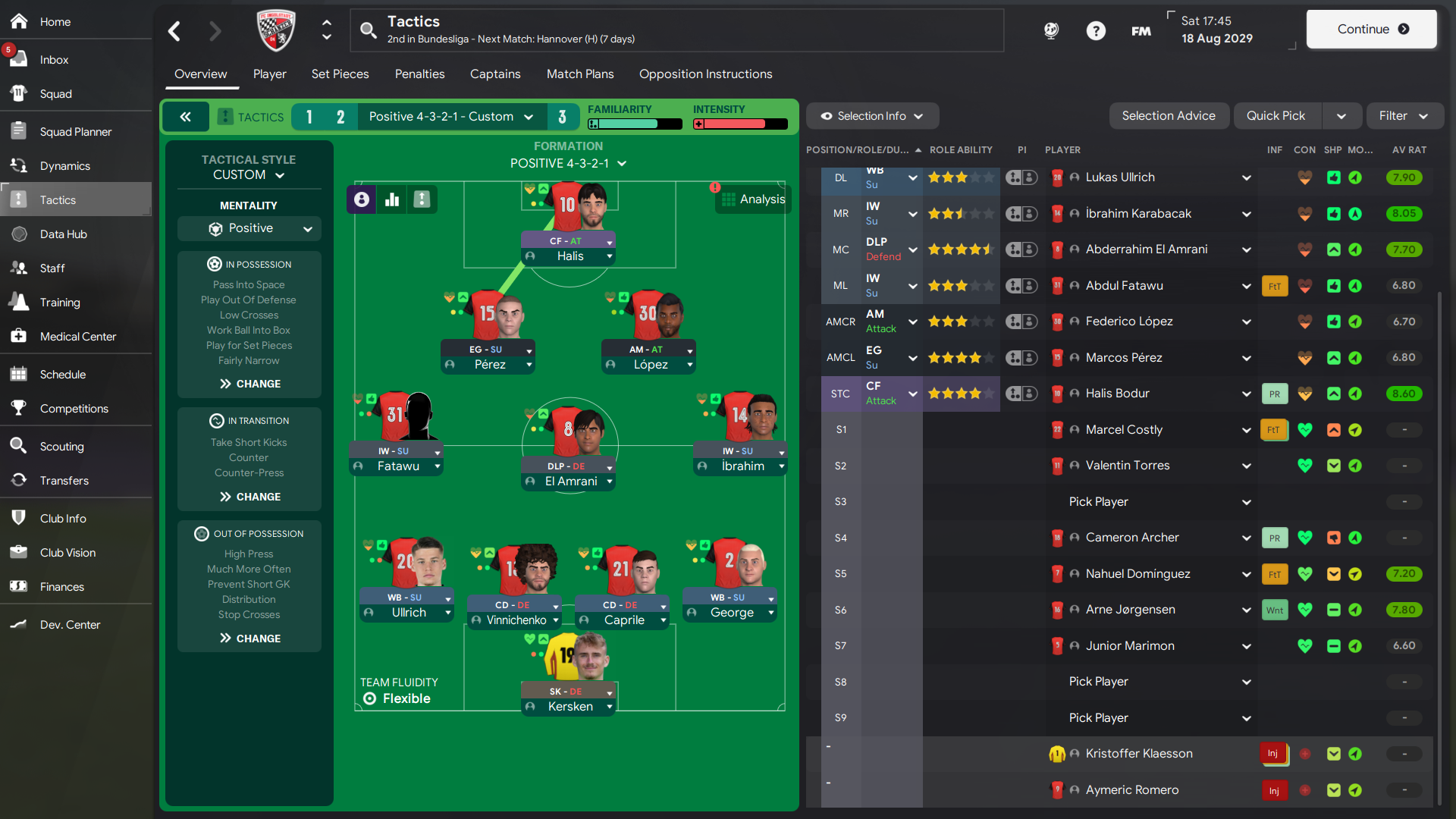
Uploaded Tactic
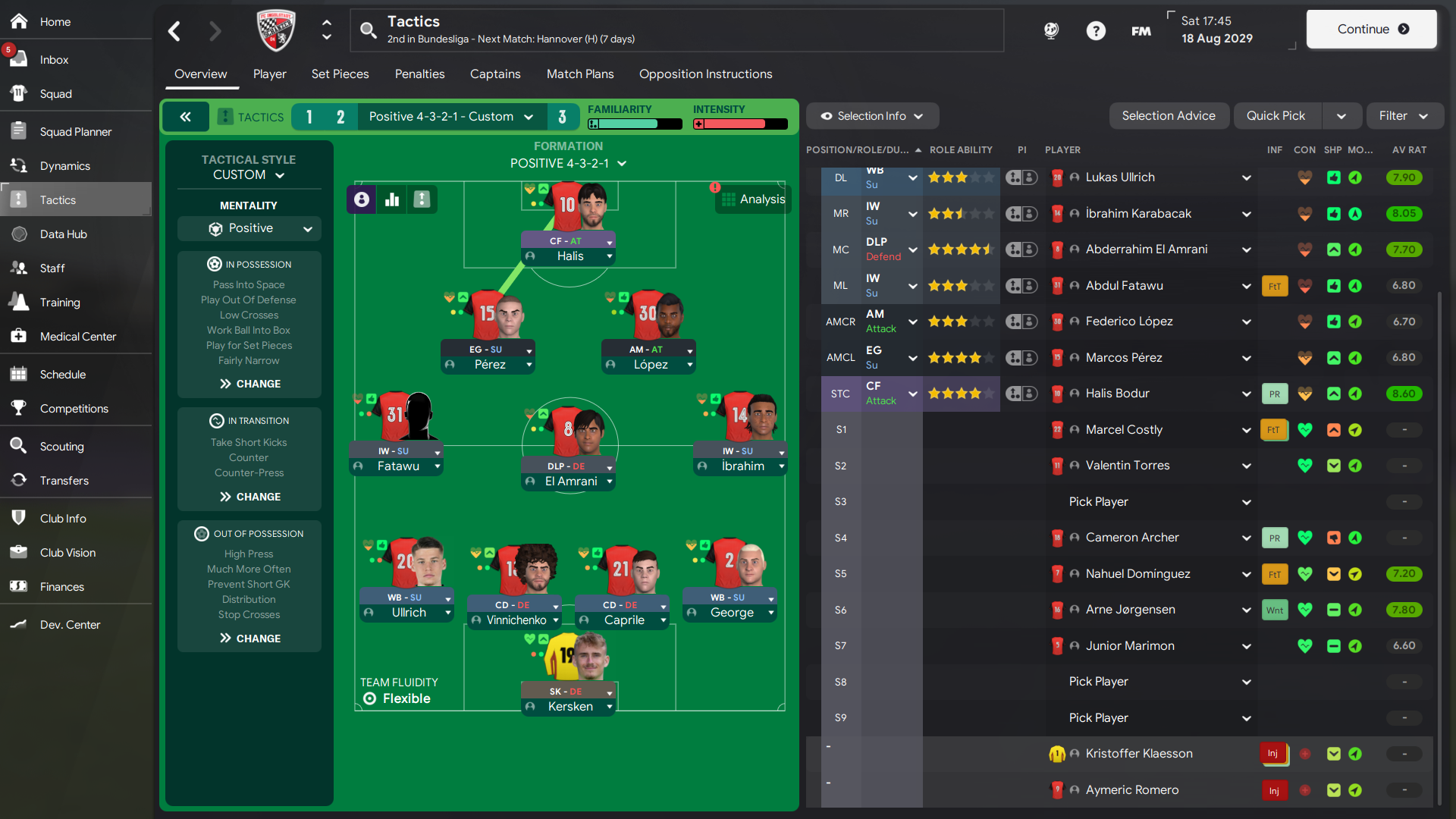
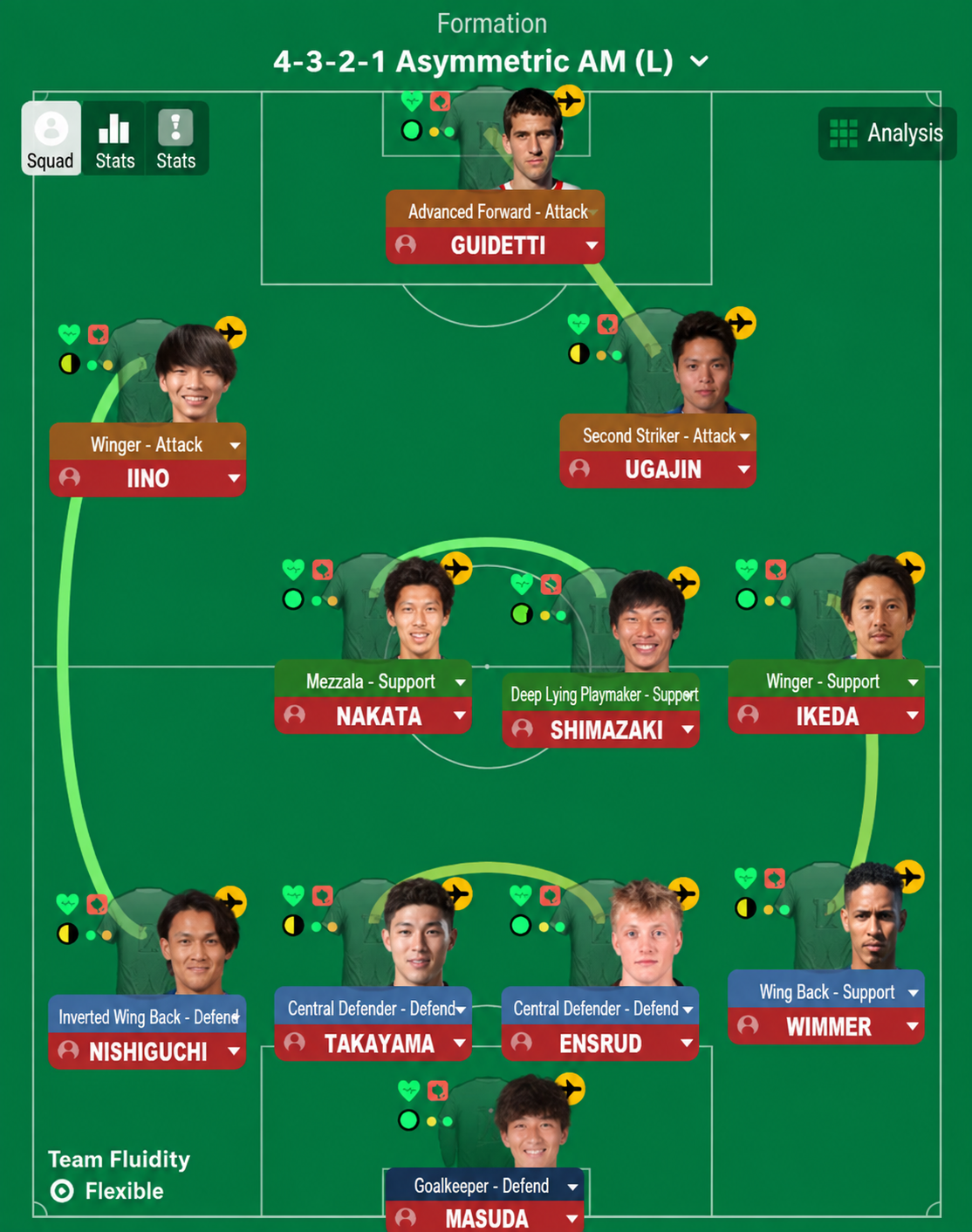
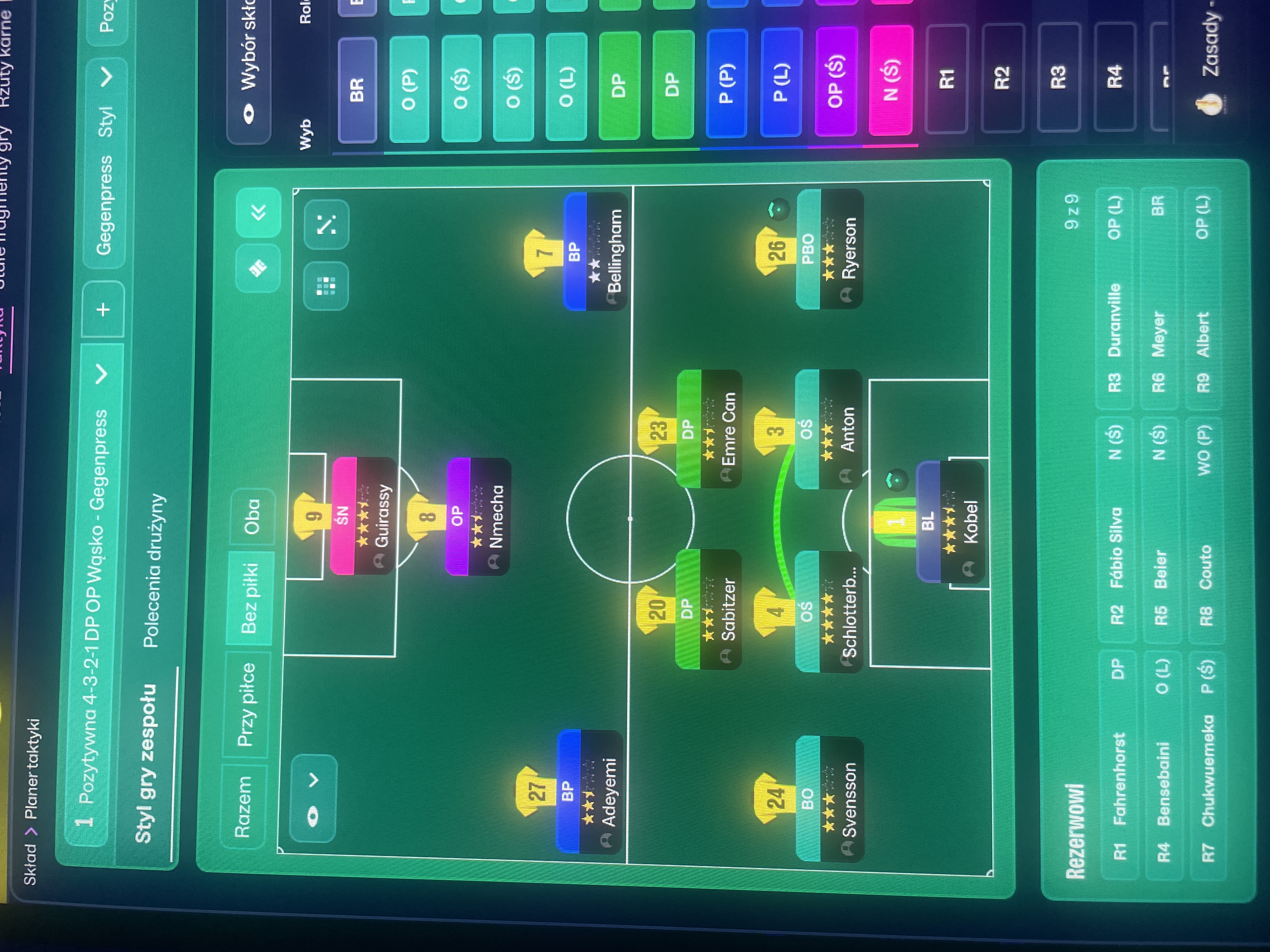
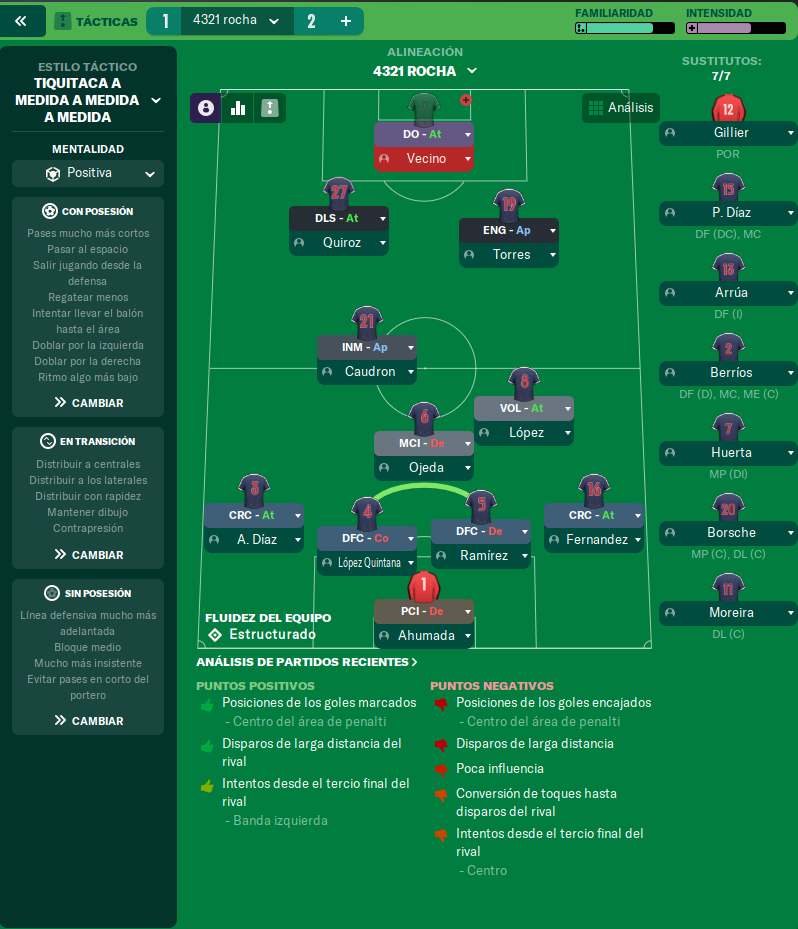
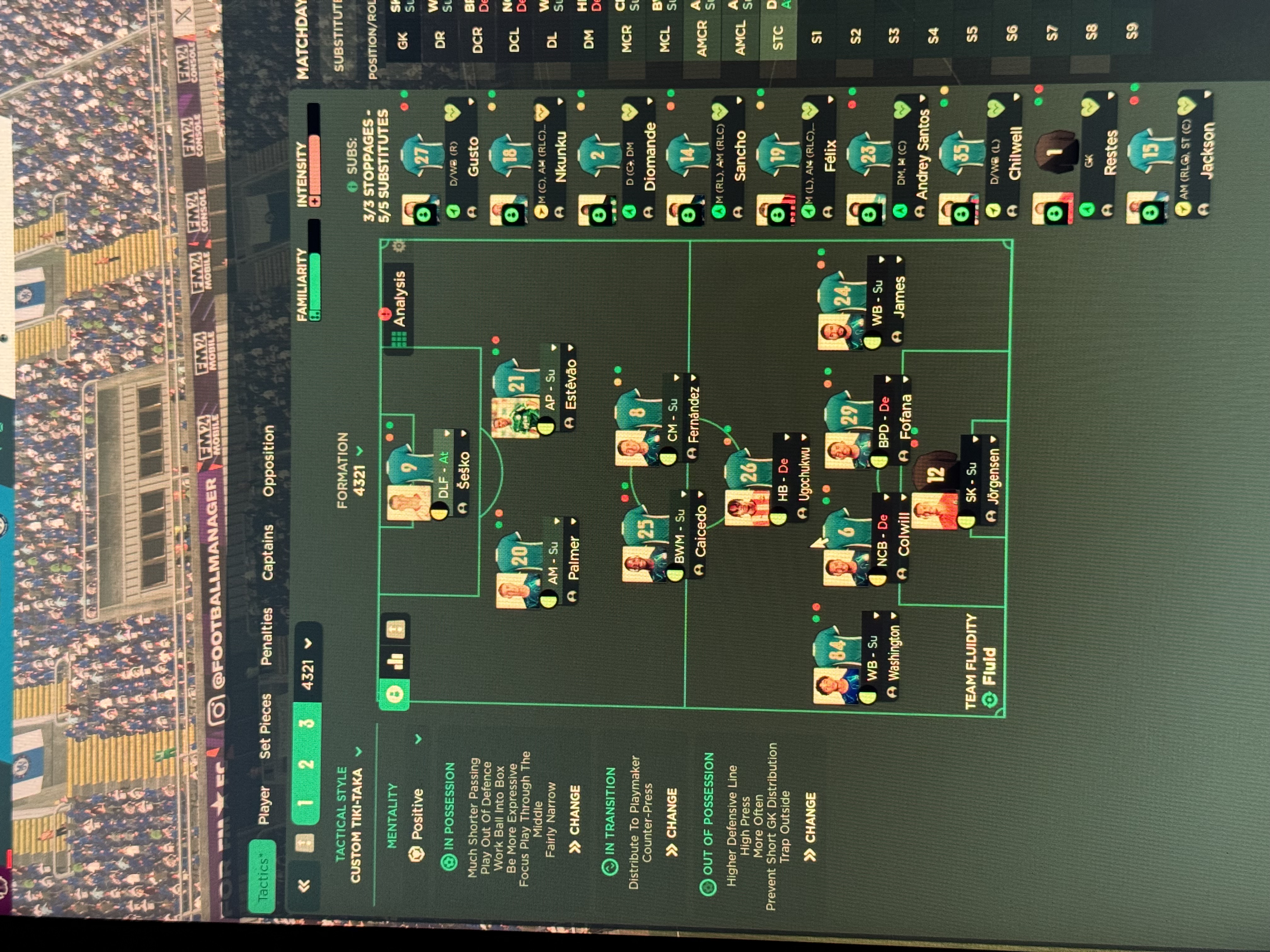
Formation & Style
Tactical Style:Custom
Mentality:Positive
Formation:4-3-2-1
Team Fluidity:Flexible
In Possession
Pass Into Space
Play Out Of Defense
Low Crosses
Work Ball Into Box
Play for Set Pieces
Fairly Narrow
In Transition
Take Short Kicks
Counter
Counter-Press
Out of Possession
High Press
Much More Often
Prevent Short GK Distribution
Stop Crosses
Team Shape Without Ball
No team shape without ball data available
Team Shape With Ball
No team shape with ball data available
Key Strengths
Attacking Versatility
With multiple attacking midfielders and a central forward role, the tactic allows for varied attacking options, which can confuse opposition defenses.
Solid Midfield Control
The deep-lying playmaker provides a strong foundation in midfield, ensuring effective ball distribution and control of the tempo.
High Pressing Game
The high pressing against opponents aims to win the ball back quickly, leading to potential counter-attacking opportunities.
Fluid Movement
With flexible team fluidity and the use of inside forwards, players can interchange positions, creating unpredictability during attacks.
Conflicting Directions
Counter-Press vs. High Press
While high pressing aims to win the ball high, counter-pressing may require players to drop back quickly to recover shape, which can lead to confusion.
Narrow Play vs. Wide Play
Using inside forwards might conflict with the wide play from wing-backs, leading to congested areas that restrict attacking options.
Roles and Duties
Having multiple players with attack duties (e.g., AM and IW) may lead to overlapping runs, thus compromising shape when transitioning to defense.
Defensive Structure during Counter
In a fast-paced counter, the focus on offense may lead to exposed defensive gaps, especially with a higher line.
Tactical Suggestions
Adjust Wing-Back Roles
Consider setting one wing-back to 'Defend' duty to maintain balance on flanks and provide more cover during counter-attacks.
Optimize Midfield Balance
Incorporate a box-to-box midfielder or a second playmaker to enhance creativity and support both defense and attack.
Refine Player Duties
Adjust the duty of the CF to 'Support' if holding play is needed, allowing wingers to exploit spaces instead of crowding the forward.
Counter-Press Focus
Ensure players understand when to press aggressively and when to maintain positional organization to avoid disorganization during transitions.