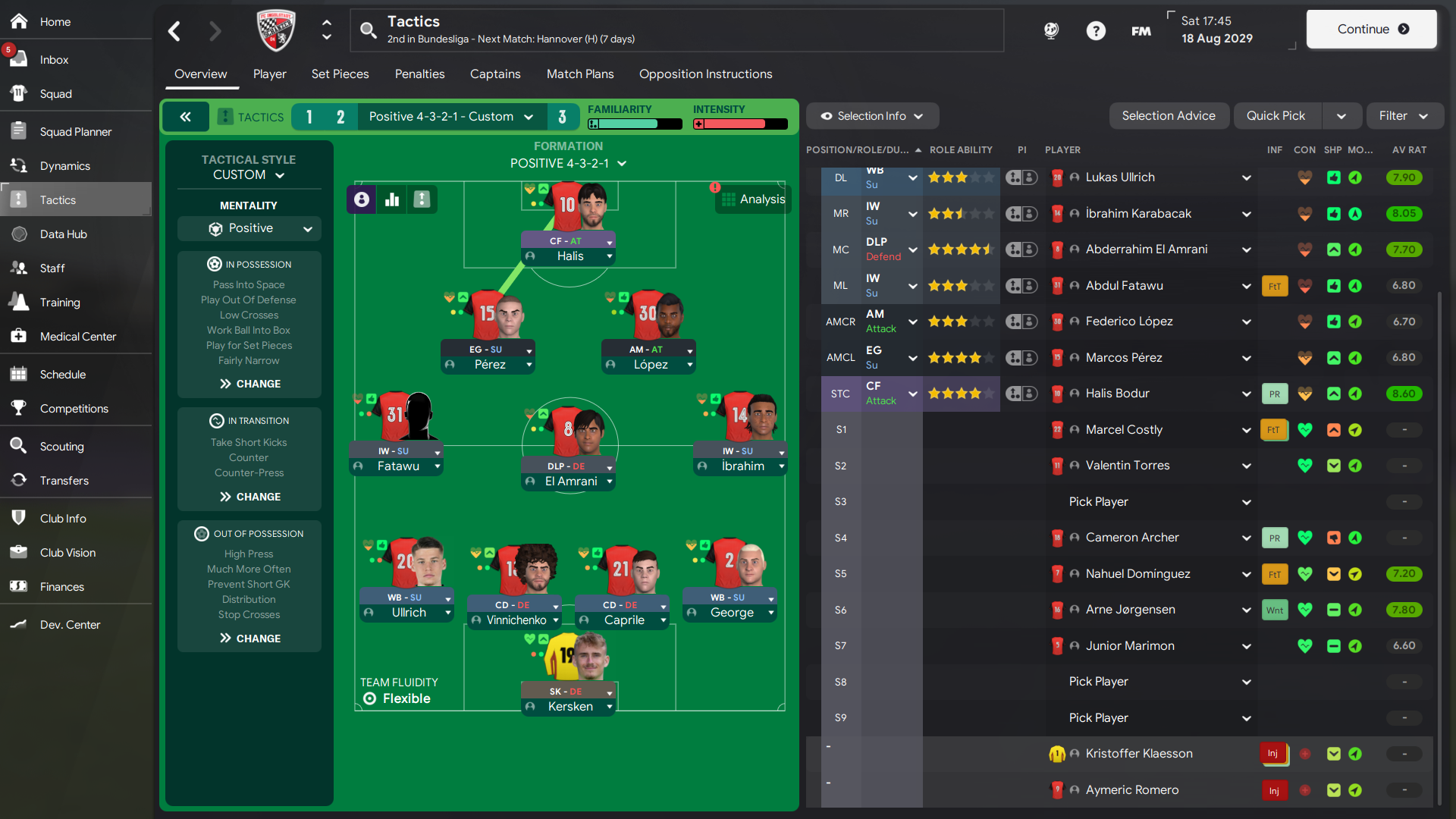
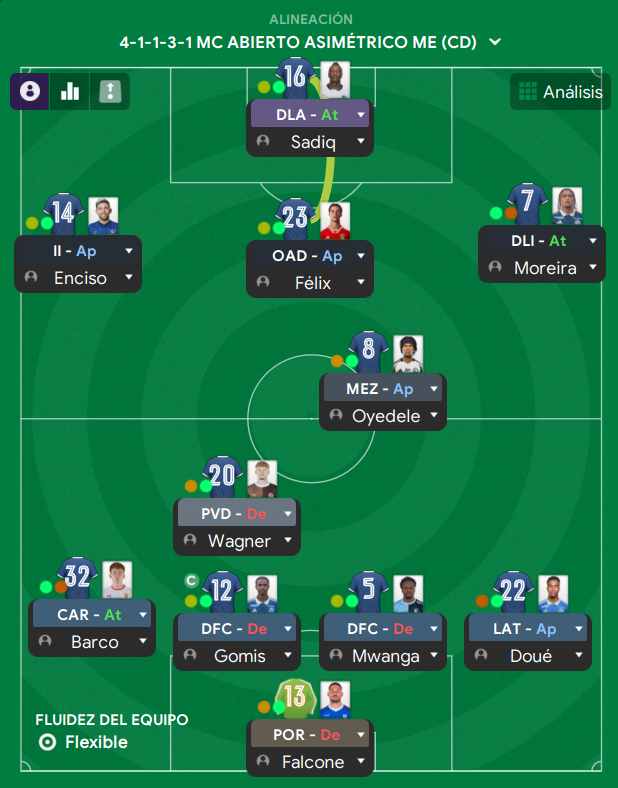
Uploaded Tactic
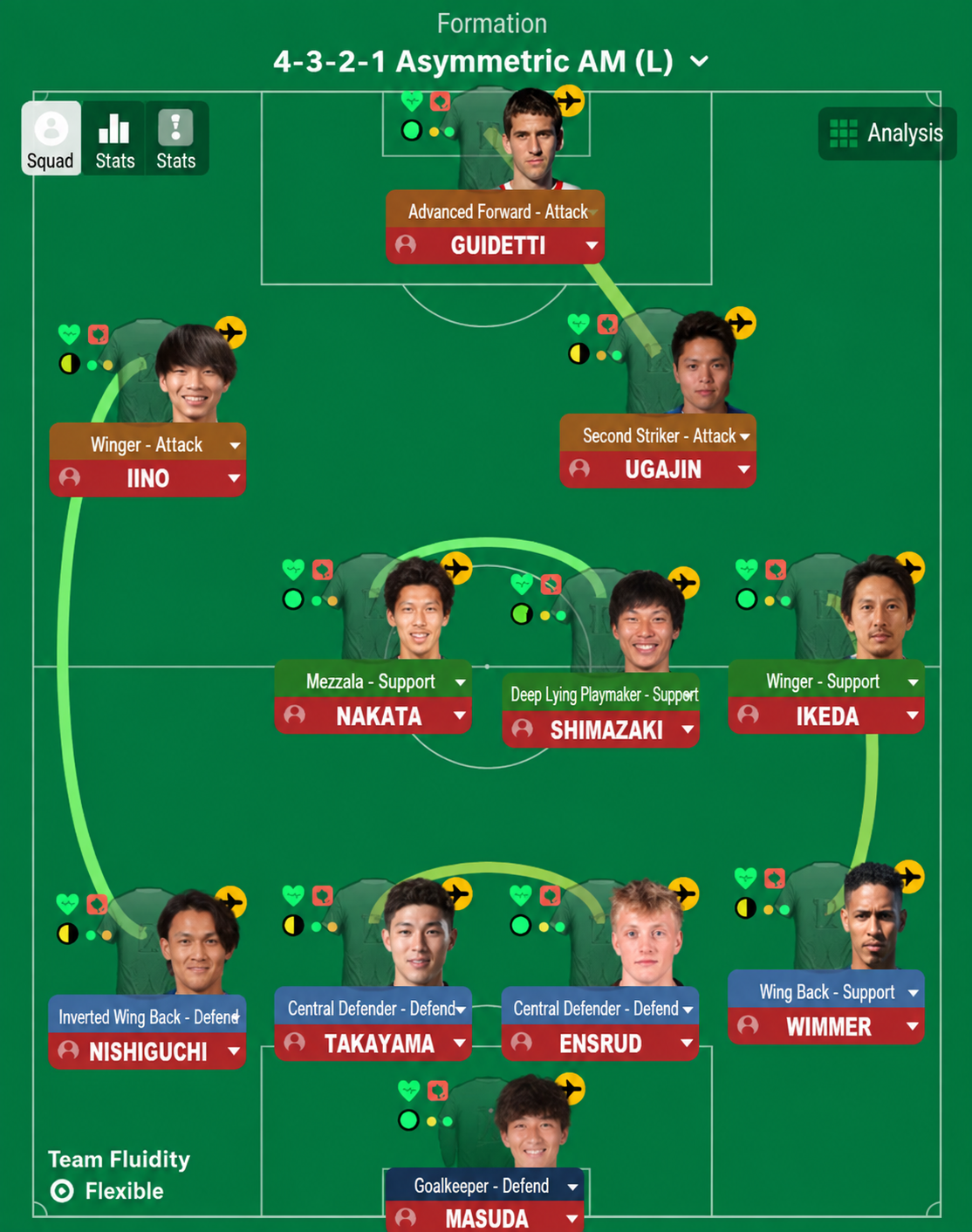
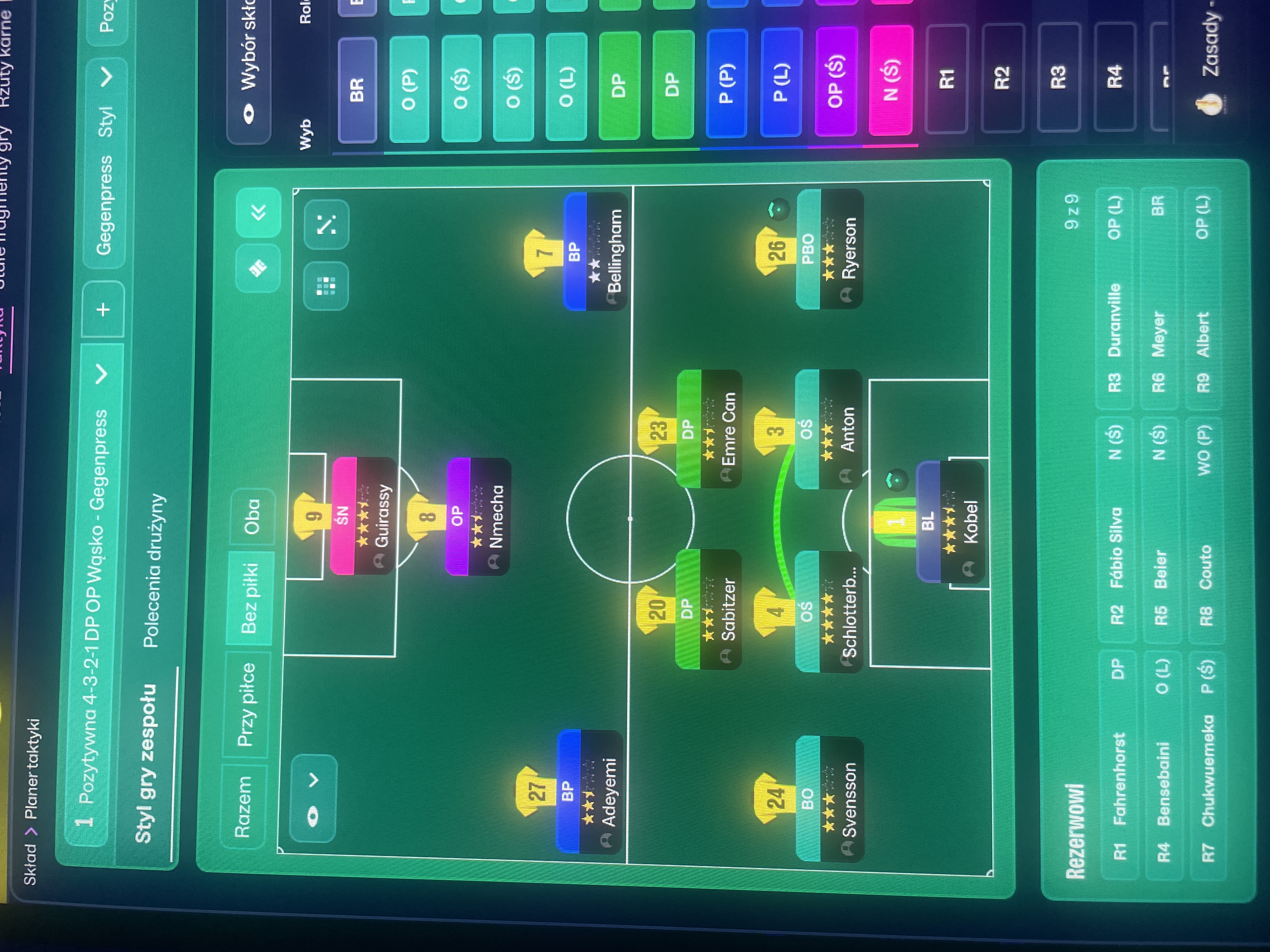
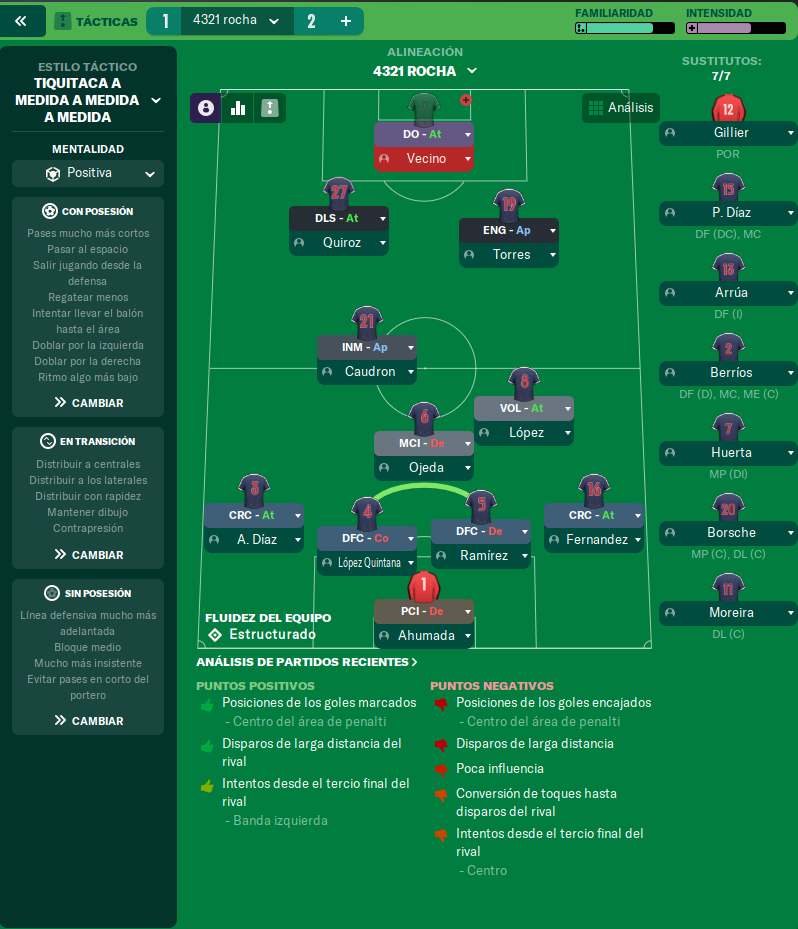
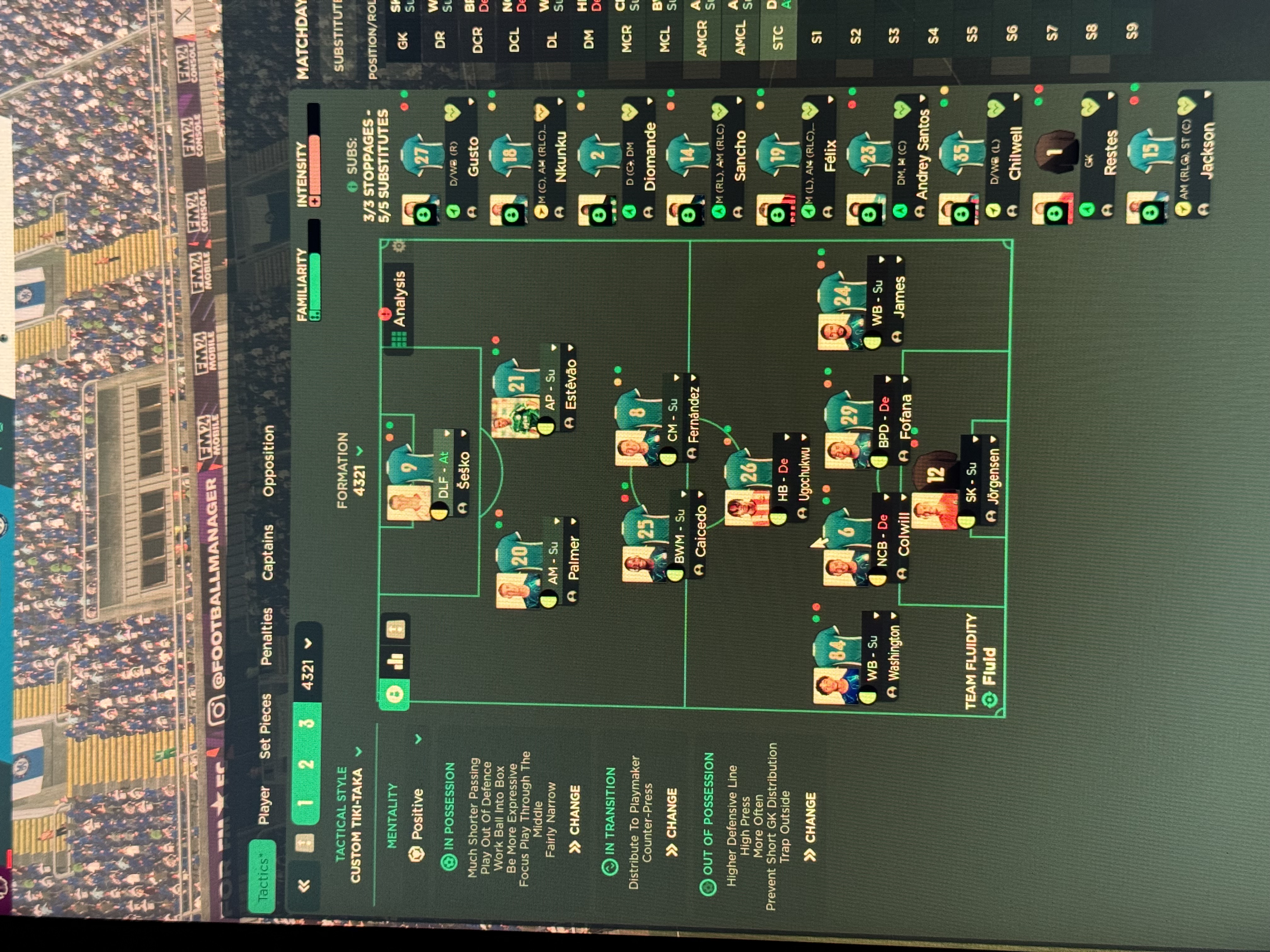
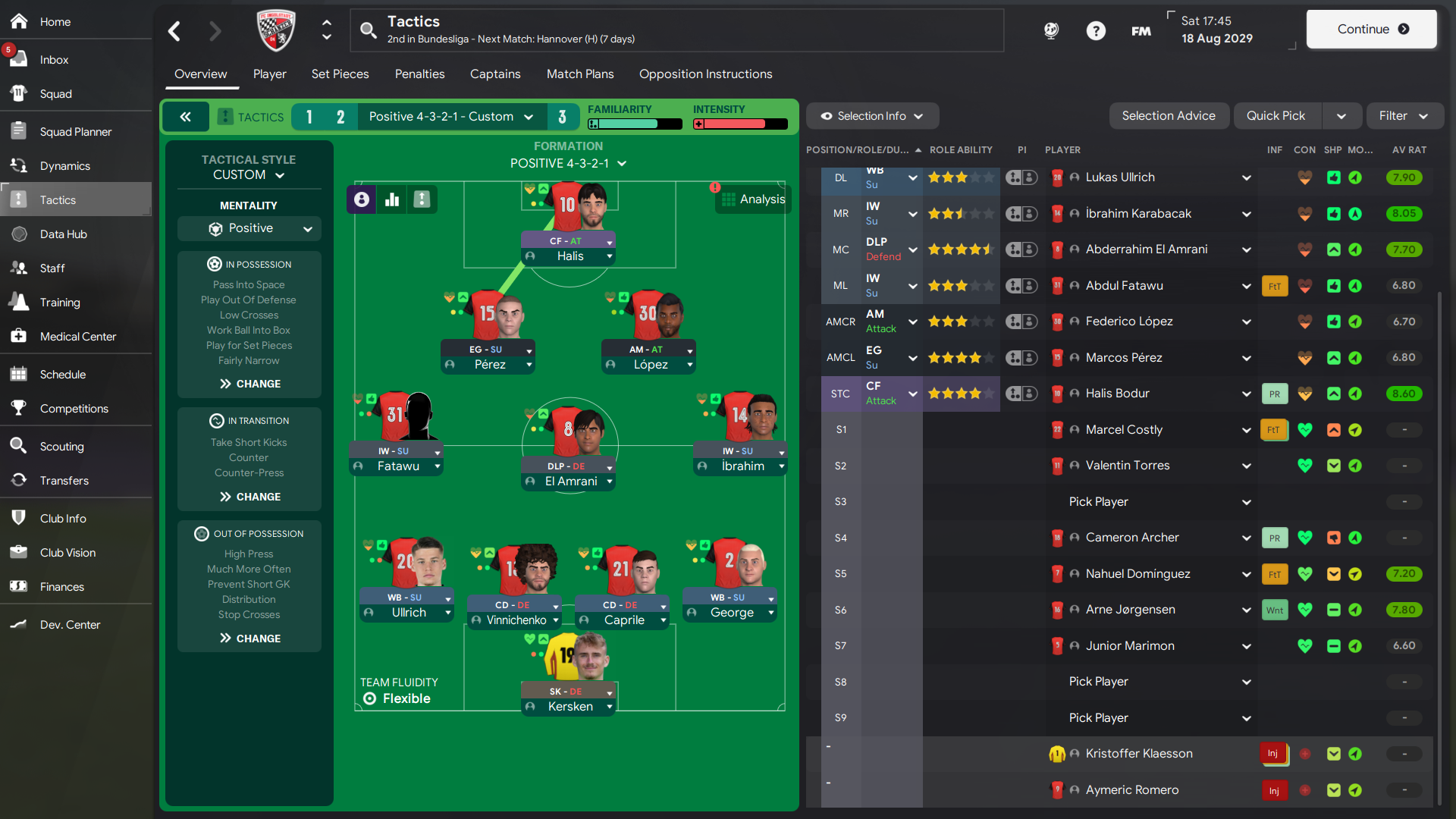
Formation & Style
Tactical Style:Asymmetrical
Mentality:Attacking
Formation:4-3-2-1
Team Fluidity:Flexible
In Possession
Play Out of Defence
Work Ball Into Box
Focus Play Down the Left
In Transition
Counter-Press
Counter
Out of Possession
Higher Defensive Line
Higher Line of Engagement
Prevent Short GK Distribution
Team Shape Without Ball
Shape:4-4-2
Description:The team shapes into a compact 4-4-2 when out of possession, limiting space for opponents in the central areas.
Evidence:The presence of two central defenders and a strong midfield presence with effective spacing.
Team Shape With Ball
Shape:4-3-3
Description:As the team attacks, they morph into a 4-3-3 dynamic, with width provided by the wingers and the advanced forward leading the line.
Evidence:The positional roles of the advanced forward, winger, and second striker create effective wide options.
Phase Description
Attacking Play
Focus on exploiting left flank with the winger and inverted wing back while maintaining attacking fluidity through the central playmaker.
Defensive Transition
Quick counter-press to regain possession immediately after losing the ball, transitioning into quick counter-attacks.
Main Focus
Utilizing width on the left while maintaining central control with the deep lying playmaker.
Key Strengths
Dynamic Attack
The asymmetrical formation allows for versatility in attacking play, facilitating quick transitions and varied point of attack.
Midfield Control
The midfield configuration ensures control over the central areas with support from the Deep Lying Playmaker and Mezzala.
Width and Depth
The use of an inverted wing back provides width while supporting central play, stretching the opponents.
Conflicting Directions
Potential Overreliance on Left Side
By focusing play down the left, there may be vulnerabilities on the right side, leading to counter-attacks.
Defensive Exposure During Attacks
Pushing both wing backs forward could leave the defense exposed during counter-attacks.
Striker Dynamics
Having a Second Striker and an Advanced Forward could potentially confuse roles in movement and space occupation.
Tactical Suggestions
Adjust Width Options
Consider encouraging the use of the right wing to balance attacking threats and reduce vulnerability on the left.
Maintain Defensive Stability
Ensure wing backs are instructed to fall back during defensive transitions to avoid being caught out.
Utilize a Target Man Option
Incorporating a Target Forward could provide a focal point, especially in aerial situations and when defending set pieces.