Uploaded Tactic
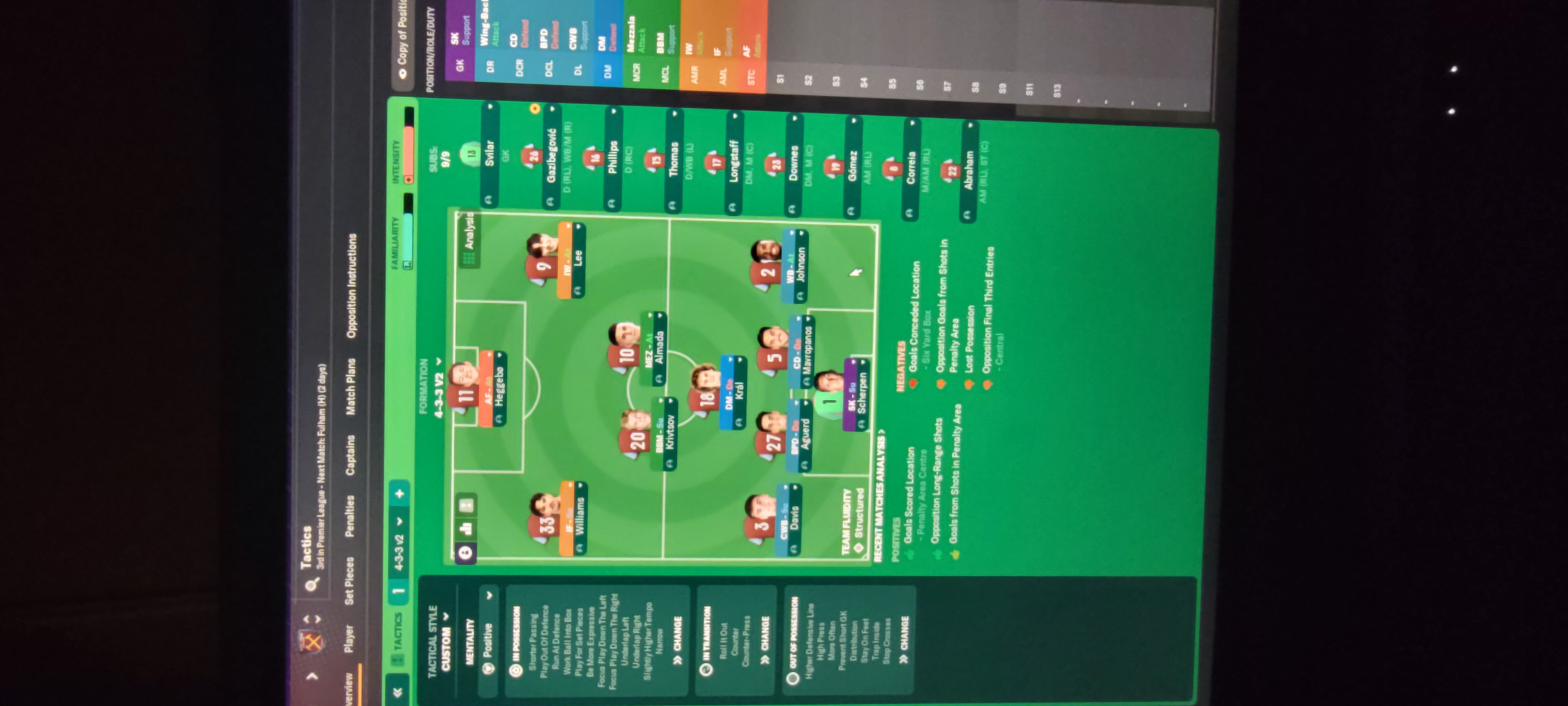
Formation & Style
Tactical Style:Custom
Mentality:Positive
Formation:4-3-3 v2
Team Fluidity:Structured
In Possession
Shorter Passing
Play Out Of Defence
Work Ball Into Box
Play For Set Pieces
In Transition
Roll It Out
Out of Possession
Higher Defensive Line
High Press
More Often
Prevent Short GK Distribution
Team Shape Without Ball
No team shape without ball data available
Team Shape With Ball
No team shape with ball data available
Key Strengths
Dynamic Attack
Utilizing inside forwards, this setup benefits from diagonal runs, creating spaces for the striker and midfielders to exploit.
Solid Midfield Control
With a deep-lying playmaker and a mezzala, there's a good balance of defensive cover and attacking support.
Effective Set-Pieces
Focusing on set-pieces can turn them into a scoring opportunity, especially with tall players in the box.
High Pressing Strategy
The high press can disrupt opposition play, winning the ball back quickly and transitioning into attacks.
Conflicting Directions
Inconsistent Defensive Shape
While the higher defensive line aims for pressure, it may lead to vulnerability against fast counter-attacks if the team isn't compact.
Midfield Overload Risks
The positive mentality may stretch the midfield too wide, leaving gaps for opponents to exploit.
Wing-Back Role Confusion
Duties for wing-backs are mismatched – one attacking and one supporting – leading to a lack of width or overlapping opportunities.
Goalkeeper Distribution
Rolling the ball out might clash with a high press if the defense is not well-positioned, causing lost possession.
Tactical Suggestions
Add Cover to Defensive Line
Consider introducing a 'Stopper' role at the back to cover counter-attacks, enhancing defensive stability.
Adjust Wing-Back Duties
Standardize the wing-backs to either both attack or both support to maintain balance and create width.
Tactical Flexibility
Switch to a more cautious approach when leading in games or facing tough opponents to prevent late concessions.
Utilize Counter-Attacks
In transition, incorporate counter-attacking options to maximize the speed and creativity of the forwards.
Ask Questions About Your Lineup
Guides for this formation
The tactical theory behind the 4-3-3 v2: roles, instructions, and the trade-offs that decide whether the system holds up.
Foundations
Understanding the 4-3-3 Formation
Master the classic 4-3-3: player roles, tactical variations, and the trade-offs that decide whether it sings or stalls.
Read guide
Player pairings
Midfield Trios
Holder, runner, creator: the role distribution rule for three-man midfields, the AMC variants, and the antipatterns that break them.
Read guide
Playing styles
Gegenpressing: A Full Guide
Klopp-style gegenpressing in FM, including squad profile, line-and-press pairing, sustainable workload, and the antipatterns to avoid.
Read guide