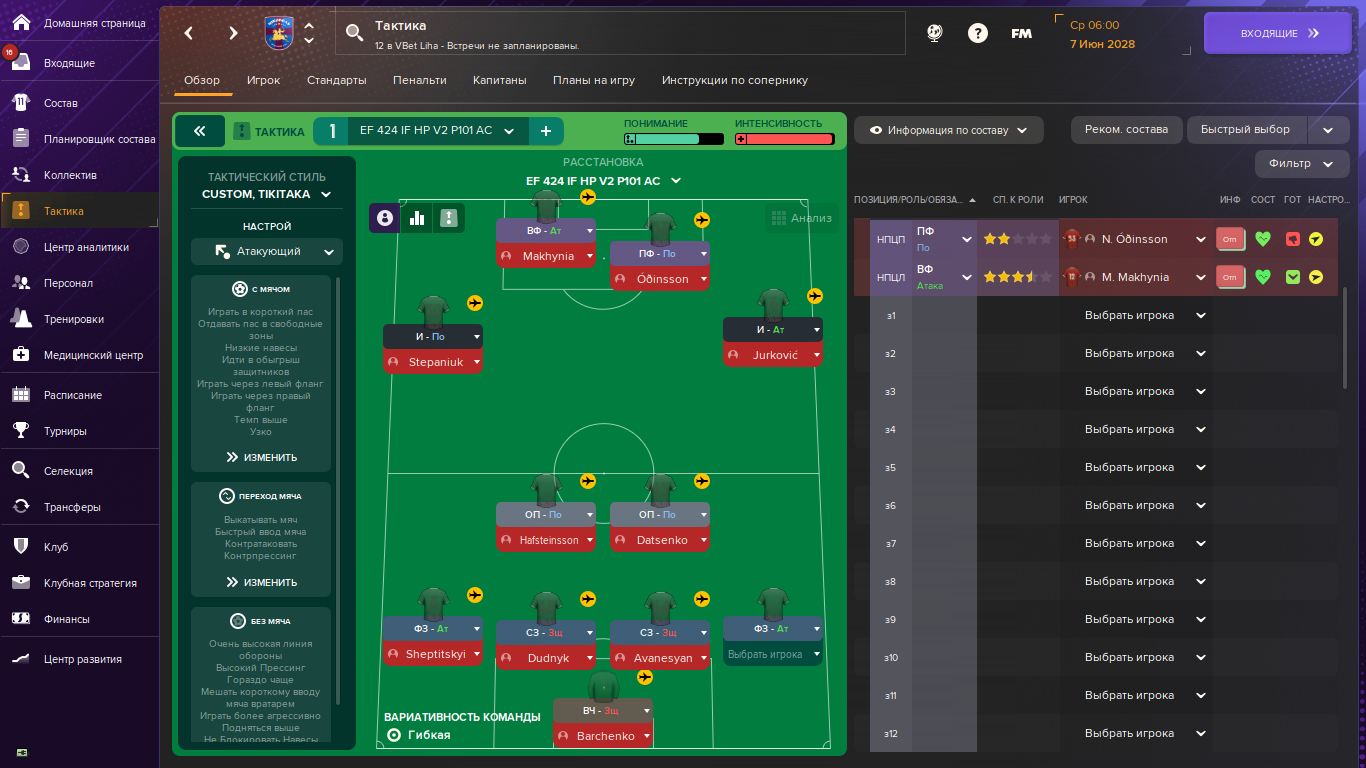
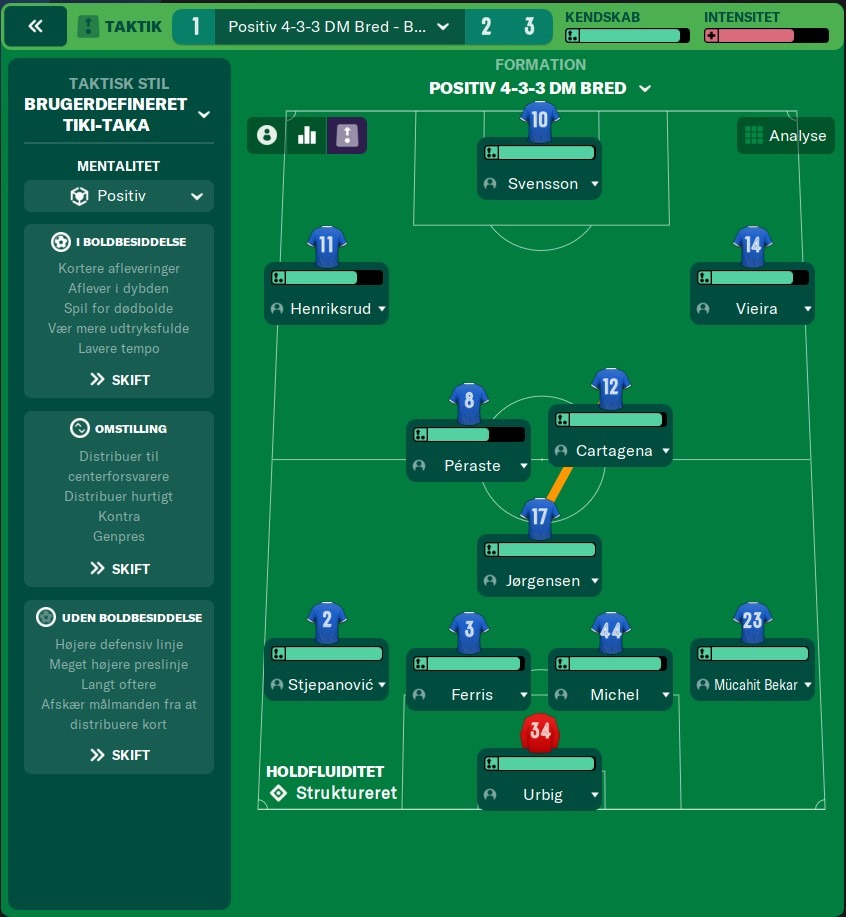
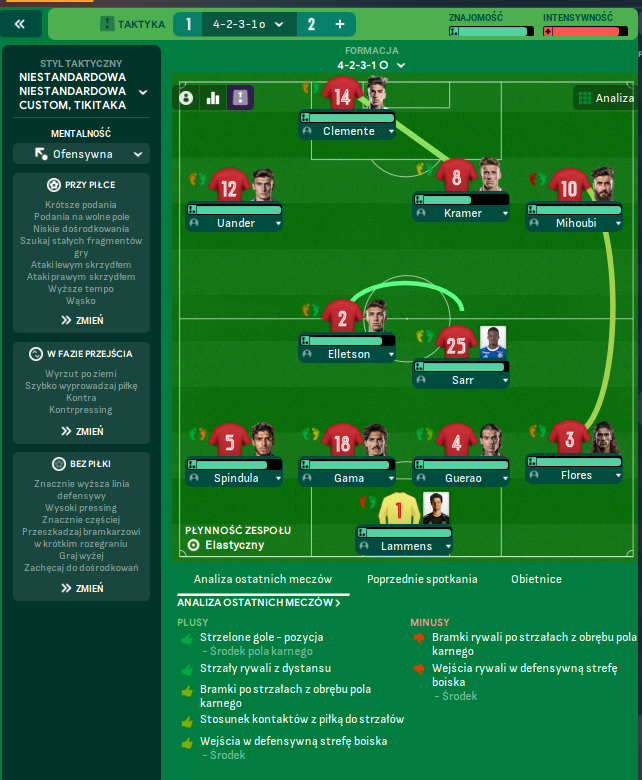
4-4-1-2
The tiki-taka approach allows for short, quick passes, maintaining possession while creating opportunities.
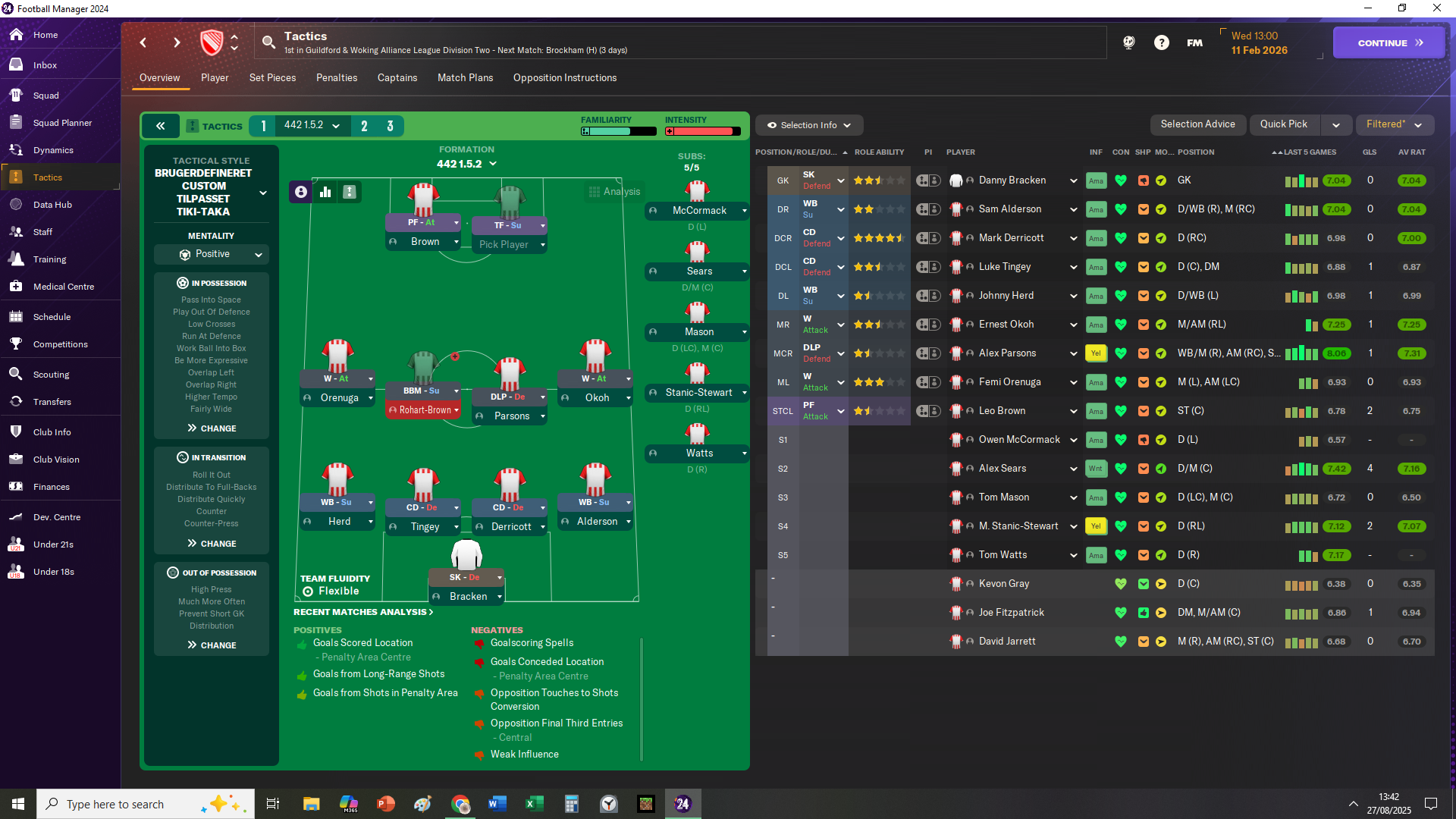
Loading tactical analysis...
Tiki-Taka
Positive
4-4-1-2
Flexible
Pass Into Space
Play Out Of Defence
Low Crosses
Work Ball Into Box
Be More Expressive
Overlap Left
Overlap Right
Tiki-Taka
Roll It Out
Distribute To Full-Backs
Counter
Counter-Press
High Press
Much More Urgent
Prevent Short GK Distribution
GK
Sweeper Keeper
Defend
DL
Wing Back
Support
DCL
Central Defender
Defend
DCR
Central Defender
Defend
DR
Wing Back
Support
MC
Deep Lying Playmaker
Support
MCL
Box to Box Midfielder
Support
MR
Winger
Attack
AML
Winger
Attack
ST
Advanced Forward
Attack
The tiki-taka approach allows for short, quick passes, maintaining possession while creating opportunities.
Utilizing wing-backs and wingers creates width, stretching the opposition and opening space for central attackers.
The high pressing may contradict the tiki-taka style, which emphasizes maintaining possession rather than chasing the ball.
Overlapping wing-backs might clash with wingers positioned wide, causing congestion in forward areas.
How well is the team managing possession during matches?
Are the wing-backs effectively contributing both defensively and in attack?
Is the counter-press yielding turnovers, or does the team seem exposed?
Do the midfielders maintain the necessary support for both defense and attack?
How functioning is the connection between forwards and midfielders?
Are opposition teams effectively breaking the high press?
The tactical theory behind the 4-4-1-2: roles, instructions, and the trade-offs that decide whether the system holds up.
Routines, takers, and target picks. How to turn corners and free-kicks into a reliable third of your goal output.
Protect a 1-0, chase a 1-0, hold a draw away. How to manage game state in FM through duties and roles, not by lurching to Defensive.
Mentality, duty, role, instruction, sub. The change hierarchy from lightest to heaviest intervention, and 60th-minute patterns by game state.