Uploaded Tactic
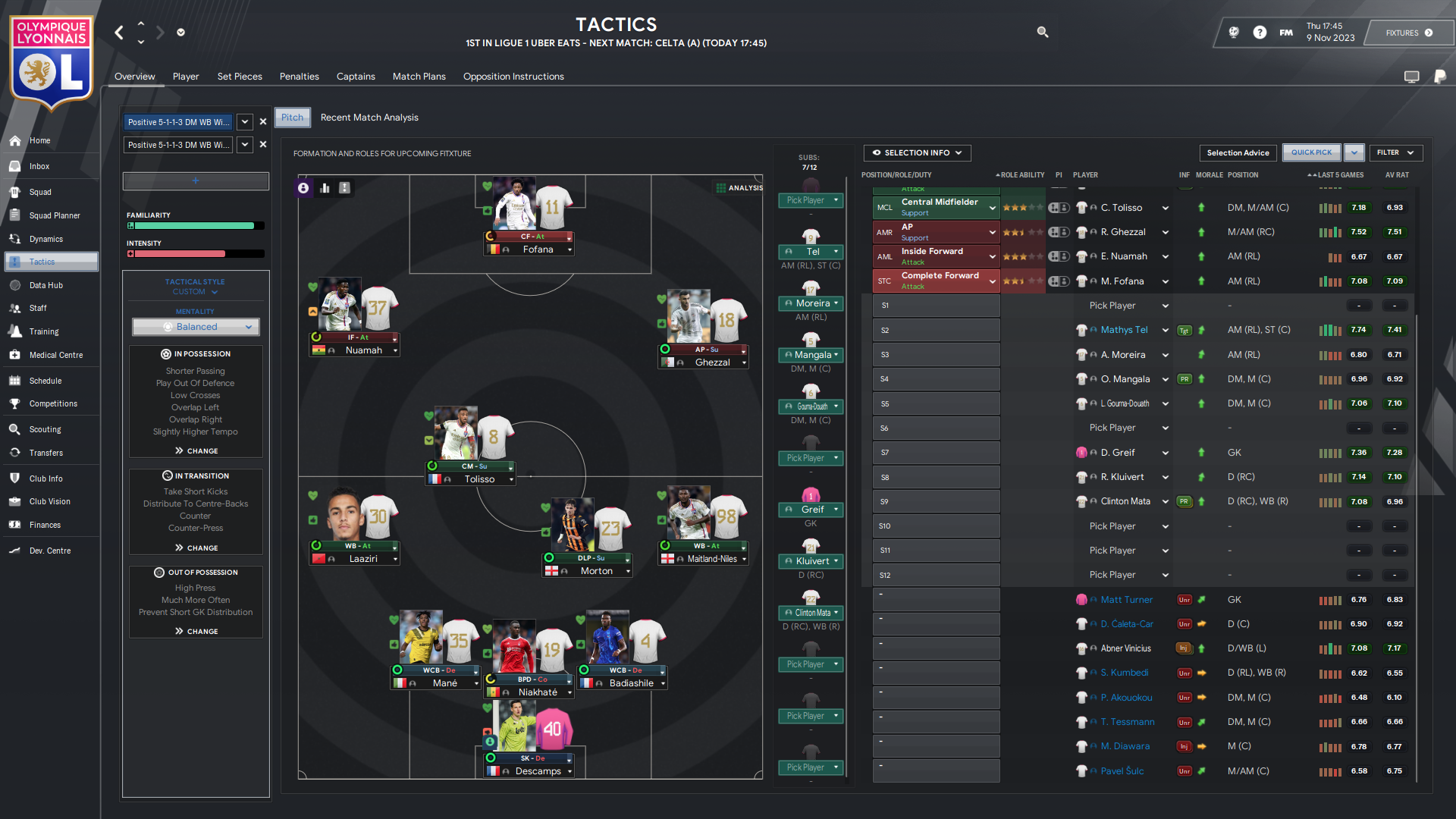
Formation & Style
Tactical Style:Balanced
Mentality:Positive
Formation:5-1-1-3-1 WB Wide
Team Fluidity:Structured
In Possession
Shorter Passing
Play Out Of Defence
Low Crosses
Overlap Left
Overlap Right
Slightly Higher Tempo
In Transition
Take Short Kicks
Distribute To Centre-Backs
Counter
Counter-Press
Out of Possession
High Press
Much More Often Prevent Short GK Distribution
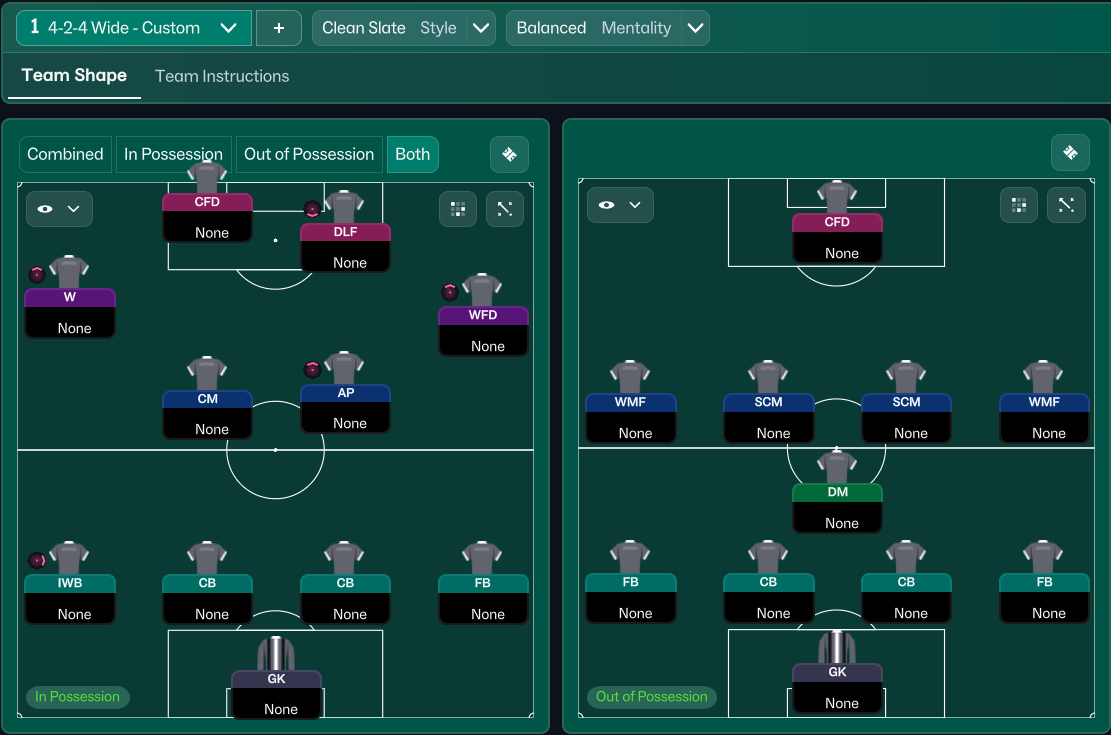
Team Shape Without Ball
Shape:Compact and Organized
Description:Maintains a tight structure with the wing-backs providing width, while the midfielders track back to support the defence.
Evidence:Three DCs plus two DMs ensuring defensive coverage.
Team Shape With Ball
Shape:Fluid and Dynamic
Description:The front line features creative roles with the complete forward linking play while inside forwards cut in from the flanks.
Evidence:Inside Forward and Advanced Playmaker roles suggest a focused attacking strategy.
Phase Description
Attacking Play
Utilizing wing-backs for width, combined with short passing and overlapping options, creating opportunities for inside forwards.
Defensive Transition
Quick transition to a high press aiming to win the ball back immediately after losing possession.
Main Focus
Creating overloads on the flanks while ensuring a solid defensive base.
Key Strengths
Width in Attack
Utilizing wing-backs allows for effective penetration on the flanks, stretching the opposition.
Defensive Stability
Three central defenders and a deep-lying playmaker provide strong defensive coverage.
Flexibility in Midfield
Having a mixture of support and attacking duties in midfield allows for adaptable play.
Conflicting Directions
Lack of Defensive Midfielders
With only one DM, opposition counter-attacks could exploit space.
Potential for Overcommitment
High pressing may lead to gaps in defence if players are too aggressive.
Dependency on Wing-Backs
Heavy reliance on wing-backs could be problematic if they are marked out of the game.
Tactical Suggestions
Consider an Additional Defensive Midfielder
Introducing a second DM could bolster the centre and protect against counter-attacks.
Adjust High Press Strategy
Moderating the pressing strategy could prevent excessive gaps when the ball is lost.
Evaluate Wing-Back Duties
Consider the duties of wing-backs to balance attack and defence.
Ask Questions About Your Lineup
More Balanced tactics
Guides for this formation
The tactical theory behind the 5-1-1-3-1 WB Wide: roles, instructions, and the trade-offs that decide whether the system holds up.