Uploaded Tactic
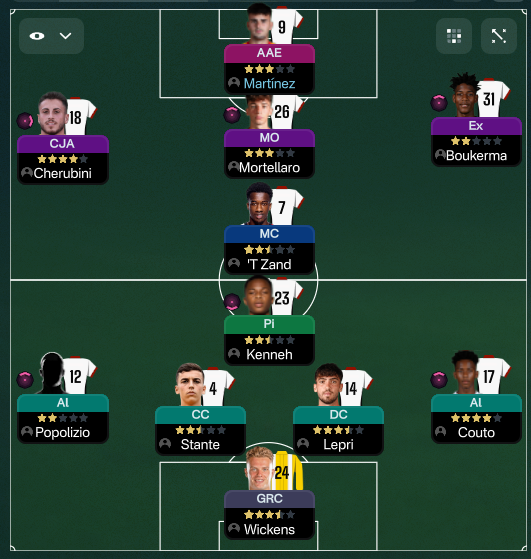
Formation & Style
Tactical Style:Balanced
Mentality:Positive
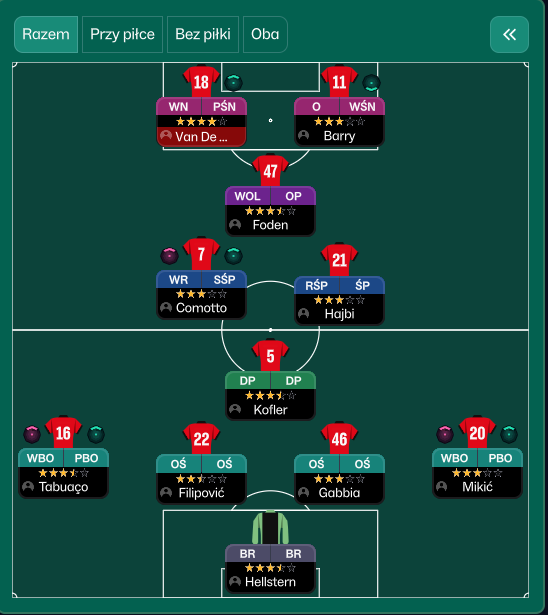
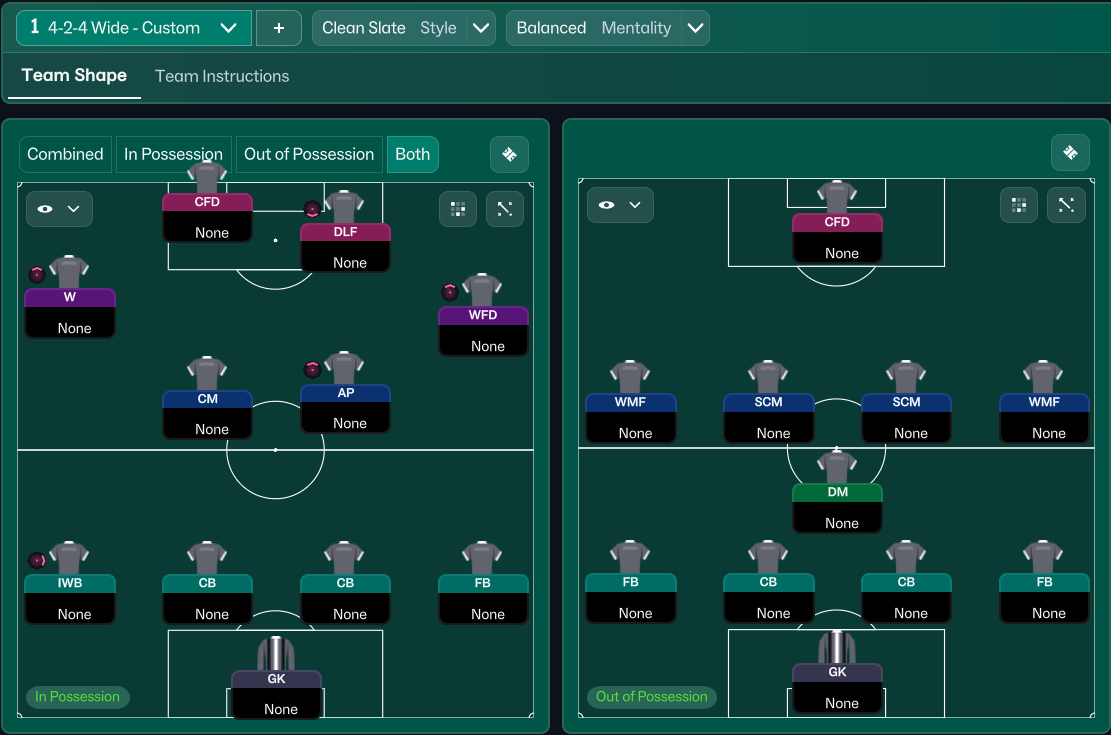
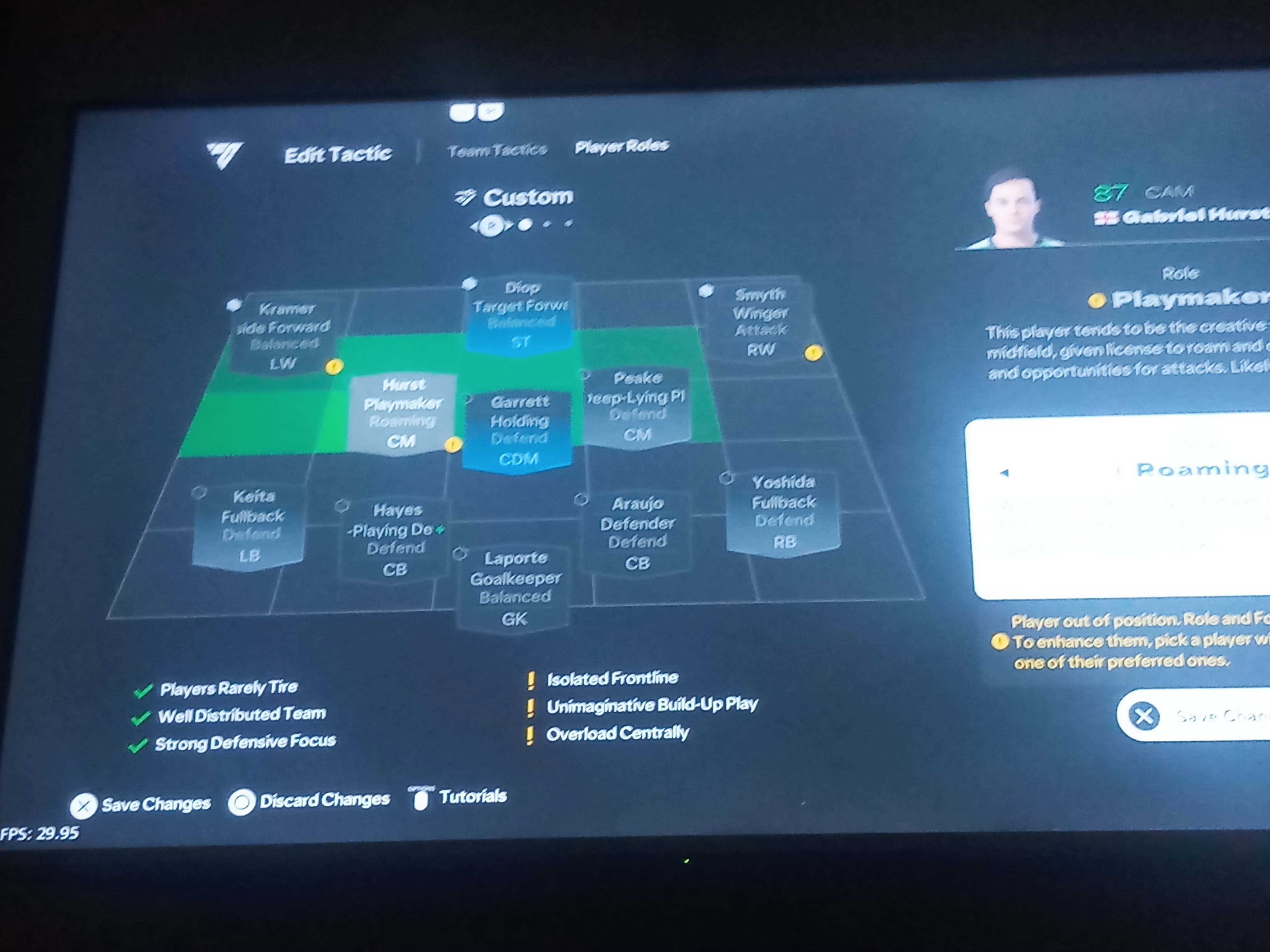
Formation:4-2-3-1 Wide
Team Fluidity:Balanced
In Possession
Work Ball Into Box
Shorter Passing
Attacking Width: Fairly Wide
In Transition
Counter-Press
Counter
Out of Possession
Higher Defensive Line
Higher Line of Engagement
Prevent Short GK Distribution
Team Shape Without Ball
Shape:4-2
Description:The shape offers compactness in central areas with the ability to push full-backs higher.
Evidence:Two CBs and a DM in front provides a strong barrier, specifically 'No-Nonsense Centre-Back' at [2,3] and 'Deep-Lying Playmaker' at [3,3] with compact positioning.
Team Shape With Ball
Shape:4-3
Description:The front three provide width to stretch the opposing defence, aided by full-backs pushing up.
Evidence:'Inside Forwards' at [6,2] and [6,4] and an 'Advanced Forward' at [6,3] create varied attacking threats with width.
Phase Description
Attacking Play
The team looks to penetrate through the center with quick passing and combination play, supported by overlapping wing-backs.
Defensive Transition
Upon losing possession, players engage in immediate pressing to regain control quickly.
Main Focus
Creating opportunities through central play while maintaining a strong defensive structure.
Key Strengths
Adaptable Offensive Play
Utilizes width and central play effectively, creating space.
Solid Defensive Structure
A strong back four minimizes space for the opposing forwards.
Pressing Strategy
'Counter-Press' activates quickly upon losing possession, disrupting opponent play.
Conflicting Directions
Risk of Overexposure on Wings
The commitment of wing-backs forward can leave spaces in transition.
Inadequate Defensive Cover
The absence of a third midfielder may create gaps, especially against stronger opposition.
Vulnerability to Set Pieces
Height and physicality can be an issue when defending set pieces.
Tactical Suggestions
Consider a More Defensive Midfield Option
Introduce a holding midfielder to provide additional protection.
Utilize a Counter-Attack Setup
Switch to a more counter-attacking mentality when playing against strong teams.
Increase Width in Attack
Encouraging full-backs to overlap could create further goal-scoring opportunities.
Ask Questions About Your Lineup
Related Tactics
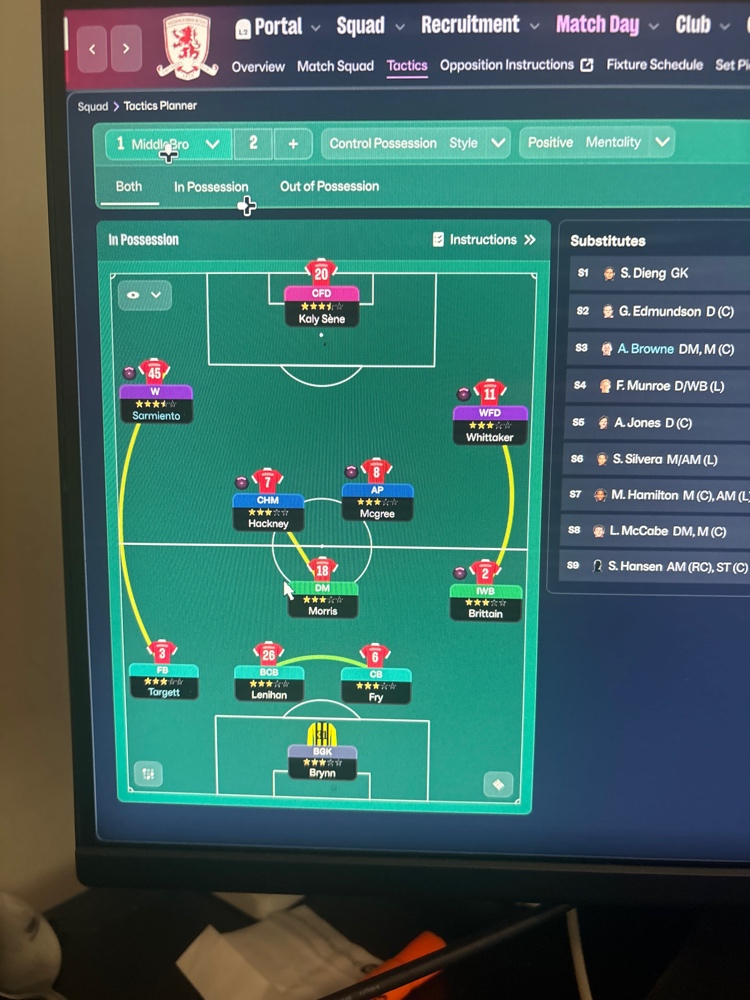
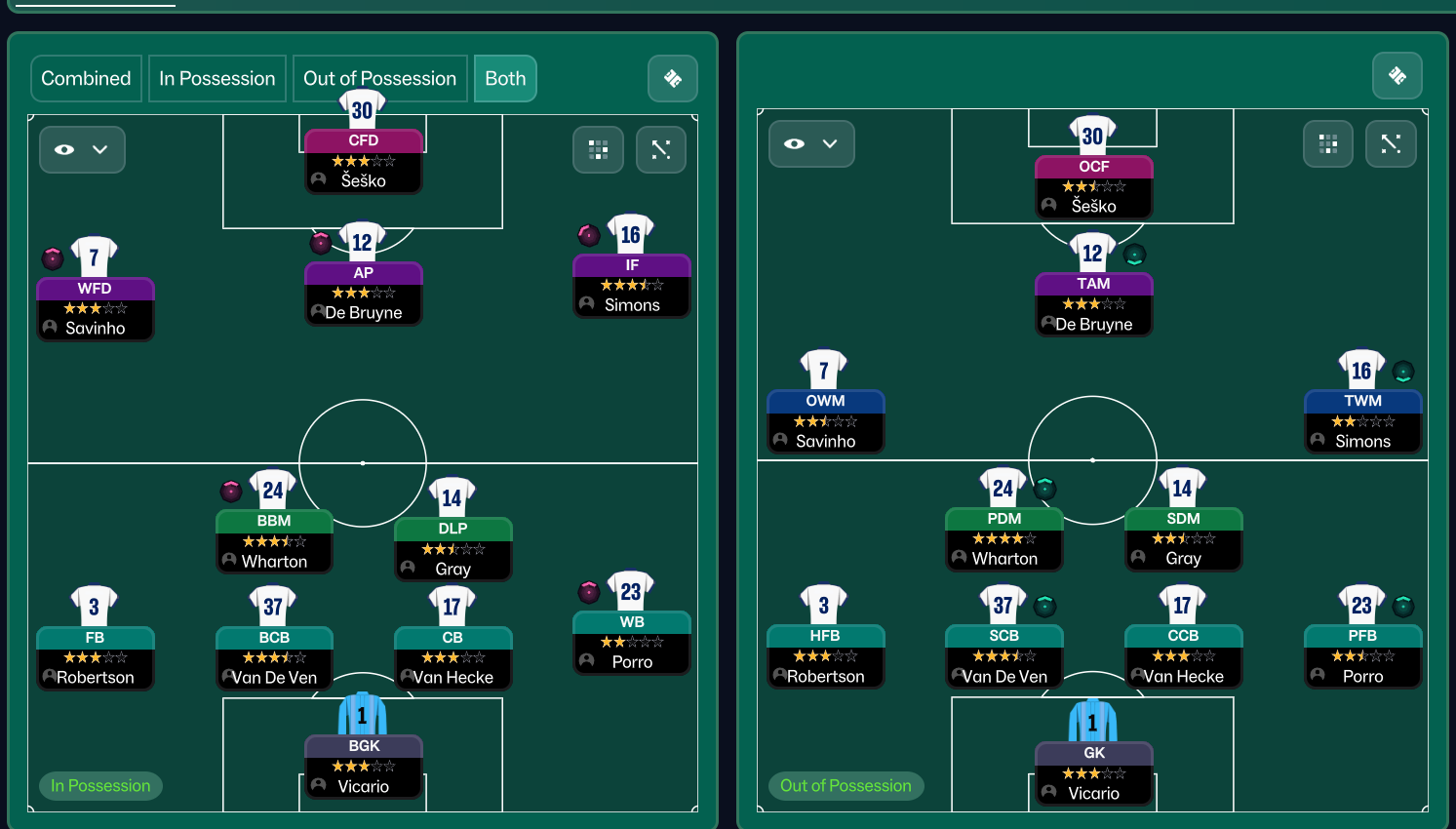
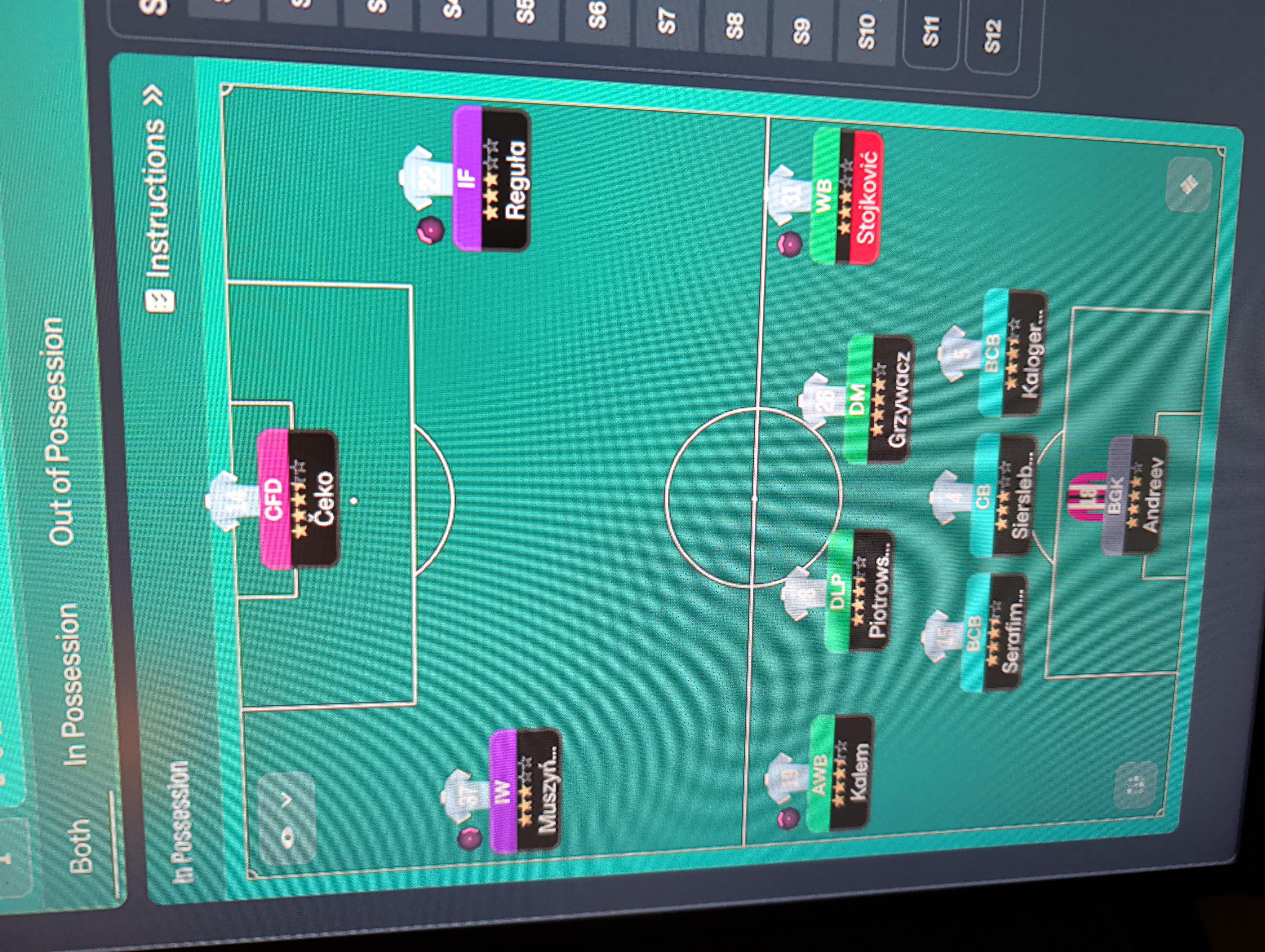
More Balanced tactics
Guides for this formation
The tactical theory behind the 4-2-3-1 Wide: roles, instructions, and the trade-offs that decide whether the system holds up.
Player pairings
Midfield Pairs in 4-2-3-1 and 4-4-2
Double pivots and flat pairs in 4-2-3-1 and 4-4-2: when each pairing works, when it collapses, and the AMC unicorn that rescues both.
Read guide
Playing styles
Gegenpressing: A Full Guide
Klopp-style gegenpressing in FM, including squad profile, line-and-press pairing, sustainable workload, and the antipatterns to avoid.
Read guide