Formation & Style
Tactical Style:Positive
Mentality:Positive
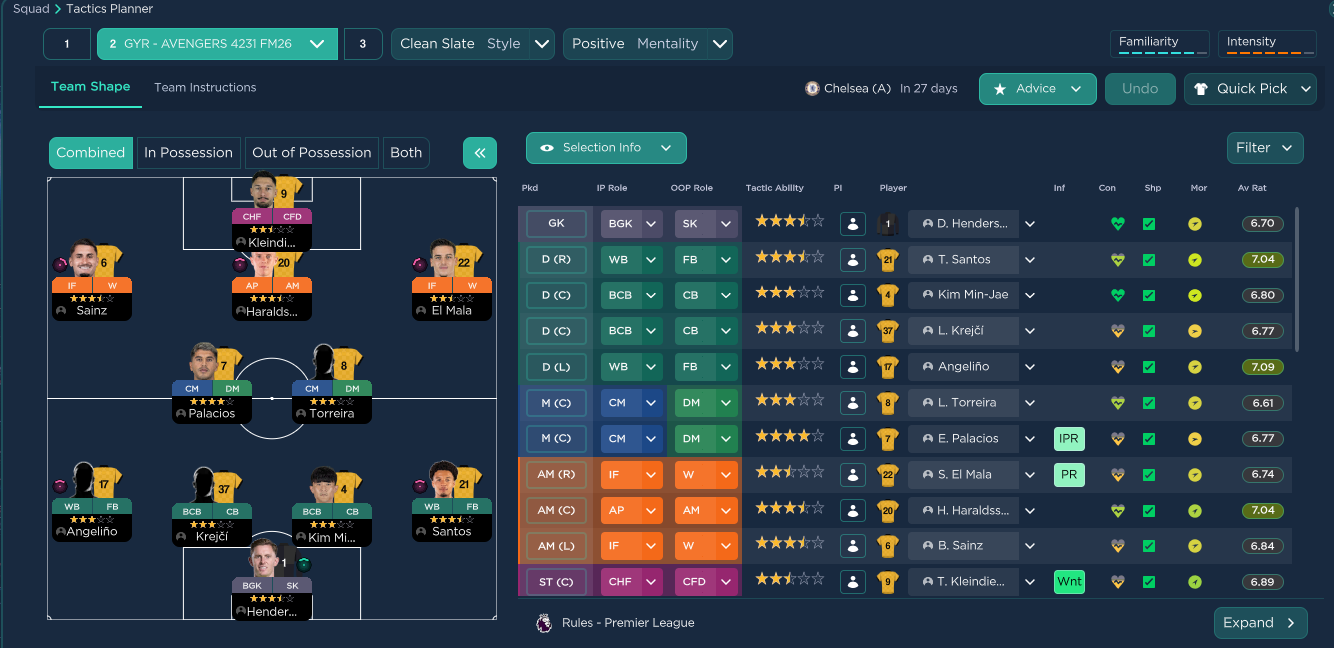
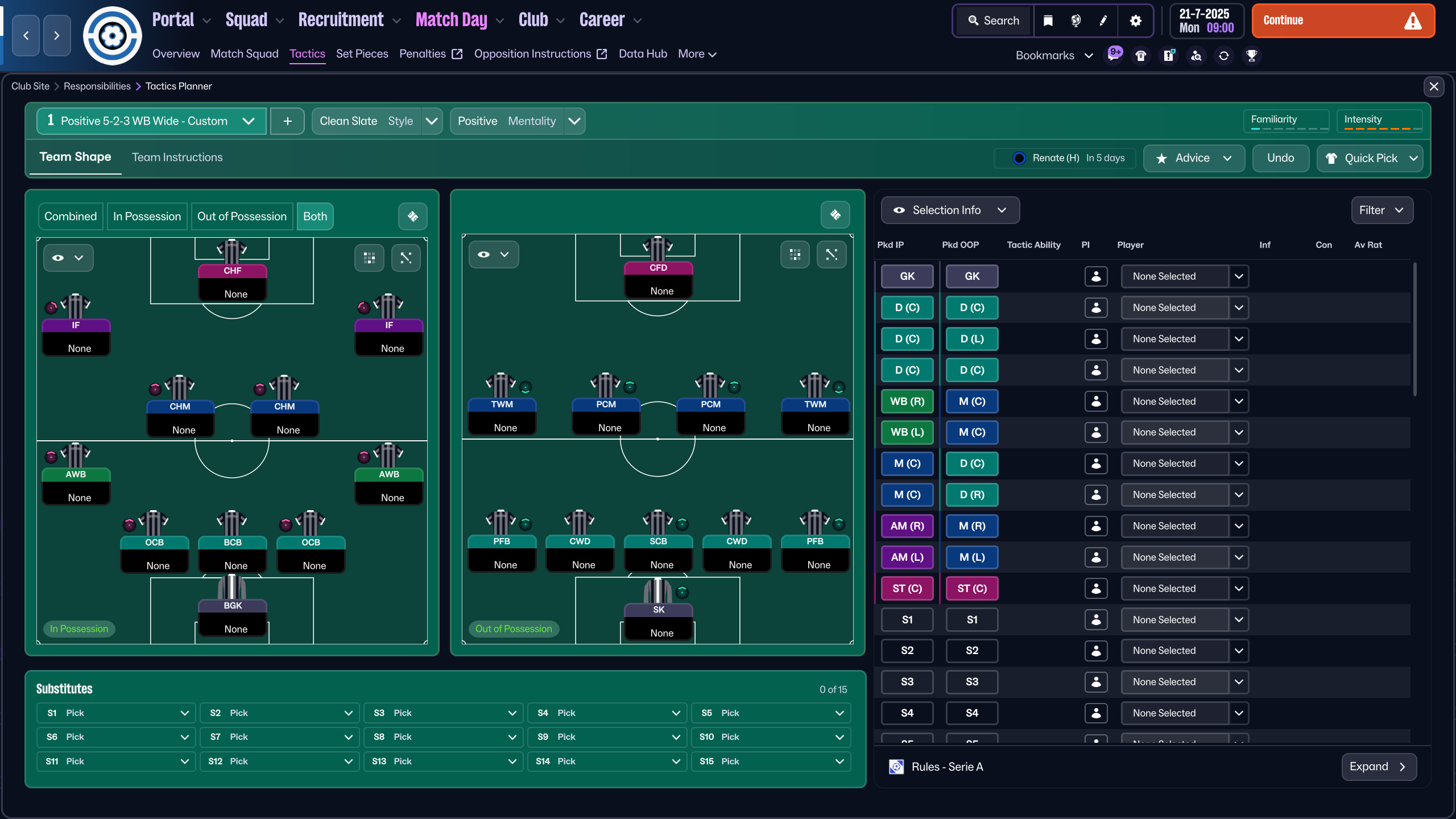
Formation:5-1-2-2 DM WB Asymmetric
Team Fluidity:Flexible
In Possession
Shorter Passing
Play Out Of Defence
Slightly Lower Tempo
In Transition
Take Short Kicks
Distribute To Centre-Backs
Distribute To Full-Backs
Counter-Press
Out of Possession
Mid Block
More Often
Prevent Short GK Distribution
Team Shape Without Ball
No team shape without ball data available
Team Shape With Ball
No team shape with ball data available
Key Strengths
Dynamic Attack
With two forwards, the formation allows for fluid attacking movements and options in the final third.
Strong Midfield Control
The presence of a Box to Box Midfielder and a Deep Lying Playmaker helps in dominating midfield battles.
Wing Play Options
Wing Backs on support duty provide width and crossing opportunities, stretching the opponent’s defense.
Flexibility in Defense
The three Ball Playing Defenders allow for varying play styles, whether building from the back or engaging offensively.
Conflicting Directions
Overlapping vs. Central Play
The use of Wing Backs may conflict with an emphasis on shorter passing, leading to inconsistent build-up.
Tempo Considerations
A slightly lower tempo may hinder quick transitions during counter-press situations.
Weak Influence of Key Players
Neglected key players such as Valencia may disrupt the team’s overall performance if they are not utilized effectively.
Full-Back Defensive Support
Wing Backs on support may leave gaps defensively, particularly against teams utilizing wide play.
Tactical Suggestions
Increase Tempo
Consider raising the tempo to enhance attacking movements during transitions and counter-press scenarios.
Adjust Wing Back Duties
Consider adjusting one Wing Back to an attack duty to create more depth in wide areas.
Utilize Key Players Effectively
Ensure that key players like Valencia are involved in build-up play to maximize their influence on the game.
Enhance Defensive Coverage
Consider adding a more defensive duty for one of the Wing Backs to provide better balance in the midfield.
Ask Questions About Your Lineup

More Positive tactics
Guides for this formation
The tactical theory behind the 5-1-2-2 DM WB Asymmetric: roles, instructions, and the trade-offs that decide whether the system holds up.