Formation & Style
Tactical Style:Positive
Mentality:Positive
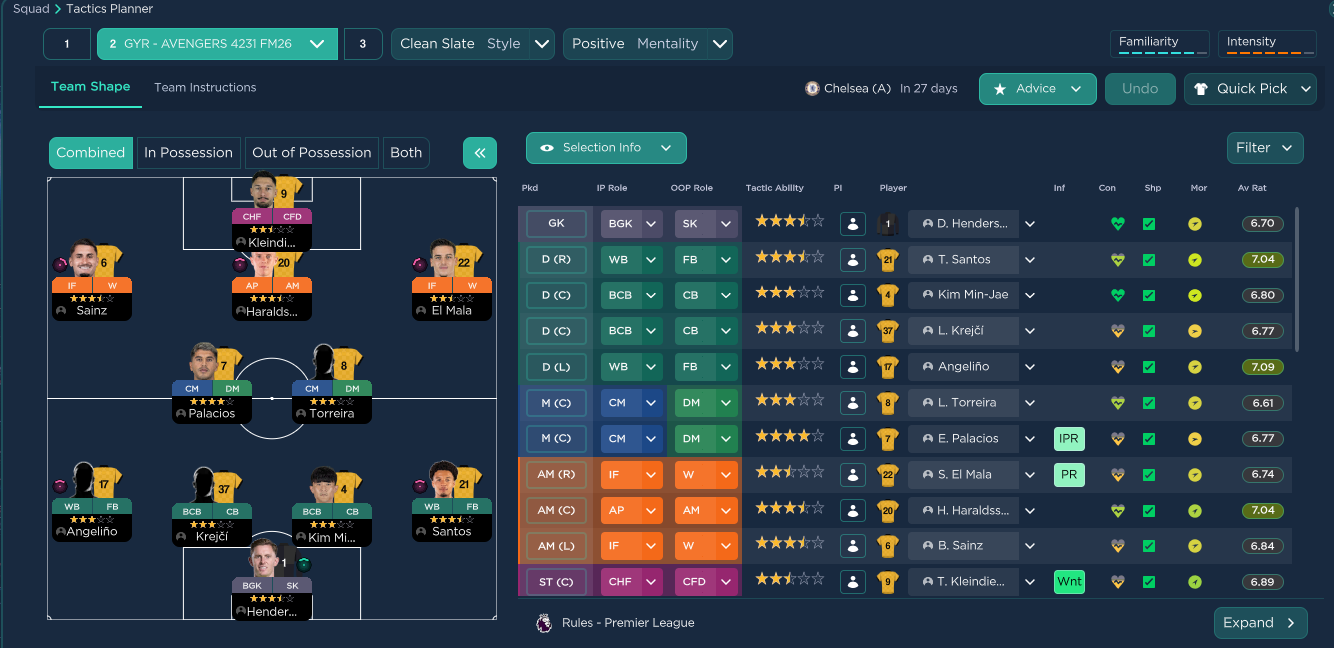
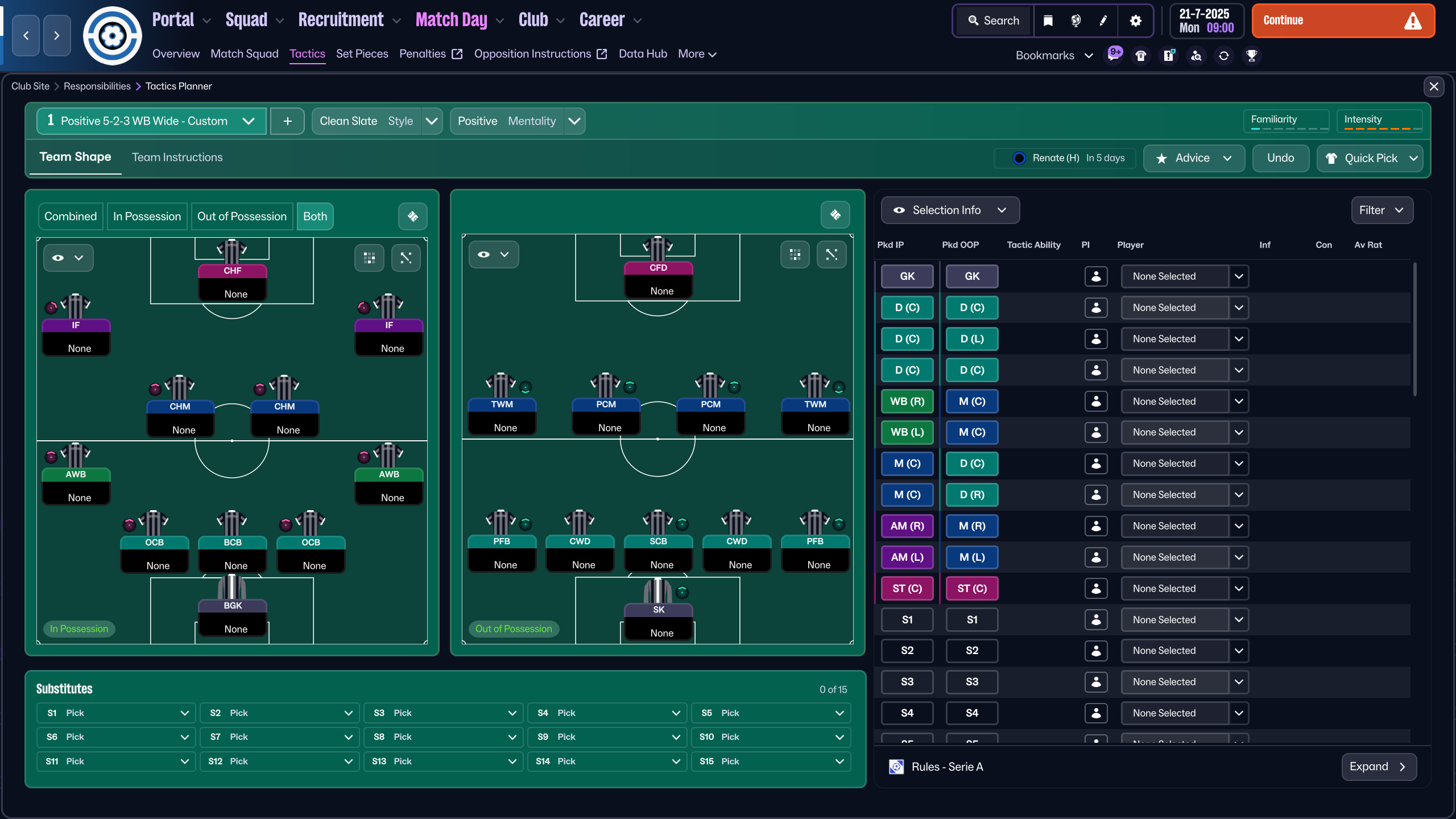
Formation:5-1-2-2 DM WB Asymmetric
Team Fluidity:Flexible
In Possession
Shorter Passing
Play Out From Defence
Play For Set Pieces
Slightly Lower Tempo
In Transition
Take Short Kicks
Distribute To Centre-Backs
Distribute To Full-Backs
Counter-Press
Out of Possession
Mid Block
More Often
Prevent Short GK Distribution
Team Shape Without Ball
No team shape without ball data available
Team Shape With Ball
No team shape with ball data available
Key Strengths
Versatile Attack
The asymmetric setup allows for flexibility in attack, leveraging wing-backs to stretch the opposition and create width.
Short Passing
The shorter passing instruction helps maintain possession and build up play from the back effectively.
Set-Piece Threat
With set-piece instructions, the team can capitalize on dead-ball situations, especially with taller players in the box.
Midfield Control
The presence of a Deep-Lying Playmaker and a Box-to-Box Midfielder allows for solid control and link-up in midfield.
Conflicting Directions
Mid Block vs. High Press
The team is more inclined towards a mid-block setup, which may conflict with the counter-pressing strategy, leading to gaps.
tempo and possession
A slightly lower tempo might conflict with a desire for quick transitions, slowing down counter-attacks.
Asymmetry Issues
An asymmetric formation could lead to overloading one side, leaving the opposite side exposed during defensive transitions.
Wing-Back Vulnerability
Playing with wing-backs can leave the flanks vulnerable to counter-attacks, especially if they push forward too often.
Tactical Suggestions
Adjust Defensive Line
Consider raising the defensive line to encourage more pressing and limit space for the opposition.
Increase Tempo
Pushing a higher tempo can aid in quick transitions and exploiting chances during counter-attacks.
Balance Wing-Back Duties
Evaluate the duties of the wing-backs to ensure they can effectively support both attack and defense.
Utilize Substitutes Wisely
Use substitutions strategically to maintain intensity and influence the game at critical moments.
Ask Questions About Your Lineup

More Positive tactics
Guides for this formation
The tactical theory behind the 5-1-2-2 DM WB Asymmetric: roles, instructions, and the trade-offs that decide whether the system holds up.