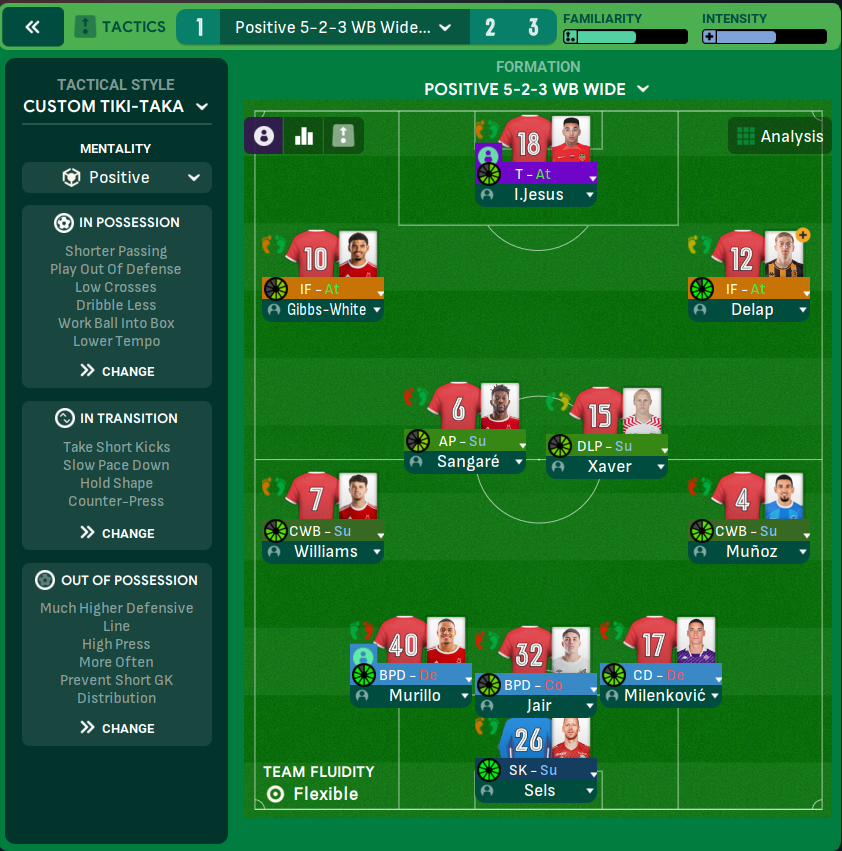
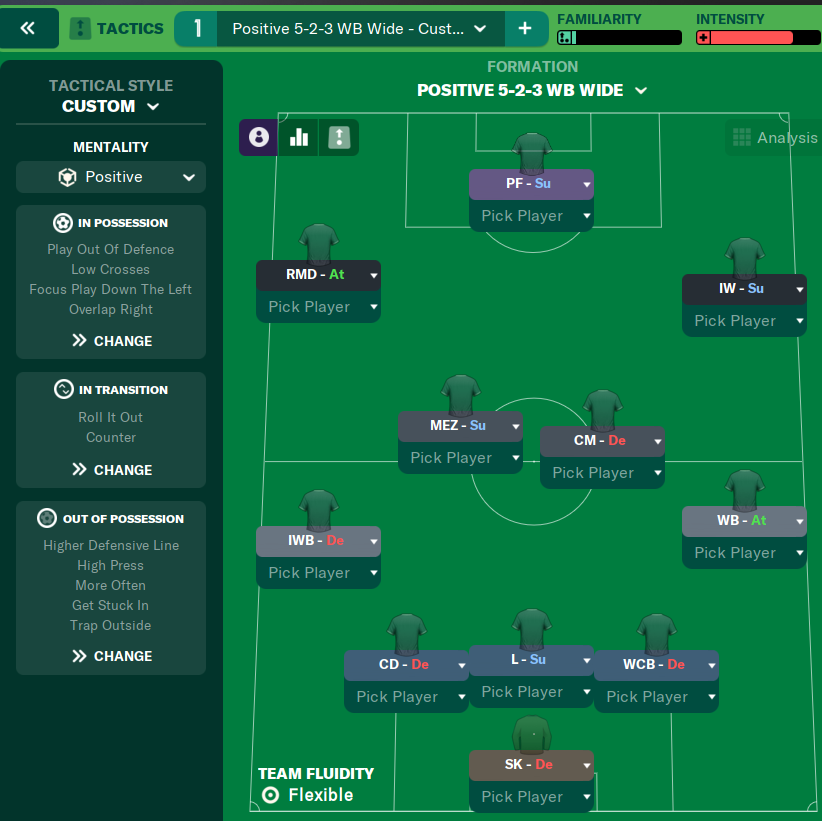
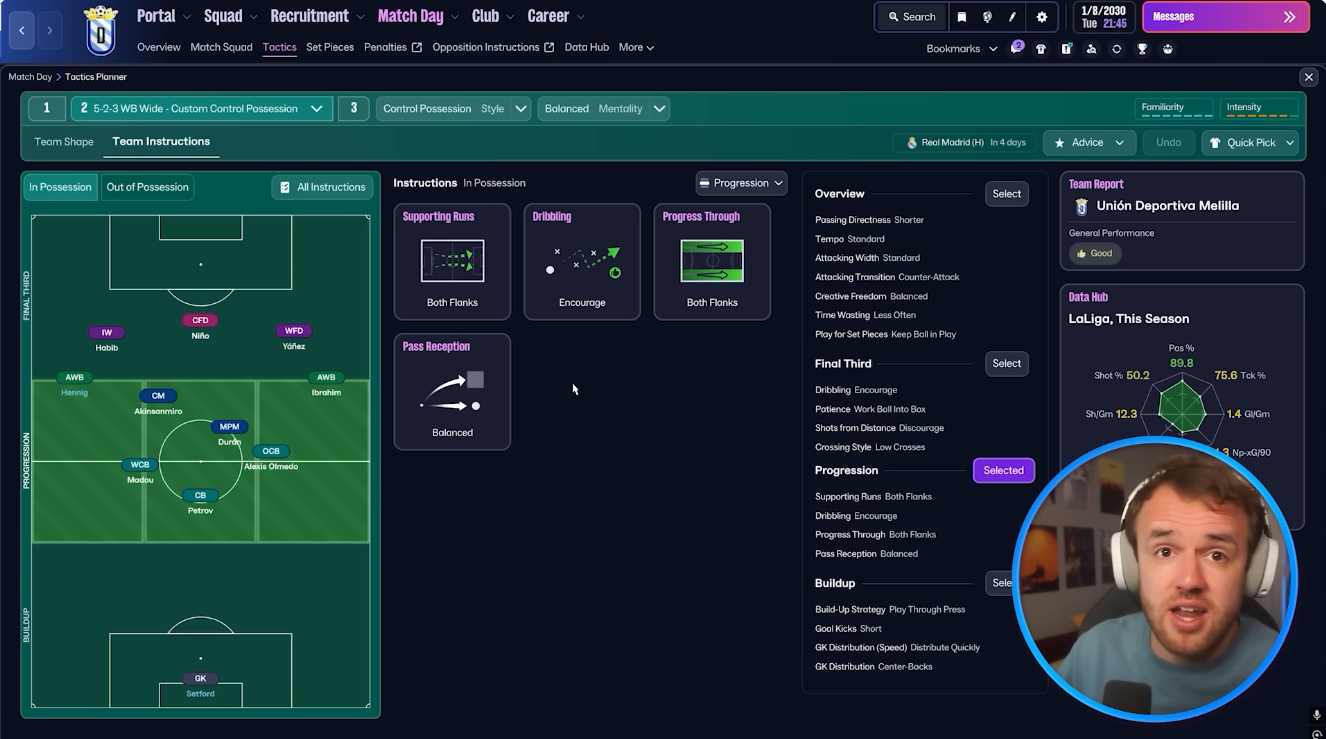
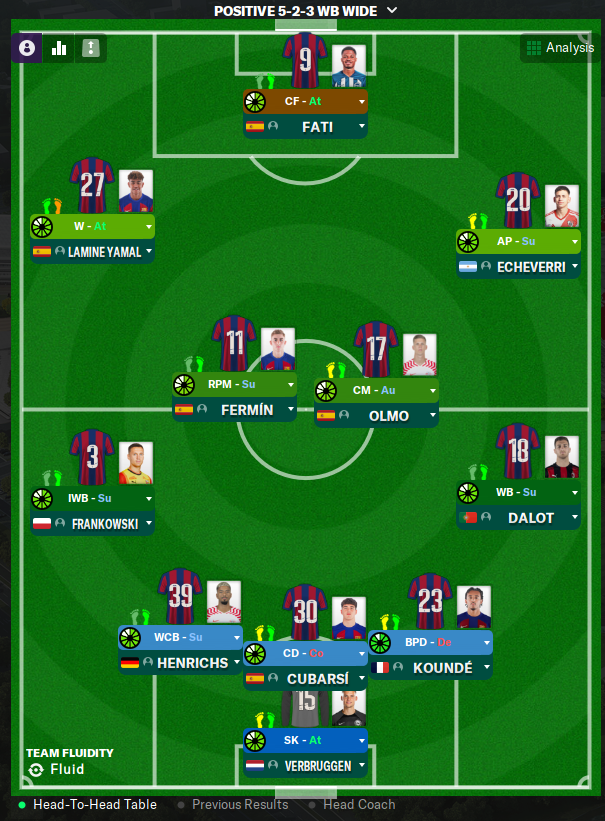
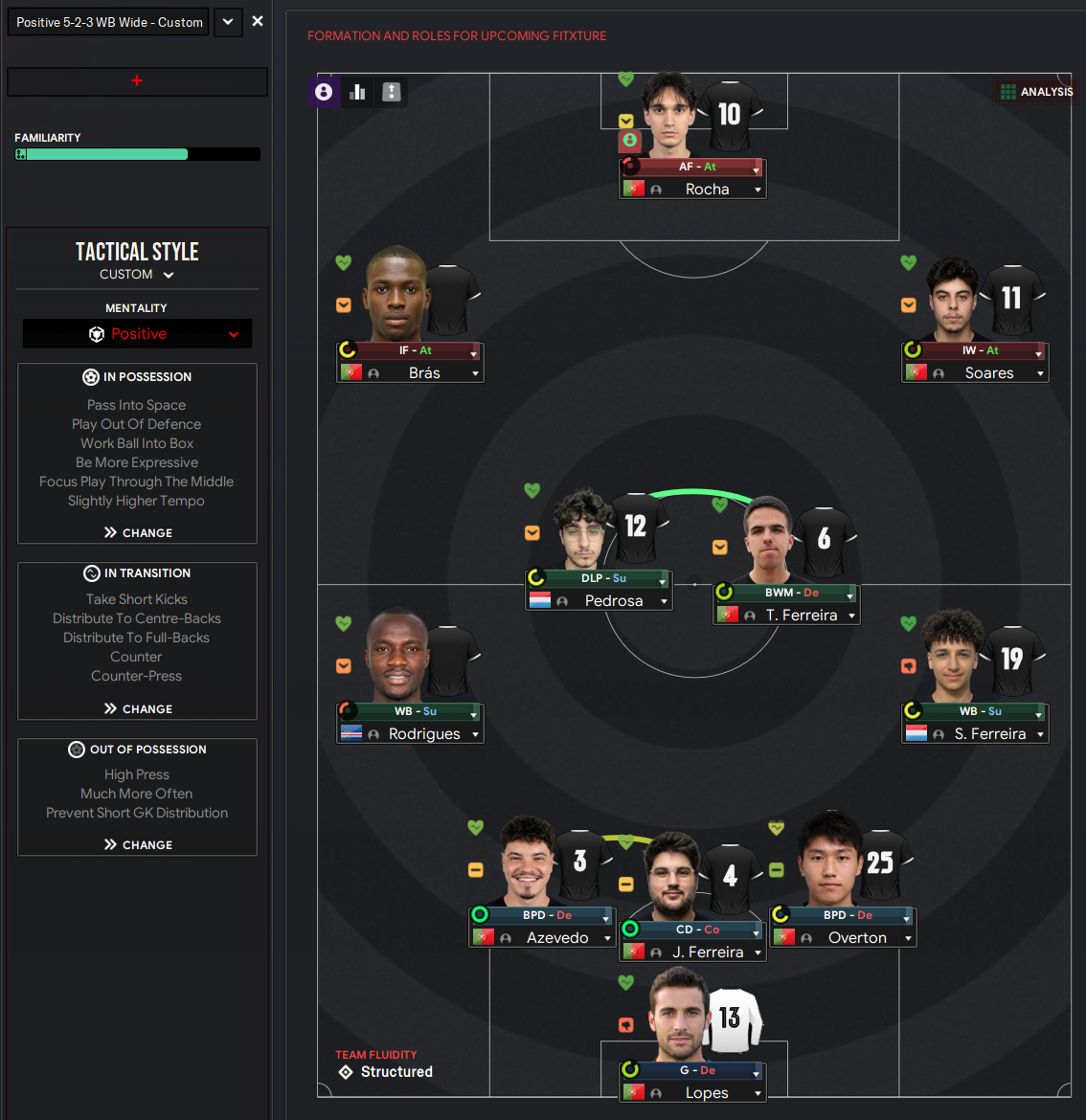
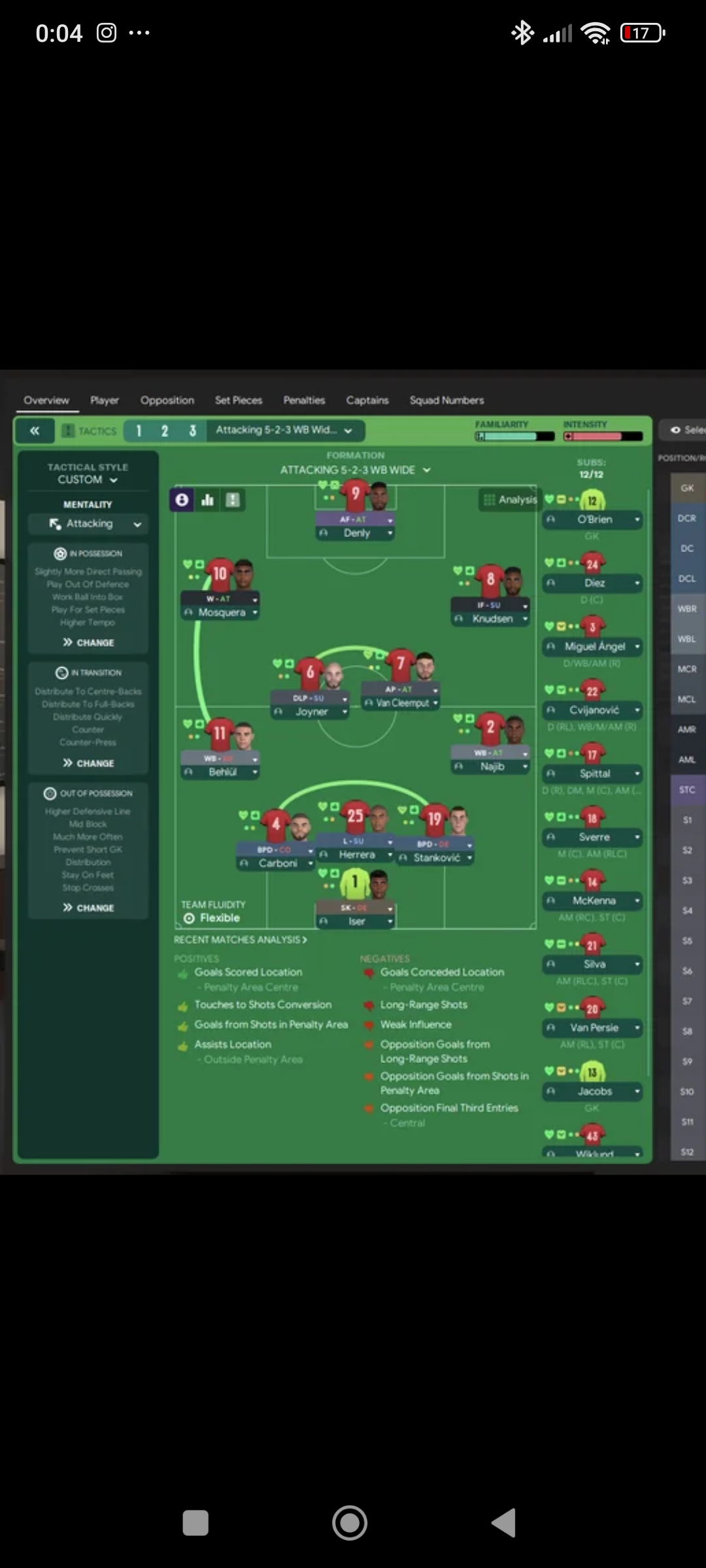
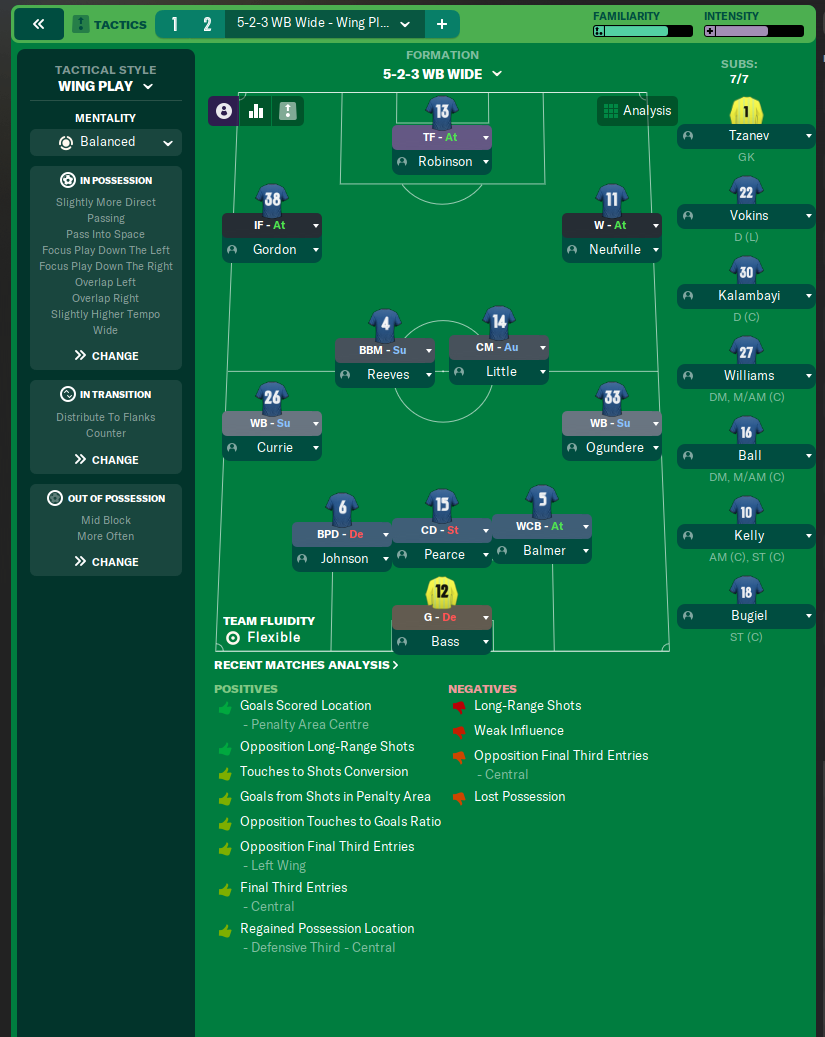
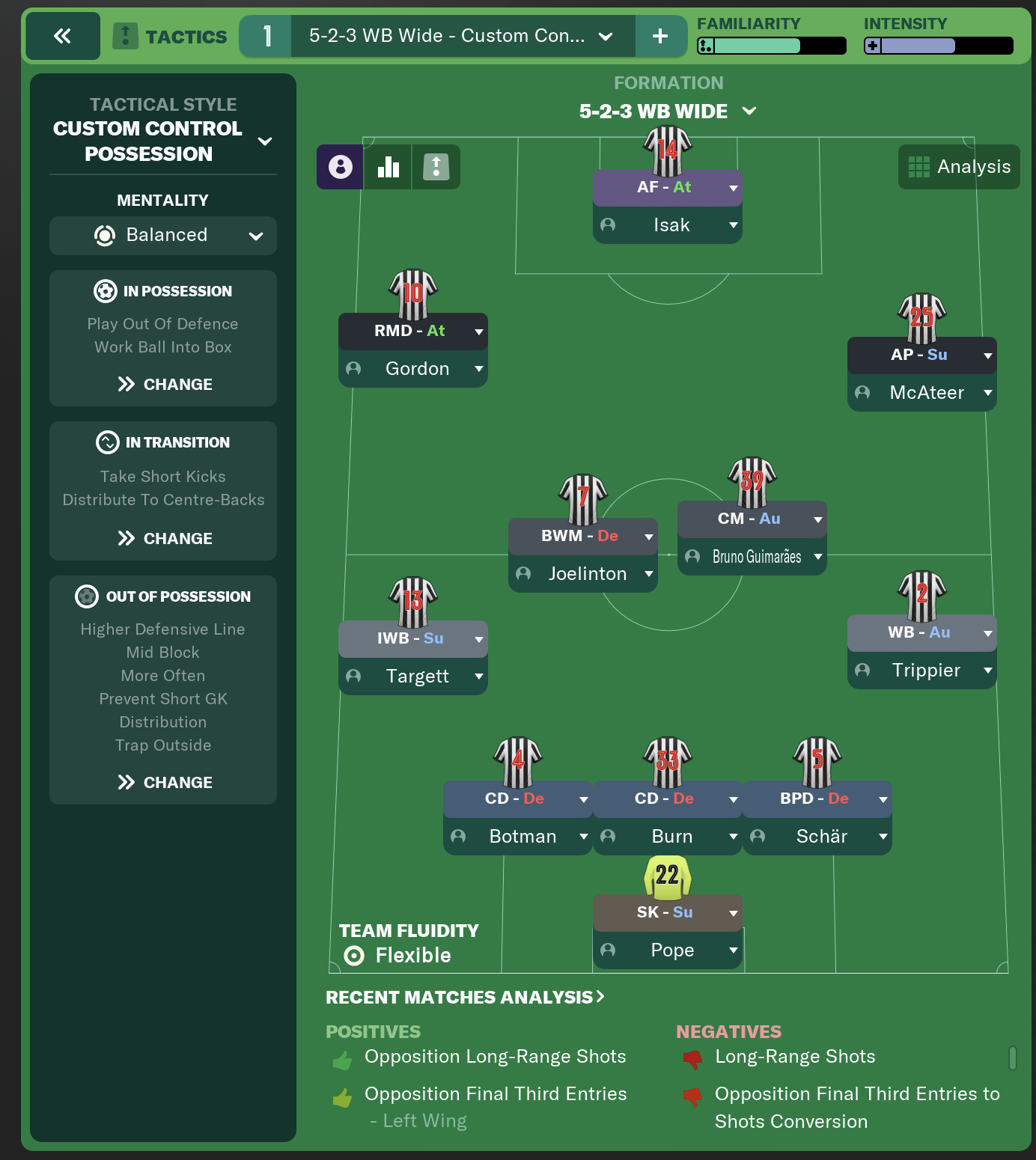
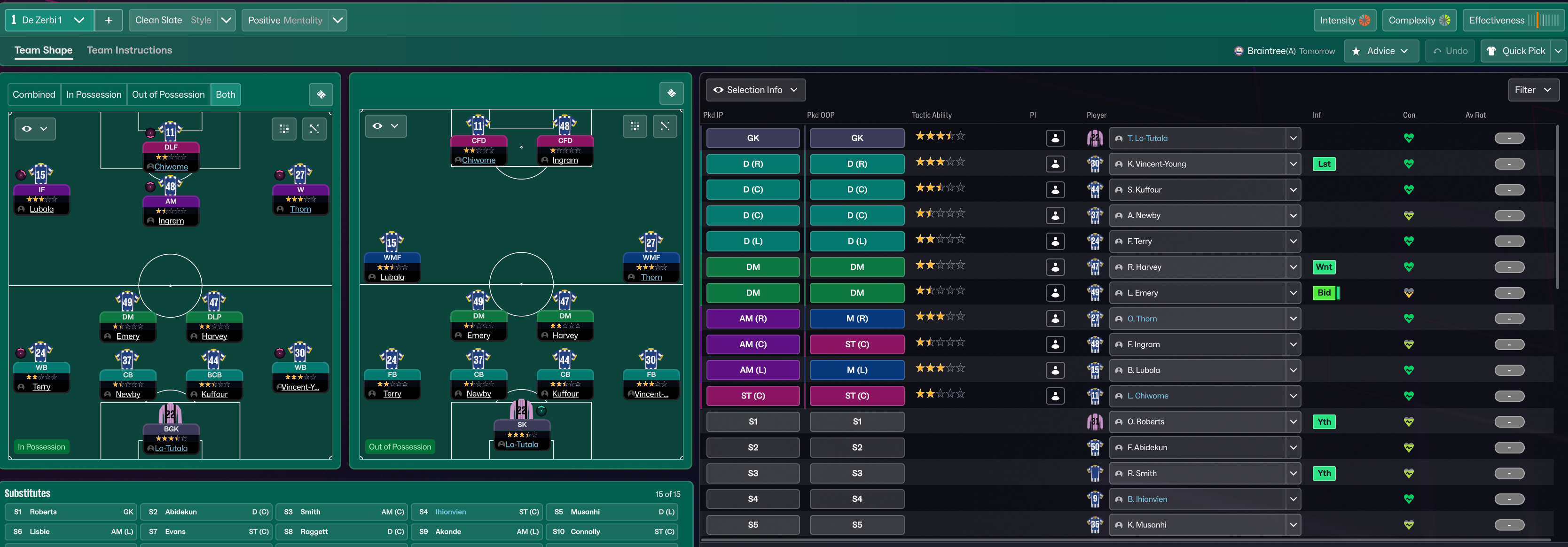
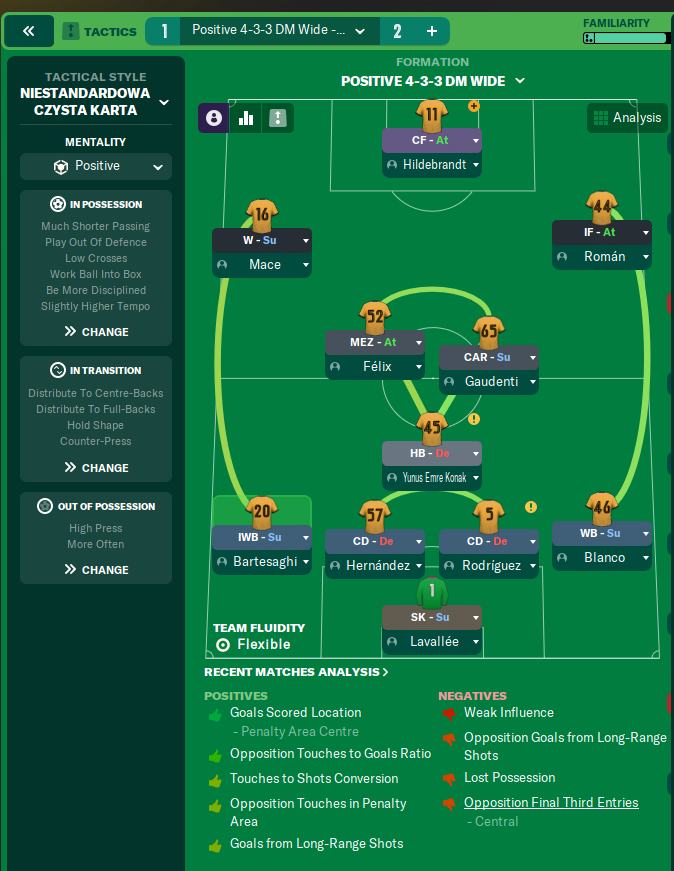
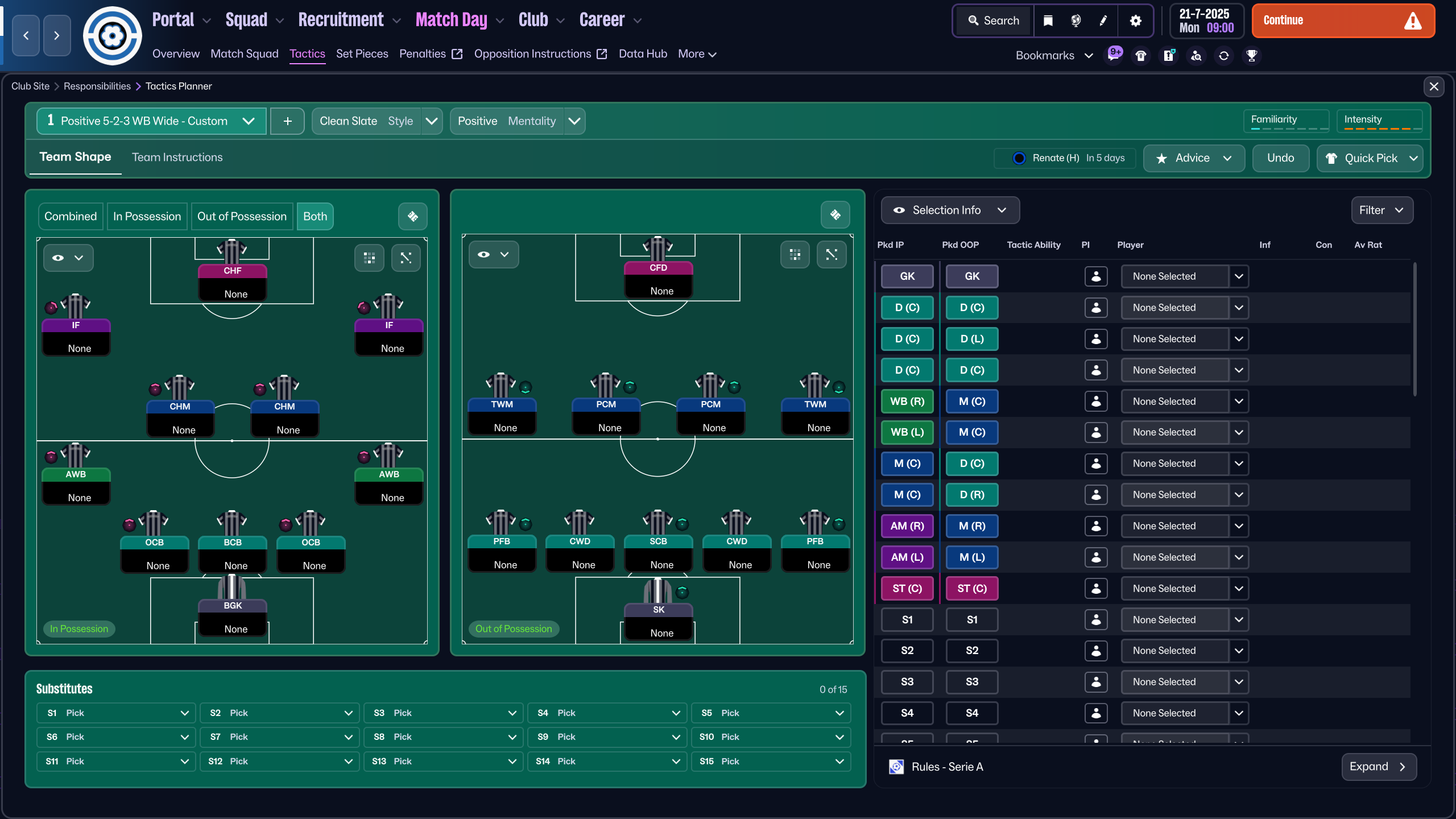
5-2-3 WB Wide
The primary focus is to create space for inside forwards while maintaining structural integrity across all lines. Wing-backs provide consistent width,…
Loading tactical analysis...
Positive
Positive
5-2-3 WB Wide
Play Out of Defence
Work Ball Into Box
Focus Play Down the Left
Focus Play Down the Right
Overlapping on the Left
Overlapping on the Right
Counter-Press
Counter
Higher Defensive Line
Higher Line of Engagement
Prevent Short GK Distribution
GK
Sweeper Keeper
Support
CB
Ball-Playing Defender
Defend
CB
Ball-Playing Defender
Defend
CB
Ball-Playing Defender
Defend
WB
Wing-Back
Attack
WB
Wing-Back
Attack
CM
Central Midfielder
Support
CM
Central Midfielder
Support
IF
Inside Forward
Attack
IF
Inside Forward
Attack
ST
Complete Forward
Attack
The team's approach involves using width effectively through the wing-backs and inside forwards, with a focus on quick transitions and overlaps.
In defensive transition, counter-pressing and maintaining a higher defensive line ensure tight control over the opponent's counter-attacks.
The primary focus is to create space for inside forwards while maintaining structural integrity across all lines.
5-2-3
A compact defensive shape with wing-backs providing width and central defenders securing the rear.
Three Ball-Playing Defenders at [2,2], [2,3], [2,4] with wing-backs providing additional depth.
3-2-3
Attacking shape utilizing width from wing-backs and inside forwards penetrating centrally.
Inside Forwards at [5,2] and [5,4], supported by CM and overlapping wing-backs.
Wing-backs provide consistent width, allowing inside forwards to exploit the space.
WB at [2,1] and [2,5] overlapping with IF at [5,2] and [5,4].
Three central defenders create a robust defensive structure.
CB at [2,2], [2,3], and [2,4] ensuring solid compactness against attacking threats.
While pressing high can force turnovers, it may expose the back line against quick counter-attacking teams.
Higher Defensive Line with a higher line of engagement can create space behind.
Overlapping play may become predictable; teams could exploit the center.
Utilizing extensive overlap may limit central progression and passing options.
Counter-Pressing
High pressing may leave gaps if unsuccessful.
Higher line of engagement at risk of leaving defenders exposed.
Width Vulnerability
Dependent on wing-backs; any injury could compromise width.
Reliance on overlapping wing-backs at [2,1] and [2,5].
Wing-Back and Inside Forward
Synergy in width allows for extensive overlapping runs.
WB at [2,1] and IF at [5,2] facilitating space.
Central Midfielder and Complete Forward
Supportive play between CM and CF enhances offensive chances.
CM at [3,3] can feed into CFD at [6,3].
How can the team maintain defensive structure against counter-attacks?
What adjustments can be made to enhance midfield connectivity?
Should we consider substituting inside forwards for more traditional wingers?
The tactical theory behind the 5-2-3 WB Wide: roles, instructions, and the trade-offs that decide whether the system holds up.
The deliberate underdog tactic in FM: formation choices, duty distribution, and why Counter-Press is exactly wrong inside a low block.
Pass map, average position, xG, possession by zone: what each tablet panel tells you in FM and the tactical change it should trigger.
FM27 keeps FM26's tactic system. Here is what stays the same, the small changes that can catch you out, and what the new Tactical Effectiveness system asks of you.