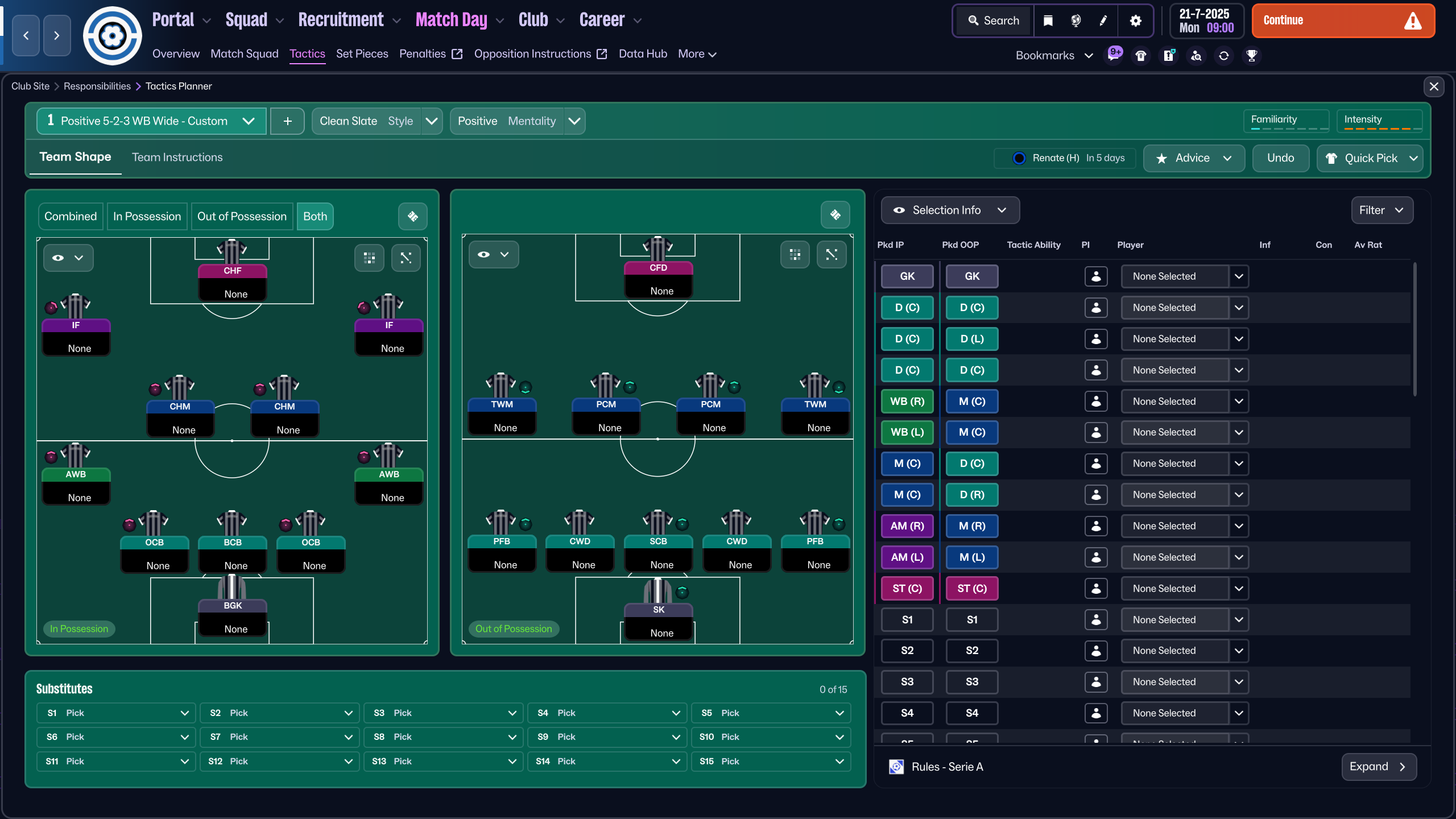
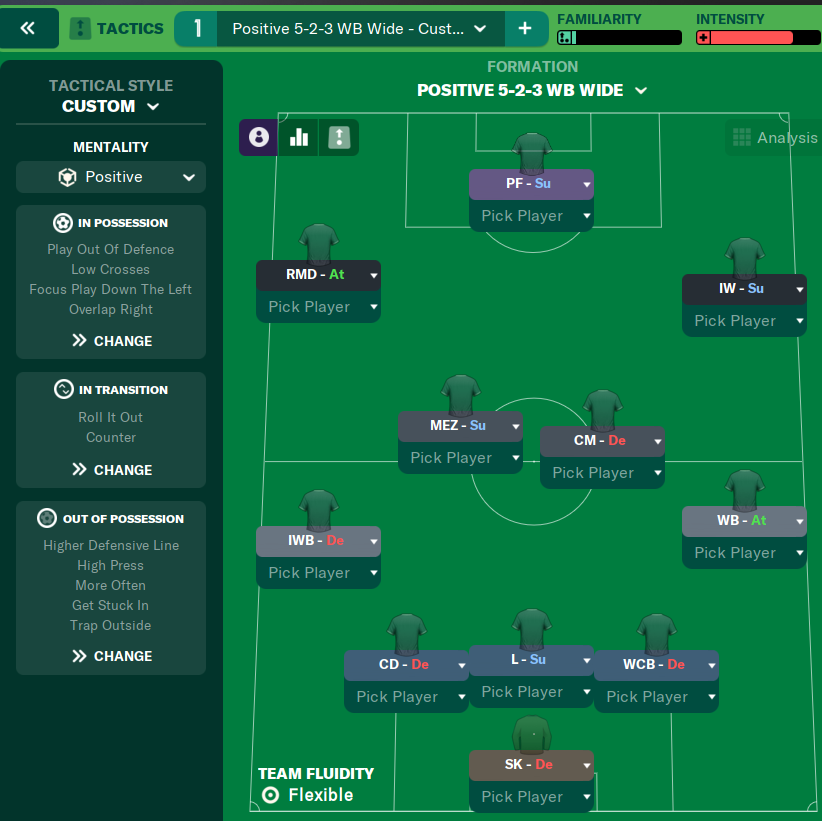
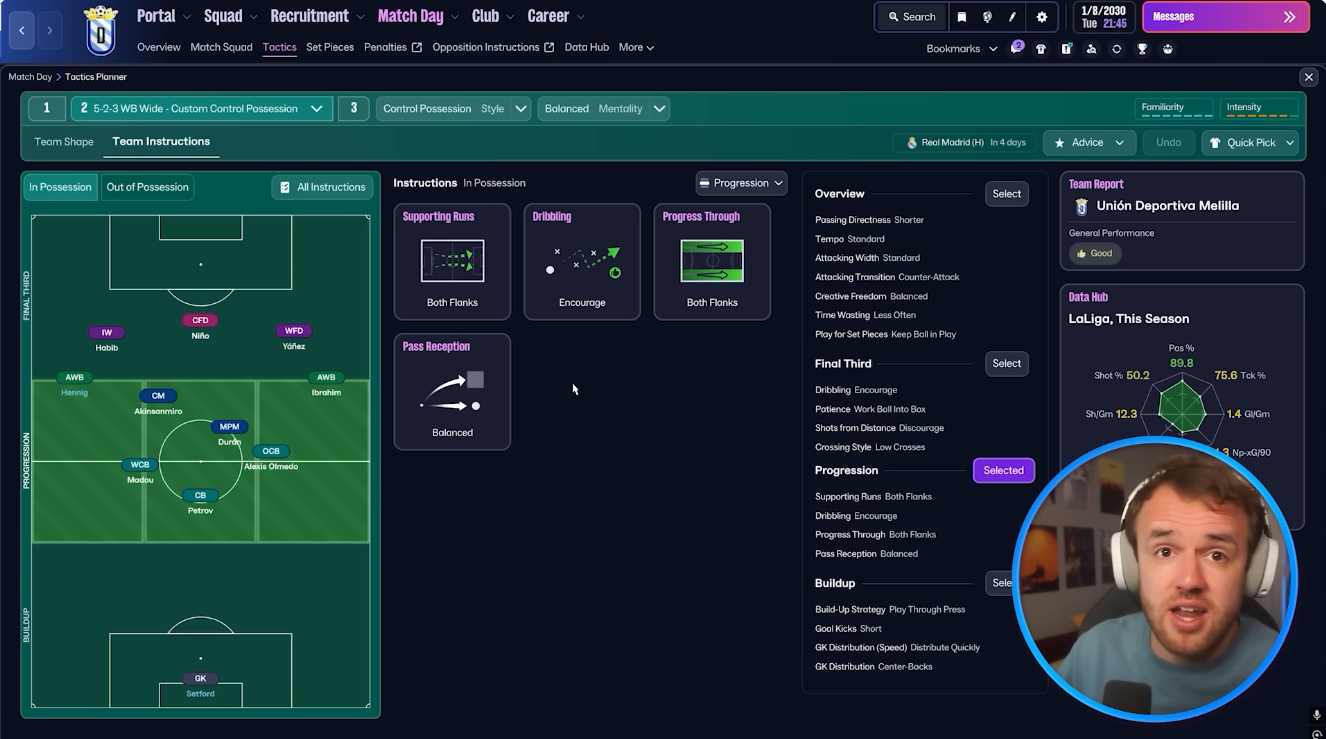
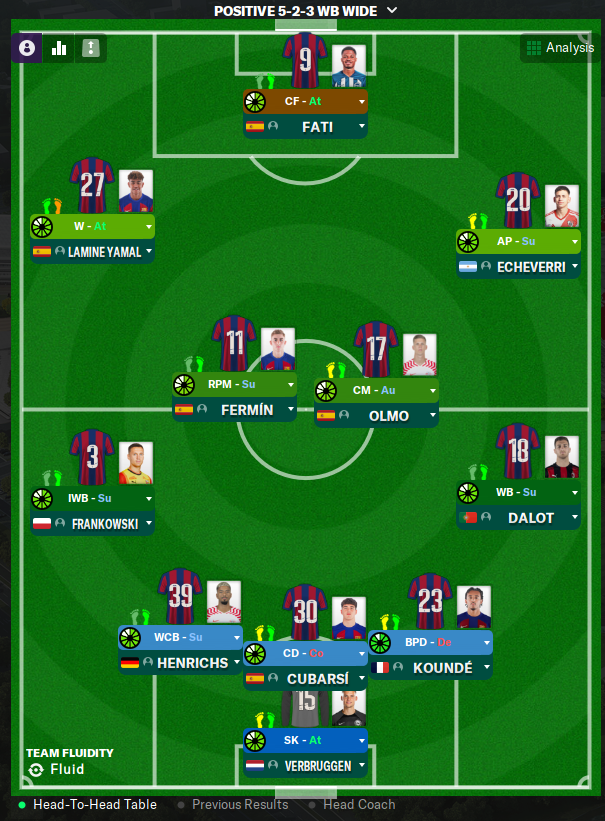
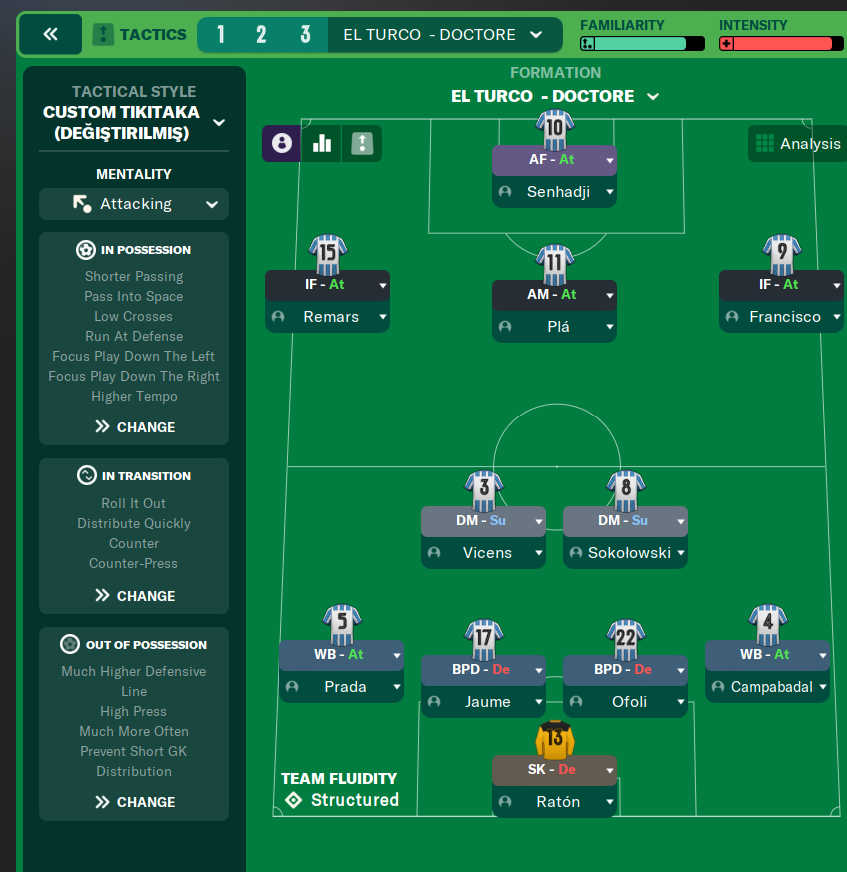
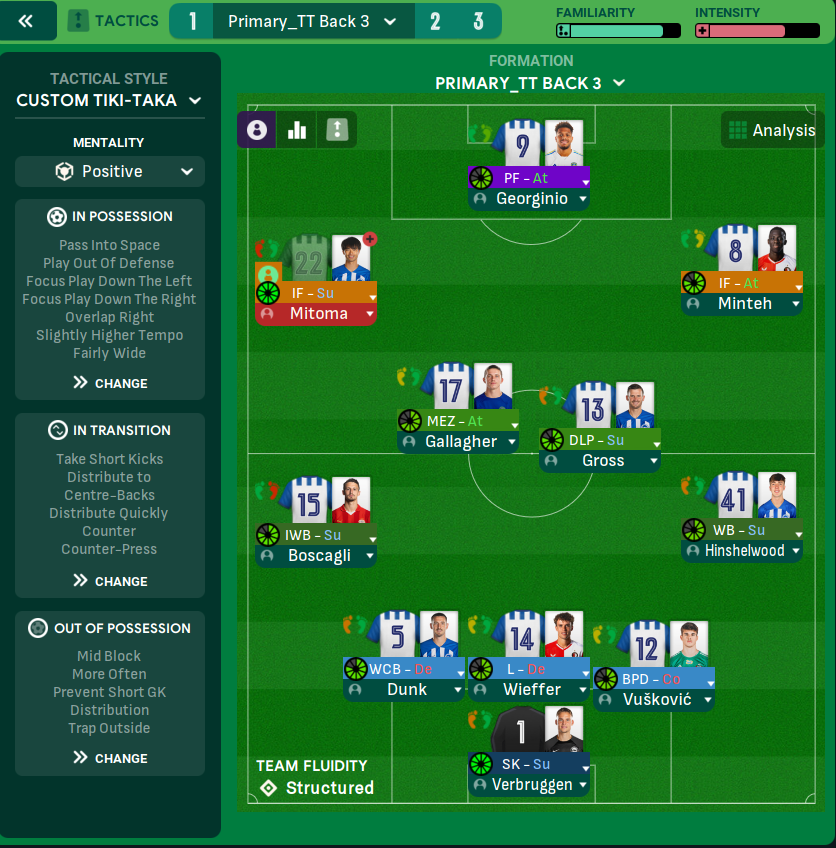
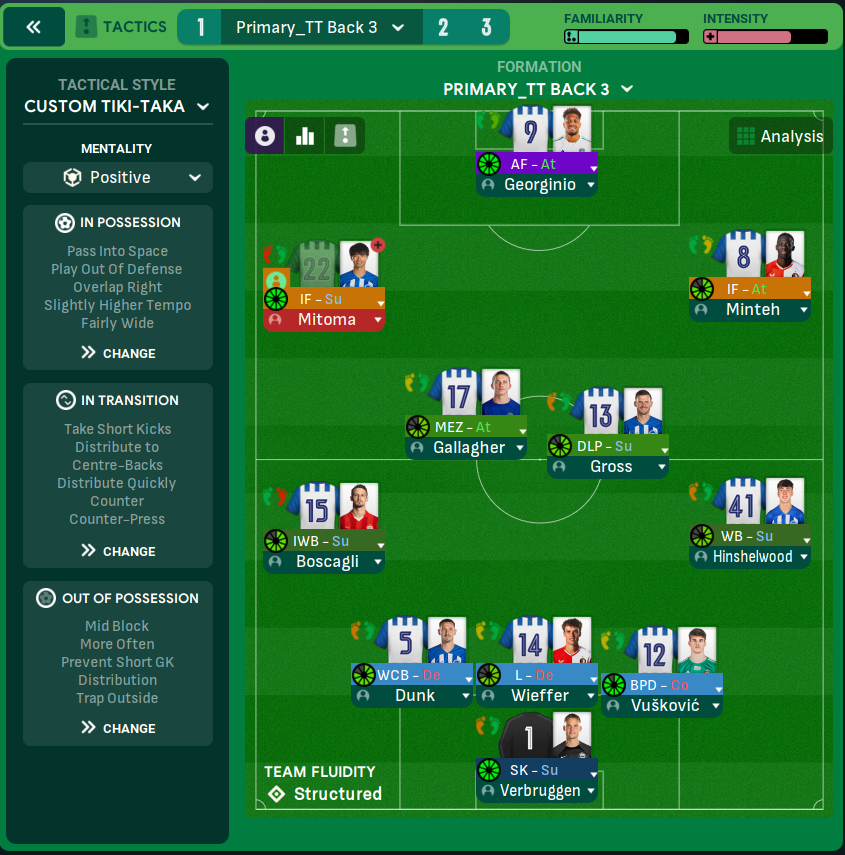
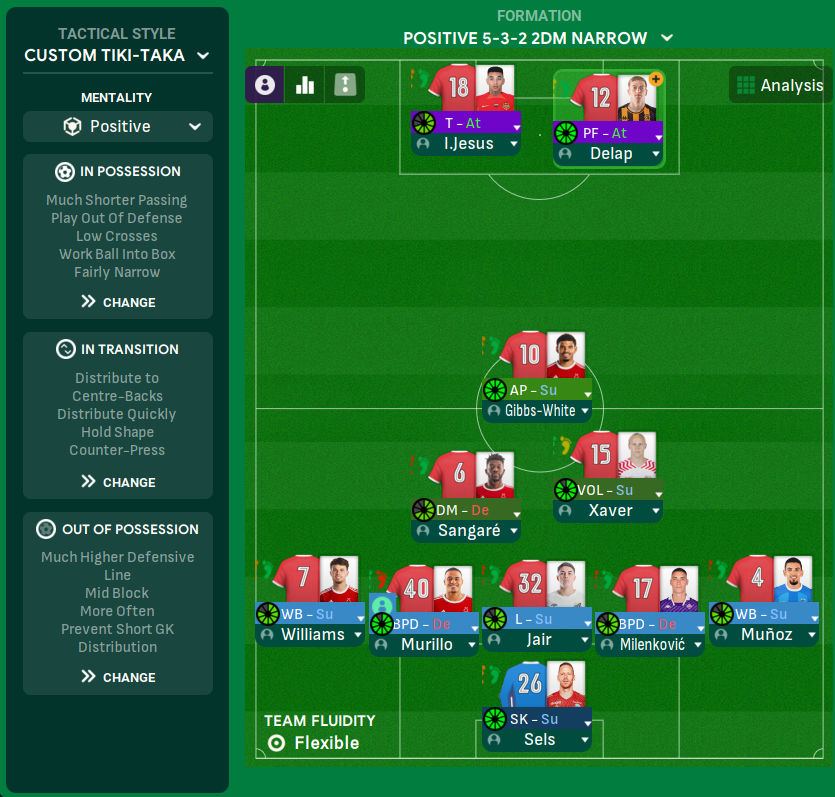
5-2-3 WB Wide
Prioritizes controlling the game through possession while exploiting width using wing-backs. The 5-2-3 formation provides defensive stability with three…
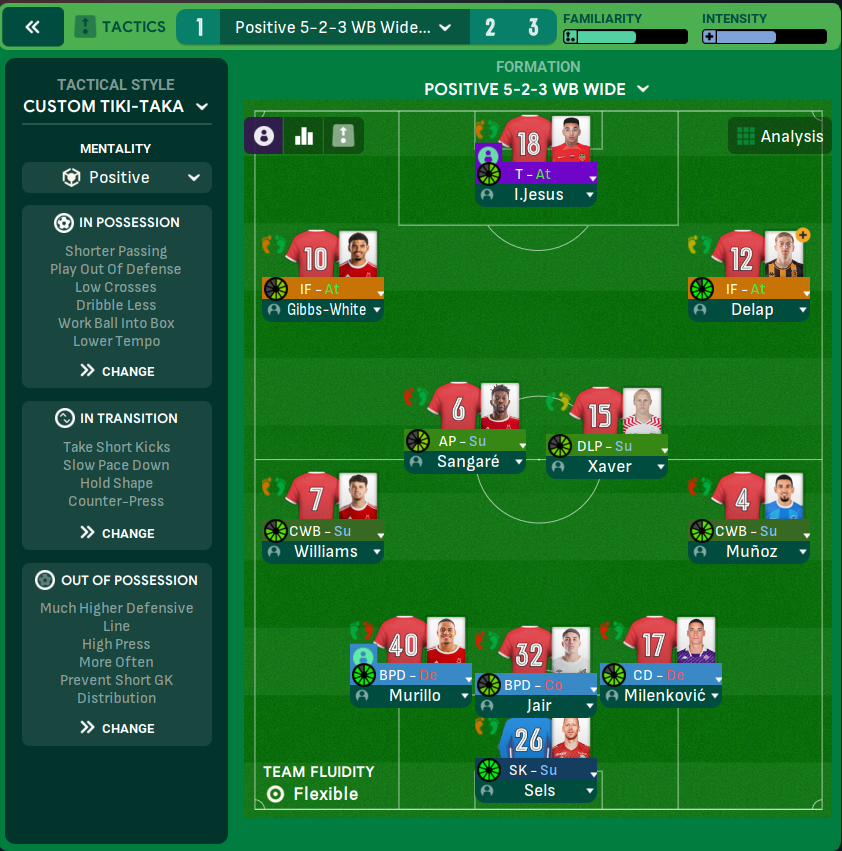
Loading tactical analysis...
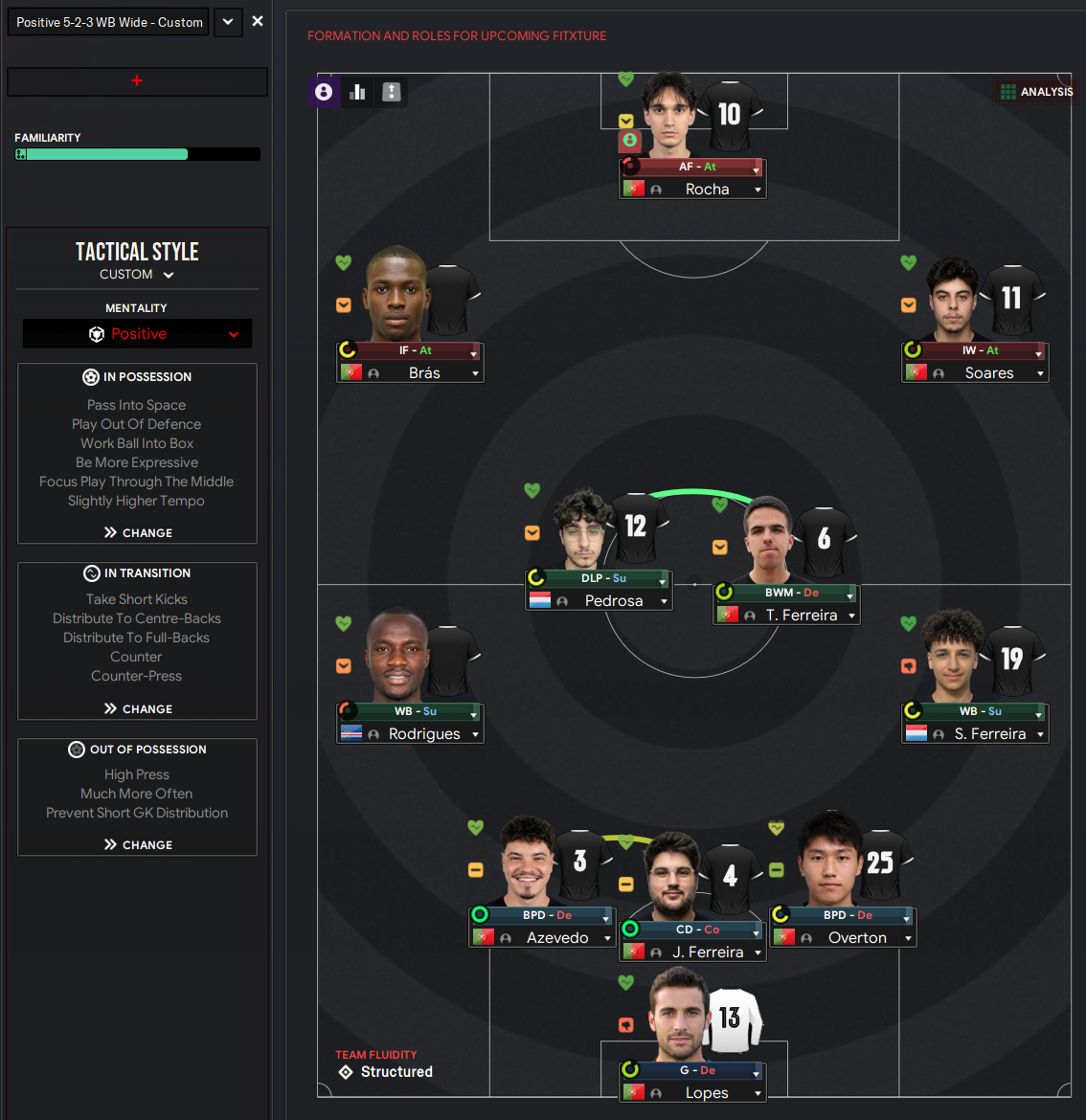
Custom Tiki-Taka
Positive
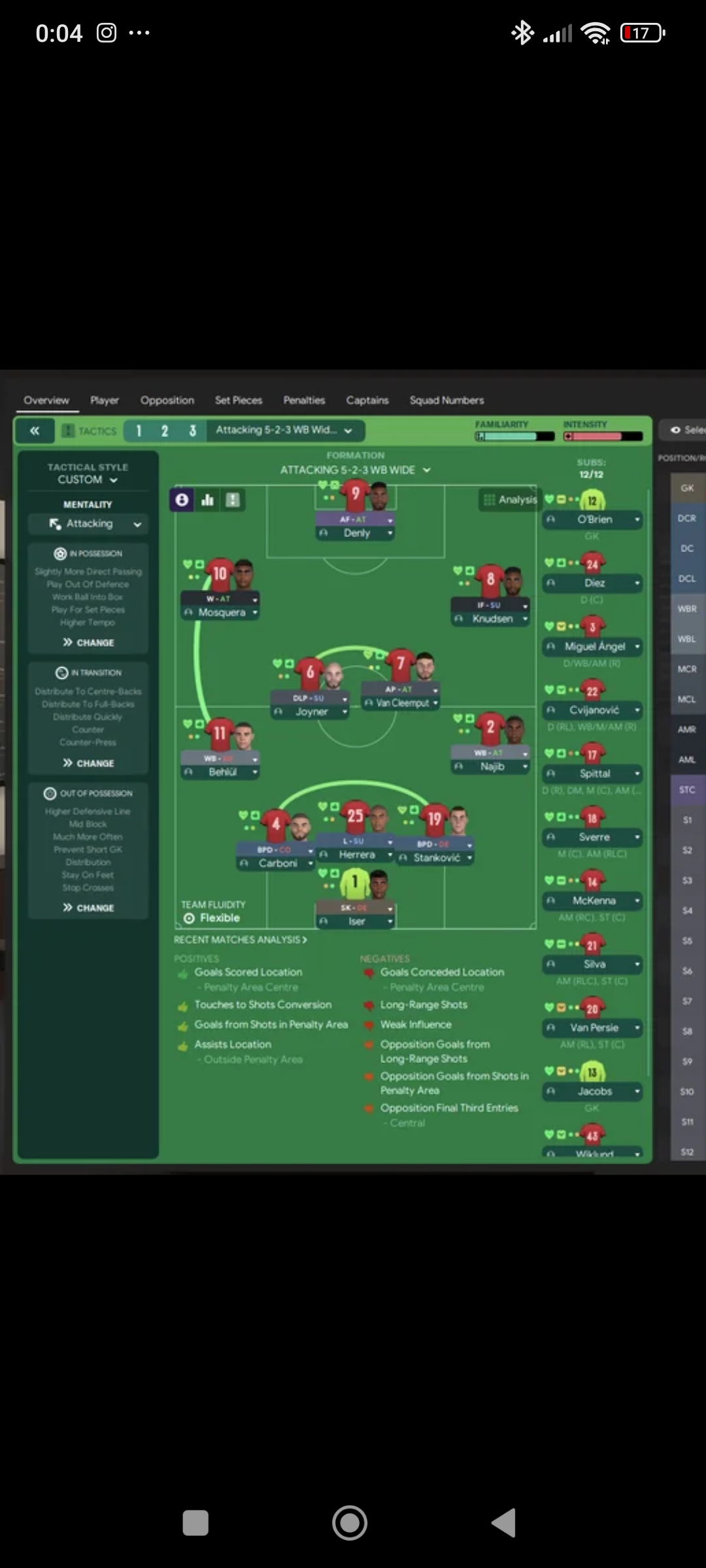
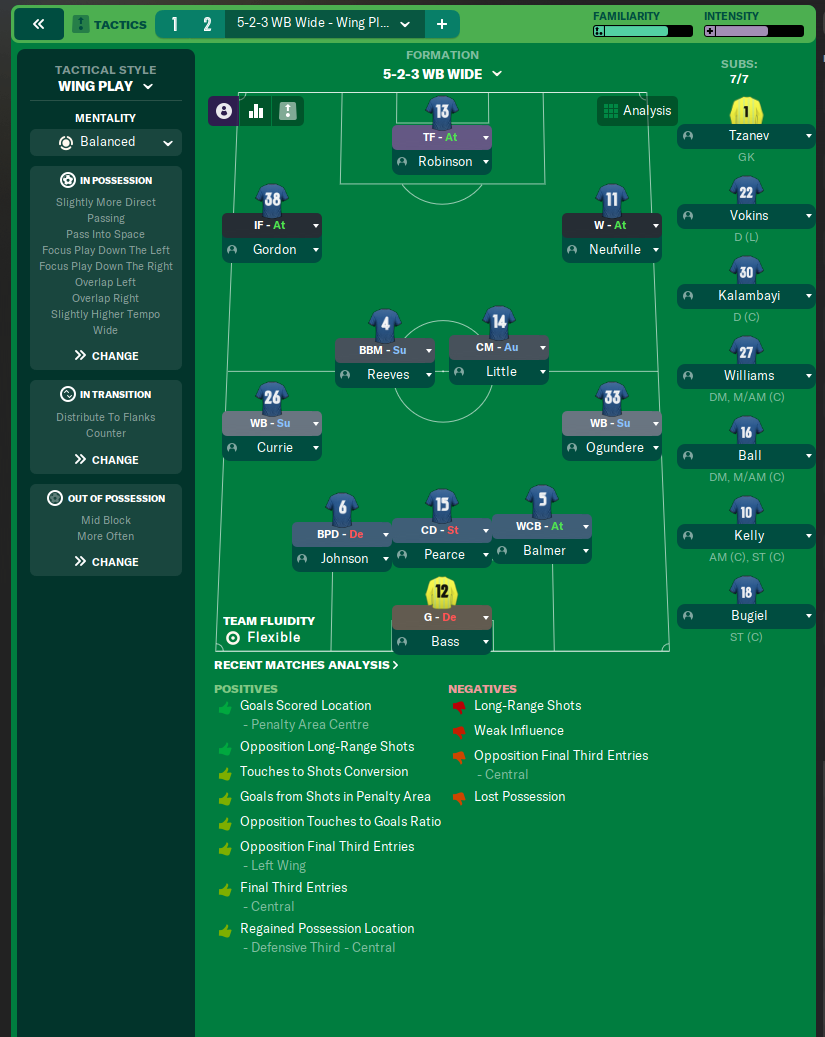
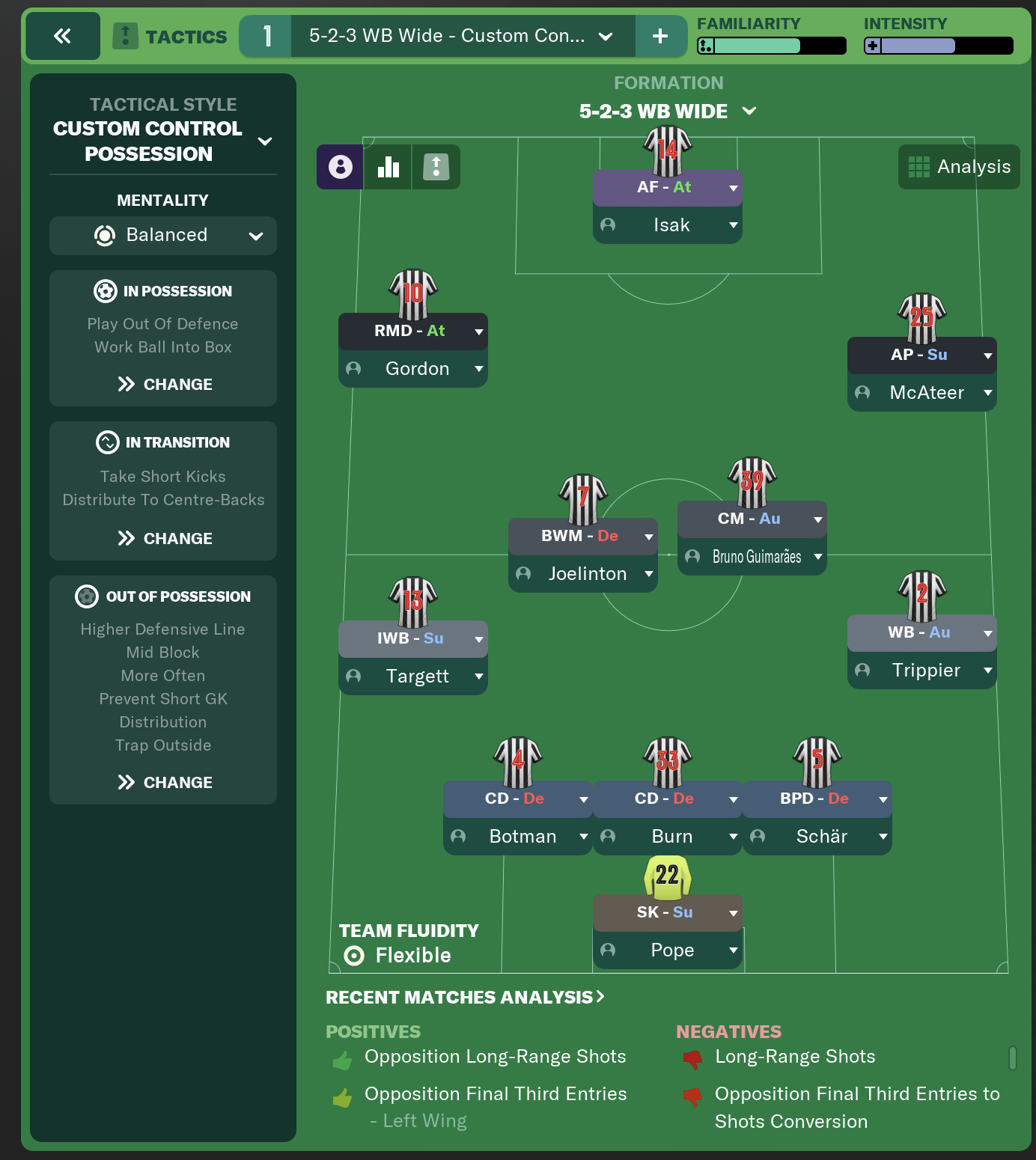
5-2-3 WB Wide
Flexible
Shorter Passing
Play Out of Defense
Low Crosses
Dribble Less
Work Ball Into Box
Lower Tempo
Take Short Kicks
Slow Pace Down
Hold Shape
Counter-Press
Much Higher Defensive Line
High Press More Often
Prevent Short GK Distribution
GK
Sweeper Keeper
De
CB
Ball-Playing Defender
Co
CB
Ball-Playing Defender
De
CB
No-Nonsense Centre-Back
De
CWB
Complete Wing-Back
Su
CWB
Complete Wing-Back
Su
CM
Advanced Playmaker
Su
CM
Deep-Lying Playmaker
Su
IF
Inside Forward
At
IF
Inside Forward
At
ST
Target Forward
At
Focuses on building from the back with short passing and working the ball into the box, promoting a patient approach.
Upon losing possession, players initiate a counter-press to regain control quickly.
Prioritizes controlling the game through possession while exploiting width using wing-backs.
5-2-3
Compact defensive block with back five holding shape and looking to engage high up the pitch.
The use of a much higher defensive line combined with a high press.
5-2-3
Utilizes the width provided by the complete wing-backs to stretch the opposition and create space for inside forwards.
The presence of CWB-Su and Inside Forwards (IF-A) enhances attacking dynamics.
The 5-2-3 formation provides defensive stability with three centre-backs and two wing-backs supporting the defense.
BPD-Co at [2,2], BPD-De at [2,3], and NCB-De at [2,4] secure the backline.
The team is designed to dominate the ball with shorter passing and a focus on building play patiently.
DLP-Su at [3,3] and AP-Su at [4,3] are essential for maintaining possession.
The team's high press may leave gaps if not executed with precision, leading to vulnerability during counters.
High Press is stated in 'Out of Possession', but with a high defensive line, it may stretch the team.
Relying heavily on counter-press may exhaust players, especially the central midfielders.
Slow Pace Down in 'In Transition' combined with Counter-Press could tire players quickly.
Defensive Transitions
High defensive line and opposition counters can exploit gaps left during transitions.
Vulnerability due to 'Much Higher Defensive Line' and 'High Press More Often.'
Over-reliance on Wing-Backs
If wing-backs advance too high, it can expose the backline to counter-attacks.
CWB-Su roles at [2,1] and [2,5] with higher positioning can leave CBs isolated.
DLP-Su and AP-Su
These roles complement each other by providing flexibility in passing options and build-up play.
DLP-Su at [3,3] and AP-Su at [4,3] enable fluid transitions in midfield.
CWB-Su with Inside Forwards
The wing-backs assist in creating width, allowing the inside forwards to cut inside for goal attempts.
CWB-Su at [2,1] and [2,5] support IF-A at [5,2] and [5,4].
How does the team cope with counter-attacks?
What adjustments can be made to improve midfield resilience?
How will player fatigue be managed during high-press situations?
The tactical theory behind the 5-2-3 WB Wide: roles, instructions, and the trade-offs that decide whether the system holds up.
The deliberate underdog tactic in FM: formation choices, duty distribution, and why Counter-Press is exactly wrong inside a low block.
FM27 keeps FM26's tactic system. Here is what stays the same, the small changes that can catch you out, and what the new Tactical Effectiveness system asks of you.
How Mentality, Duty, and Role interact in FM, why duty trumps mentality every time, and the role-on-top-of-duty composition rules.