Uploaded Tactic
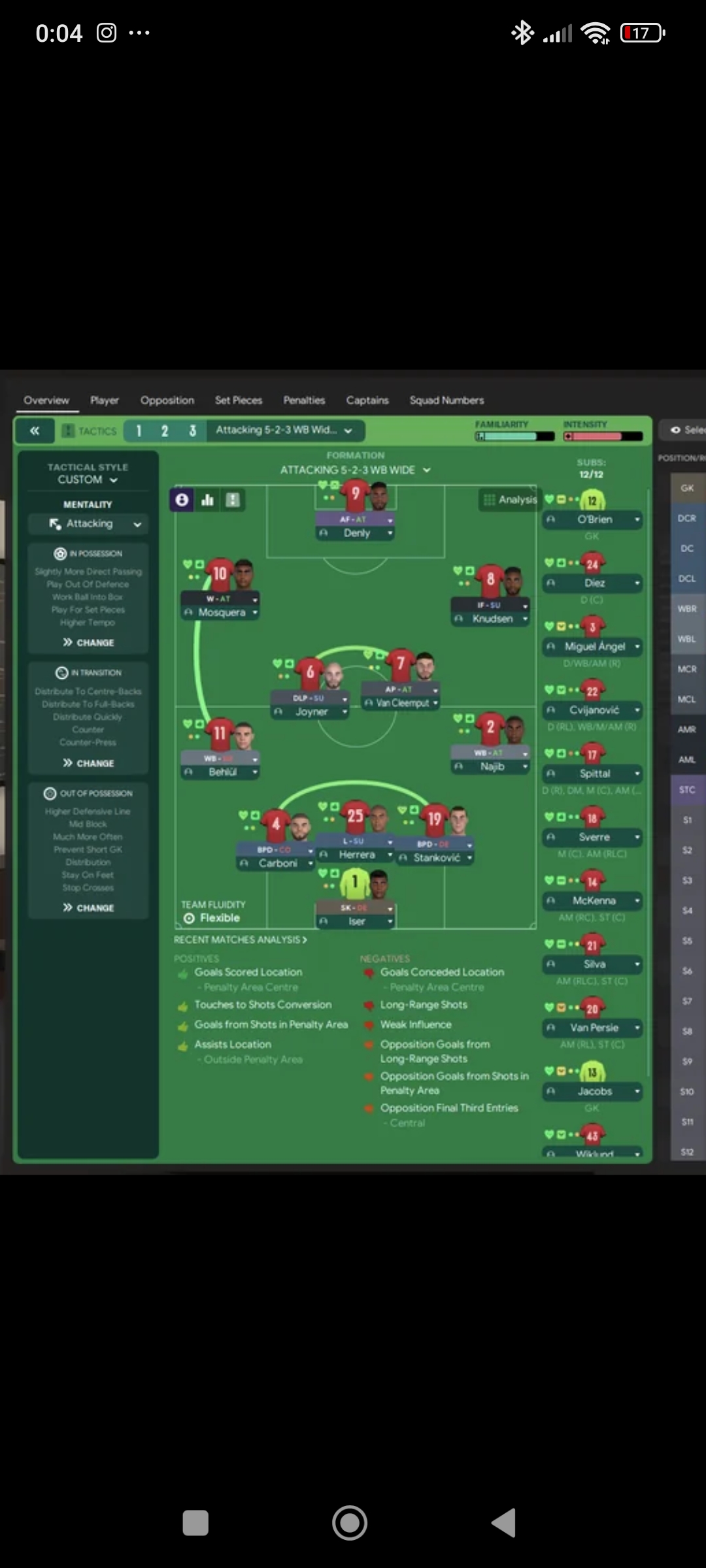
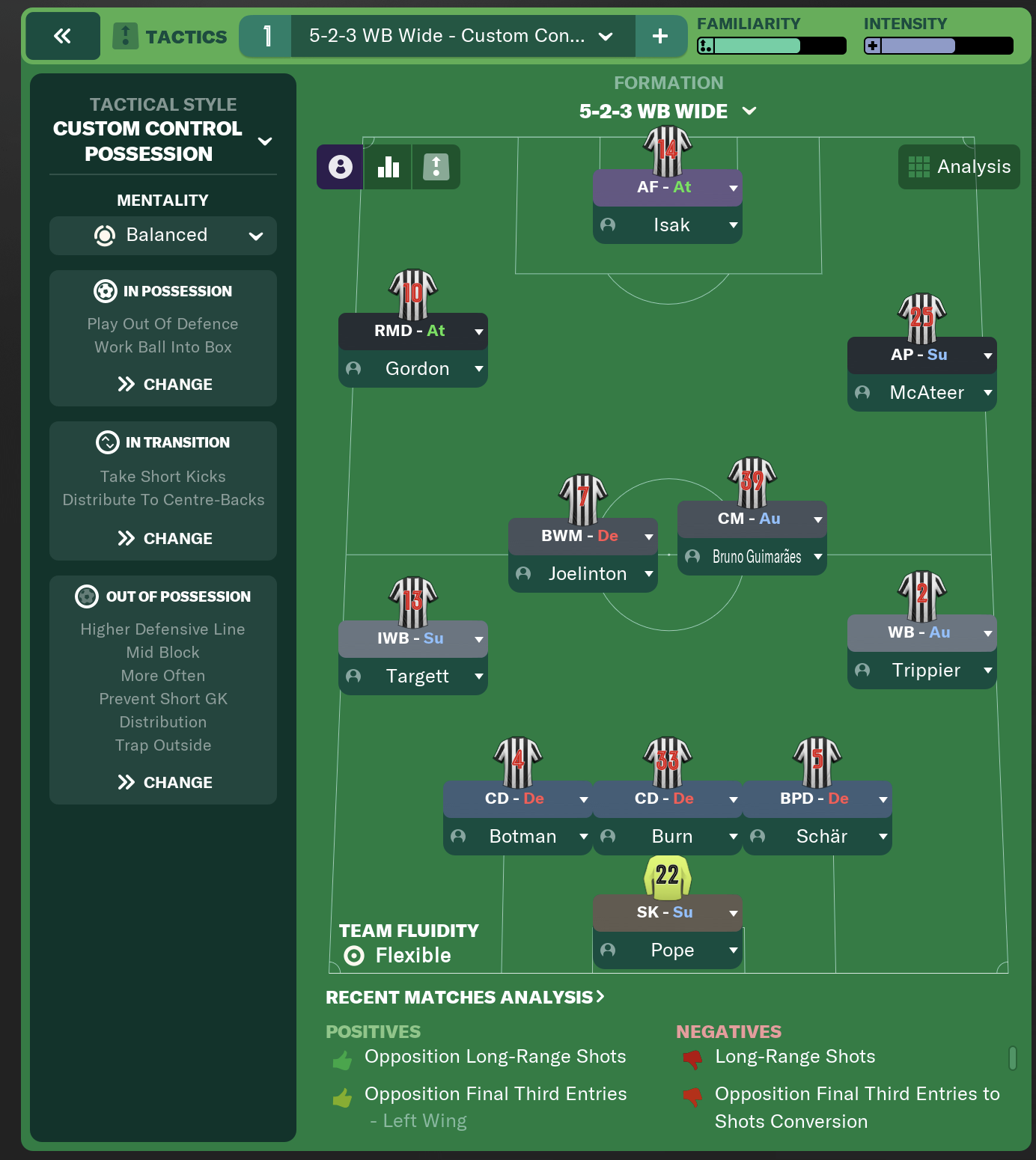
Formation & Style
Tactical Style:Custom
Mentality:Attacking
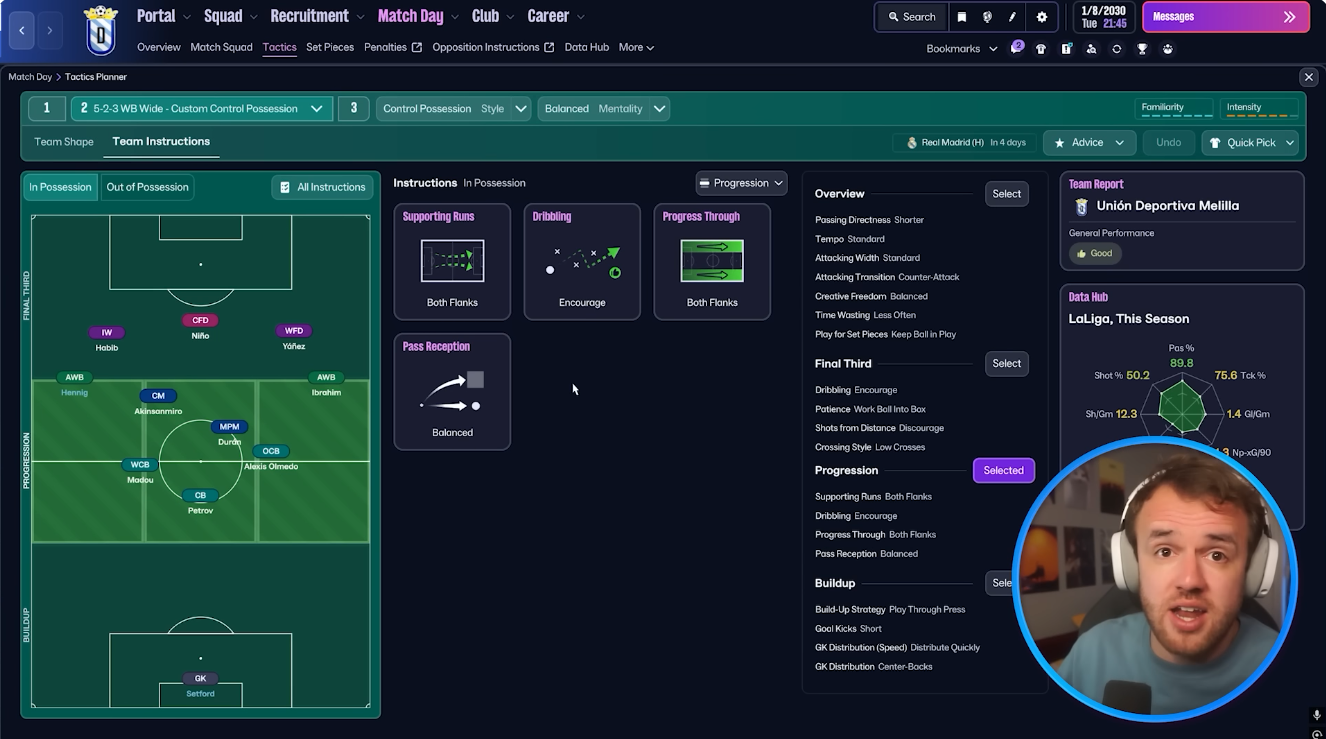
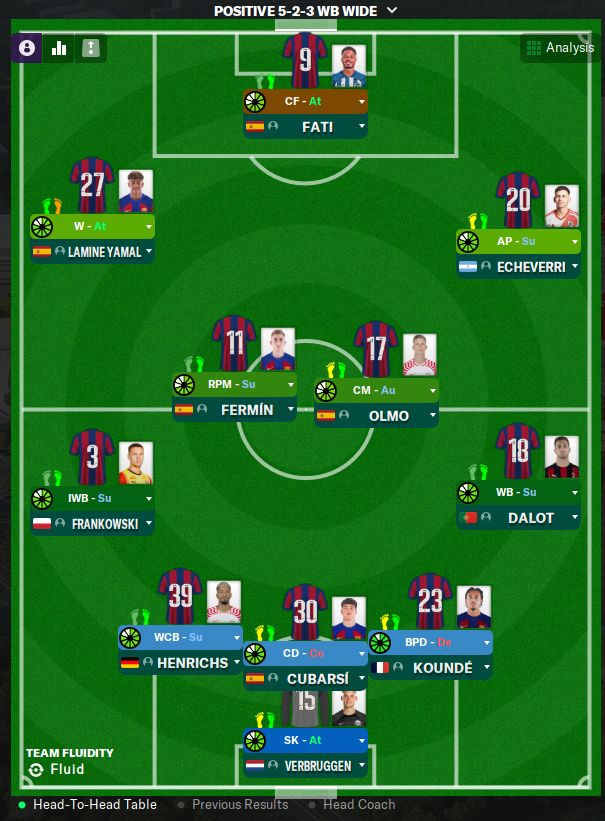
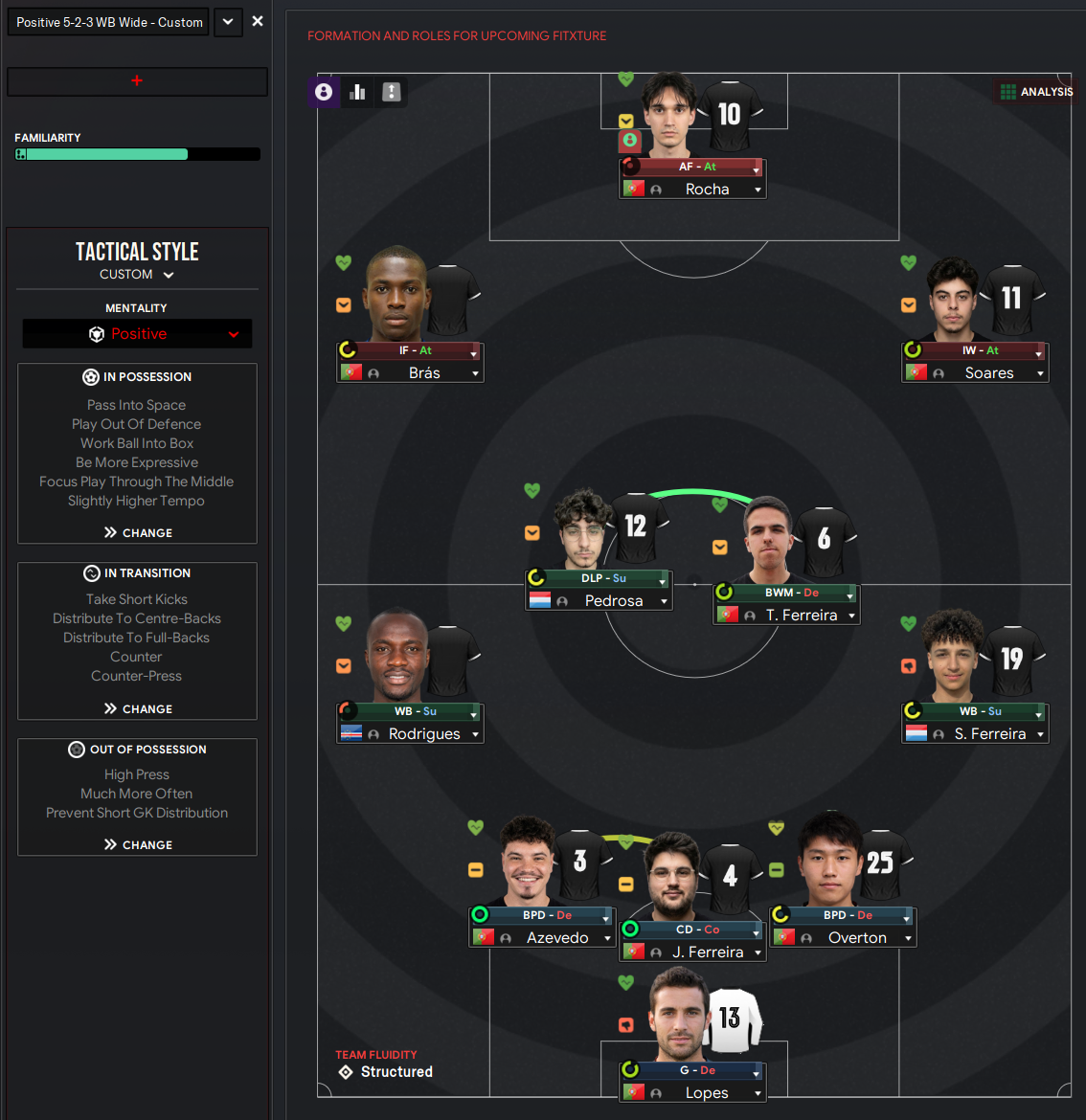
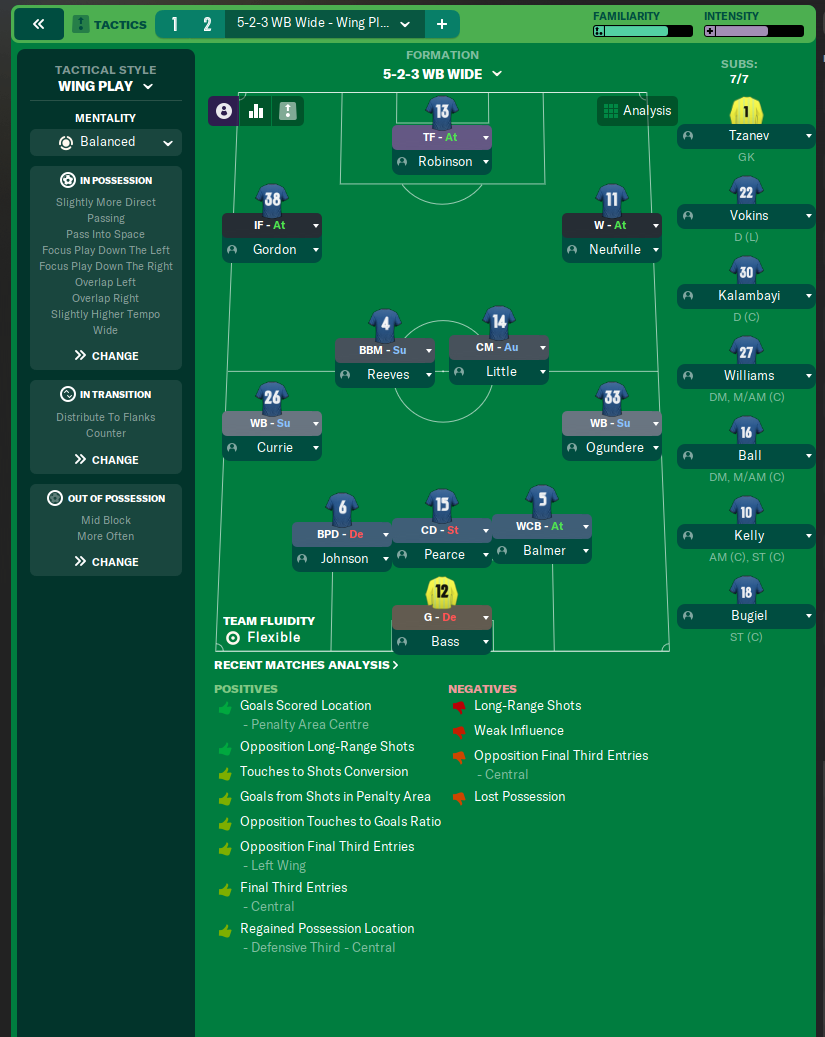
Formation:5-2-3 WB Wide
Team Fluidity:Flexible
In Possession
Slightly More Direct Passing
Play Out Of Defence
Work Ball Into Box
Play For Set Pieces
Higher Tempo
In Transition
Counter-Press
Counter
Out of Possession
Higher Defensive Line
Mid Block
Much More Often
Prevent Short GK Distribution
Stay On Feet
Stop Crosses
Team Shape Without Ball
Shape:5-4-1
Description:Solid defensive setup utilizing wing-backs for transition.
Evidence:5 defenders with a mix of defensive and ball-playing roles.
Team Shape With Ball
Shape:3-2-3-1
Description:Attacking style leveraging width through wing-backs and inside forwards.
Evidence:Advanced Forward positioned centrally supported by inside forwards.
Phase Description
Attacking Play
Utilizing width through wing-backs and inside forwards to stretch opposition.
Defensive Transition
Implementing a quick counter-press to regain possession immediately after losing the ball.
Main Focus
Creating goal-scoring opportunities from the penalty area and utilizing set pieces.
Key Strengths
Width and Depth
Utilizing wing-backs and inside forwards creates effective overloads in wide areas.
Dynamic Midfield Shape
A mix of roles in midfield allows for fluid play and options.
Solid Defensive Foundation
Five-man defense provides defensive resilience and transition stability.
Conflicting Directions
Potential Over-reliance on Wing Play
Heavy use of wing-backs may lead to vulnerability in central areas.
Susceptibility to Counter-Attacks
Playing with a high line might leave defense exposed to quick counters.
Limited Space for Central Players
Focus on width may crowd central attacking players and reduce efficiency.
Tactical Suggestions
Strategic Central Movement
Incorporate players to drop into midfield to facilitate ball progression.
Adjust Defensive Line
Consider lowering the defensive line to minimize counter-attack risks.
Incorporate Variation in Set Pieces
Utilize alternative set piece strategies to maximize scoring opportunities.
Ask Questions About Your Lineup
Related Tactics
Guides for this formation
The tactical theory behind the 5-2-3 WB Wide: roles, instructions, and the trade-offs that decide whether the system holds up.