Uploaded Tactic
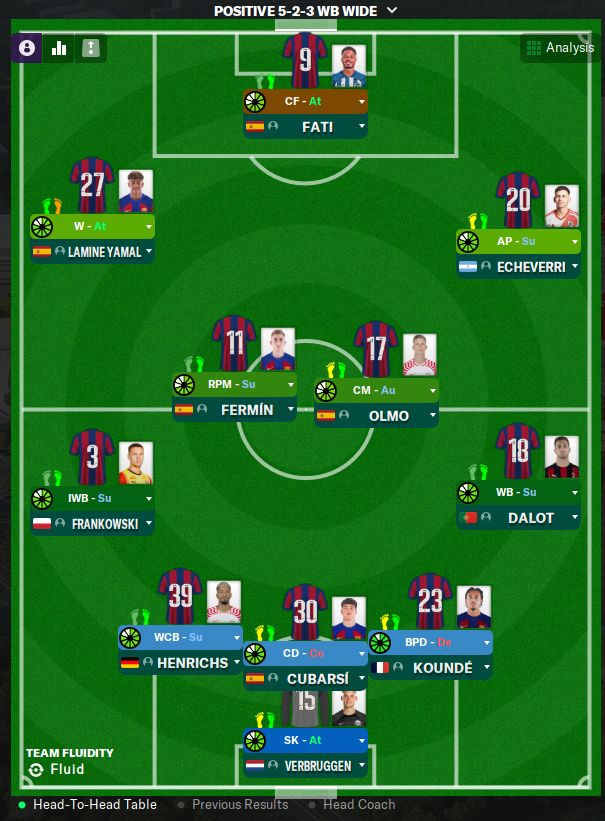
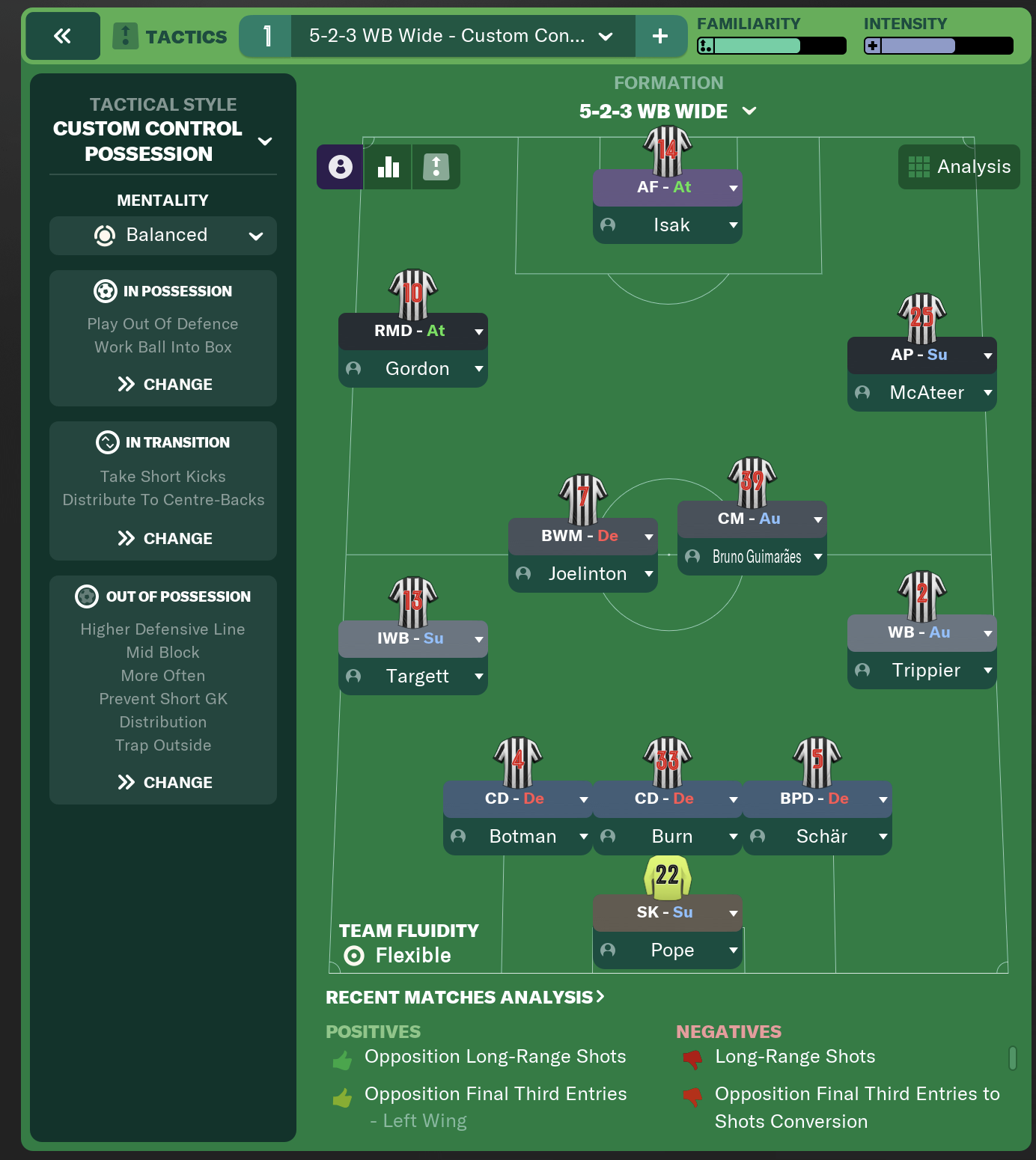
Formation & Style
Tactical Style:Positive
Mentality:Positive
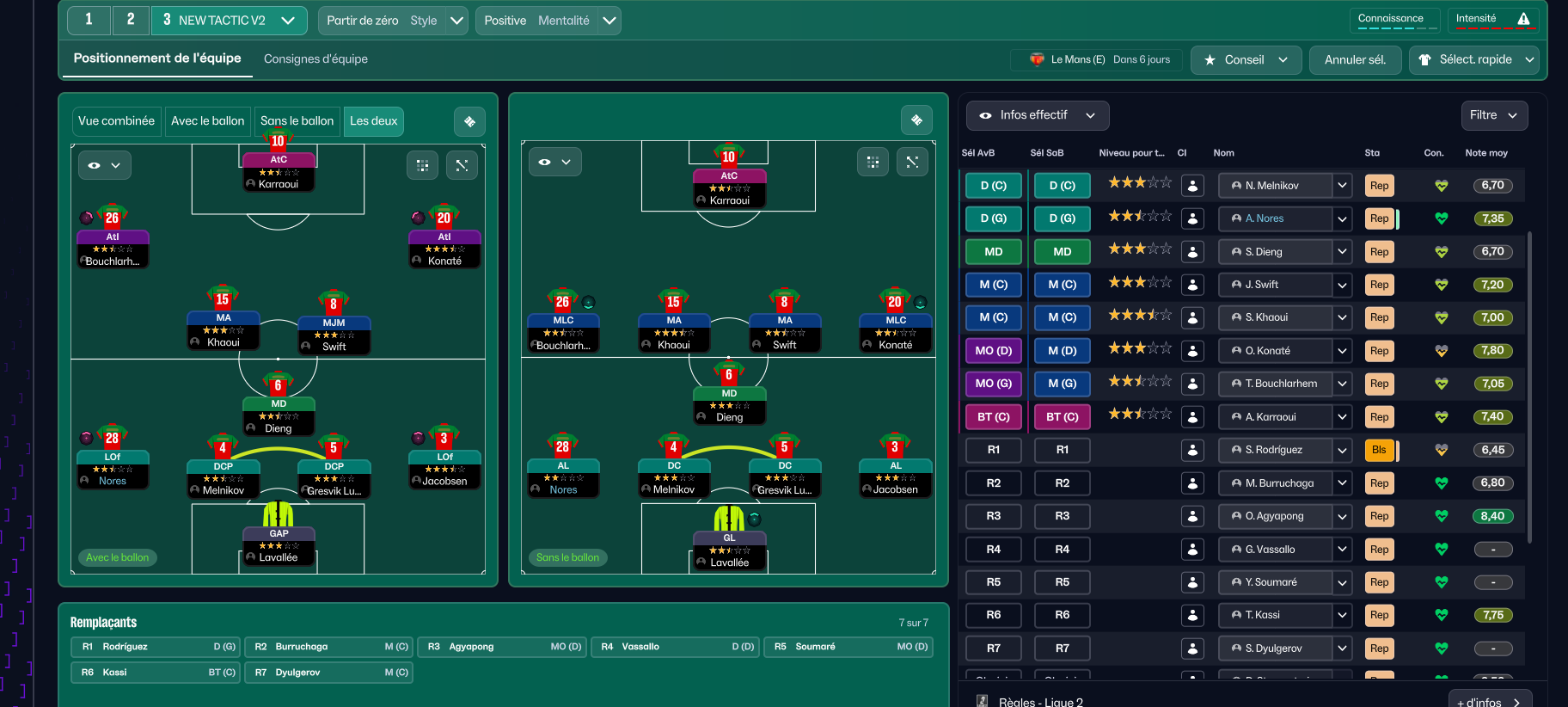
Formation:5-2-3 WB Wide
Team Fluidity:Fluid
In Possession
Work Ball Into Box
Play Out of Defence
Focus Play Down the Wings
Be More Expressive
In Transition
Counter-Press
Counter
Out of Possession
Higher Line of Engagement
Higher Defensive Line
Prevent Short GK Distribution
Team Shape Without Ball
Shape:5-4-1
Description:In a defensive phase, the team drops into a 5-4-1 shape to maintain width and density.
Evidence:The presence of 5 defenders with an inverted wing-back gives solid coverage in defense.
Team Shape With Ball
Shape:3-4-3
Description:Attacking shape shifts into a 3-4-3 with wing-backs pushing high up the pitch while supporting the wingers and forward.
Evidence:The forward line consists of three attackers, with two wing-backs providing options on the flanks.
Phase Description
Attacking Play
The team emphasizes ball possession with quick, short passes, aiming to break down the opponent's defense through the wings and exploiting gaps.
Defensive Transition
Upon losing possession, players immediately initiate a counter-press to regain control, using high energy to disrupt the opponent's rebuild.
Main Focus
The main focus is to transition quickly into offense while maintaining a solid defensive structure.
Key Strengths
Width in Attack
Utilization of inverted wing-backs and wide players provides necessary width for stretching the opponent's defense.
Dynamic Forward Play
A complete forward complemented by wingers creates numerous options for scoring.
Solid Defensive Base
The 5-player defense structure minimizes space and increases robustness against attacks.
Conflicting Directions
Overlapping Runs vs Cutting Inside
Wingers might struggle to combine effectively if both attempt opposite styles (overlapping vs cutting inside).
Aggressive Pressing vs Countering
Counter-pressing could leave gaps if the team is caught high up the pitch and the opponent breaks through.
Inverted Wing-Backs vs Wide Center-Backs
Inverted wing-backs may reduce width which wide center-backs would normally provide.
Tactical Suggestions
Consider Role Clarification
Ensure wingers have clear roles to avoid confusion on deliverable styles on the flanks.
Tweak Defensive Shapes
Fine-tuning the defensive structure may help in reducing vulnerabilities during transitions.
Increase Depth in Central Midfield
Adding a deeper midfielder could help in linking play and providing additional support both defensively and offensively.
Ask Questions About Your Lineup
Related Tactics
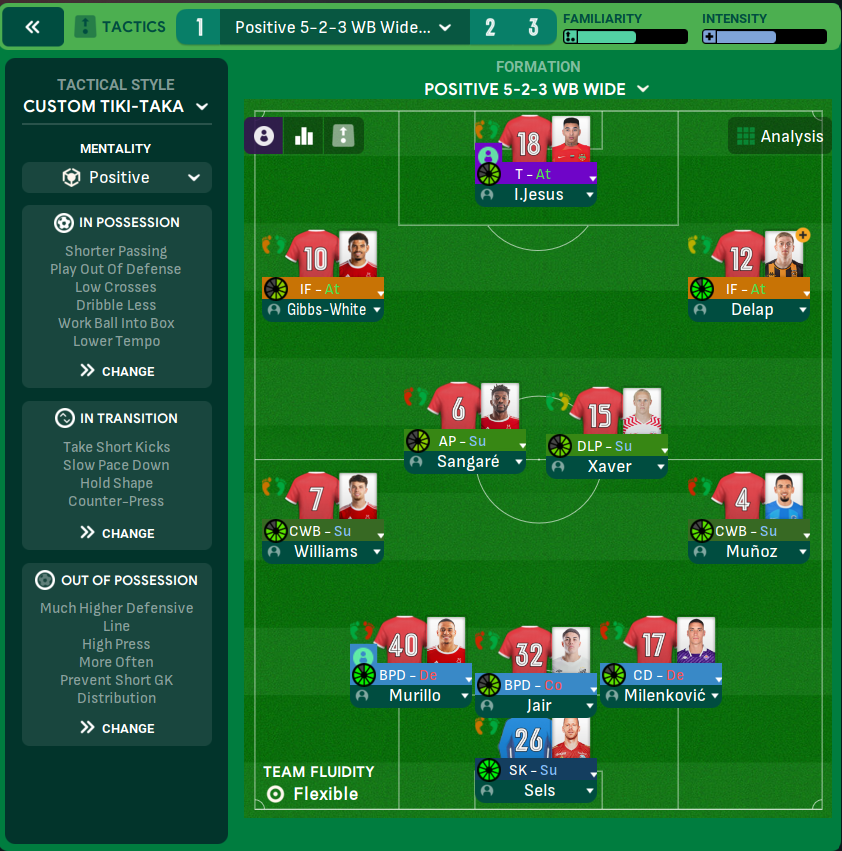
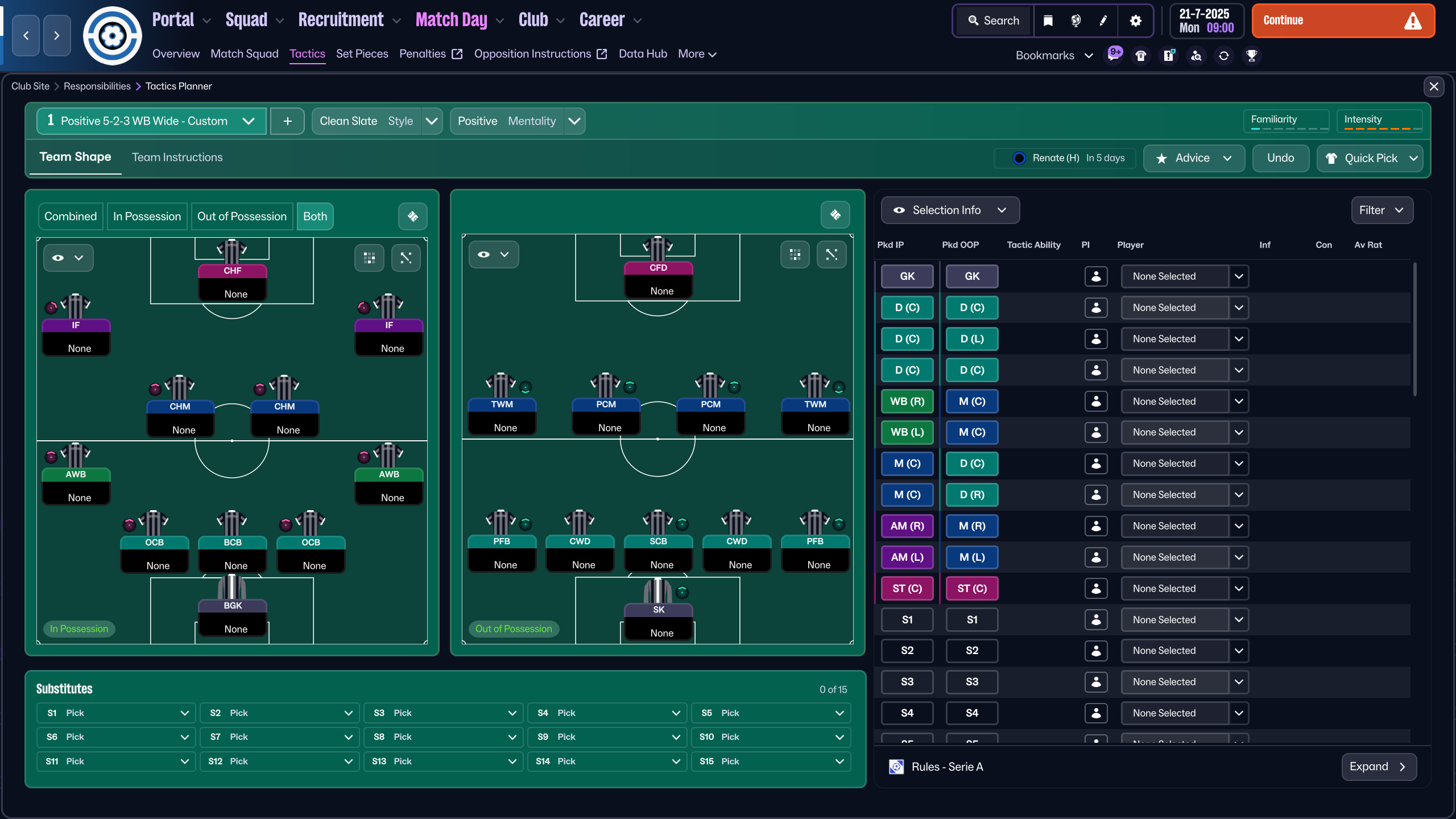
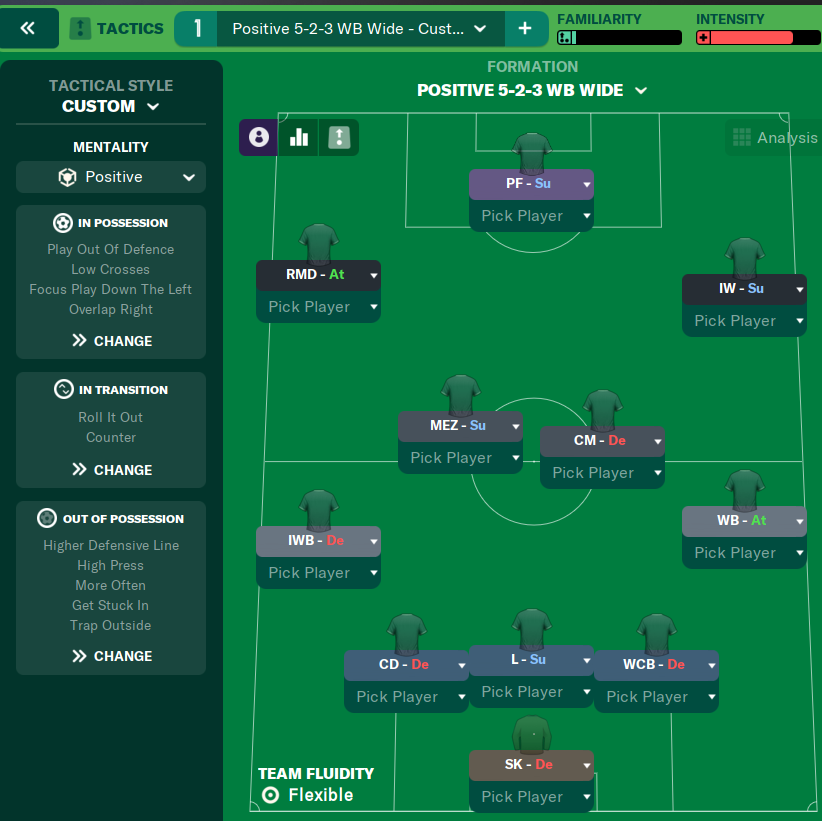
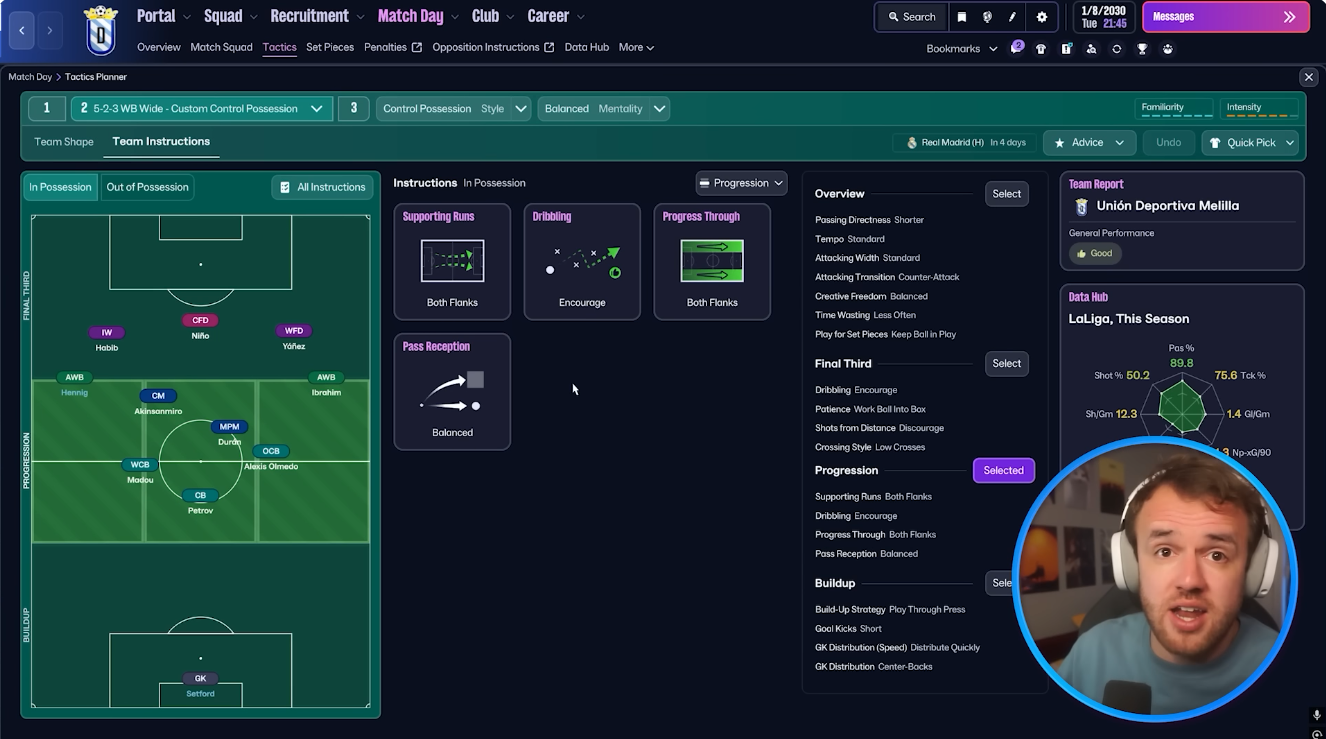
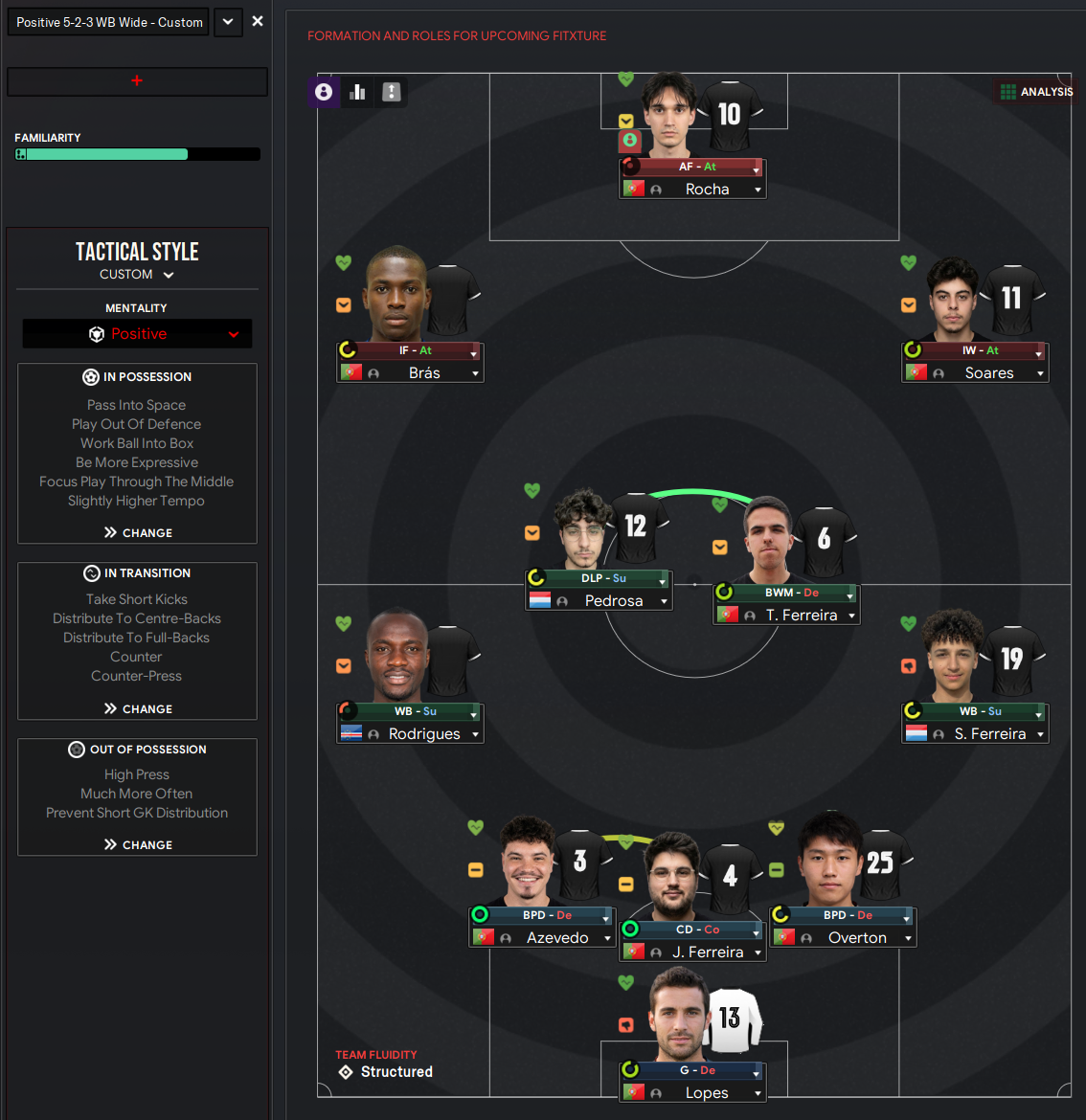
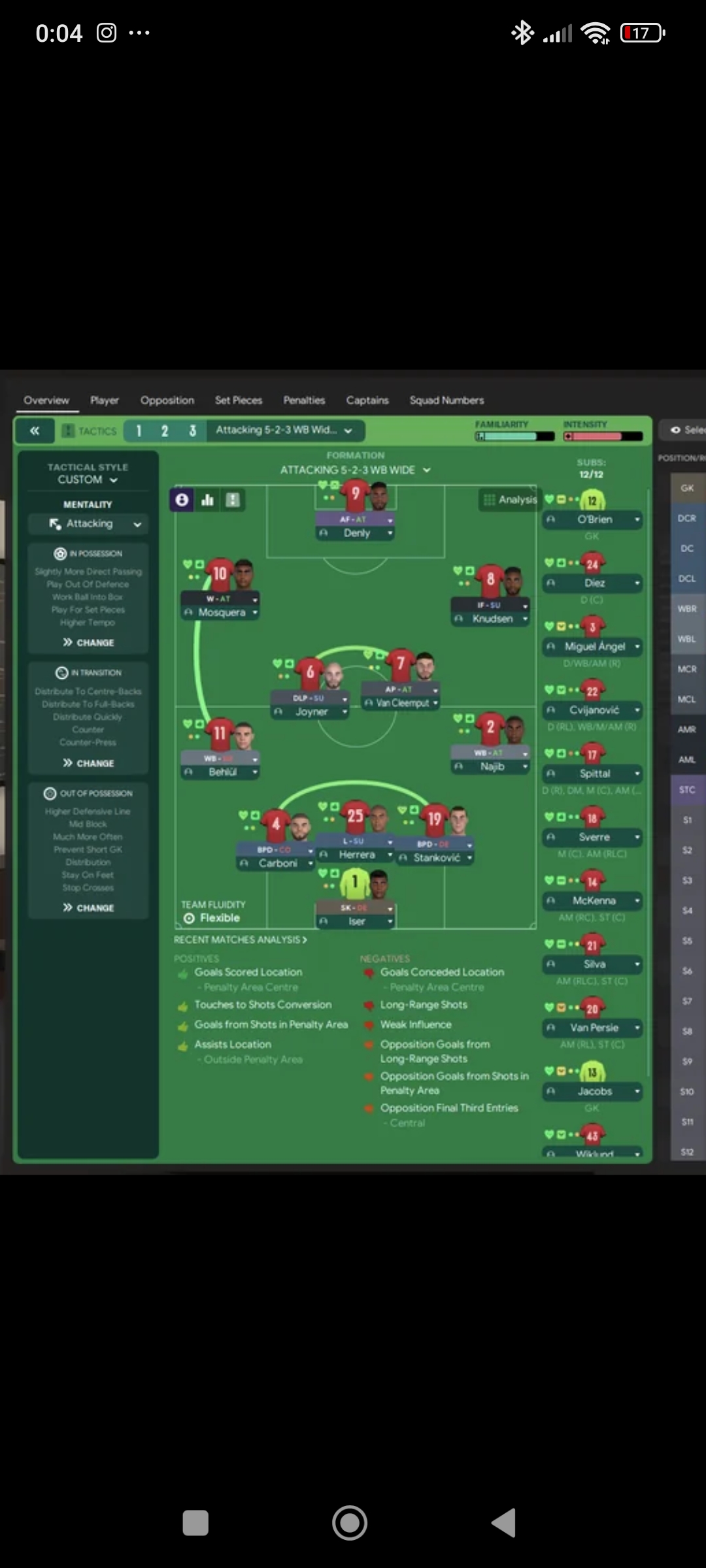
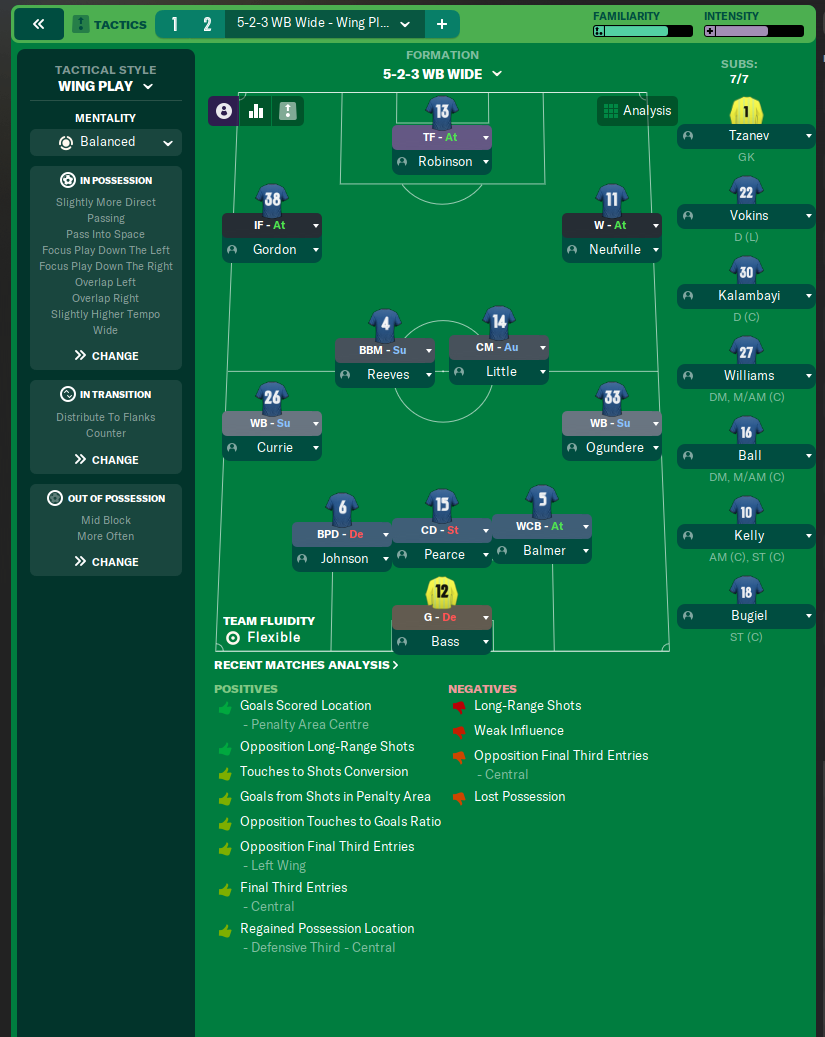
More Positive tactics
Guides for this formation
The tactical theory behind the 5-2-3 WB Wide: roles, instructions, and the trade-offs that decide whether the system holds up.