Uploaded Tactic
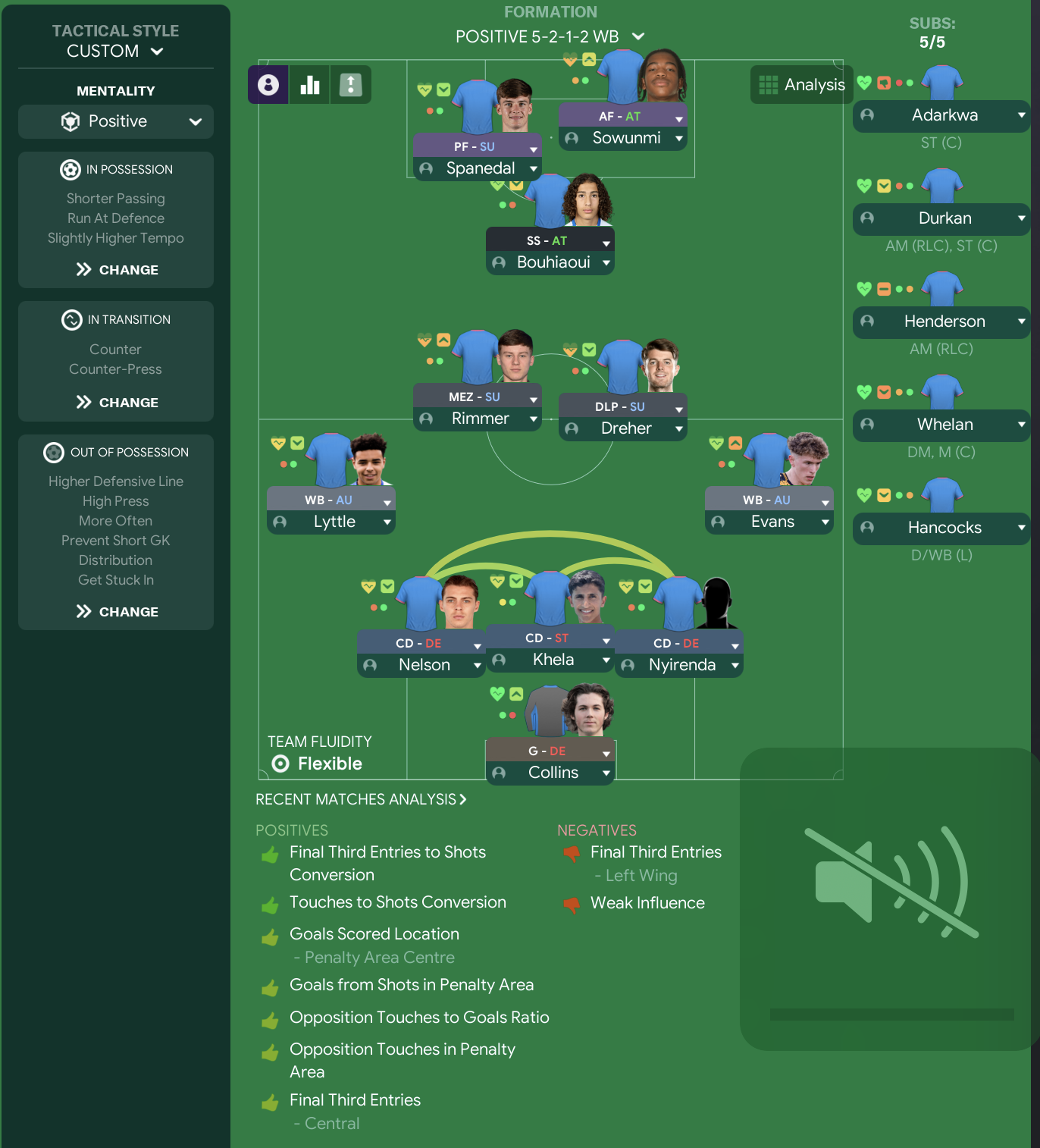
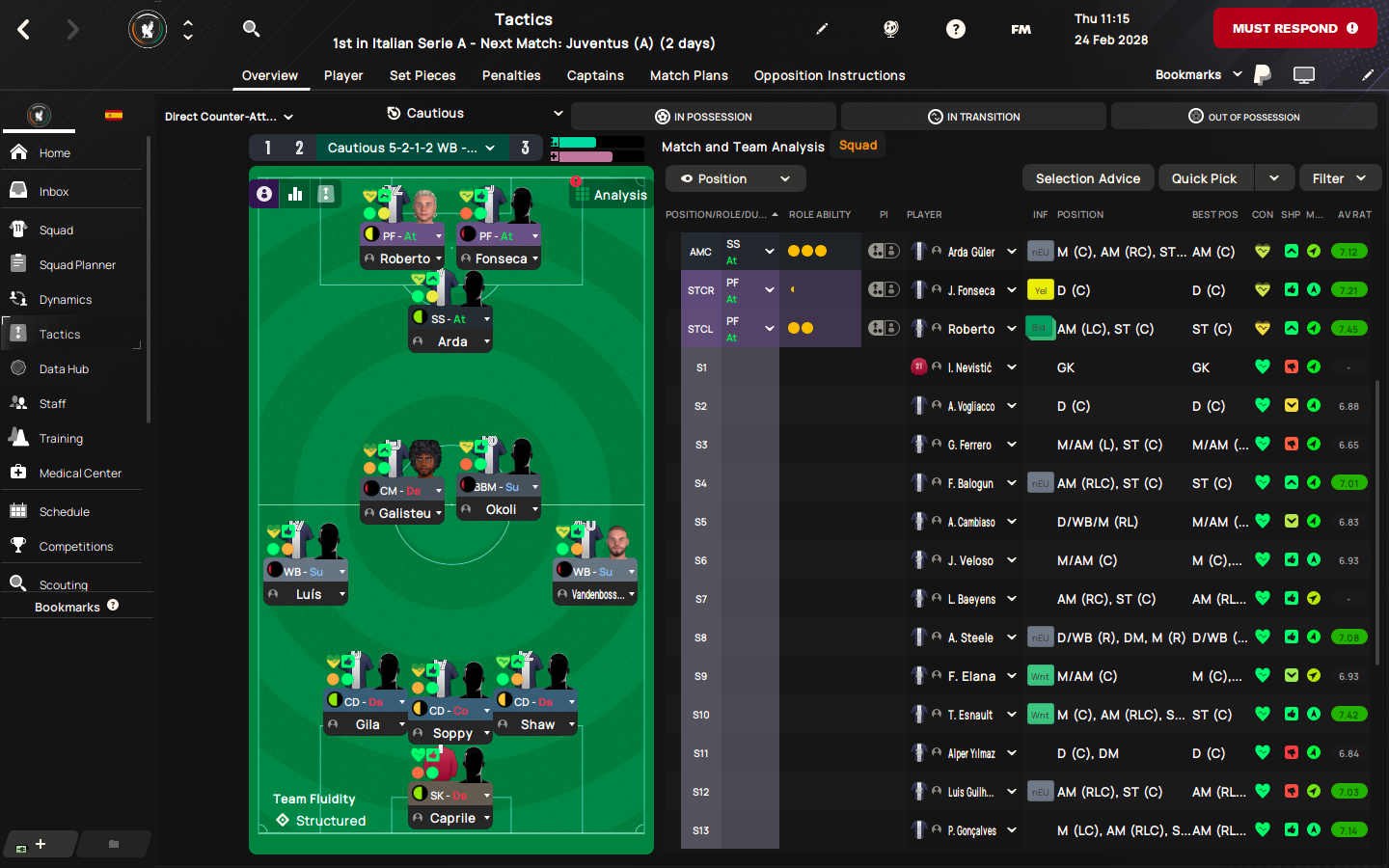
Formation & Style
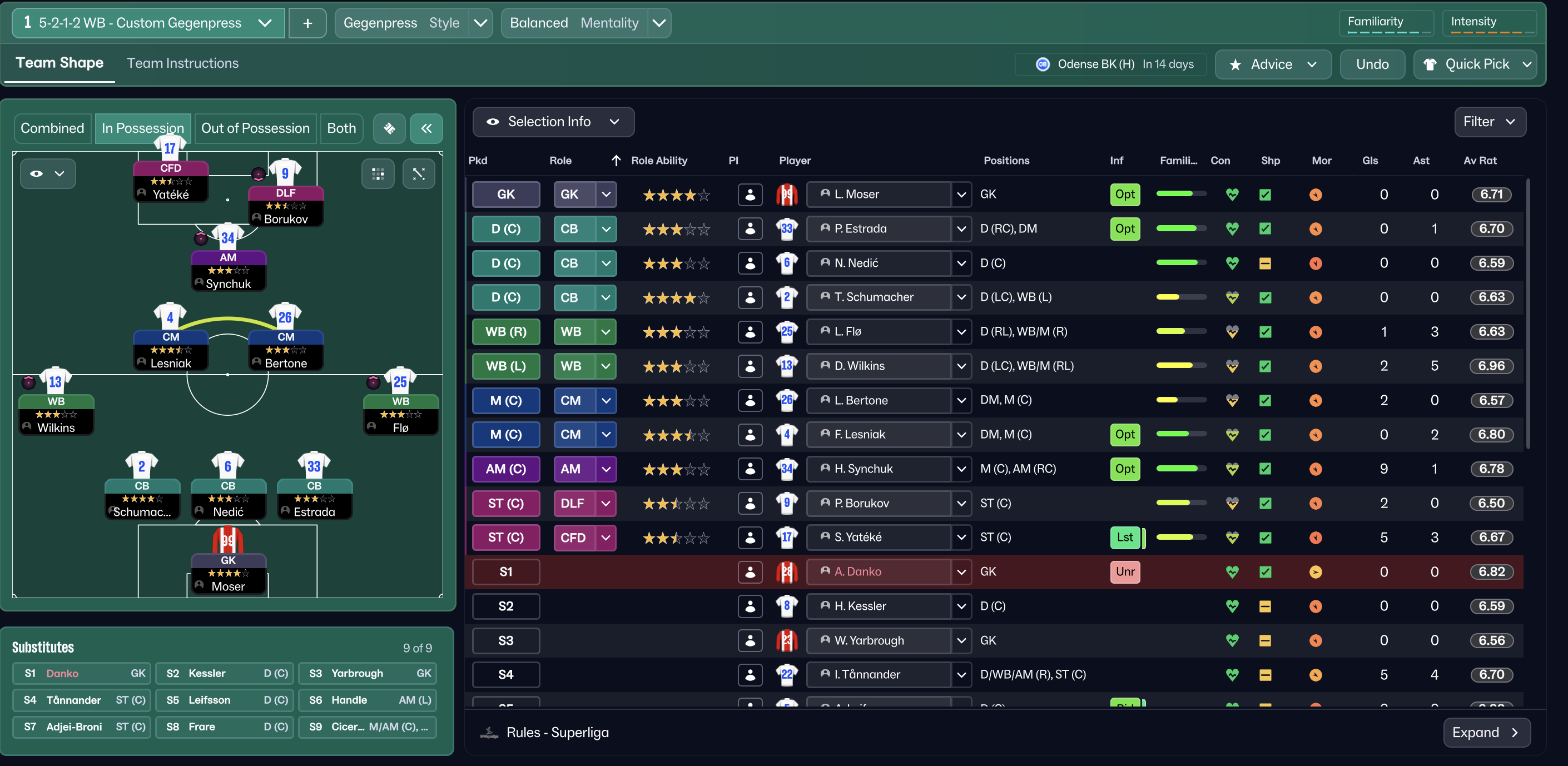
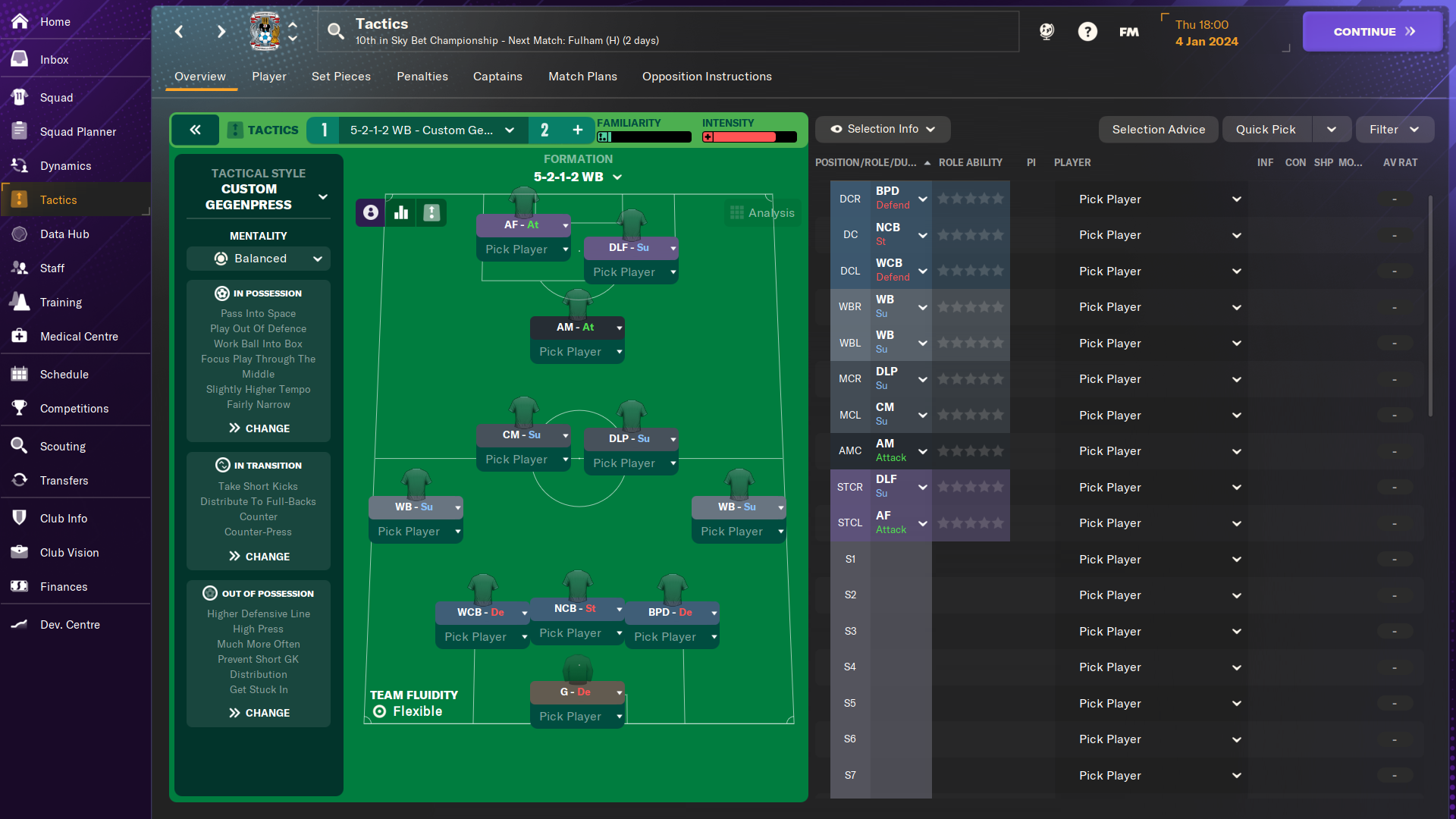
Tactical Style:Custom
Mentality:Positive
Formation:5-2-1-2 WB
Team Fluidity:Flexible
In Possession
Shorter Passing
Run At Defence
Slightly Higher Tempo
In Transition
Counter
Counter-Press
Out of Possession
Higher Defensive Line
High Press More Often
Prevent Short GK Distribution
Get Stuck In
Team Shape Without Ball
No team shape without ball data available
Team Shape With Ball
No team shape with ball data available
Key Strengths
Strong Central Penetration
Goals are primarily being scored through central areas, indicating effective use of attacking players in the middle.
Effective Counter-Pressing
The counter-pressing strategy helps to regain possession quickly after losing the ball, creating opportunities for immediate counter-attacks.
Solid Defensive Setup
The 5-2-1-2 formation provides a robust defensive structure with three central defenders and wing-backs supporting both attack and defense.
Utility of Wing-Backs
Wing-backs are utilized in attack, allowing width to stretch the opponent's defense while still covering defensively.
Conflicting Directions
High Press vs. Defensive Line
While the team is instructed to press high, the defensive line being set higher can leave gaps in behind if the press is not effective.
Short Passing with High Tempo
A higher tempo may conflict with the shorter passing approach, potentially leading to rushed decisions and misplaced passes.
Countering with Assertiveness
The desire to counter may clash with maintaining possession through shorter passing, making transitions chaotic.
Role Balance in Midfield
The combination of two support duties in midfield may lead to a lack of a clear playmaker or creative influence in higher areas.
Tactical Suggestions
Adjust Defensive Line
Consider lowering the defensive line to reduce the risk of being caught on counter-attack, especially against faster opposition.
Enhance Midfield Creativity
Introduce a more attacking role for one of the midfield players to increase creativity and goal threat.
Shift Wing-Back Responsibilities
Consider allowing wing-backs more freedom in attack to increase width, but ensure they have defensive cover in place.
Optimize Pressing Triggers
Refine pressing triggers to maximize the efficiency of the high press, ensuring players are not caught out of position.
Ask Questions About Your Lineup
Related Tactics
Guides for this formation
The tactical theory behind the 5-2-1-2 WB: roles, instructions, and the trade-offs that decide whether the system holds up.