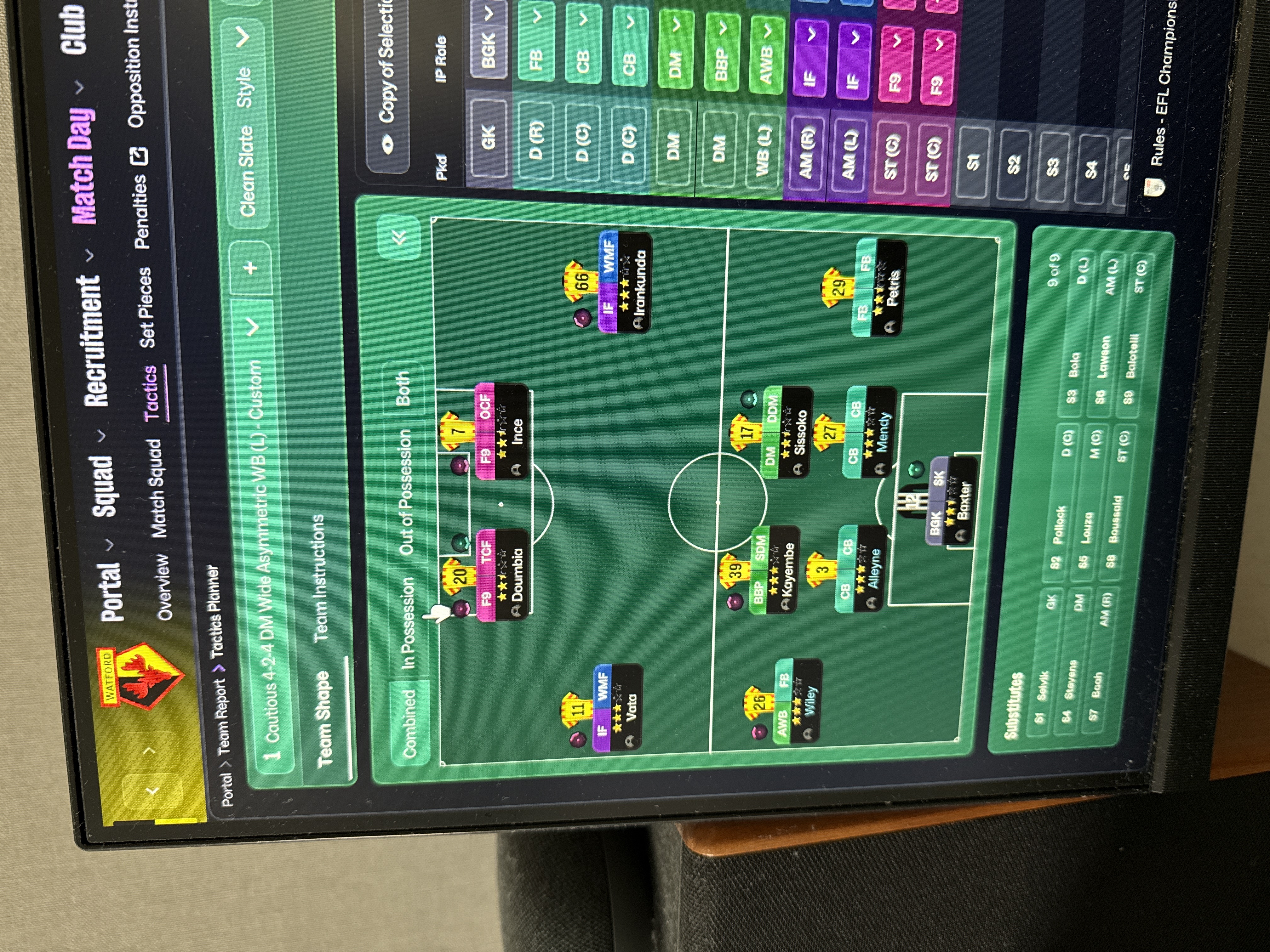
Uploaded Tactic
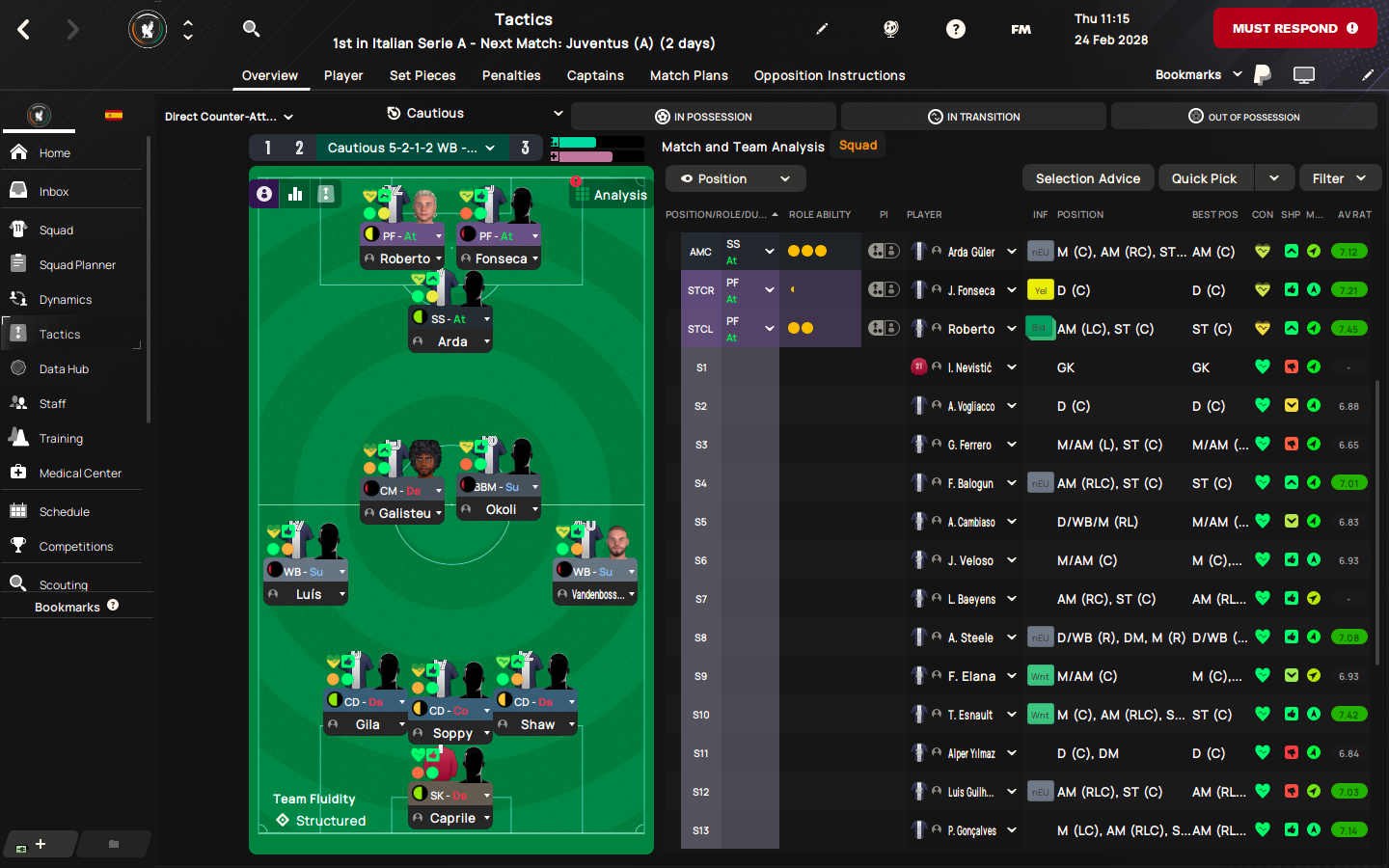
Formation & Style
Tactical Style:Cautious
Mentality:Cautious
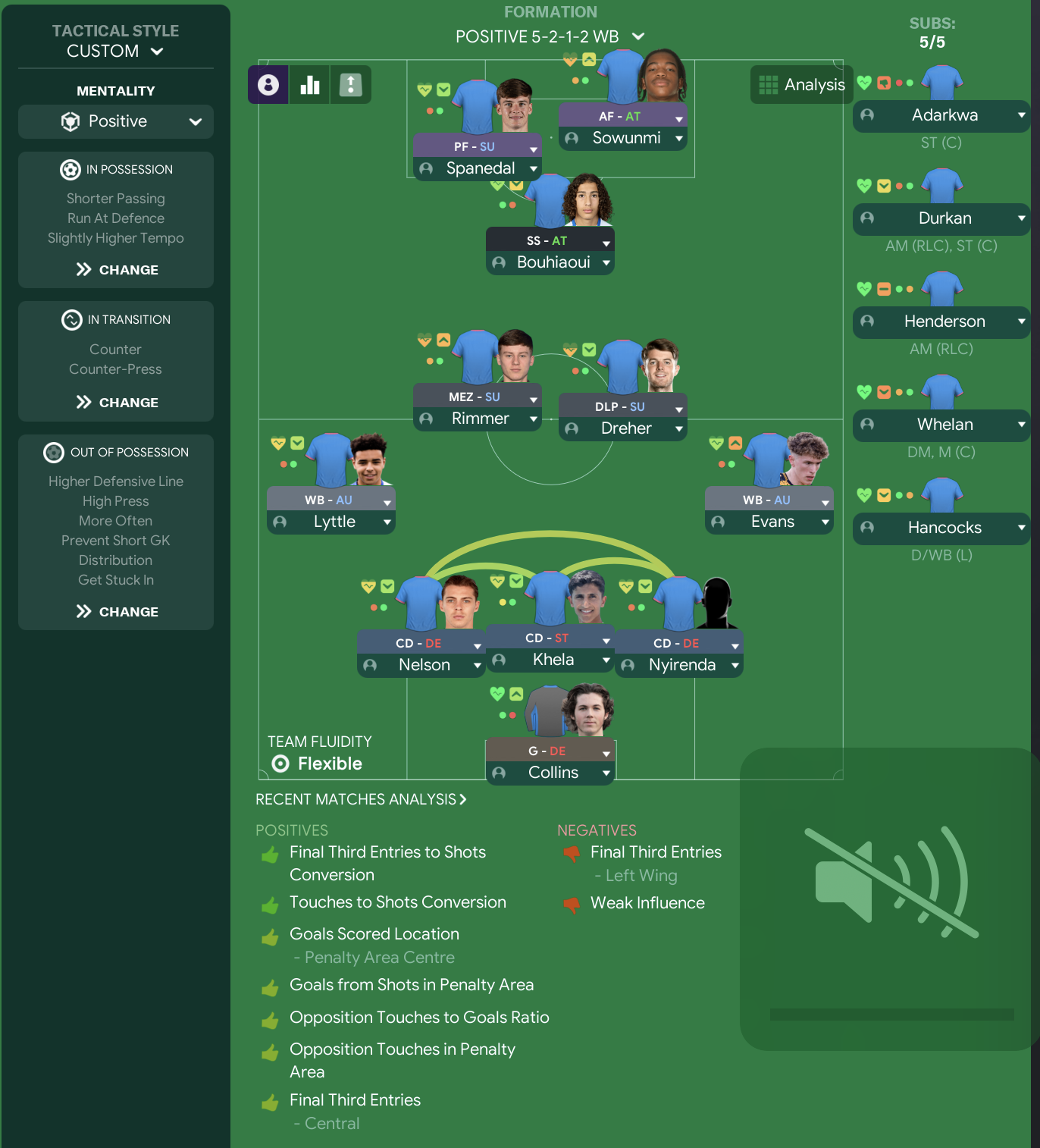
Formation:5-2-1-2 WB
Team Fluidity:Structured
In Possession
Play out of defense
Retain possession
Work ball into box
In Transition
Counter-attack
Hold shape
Out of Possession
Lower defensive line
Reduced pressing intensity
Team Shape Without Ball
No team shape without ball data available
Team Shape With Ball
No team shape with ball data available
Key Strengths
Solid Defensive Structure
The 5-2-1-2 shape provides a strong defensive base with five defenders, offering good cover against opposing attacks.
Flexibility in Transition
The formation allows for quick counter-attacks thanks to forward players who can exploit spaces left by opponents.
Midfield Control
Two central midfielders (CM and B2B) help maintain possession and switch the play efficiently.
Width from Wing-backs
Using wing-backs adds width to the attack, creating space for forward runs and pulling opposing defenders out of position.
Conflicting Directions
Cautious Mentality vs. Attacking Players
Using a cautious mentality can limit the effectiveness of attacking players like Shadow Striker and Pressing Forward, who thrive in more aggressive styles.
Wing-Backs Role in a Cautious Setup
Wing-backs may become isolated in a cautious setup, reducing their impact on the match if not properly supported.
High Defensive Line vs. Player Capabilities
Having a lower defensive line may be necessary due to potential gaps if the center-backs lack pace to recover against fast forwards.
Inflexibility in Fluidity
A structured approach can make it harder for players to adapt fluidly to game situations, potentially hampering quick offensive transitions.
Tactical Suggestions
Adjust Mentality
Consider changing to a Balanced or Positive mentality to support attacking players, enhancing goal-scoring opportunities.
Improve Wing-Back Support
Consider changing wing-backs to 'Attack' duty to provide higher offensive support and enhance width in attack.
Characterize Team Roles
Ensure roles such as B2B are optimized for players with higher stamina and work rates to maximize their importance.
Consider a Solid Sit-Back
If facing top teams consistently, transition to a more reliable sit-back formation to maintain defensive stability.
Ask Questions About Your Lineup
Related Tactics
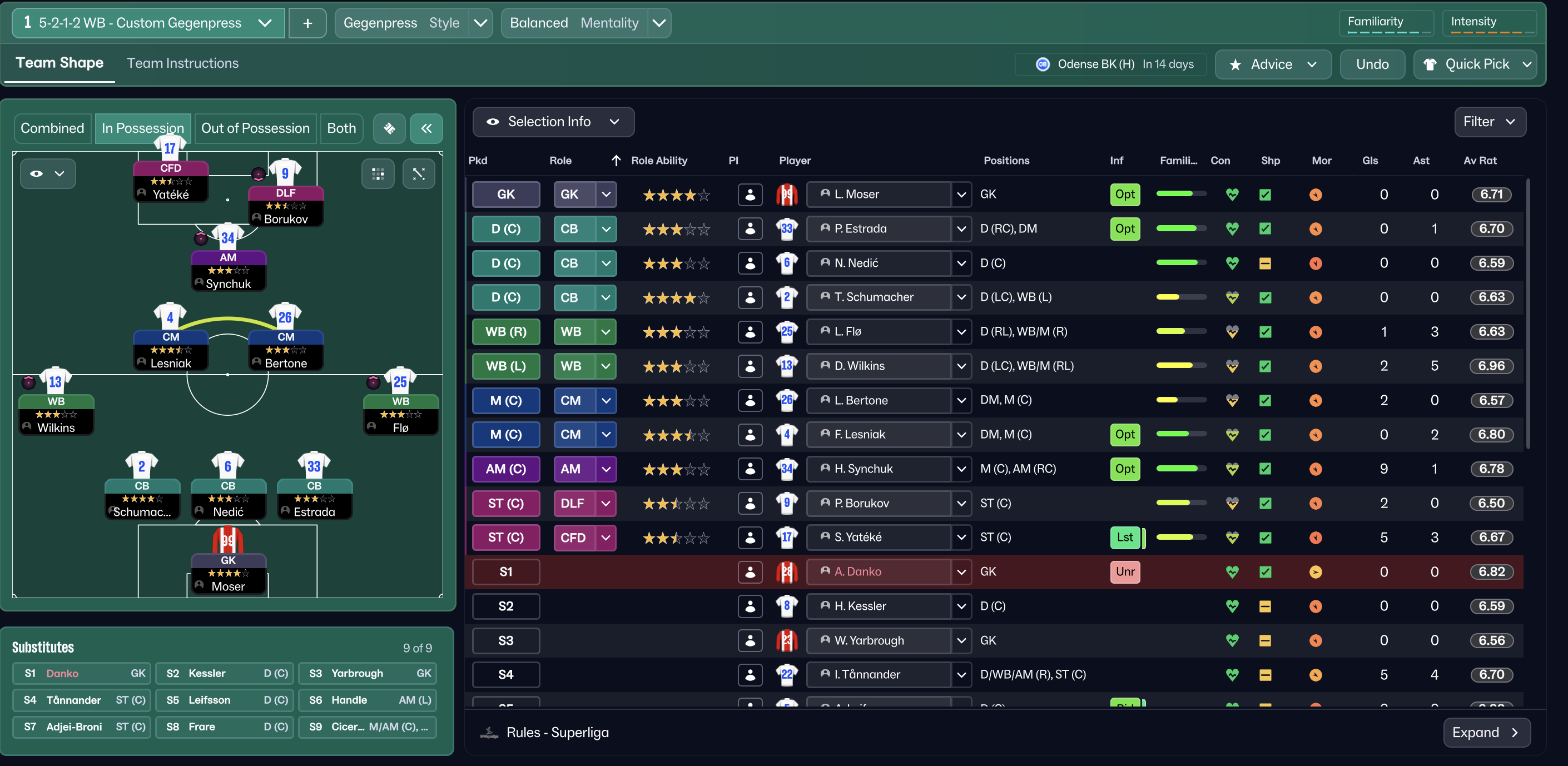
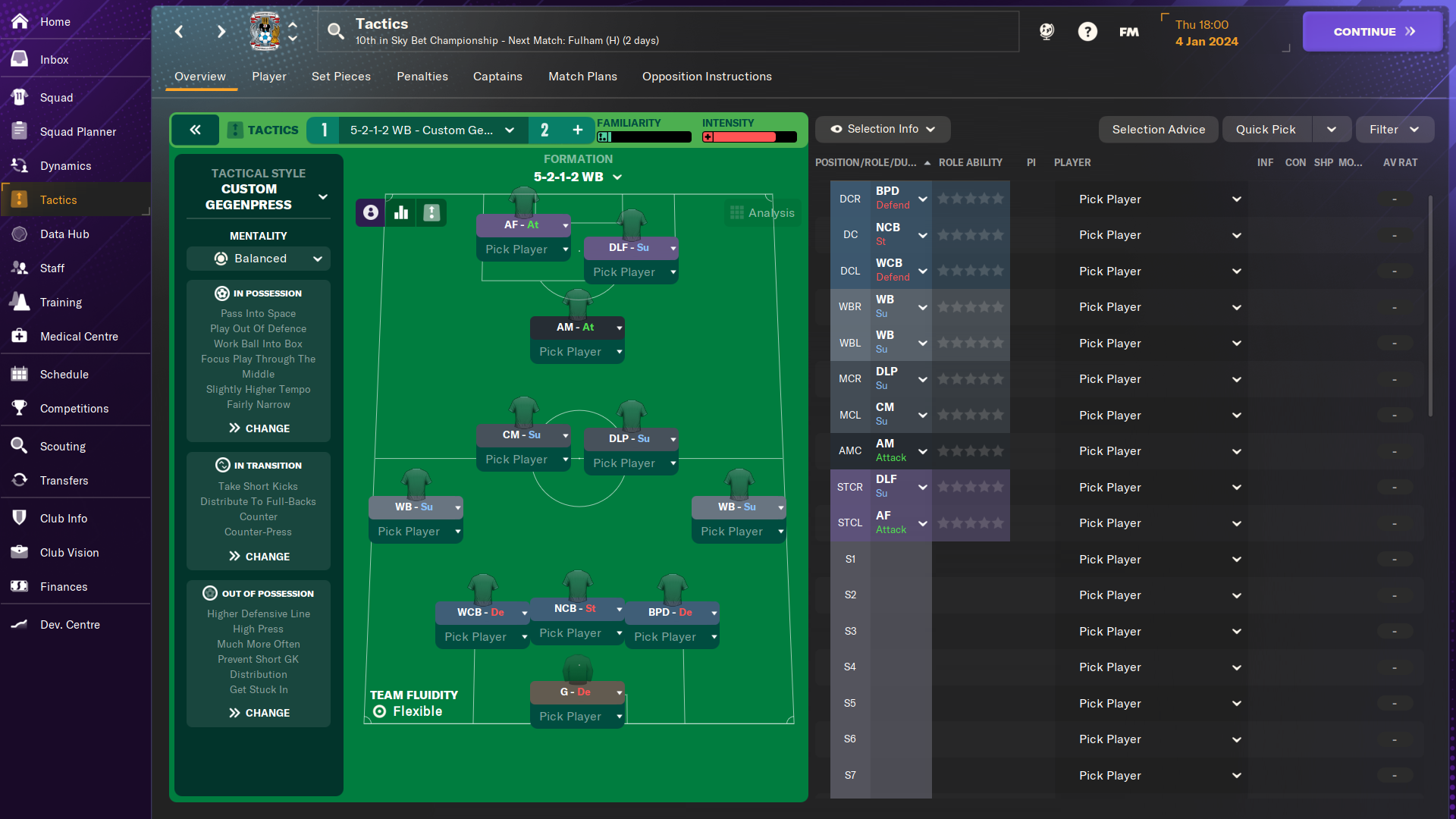
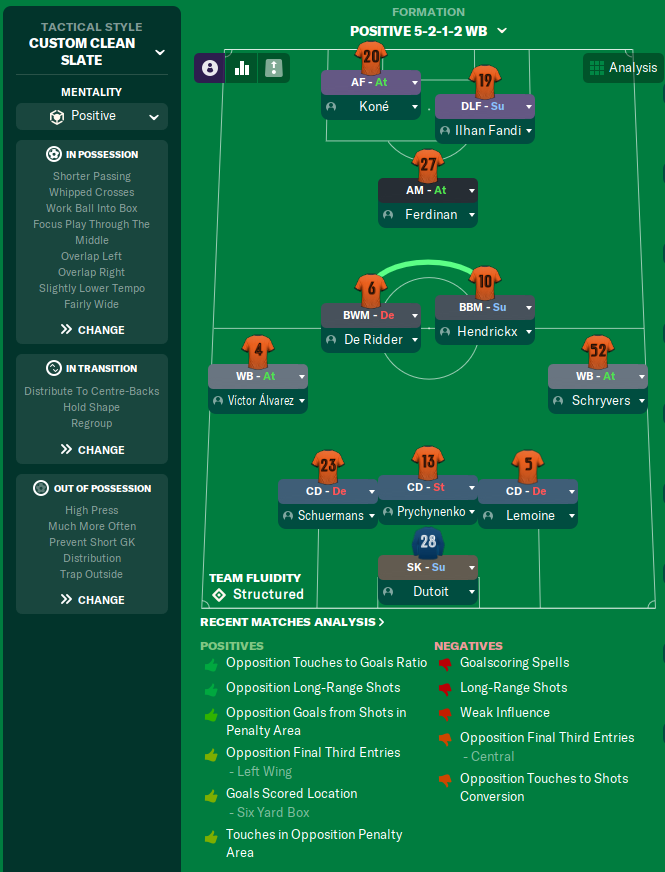
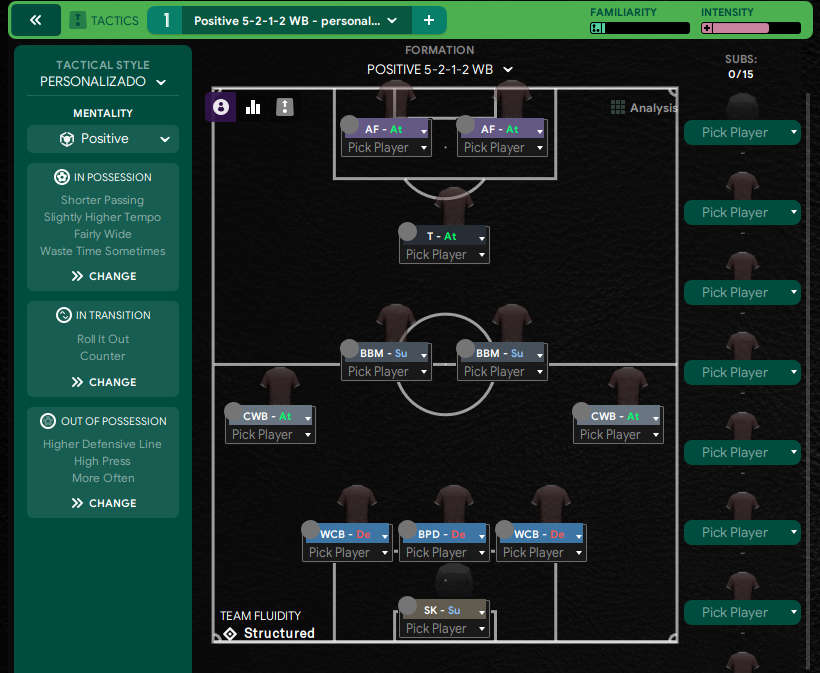
More Cautious tactics
Guides for this formation
The tactical theory behind the 5-2-1-2 WB: roles, instructions, and the trade-offs that decide whether the system holds up.