Uploaded Tactic

Formation & Style
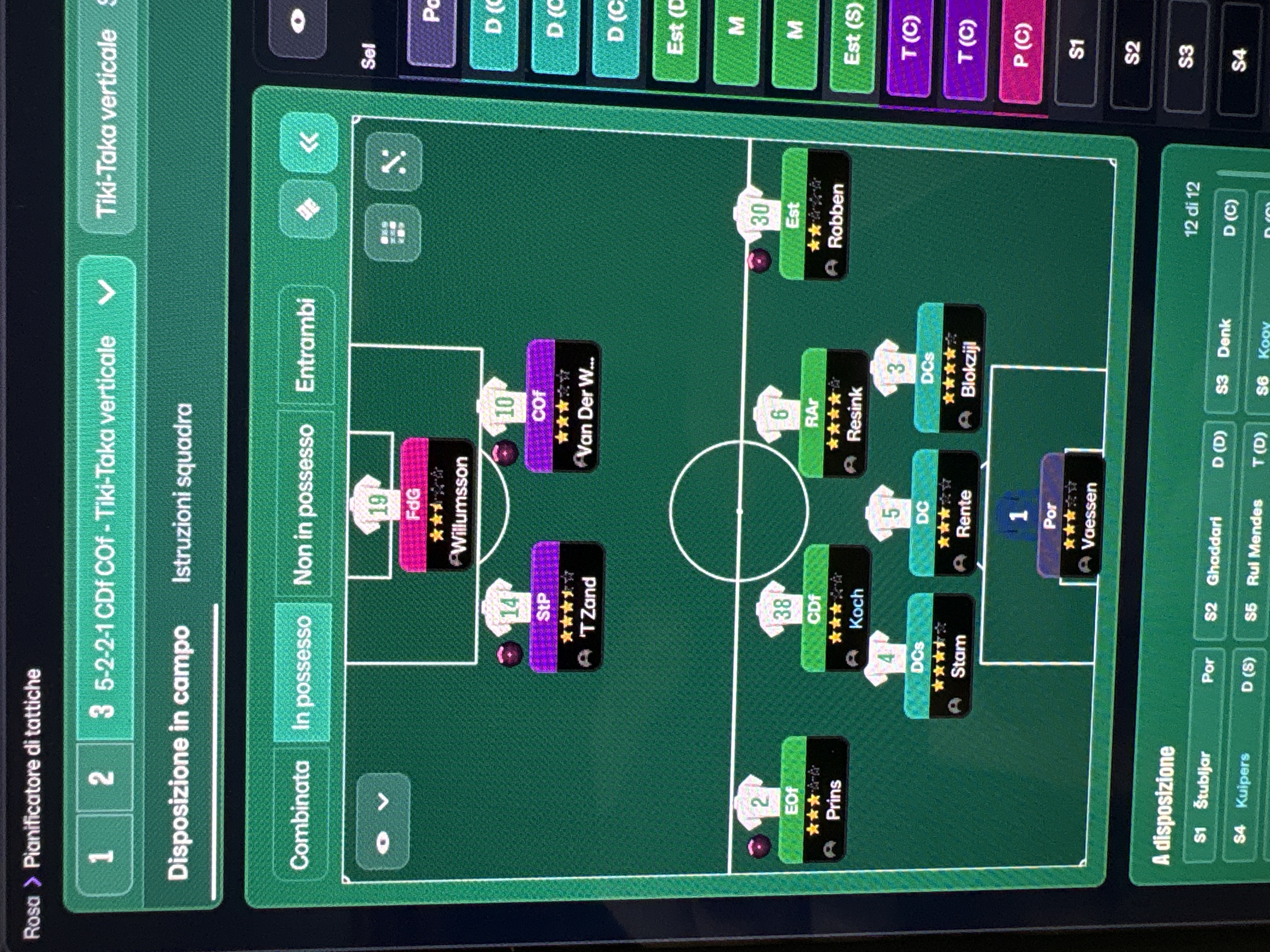
Tactical Style:Tiki-Taka
Mentality:Controlled
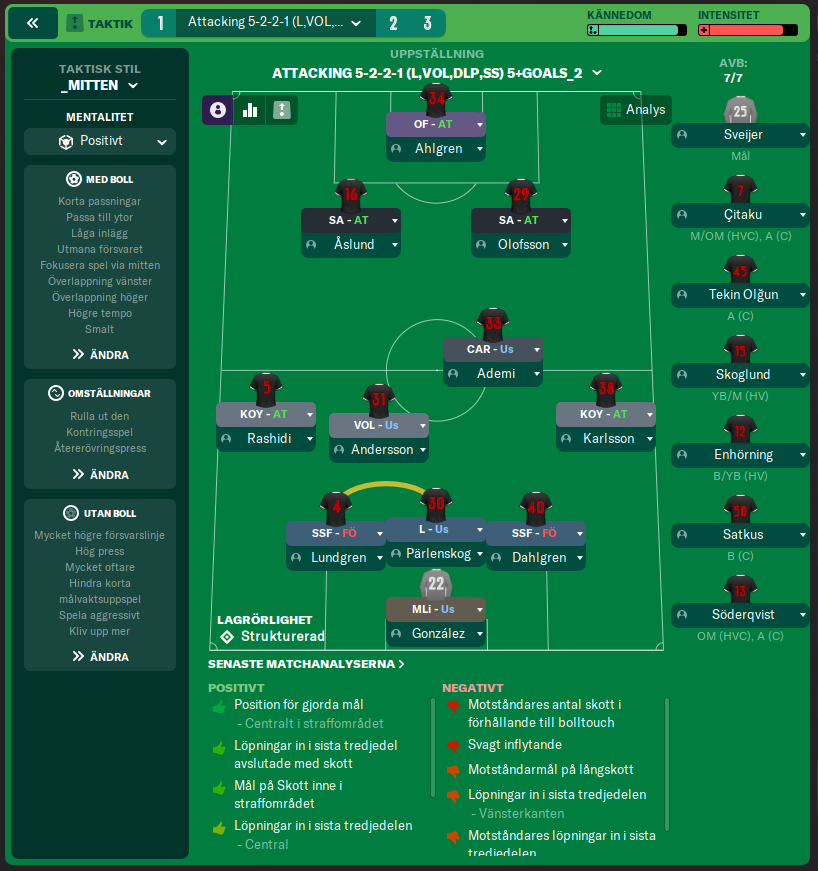
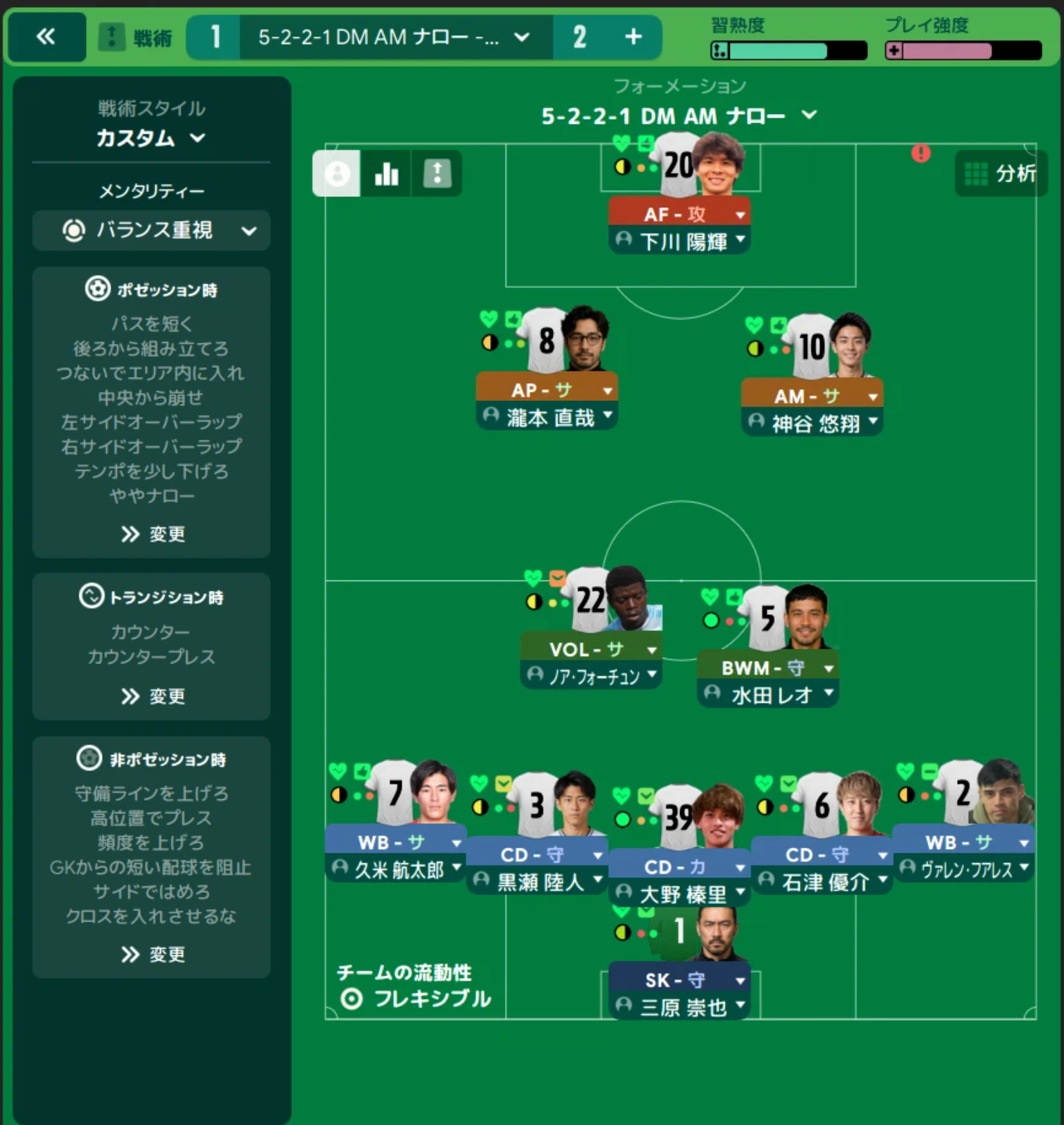
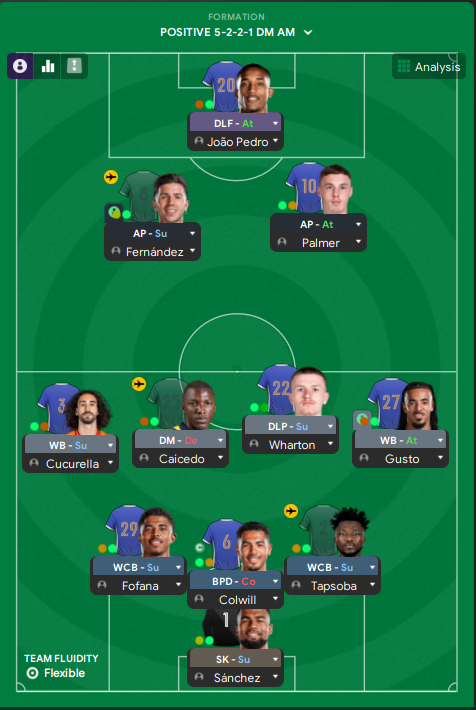
Formation:5-2-2-1
Team Fluidity:Dynamic
In Possession
Shorter passing
Focus play through the middle
Utilize width
In Transition
Counter-pressing
Short goal kicks
Out of Possession
Low block
Frequent pressing
Team Shape Without Ball
No team shape without ball data available
Team Shape With Ball
No team shape with ball data available
Key Strengths
Possession Retention
With shorter passing and a focus on keeping the ball, the team can control the tempo and create opportunities.
Width Utilization
Utilizing wing-backs allows for creating space in central areas, providing numerous passing lanes.
Defensive Solidity
The five-man backline offers strong defensive stability, making it hard for opponents to penetrate.
Dynamic Attacking Options
The advanced forward and inverted wingers create unpredictability and movement, facilitating goal-scoring opportunities.
Conflicting Directions
Counter-pressing Strategy
While pressing is encouraged, it may clash with the slower build-up play intended by Tiki-Taka, leading to mismatches in player positioning.
Defensive Flexibility vs. Structured Build-up
The dynamic nature may conflict with the short, structured passing unique to Tiki-Taka, risking disorganization.
Wing-back Involvement
The reliance on wing-backs might leave central areas exposed if they push up too high too often.
High Defensive Line
A high line can be risky with counter-attacking opponents, contradicting the safe nature of Tiki-Taka.
Tactical Suggestions
Balance Pressing and Build-up
Adjust the pressing intensity to maintain possession while still being able to apply pressure when the ball is lost.
Reassess Wing-back Roles
Consider switching one of the wing-backs to a more defensive duty to ensure greater stability when attacking.
Add a Playmaker
Integrating a playmaker role in midfield could enhance creativity and facilitate better link-up play between defense and attack.
Tactical Adjustments for Away Matches
In away games, consider switching to a slightly more defensive structure to absorb pressure more effectively.
Ask Questions About Your Lineup
Related Tactics
More Tiki-Taka tactics
Guides for this formation
The tactical theory behind the 5-2-2-1: roles, instructions, and the trade-offs that decide whether the system holds up.