Uploaded Tactic
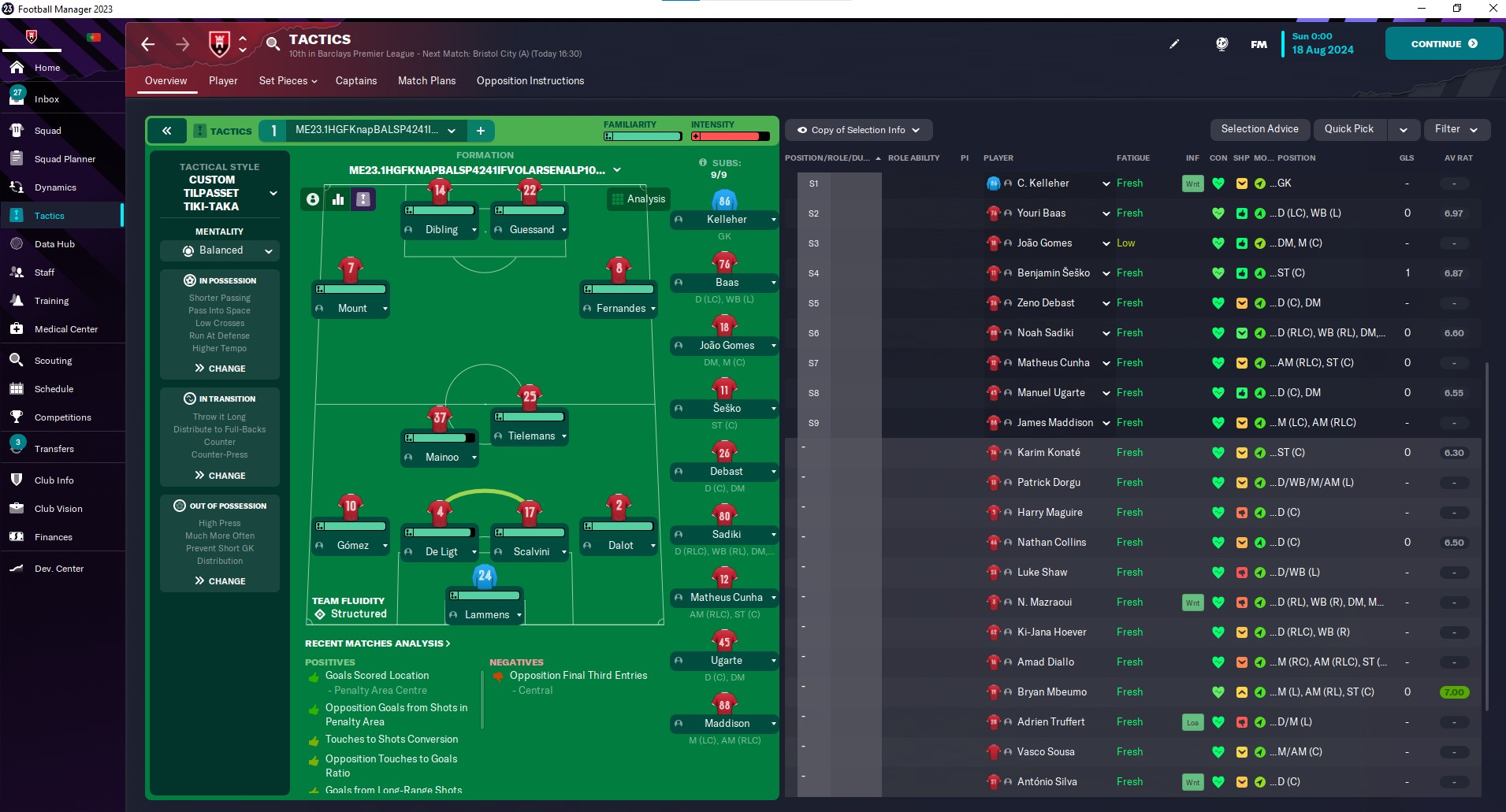
Formation & Style
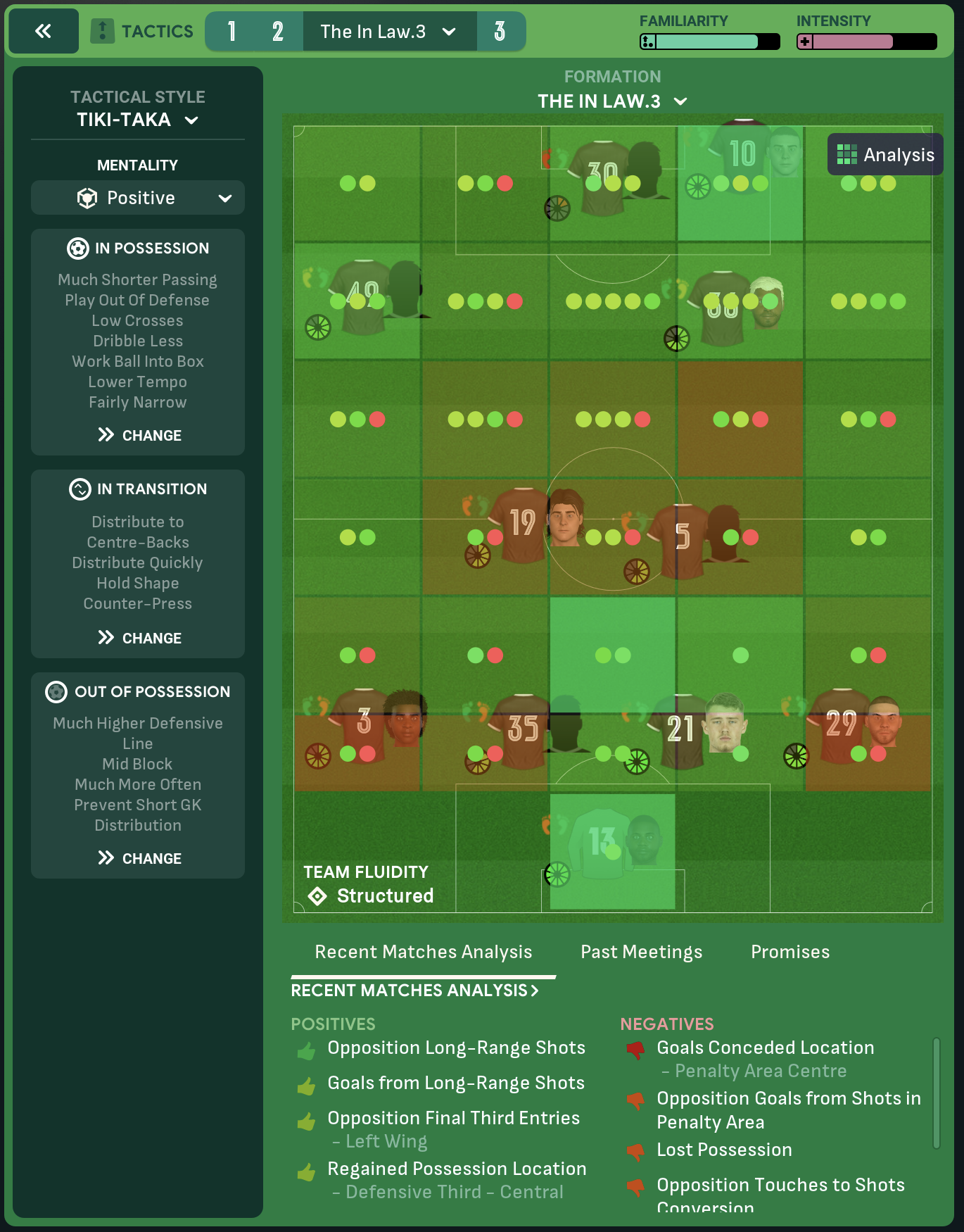
Tactical Style:Tiki-Taka
Mentality:Balanced
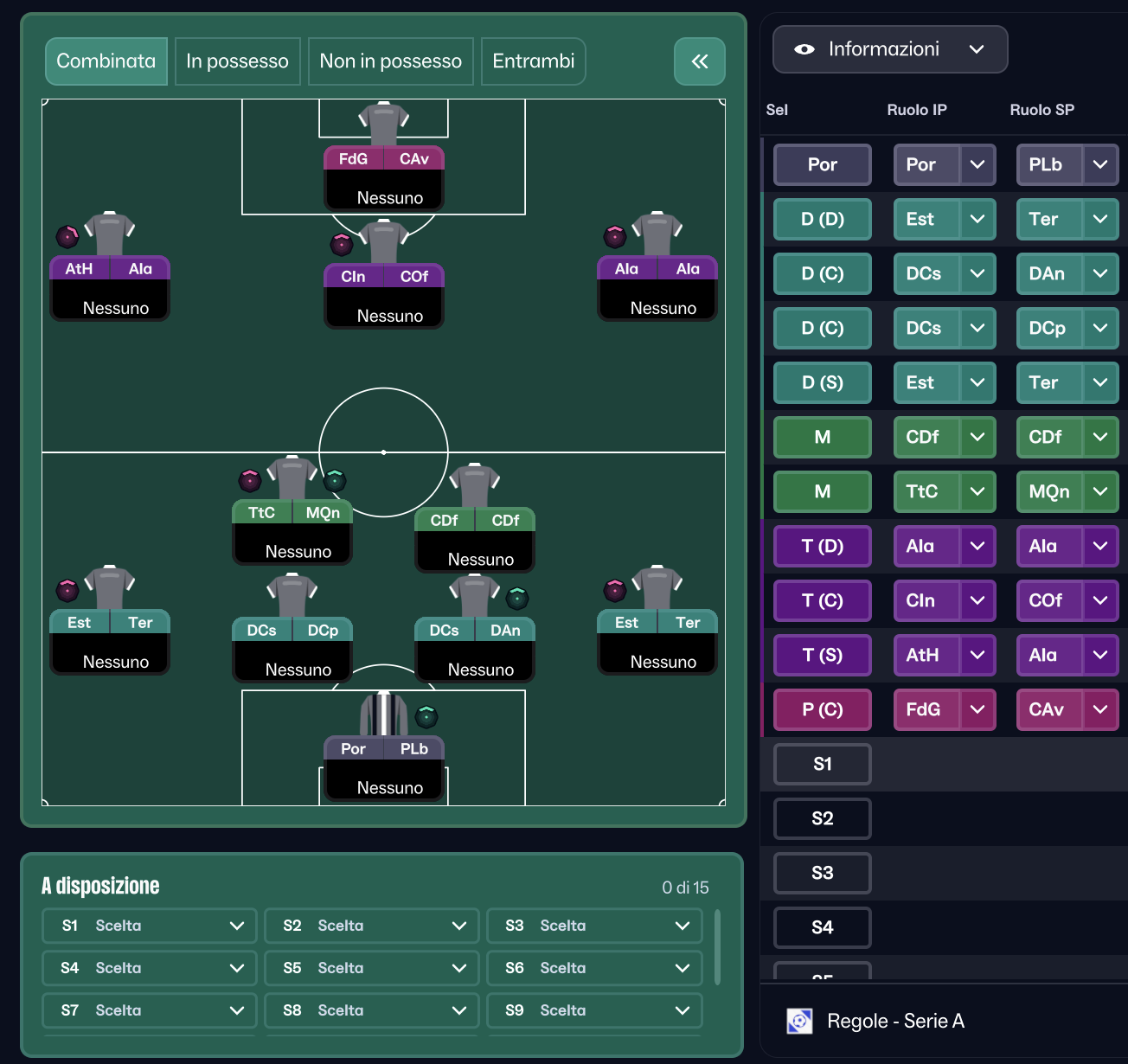
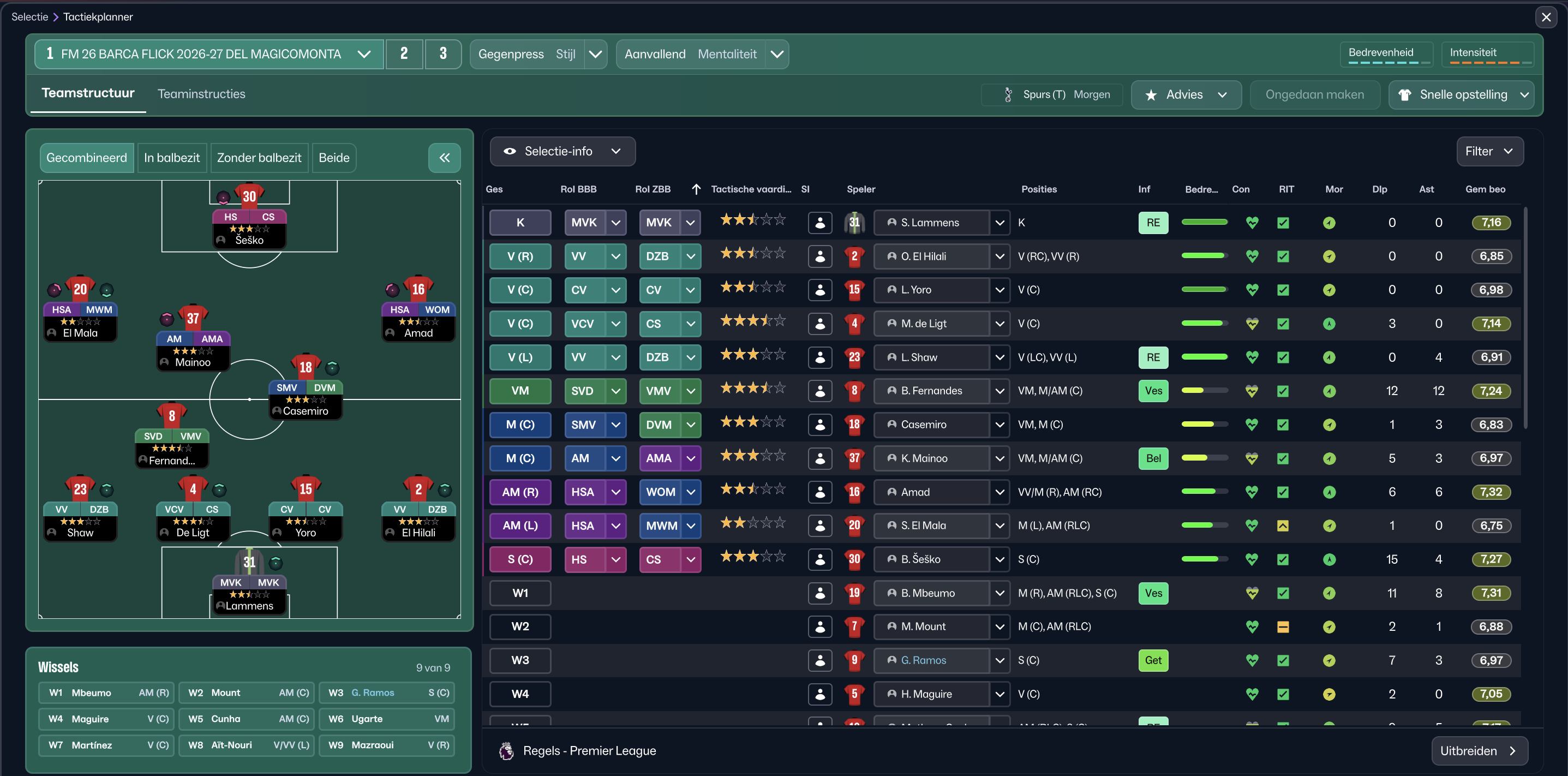
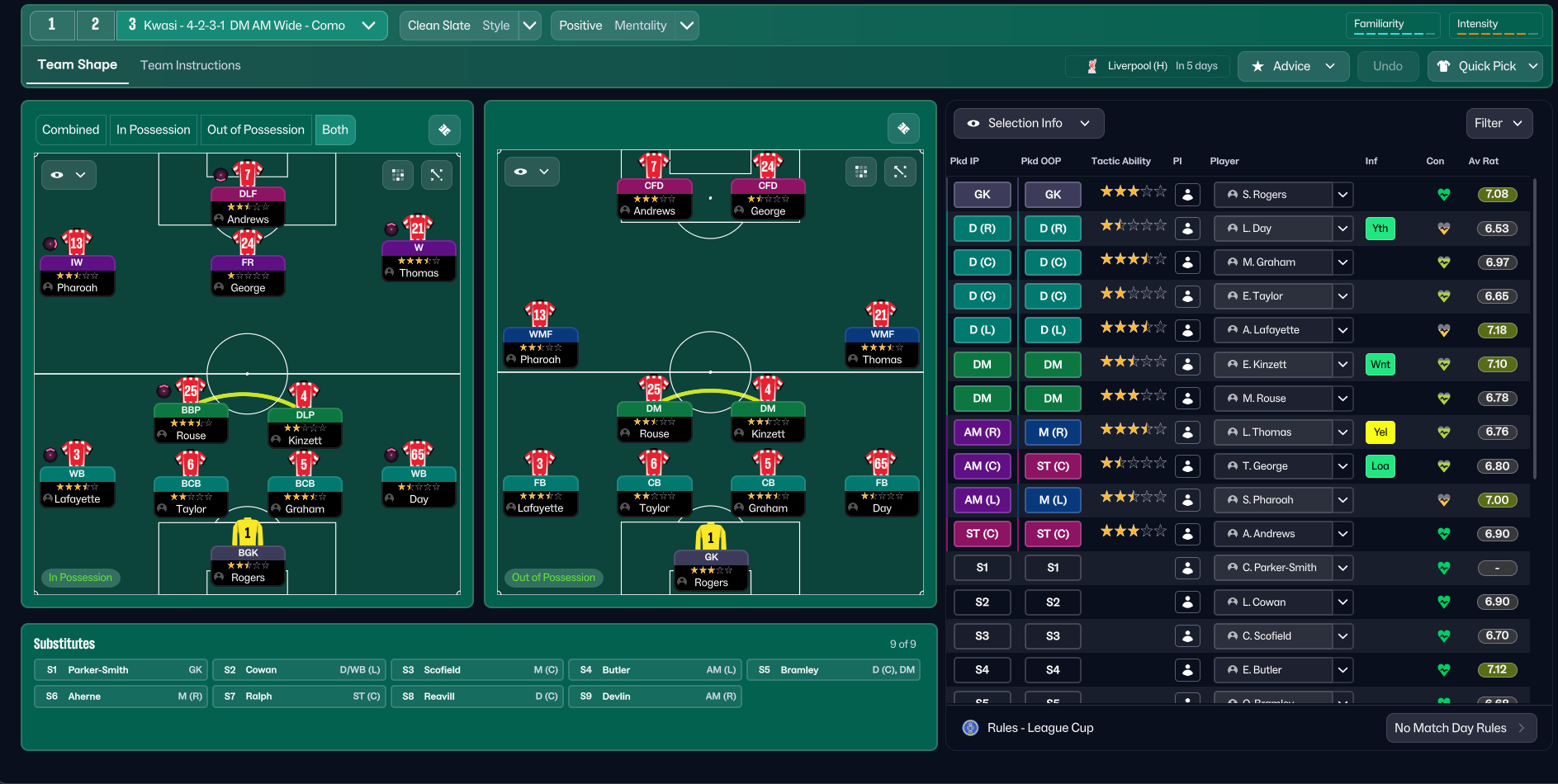
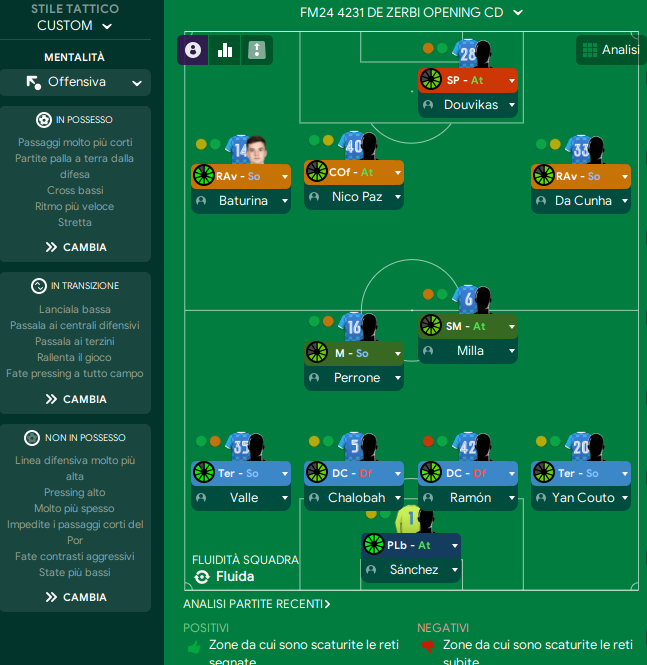
Formation:4-2-3-1
Team Fluidity:Structured
In Possession
Shorter Passing
Pass Into Space
Low Crosses
Run At Defence
Higher Tempo
In Transition
Throw In Long
Distribute to Full-Backs
Counter
Counter-Press
Out of Possession
High Press
Much More Often
Prevent Short GK Distribution
Team Shape Without Ball
Shape:Compact 4-2-3-1
Description:Defensive block stays compact, relying on a high pressing line to quickly regain possession.
Evidence:D (C) at [2,2] and D (C) at [2,3] with 'High Press'.
Team Shape With Ball
Shape:Fluid Front Four
Description:Attacking shape varies, with wing-backs providing width and the AM supporting the ST in central positions.
Evidence:AM (C) at [5,3] supported by wide players AM (R) and AM (L).
Phase Description
Attacking Play
Focus on maintaining possession and building attacks through short and quick passes, exploiting spaces.
Defensive Transition
Quickly pressuring the opposition to recover the ball and losing less ground.
Main Focus
Maximizing width through wing-backs while optimizing central support via the midfield.
Key Strengths
Effective Possession Retention
Short passing combined with a structured approach allows maintaining control of the ball.
Width and Overlap in Attack
Utilizing wing-backs creates space and overlaps, drawing defenders out of position.
Dynamic Attacking Options
Dual threats from central and approaching wide players lead to varied attacking options.
Conflicting Directions
Vulnerability to Counter-Attacks
High pressing leaves spaces behind that can be exploited if possession is lost.
Dependence on Wing-Backs
Over-reliance on wide play can lead to tactical inflexibility if marked effectively.
Central Congestion
Potential crowding of the midfield area may lead to difficulty in progressing the ball.
Tactical Suggestions
Consider a Sweeper Keeper
Incorporating a Sweeper Keeper can provide additional defensive coverage and support against quick counters.
Alter Pressing Triggers
Adjusting pressing trigger frequency could help maintain defensive shape and cover.
Diversify Attacking Play
Introduce varied attacking patterns to avoid predictability, incorporating late runs from midfield.
Ask Questions About Your Lineup
Related Tactics
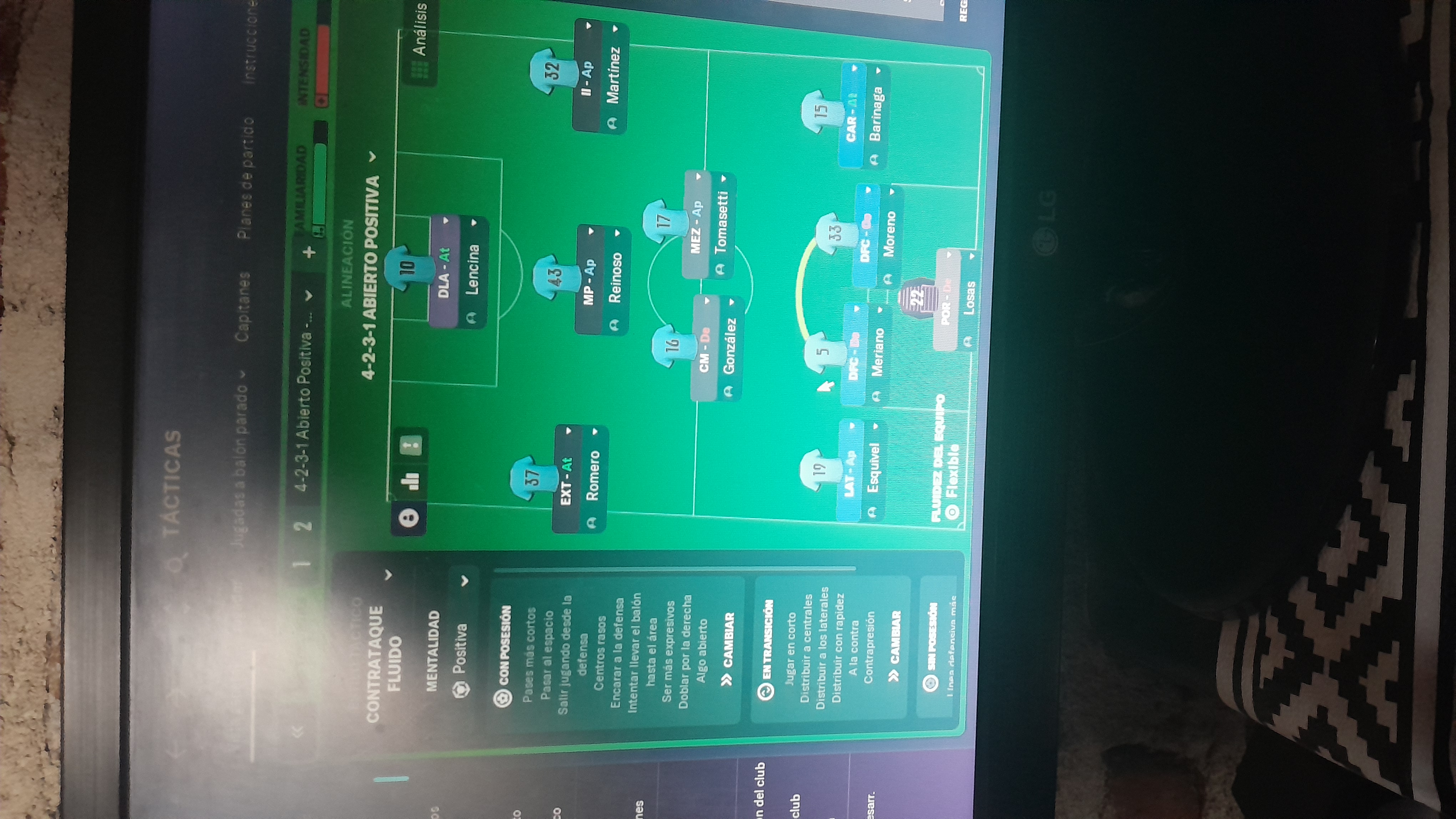
More Tiki-Taka tactics
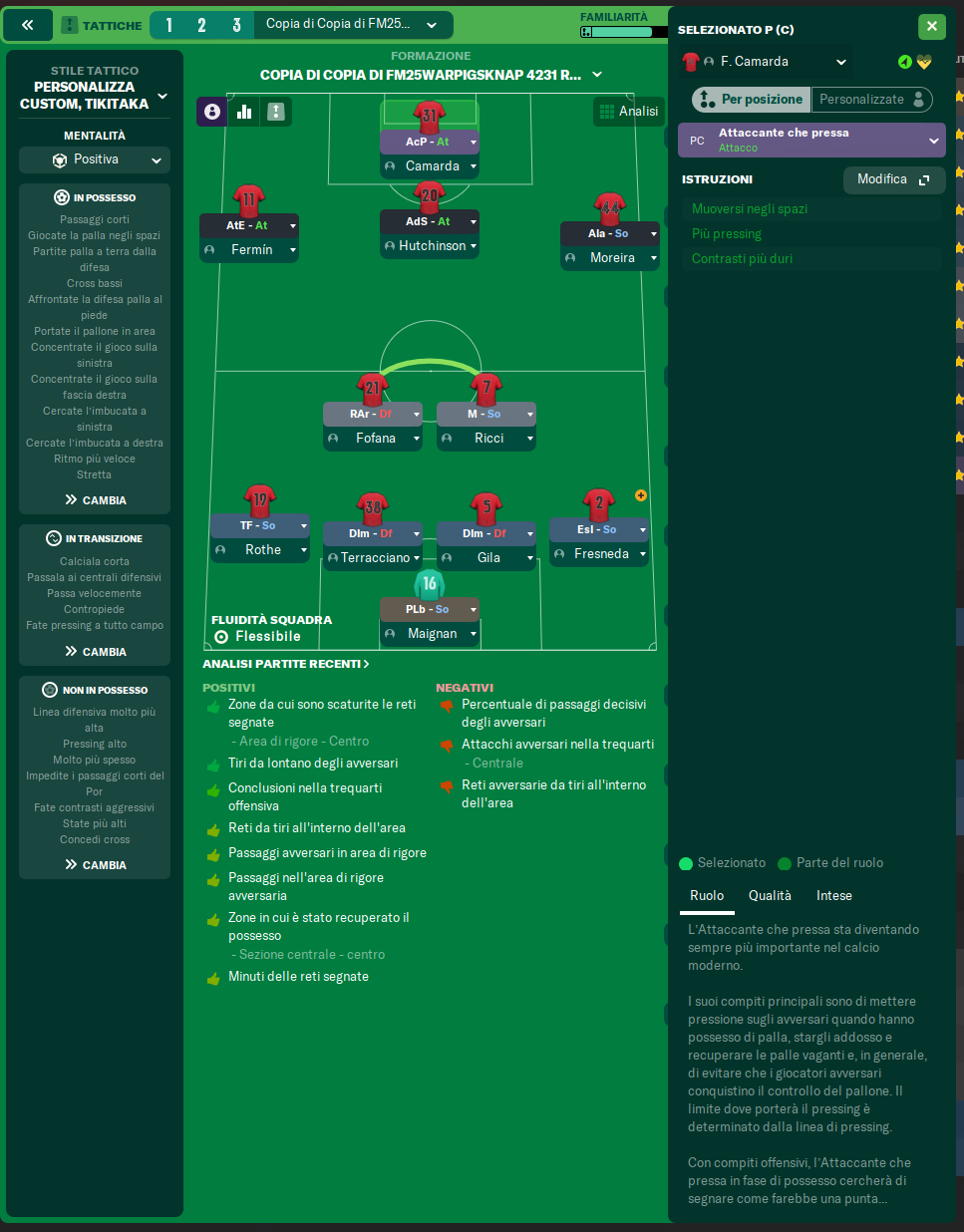
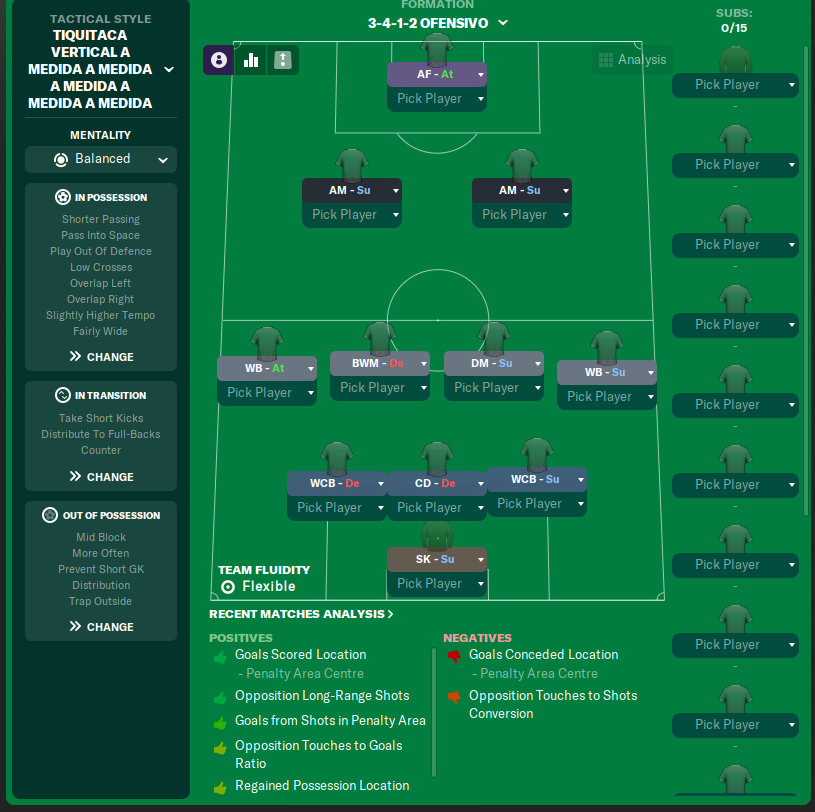
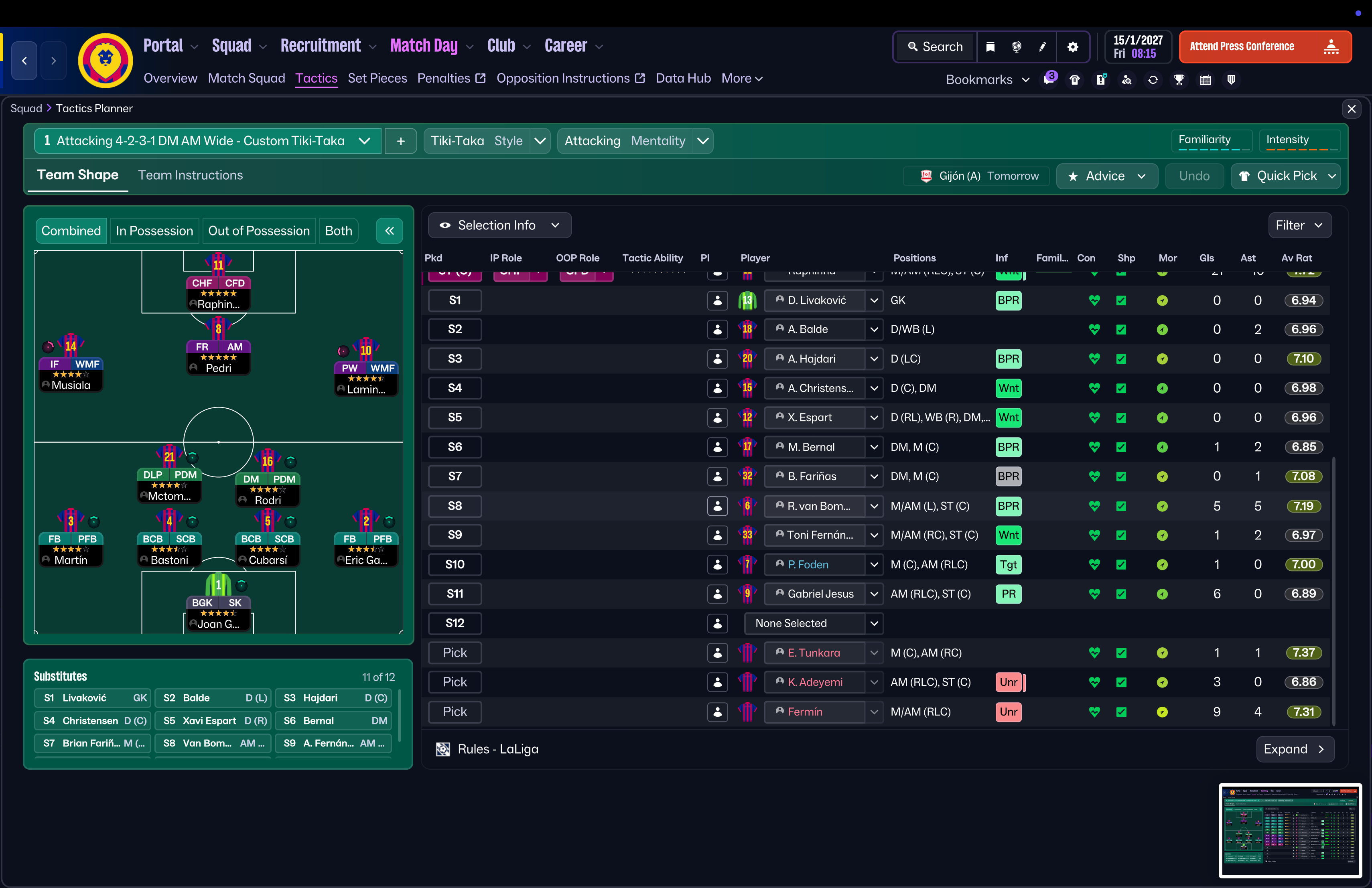
Guides for this formation
The tactical theory behind the 4-2-3-1: roles, instructions, and the trade-offs that decide whether the system holds up.
Player pairings
Midfield Pairs in 4-2-3-1 and 4-4-2
Double pivots and flat pairs in 4-2-3-1 and 4-4-2: when each pairing works, when it collapses, and the AMC unicorn that rescues both.
Read guide
Playing styles
Gegenpressing: A Full Guide
Klopp-style gegenpressing in FM, including squad profile, line-and-press pairing, sustainable workload, and the antipatterns to avoid.
Read guide