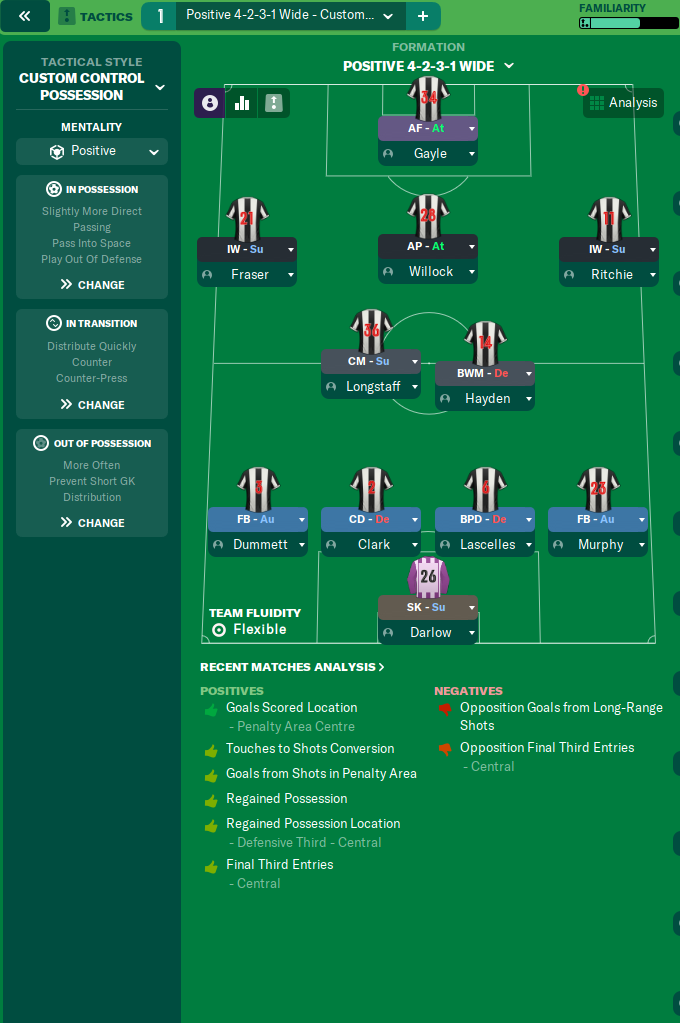
Uploaded Tactic
Formation & Style
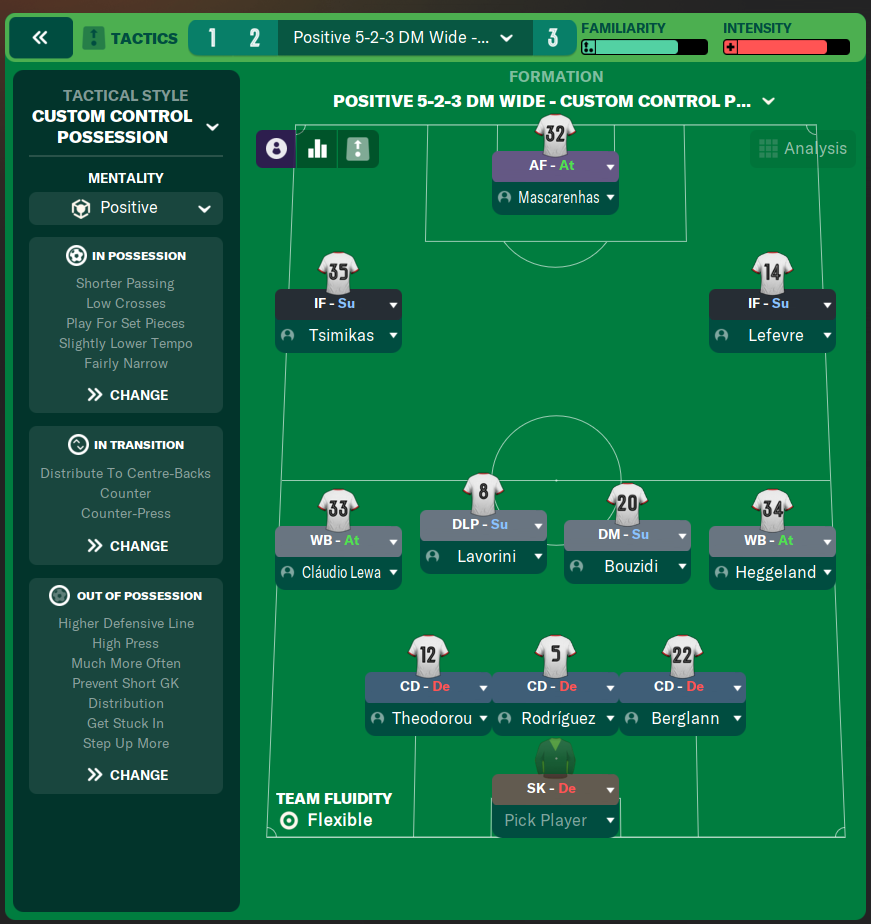
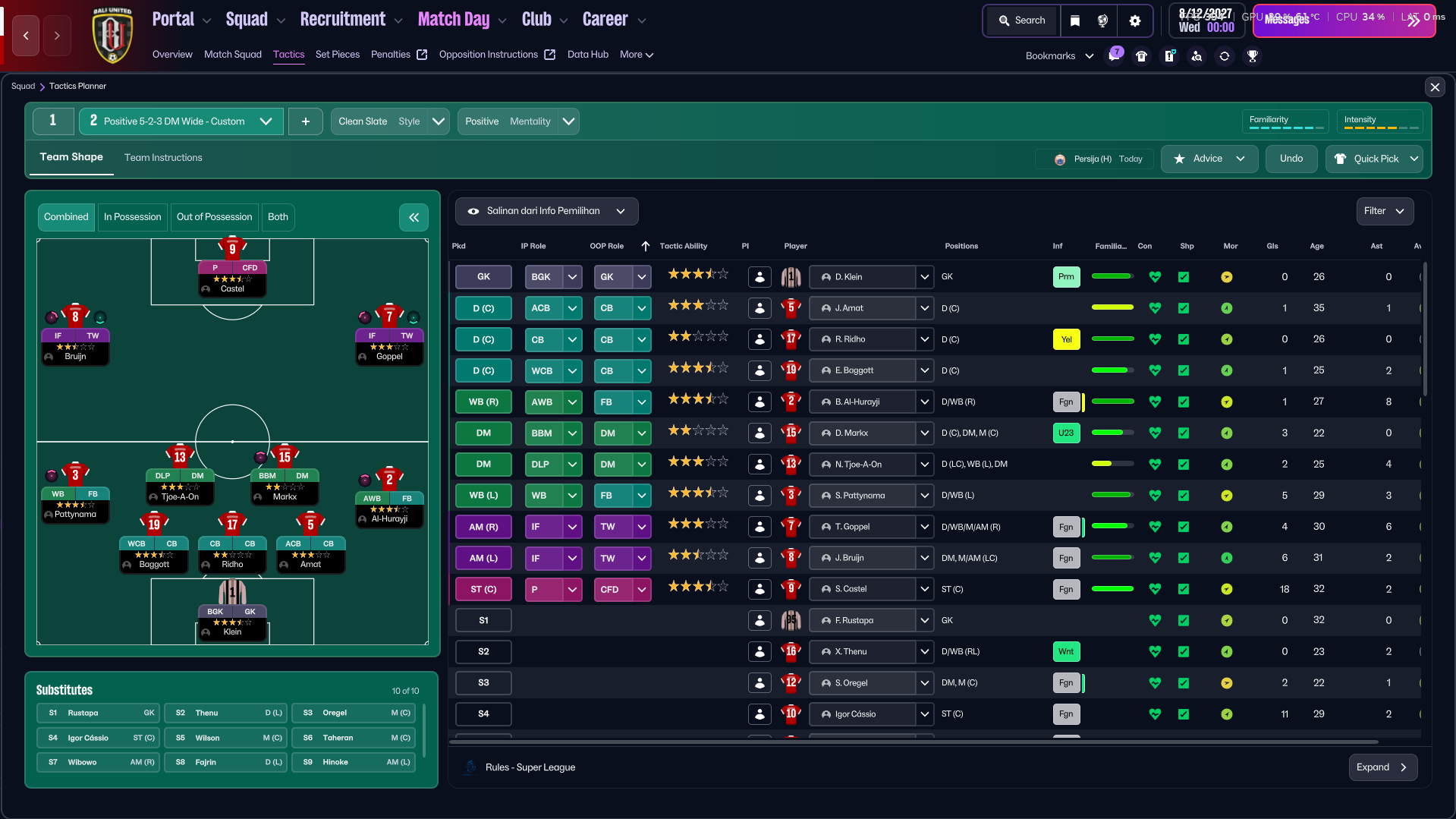
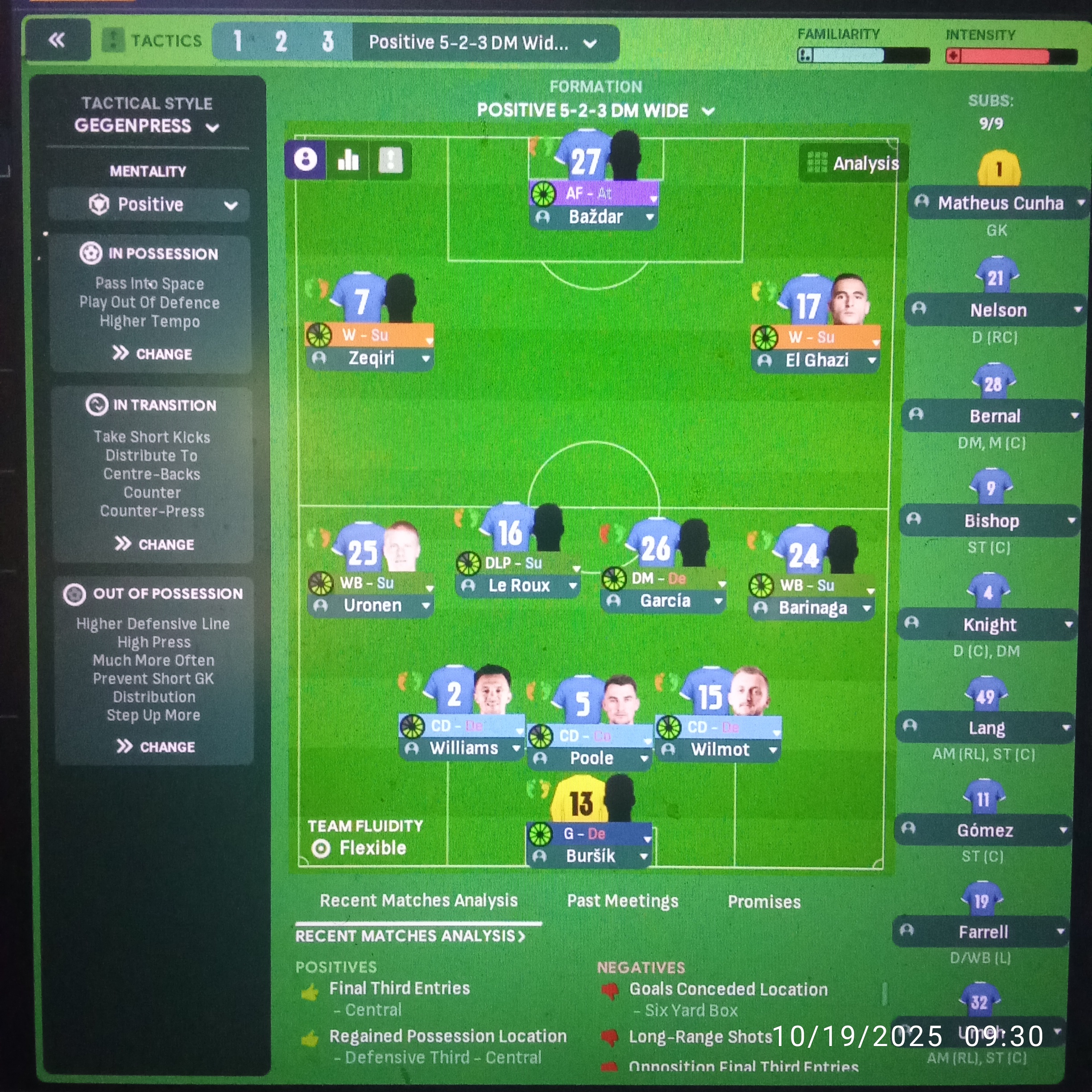
Tactical Style:Custom Control Possession
Mentality:Positive
Formation:5-2-3 DM Wide
Team Fluidity:Flexible
In Possession
Shorter Passing
Low Crosses
Slightly Lower Tempo
Fairly Narrow
Play For Set Pieces
In Transition
Distribute To Centre-Backs
Counter
Counter-Press
Out of Possession
Higher Defensive Line
High Press
Much More Often Prevent Short GK Distribution
Get Stuck In
Step Up More
Team Shape Without Ball
Shape:5-2-3
Description:Compact shape with three central defenders and two defensive midfielders providing cover, ensuring a solid structure against attacks.
Evidence:DC x3 at [2,2-4] and DM x2 at [3,2-3]
Team Shape With Ball
Shape:3-2-5
Description:The formation transitions into a more offensive shape with the wing-backs pushing high and inside forwards cutting in, creating overloads on the flanks.
Evidence:WB x2 at [2,1-5], AF at [6,3] supported by IFs at [5,2-4]
Phase Description
Attacking Play
Utilizes possession-oriented tactics with shorter passing and a slightly lower tempo to control the game. Wing-backs engage in high overlapping runs to stretch the opposition.
Defensive Transition
Counter-pressing approach to immediately regain possession after losing the ball, supported by a high press to disrupt opponent buildup.
Main Focus
Dominating possession while utilizing width through wing-backs to create opportunities.
Key Strengths
Defensive Solidity
The formation provides a strong defensive structure with five defenders and two midfielders shielding the back line.
Width in Attack
Wing-backs push forward to create width, allowing the inside forwards to exploit central spaces.
Possession Control
Short passing and lower tempo enable better ball retention and control of the match flow.
Conflicting Directions
High Press vs. Countering
While the high press can disrupt opponent attacks, it might leave spaces behind if not executed properly, especially with a higher defensive line.
Narrow Shape vs. Overlapping Wing-Backs
The fairly narrow shape may restrict wing-backs' attacking opportunities, potentially reducing crosses into the box.
Balance between Attack and Defence
With a positive mentality and attacking intent, there could be risks in transitions if the team overcommits.
Tactical Suggestions
Adjust Mentality for More Control
Consider shifting to a more balanced mentality to manage risks while still maintaining attacking flow.
Enhance Wing-Back Support
Encourage wing-backs to have mixed roles allowing them to switch between defensive and attacking responsibilities.
Utilize a Target Forward
Introducing a target forward instead of an advanced forward can help in retaining possession under pressure and providing aerial options.
Ask Questions About Your Lineup
Related Tactics
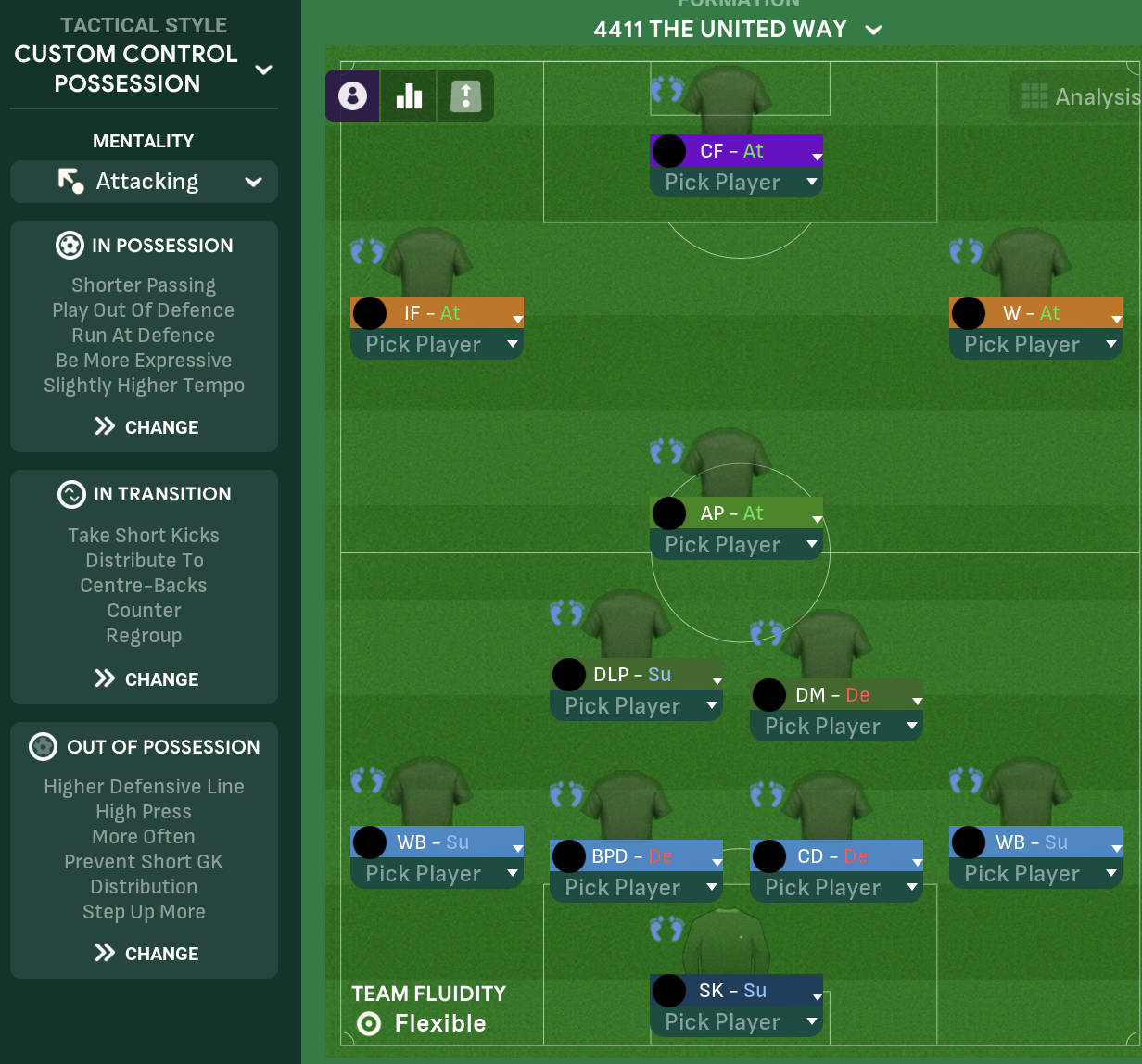
More Custom Control Possession tactics
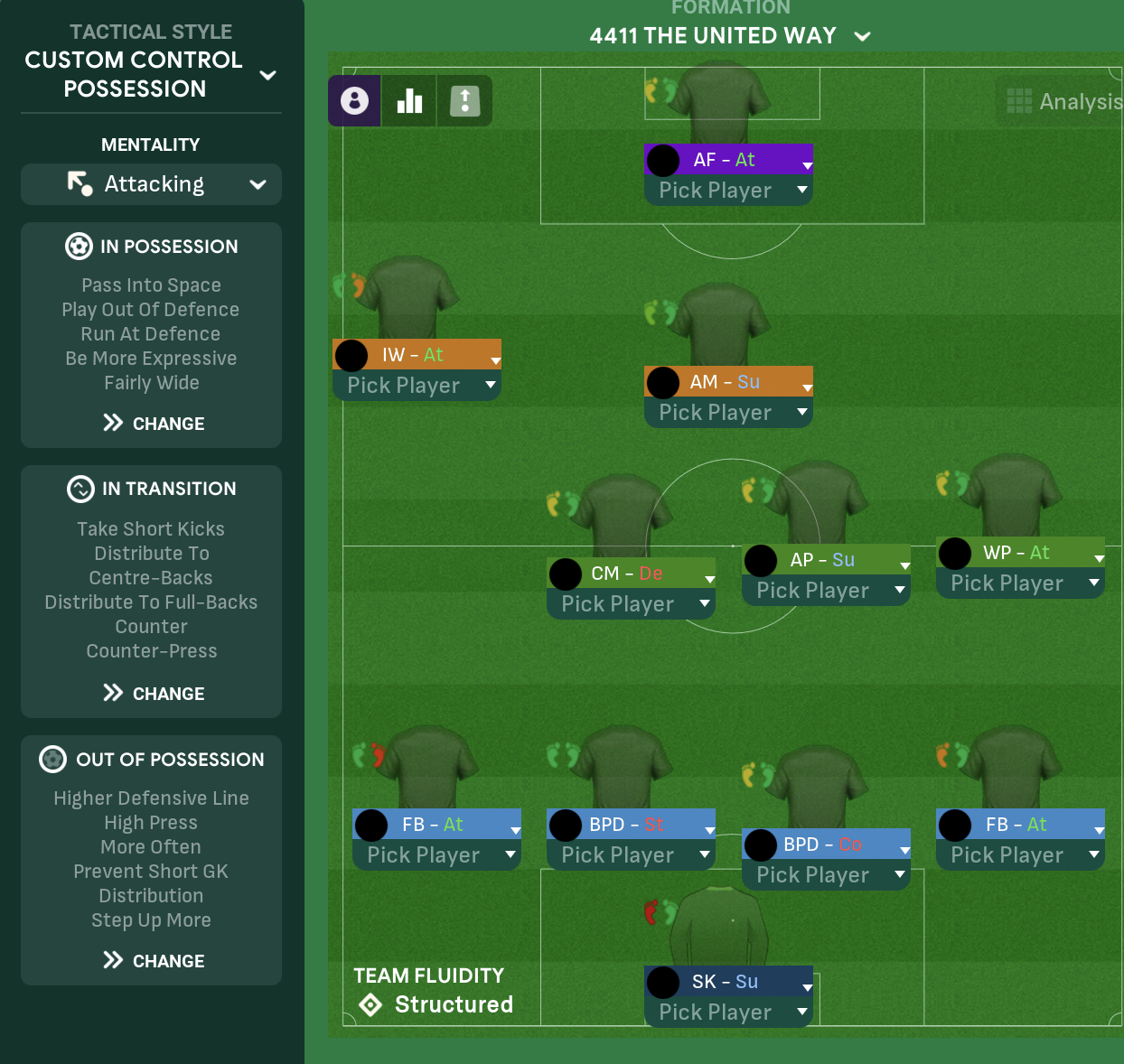
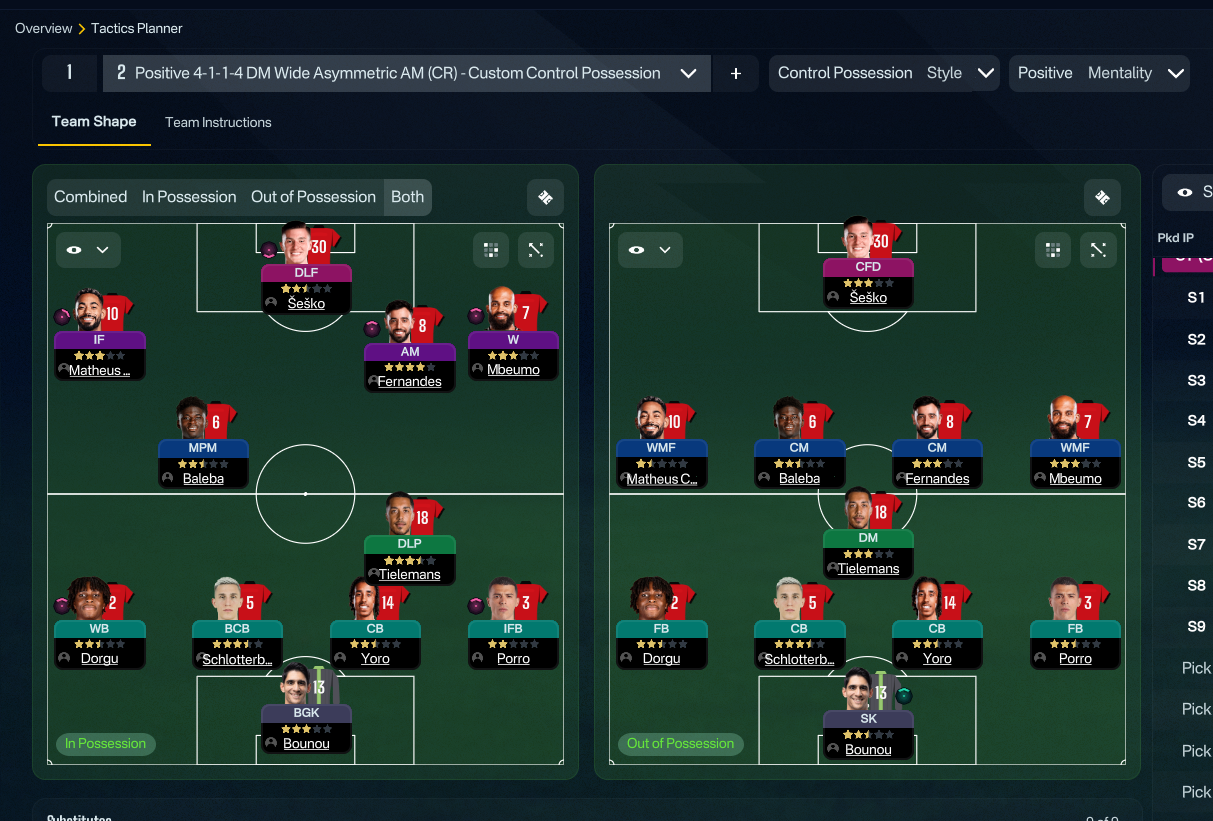
Guides for this formation
The tactical theory behind the 5-2-3 DM Wide: roles, instructions, and the trade-offs that decide whether the system holds up.