Uploaded Tactic
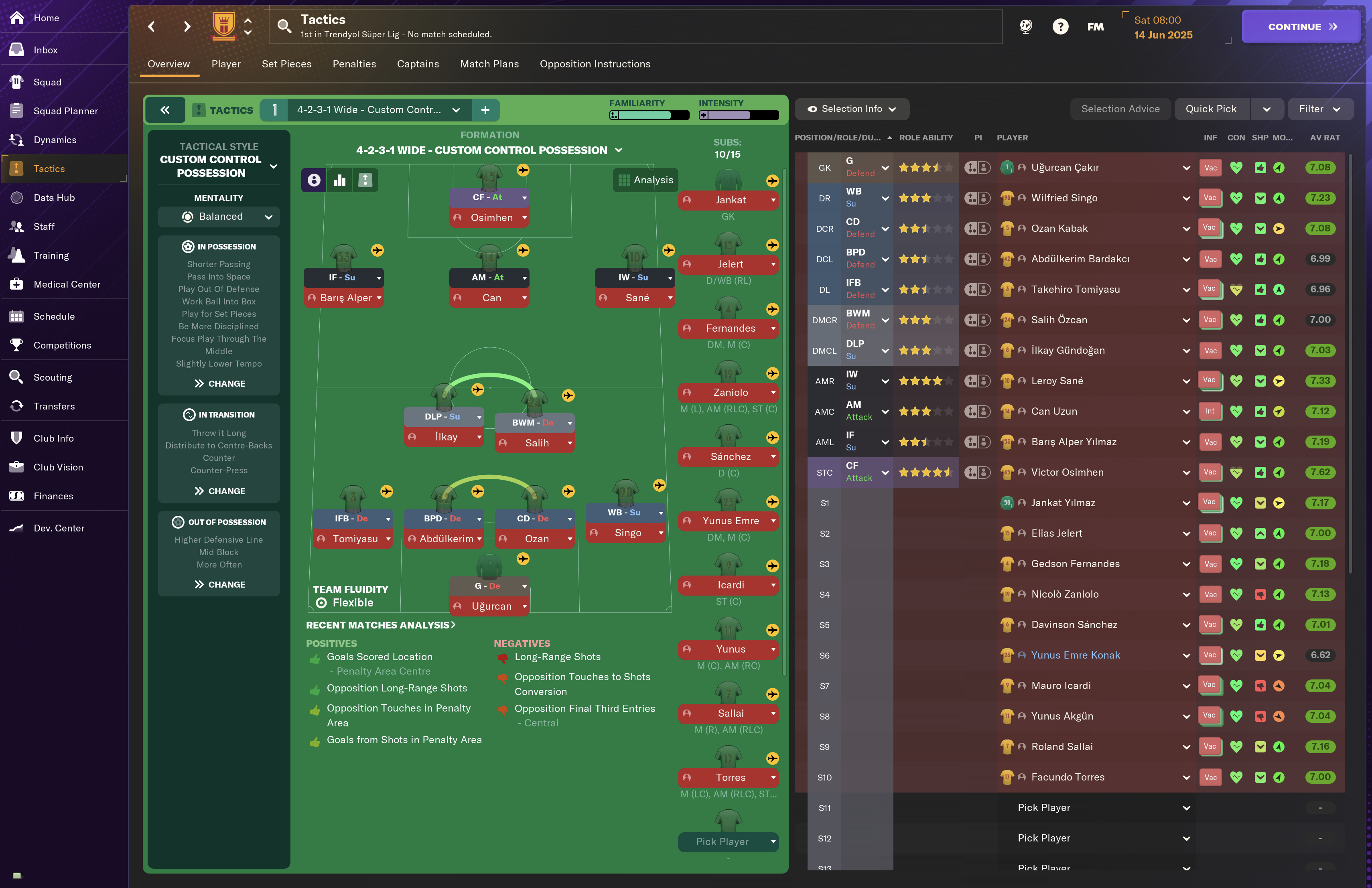
Formation & Style
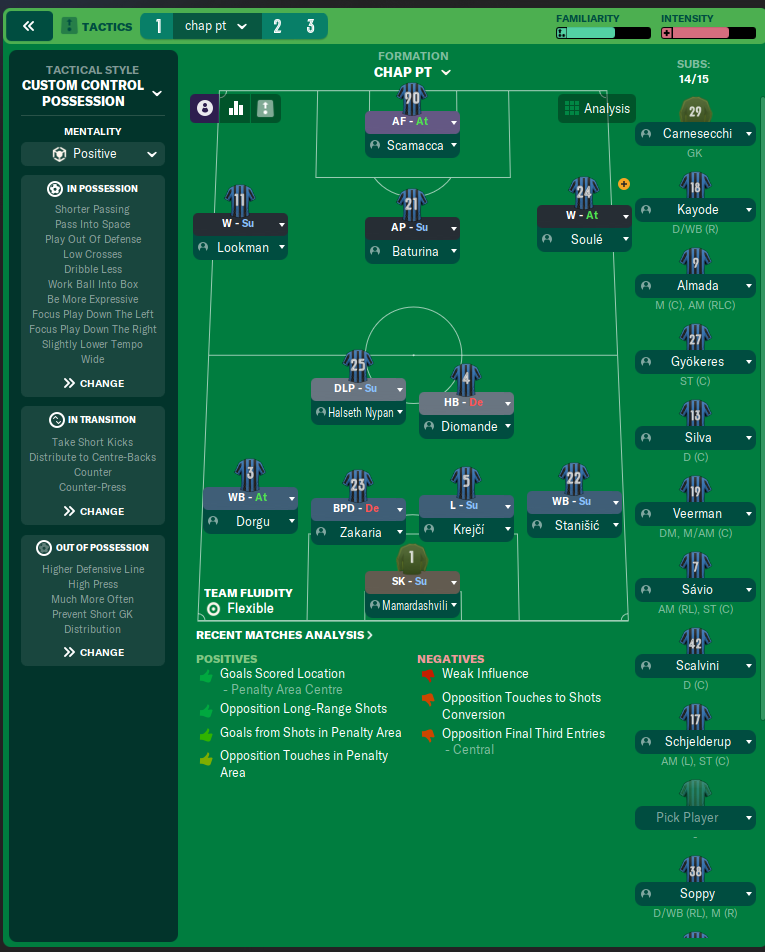
Tactical Style:Custom Control Possession
Mentality:Balanced
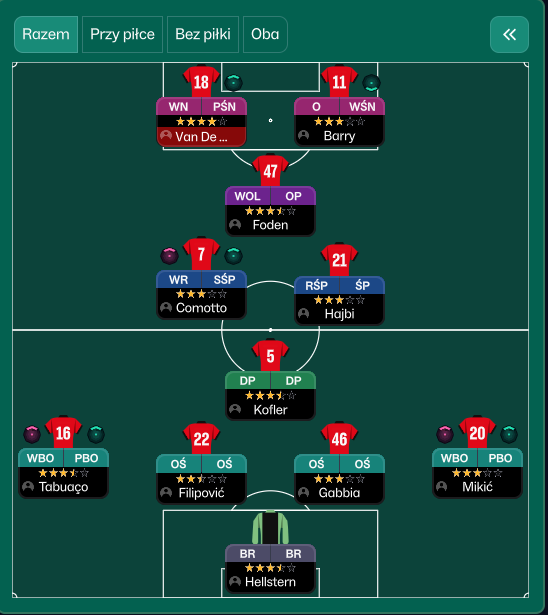
Formation:4-2-3-1 Wide
Team Fluidity:Flexible
In Possession
Pass Into Space
Play Out of Defence
Focus Play Through The Middle
Slightly Lower Tempo
In Transition
Counter
Counter-Press
Distribute To Centre-Backs
Out of Possession
Higher Defensive Line
Mid Block
More Often
Team Shape Without Ball
Shape:4-2
Description:Compact defending shape that aims to close down spaces effectively while maintaining coverage in midfield.
Evidence:BWM-D at [3,3] and DLP-S at [3,4] provide additional support.
Team Shape With Ball
Shape:3-2-1
Description:Overlapping full-backs provide width, while the attacking midfielders create space through intricate play.
Evidence:IW-S at [5,2] and [5,4] combined with AM-A at [5,3] furthers attacking creativity.
Phase Description
Attacking Play
The team looks to control possession and create space for attackers by utilizing width and depth.
Defensive Transition
The team alternates between counter-pressing and organized retreats, depending on the opponent's position.
Main Focus
Maintain possession while probing for opportunities to penetrate the defense.
Key Strengths
Goals Scored Location
Efficient at creating chances within the penalty area, maximizing goal-scoring opportunities.
Control of Penalty Area
Strong presence in opponent's penalty area leads to potentially dangerous situations.
Long-Range Shots
The team's ability to take long-range shots adds danger from distance.
Conflicting Directions
Shot Conversion
The team struggles with converting shots to goals, indicating potential inefficiencies in finishing.
Final Third Entries
Inconsistent entries into the opposition's final third may hinder scoring opportunities.
Defensive Vulnerabilities
Vulnerabilities to counter-attacks may expose the defense given the higher defensive line.
Tactical Suggestions
Improve Shot Conversion
Focus on better decision-making in offensive situations to boost conversion rates.
Enhance Defensive Awareness
Train players to quickly transition defensively to reduce vulnerability during counter-attacks.
Utilize Wider Play
Encourage wider players to stay wide to create more space for central attackers.
Ask Questions About Your Lineup
Related Tactics
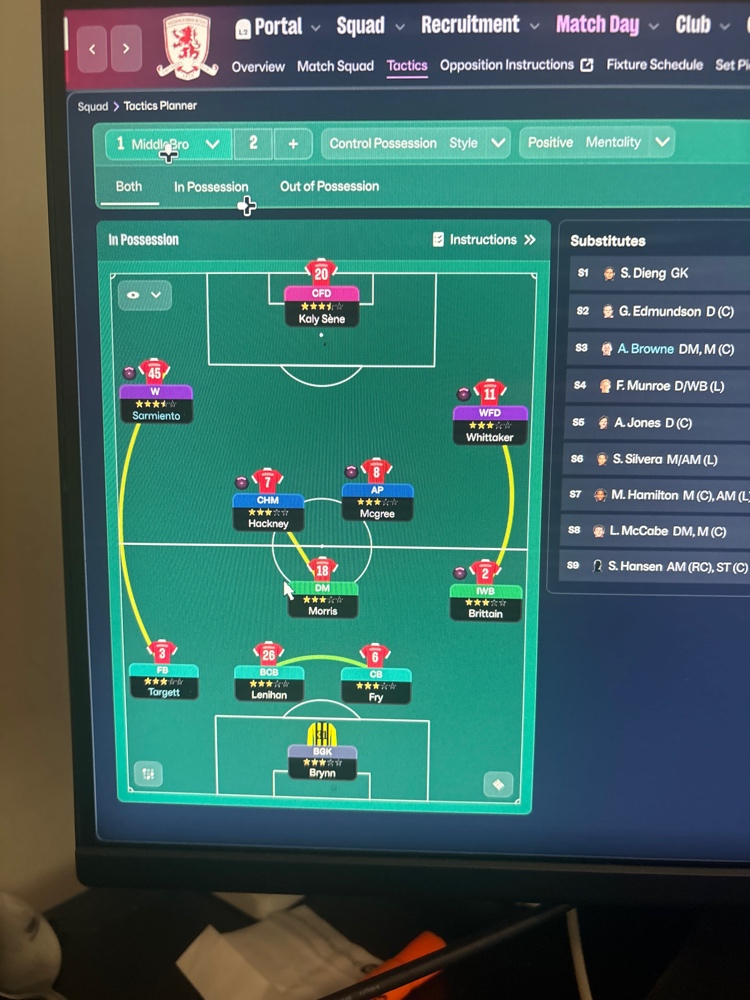
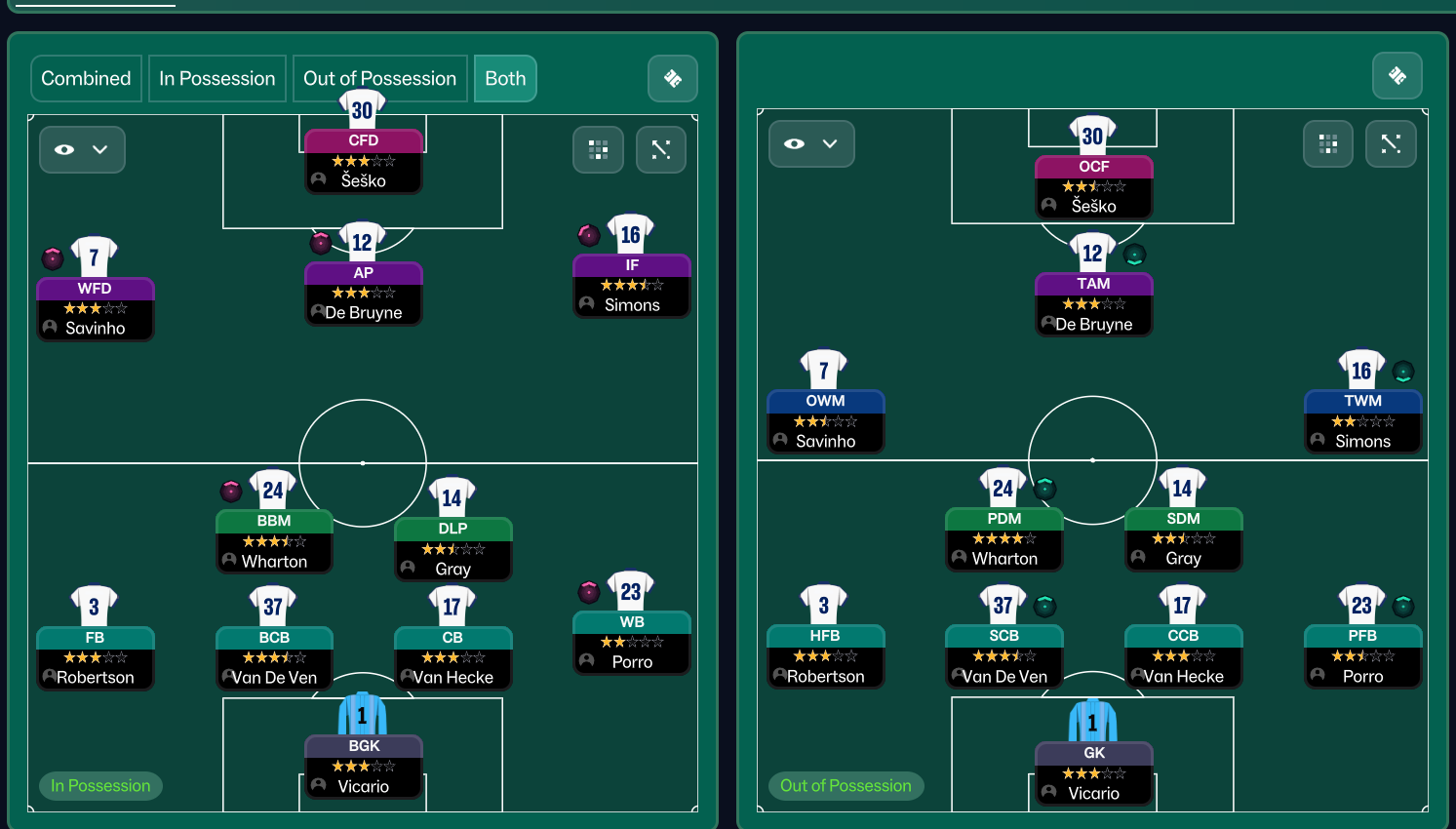
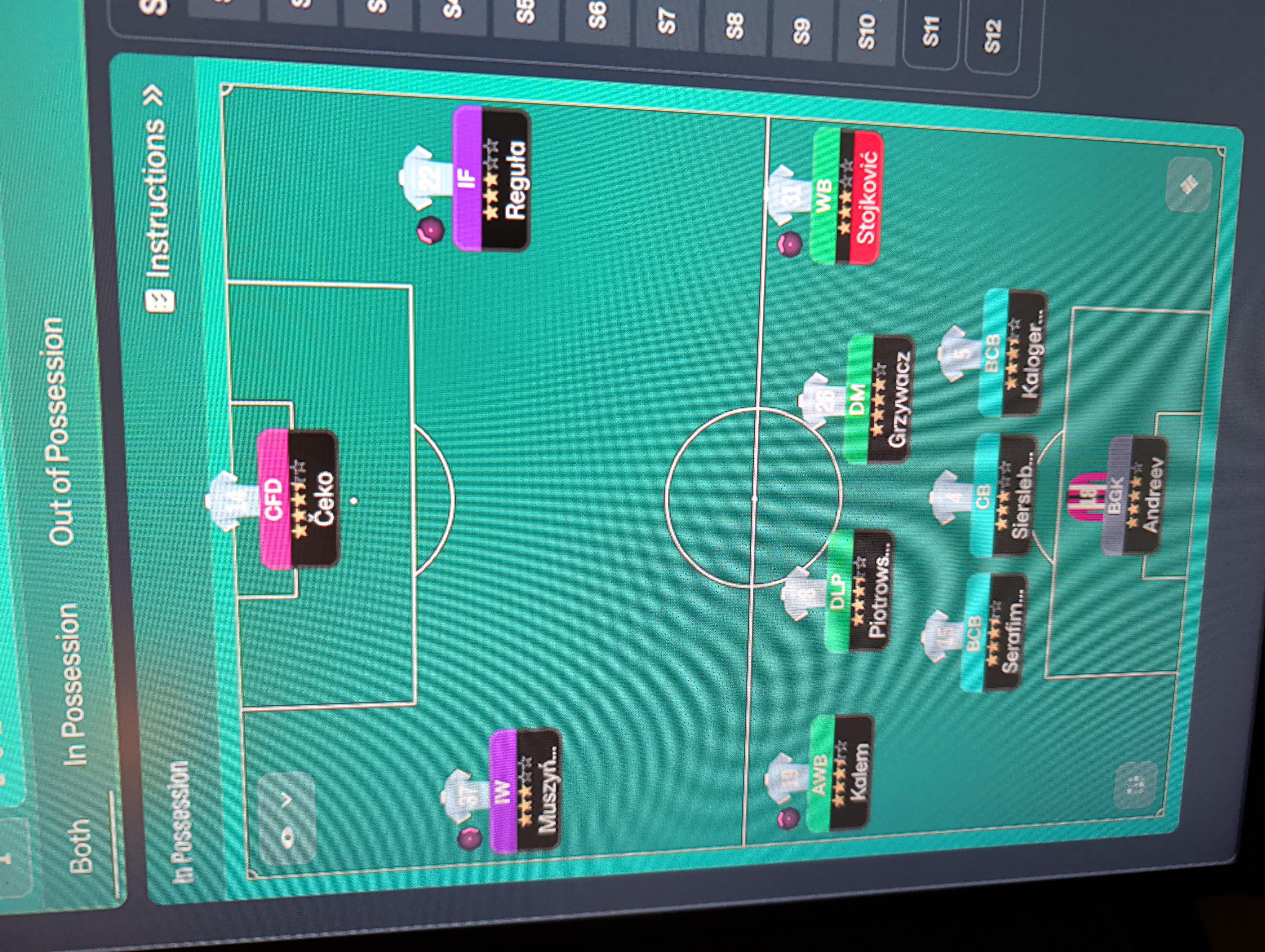
More Custom Control Possession tactics
Guides for this formation
The tactical theory behind the 4-2-3-1 Wide: roles, instructions, and the trade-offs that decide whether the system holds up.
Player pairings
Midfield Pairs in 4-2-3-1 and 4-4-2
Double pivots and flat pairs in 4-2-3-1 and 4-4-2: when each pairing works, when it collapses, and the AMC unicorn that rescues both.
Read guide
Playing styles
Gegenpressing: A Full Guide
Klopp-style gegenpressing in FM, including squad profile, line-and-press pairing, sustainable workload, and the antipatterns to avoid.
Read guide