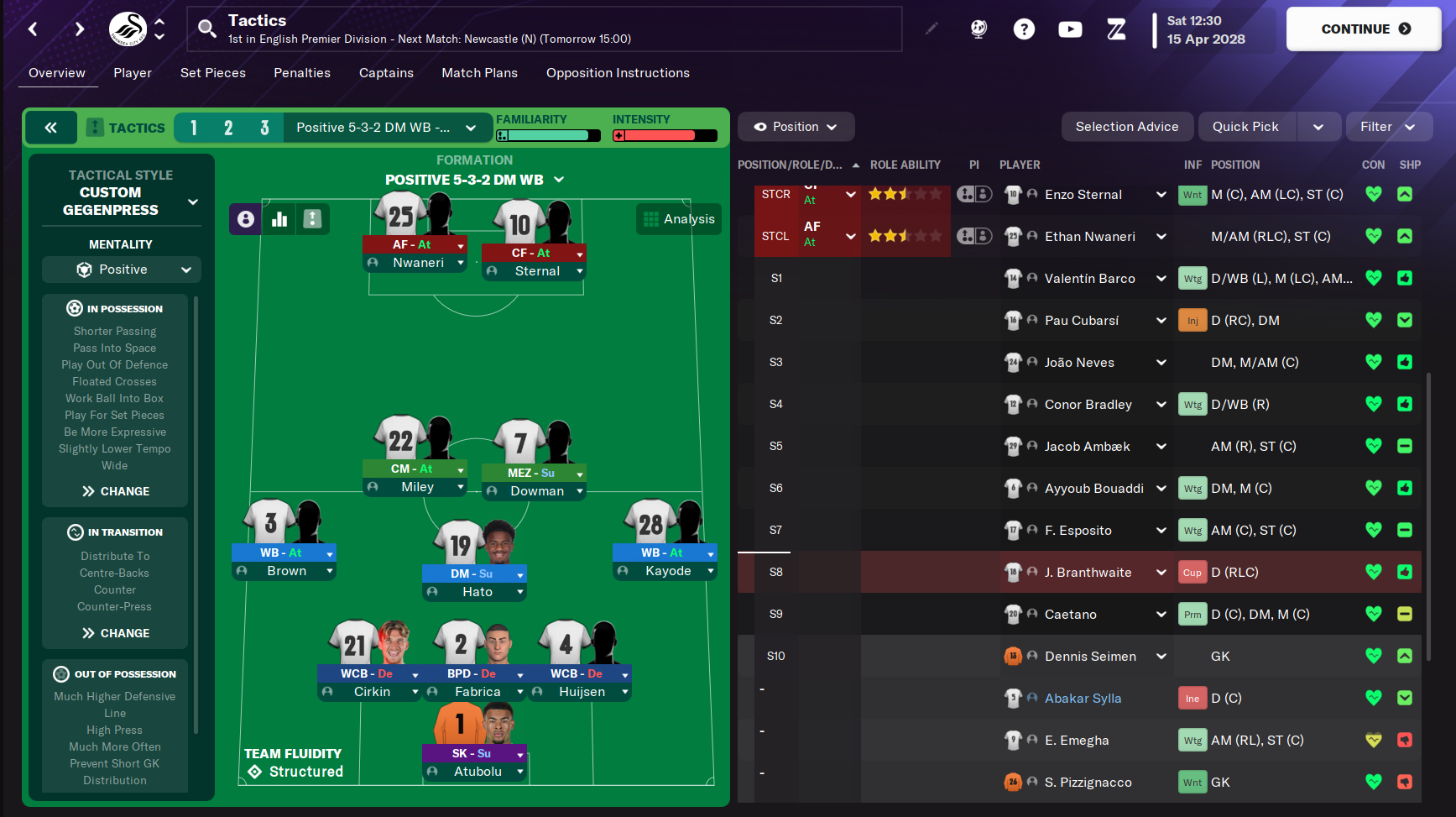
Uploaded Tactic
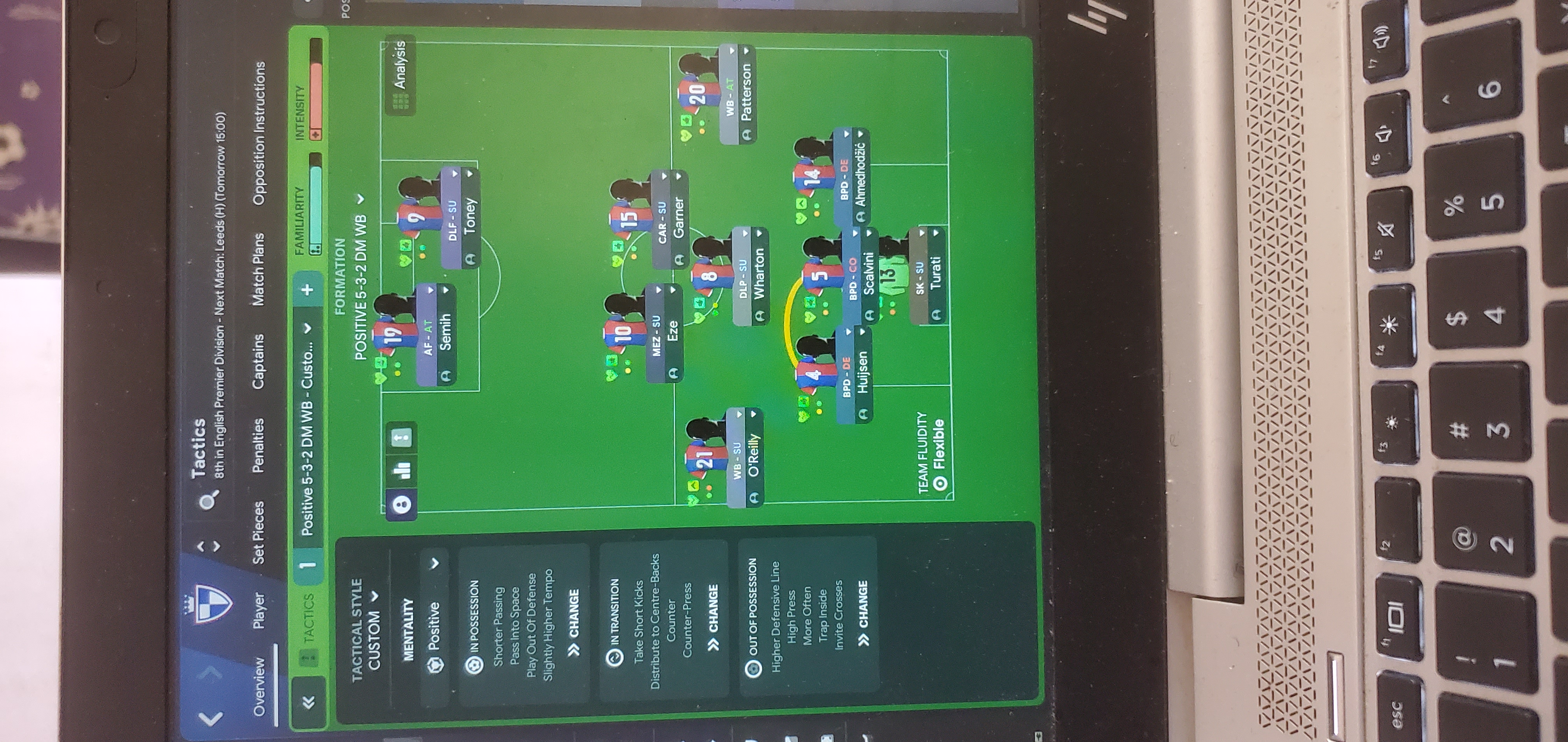
Formation & Style
Tactical Style:Custom
Mentality:Positive
Formation:5-3-2 DM WB
Team Fluidity:Flexible
In Possession
Shorter Passing
Pass Into Space
Play Out Of Defence
Slightly Higher Tempo
In Transition
Take Short Kicks
Distribute to Centre-Backs
Counter
Out of Possession
Higher Defensive Line
High Press
More Often
Trap Inside
Invite Crosses
Team Shape Without Ball
No team shape without ball data available
Team Shape With Ball
No team shape with ball data available
Key Strengths
Solid Defensive Structure
The 5-3-2 formation provides a strong defensive base with five defenders, making it difficult for opponents to penetrate.
Counter-Attacking Ability
The tactic encourages quick transitions, allowing for swift counter-attacks once possession is regained.
Wide Play Opportunities
Wing-backs can utilize space on the flanks, creating width and crossing opportunities for forwards.
Numerical Advantage in Midfield
Three central midfielders ensure midfield control, providing support for both attack and defense.
Conflicting Directions
High Press vs. Defensive Stability
The high press can leave the defense exposed if not executed properly, potentially leading to gaps in the backline.
Wing-Back Duties
If both wing-backs push forward, there may be a lack of cover defensively, especially against swift counter-attacks.
Tempo Choices
Slightly higher tempo might lead to rushed decisions, contradicting the shorter passing style.
Transition Phase
Relying on short kicks may slow down counter-attacks, which could be detrimental given the attacking mentality.
Tactical Suggestions
Balance Wing-Back Roles
Consider alternating wing-back duties between attack and support to ensure defensive coverage.
Adjust Pressing Intensity
Optimize high pressing conditions to avoid defensive vulnerabilities, possibly limiting it to certain situations.
Crowd the Midfield
Consider a more advanced role for one of the central midfielders to increase pressure in the opponent’s half.
Utilize Playmaker More Effectively
Instruct the deep-lying playmaker to occasionally make forward runs to support the attack, adding creativity.
Ask Questions About Your Lineup
Related Tactics
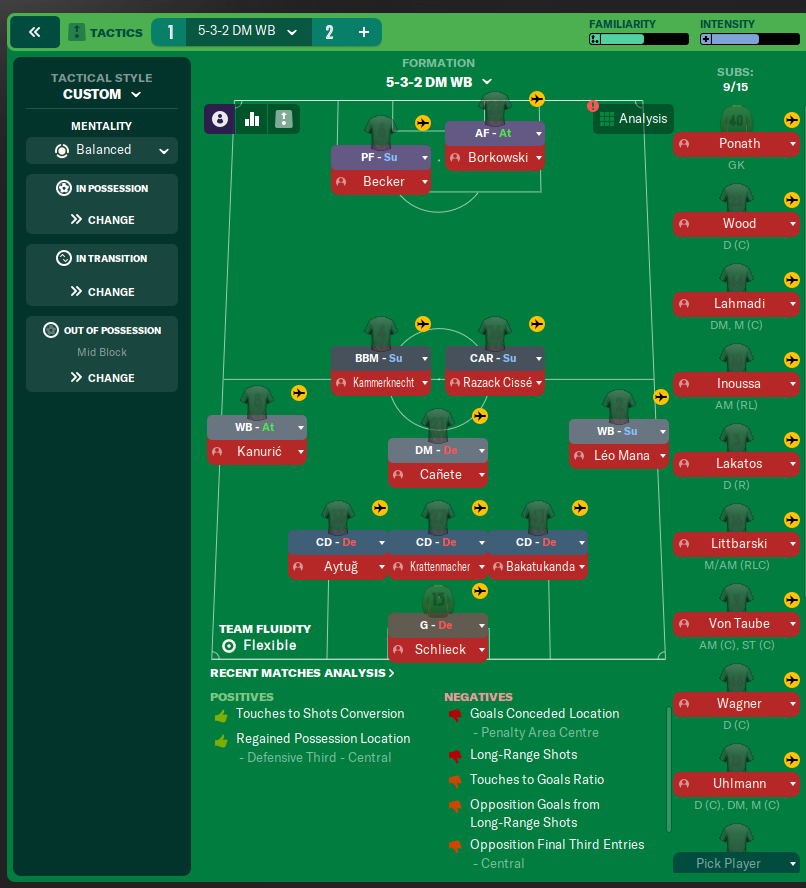
5-3-2 DM WB Formation
Custom
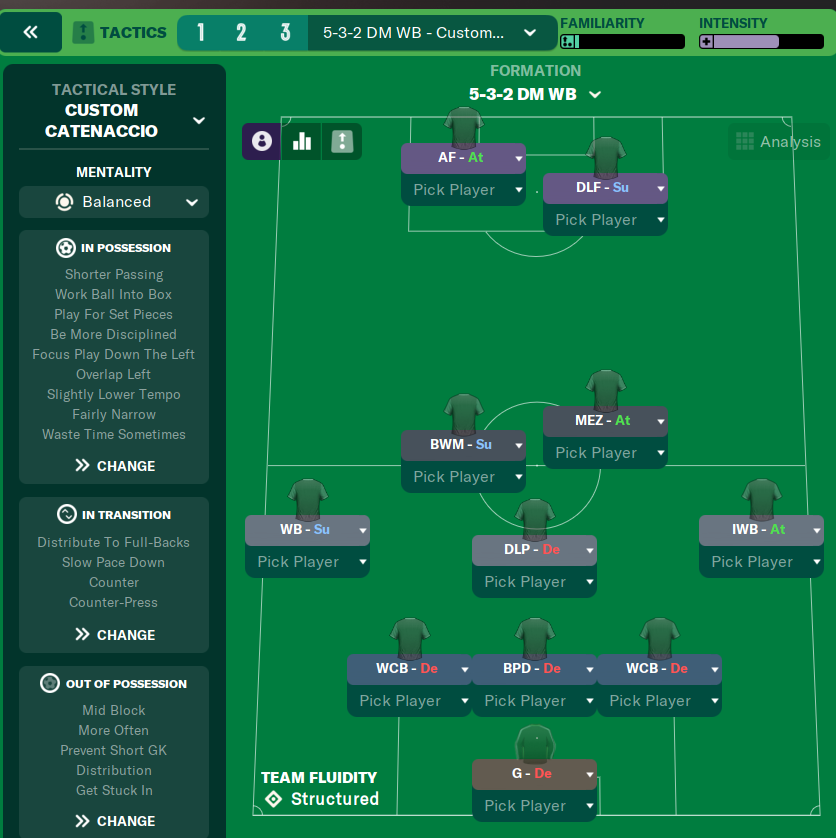
Catenaccio 5-3-2 DM WB
Custom Catenaccio
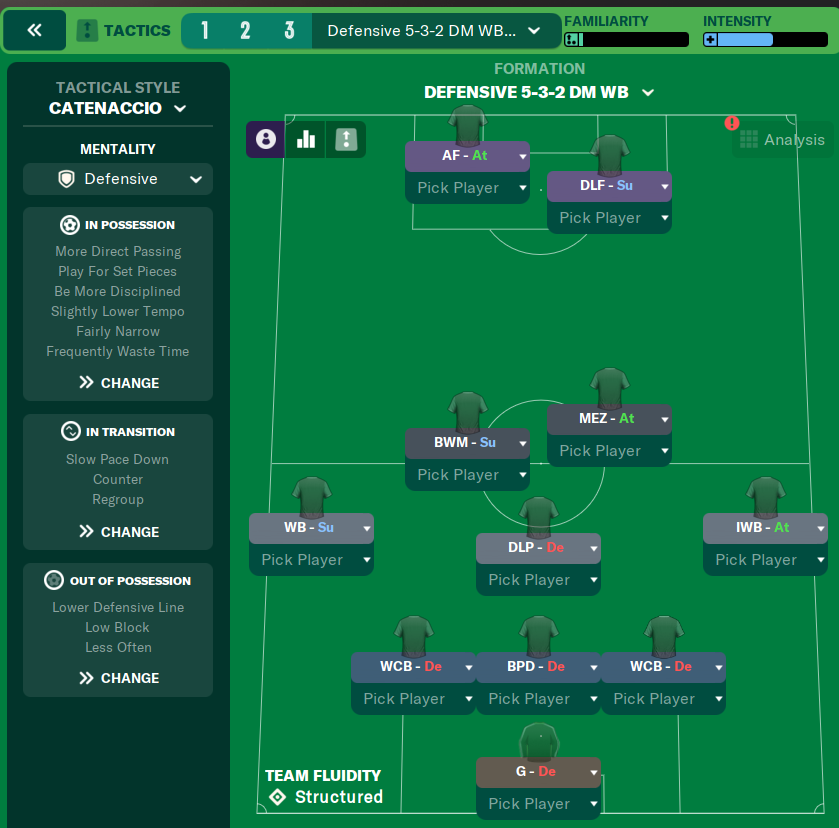
Catenaccio 5-3-2 DM WB
Catenaccio
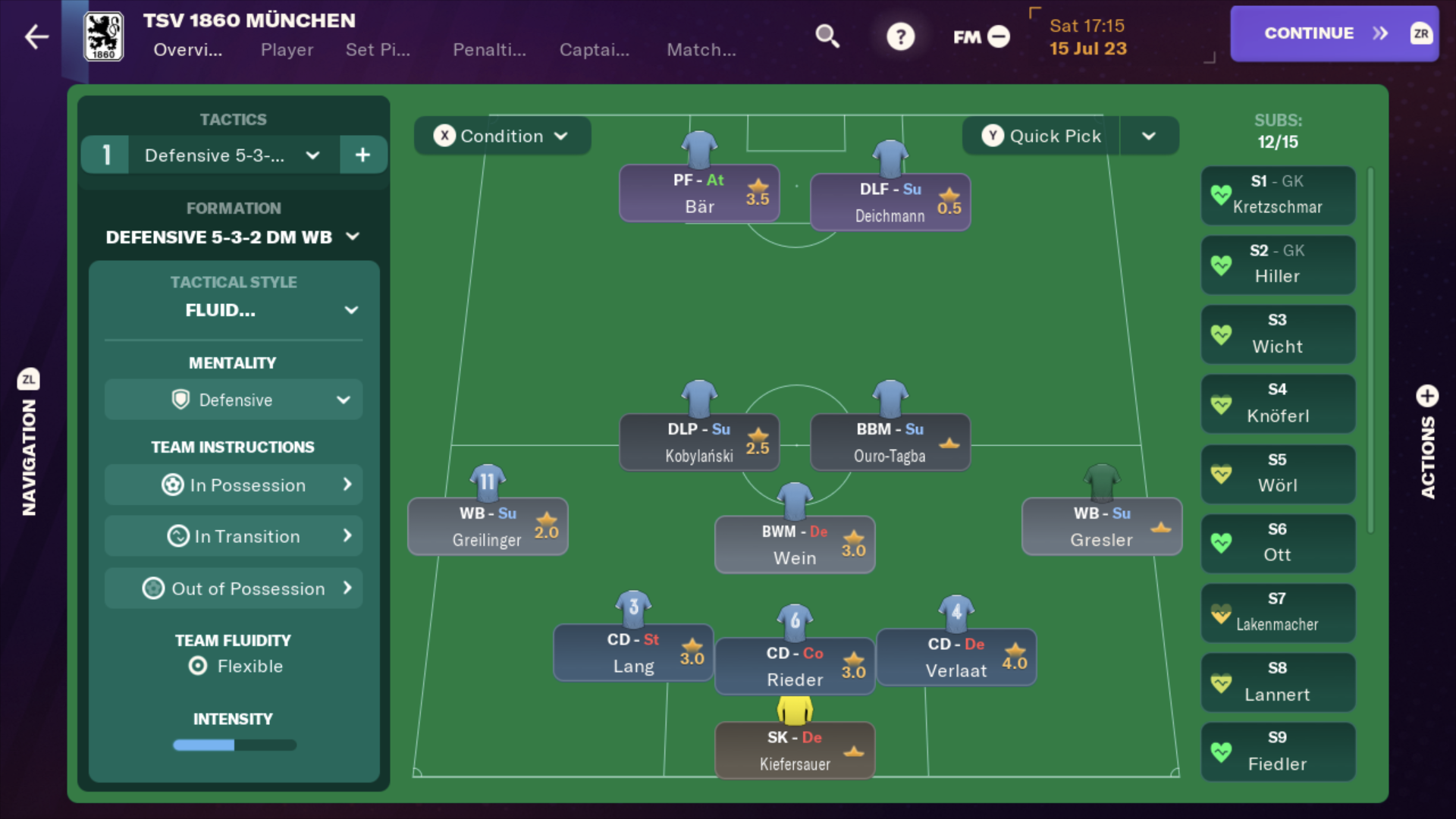
Fluid 5-3-2 DM WB
Fluid
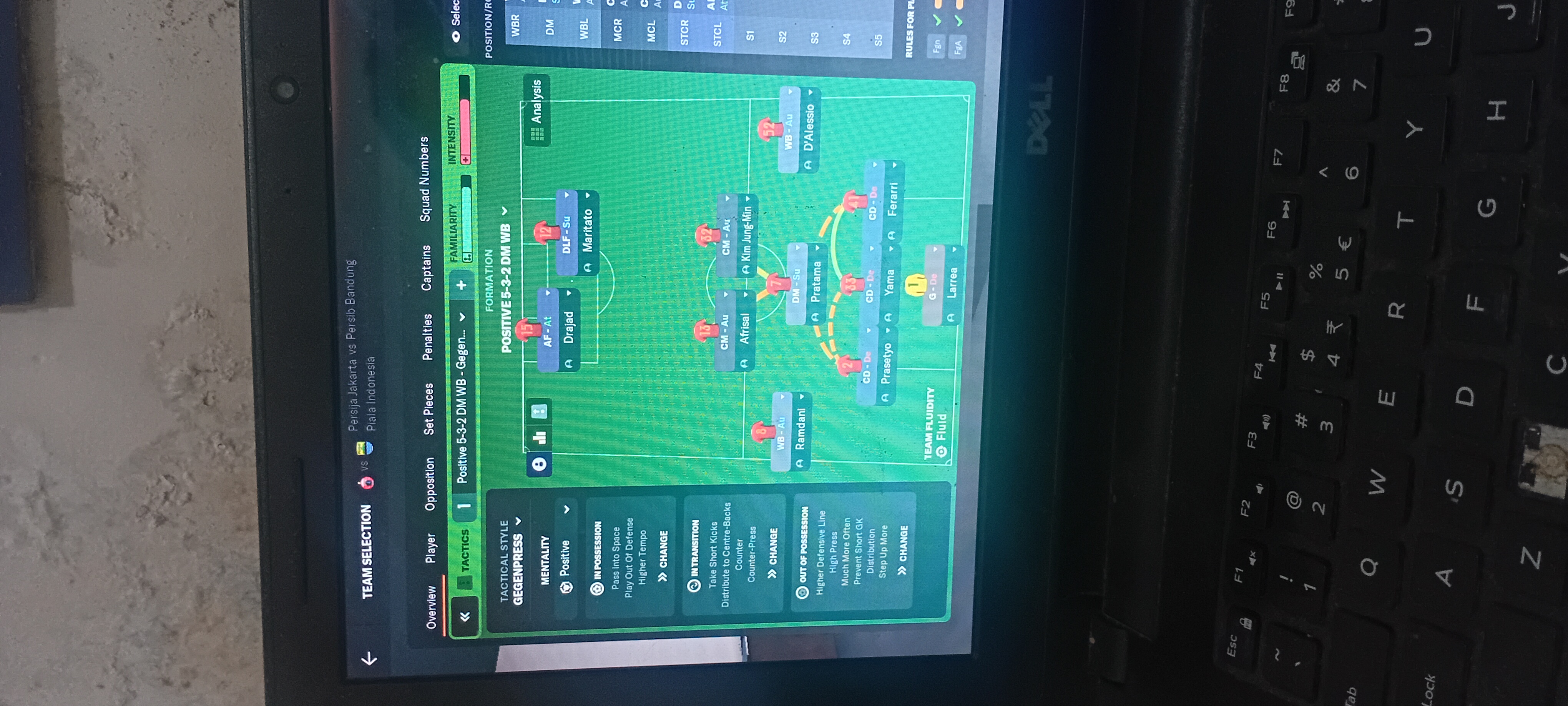
Gegenpress 5-3-2 DM WB
Gegenpress
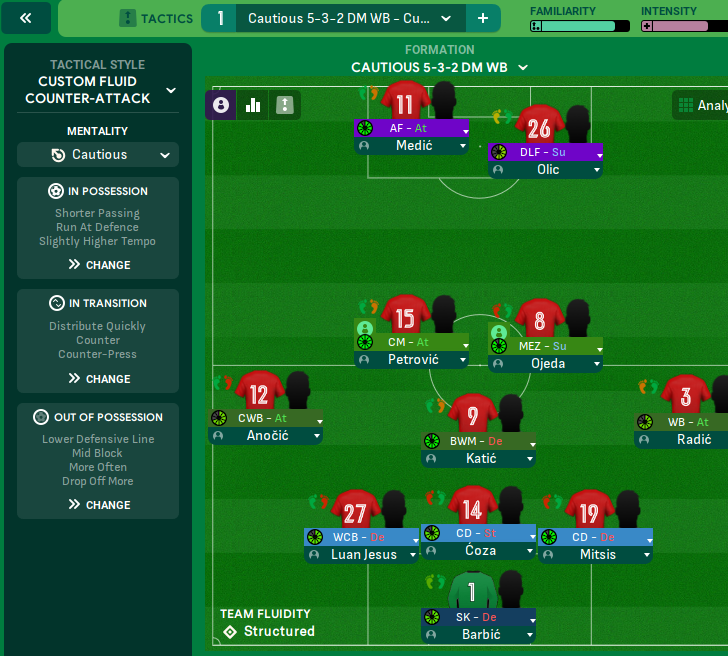
Fluid Counter-Attack 5-3-2 DM WB
Custom Fluid Counter-Attack
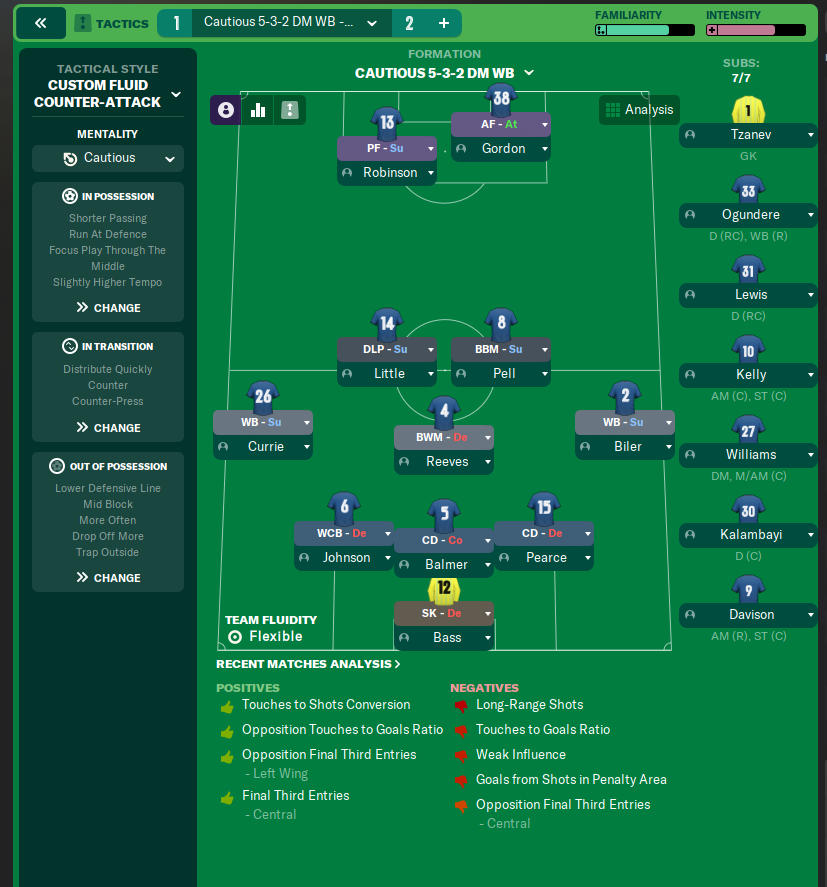
Fluid Counter-Attack 5-3-2 DM WB
Custom Fluid Counter-Attack
Gegenpress 5-3-2 DM WB
Gegenpress
Guides for this formation
The tactical theory behind the 5-3-2 DM WB: roles, instructions, and the trade-offs that decide whether the system holds up.