Uploaded Tactic
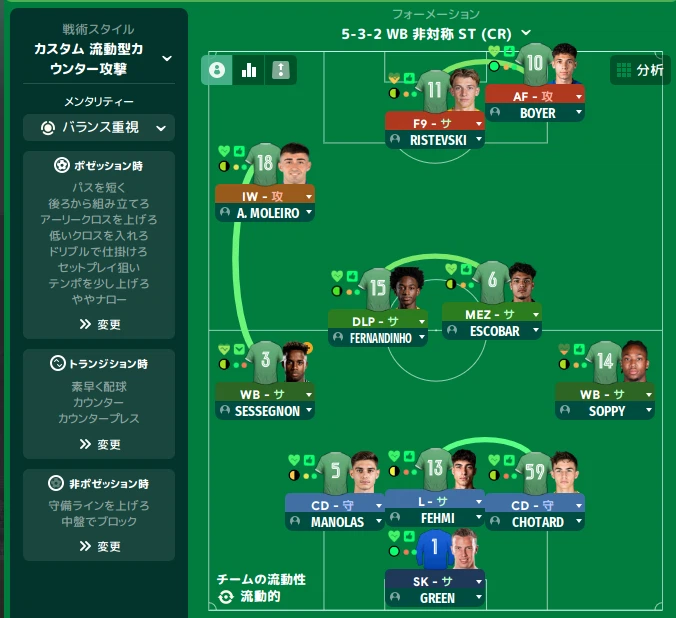
Formation & Style
Tactical Style:Counter Attack
Mentality:Balanced
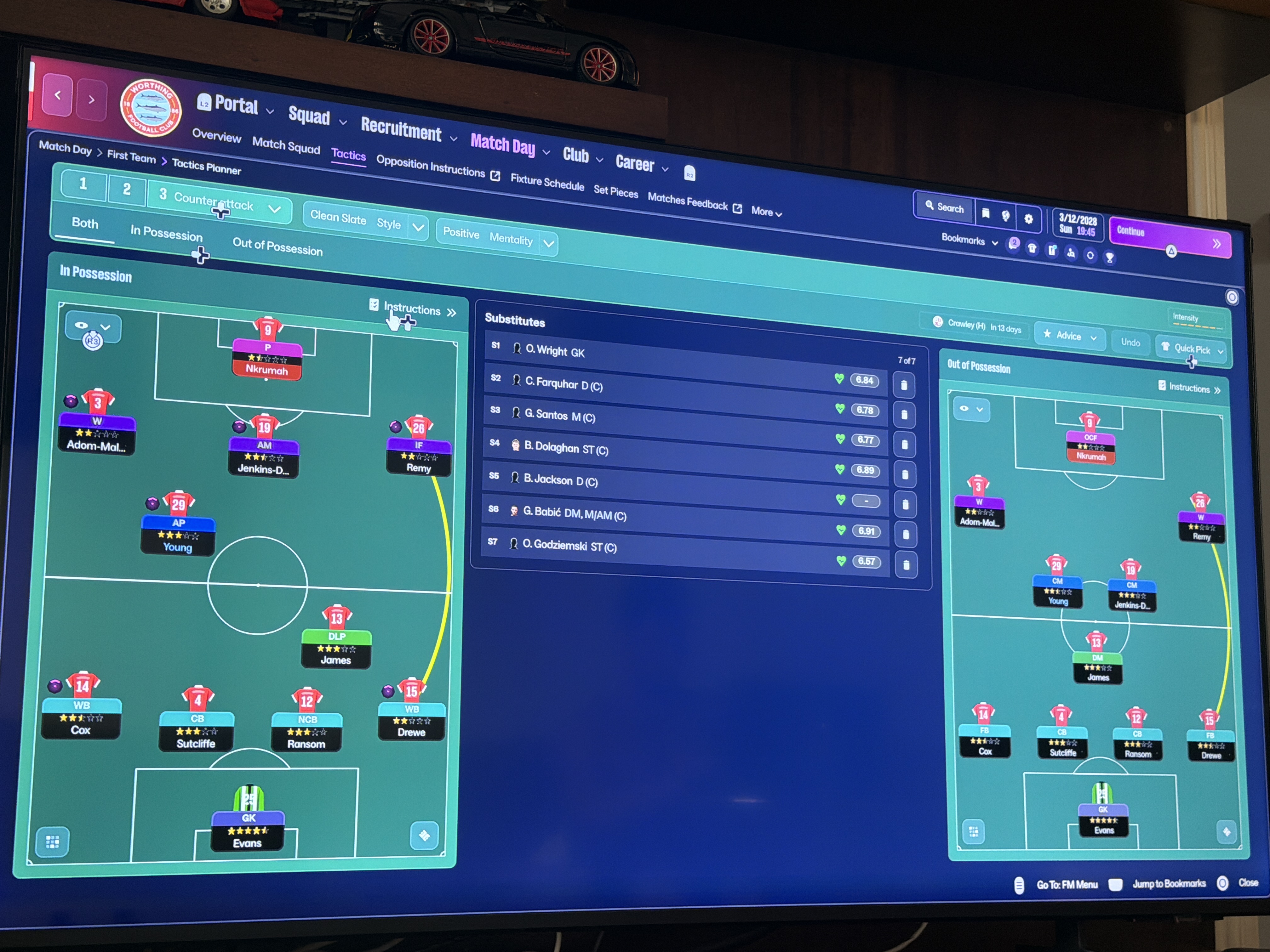
Formation:5-3-2 WB
Team Fluidity:Fluid
In Possession
Pass Into Space
Run At Defence
In Transition
Counter
Counter Press
Out of Possession
Higher Defensive Line
Higher Line of Engagement
Prevent Short GK Distribution
Team Shape Without Ball
Shape:Compact Defensive Block
Description:The team sits deep with a high line to apply pressure on the opposition when possession is lost.
Evidence:Higher Defensive Line and Higher Line of Engagement.
Team Shape With Ball
Shape:Fluid Attack with Width
Description:Wing-backs provide width while wingers cut inside, allowing central players to exploit spaces.
Evidence:Use of Inside Winger and Wing-Backs on attack.
Phase Description
Attacking Play
Utilizes wingers and wing-backs to stretch the opposition, aiming for fast breaks into space.
Defensive Transition
Quickly transition to a compact shape to limit opponent's space.
Main Focus
Maximize space utilization through width, particularly in counter-attacks.
Key Strengths
Versatile Wing Play
The wing-backs and inside winger create attacking overloads on the flanks.
Defensive Stability
Three centre-backs provide a solid foundation, complemented by a No-Nonsense Centre-Back.
Counter-Attacking Threat
Quick transitions enable rapid counter-attacks utilizing pace on the flanks.
Conflicting Directions
High Press vs. Stable Defence
High pressing may disrupt the flow, particularly with a defensive squad setup.
Overly Attacking Wing-Backs vs. Defence
If wing-backs push too far forward, may leave back three exposed.
Midfield Congestion
Three central midfielders could lead to congestion against more balanced formations.
Tactical Suggestions
Adjust Wing-Back Roles
Consider varying one of the wing-backs to a more defensive duty for better depth.
Utilize Target Man
Introducing a Target Forward could allow for more direct play when countering.
Improve Central Midfield Links
Incorporate a more dynamic player instead of a DLP if facing press-heavy teams.
Ask Questions About Your Lineup
Related Tactics
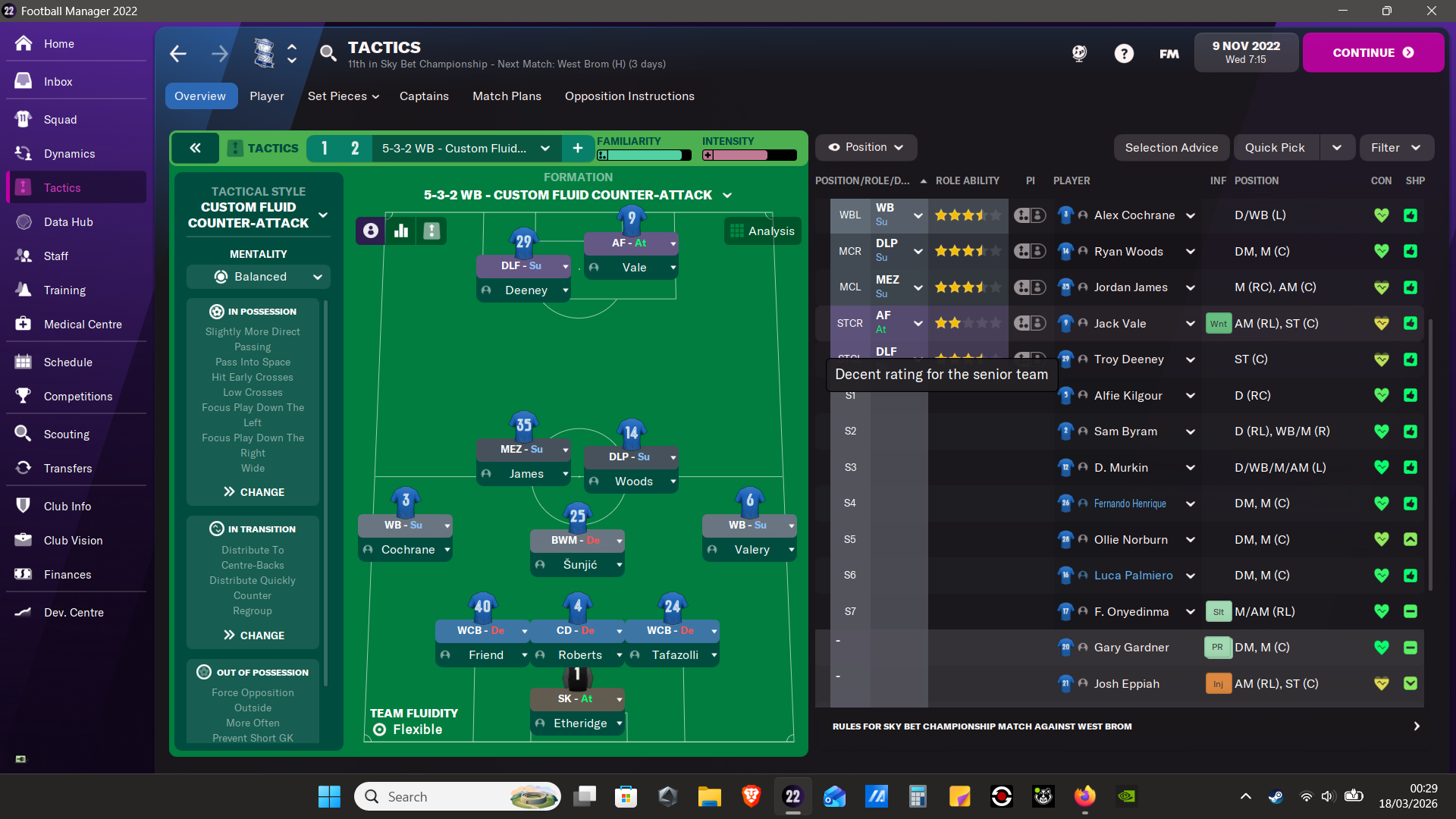
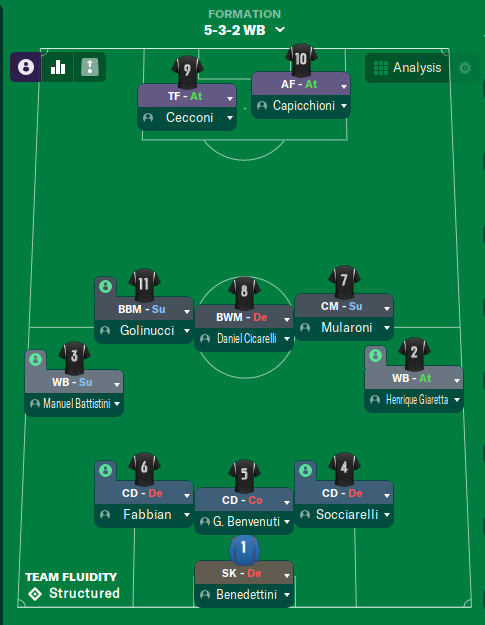
More Counter Attack tactics
Guides for this formation
The tactical theory behind the 5-3-2 WB: roles, instructions, and the trade-offs that decide whether the system holds up.