Uploaded Tactic
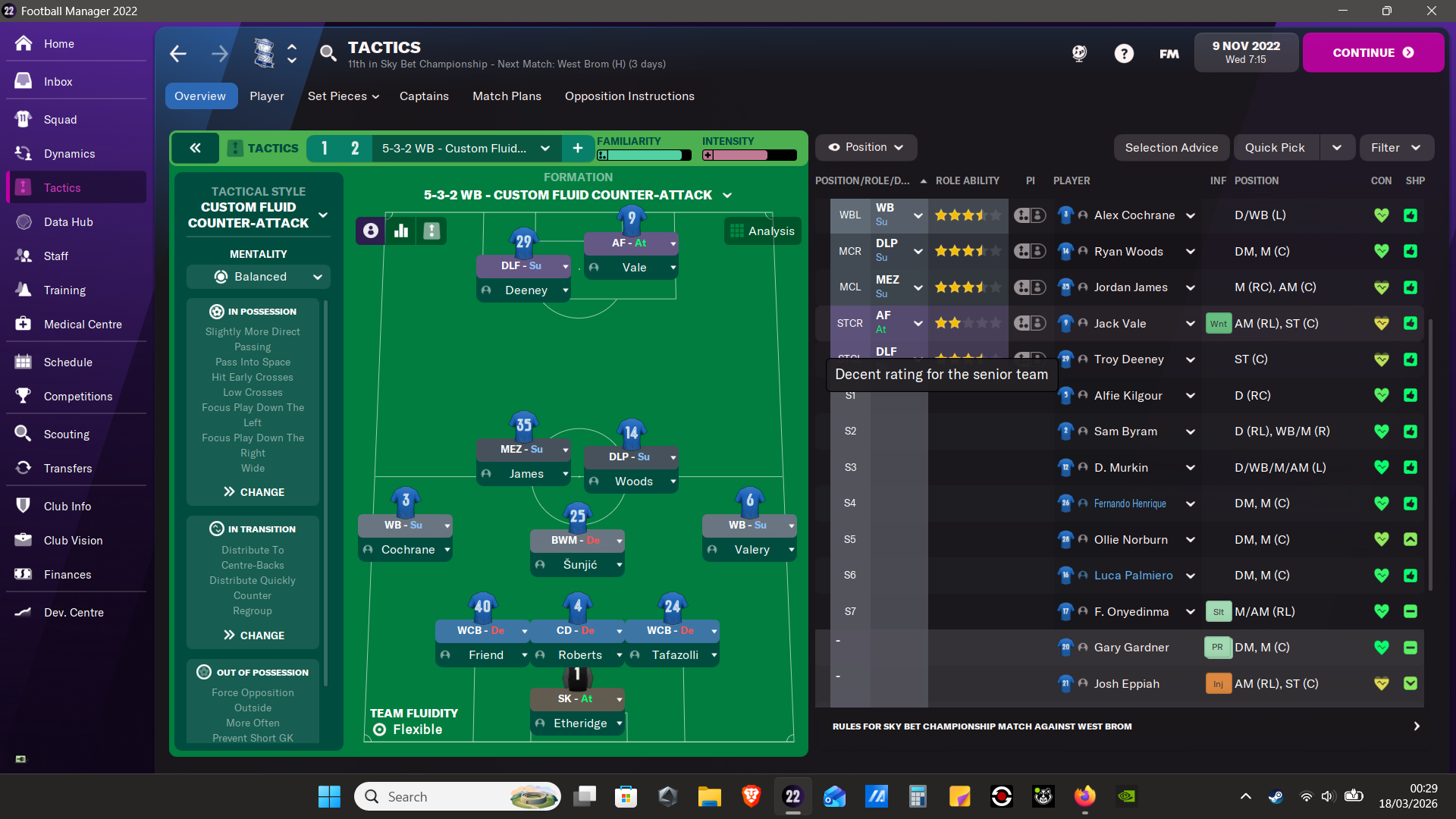
Formation & Style
Tactical Style:Custom Fluid Counter-Attack
Mentality:Balanced
Formation:5-3-2 WB
Team Fluidity:Flexible
In Possession
Slightly More Direct Passing
Pass Into Space
Hit Early Crosses
Low Crosses
Focus Play Down The Left
Focus Play Down The Right
Wide
In Transition
Distribute To Centre-Backs
Distribute Quickly
Counter
Regroup
Out of Possession
Force Opposition Outside
More Often
Prevent Short GK
Team Shape Without Ball
Shape:5-3-2
Description:Utilizes a back five for strong defensive coverage, while the midfielders drop back to support defensive duties, providing a solid barrier against opposition attacks.
Evidence:WCB-D at [2,1] and [2,5] combined with BWM-D at [3,3]
Team Shape With Ball
Shape:3-2
Description:Two forwards dropping into the midfield to create numerical superiority and facilitate attacking flows through quick passing and movement.
Evidence:AF-A at [6,3] combined with DLF-S at [6,2] and MEZ-S at [4,2] and [4,4]
Phase Description
Attacking Play
The team looks to transition quickly into attack with direct passing and exploiting space through wide play. The use of early crosses can create scoring opportunities.
Defensive Transition
Upon losing the ball, the team quickly reorganizes to regroup, looking to counter-press while maintaining defensive shape.
Main Focus
Maximizing width to stretch the opponent and creating overloads in wide areas.
Key Strengths
Defensive Resilience
The shape ensures strong defensive coverage with five defenders to maintain stability against opposition attacks.
Fluid Transition Play
The tactical setup is designed to quickly transition from defense to attack, maximizing counter-attacking opportunities.
Width in Attack
Utilizing wing-backs provides width, creating space for forwards and midfielders to exploit.
Conflicting Directions
Over-reliance on Wings
Heavy focus on wing play may make it predictable, allowing opponents to adjust defensively.
Counter-Press Risk
Counter-pressing may lead to gaps in the defense if players are caught forward during transitions.
Midfield Congestion
With three midfielders and two forwards, it may lead to congestion, reducing passing options.
Tactical Suggestions
Add Central Overlap
Consider adding an instruction to encourage central movements for midfielders to alleviate congestion and create space.
Vary Attacking Width
Adjust the focus of attack to include more central options to prevent predictability.
Utilizing a Target Man
Introduce a target man on the bench to provide an aerial threat and alter attacking dynamics.
Ask Questions About Your Lineup
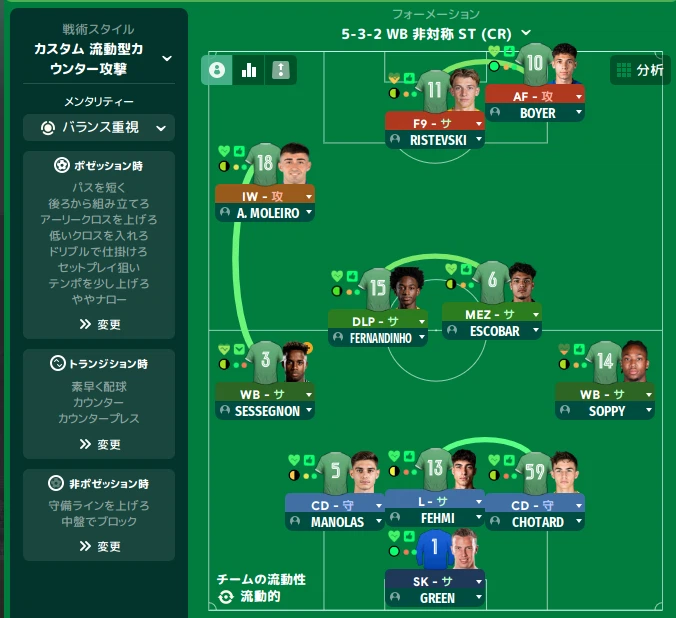
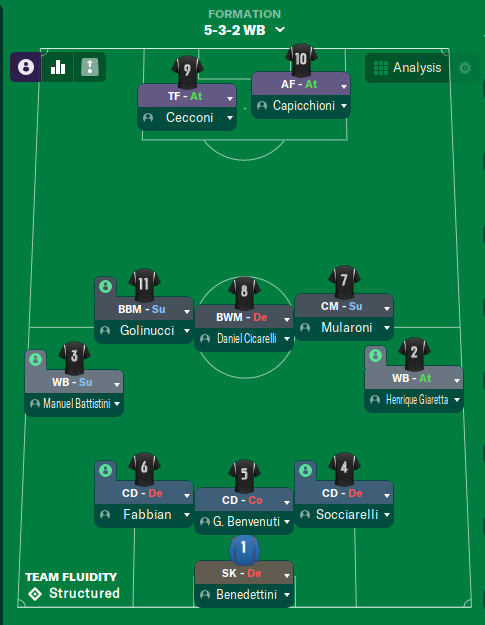
More Custom Fluid Counter-Attack tactics
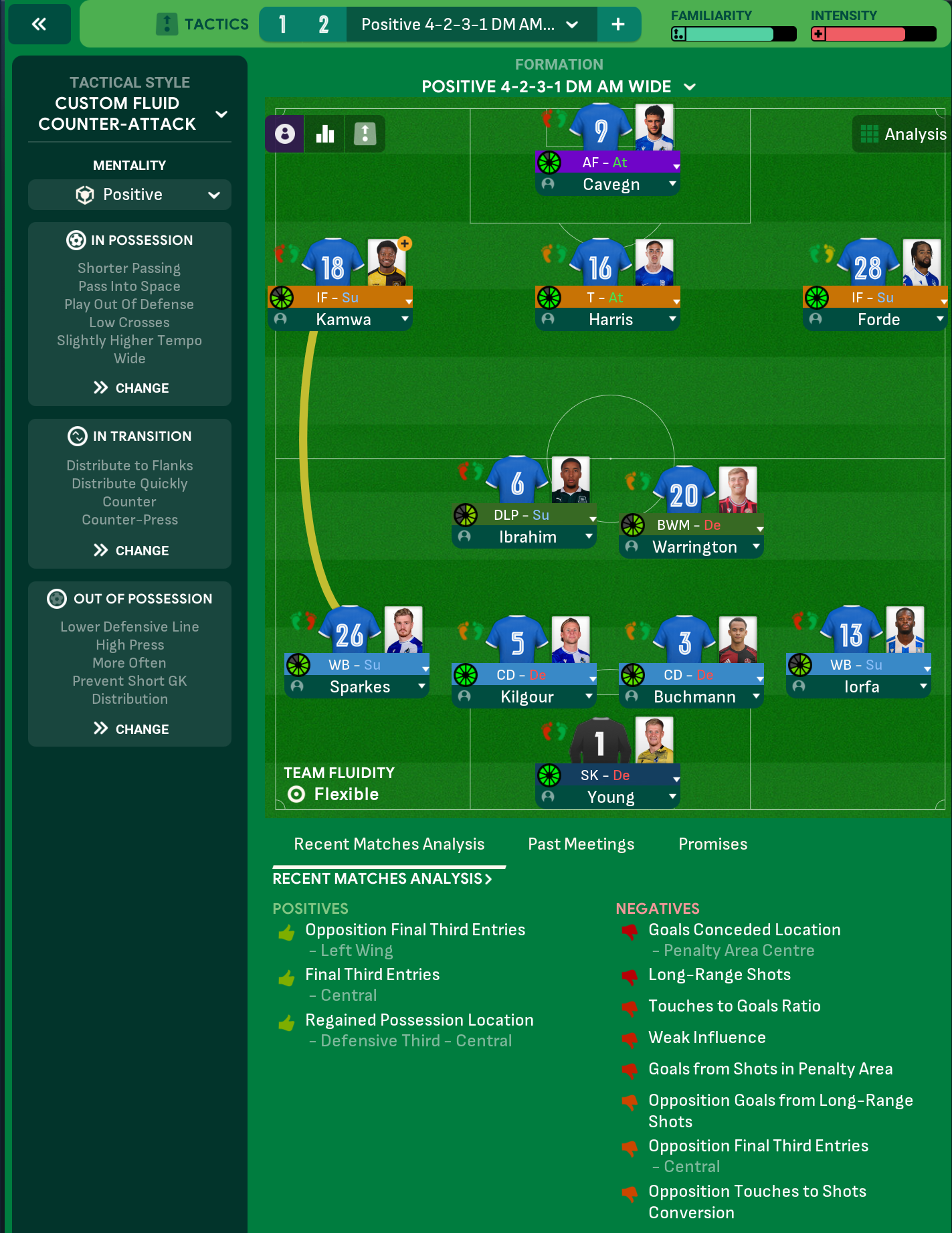
Guides for this formation
The tactical theory behind the 5-3-2 WB: roles, instructions, and the trade-offs that decide whether the system holds up.