Uploaded Tactic
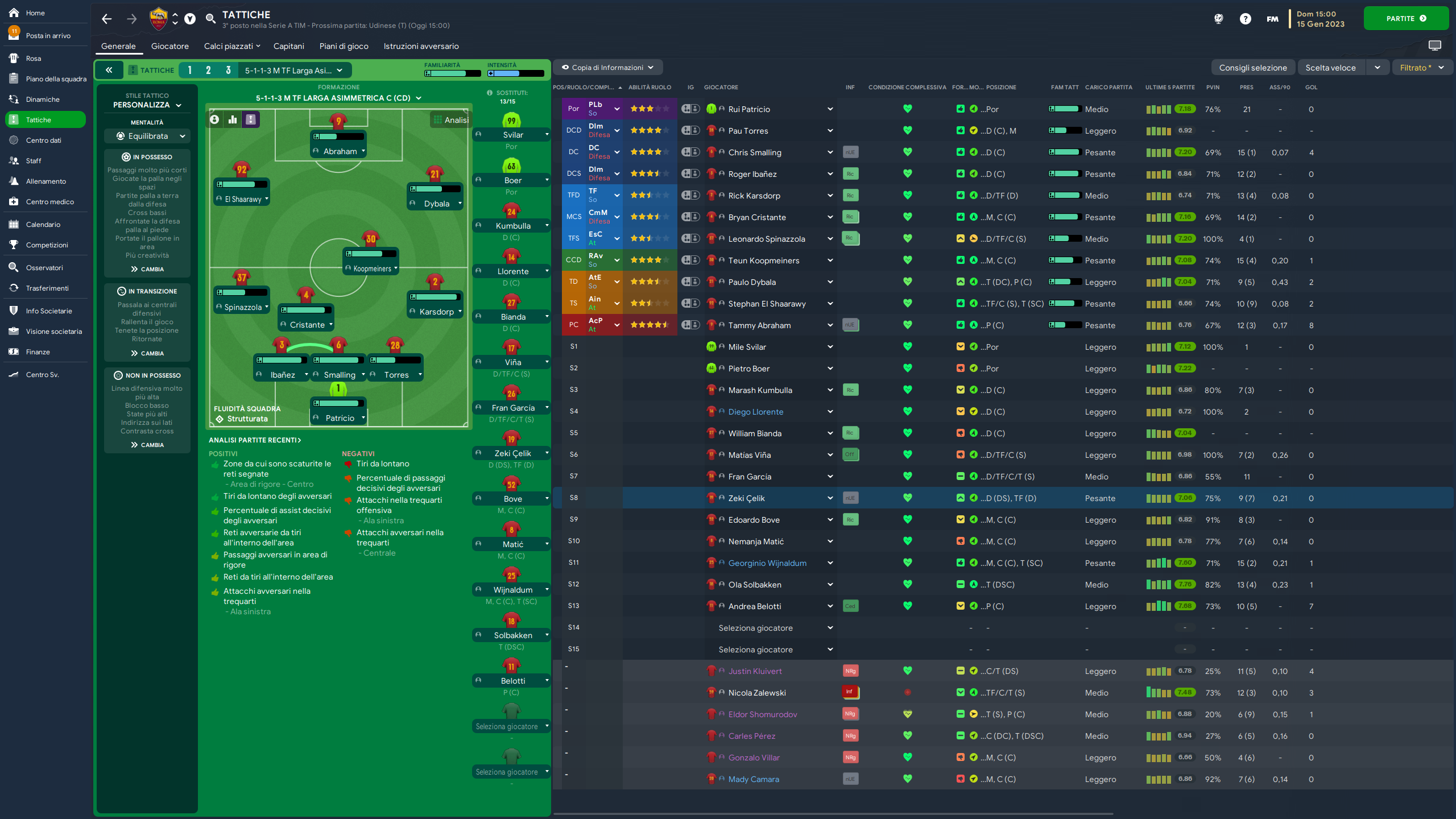
Formation & Style
Tactical Style:Balanced
Mentality:Positive
Formation:5-1-3-1-1
Team Fluidity:Structured
In Possession
Play Out of Defence
Work Ball Into Box
Focus Play Down the Left
In Transition
Counter
Hold Shape
Out of Possession
Higher Defensive Line
Higher Line of Engagement
Prevent Short GK Distribution
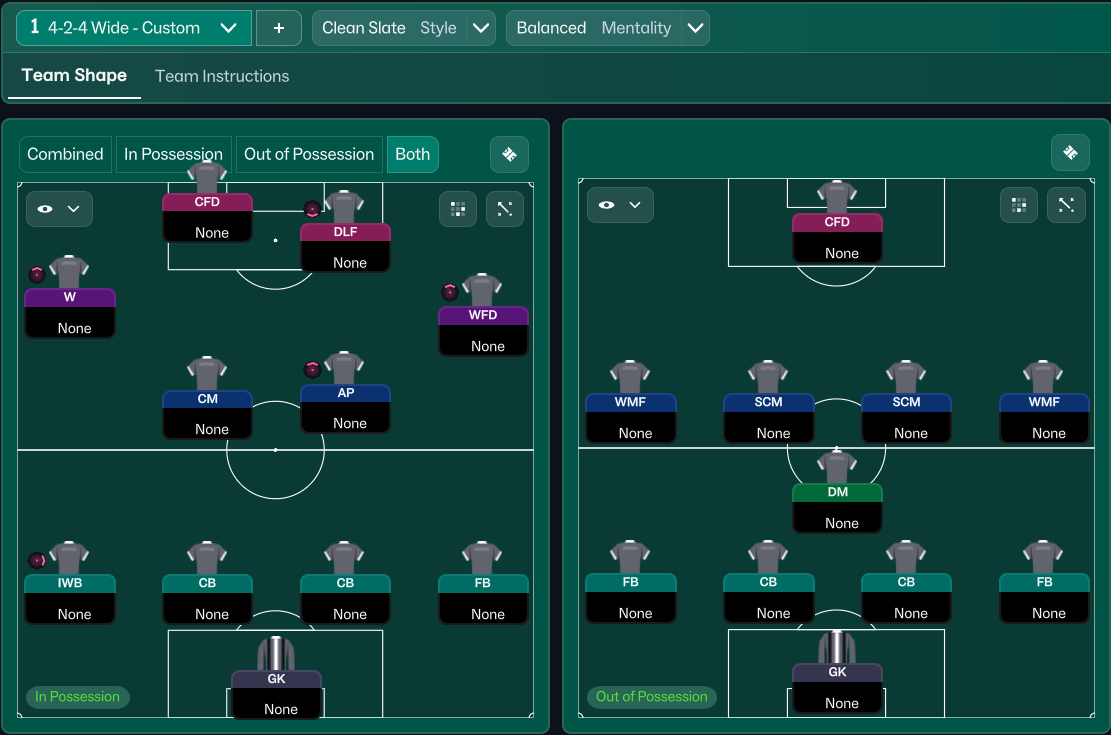
Team Shape Without Ball
Shape:5-1-3-1-1
Description:Defensive solidity with five defenders ensuring coverage against wide and central attacks.
Evidence:No-Nonsense CBs at [2,2] and [2,4], providing tough defense with the BWM at [3,3] reinforcing the defense.
Team Shape With Ball
Shape:3:2:1
Description:Utilizing the wing-backs to stretch the opposition and inside forwards cutting in for goal-scoring chances.
Evidence:Wing-Backs at [2,1] and [2,5] with Inside Forwards at [5,2] and [5,4].
Phase Description
Attacking Play
The team looks to build through the left wing, using wing-backs to stretch the play while utilizing the advanced playmaker to link up with the forwards.
Defensive Transition
Upon losing possession, the team quickly retreats to a compact shape, prioritizing organization over immediate pressing.
Main Focus
To dominate possession and create wide overloads, particularly on the left side.
Key Strengths
Wide Overloads
The use of wing-backs creates space for the inside forwards to exploit in the final third.
Defensive Solidity
The formation provides a strong defensive structure with plenty of width and depth.
Versatile Midfield Play
The presence of an advanced playmaker supported by a defensive midfielder allows for balanced build-up play.
Conflicting Directions
Counter-Pressing
The team's focus on maintaining shape limits effectiveness in counter-pressing situations.
Low Crossing
With two inside forwards deployed, crossing may not be the best option as they thrive on through balls.
Heavy Dependence on Left Side
The tactical setup is heavily favoring left-side play, potentially making the attack predictable.
Tactical Suggestions
Diversify Attacking Play
Incorporate more emphasis on right-side attacks to avoid predictability.
Adopt Higher Pressing
Increasing the intensity of pressing could regain possession more effectively.
Enhance Midfield Creativity
Introduce a second central midfielder to provide more support in midfield.
Ask Questions About Your Lineup
More Balanced tactics
Guides for this formation
The tactical theory behind the 5-1-3-1-1: roles, instructions, and the trade-offs that decide whether the system holds up.