Uploaded Tactic
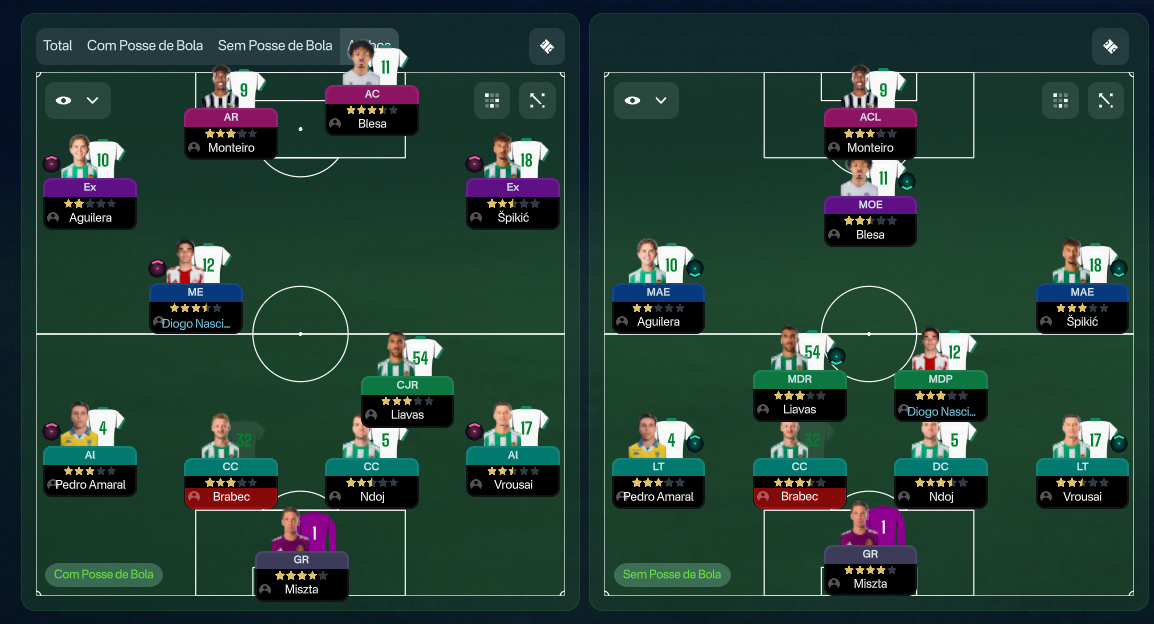
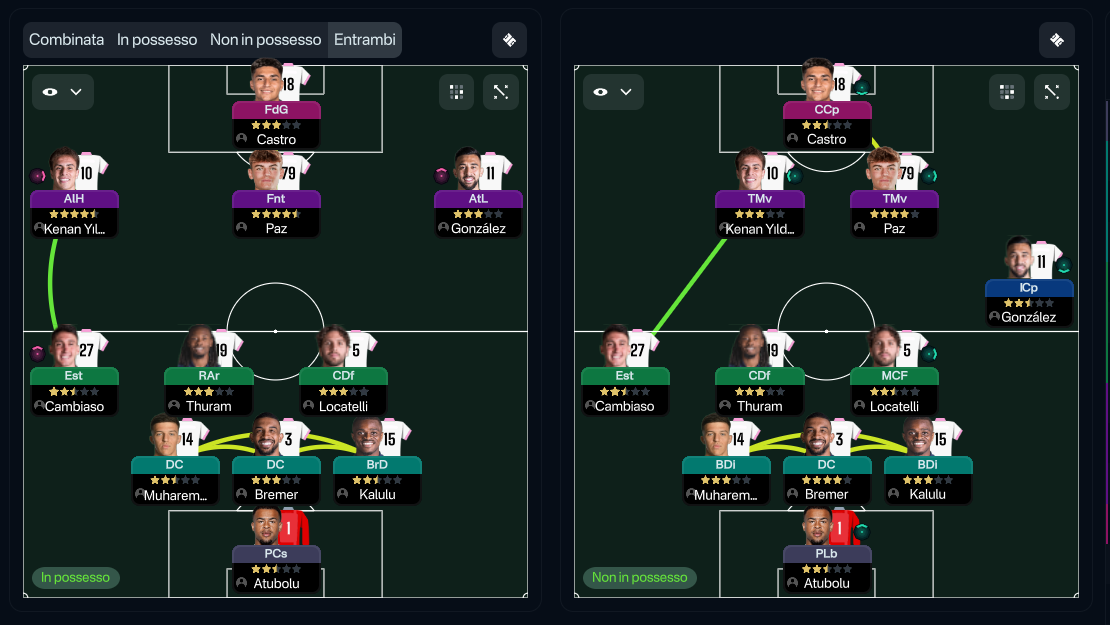
Formation & Style
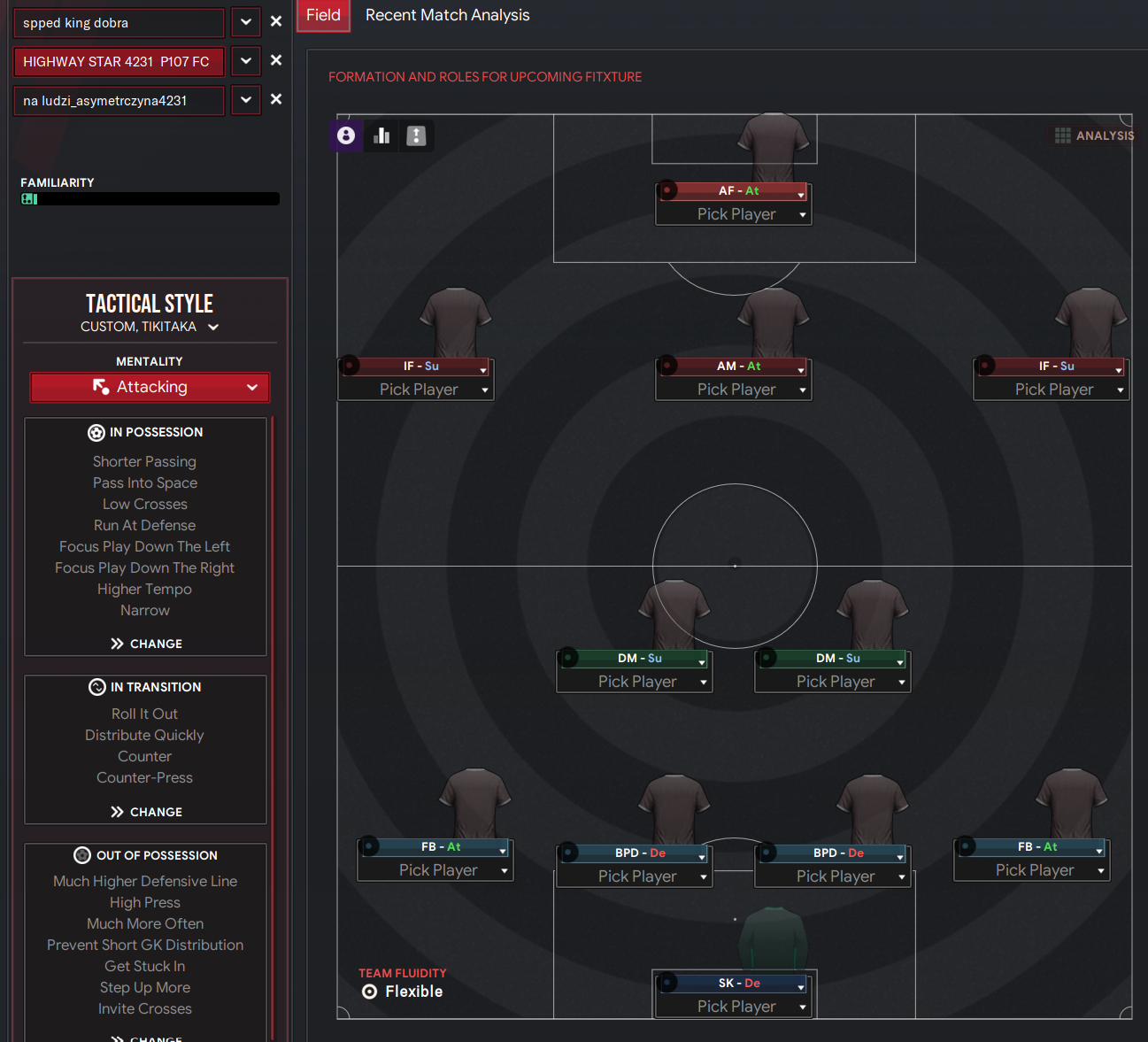
Tactical Style:Balanced
Mentality:Positive
Formation:4-2-3-1 Wide
Team Fluidity:Fluid
In Possession
Play Out of Defence
Pass Into Space
Shorter Passing
Focus Play Down the Wings
In Transition
Counter
Distribute to Full-Backs
Out of Possession
Higher Defensive Line
Much Higher Line of Engagement
Prevent Short GK Distribution
Team Shape Without Ball
Shape:Compact
Description:Team maintains a compact shape, ensuring minimal space between lines, with pressing in higher areas.
Evidence:Defensive Line set to 'Higher' and Line of Engagement to 'Much Higher'.
Team Shape With Ball
Shape:Fluid width
Description:Wide play facilitated by wing-backs and inside forwards stretching the opponent's defence.
Evidence:Focus Play Down the Wings and Wing-Back roles advancing into attacking areas.
Phase Description
Attacking Play
Focus on quick transitions and exploiting width to stretch the opposition, utilizing wing-backs for overlap.
Defensive Transition
Rapid retreat to a compact shape with emphasis on recovering the ball quickly.
Main Focus
Creating high-quality chances through ball distribution in the attacking third.
Key Strengths
Wide Play
Usage of wing-backs allows for effective flanking, stretching the opposition.
Compact Midfield
Solid central midfield arrangement allows for both defensive stability and creative support.
Attacking Variety
Diverse roles in the attacking line promote different options and unpredictability.
Conflicting Directions
Overcommitting Wing-backs
Stationary defensive shape can be compromised if wing-backs advance too far, risking counter-attacks.
Lack of Defensive Midfield Depth
Dependency on a single DM can lead to vulnerabilities if isolated.
Predictable Attack Patterns
Heavy reliance on width can make the attack predictable and easier for opponents to defend against.
Tactical Suggestions
Increase Central Presence
Introduce a more dynamic player in central midfield to add creativity and unpredictability.
Balance Wing-backs
Consider having at least one wing-back set to defend to avoid excessive gaps during transitions.
Adjust Line Depths
Experiment with higher defensive line paired with lower line of engagement for a more compact structure.
Ask Questions About Your Lineup
Related Tactics
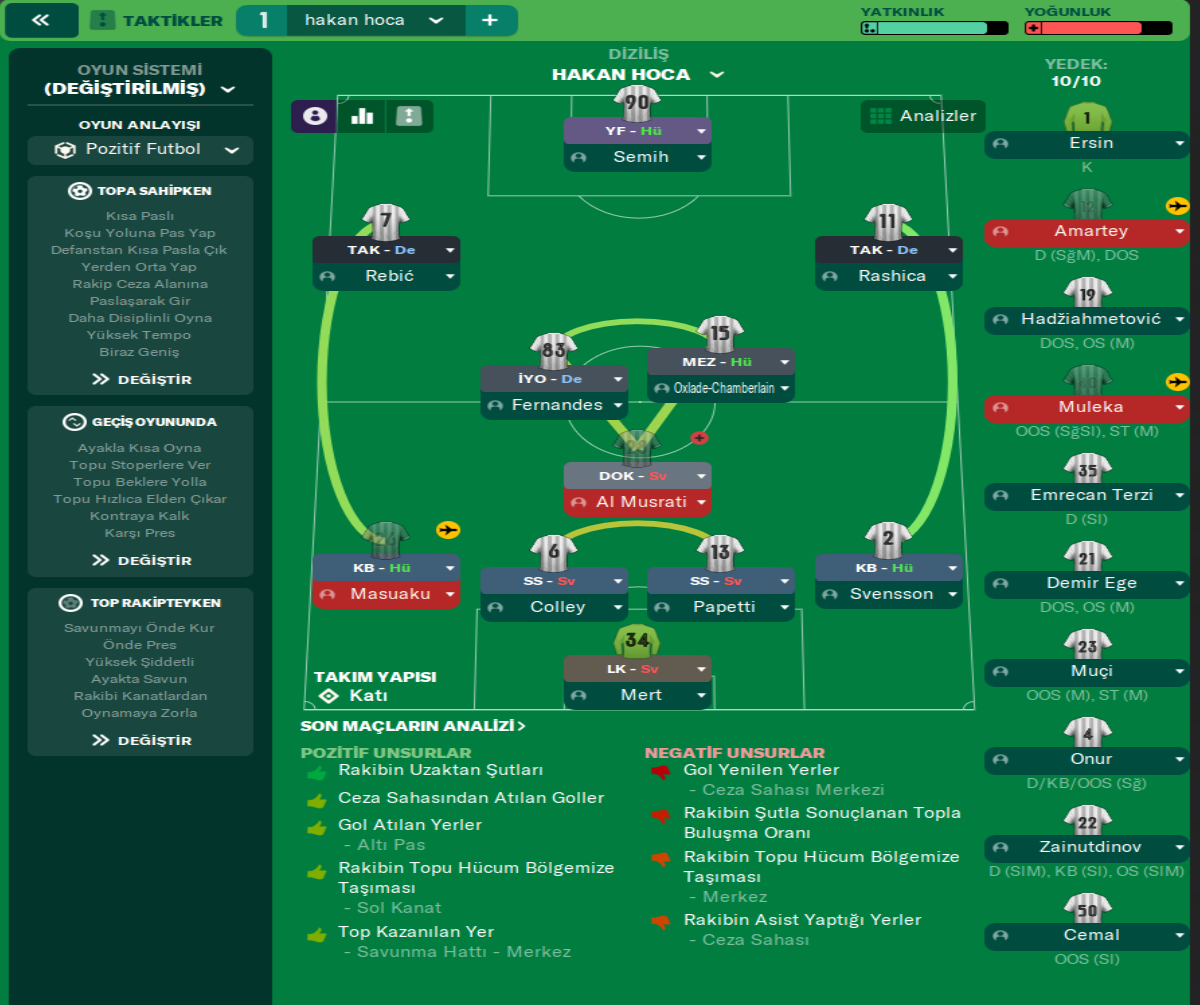
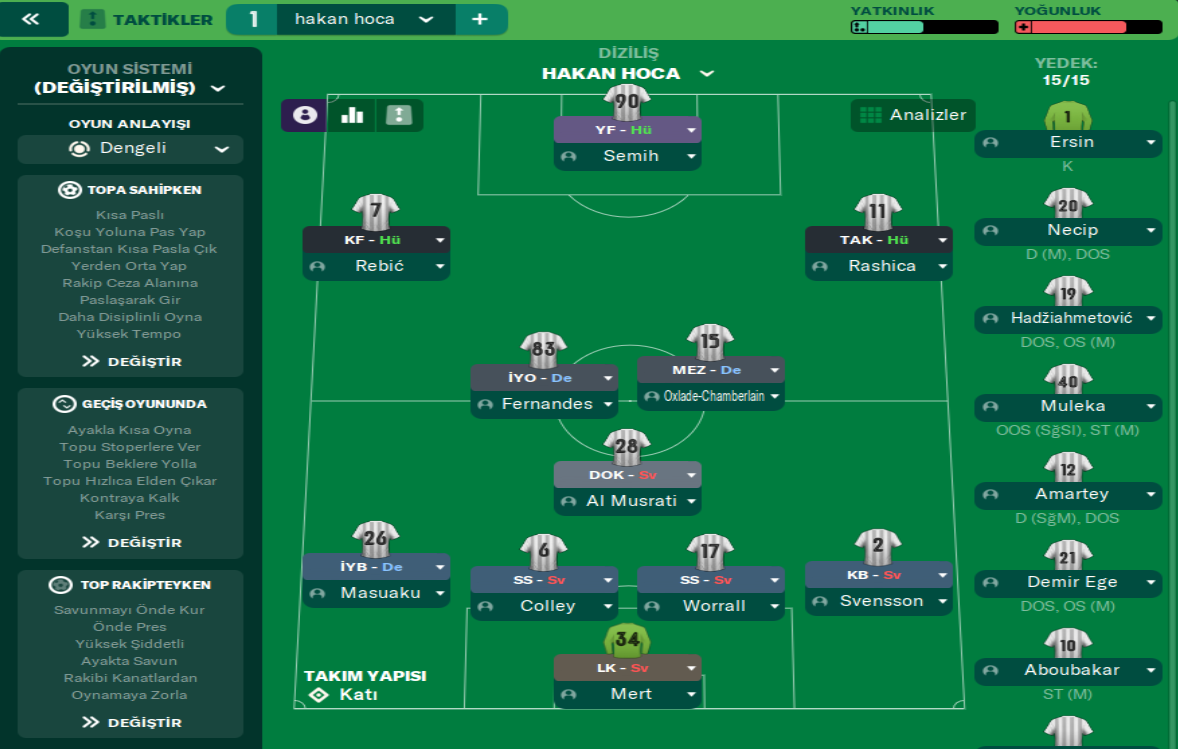
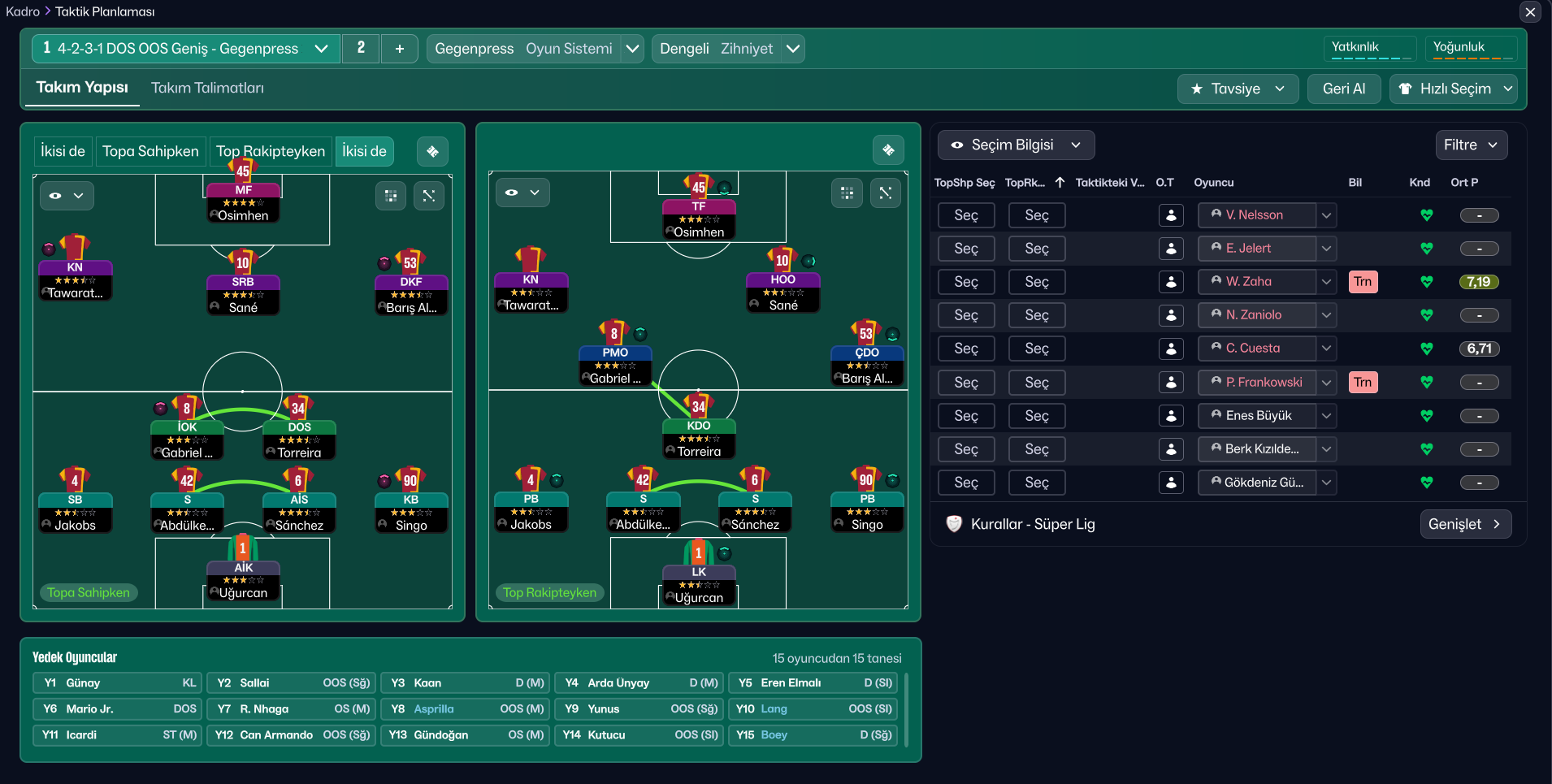
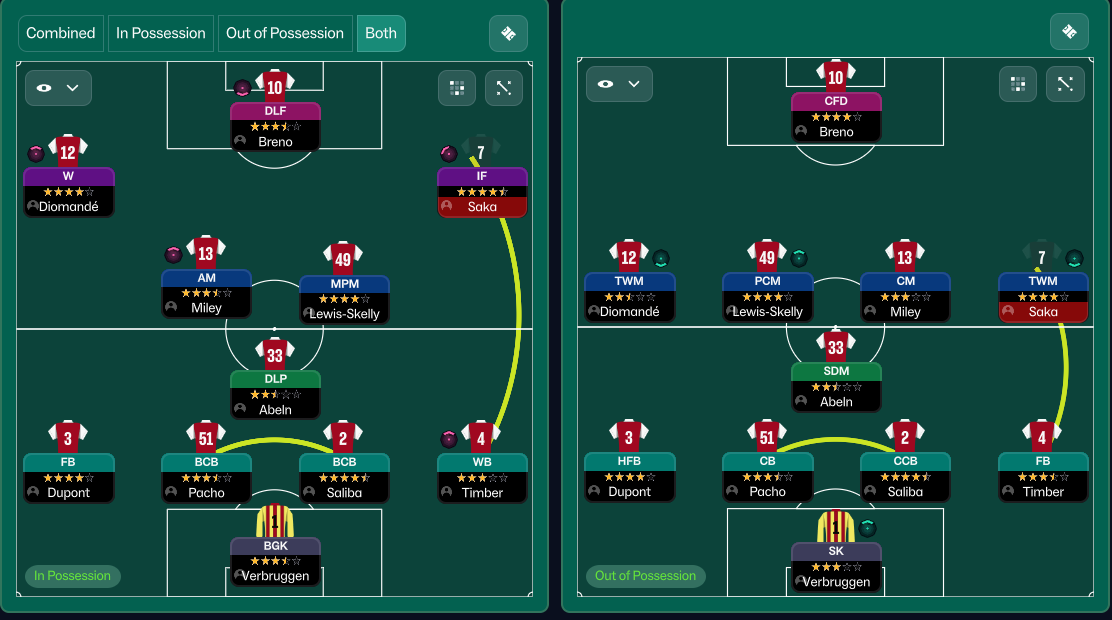
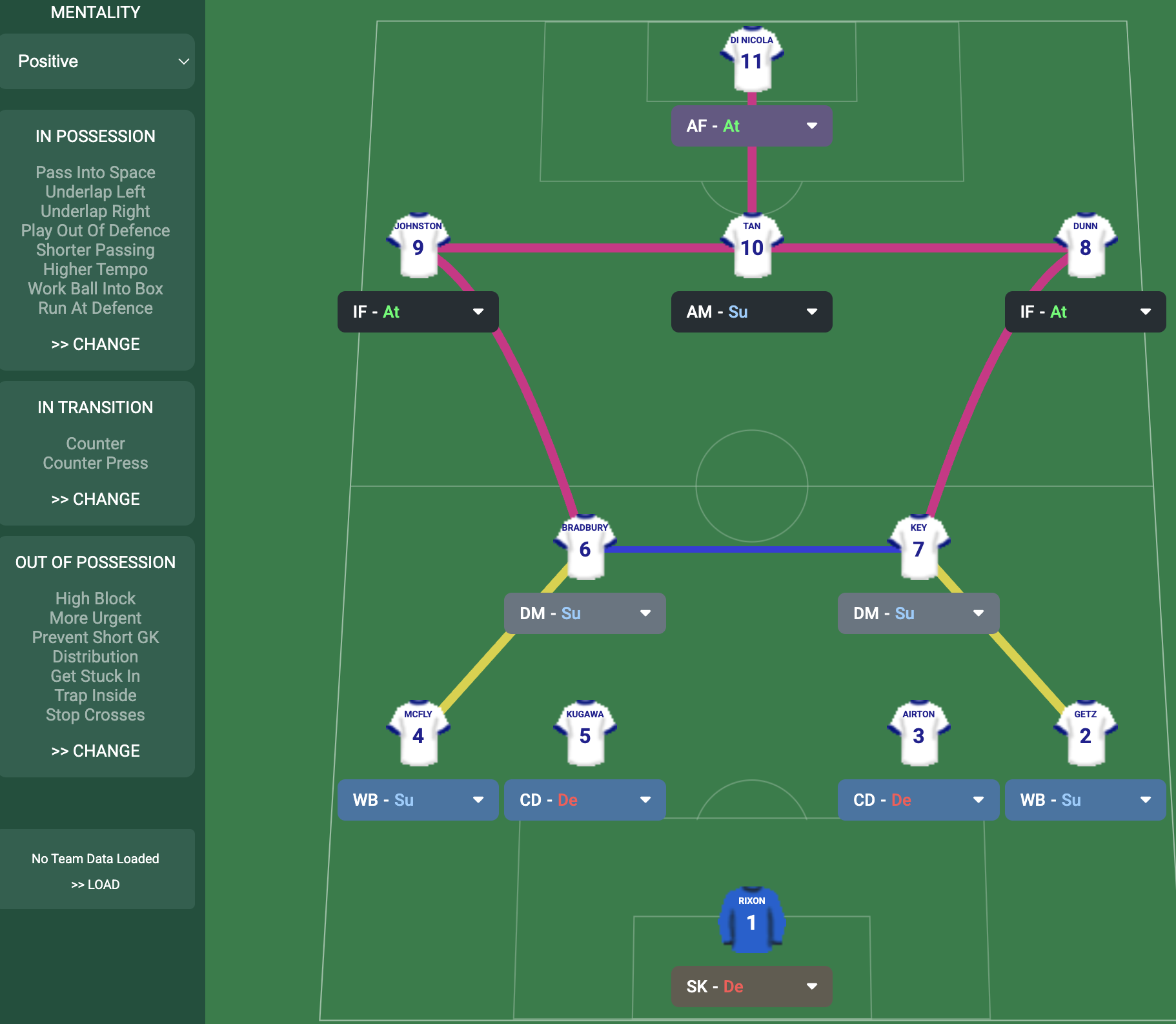
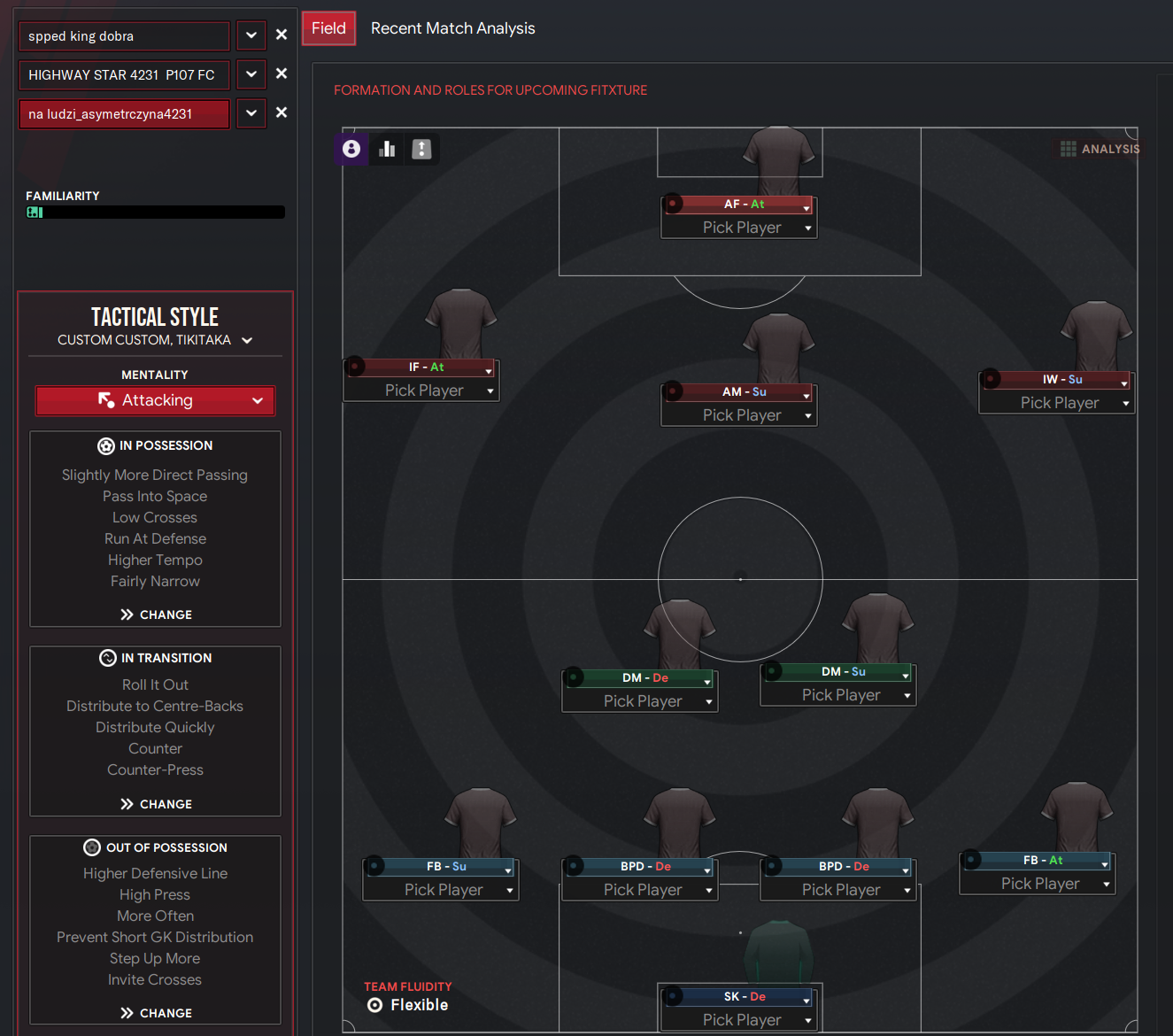
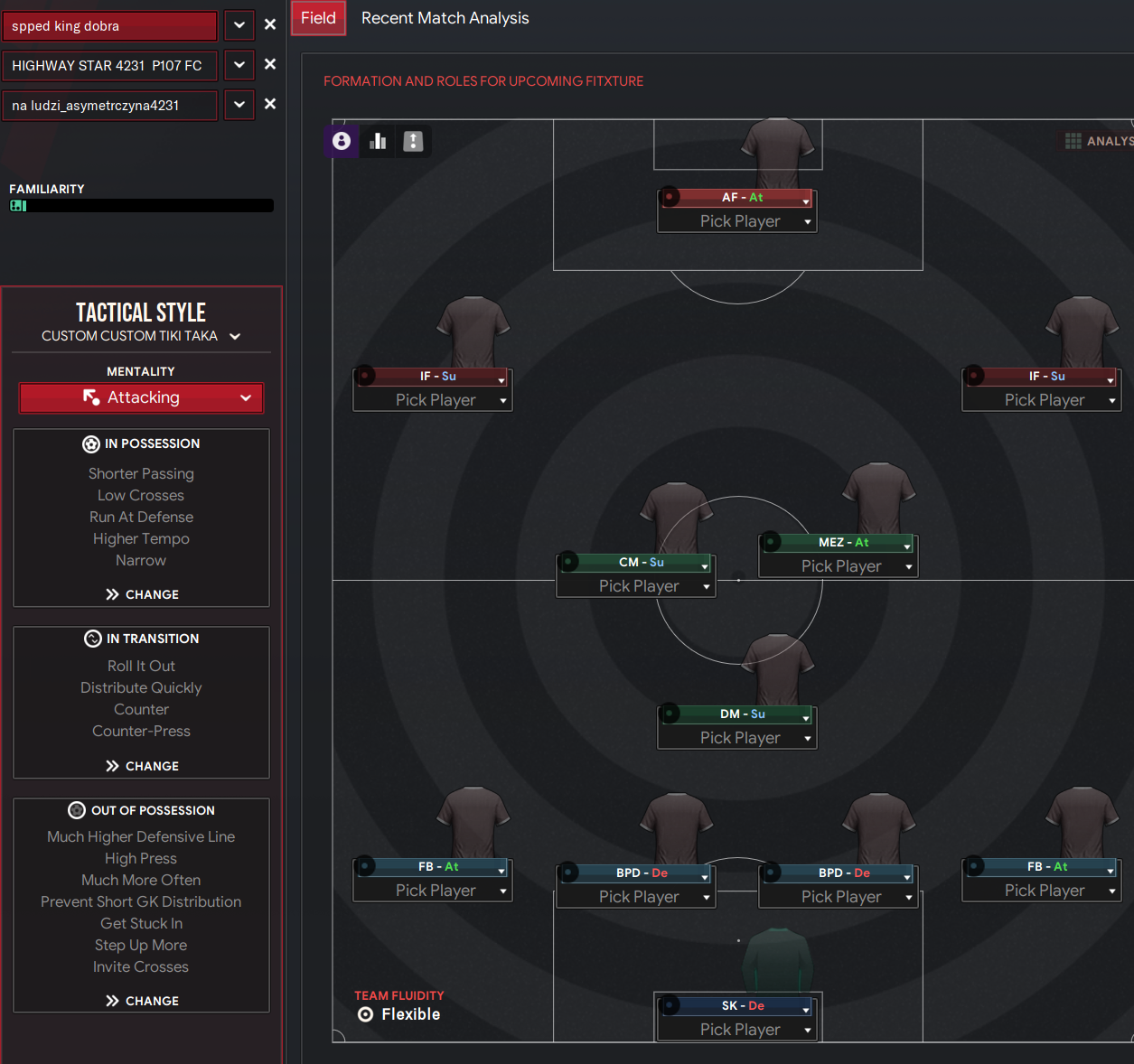
More Balanced tactics
Guides for this formation
The tactical theory behind the 4-2-3-1 Wide: roles, instructions, and the trade-offs that decide whether the system holds up.
Player pairings
Midfield Pairs in 4-2-3-1 and 4-4-2
Double pivots and flat pairs in 4-2-3-1 and 4-4-2: when each pairing works, when it collapses, and the AMC unicorn that rescues both.
Read guide
Playing styles
Gegenpressing: A Full Guide
Klopp-style gegenpressing in FM, including squad profile, line-and-press pairing, sustainable workload, and the antipatterns to avoid.
Read guide