Uploaded Tactic
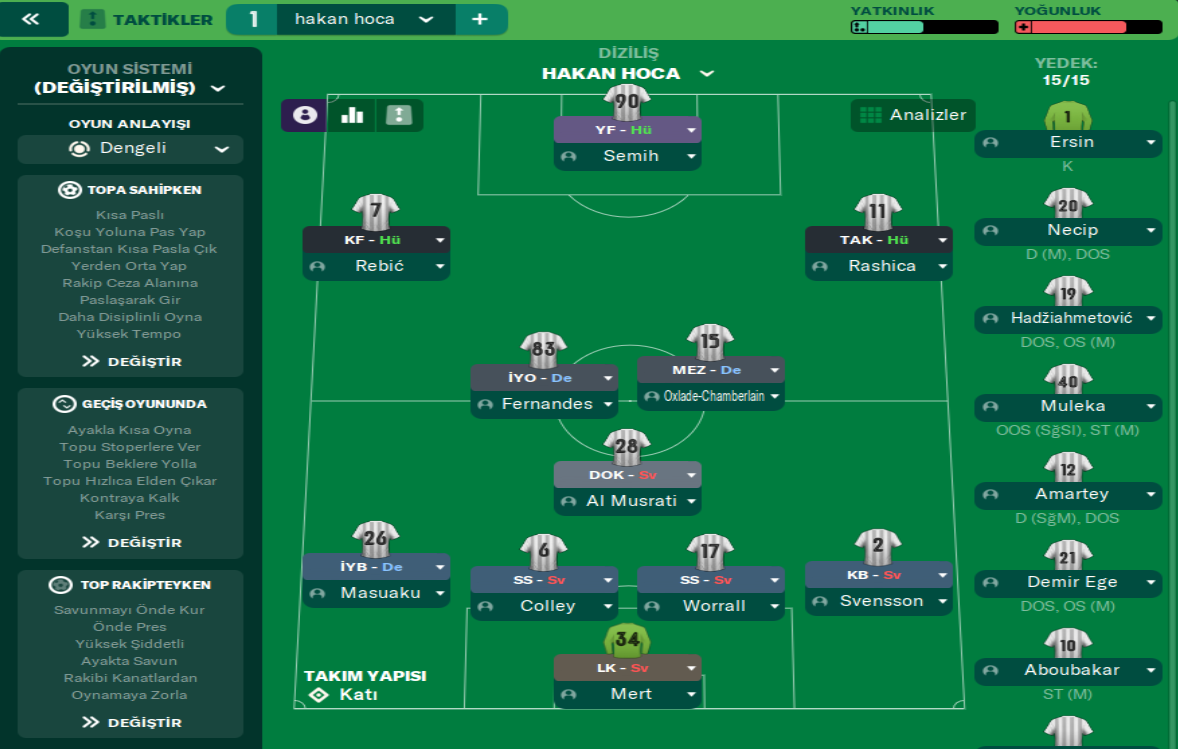
Formation & Style
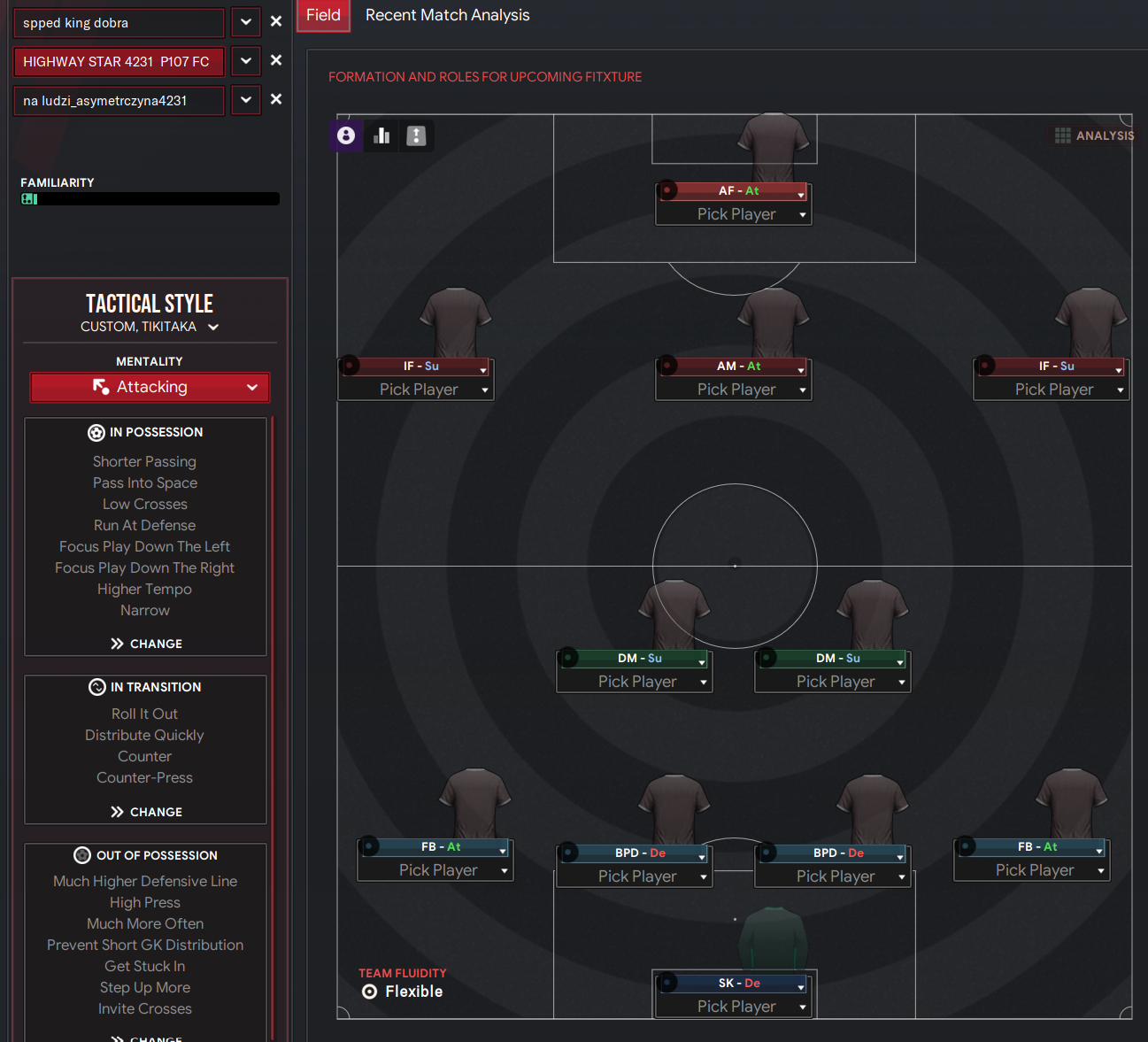
Tactical Style:Dengeli
Mentality:Balanced
Formation:4-2-3-1 Wide
Team Fluidity:Rigid
In Possession
Shorter Passing
Pass into Space
Work Ball into Box
Run at Defence
Higher Tempo
In Transition
Counter-Press
Counter
Distribute to Full-Backs
Out of Possession
Higher Defensive Line
Higher Line of Engagement
Prevent Short GK Distribution
Team Shape Without Ball
Shape:Compact Block
Description:Maintains a tight formation to deny space and limit the opposition's attacking areas.
Evidence:Higher Defensive Line and Higher Line of Engagement lead to tighter team alignment.
Team Shape With Ball
Shape:Fluid Front Four
Description:Flexible positioning with interchanging roles among the attackers.
Evidence:The use of a Trequartista allows for creative play through the middle.
Phase Description
Attacking Play
Focus on building up play through midfield with short passes and progressive runs, creating spaces for the wide forwards and striker.
Defensive Transition
Quickly regain possession through counter-pressing when losing the ball in midfield.
Main Focus
Maximize width and movement through the attacking midfield zone.
Key Strengths
Midfield Control
The combination of a Ball-Winning Midfielder and a Mezzala provides a strong presence in the midfield.
Attacking Versatility
The formation allows for various attacking avenues through the wide forwards and trequartista.
Solid Defensive Base
Two No-Nonsense Centre-Backs and Full-Backs support minimize defensive vulnerabilities.
Conflicting Directions
Potential Width Lack
Over-reliance on full-backs may lead to predictability in breaking down narrow defenses.
Counter Press Effectiveness
Requires rapid recovery after losing possession; high defensive line increases risk.
Trequartista Isolation
If the trequartista is marked tightly, it could disconnect from the forward line.
Tactical Suggestions
Encourage Full-Back Overlapping
To add width and unpredictability in attack, instruct full-backs to overlap wingers.
Adjust Counter-Pressing Frequency
Depending on opponent's style, consider adjusting counter-press intensity to mitigate defensive risks.
Integrate Late Arrivals into the Box
Encourage midfielders to make late runs into the penalty area to support isolated forward.
Ask Questions About Your Lineup
Related Tactics
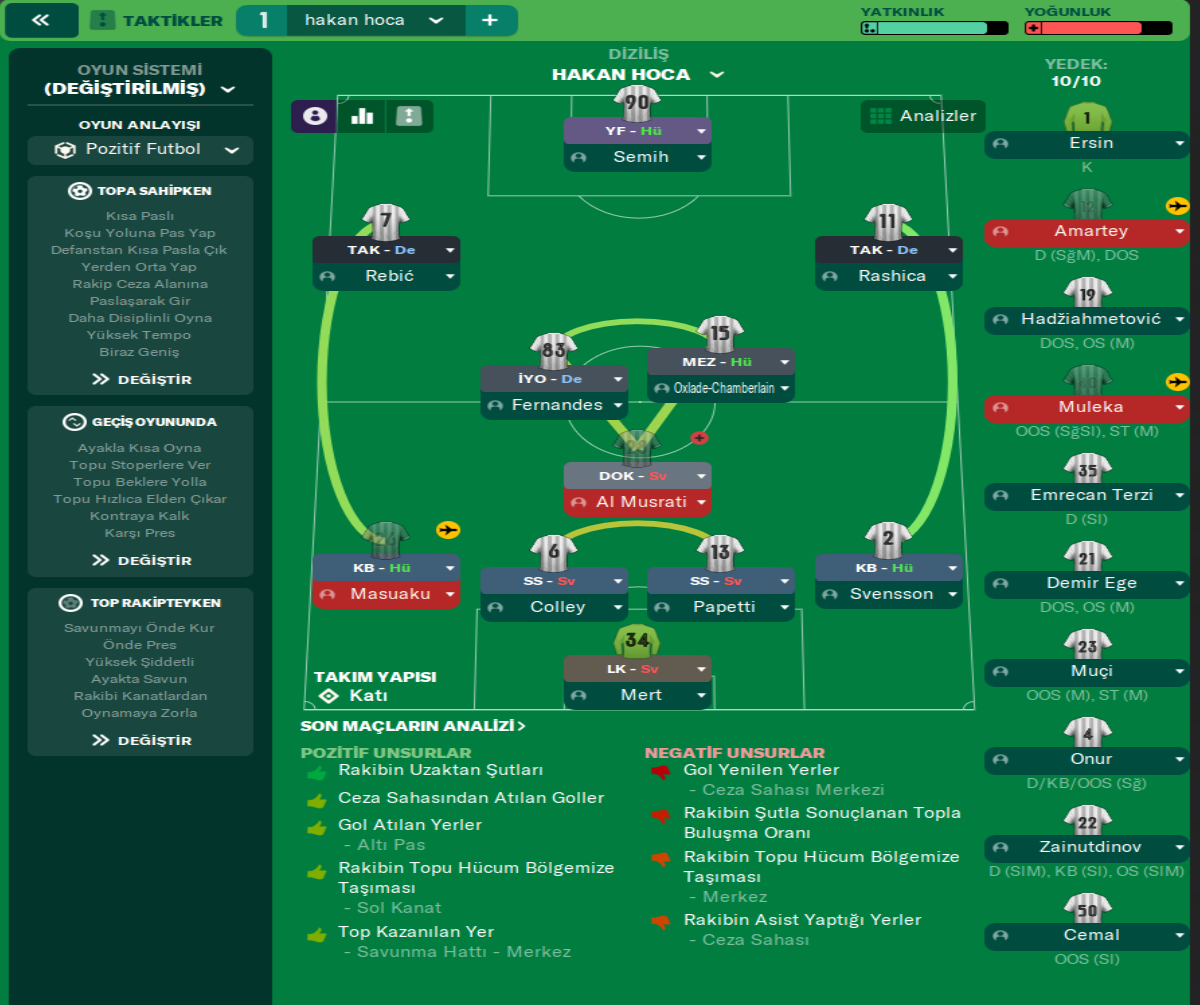
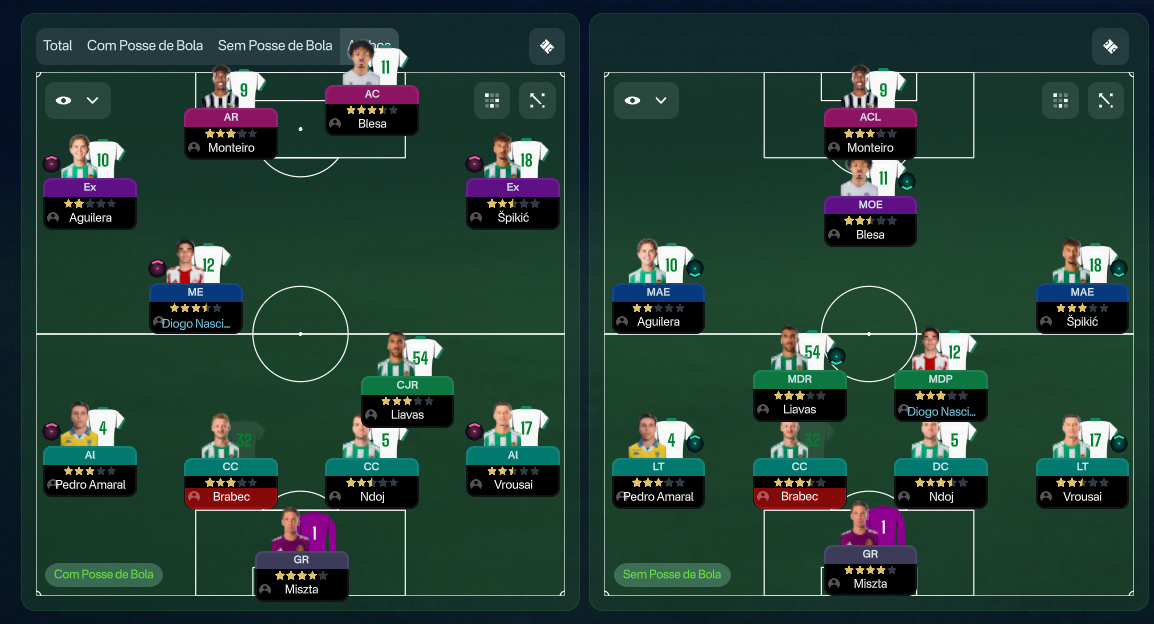
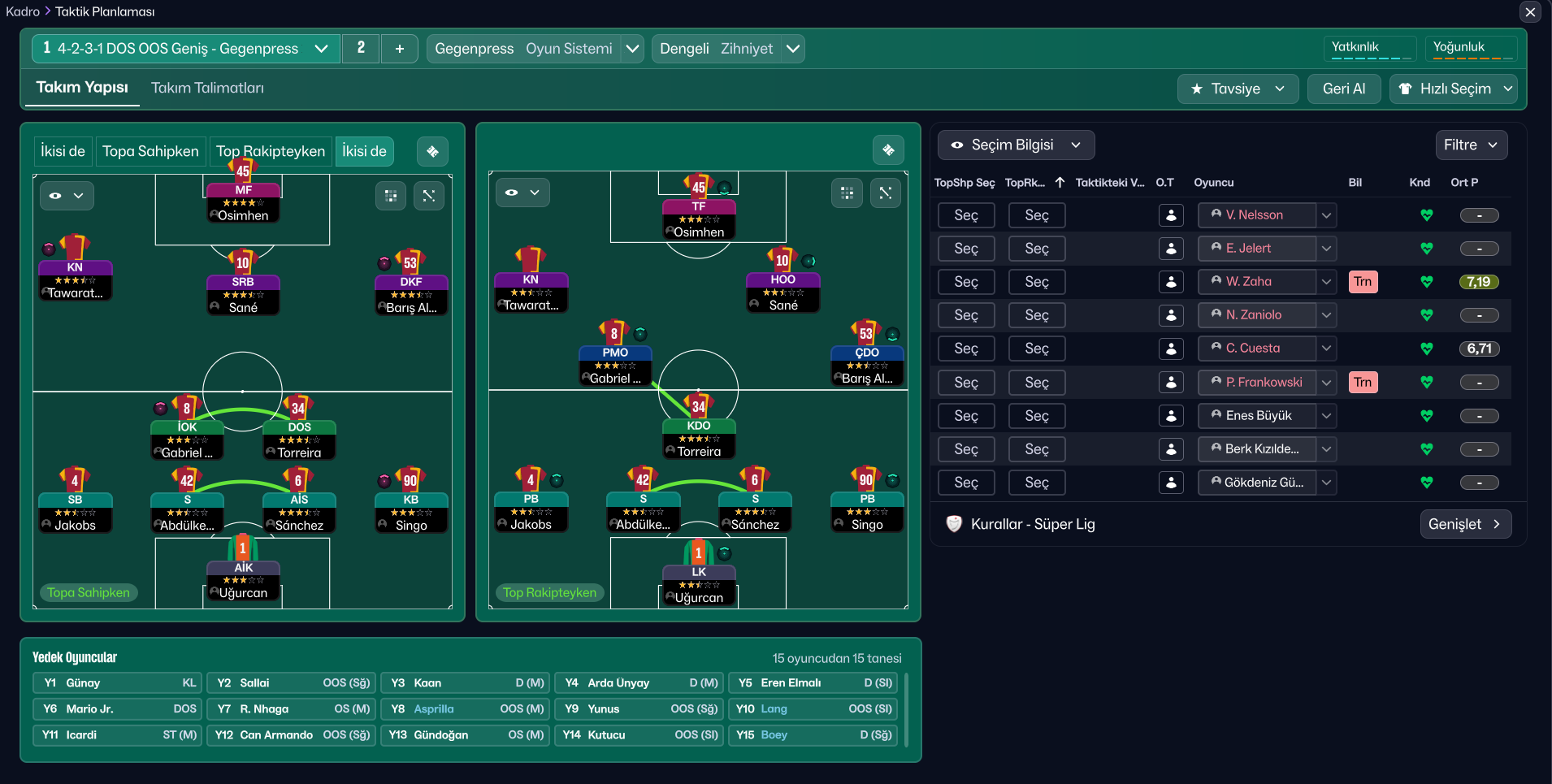
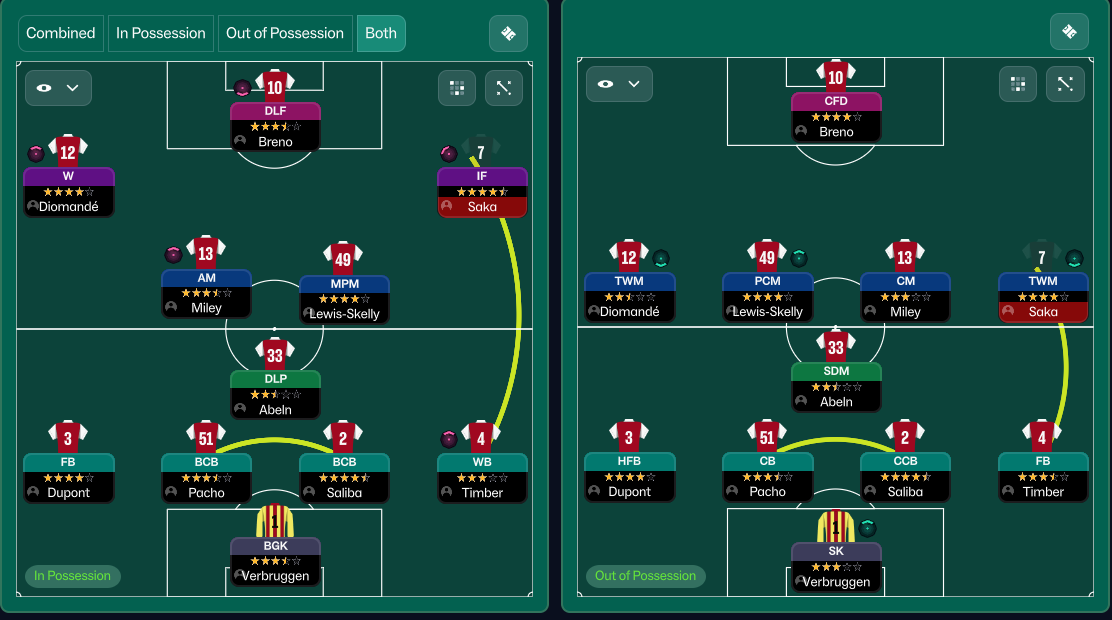
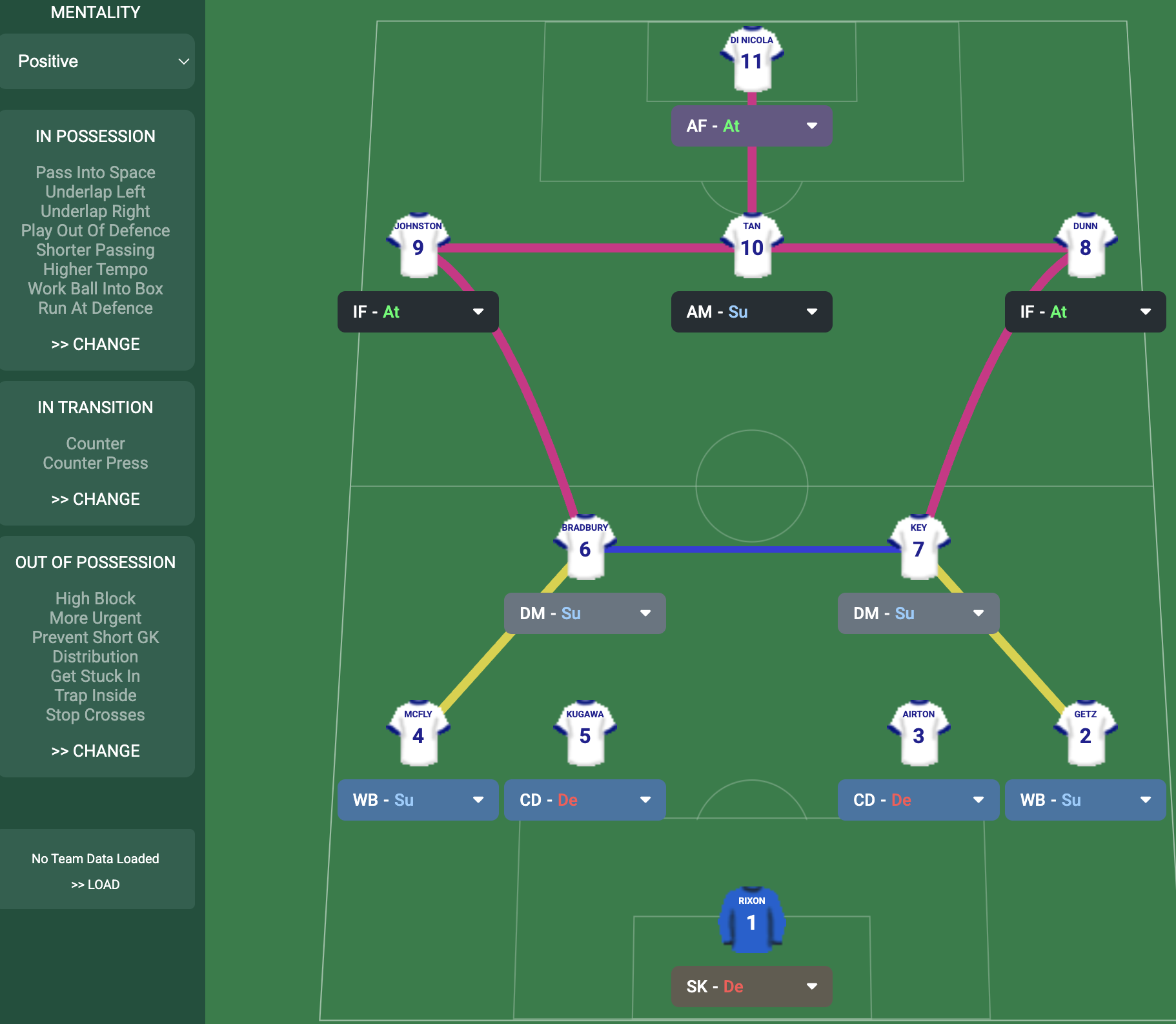
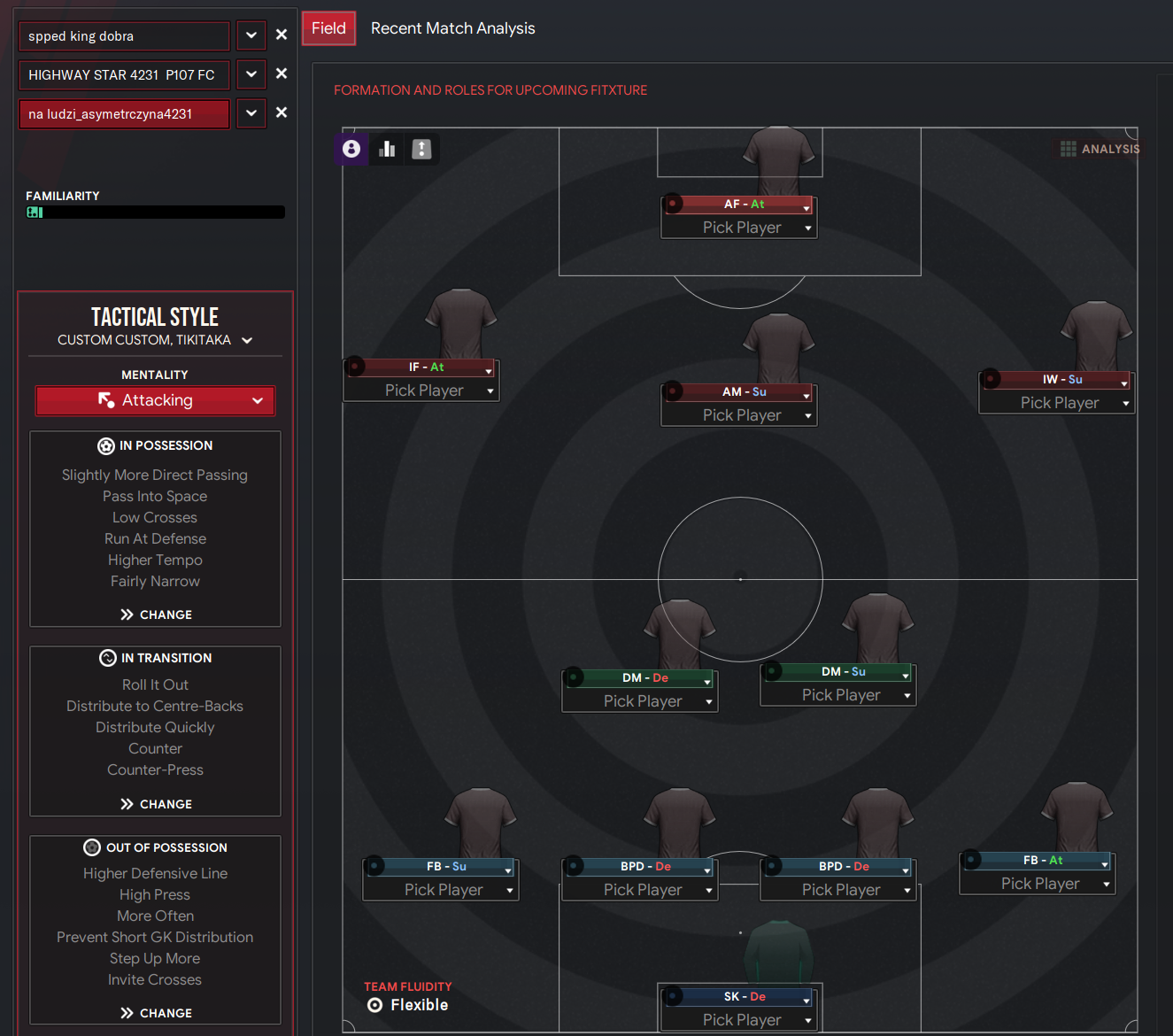
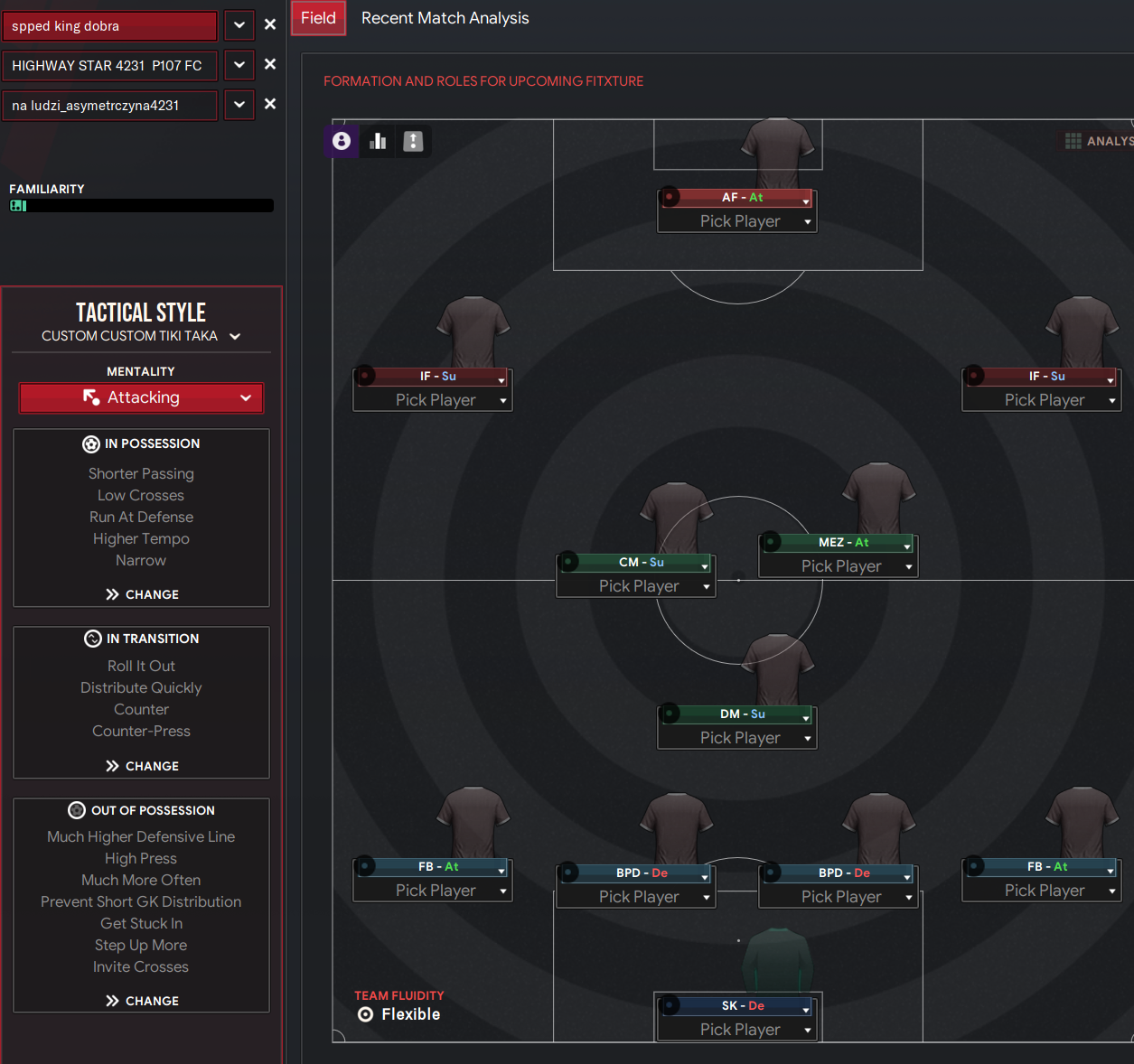
More Dengeli tactics


Guides for this formation
The tactical theory behind the 4-2-3-1 Wide: roles, instructions, and the trade-offs that decide whether the system holds up.
Player pairings
Midfield Pairs in 4-2-3-1 and 4-4-2
Double pivots and flat pairs in 4-2-3-1 and 4-4-2: when each pairing works, when it collapses, and the AMC unicorn that rescues both.
Read guide
Playing styles
Gegenpressing: A Full Guide
Klopp-style gegenpressing in FM, including squad profile, line-and-press pairing, sustainable workload, and the antipatterns to avoid.
Read guide