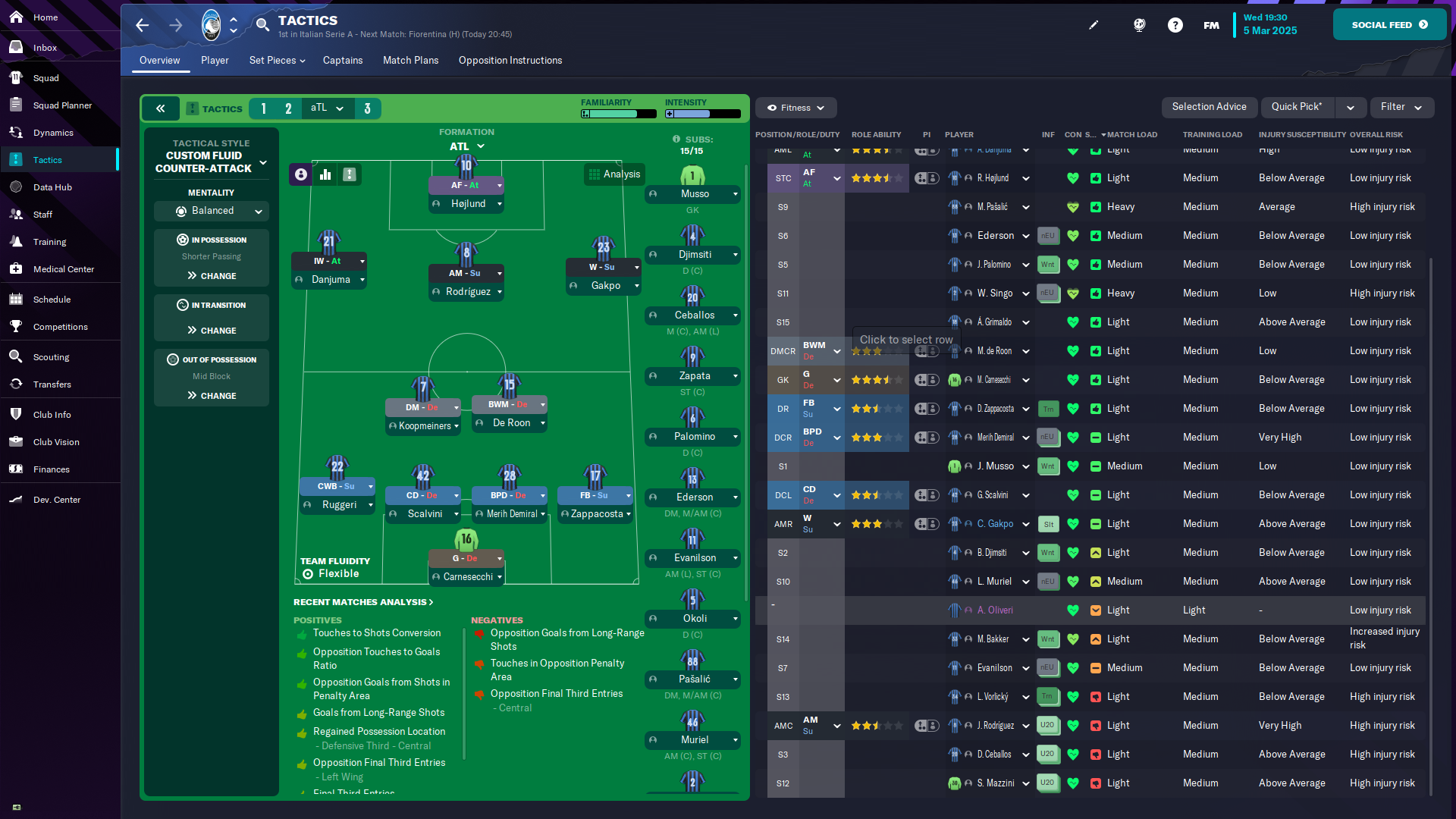
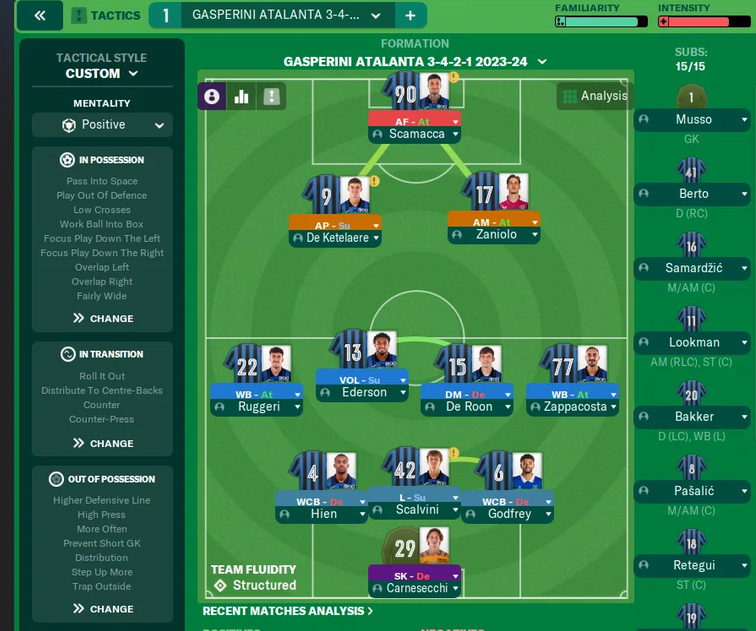
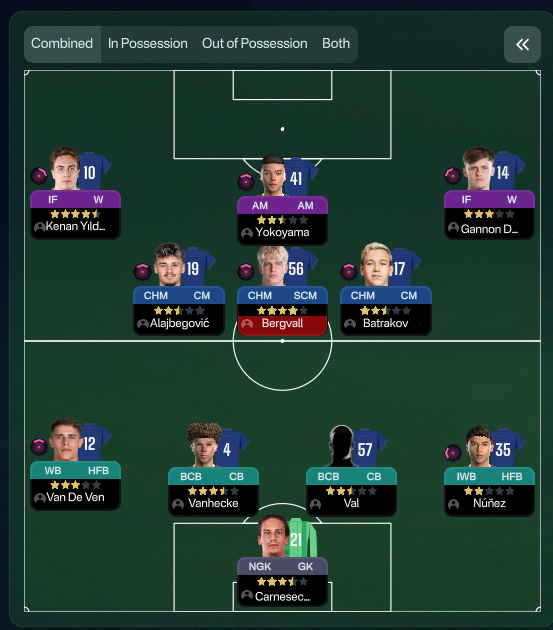
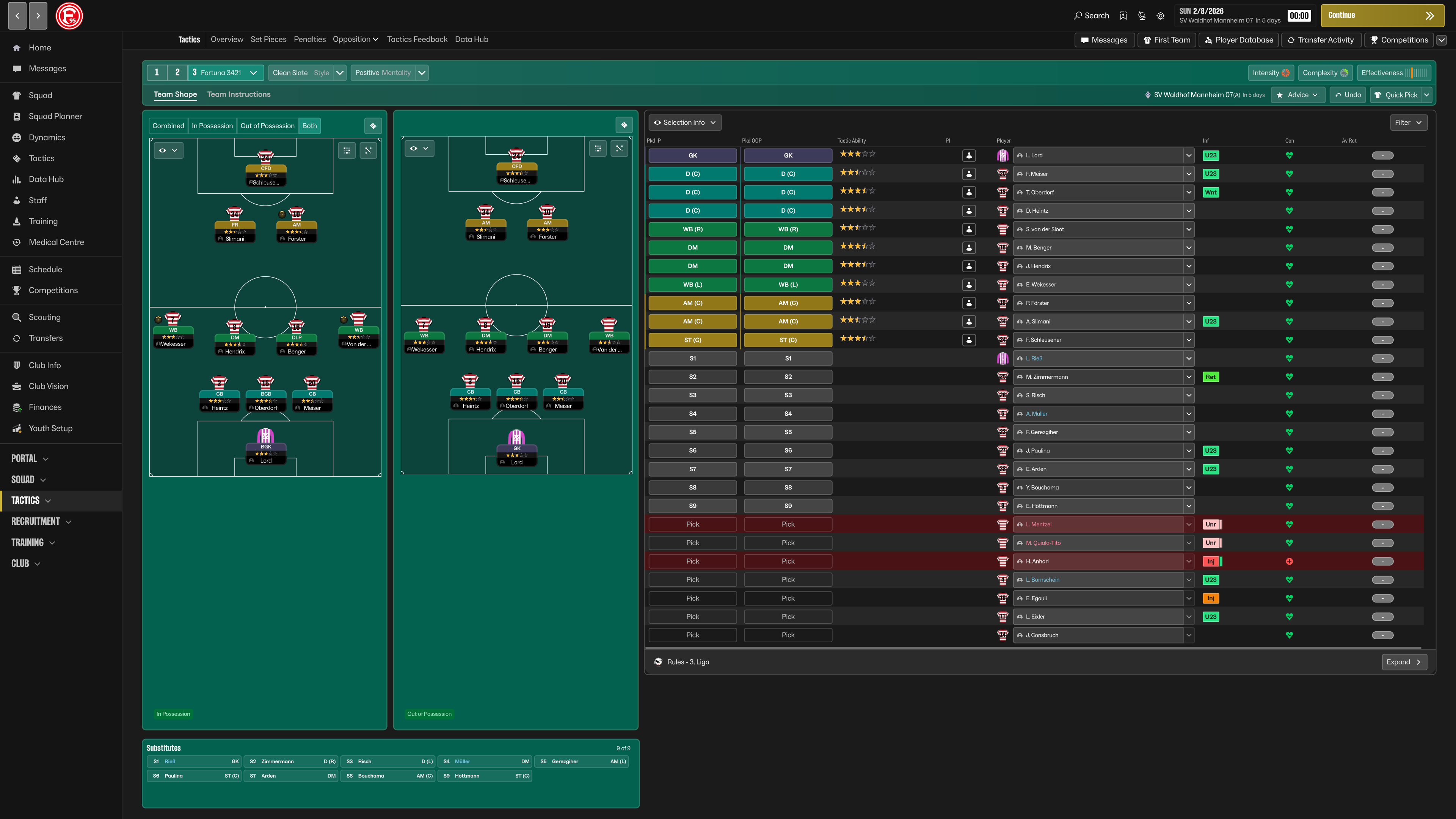
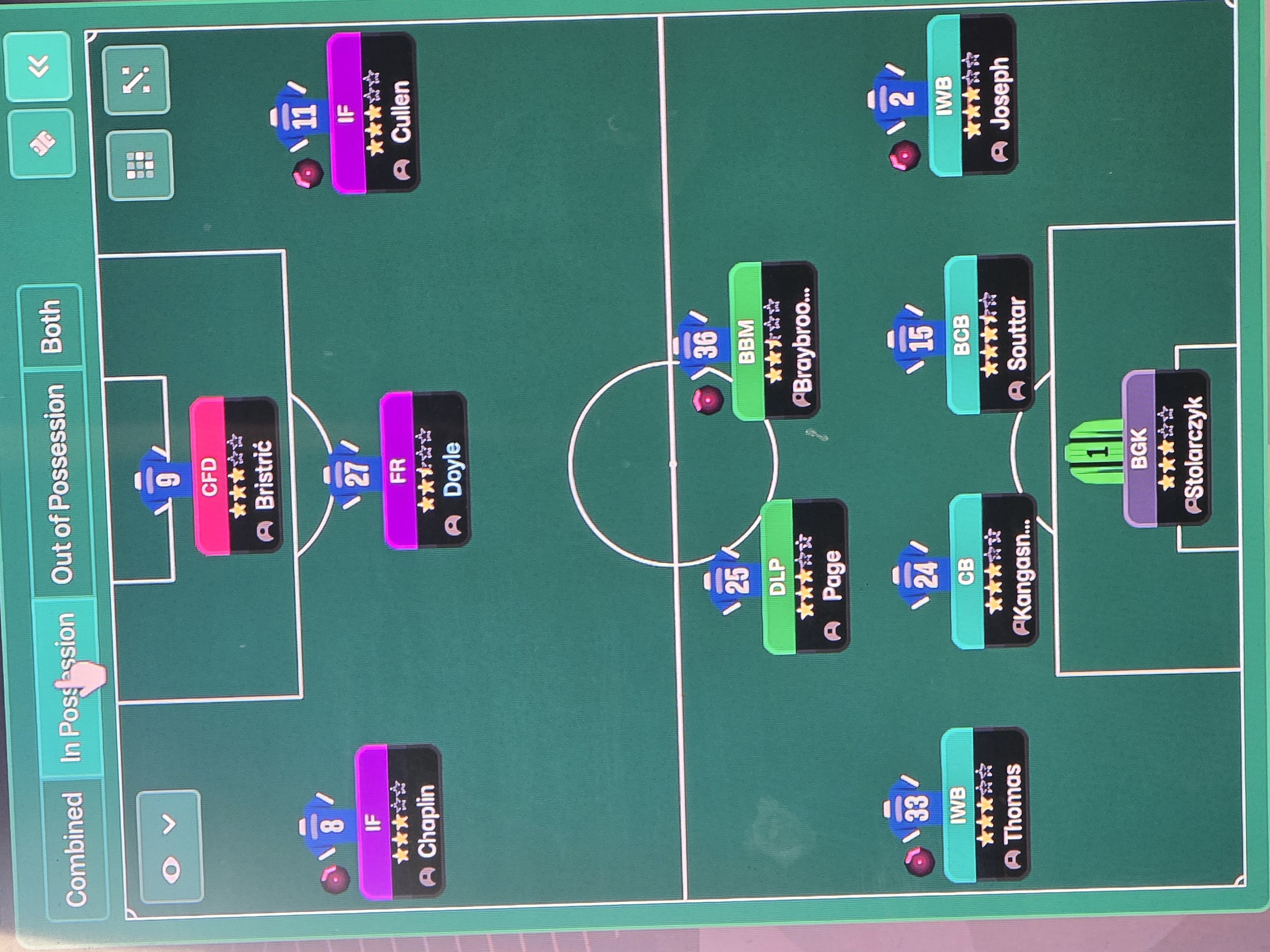
3-4-2-1
Utilize wide areas and exploit defensive frailties with quick transitions. The wing-backs stretch the opposition, providing width and depth, allowing…
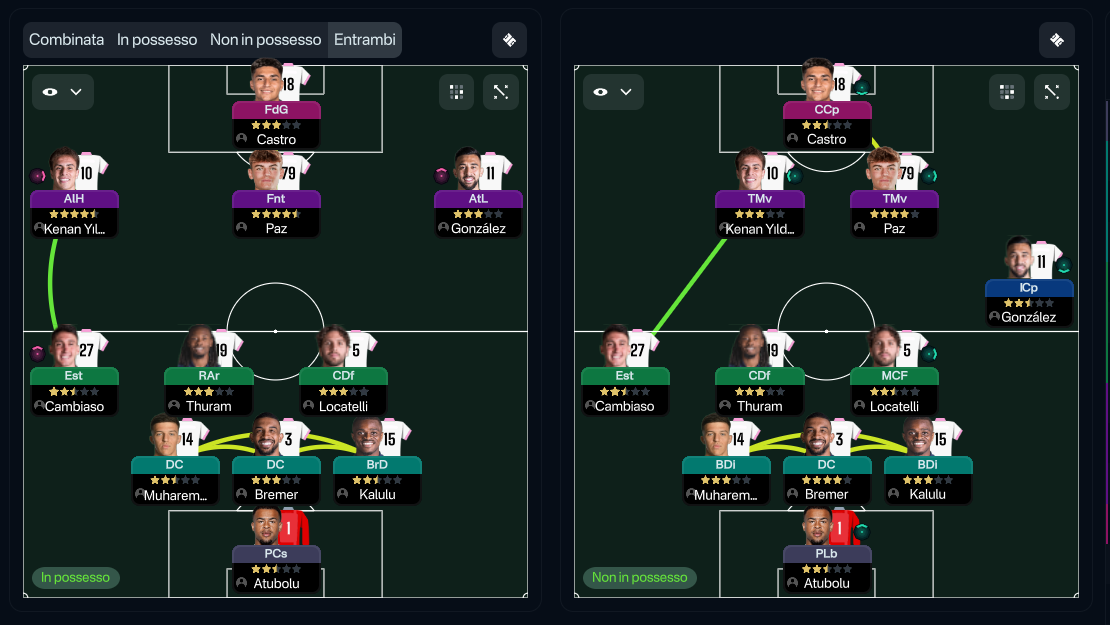
Loading tactical analysis...
Balanced
Positive
3-4-2-1
Fluid
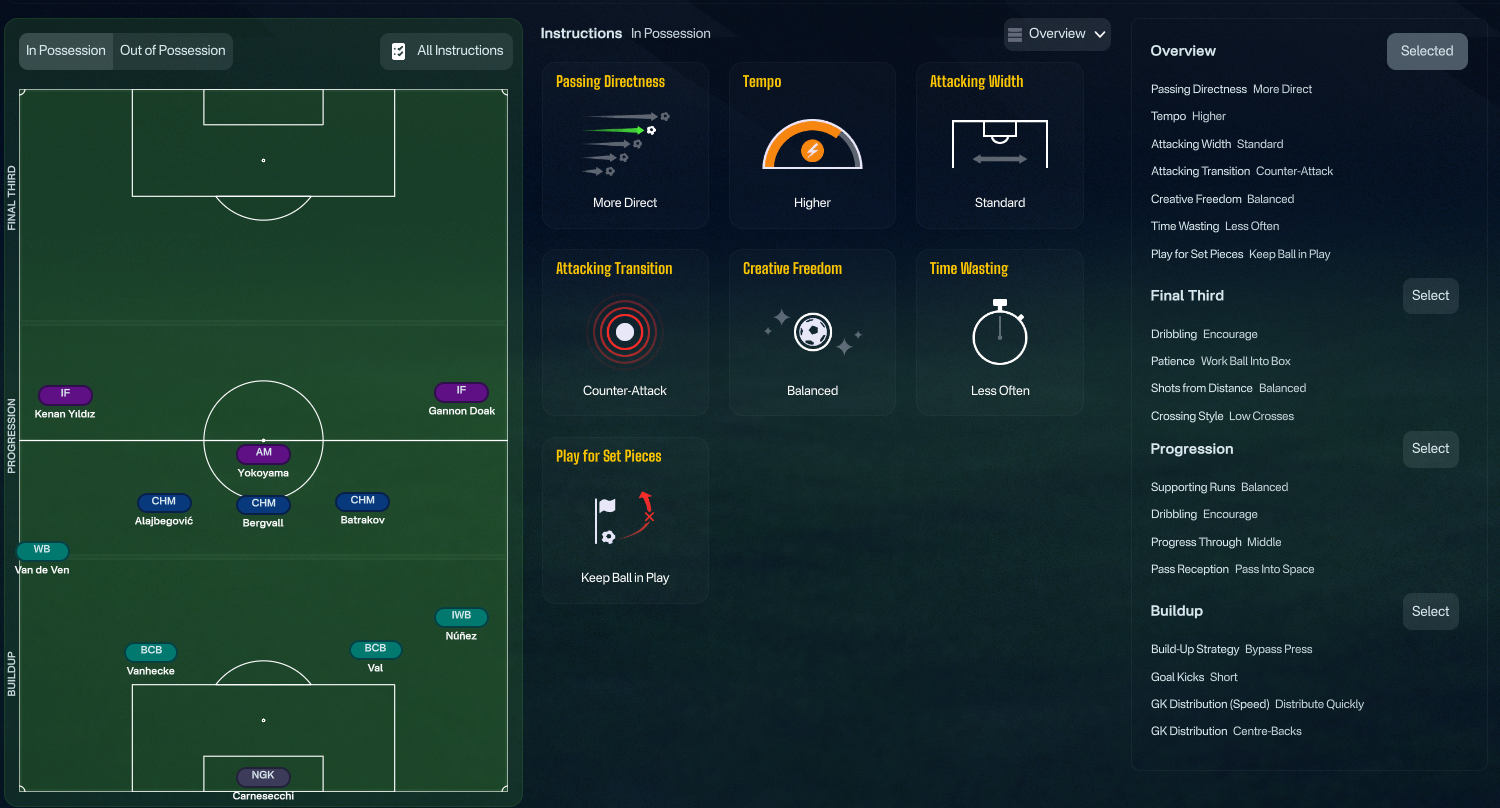
Work Ball Into Box
Shorter Passing
Overlap Left
Overlap Right
Counter
Counter-Press
Higher Defensive Line
Higher Line of Engagement
Prevent Short GK Distribution
GK
Goalkeeper
Defend
CB
Ball-Playing Defender
Defend
CB
Ball-Playing Defender
Defend
CB
No-Nonsense Centre-Back
Defend
RWB
Wing-Back
Attack
LWB
Wing-Back
Attack
CM
Central Midfielder
Support
CM
Box-to-Box Midfielder
Support
AMC
Advanced Playmaker
Support
AMC
Trequartista
Attack
ST
Complete Forward
Attack
Focus on working the ball through the midfield to create space for wingers and overlapping full-backs.
Immediate pressure on the ball with a quick recovery to shape if possession is lost.
Utilize wide areas and exploit defensive frailties with quick transitions.
Compact
Defensive shape closes gaps and limits space for opposing players, particularly when pressing.
Higher Defensive Line with 'Prevent Short GK Distribution' and 'Higher Line of Engagement'.
Fluid
Interchanging roles between the advanced players and the solo striker allows for varied attacking patterns.
Overlap instructions on both flanks coupled with two advanced players in the AMC slots.
The wing-backs stretch the opposition, providing width and depth, allowing central players to find spaces.
Wing-Backs (WB-A) at [2,4] and [2,5], along with overlaps.
The team can quickly regain possession through effective pressing.
Higher Line of Engagement with 'Counter-Press' will apply pressure high up the pitch.
Excessive play on the flanks may lead to reduced central penetration, stalling attacks.
Overlap and width-focused tactics could isolate central playmakers.
If possession is lost quickly, the wing-backs may leave the team vulnerable.
Wing-Backs (WB-A) pushing high can create gaps in defense.
Flanks
Heavy reliance on wing-backs puts pressure on them and exposes flanks during defensive transitions.
Wing-Backs (WB-A) high up may result in fewer defenders on critical counter-attacks.
Central Defense
3-man defense might be overwhelmed by quick attacking formations.
Limited central defensive cover if pressing fails.
Wing-Backs and Central Midfielders
Overlap and space management allows midfielders to receive passes behind opposition lines.
Wing-Backs (WB-A) at [2,4] and [2,5] support midfielders effectively.
Advanced Playmaker and Trequartista
Two creative roles can interchange and create unpredictable attacks.
AP-S at [5,3] and TREQ at [5,4] provide flexibility in attack.
How can I improve central midfield movement?
What adjustments can optimize wing-play without compromising defense?
How to balance pressing intensity throughout the match?
The tactical theory behind the 3-4-2-1: roles, instructions, and the trade-offs that decide whether the system holds up.
Mentality, duty, role, instruction, sub. The change hierarchy from lightest to heaviest intervention, and 60th-minute patterns by game state.
Pass map, average position, xG, possession by zone: what each tablet panel tells you in FM and the tactical change it should trigger.
FM27 keeps FM26's tactic system. Here is what stays the same, the small changes that can catch you out, and what the new Tactical Effectiveness system asks of you.