Balanced 3-4-3 (Positive) Tactic
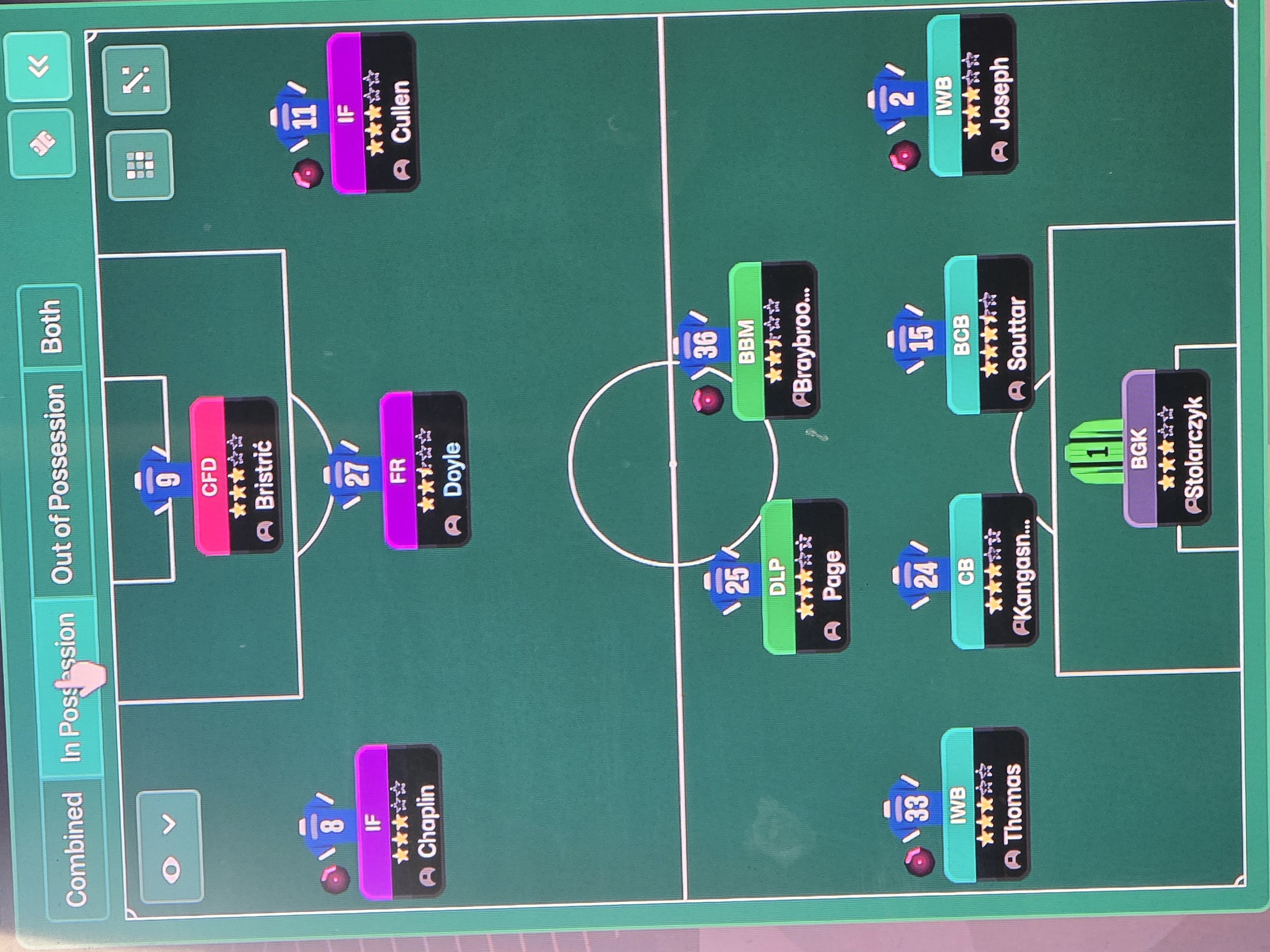
3-4-3
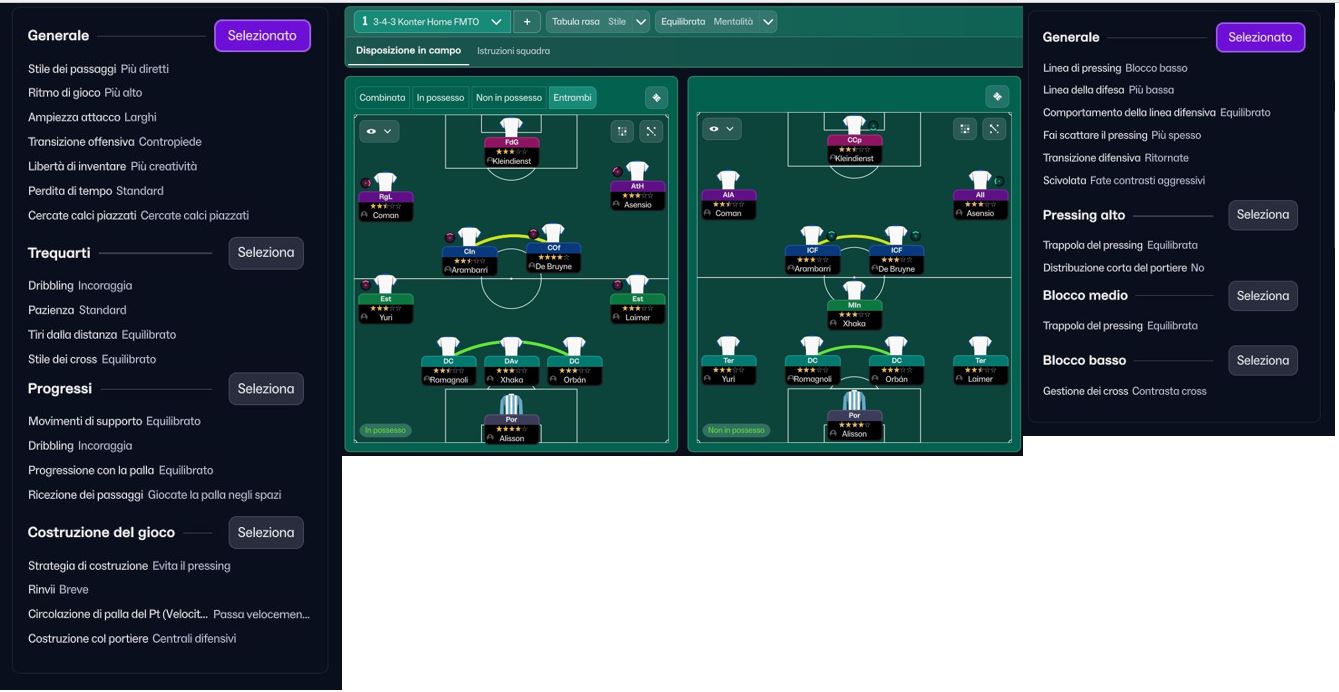
Exploitation of spaces created by the attacking width with Inside Forwards cutting in. Three central defenders provide a solid foundation.
Loading tactical analysis...
Formation and style
Balanced
Positive
3-4-3
Fluid
In possession
Work Ball Into Box
Play Out of Defence
Shorter Passing
In transition
Counter
Counter Press
Out of possession
Higher Defensive Line
Higher Line of Engagement
Prevent Short GK Distribution
Player roles
GK
Goalkeeper
Defend
CB
Centre-Back
Defend
BCB
Ball-Playing Defender
Defend
IWB
Inverted Wing-Back
Support
IWB
Inverted Wing-Back
Support
DLP
Deep-Lying Playmaker
Support
BBM
Box-to-Box Midfielder
Support
FR
Forward
Attack
IF
Inside Forward
Attack
CFD
Complete Forward
Attack
IF
Inside Forward
Attack
Phase description
Focus on building attacks with controlled possession and quick exchanges, utilizing the width from the Inverted Wing-Backs.
Quick counter-pressing to regain possession immediately, maximizing pressure on the opposition.
Exploitation of spaces created by the attacking width with Inside Forwards cutting in.
Team shape defence
Compact
Defensive shape remains solid with players closely supporting each other.
The positioning of CB and BCB at [2,3] and [2,2] ensures a strong central defense.
Team shape attack
Dynamic
Forwards interchange to create opportunities and stretch defenses.
The positioning of IF at [6,1] and [6,5] offers varied attacking angles.
Key strengths
Strong Central Defense
Three central defenders provide a solid foundation.
CB at [2,3] and BCB at [2,2] form a strong back line.
Dynamic Attack
Forwards can interchange effectively.
CFD at [6,3] with IFs at [6,1] and [6,5] enabling quick attacks.
Conflicting tactics
Lack of Width in Defense
Wingers may be overstretched if attacked down flanks.
Inverted Wing-Backs at [2,1] and [2,5] may lead to vulnerabilities.
Risk of Isolation
If midfielders are bypassed, attackers could be isolated.
The reliance on DLP at [3,2] could lead to challenges if they are marked out.
Risk exposures
Risk Exposures
Items
Flanks
Walking a tightrope on the flanks could be exploited by opponents.
IWB could leave a gap if opposing wingers push forward.
Midfield Pressing
Pressing too high could lead to gaps.
Higher Line of Engagement may facilitate counter situations.
Role synergies
Role Synergies
Items
DLP-S and BBM-S
Excellent synergy in midfield with ball recovery and transition.
DLP at [3,2] and BBM at [4,2] support both phases effectively.
IF and CFD
Inside forwards create space for the Complete Forward.
IFs at [6,1] and [6,5] allowing for central movement for CFD at [6,3].
Suggested questions
How can we improve defensive stability while maintaining attacking fluidity?
What adjustments can be made to capitalize on opponent weaknesses?
Are there any alternative formations that may better suit the current player roles?
Related Tactics
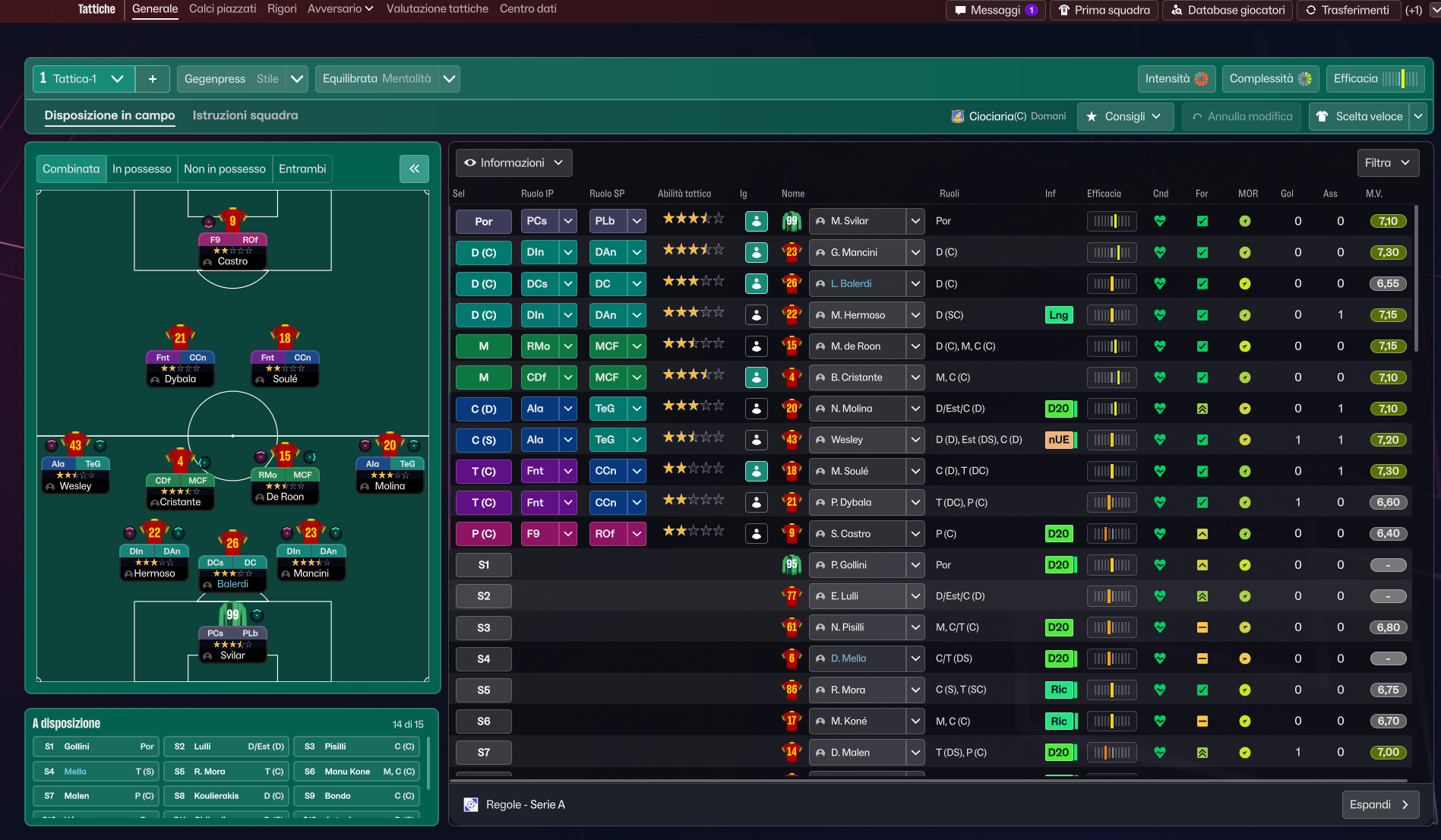
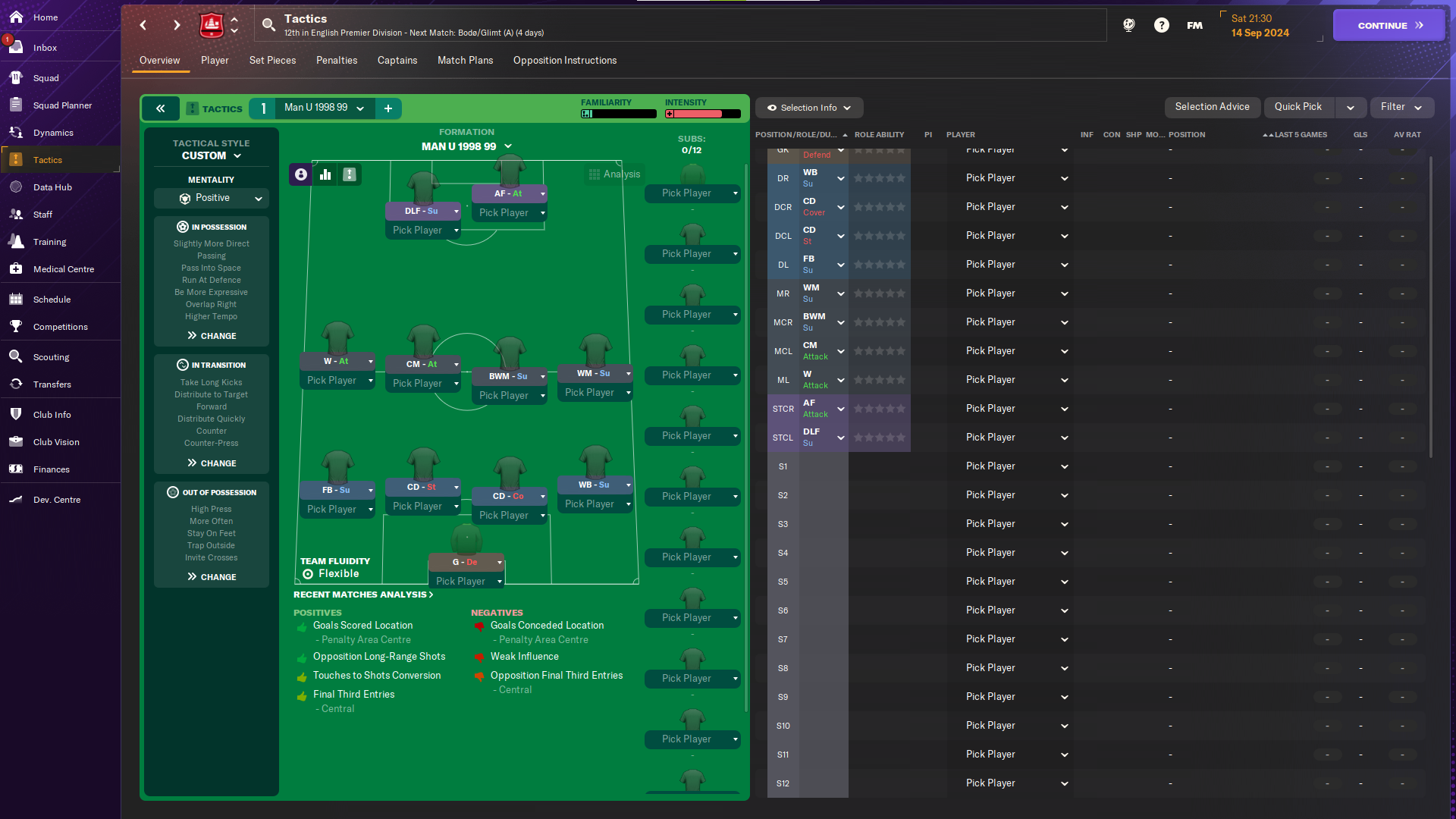
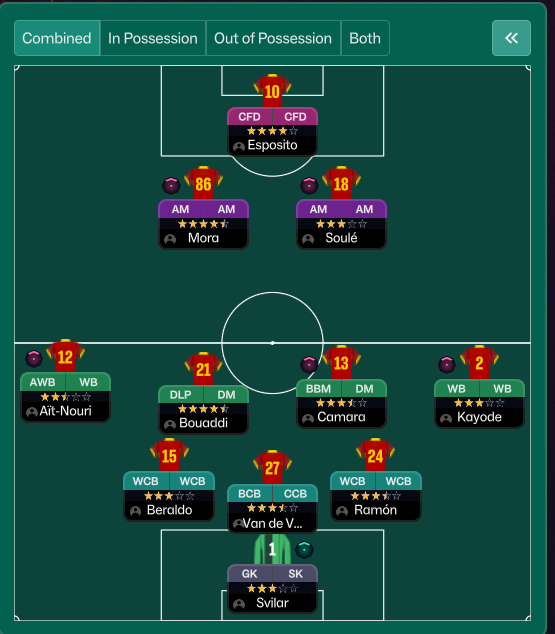
More Balanced tactics
Guides for this tactic
The tactical theory behind the 3-4-3: roles, instructions, and the trade-offs that decide whether the system holds up.
Playing styles
Possession-Based Tactics in Football Manager
Build the patient, control-the-tempo style without watching your opponents counter through the gaps you leave behind.
Read guide
Playing styles
Direct, Vertical Football
Long-ball football done well in FM. When direct, vertical play is the right choice, and what the Direct Passing TI actually changes.
Read guide
Match preparation
Reading the Match Tablet
Pass map, average position, xG, possession by zone: what each tablet panel tells you in FM and the tactical change it should trigger.
Read guide