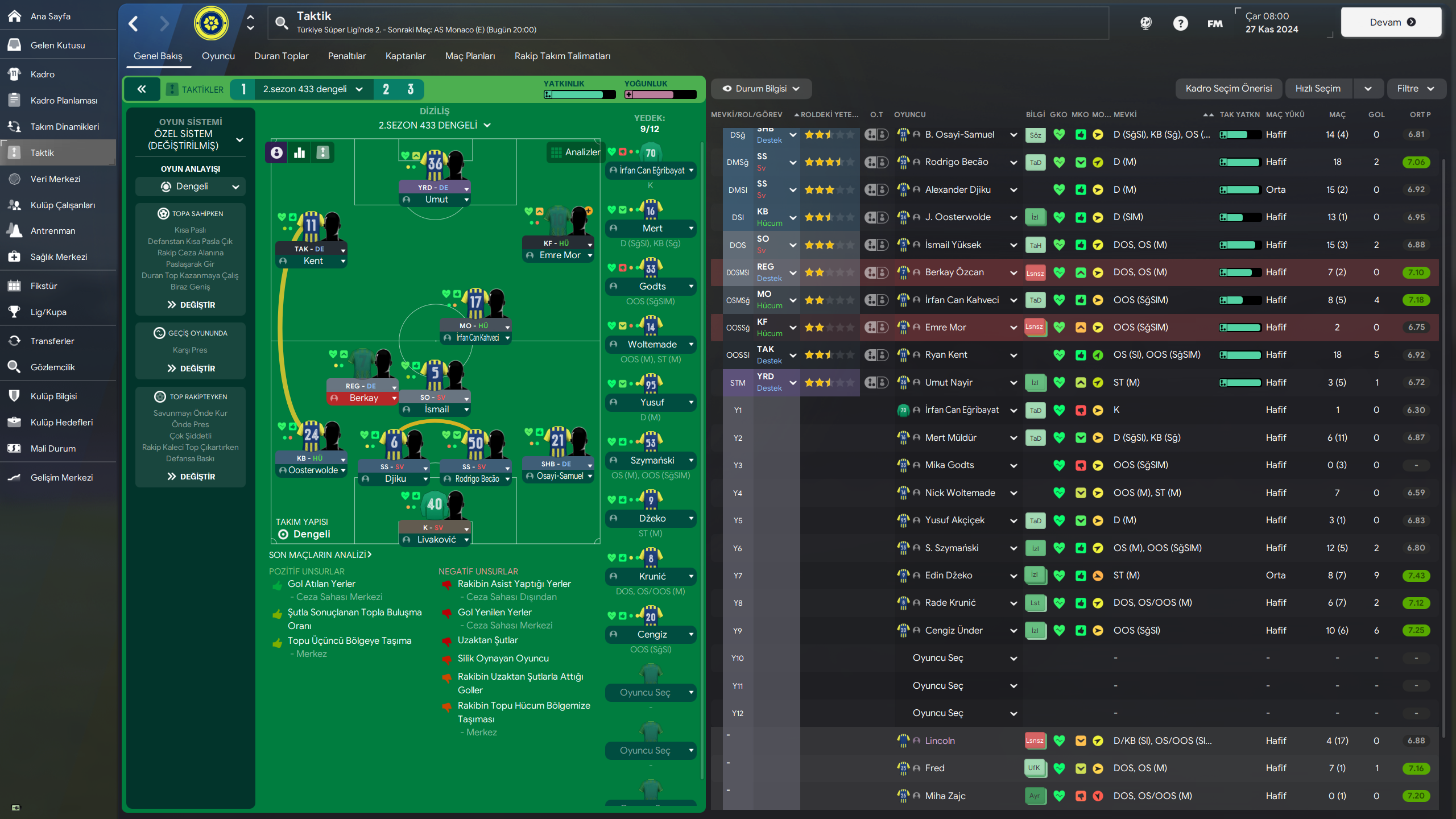
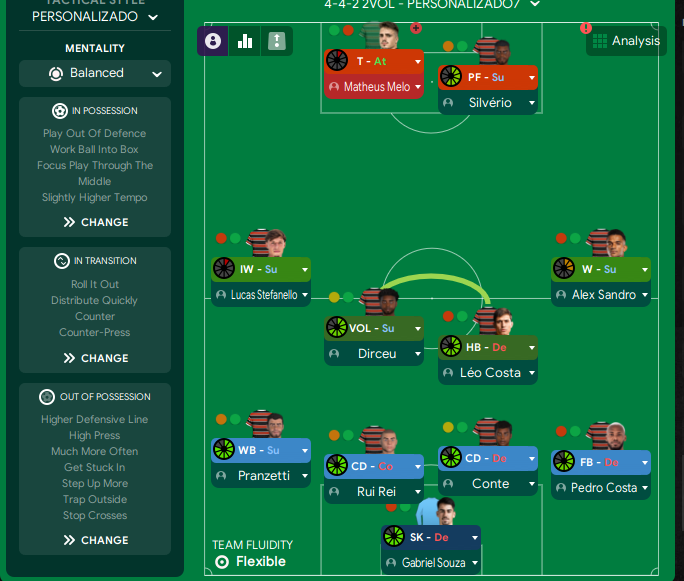
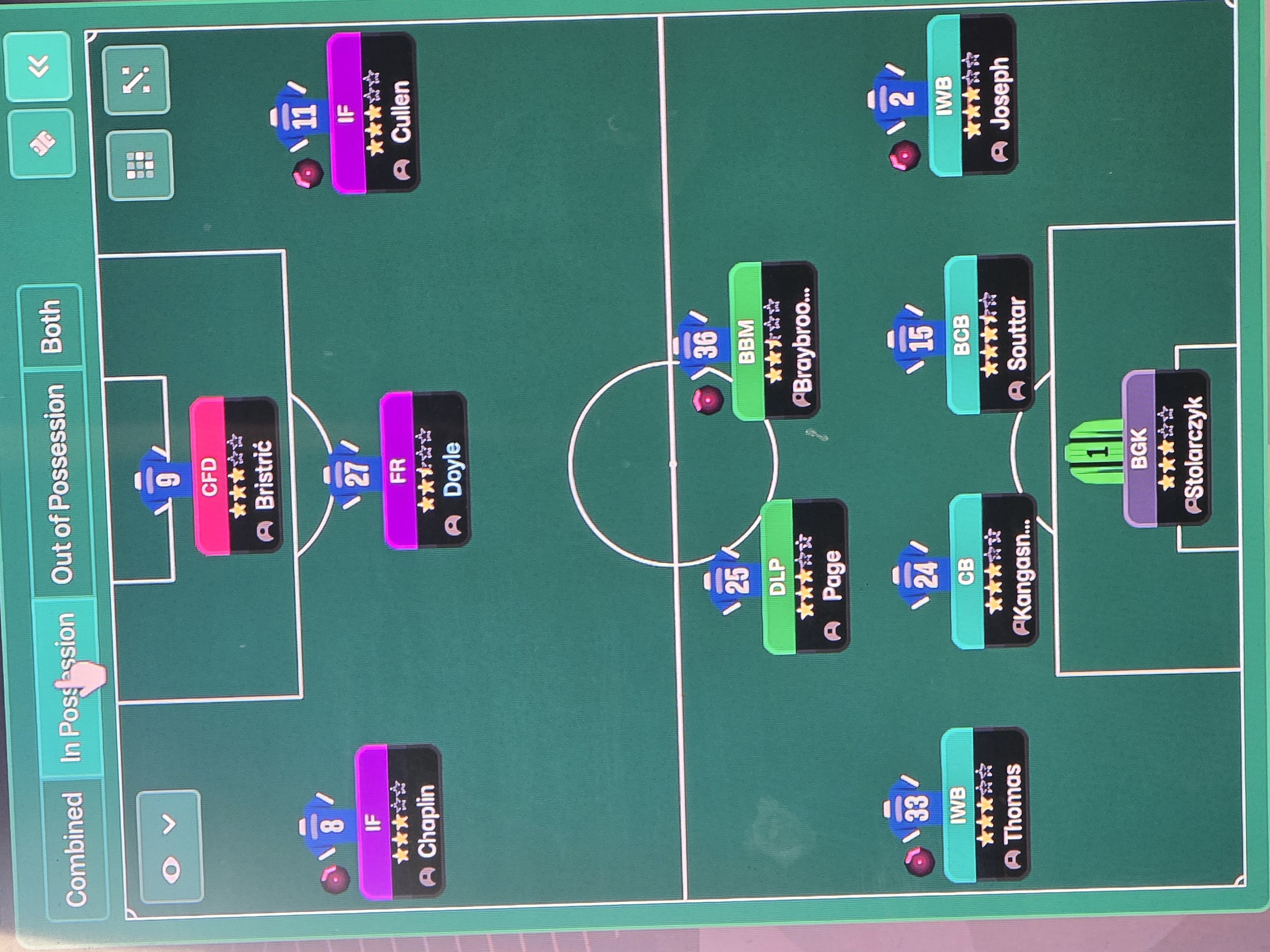
Balanced 4-1-1-4 (Positive) Tactic
4-1-1-4
Exploit flanks and utilize quick counter-attacks. Utilizes wing-backs efficiently to create width and stretch the opposition.
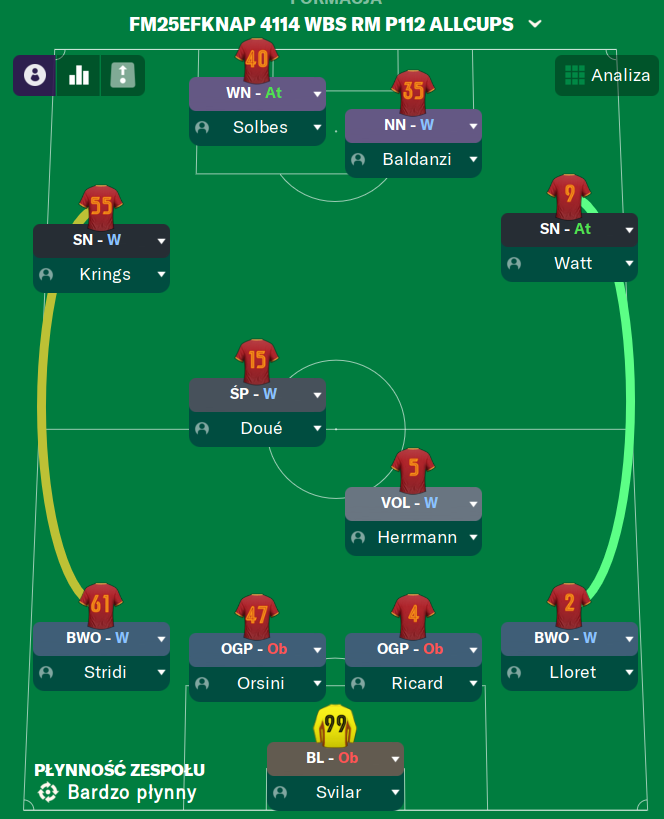
Loading tactical analysis...
Formation and style
Balanced
Positive
4-1-1-4
Very Fluid
In possession
Play out of Defence
Focus Play Down the Wings
Be More Expressive
In transition
Counter-Press
Counter
Out of possession
Higher Defensive Line
Higher Line of Engagement
Prevent Short GK Distribution
Player roles
GK
Goalkeeper
Defend
DL
Wing-Back
Support
DC
Centre-Back
Defend
DC
Centre-Back
Defend
DR
Wing-Back
Support
DM
Volante
Support
MC
Deep-Lying Playmaker
Support
AML
Inside Forward
Attack
AMC
Advanced Playmaker
Support
AMR
Inside Forward
Attack
ST
Poacher
Attack
Phase description
Utilizes width effectively with wing-backs overlapping and inside forwards cutting inside.
Quickly transitions to a pressing game to regain possession.
Exploit flanks and utilize quick counter-attacks.
Team shape defence
Compact 4-1-1 structure
The team remains organized in defense, making it difficult for the opposition to penetrate.
Two wing-backs and centre-backs cover wide spaces, while the DM shields the defense.
Team shape attack
Fluid 4-3-3 attacking shape
The inside forwards and central attacking midfielder create overloads in the final third.
The inside forwards position themselves centrally to exploit gaps in the defense.
Key strengths
Wide Play
Utilizes wing-backs efficiently to create width and stretch the opposition.
Wing-Backs at [2,1] and [2,5] with support duty.
Fluid Attack
The combination of inside forwards and an advanced playmaker offers creative options.
Inside Forwards at [6,1] and [6,5] with attacking duties.
Conflicting tactics
Inverted Full-Backs Not Utilized
The wing-backs are set to support rather than invert, limiting potential overloads.
Wing-Backs at [2,1] and [2,5] with Support duty.
Counter-Pressing Risk
High line engagement could leave gaps if counter-pressed unsuccessfully.
Higher Line of Engagement along with Counter-Press is set.
Risk exposures
Risk Exposures
Items
Counter-Attacks
High line and pressing tactics can be vulnerable to quick counter-attacks.
Higher Line of Engagement and Counter-Pressing set.
Wide Attacks
Dependency on wing-backs can be exploited if they are bypassed by the opposition.
Wing-Backs are critical for width but susceptible to being caught out.
Role synergies
Role Synergies
Items
Wing-Backs and Inside Forwards
Creates effective overlaps and provides space for forwards to cut inside.
Wing-Backs at [2,1] and [2,5] enable Inside Forwards at [6,1] and [6,5].
Advanced Playmaker and Poacher
Advanced Playmaker supports the Poacher in exploiting defensive lapses.
AI at AMC and Poacher at ST roles set up to capitalize on created chances.
Suggested questions
How effective have the wing-backs been in providing width?
Is the single defensive midfielder effective against teams with multiple attackers?
What adjustments can be made to improve the counter-press strategy?
Related Tactics

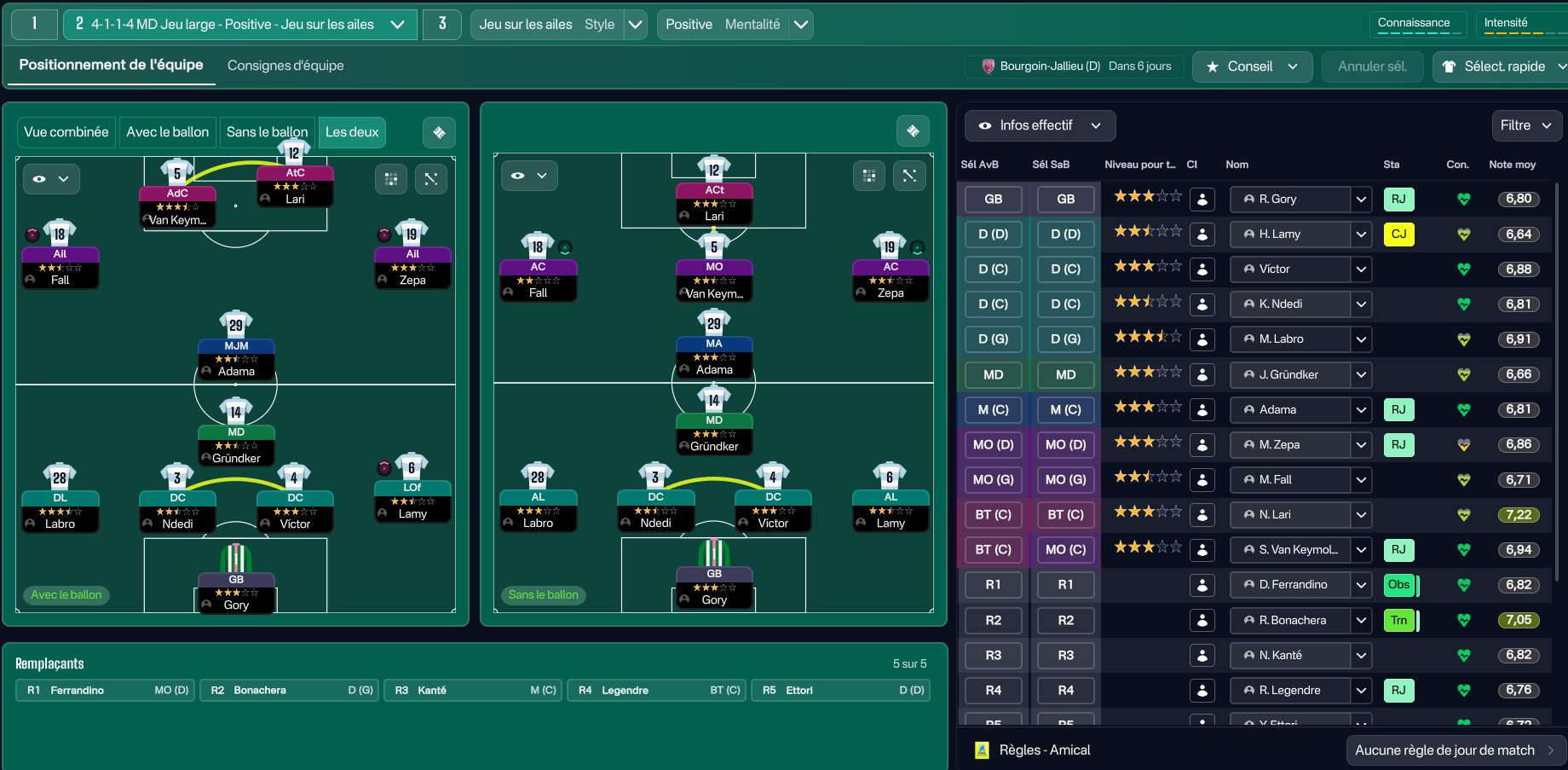
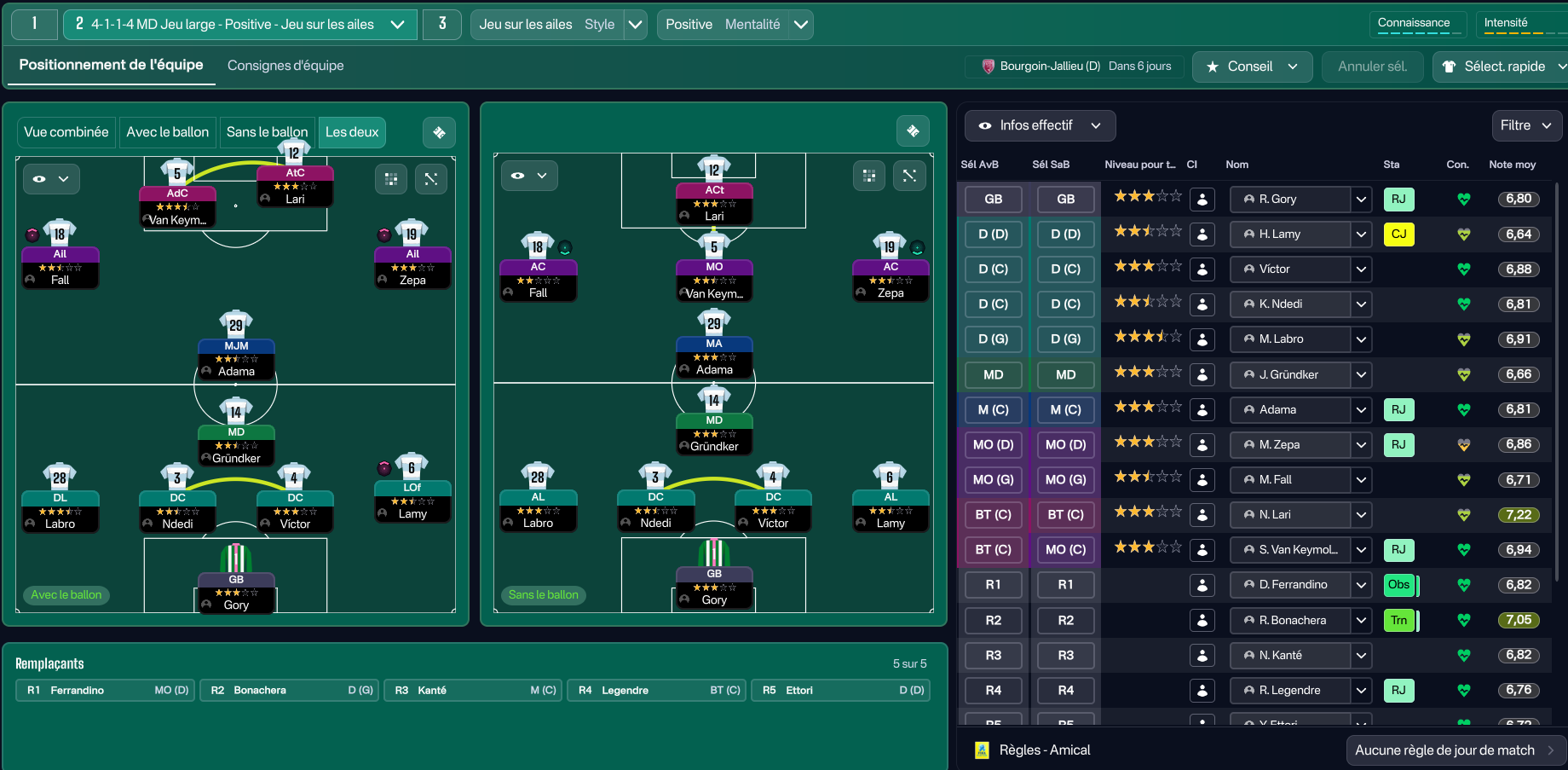


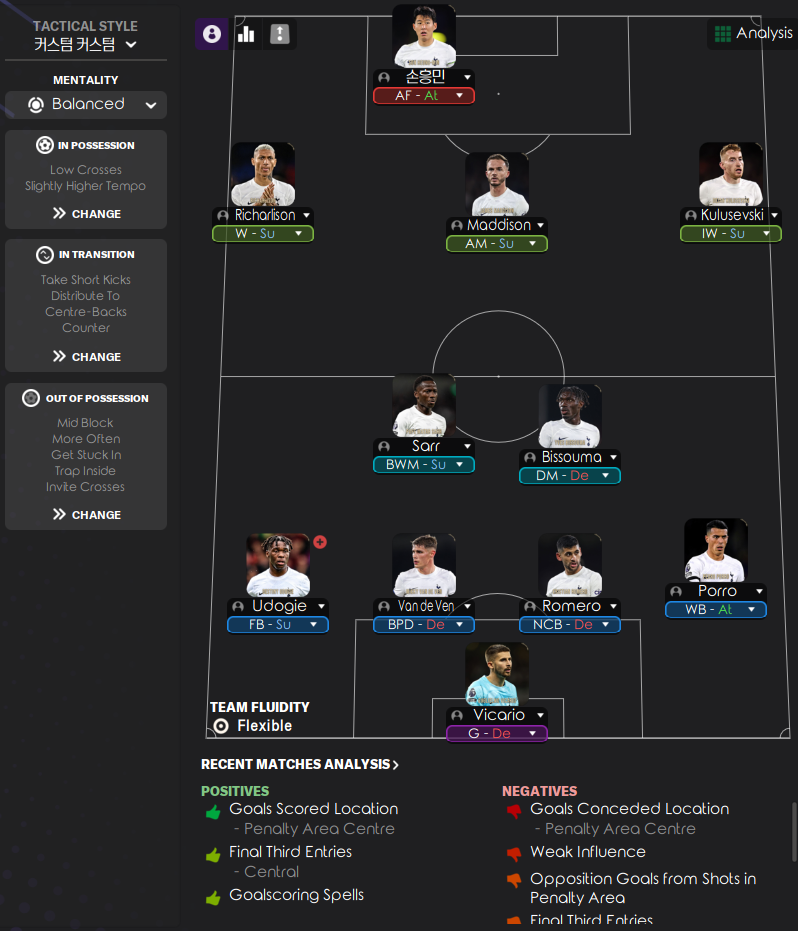
More Balanced tactics
Guides for this tactic
The tactical theory behind the 4-1-1-4: roles, instructions, and the trade-offs that decide whether the system holds up.
Match preparation
Reading the Match Tablet
Pass map, average position, xG, possession by zone: what each tablet panel tells you in FM and the tactical change it should trigger.
Read guide
Foundations
FM27 Tactics: What Changed from FM26
FM27 keeps FM26's tactic system. Here is what stays the same, the small changes that can catch you out, and what the new Tactical Effectiveness system asks of you.
Read guide
Foundations
Mentality, Duty & Roles
How Mentality, Duty, and Role interact in FM, why duty trumps mentality every time, and the role-on-top-of-duty composition rules.
Read guide