Control Possession 3-2-5-2 (Positive) Tactic
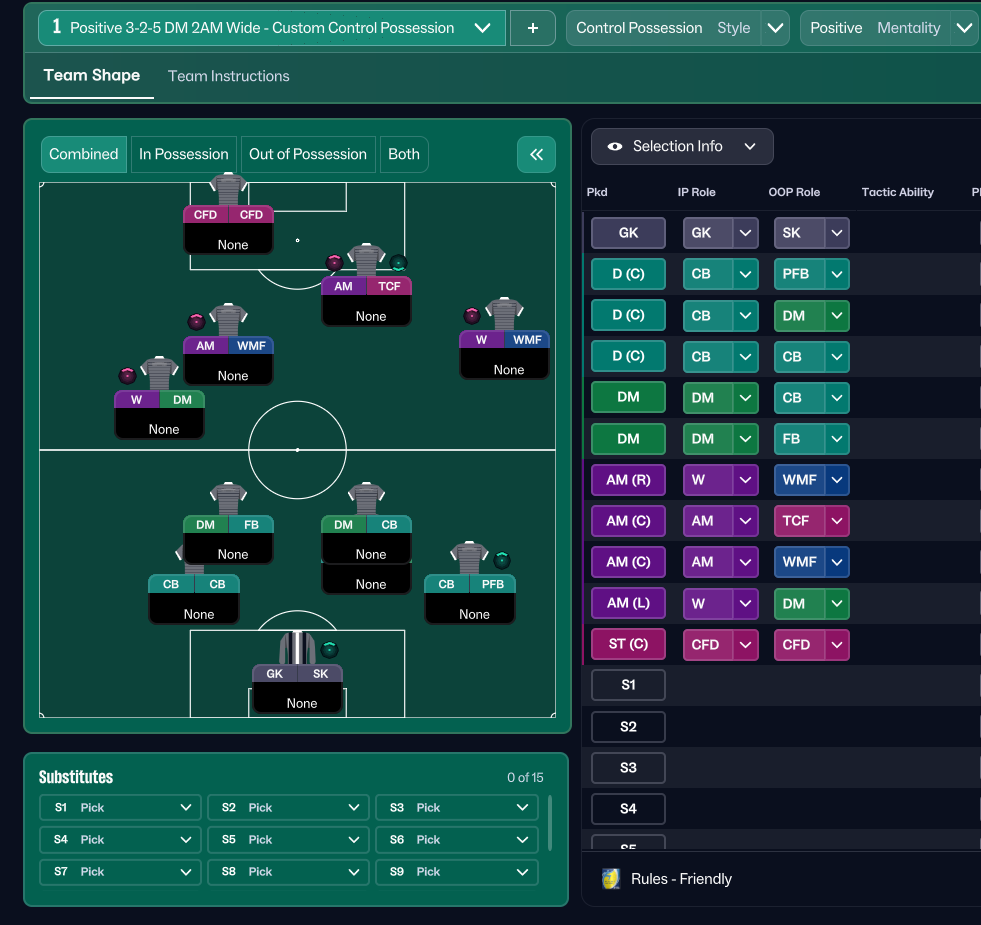
3-2-5-2
Building through the thirds with quick, patient passing and movement off the ball. Utilizing wide midfield forwards stretches the opponent's defense,…
Loading tactical analysis...
Formation and style
Control Possession
Positive
3-2-5-2
In possession
Play Out of Defence
Shorter Passing
Work Ball Into Box
Be More Expressive
Run At Defence
In transition
Counter
Counter-Press
Out of possession
Higher Defensive Line
Higher Line of Engagement
Use Offside Trap
Prevent Short GK Distribution
Player roles
GK
GK
CB (L)
CB
CB (C)
CB
CB (R)
PFB
DM (L)
FB
DM (C)
CB
DM (R)
DM
AM (C)
TCF
AM (L)
WMF
AM (R)
WMF
C (L)
CFD
C (R)
CFD
Phase description
Focus on maintaining possession and creating overloads in wide areas with overlapping full-backs.
Quickly regain possession through counter-pressing when losing the ball to exploit opponent weaknesses.
Building through the thirds with quick, patient passing and movement off the ball.
Team shape defence
3-2
Three central defenders supported by two defensive midfielders, maintaining a solid structure.
Three CBs at [2,1], [2,3], [2,5] and DM at [3,1], [3,3] ensures strong defensive organization.
Team shape attack
3-2-5
Utilizing a narrow midfield with wide players and two central forwards for flexibility in attacking movements.
Five attacking players providing numerous options in the final third, ensuring width and depth.
Key strengths
Width in Attack
Utilizing wide midfield forwards stretches the opponent's defense, creating spaces for central players.
WMF at [5,1] and [5,5] alongside CFs at [6,2] and [6,4] maximizes width and depth.
Compact Defense
A three-man defense supported by a DM ensures solidity and cover during transitions.
CBs at [2,1], [2,3], [2,5] and DM at [3,3] creates a robust defensive line.
Conflicting tactics
Vulnerability to Counterattacks
A high defensive line and aggressiveness may expose defense against rapid counters.
Higher Defensive Line alongside Higher Line of Engagement at [3,1] and [4,1] risks being caught out.
Dependence on Wide Play
If the wings are nullified, options for progressing the ball become limited.
Heavy reliance on WMF at [5,1],[5,5] without alternative central options can stall progression.
Risk exposures
Risk Exposures
Items
Defensive Vulnerability
The high defensive line may expose vulnerabilities against fast attackers.
Counterattacks can be lethal due to higher line engagement.
Overloaded Central Areas
If midfield is overrun, control of the center can be compromised.
The setup may lack sufficient cover or mobility in central zones.
Role synergies
Role Synergies
Items
TCF and WMF partnership
TCF’s ability to drop deep supports WMF in creating overloads.
TCF at [4,3] provides link play with WMF at [5,1] and [5,5].
CB and DM collaboration
CBs can rely on DM for cover, enhancing defensive solidity.
DM at [3,3] allows for CBs at [2,1], [2,3], and [2,5] to take risks.
Suggested questions
How can adjustments be made to enhance ball recovery during transitions?
What formations can adapt better against teams employing low blocks?
How might fatigue management strategies be implemented in training?
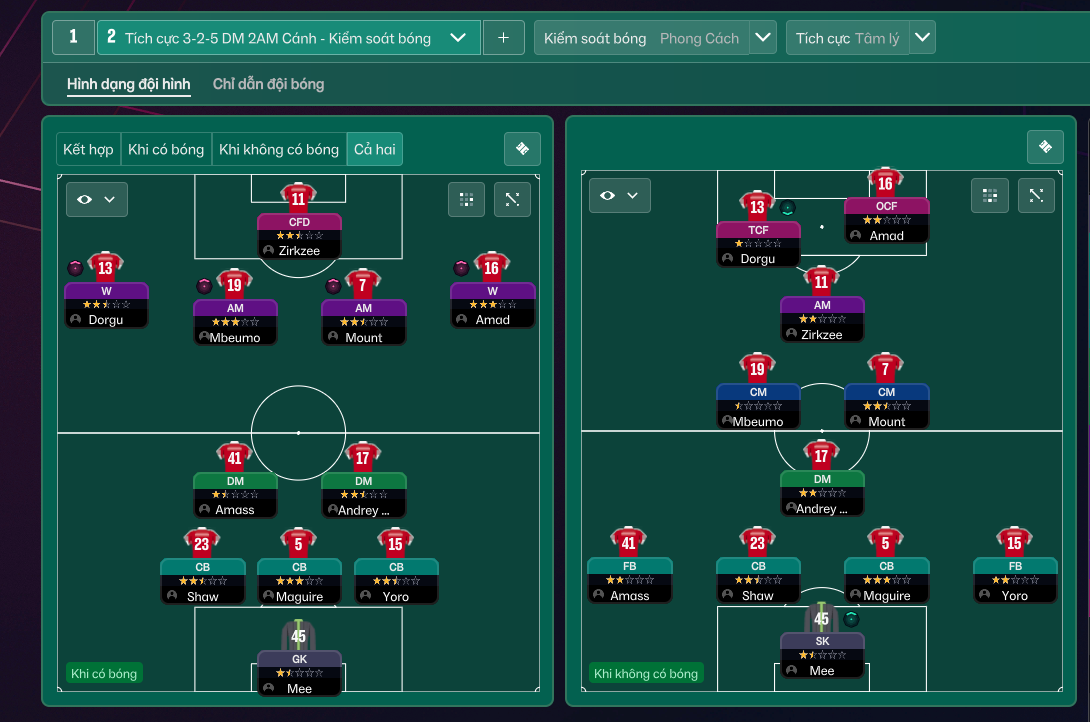
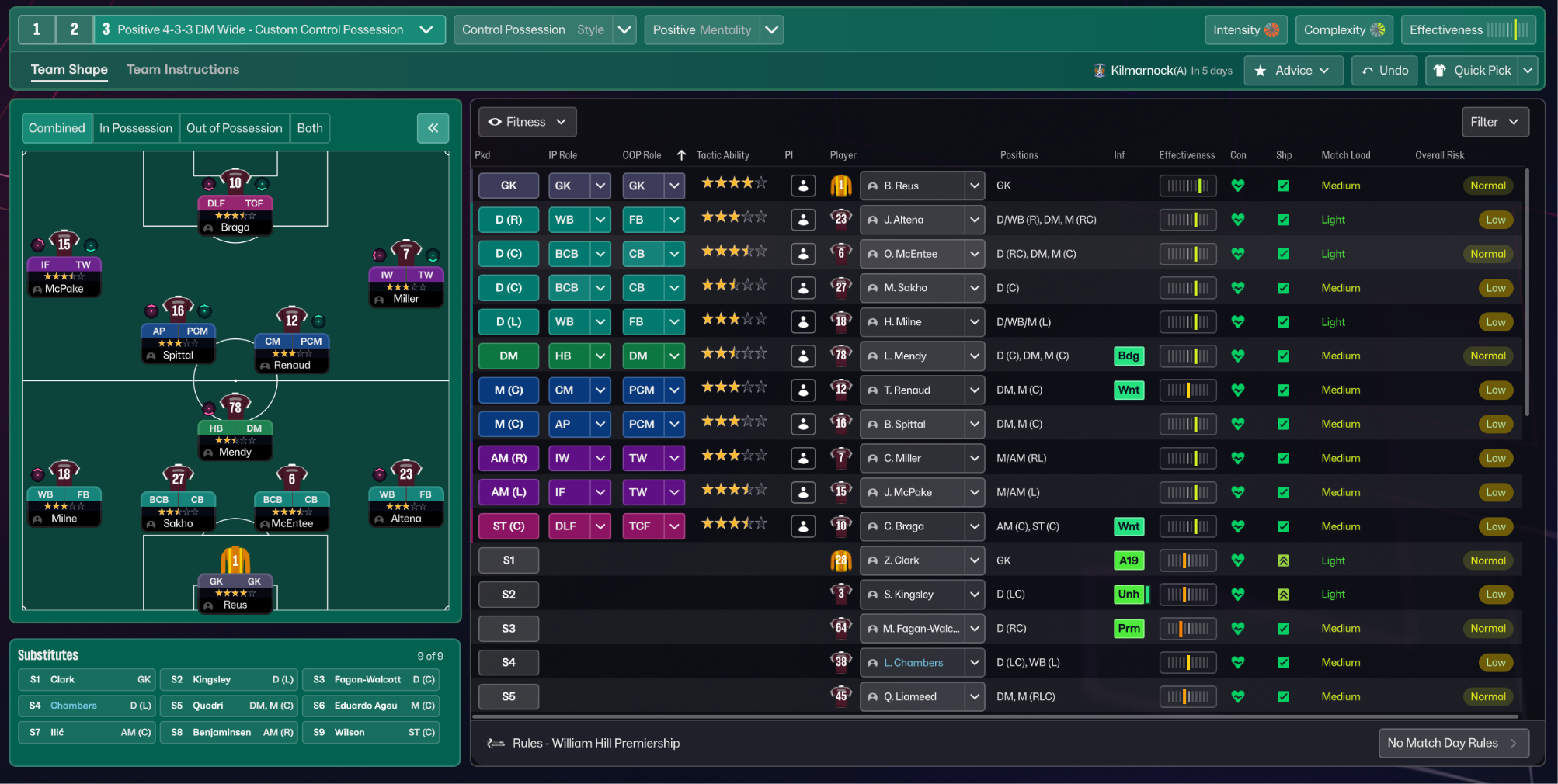
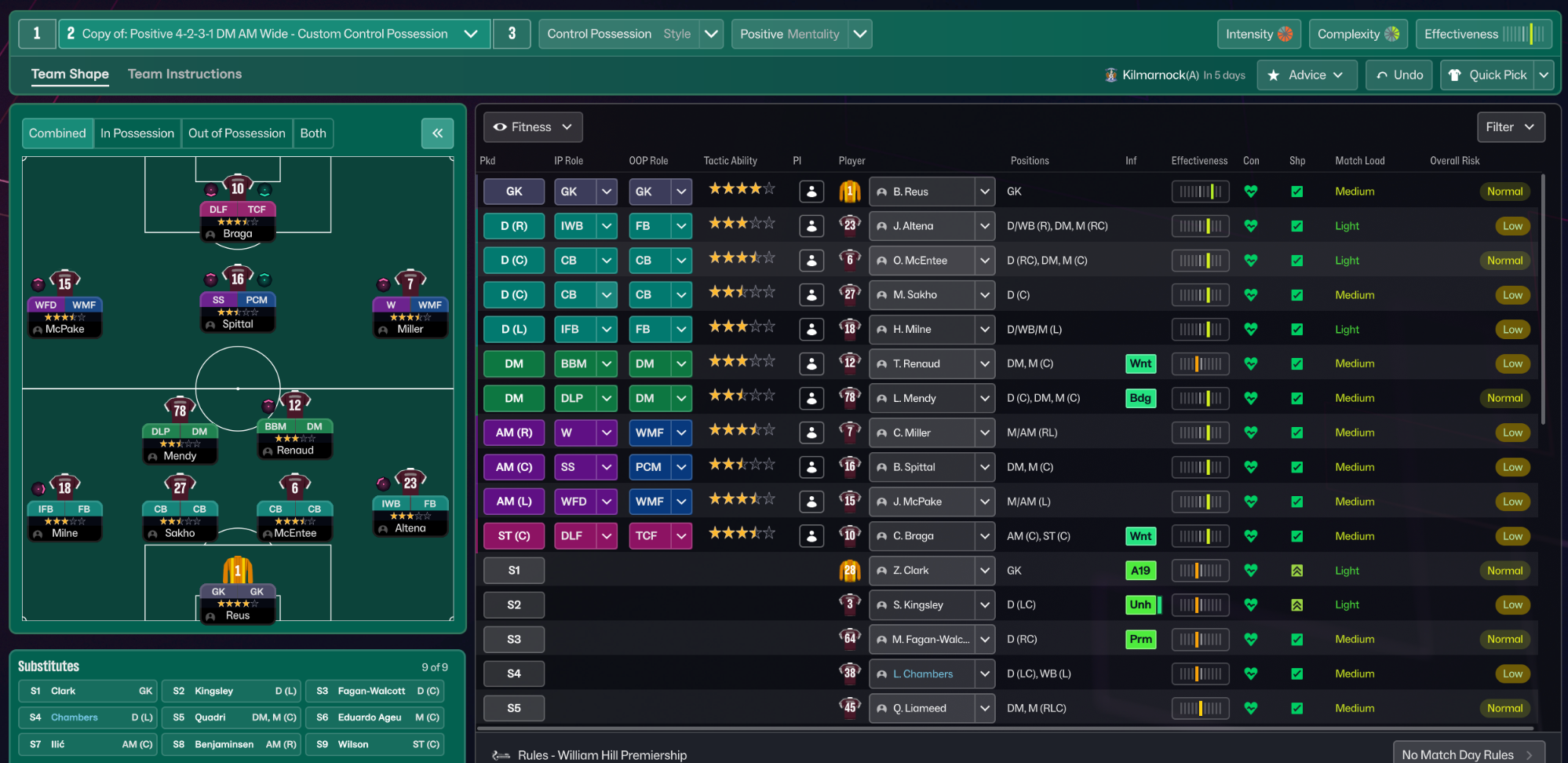
More Control Possession tactics
Guides for this tactic
The tactical theory behind the 3-2-5-2: roles, instructions, and the trade-offs that decide whether the system holds up.
Playing styles
Tiki-Taka vs Positional Play
Why circulation density and zonal occupation aren't the same thing in FM, and the half-space occupation rule that decides build-up.
Read guide
Foundations
Wing Play vs Central Play
Build through the wide areas or through the middle? A working framework for picking the right one for your squad.
Read guide
Foundations
Defensive Transitions
The five seconds after losing the ball decide most matches. Counter-press, drop-and-recover, and how to know which one you should be doing.
Read guide