Custom
A high press and counter-press paired with controlled short build-up, central playmaking, and quick attacks after turnovers. Shorter passing, Pass to…
Loading tactical analysis...
Custom
4-1-4-1 DM
4-1-1-3-1 DM Wide Asymmetric M (CL)
Positive
Clean Slate
1
3
Goalkeeper
Sweeper Keeper
2
2
Centre-Back
Centre-Back
2
4
Centre-Back
Centre-Back
3
1
Full Back
Pressing Full-Back
3
5
Full Back
Pressing Full-Back
3
3
Defensive Midfielder
Screening Defensive Midfielder
4
2
Midfield Playmaker
Pressing Central Midfielder
4
4
Advanced Playmaker
Tracking Attacking Midfielder
5
5
Winger
Tracking Winger
5
1
Inside Forward
Tracking Winger
6
3
Deep-Lying Forward
Tracking Centre Forward
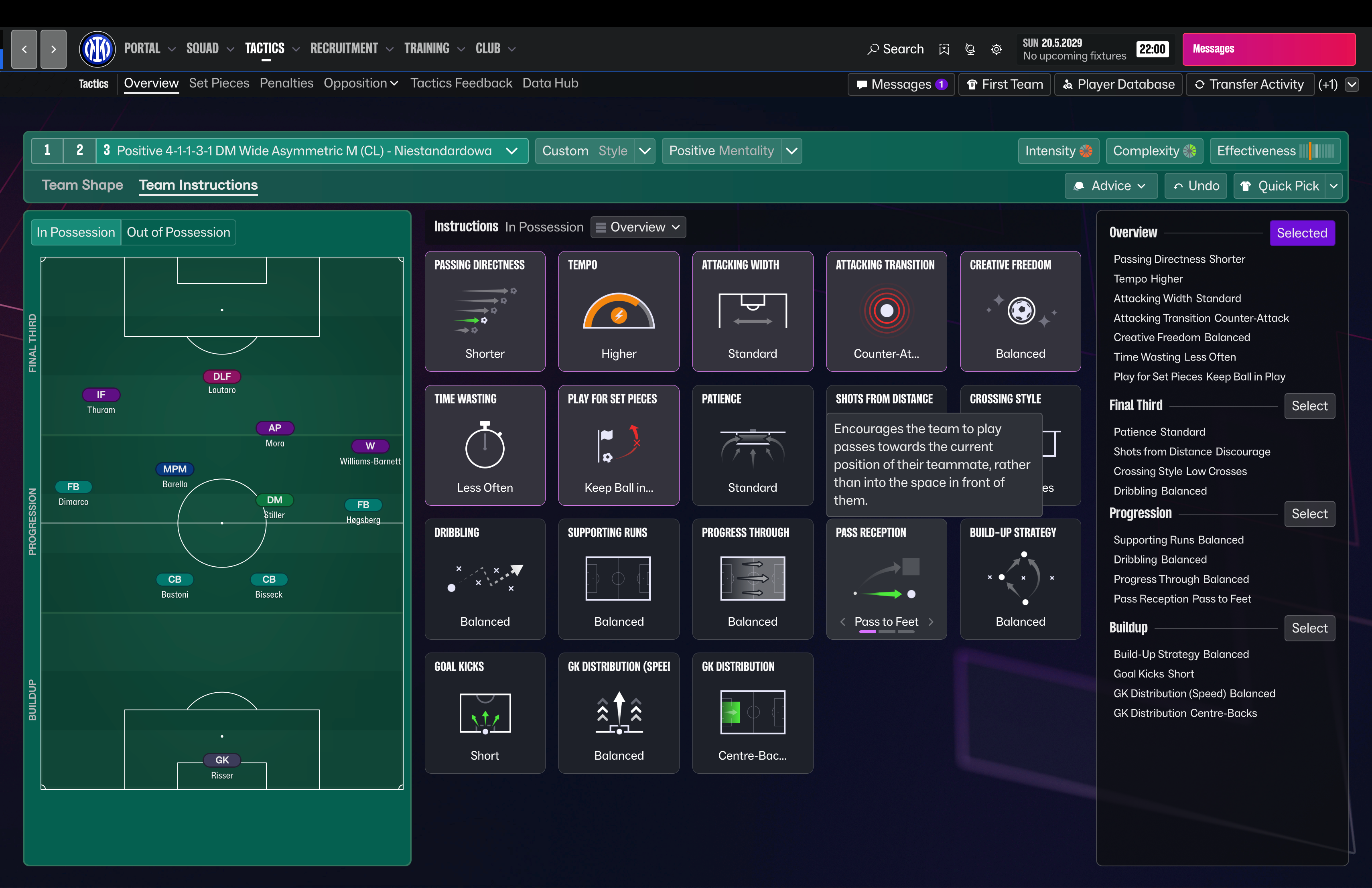
Shorter
Higher
Standard
Counter-Attack
Balanced
Less Often
Keep Ball in Play
Standard
Discourage
Low Crosses
Balanced
Overlap Balanced
Balanced
Balanced
Pass to Feet
Balanced
Short
Balanced
Center-Backs
Underlap Balanced
High Press
Standard
Balanced
Much More Often
Counter-Press
Stay On Feet
No
Trap Outside
Trap Outside
Balanced
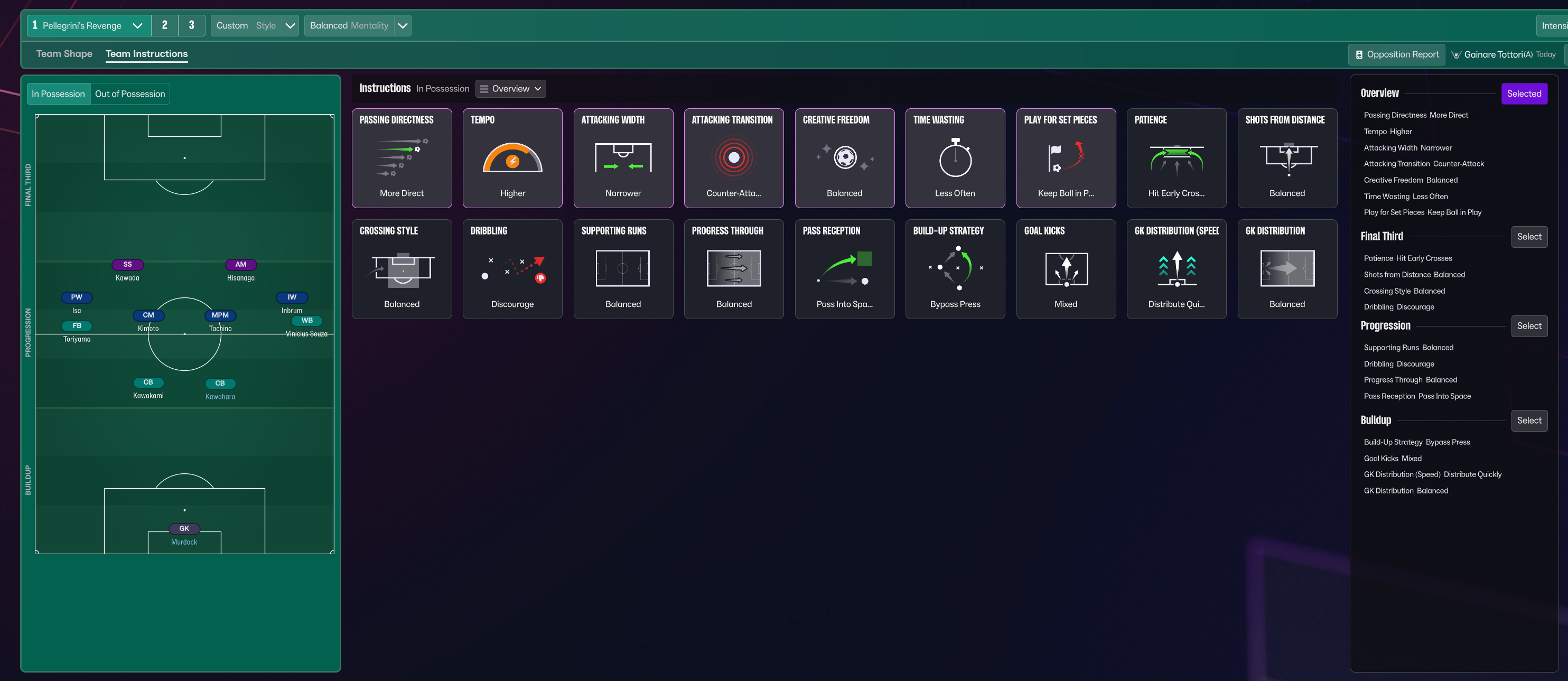
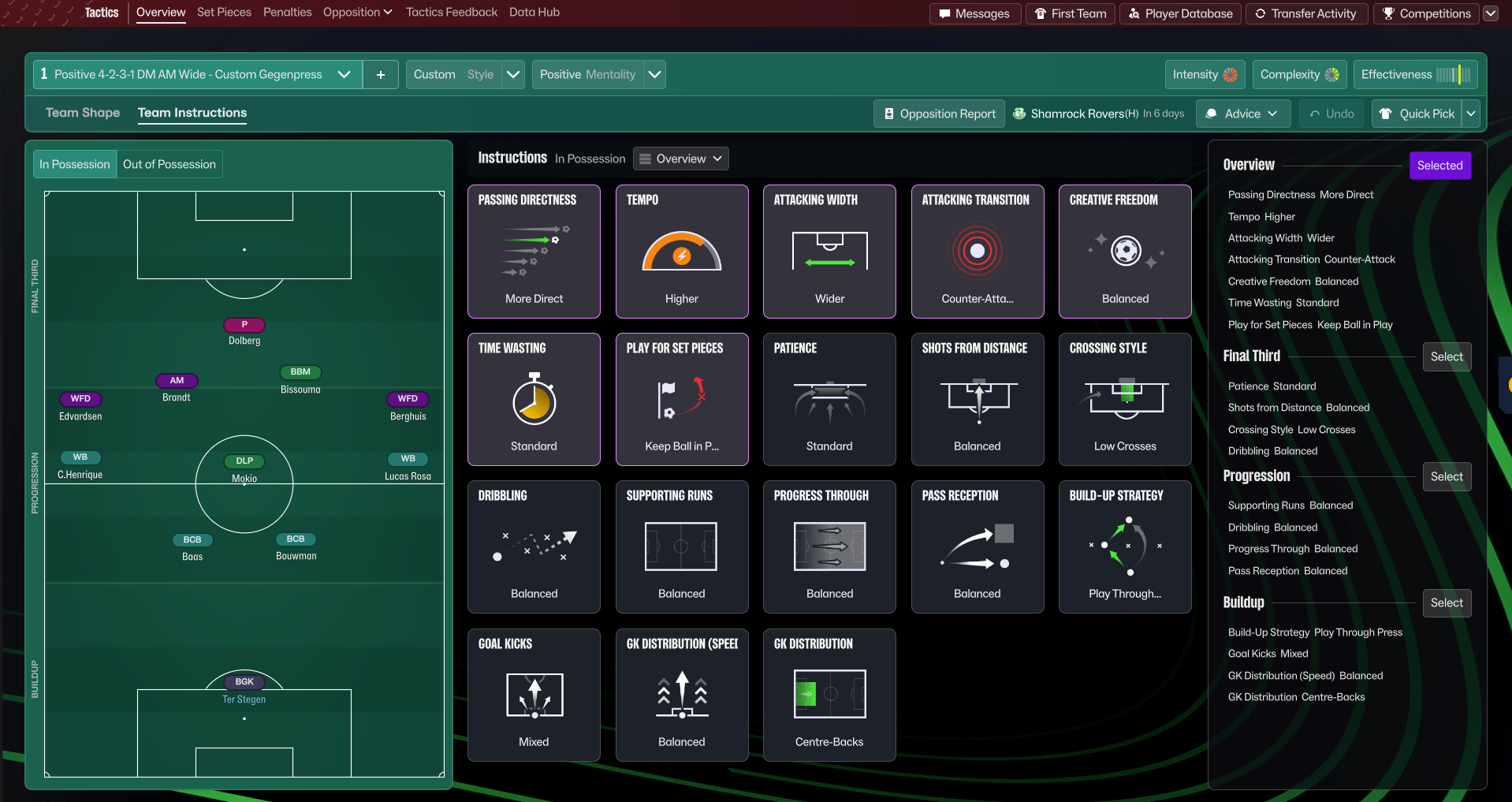
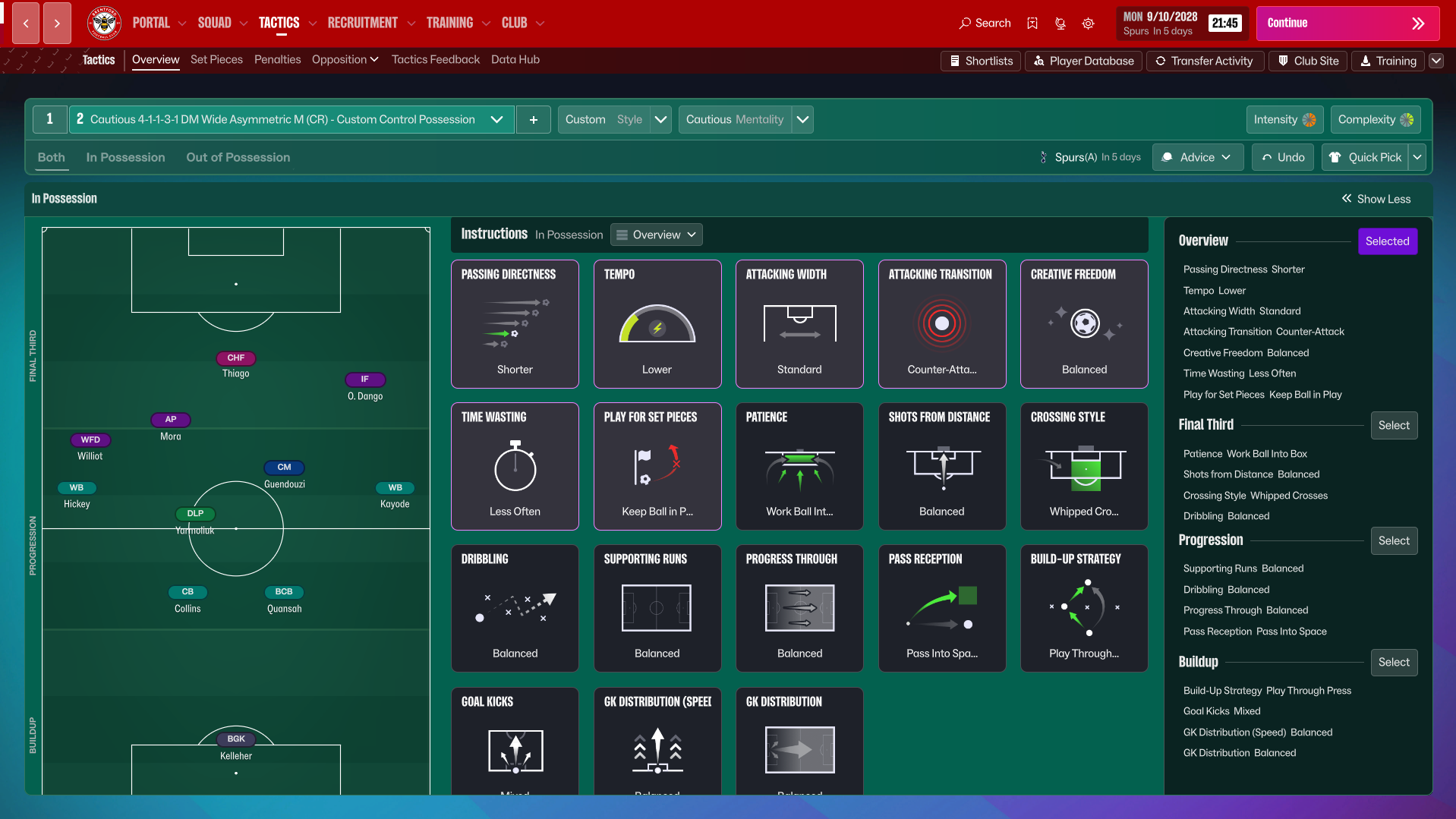
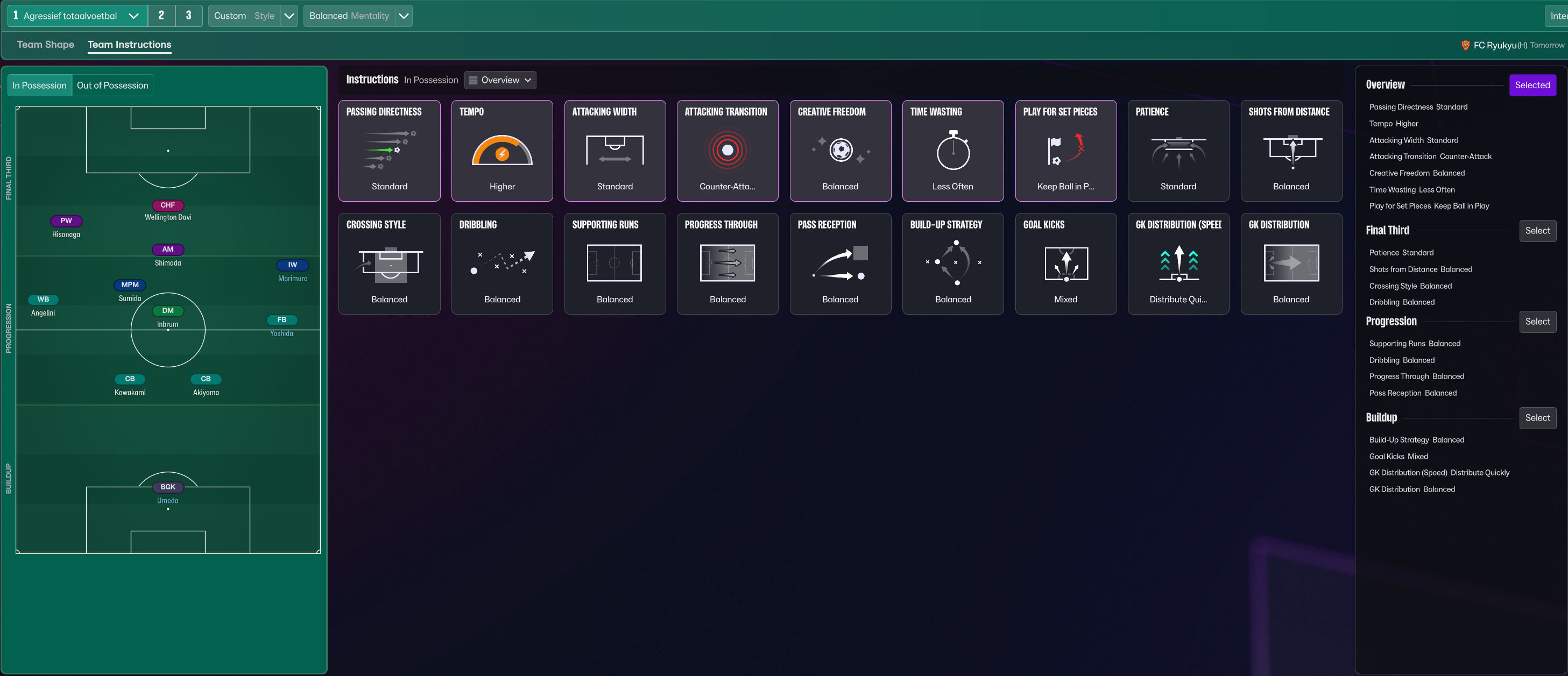
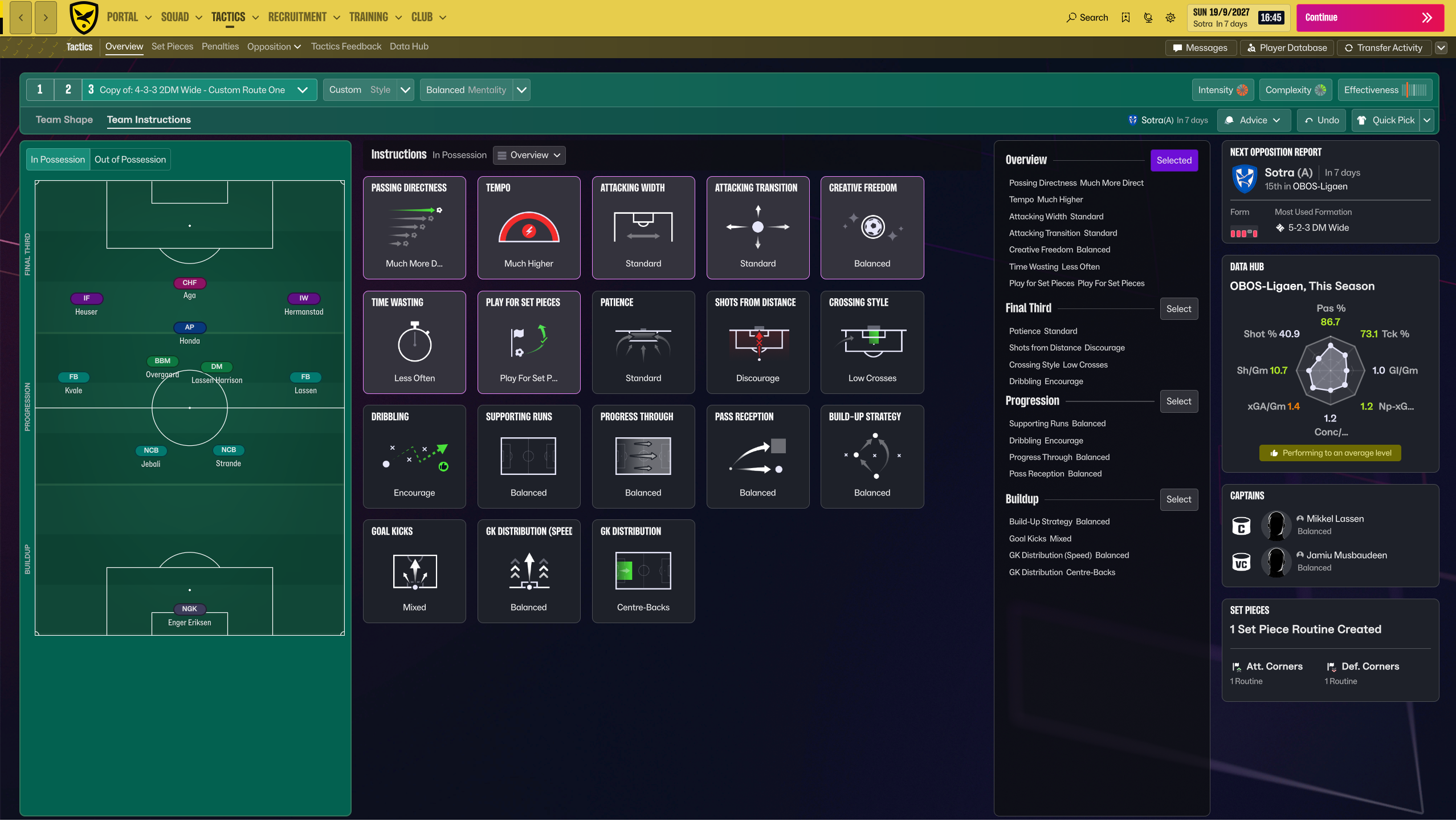
Shorter passing, Pass to Feet, and short goal kicks through the Center-Backs support controlled progression, while the midfield playmaker and advanced playmaker offer central outlets.
Midfield Playmaker and Advanced Playmaker provide two central creative roles ahead of the Defensive Midfielder; goal kicks are directed to the Center-Backs.
A High Press, Much More Often pressing, and Counter-Press aim to win the ball back in advanced areas and quickly turn turnovers into attacks.
The Sweeper Keeper supports a High Press behind the Centre-Backs, while the Pressing Central Midfielder and Tracking Wingers contribute to the pressing shape.
The High Press and Much More Often pressing can push players forward, but the Standard defensive line may leave a larger gap between the pressing unit and defence. The balanced line behaviour does not specifically mitigate that space.
HIGH press is paired with the Standard defensive line and Much More Often pressing; the Screening Defensive Midfielder sits ahead of the Centre-Backs.
Shorter passing and Pass to Feet emphasize retention, while Counter-Attack and Higher tempo favor immediate forward action. This can make the transition plan less consistent when possession is regained.
Midfield Playmaker and Advanced Playmaker support short combinations, while the Inside Forward and Deep-Lying Forward are the forward outlets for Counter-Attack.
Space behind the pressing line
The High Press with Much More Often pressing can be beaten, and a Standard defensive line offers less protection against direct balls in behind than a deeper line. The Sweeper Keeper may help cover, but this remains a transition risk.
Sweeper Keeper is behind the Centre-Backs in a High Press with a Standard defensive line and Much More Often pressing.
high
Energy and defensive compactness under sustained pressing
Much More Often pressing combined with Counter-Press demands repeated high-intensity work; if players cannot sustain it, the press can lose coordination and leave midfield gaps.
Pressing Central Midfielder, Tracking Attacking Midfielder, and Tracking Winger are part of the shape using Much More Often pressing and Counter-Press.
medium
Playmaker pair behind a link forward
The Midfield Playmaker and Advanced Playmaker can create and connect centrally, with the Deep-Lying Forward dropping to link play and the Inside Forward offering a run toward goal.
Midfield Playmaker, Advanced Playmaker, Deep-Lying Forward, and Inside Forward.
Pressing front with a screening midfielder
The Tracking Centre Forward and Tracking Attacking Midfielder can help direct pressure, while the Screening Defensive Midfielder protects the central area behind them.
Tracking Centre Forward and Tracking Attacking Midfielder press ahead of the Screening Defensive Midfielder.
How can I protect the space behind my high press without losing its ability to win the ball high?
What should I look for in my players to sustain Much More Often pressing and Counter-Press?
How can I make my shorter passing and Counter-Attack work together more consistently?
This is an ambitious possession-and-pressing setup: the central playmakers, short build-up, and forward link roles provide a clear way to progress, while the High Press and Counter-Press seek quick regains. The main concern is the combination of intense pressing with a Standard defensive line, which can leave space behind the press; the higher tempo and Counter-Attack also pull against the short, retention-focused passing choices. I would first align the defensive line more closely with the press, then ease the pressing frequency and temper the tempo if possession becomes hurried.
Build from the goalkeeper through the centre-backs using shorter passes and Pass to Feet. The two playmakers offer central creativity, while the deep-lying forward links with the inside forward and winger; Low Crosses are the specified delivery.
Counter-Press immediately after losing the ball, aiming to regain possession before the opponent can settle. This is demanding and can expose the defence if the first pressure is bypassed.
A high press and counter-press paired with controlled short build-up, central playmaking, and quick attacks after turnovers.
The tactical theory behind the Custom: roles, instructions, and the trade-offs that decide whether the system holds up.
Counter-Press, Regroup, Stand Off, Trigger Press: what each pressing instruction does in FM and how to pair them without contradicting.
The pairing rule for Defensive Line and Line of Engagement, all 9 combinations, and the gap that costs goals.
What Higher Tempo, Wider, and Narrower actually do in FM, plus the dial contradictions and antipatterns players run into most often.