Uploaded Tactic
Formation & Style
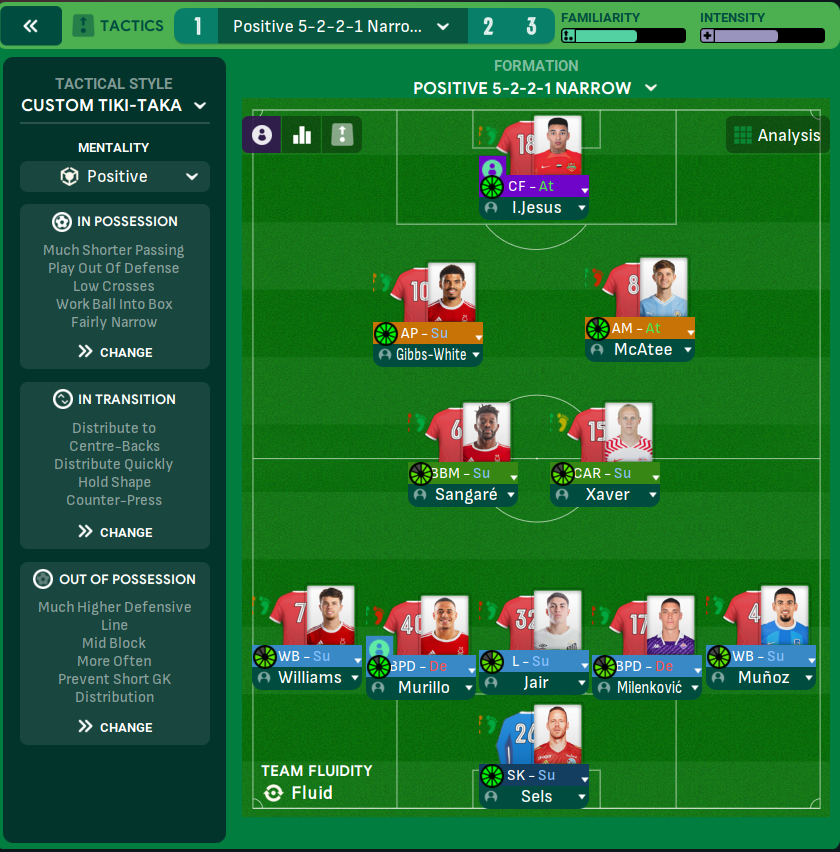
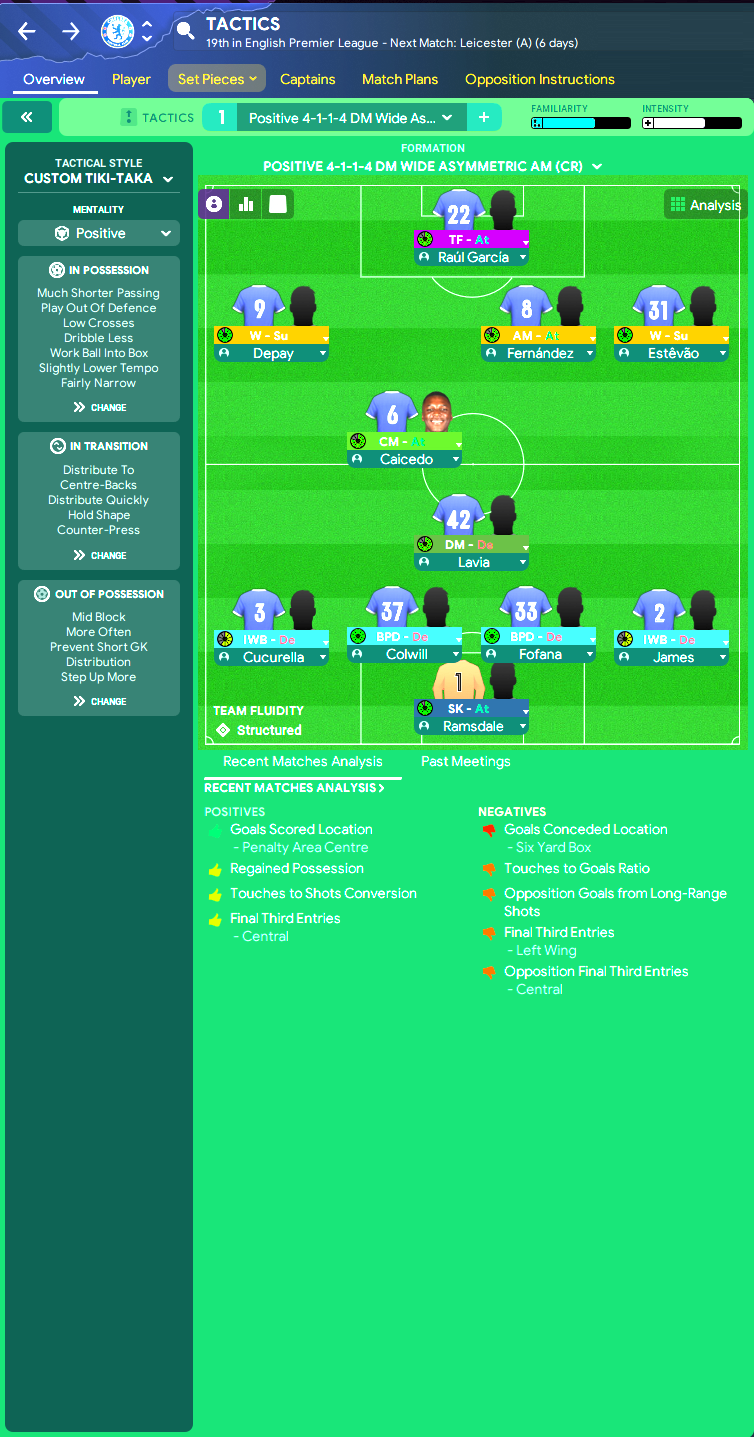
Tactical Style:Custom Tiki-Taka
Mentality:Positive
Formation:5-2-2-1 Narrow
Team Fluidity:Fluid
In Possession
Much Shorter Passing
Play Out Of Defence
Low Crosses
Work Ball Into Box
Fairly Narrow
In Transition
Distribute to Centre-Backs
Distribute Quickly
Hold Shape
Counter-Press
Out of Possession
Much Higher Defensive Line
Mid Block
More Often
Prevent Short GK Distribution
Team Shape Without Ball
Shape:Compact
Description:Defensive structure remains compact, allowing for a mid-block to intercept passes effectively.
Evidence:Much Higher Defensive Line and Mid Block
Team Shape With Ball
Shape:Narrow Width
Description:Utilizing central attacking routes with support from wide positions.
Evidence:Fairly Narrow + Much Shorter Passing + Work Ball Into Box
Phase Description
Attacking Play
Fluid interplay with focus on quick passing and utilizing the width provided by wing-backs.
Defensive Transition
Immediate counter-press initiated by advanced players to regain possession quickly.
Main Focus
Creating opportunities through a combination of central play and wing contributions.
Key Strengths
Ball Progression
Strong focus on shorter passing increases ball retention and builds moves methodically.
Defensive Solidity
A solid back three provides a strong defensive base while allowing wing-backs to support attacks.
Diversity in Attacking Options
Multiple roles in the attacking phase allow for varied offensive tactics.
Conflicting Directions
Defensive Exposure on Counters
The higher defensive line combined with a mid-block might leave space for quick counter-attacks.
Overreliance on Wing-Backs
Heavy reliance on wing-backs for width could lead to stagnation if they are well-marked.
Risk of Midfield Overload
With only two central midfielders, opposition teams could exploit spaces via overloads.
Tactical Suggestions
Consider Adjusting Defensive Line
To mitigate risks against counter-attacks, lowering the defensive line could be beneficial.
Enhance Width in Attack
Introducing an additional winger or adjusting one of the wing-backs to an attacking role can stretch the defense.
Explore Midfield Variation
Consider switching to a more robust midfield shape to avoid being outnumbered.
Ask Questions About Your Lineup
Related Tactics
More Custom Tiki-Taka tactics
Guides for this formation
The tactical theory behind the 5-2-2-1 Narrow: roles, instructions, and the trade-offs that decide whether the system holds up.