Uploaded Tactic
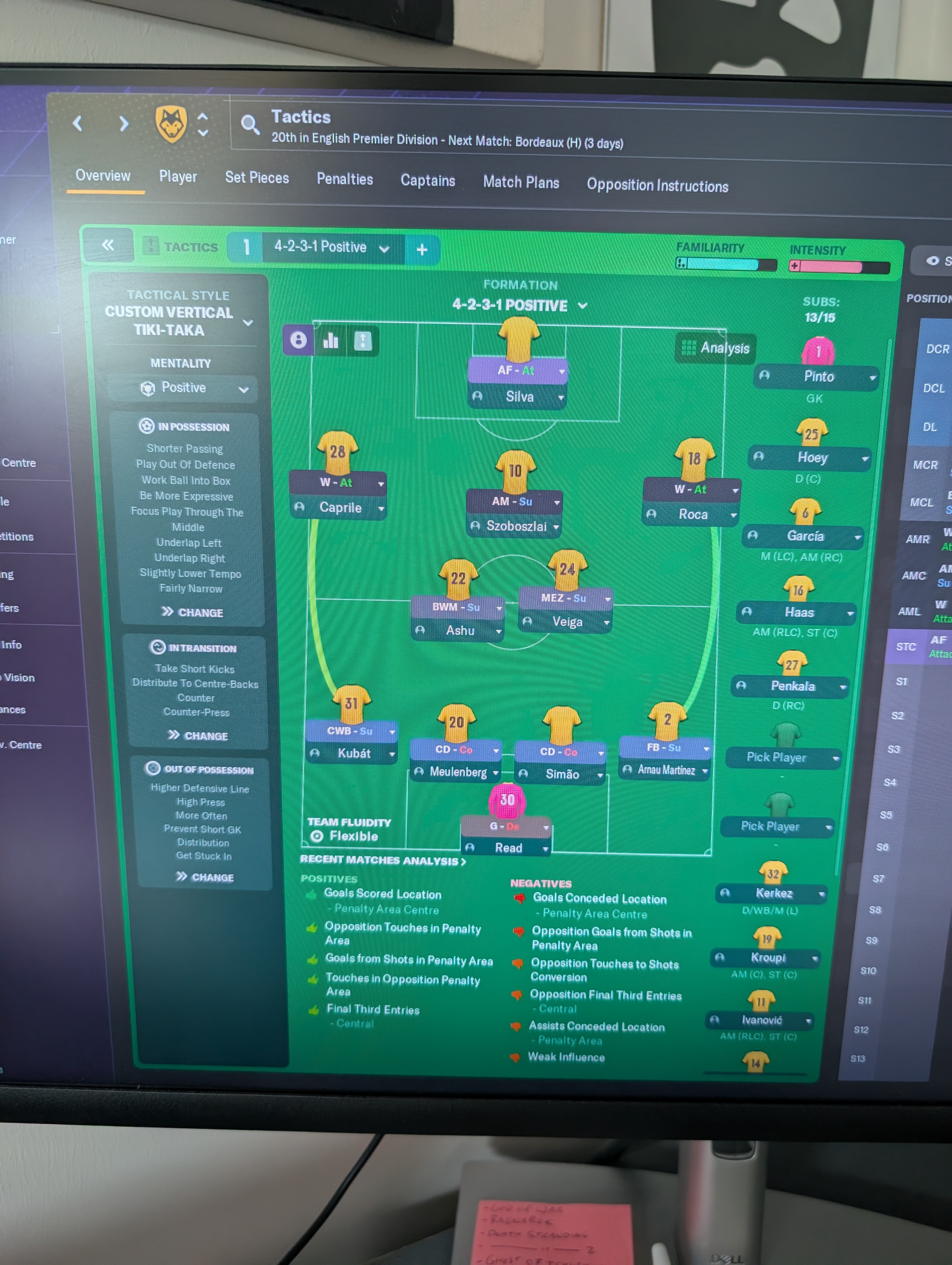
Formation & Style
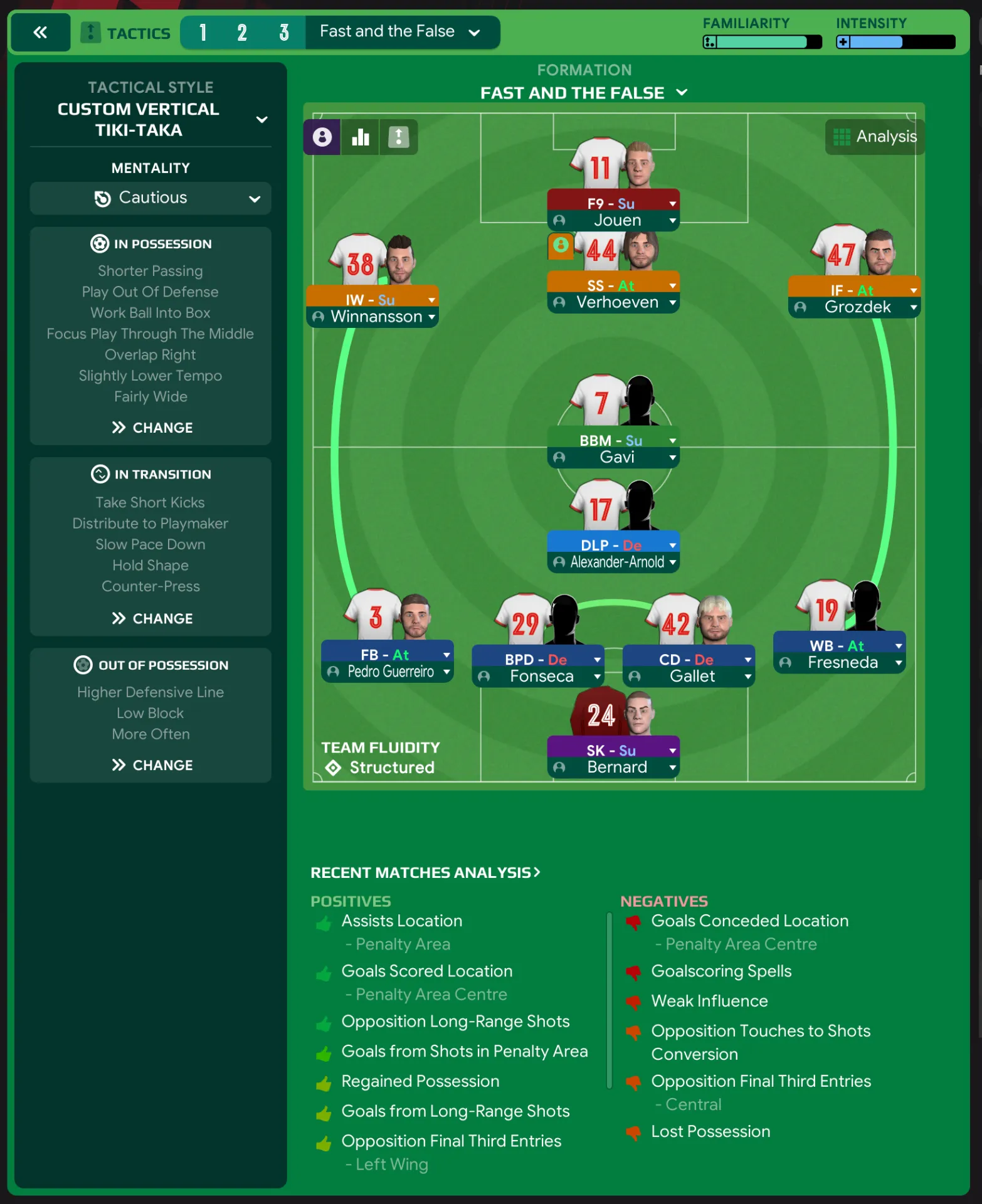
Tactical Style:Custom Vertical Tiki-Taka
Mentality:Positive
Formation:4-2-3-1 Positive
Team Fluidity:Flexible
In Possession
Shorter Passing
Play Out Of Defence
Be More Expressive
Focus Play Through The Middle
Underlap Left
Slightly Lower Tempo
Rarely Trigger Press
In Transition
Take Short Kicks
Distribute To Centre-Backs
Counter
Counter-Press
Out of Possession
Higher Defensive Line
High Press
Prevent Short GK Distribution
Team Shape Without Ball
Shape:Compact
Description:A compact defensive formation ensuring minimal spaces between player lines, which aids in limited opposition opportunities.
Evidence:Higher Defensive Line; CD, CD roles at [2,2], [2,3] ensure tight defensive organization.
Team Shape With Ball
Shape:Expansive
Description:Utilizes width effectively with wingers and wing-backs stretching the opposition, creating space for through balls.
Evidence:W at [6,1] and CWB at [2,1] allow for wide play which supports the central attackers.
Phase Description
Attacking Play
Focuses on short passing to control the game tempo, creating numerous opportunities through central play with underlapping runs from positions.
Defensive Transition
Quick regrouping and high pressing are emphasized but can be risky against swift counter-attacks.
Main Focus
Possession retention and methodical buildup to dismantle opponent defenses.
Key Strengths
Effective Ball Retention
The use of shorter passing allows the team to maintain possession and control the pace of the match.
Dynamic Midfield Options
The variety of roles in midfield provides flexibility in defense and attack, creating numerous passing lanes.
Width in Attack
Effective use of wingers and wing-backs creates space and width, opening central lanes for attackers.
Conflicting Directions
Risk of Overcommitting in Attack
The push for wide play may leave the defense vulnerable to quick counter-attacks.
Pressure on Central Defenders
Playing out from the back can lead to pressures if the opposition employs effective pressing tactics.
Vulnerability to Quick Breaks
Transitioning rapidly to pressing may result in a disjointed defense against quick counter-attacks.
Tactical Suggestions
Adjust Defensive Line Height
Consider dropping the defensive line slightly to mitigate risks associated with fast breaks from opponents.
Incorporate a Playmaker Role
An additional playmaker in midfield could enhance creativity and adaptability in tight spaces.
Diversify Attacking Patterns
Implementing more varied attacking patterns can unbalance the opposition and create openings.
Ask Questions About Your Lineup
More Custom Vertical Tiki-Taka tactics
Guides for this formation
The tactical theory behind the 4-2-3-1 Positive: roles, instructions, and the trade-offs that decide whether the system holds up.
Player pairings
Midfield Pairs in 4-2-3-1 and 4-4-2
Double pivots and flat pairs in 4-2-3-1 and 4-4-2: when each pairing works, when it collapses, and the AMC unicorn that rescues both.
Read guide
Playing styles
Gegenpressing: A Full Guide
Klopp-style gegenpressing in FM, including squad profile, line-and-press pairing, sustainable workload, and the antipatterns to avoid.
Read guide