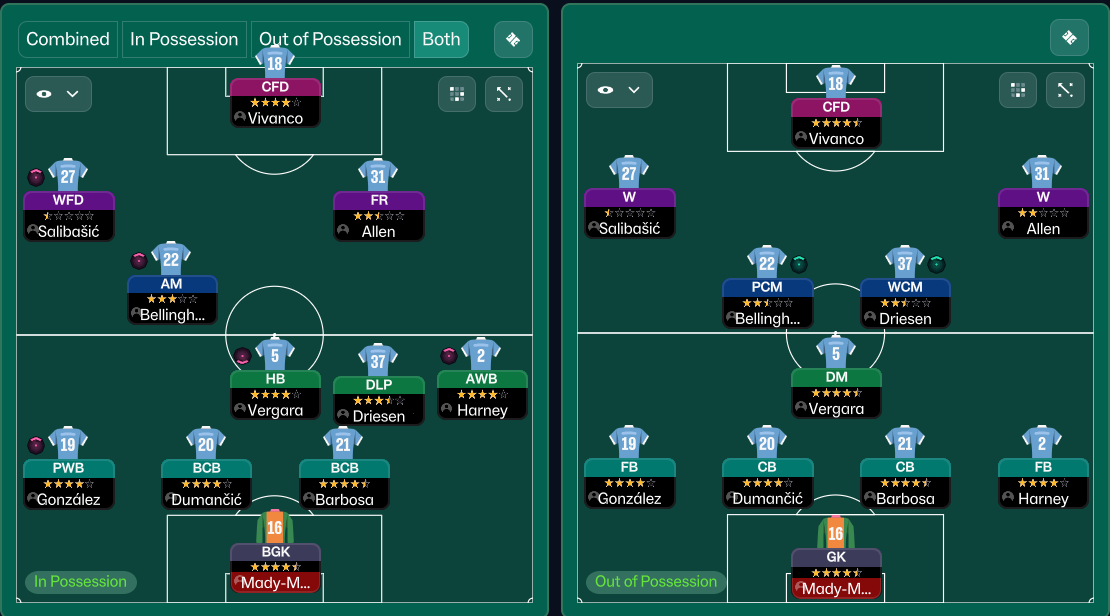
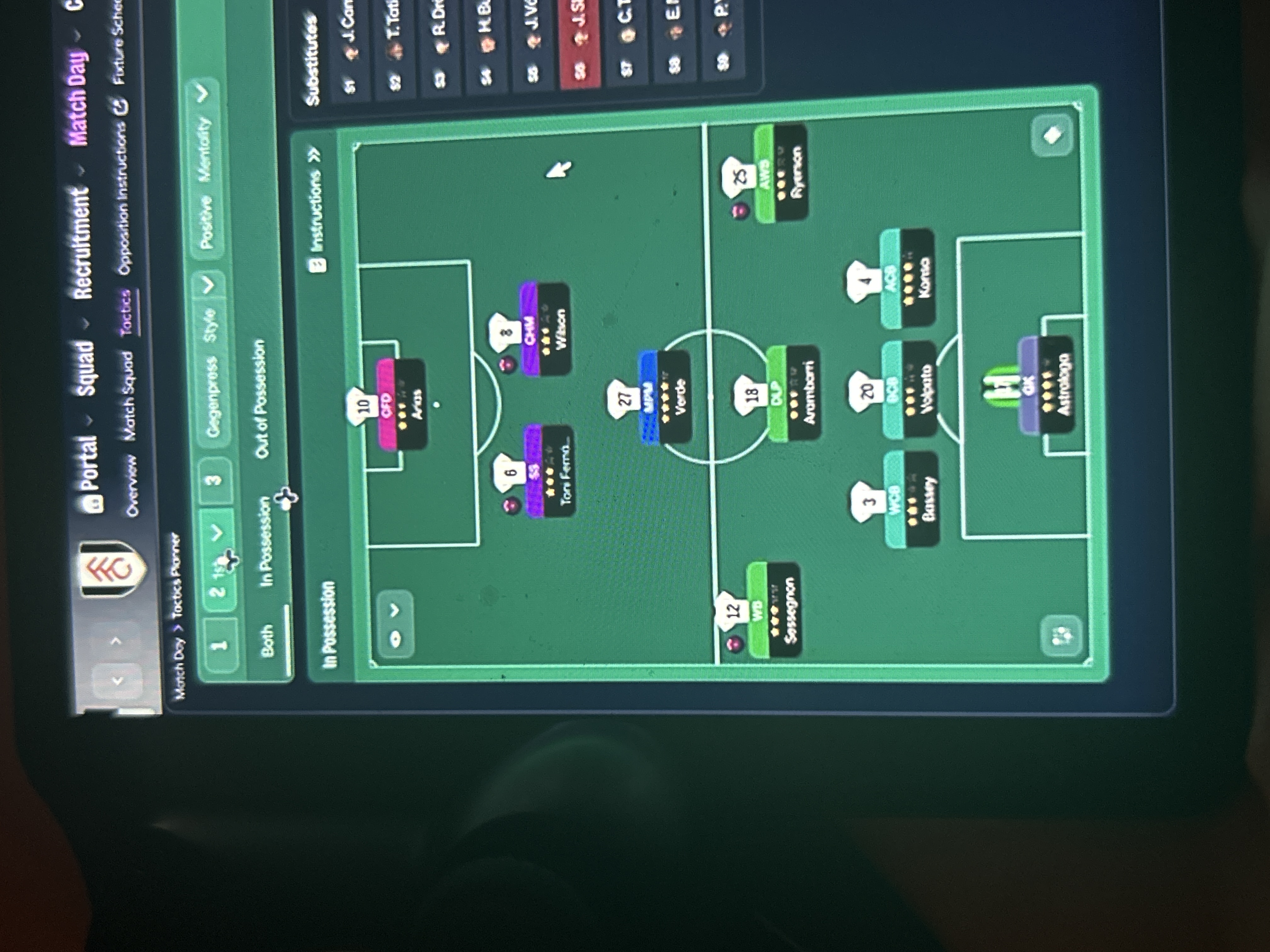
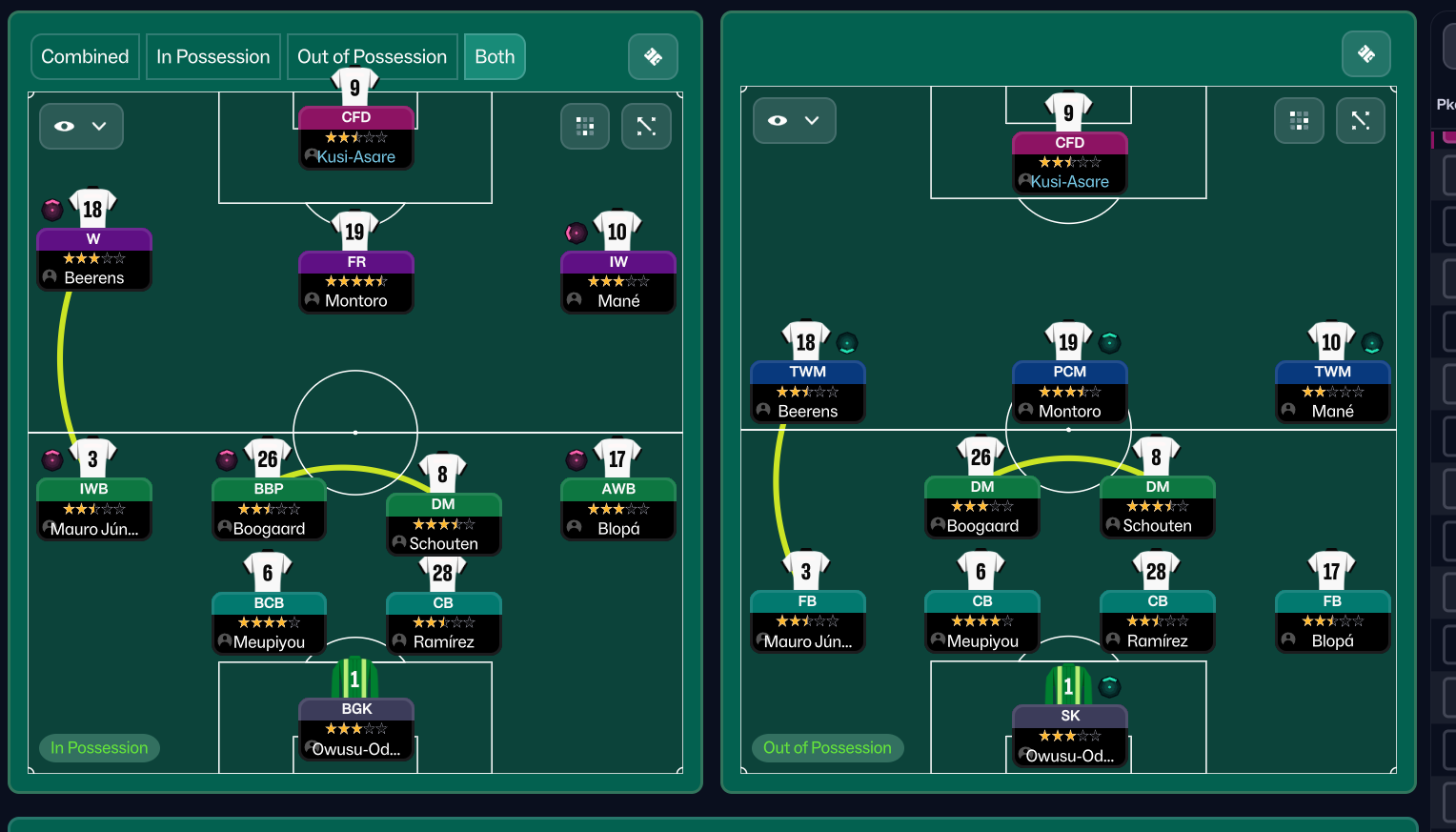
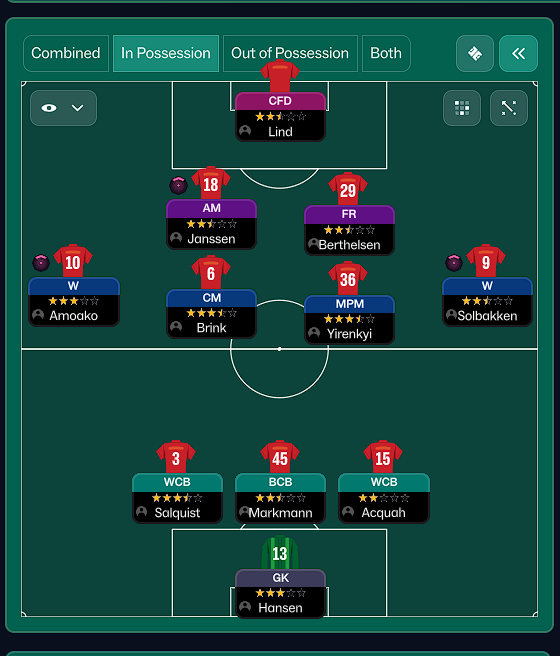
Uploaded Tactic
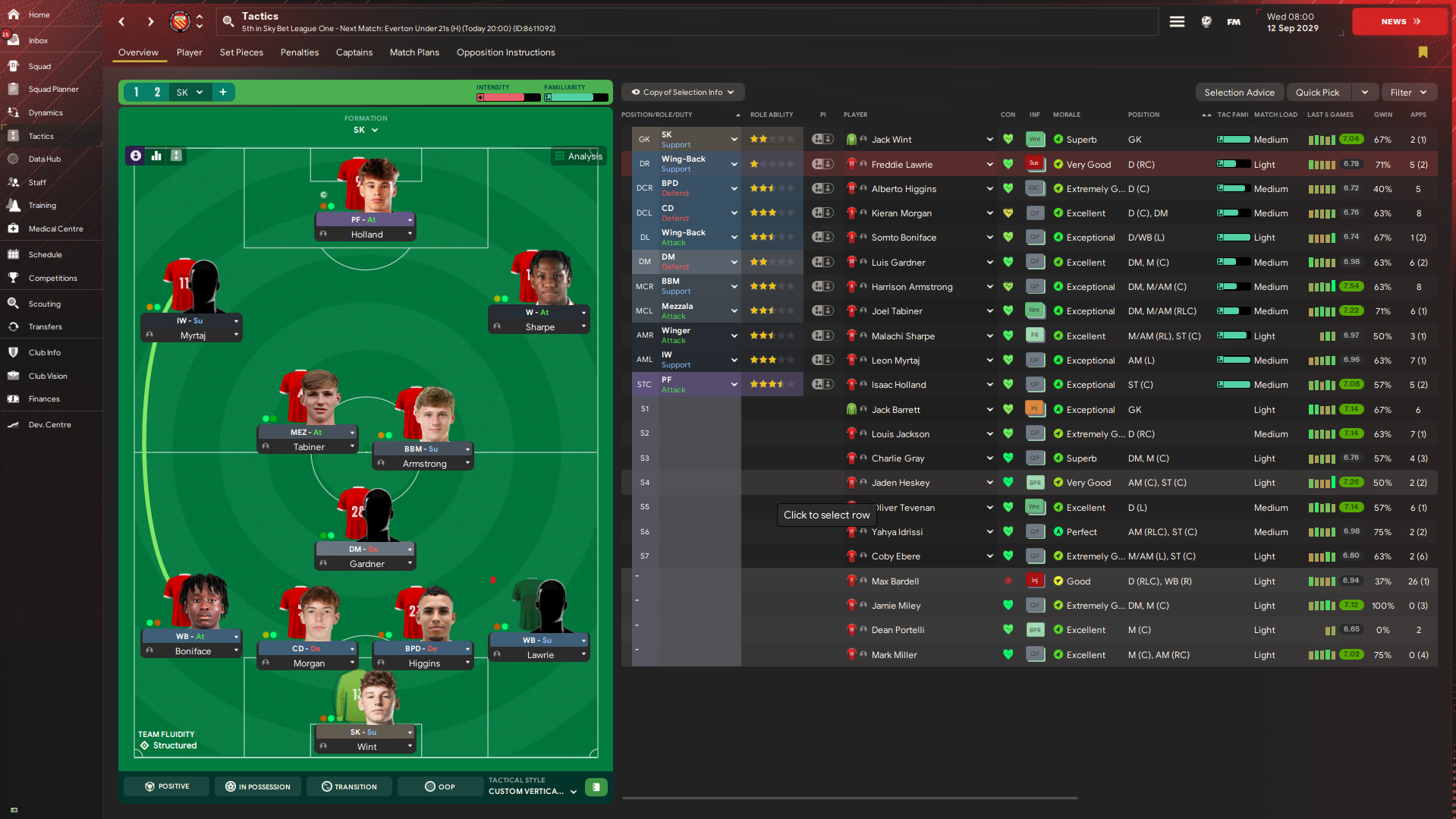
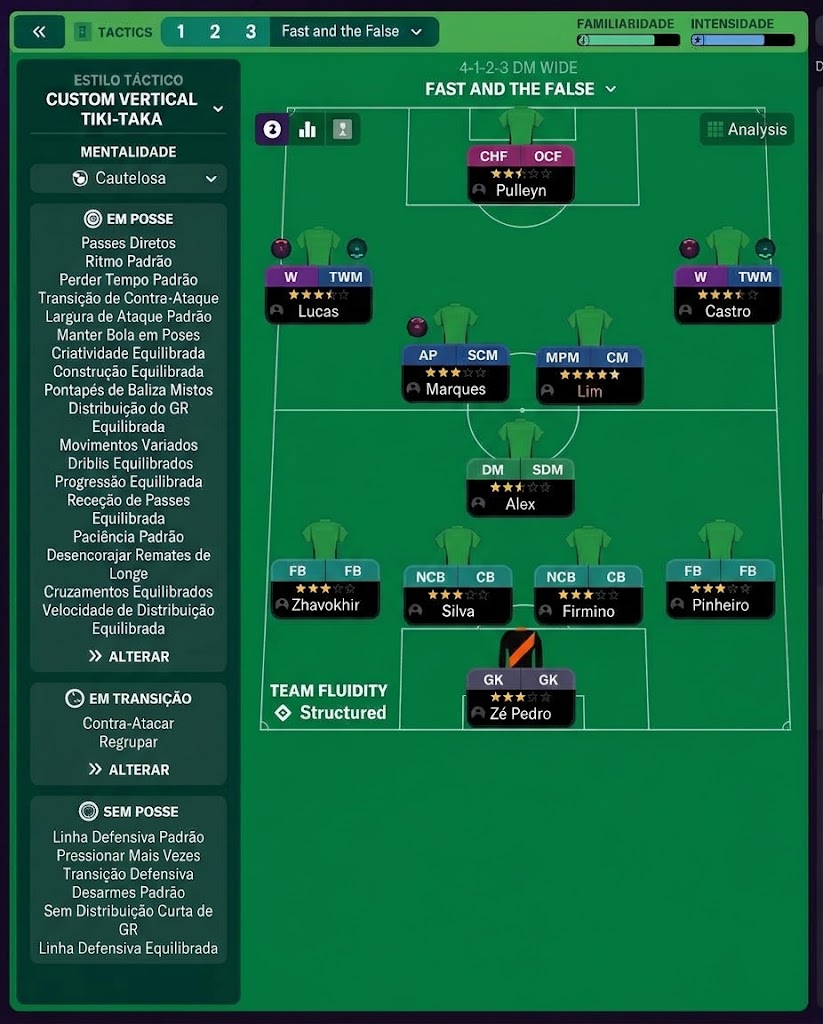
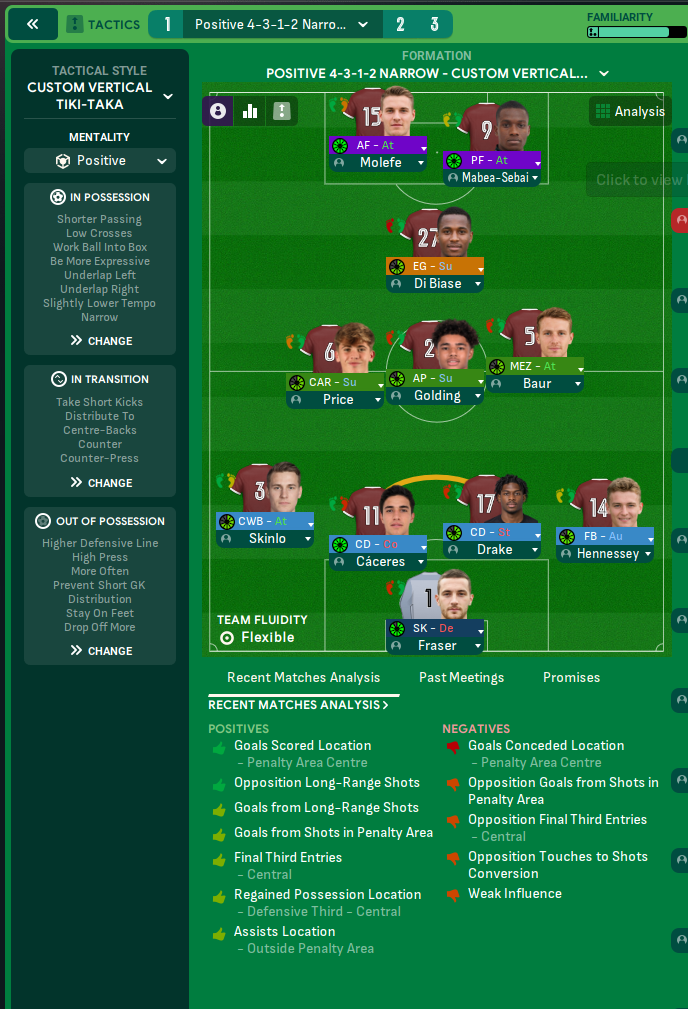
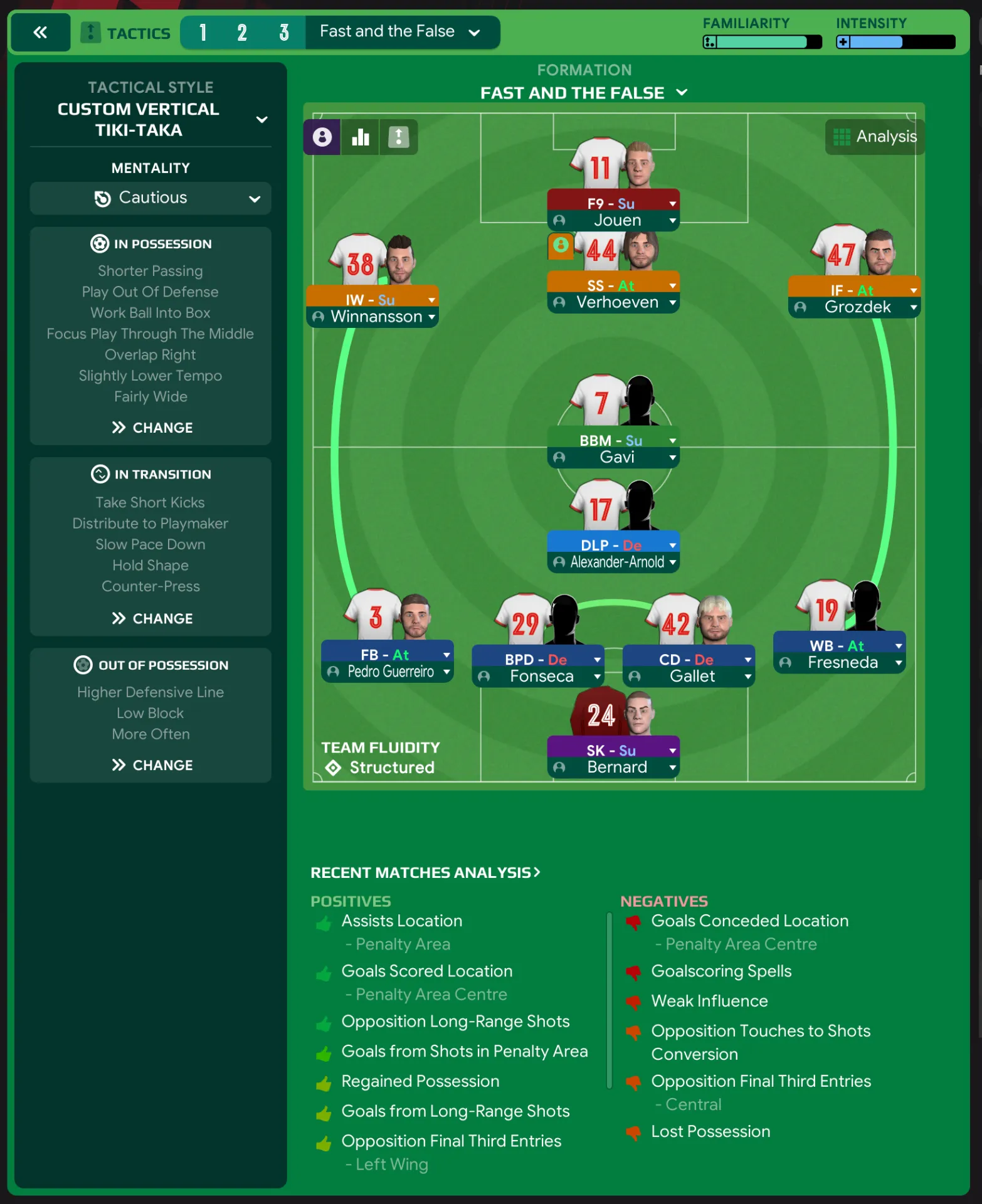
Formation & Style
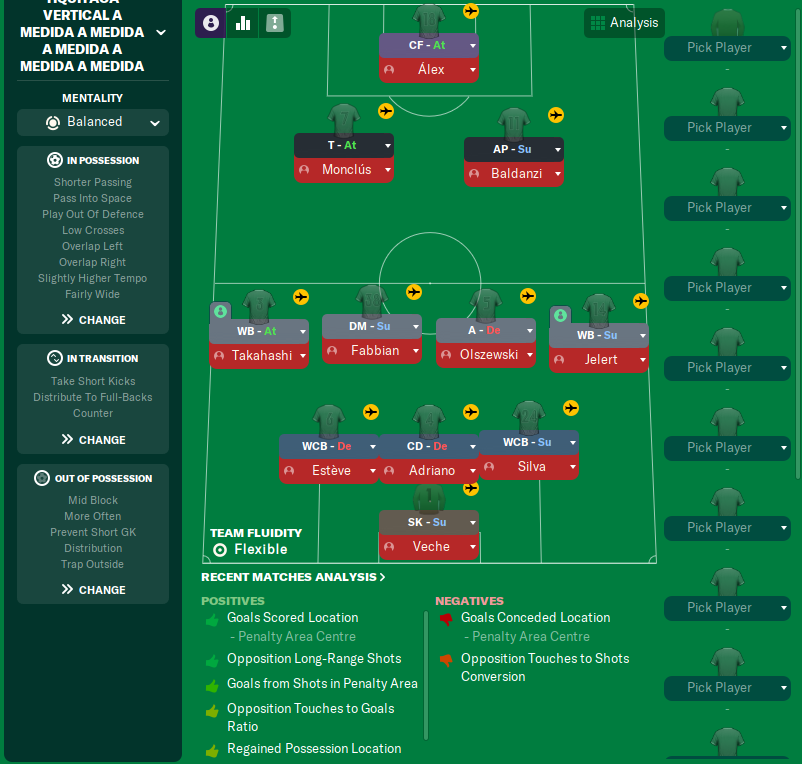
Tactical Style:Custom Vertical Tiki-Taka
Mentality:Positive
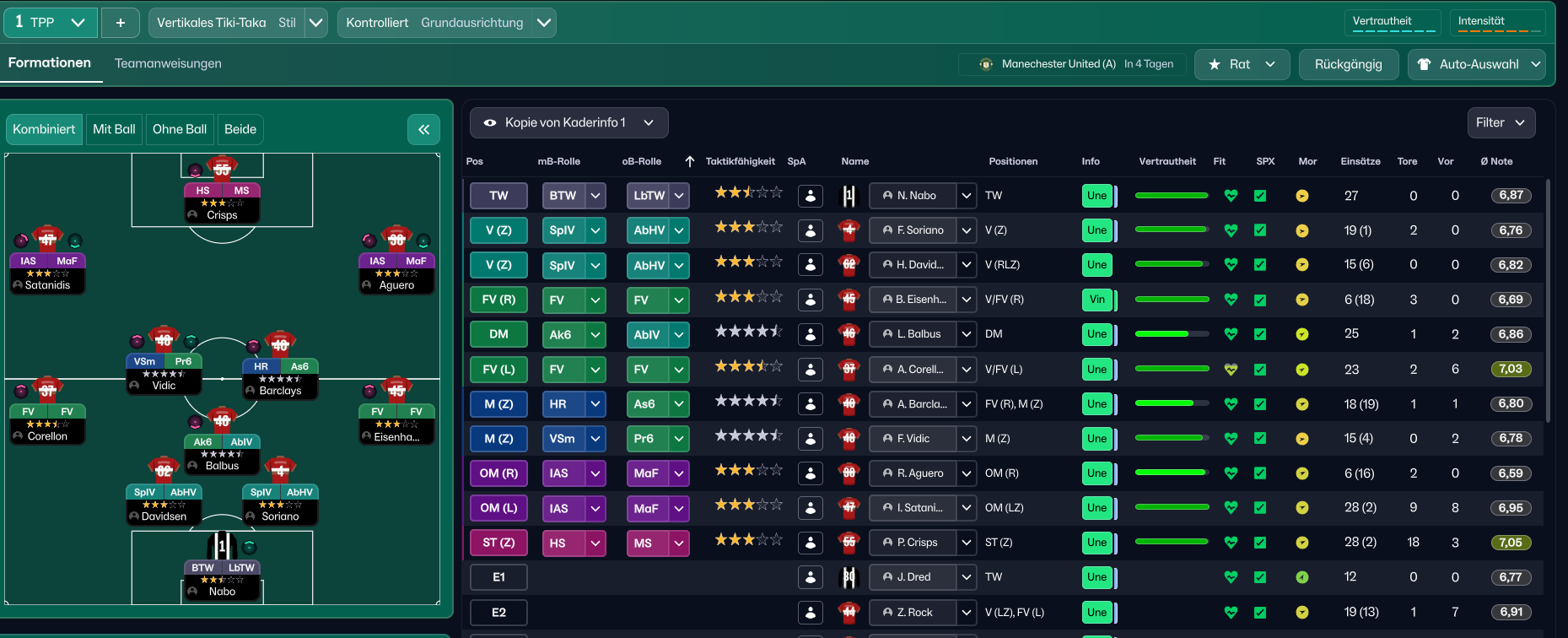
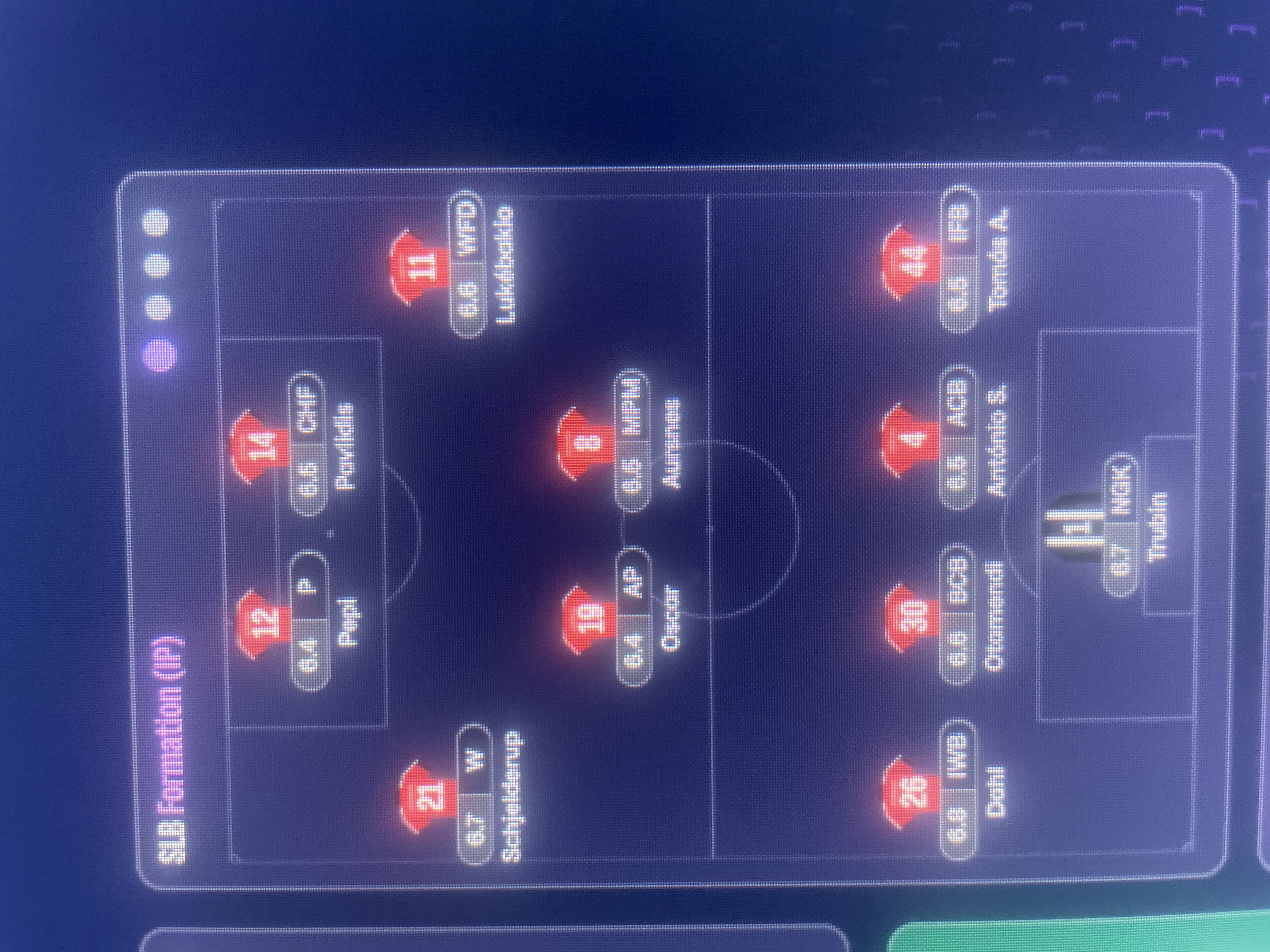
Formation:3-1-4-2
Team Fluidity:Structured
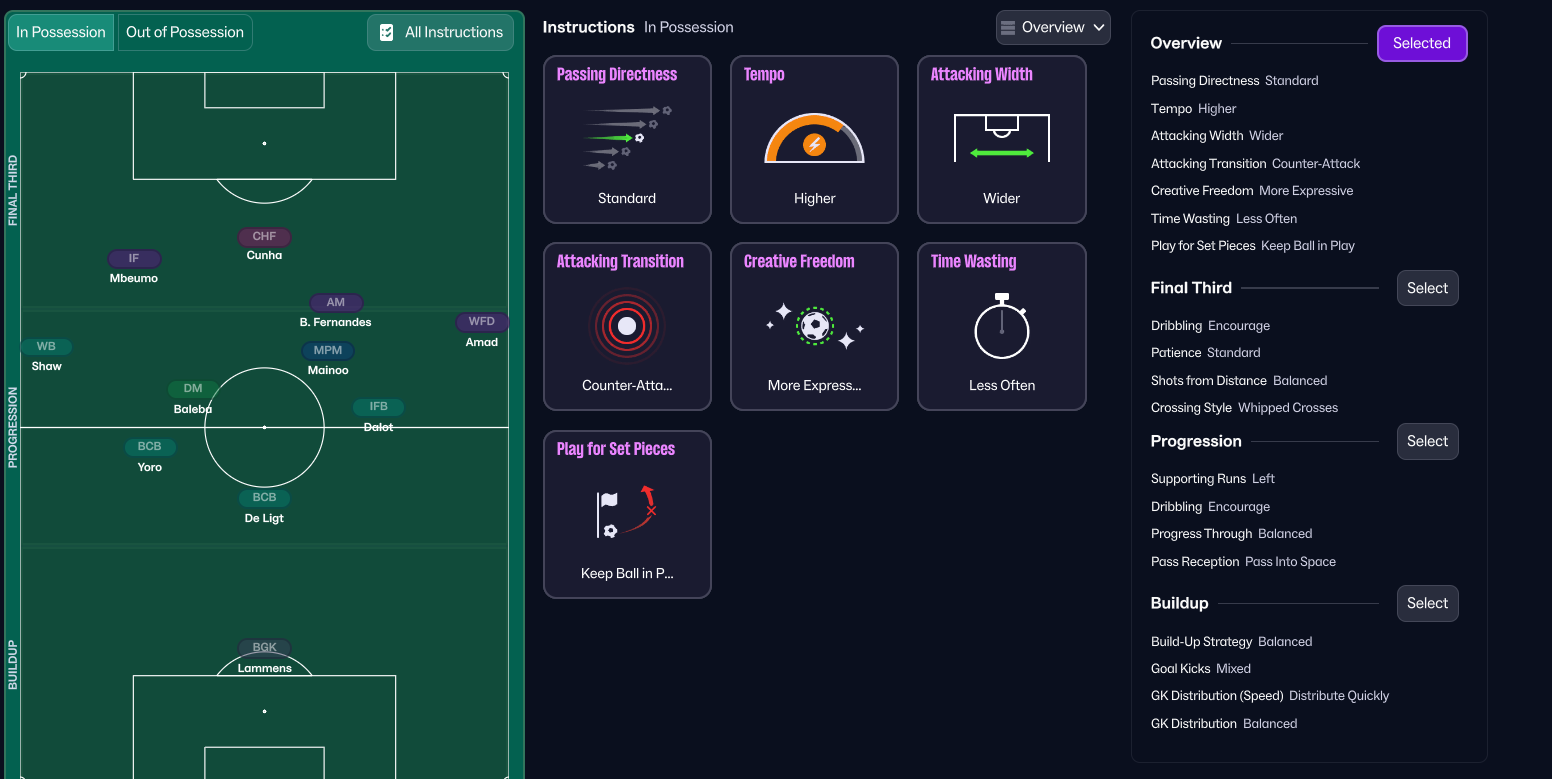
In Possession
Shorter passing
Focus play down the flanks
Work ball into box
Overlap on the left
In Transition
Counter-press
Counter
Out of Possession
Higher defensive line
More urgent pressing
Zonal marking
Team Shape Without Ball
No team shape without ball data available
Team Shape With Ball
No team shape with ball data available
Key Strengths
Strong Central Presence
The presence of a deep-lying playmaker and box-to-box midfielder supports both defensive stability and attacking transitions.
Wide Play Utilization
Utilizing wing-backs and wide forwards allows for stretching the opposition and creating space for central players.
High Defensive Line
This setup helps compress the pitch and can lead to winning the ball back quickly in advanced positions.
Fluid Attacking Movement
With overlapping runs and varied movements from the forwards and midfielders, the tactic emphasizes unpredictable attacking patterns.
Conflicting Directions
Commitment of Wing-Backs
Wing-backs on attack might leave gaps defensively if the high pressing is not effective, compelling the center-backs to cover larger spaces.
Player Roles Compatibility
Having both a Mezzala and Box to Box Midfielder might lead to positional conflicts in the midfield, particularly when transitioning from attack to defense.
Pressing Intensity vs. Ball Retention
High pressing can lead to quick transitions, but may compromise ball retention if players are out of position during counterattacks.
Formation Balance
The formation can be susceptible to counterattacks with only three defenders, risking defensive solidity.
Tactical Suggestions
Adjust Wing-Back Duties
Consider adjusting at least one wing-back to a defensive role during specific matches for a more balanced approach against strong opposition.
Consider a More Central Midfielder Role
Switching from a Mezzala to an Advanced Playmaker could enhance creativity without compromising midfield solidity.
Implement More Pressing Triggers
Work on specific pressing triggers to ensure that all players are coordinated in their pressing efforts.
Explore Forward Roles
Experiment with roles for the strikers; consider a Target Man if aerial strength is present in the squad, providing a focal point.