Uploaded Tactic
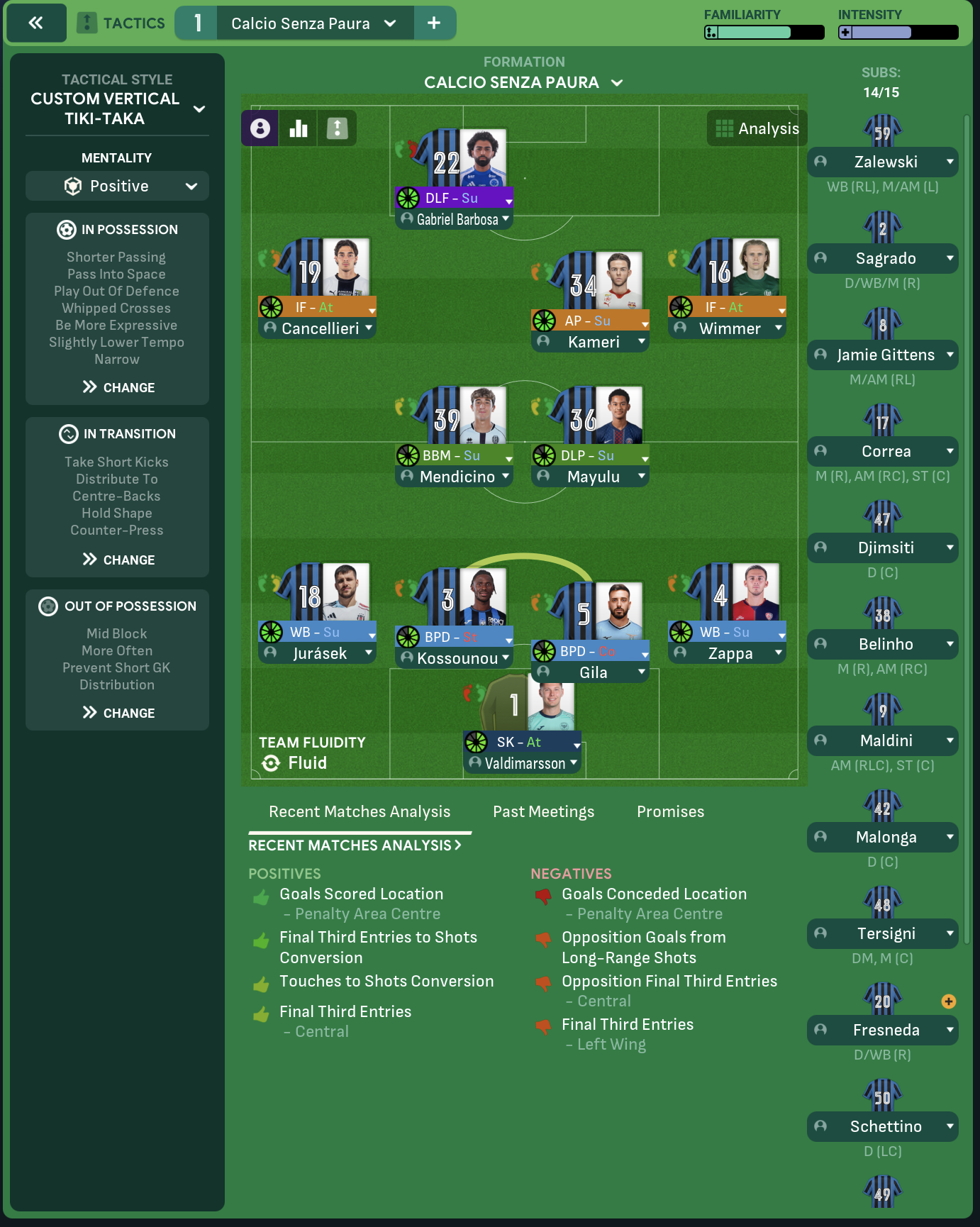
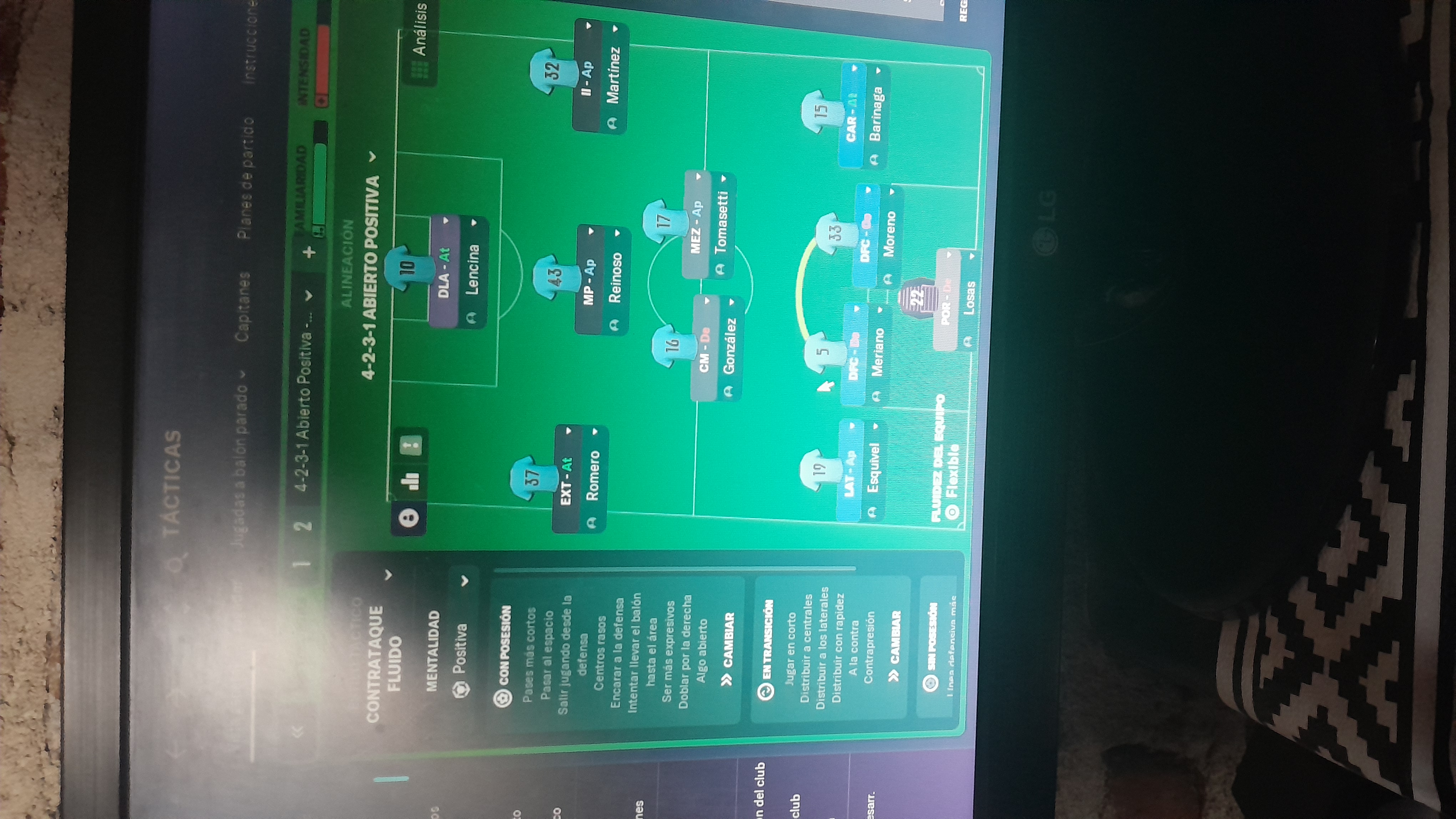
Formation & Style
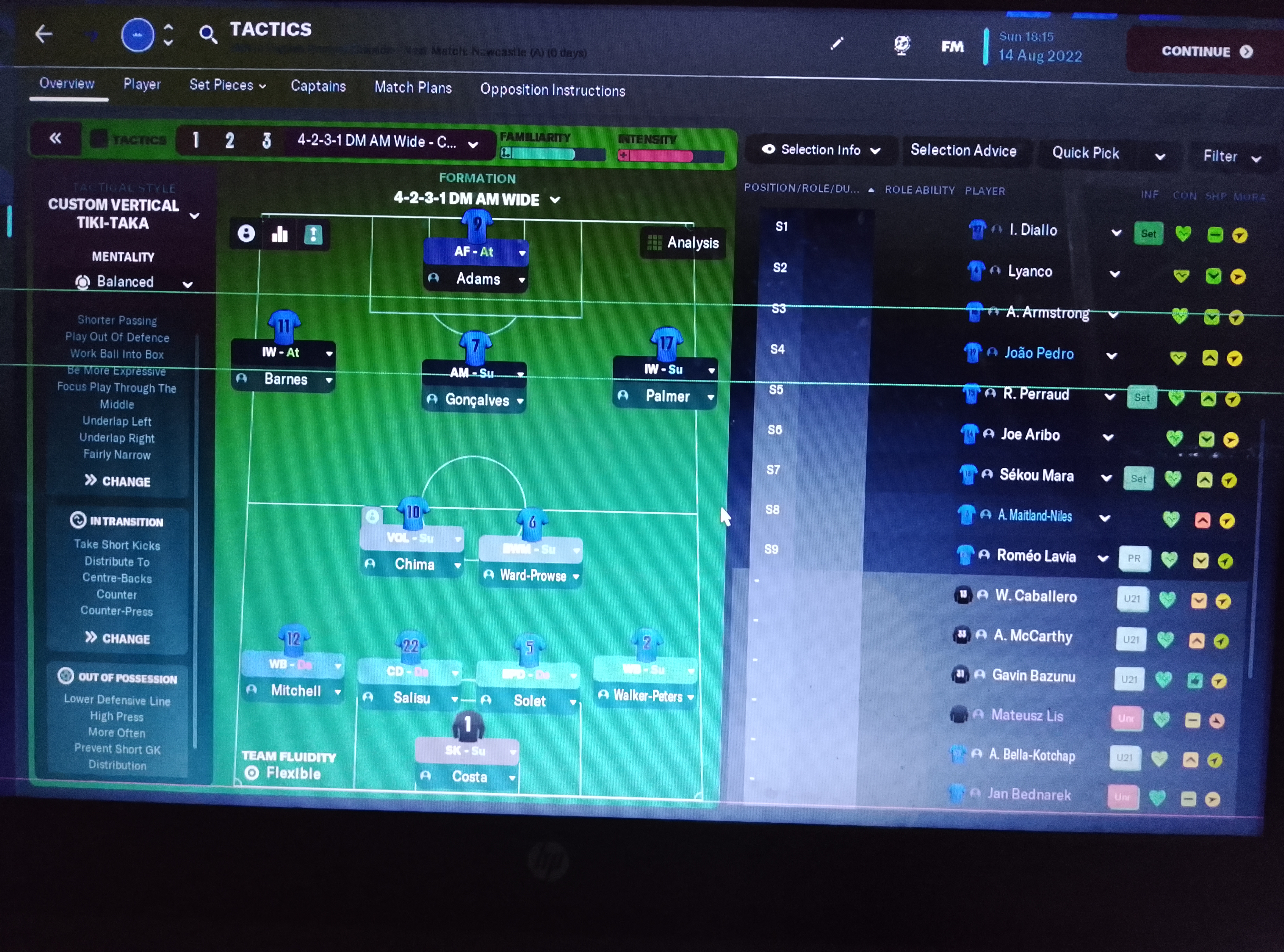
Tactical Style:Custom Vertical Tiki-Taka
Mentality:Positive
Formation:4-2-3-1
Team Fluidity:Fluid
In Possession
Shorter Passing
Pass Into Space
Play Out of Defence
Whipped Crosses
Be More Expressive
Slightly Lower Tempo
Narrow
In Transition
Take Short Kicks
Distribute To Centre-Backs
Hold Shape
Counter-Press
Out of Possession
Mid Block
More Often
Prevent Short GK Distribution
Team Shape Without Ball
Shape:4-2
Description:Defensive shape allows for compactness while covering central and wide areas effectively.
Evidence:Midfielders positioned to maintain balance with box-to-box roles providing additional coverage.
Team Shape With Ball
Shape:4-3
Description:Fluid attacking shape with options on both flanks and central attacks spearheaded by the advanced playmaker.
Evidence:Advanced Playmaker and Inside Forward work in tandem to exploit gaps.
Phase Description
Attacking Play
Looking to build play through short passing and movement, utilizing the width via wing-backs.
Defensive Transition
Transitioning into a mid-block to regain possession and quickly counter-press.
Main Focus
Maximizing possession and creating central and wide opportunities.
Key Strengths
Strong Central Control
The presence of a Deep-Lying Playmaker and Box-to-Box Midfielder helps maintain possession and control central midfield.
Dynamic Wing Play
Wing-Backs support both defensive duties and width in attack, creating overloads on the flanks.
Effective Transition Strategy
The provision for quick counter-pressing can exploit turnovers effectively.
Conflicting Directions
Potential for Overexposure
Utilizing a high line with limited pace in defenders may lead to vulnerabilities against speedy attackers.
Central Defense Vulnerability
The reliance on a two-man defensive midfield may leave central defense exposed to quick transitions.
Cross Dependency
While the focus on whipped crosses can yield chances, it may also become predictable if not varied.
Tactical Suggestions
Consider Defensive Depth
To mitigate vulnerabilities, consider adjusting the defensive line deeper to reduce exposure.
Increase Width Variation
Adding a player with width capability in attacking phases could diversify the attack.
Reassess Midfield Duties
Revisiting the Box-to-Box Midfielder’s duty may add necessary defensive cover amidst transitions.
Ask Questions About Your Lineup
Related Tactics
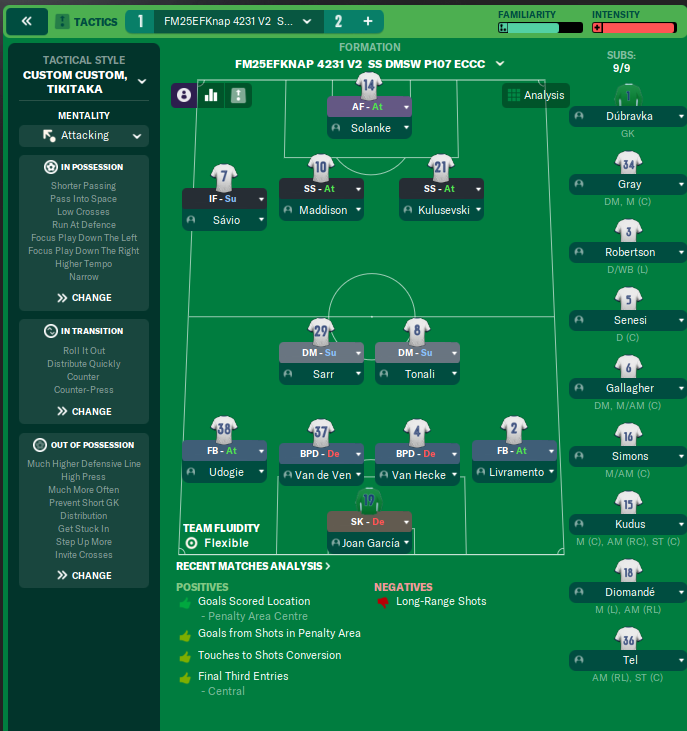
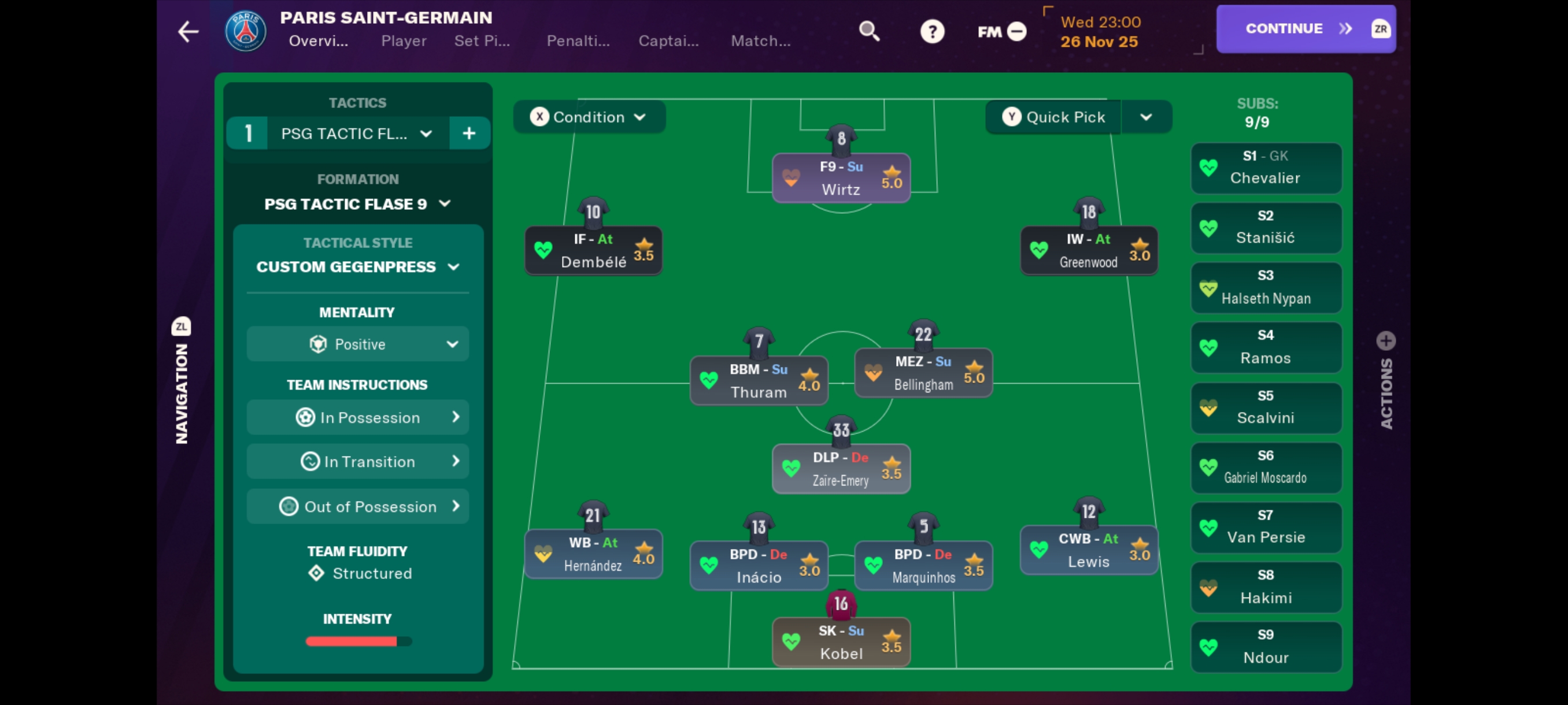
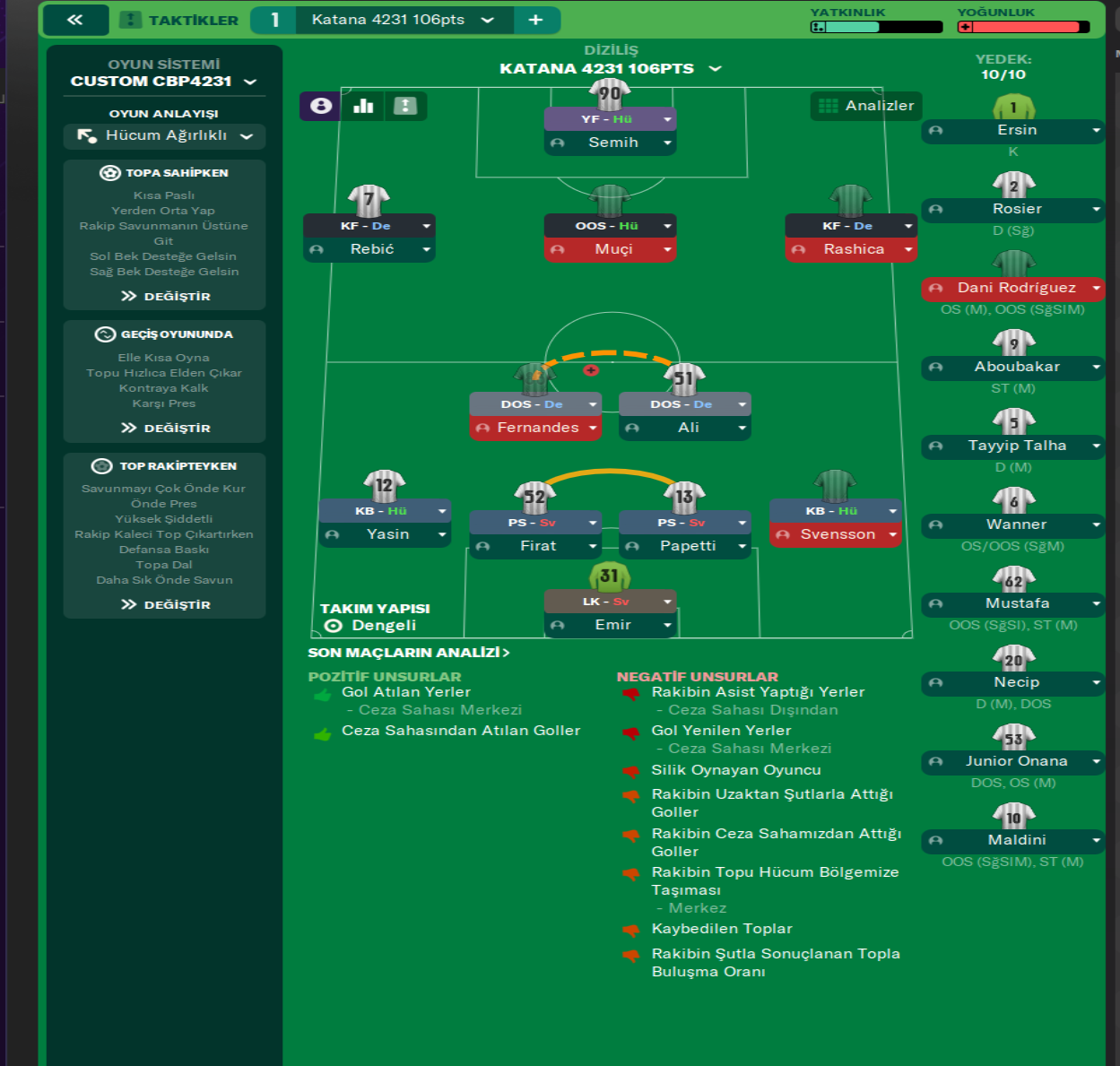
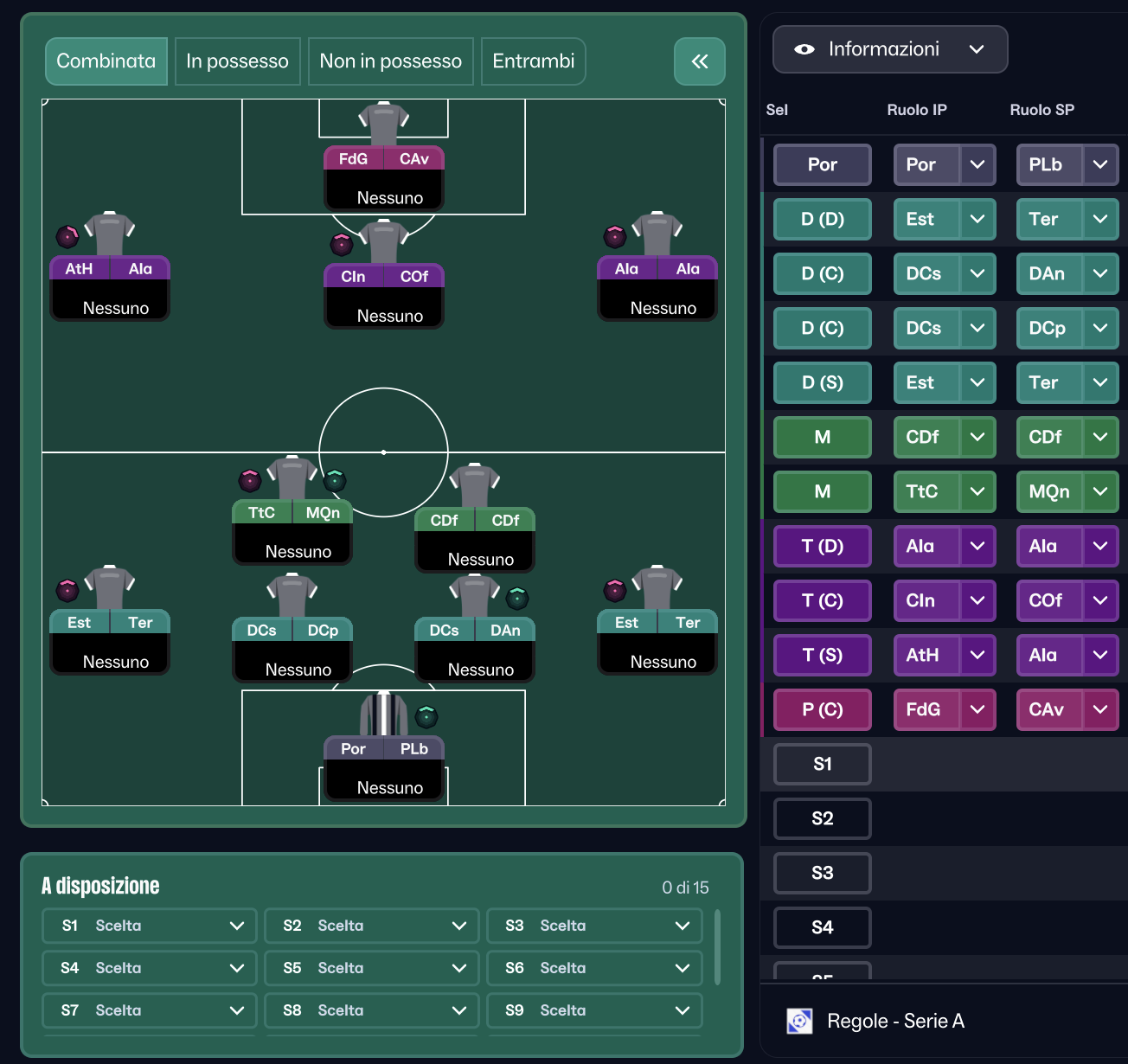
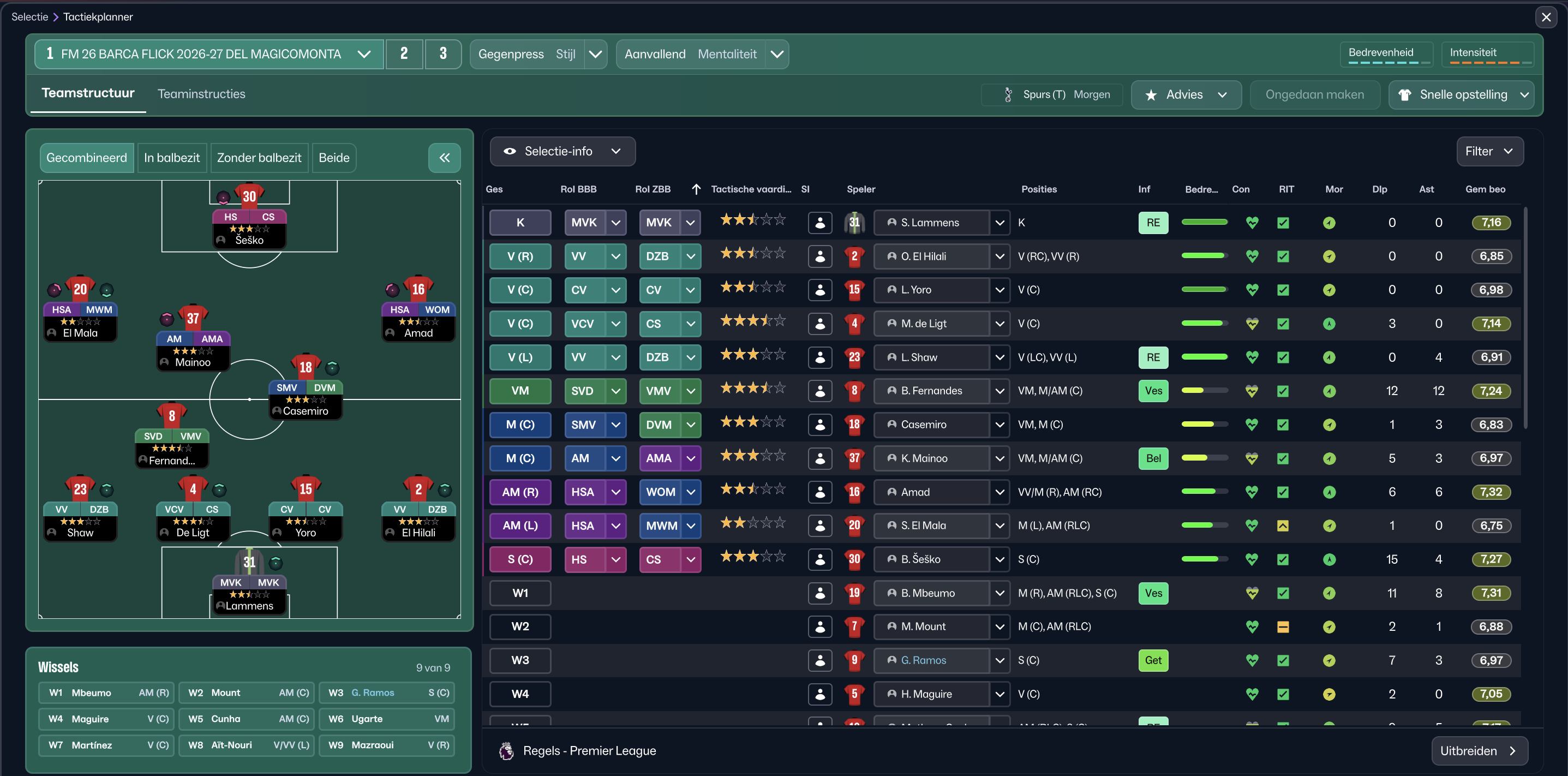
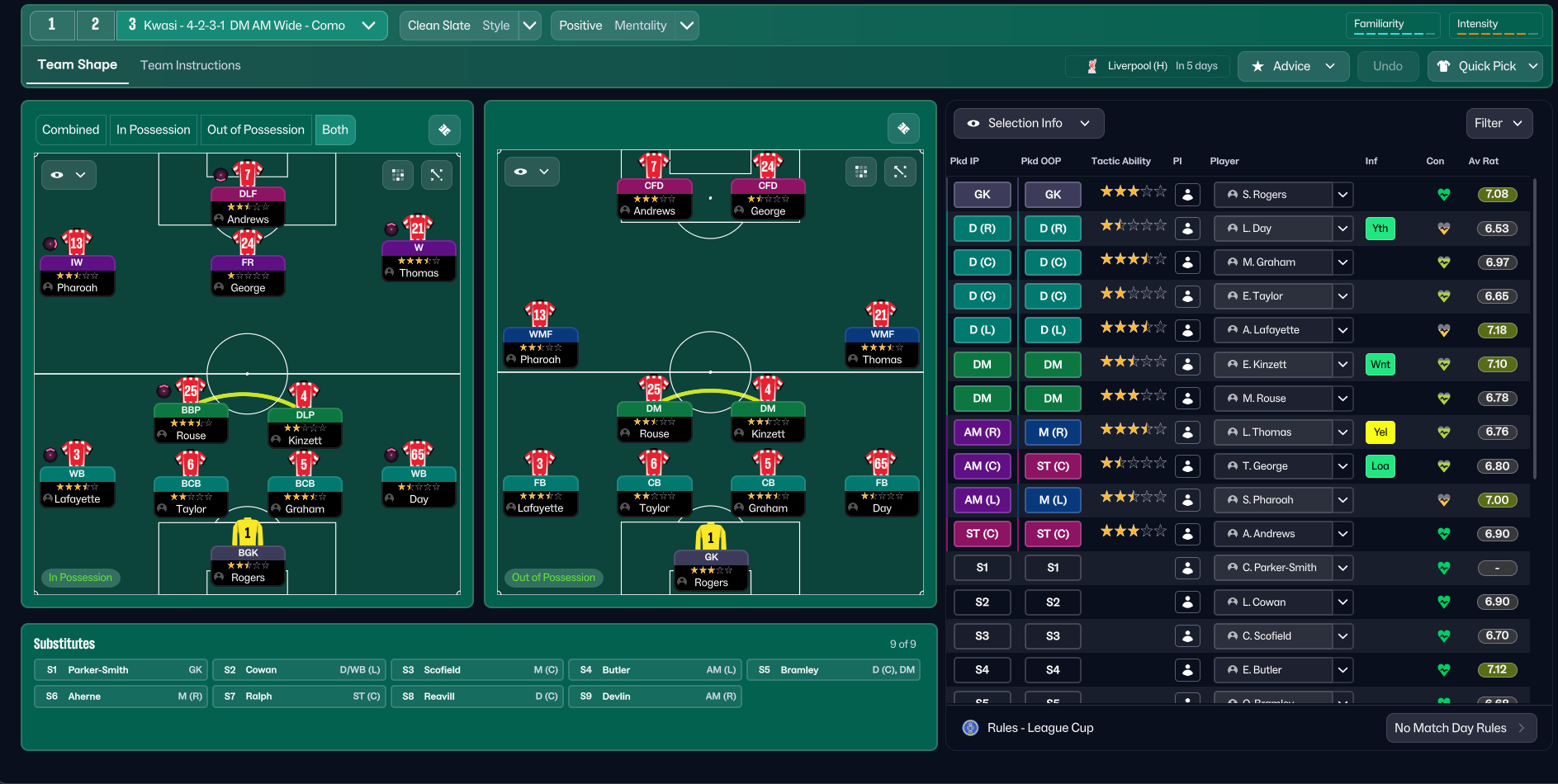
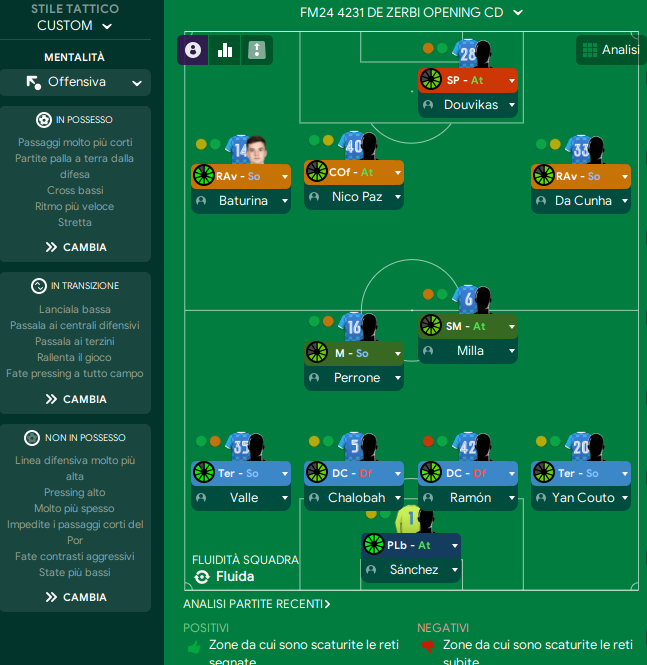
More Custom Vertical Tiki-Taka tactics
Guides for this formation
The tactical theory behind the 4-2-3-1: roles, instructions, and the trade-offs that decide whether the system holds up.
Player pairings
Midfield Pairs in 4-2-3-1 and 4-4-2
Double pivots and flat pairs in 4-2-3-1 and 4-4-2: when each pairing works, when it collapses, and the AMC unicorn that rescues both.
Read guide
Playing styles
Gegenpressing: A Full Guide
Klopp-style gegenpressing in FM, including squad profile, line-and-press pairing, sustainable workload, and the antipatterns to avoid.
Read guide