Uploaded Tactic
Formation & Style
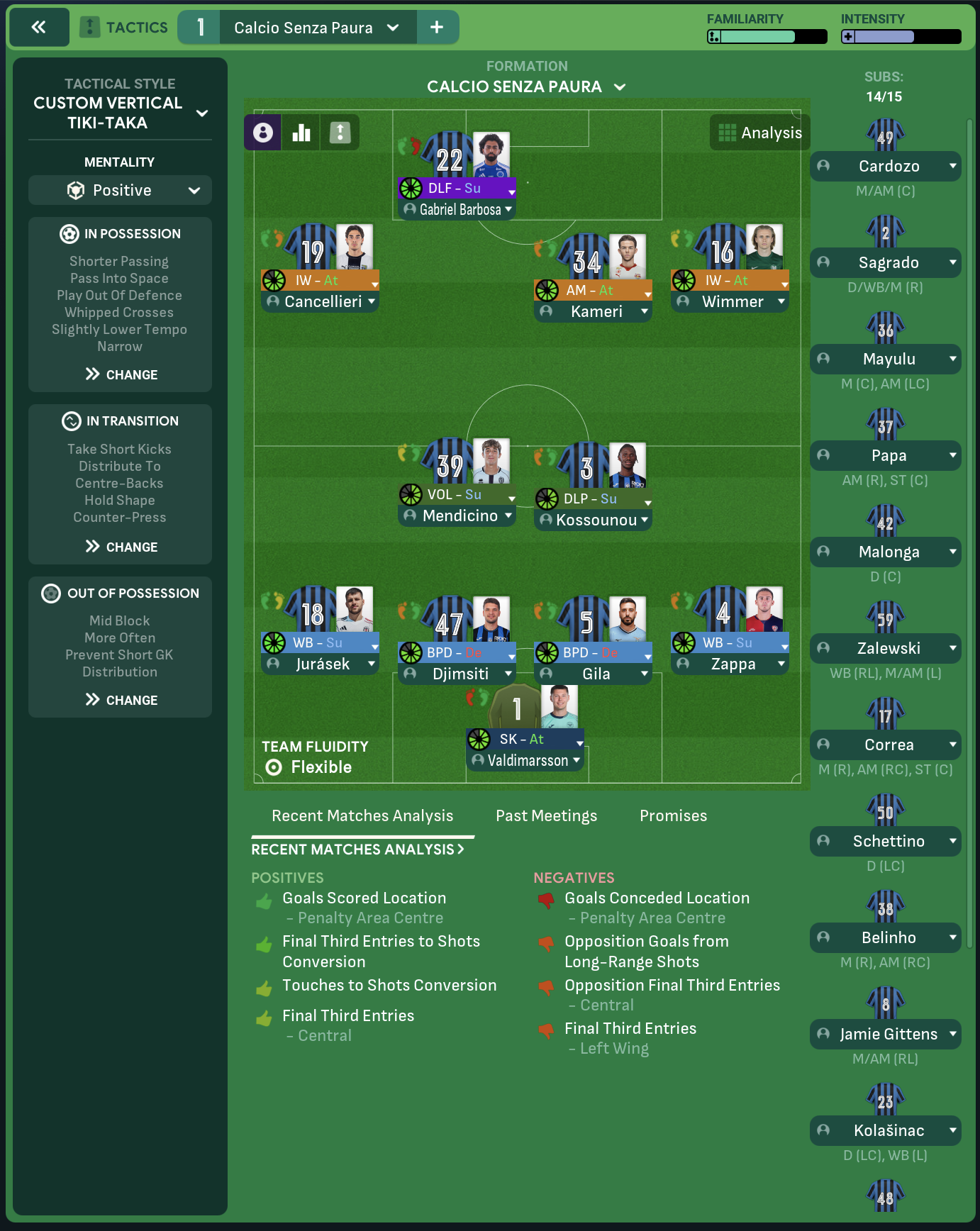
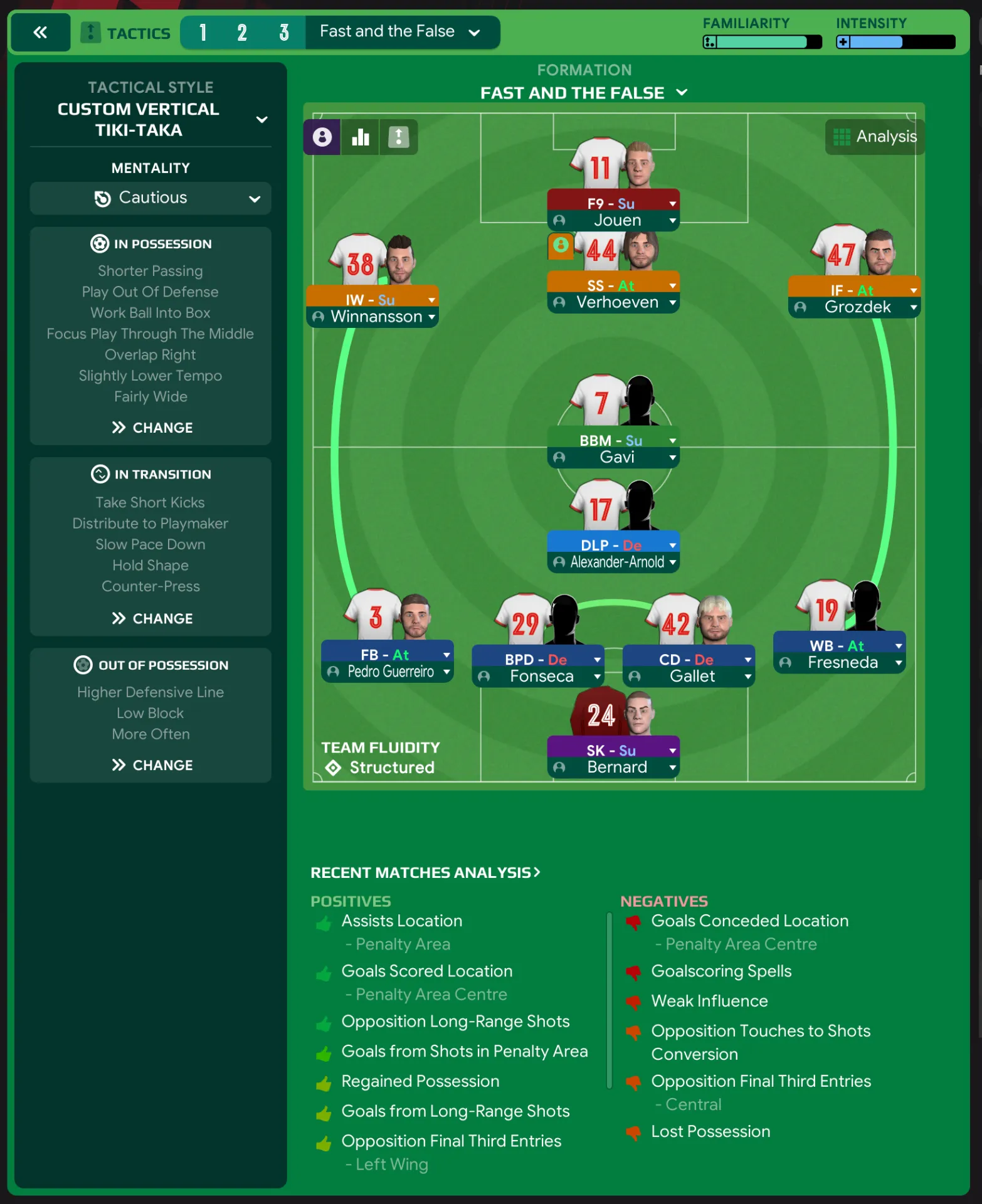
Tactical Style:Custom Vertical Tiki-Taka
Mentality:Positive
Formation:4-2-3-1 Wide
Team Fluidity:Flexible
In Possession
Shorter Passing
Pass Into Space
Play Out of Defence
Whipped Crosses
Slightly Lower Tempo
Narrow
In Transition
Take Short Kicks
Distribute To Centre-Backs
Hold Shape
Counter-Press
Out of Possession
Mid Block
More Often
Prevent Short GK Distribution
Team Shape Without Ball
Shape:Mid Block
Description:Defensive line sits moderately deep, cutting off passing lanes.
Evidence:Used 'Mid Block' in out of possession setup, indicating preference to contain the opposition.
Team Shape With Ball
Shape:Fluid
Description:Triangle formation with width from wingers and support from two central midfielders.
Evidence:Roles of 'IW-A' provide width while 'AM-A' and 'DLF-Su' create attacking options.
Phase Description
Attacking Play
Focus on quick, short passes and creating space for attacking runs into the penalty area, exploiting the width provided by the wing-backs.
Defensive Transition
Encourage aggressive pressing immediately after losing the ball to recover quickly.
Main Focus
Control possession and create opportunities through intricate passing and exploiting spaces.
Key Strengths
Strong Attacking Outlets
Inside Wingers provide penetration and width, drawing defenders out of position.
Possession Retention
The DLP-Su and VOL-Su allow for effective ball distribution in midfield.
Defensive Flexibility
The BPDs can initiate play while being solid defensively.
Conflicting Directions
Defensive Vulnerabilities
Mid block may leave gaps that can be exploited by fast transitions.
Over-reliance on Width
Dependent on wing-backs for width; if neutralized, the attack can become predictable.
Potential Slow Build-Up
Short passing may lead to hesitant build-up and loss of tempo against pressing teams.
Tactical Suggestions
Utilize Counter Attacks
Emphasize quick transitions to exploit opponents' defensive line when they commit forward.
Adjust Midfield Shape
Consider a more aggressive midfield role to increase pressing effectiveness.
Increase Width in Attack
Encouraging players to drift wide can draw defenders out, creating central spaces.
Ask Questions About Your Lineup
Related Tactics
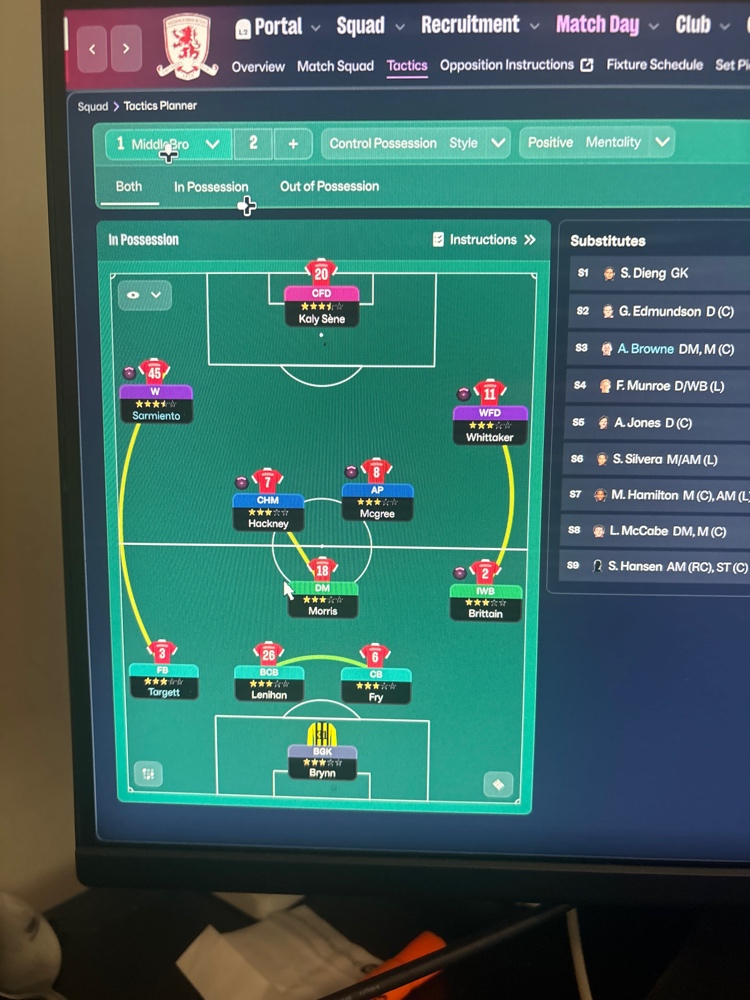
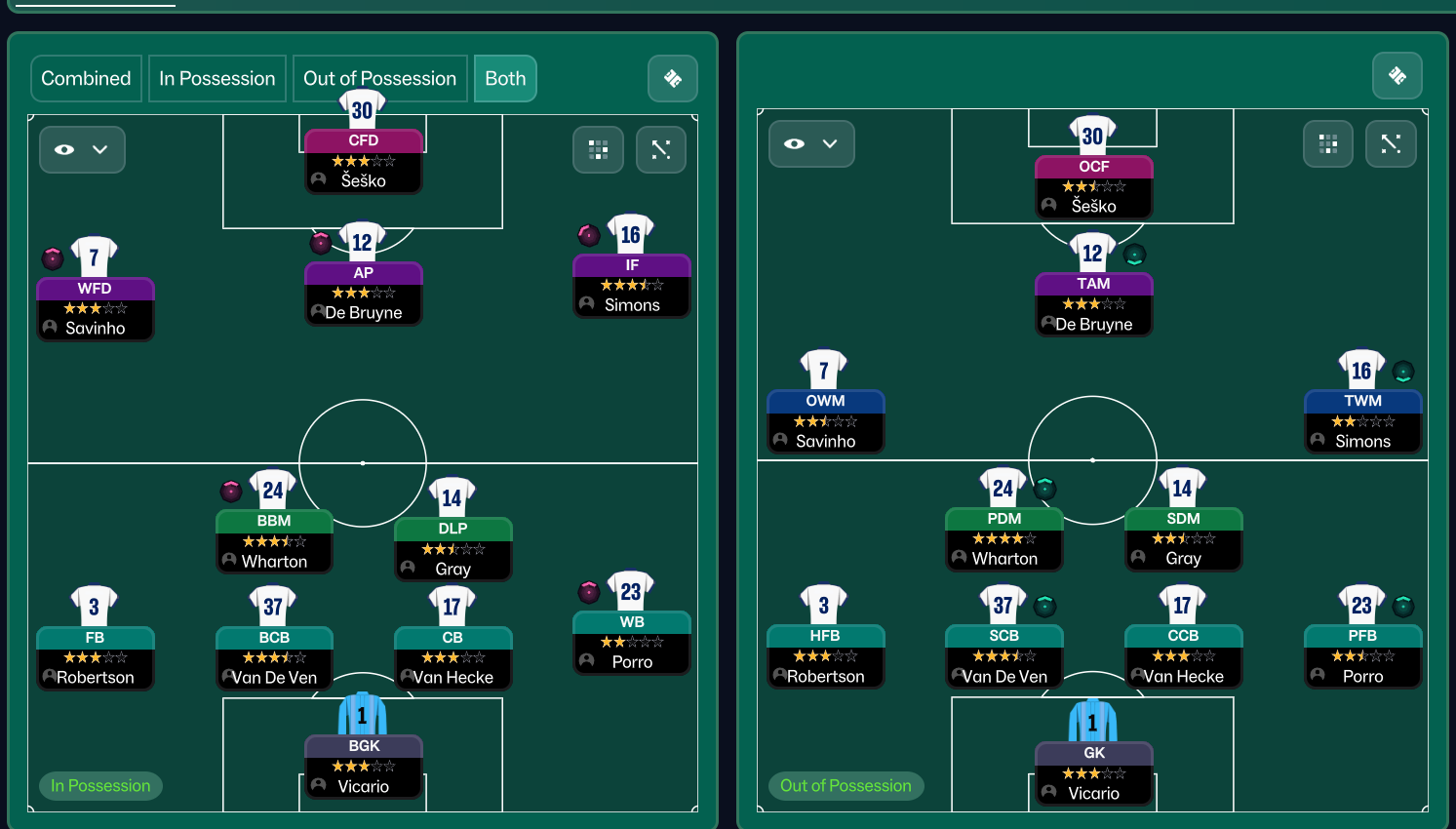
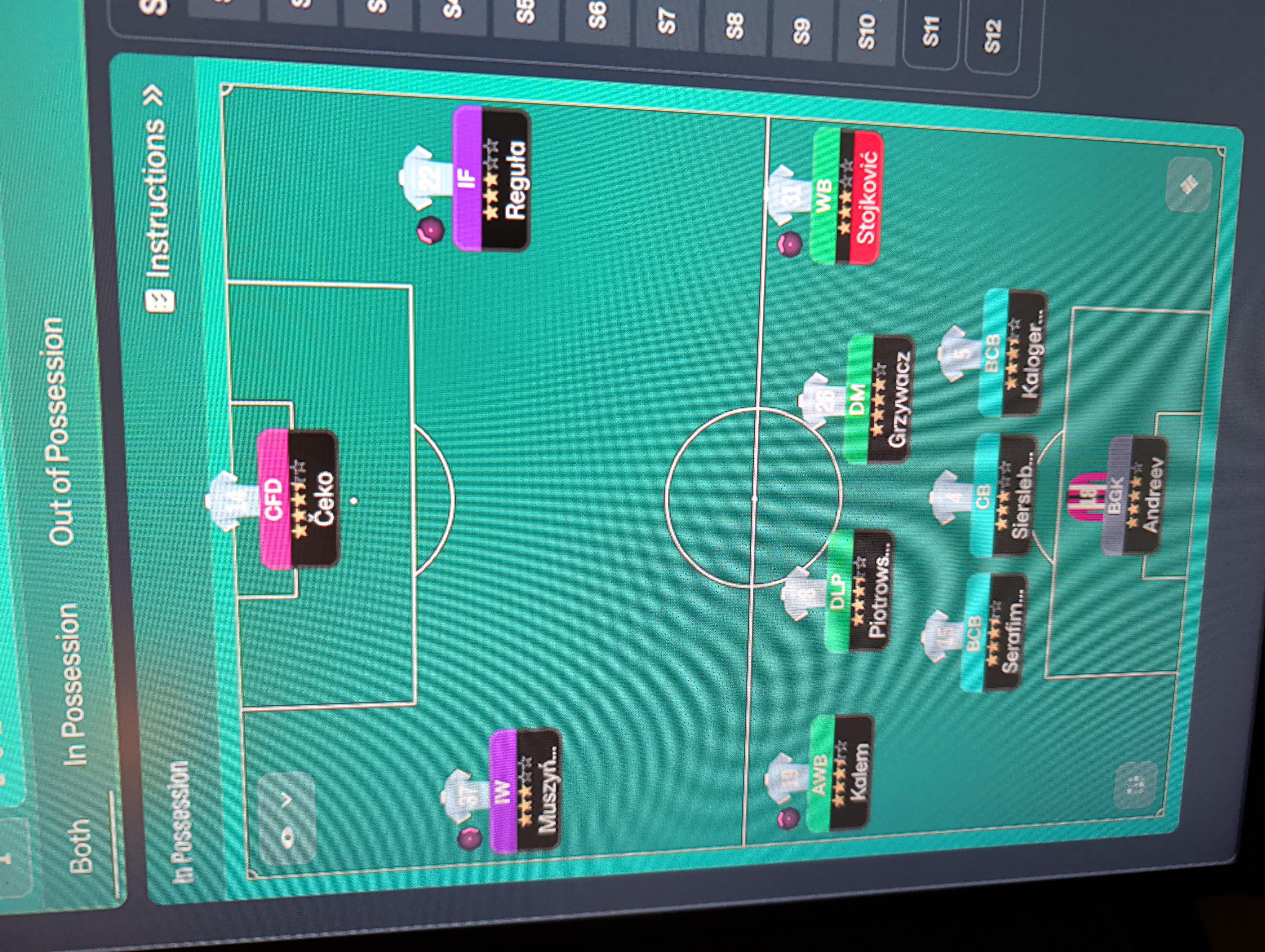
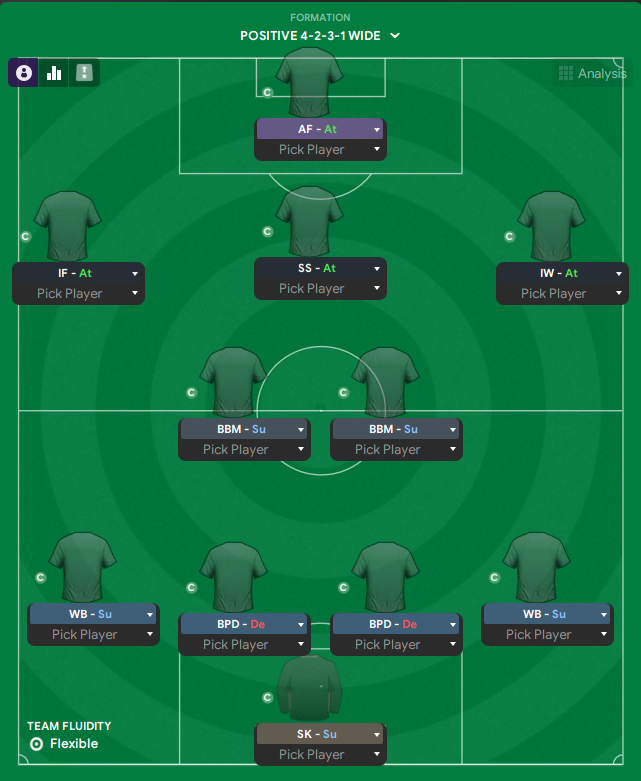
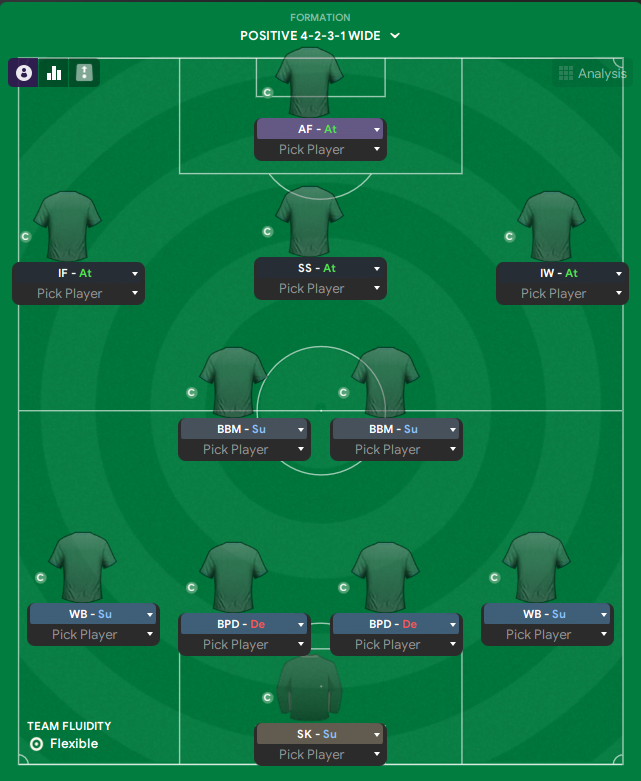
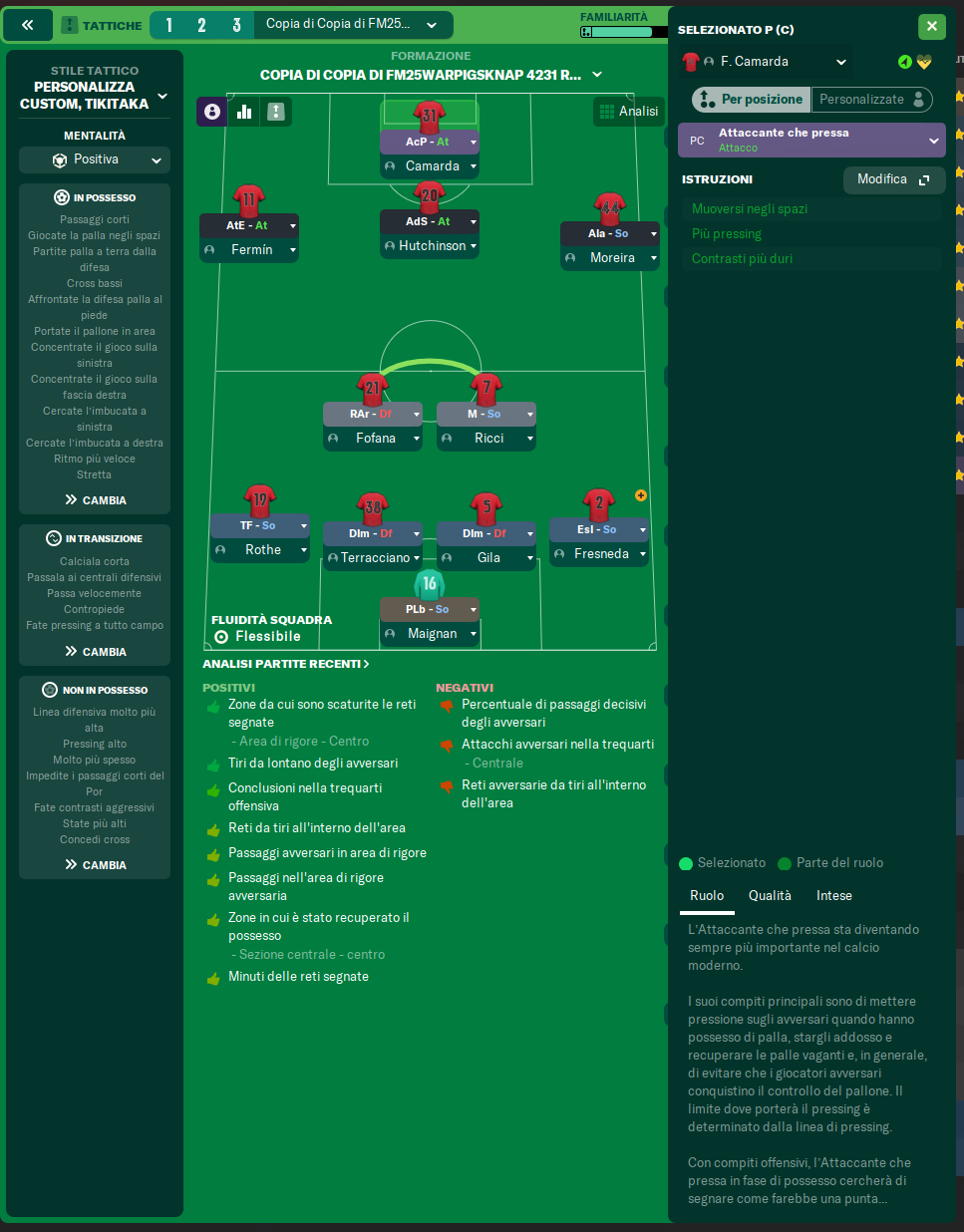
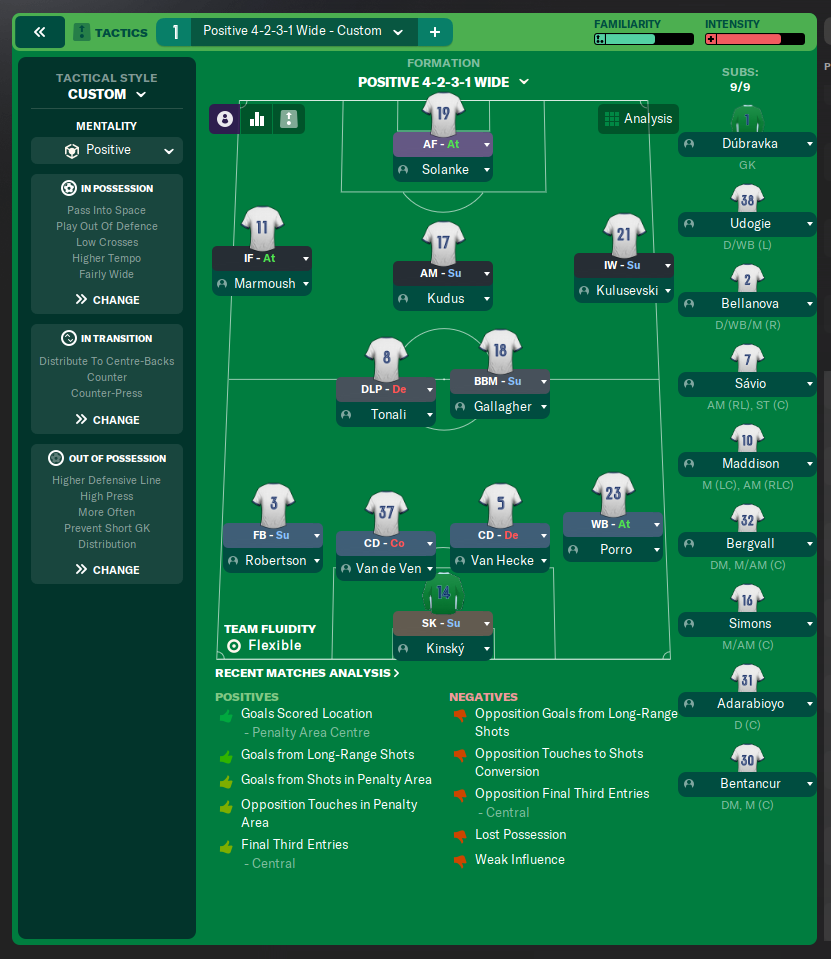
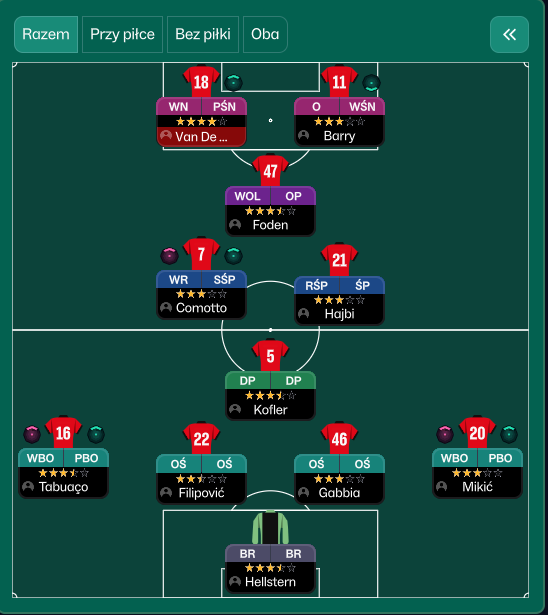
More Custom Vertical Tiki-Taka tactics
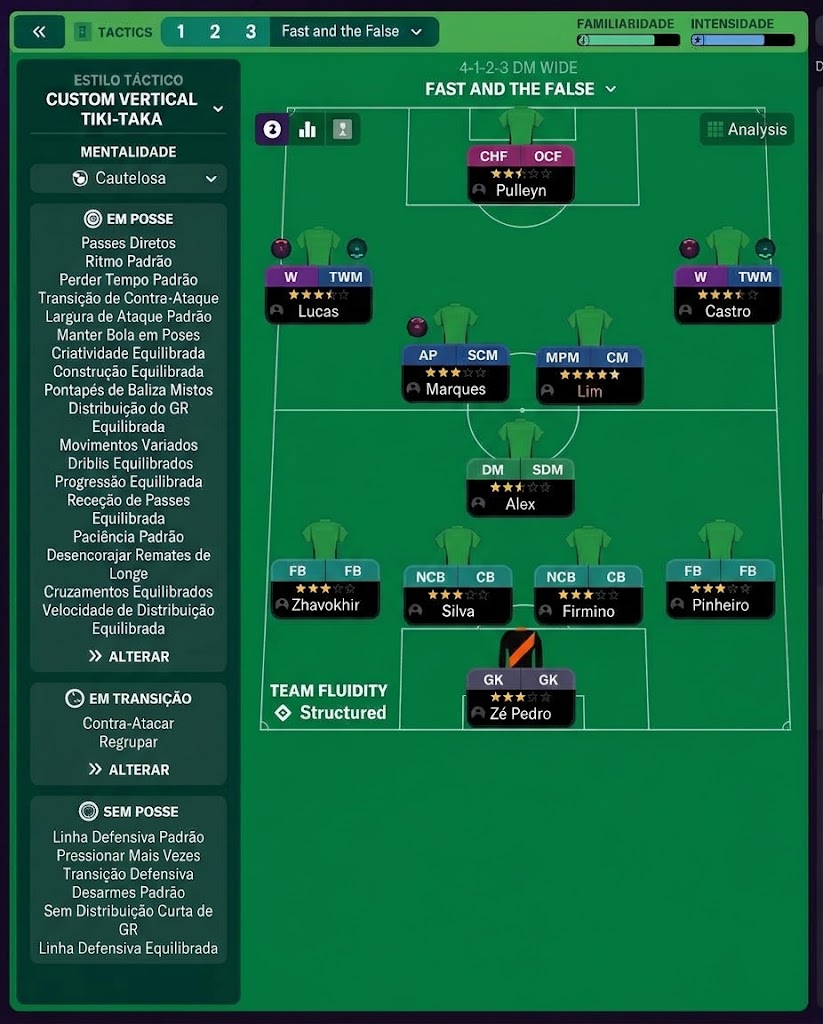
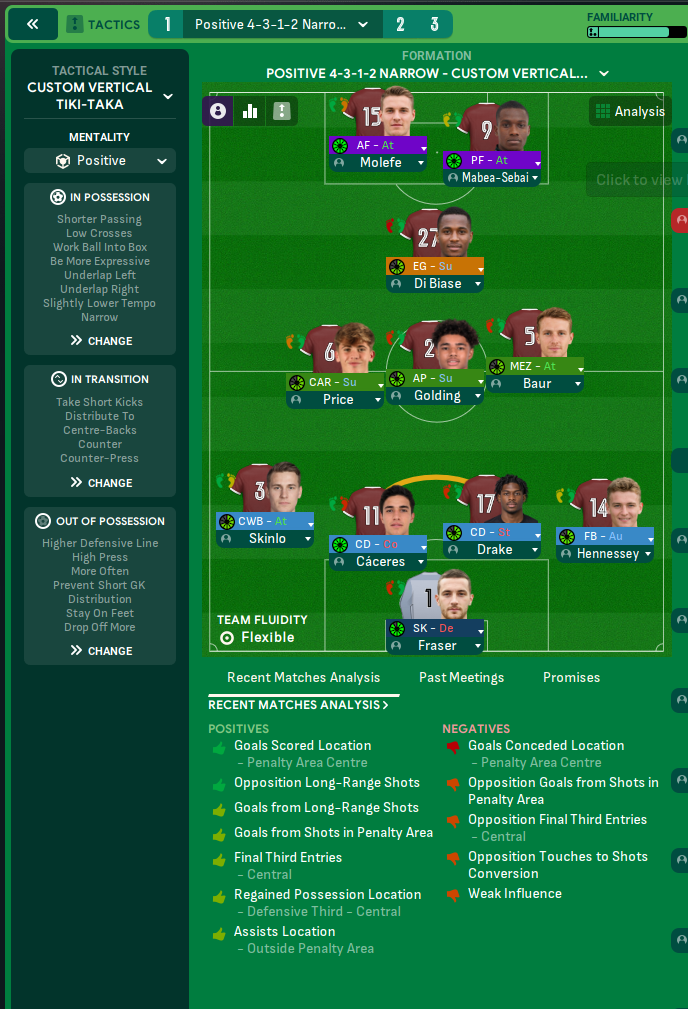
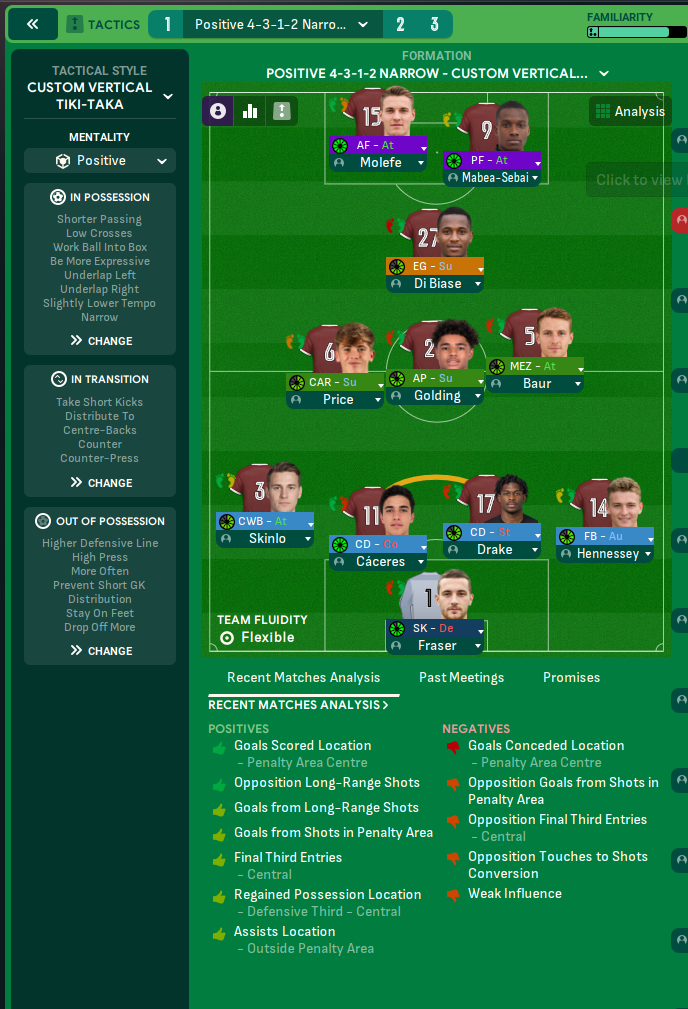
Guides for this formation
The tactical theory behind the 4-2-3-1 Wide: roles, instructions, and the trade-offs that decide whether the system holds up.
Player pairings
Midfield Pairs in 4-2-3-1 and 4-4-2
Double pivots and flat pairs in 4-2-3-1 and 4-4-2: when each pairing works, when it collapses, and the AMC unicorn that rescues both.
Read guide
Playing styles
Gegenpressing: A Full Guide
Klopp-style gegenpressing in FM, including squad profile, line-and-press pairing, sustainable workload, and the antipatterns to avoid.
Read guide