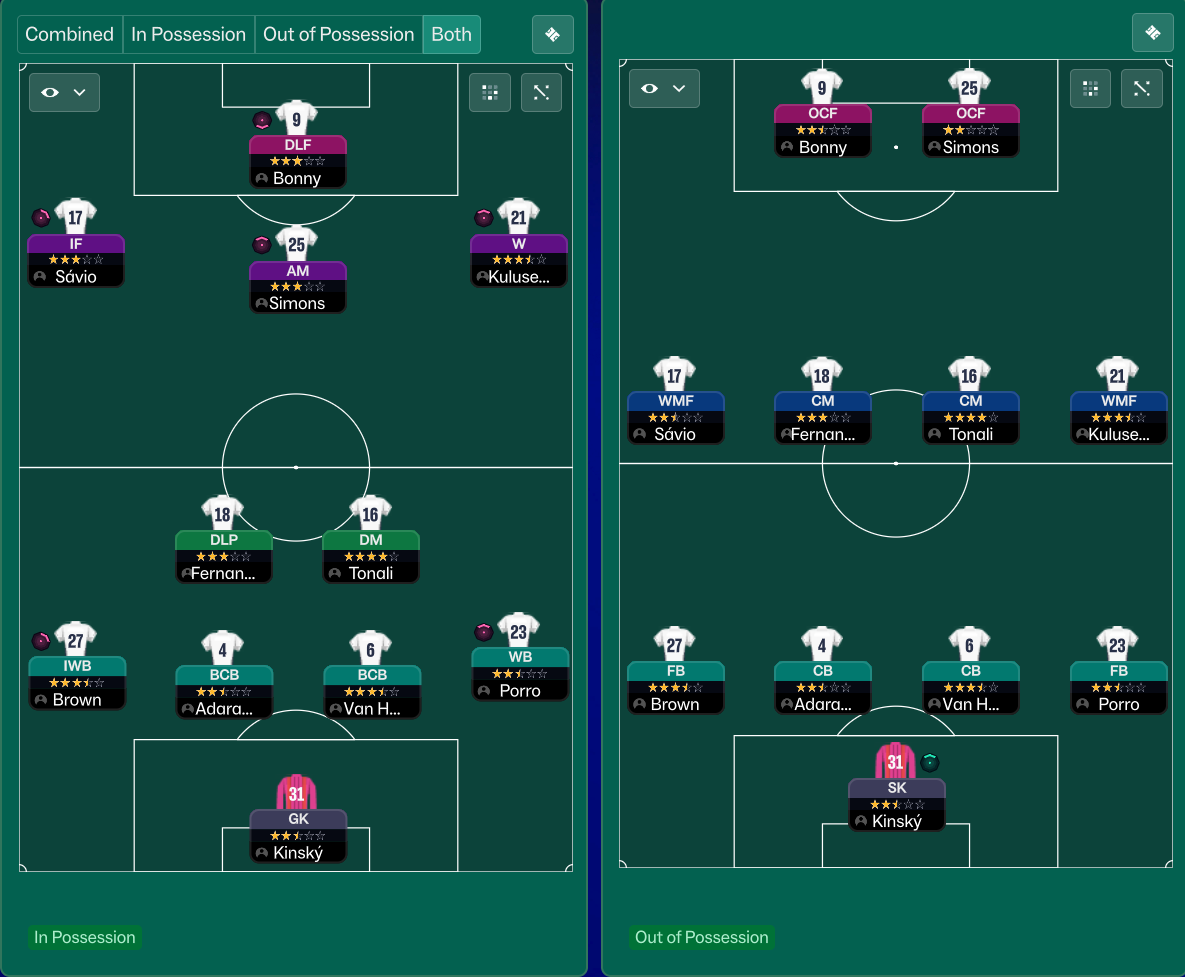
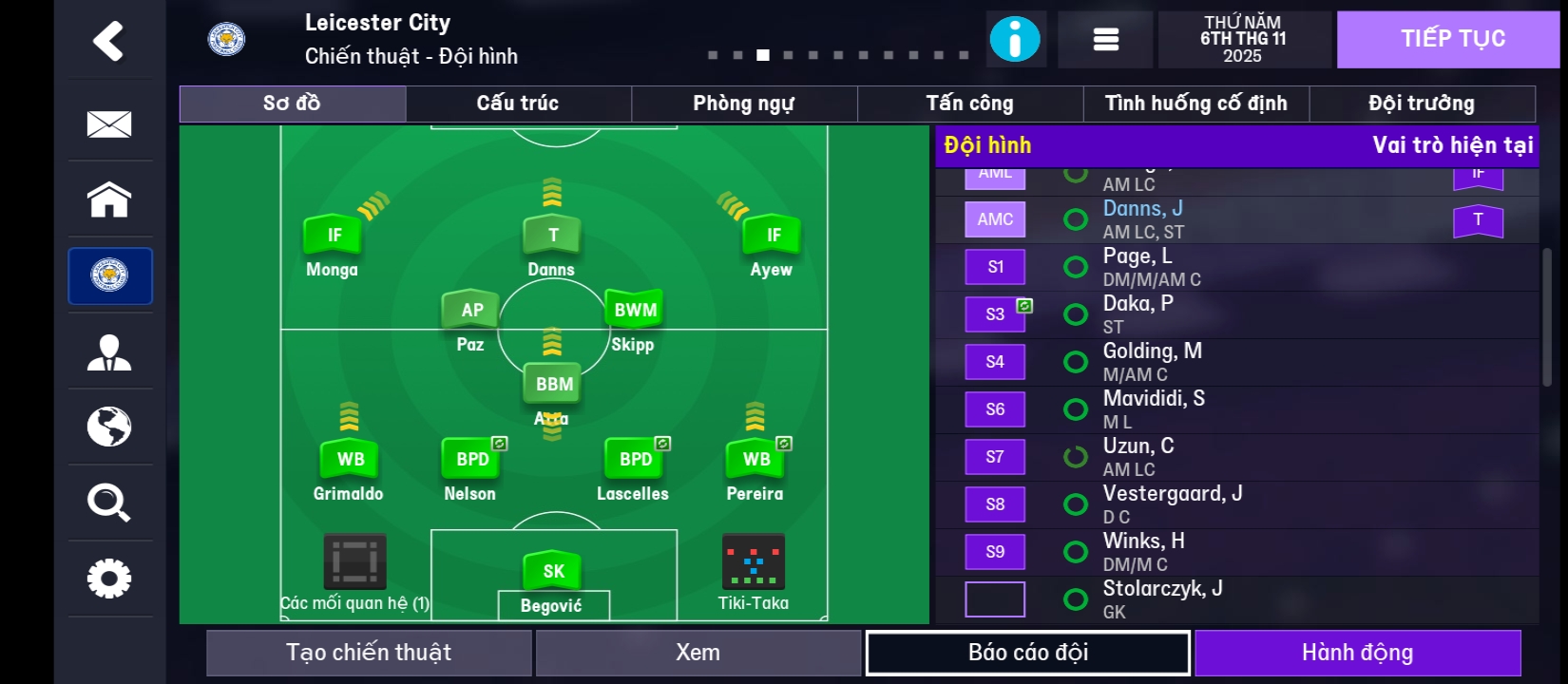
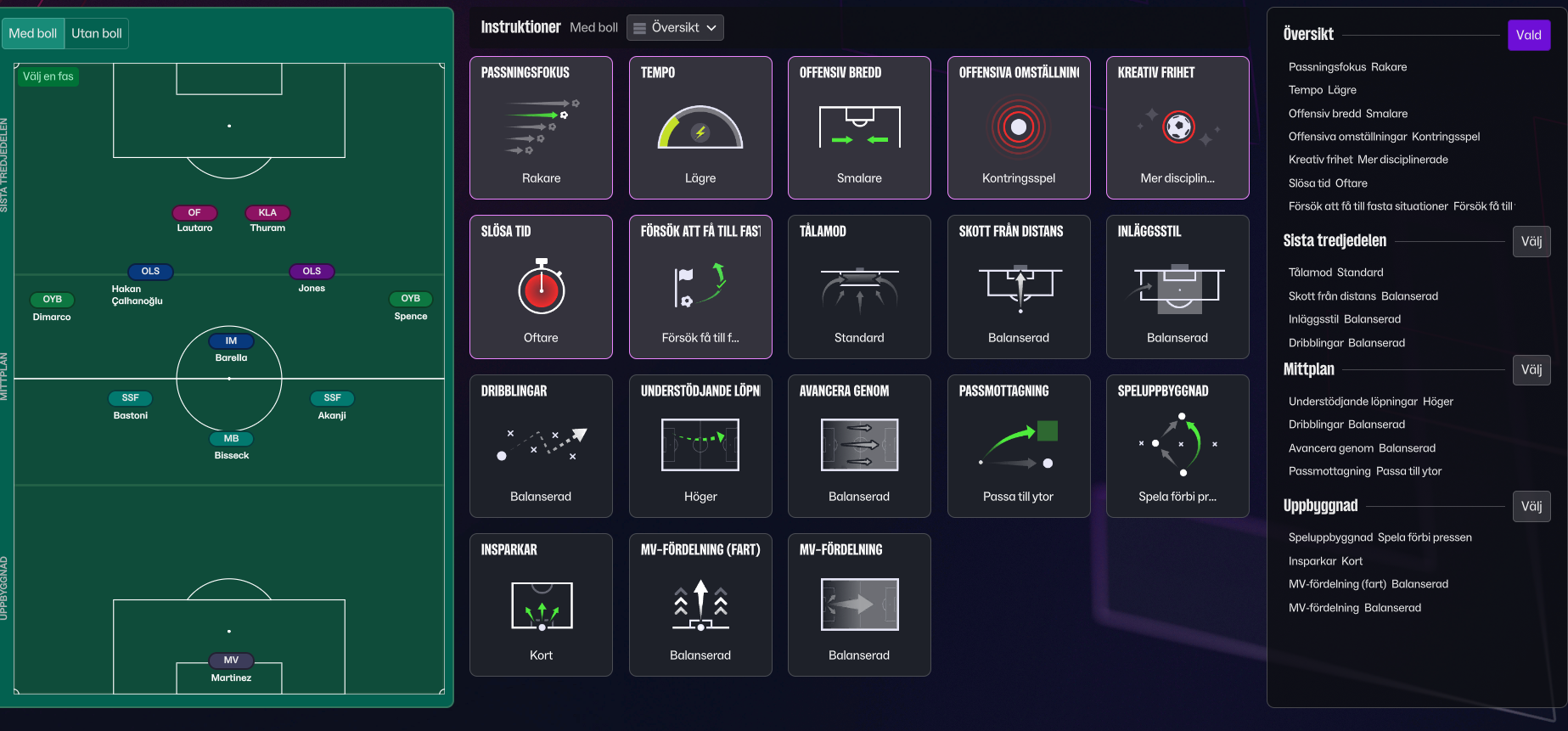
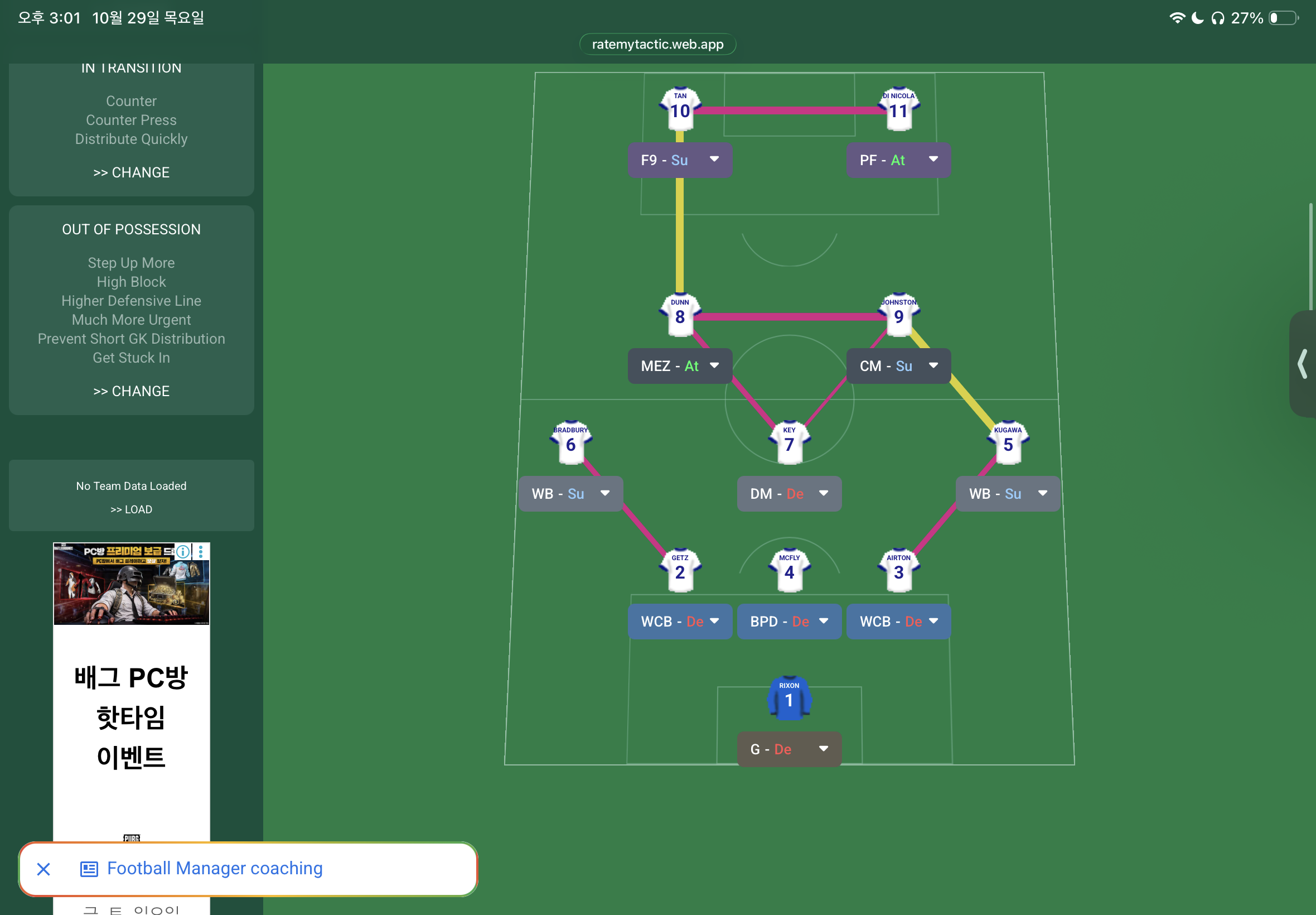
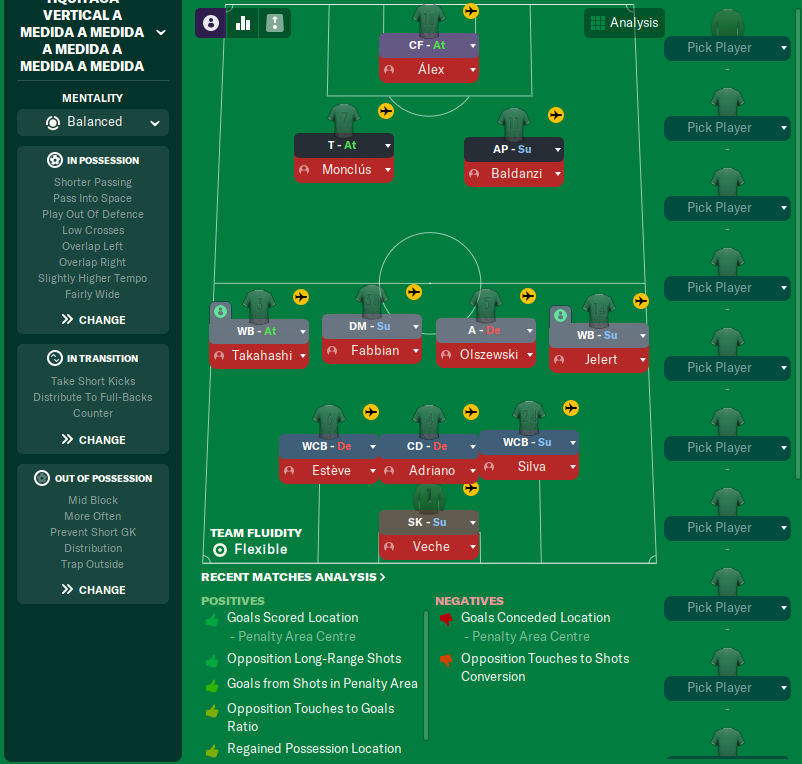
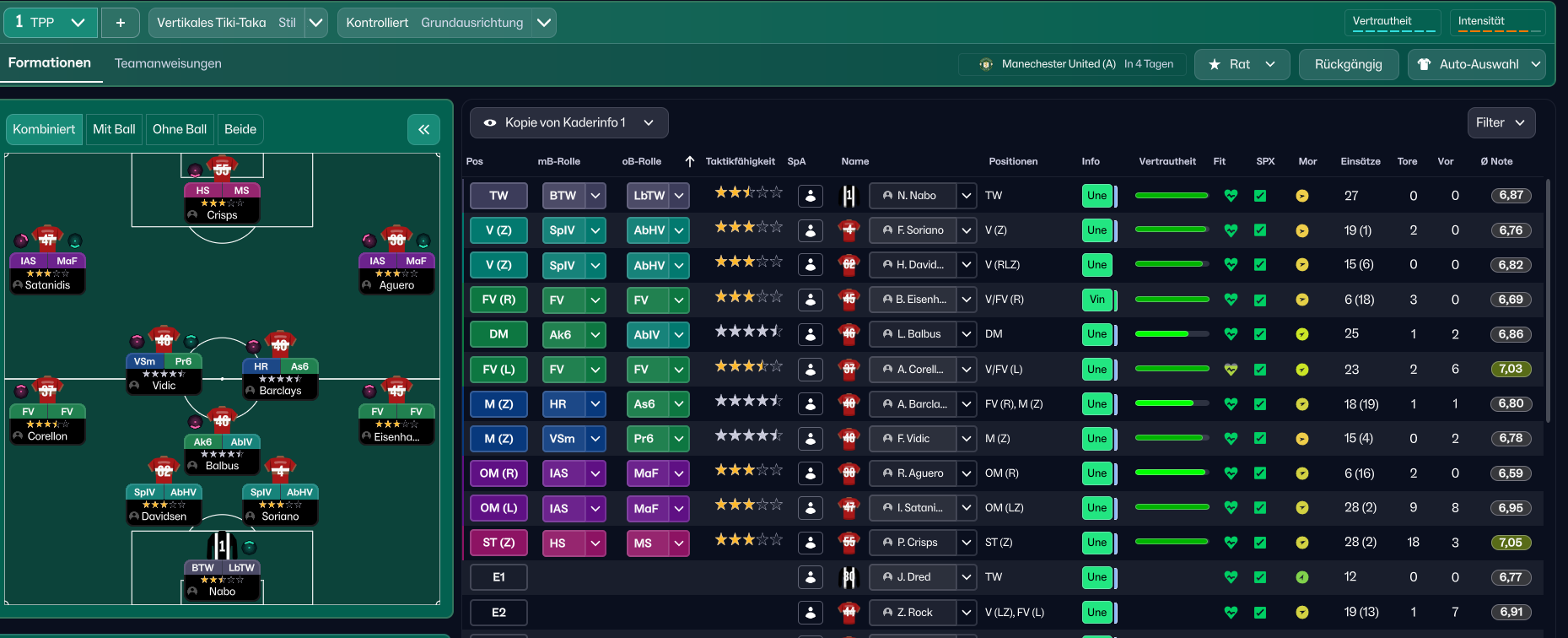
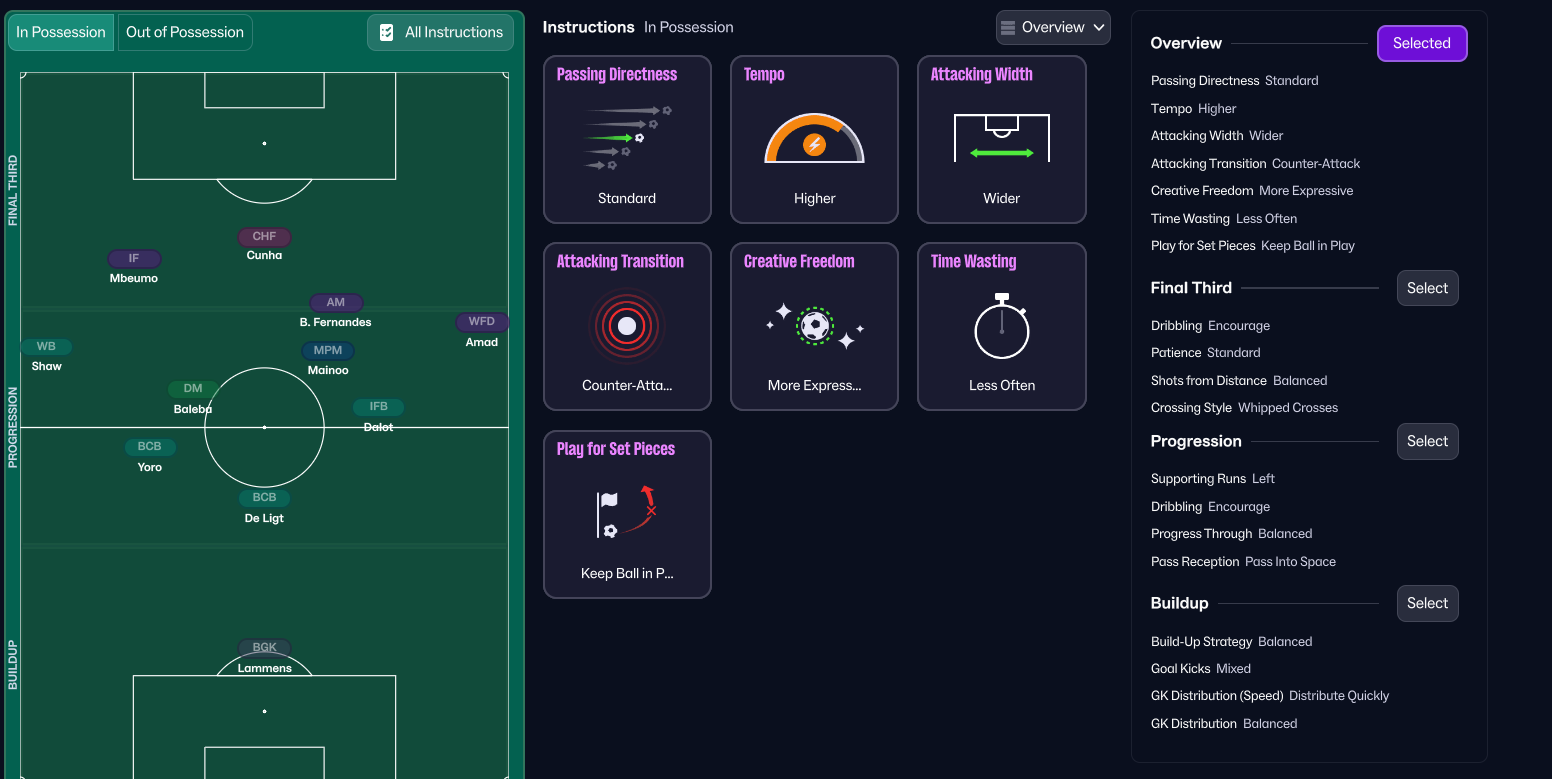
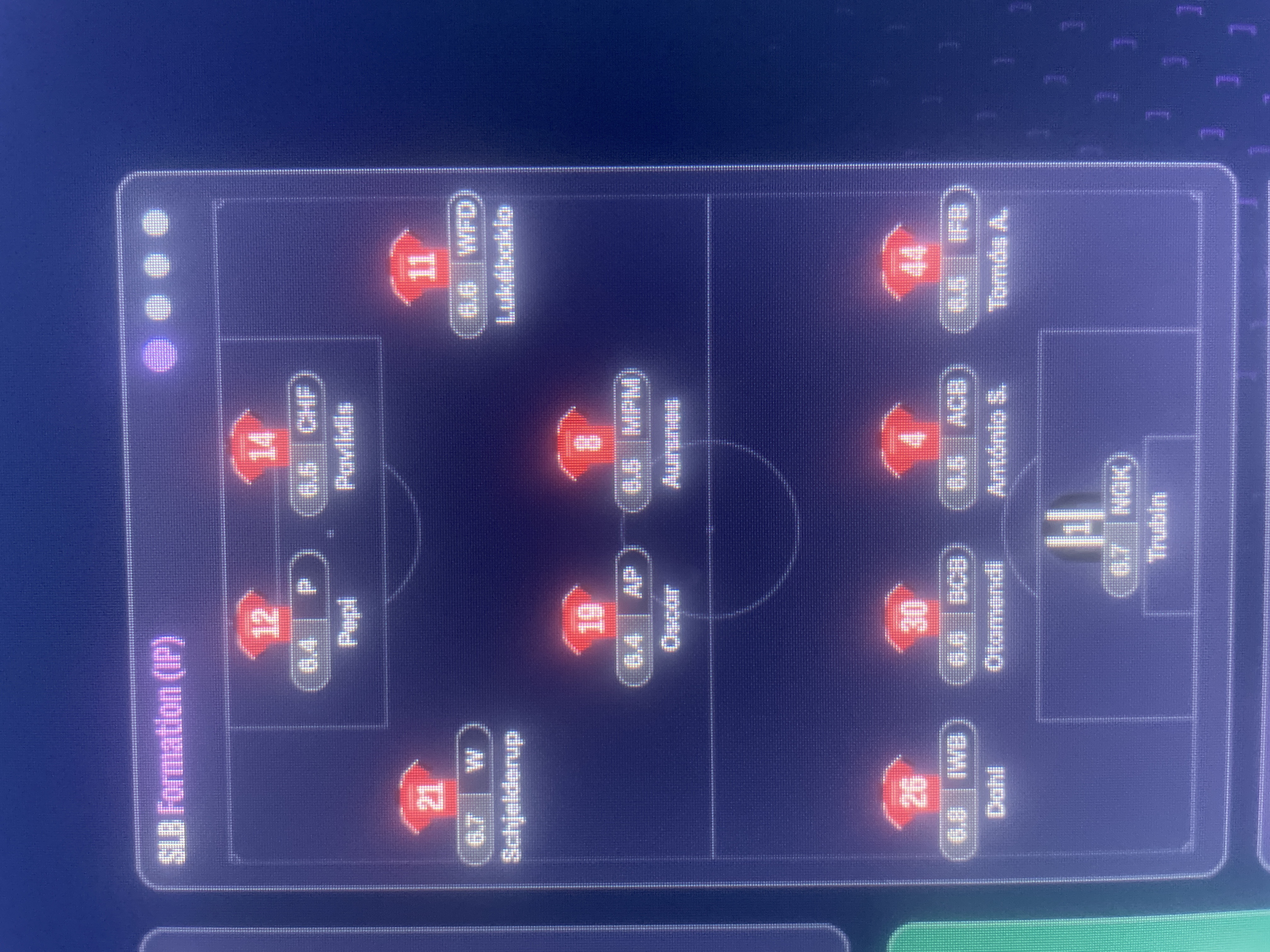
3-1-4-2
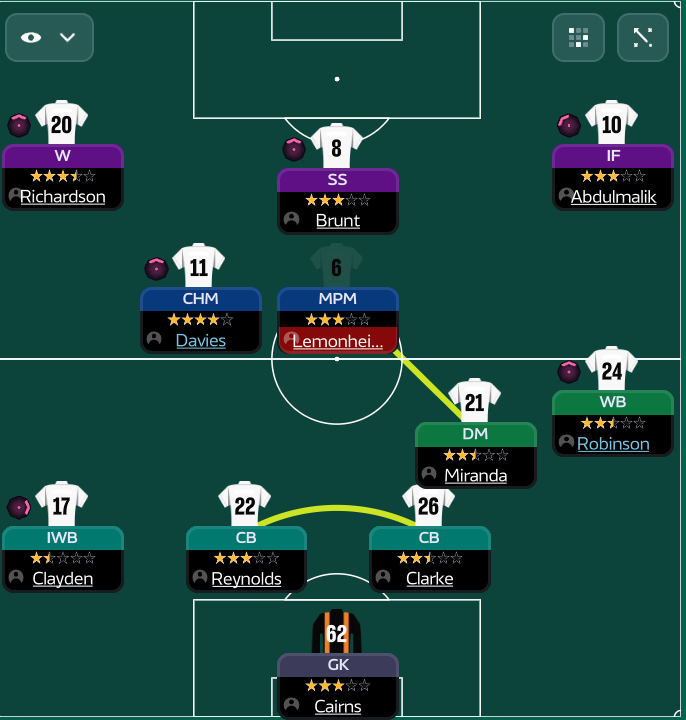
Finding space for attacking players through combination play. The three central defenders provide solidity and cover.
Loading tactical analysis...
3-1-4-2
Play out of defence
Focus play down the right
Work ball into the box
Counter-press
Counter
Higher defensive line
Much more often prevent short GK distribution
GK
GK
CB
CB
CB
CB
CB
CB
DM
DM
D
IWB
IWB
A
WB
WB
A
CHM
CHM
MPM
MPM
SS
SS
A
IF
IF
A
Utilizes wide players and a shadow striker to create opportunities.
Presses aggressively after losing possession.
Finding space for attacking players through combination play.
Flat 3
Solid three-man defense with width provided by wing-backs.
CBs at [2,2], [2,3], [2,4] with IWB and WB providing width.
Fluid 2
Two forwards with support from wide players and advanced midfielders.
SS at [6,3] and IF at [6,4] supported by MPM at [4,3].
The three central defenders provide solidity and cover.
CBs at [2,2], [2,3], and [2,4] ensure defensive stability.
IWB and WB push up the flanks effectively.
IWB at [2,1] and WB at [2,5] creating width.
Opponents exploiting space behind a high line could be problematic.
Higher defensive line instruction increases risk of being countered.
Over-reliance on wide players might leave central areas exposed.
Team focuses play down the right while midfield remains congested.
Defensive Transition
High pressing can leave spaces for counter-attacks.
Counter-pressing instruction may expose defensive line.
Flank Defense
Wide players may leave gaps when they push forward.
IWB and WB responsibilities can lead to central areas being neglected.
MPM with CHM
Can create effective triangles to transition from defense to attack.
MPM at [4,3] with CHM at [4,2] facilitates passing options.
IWB and WB
Provides both width and depth, making it difficult to defend against.
IWB at [2,1] and WB at [2,5] offer overlapping runs.
How can I better exploit space behind the opponent's defense?
What adjustments can I make during in-game transitions?
How do I ensure midfield stability while maximizing offensive capabilities?
The tactical theory behind the 3-1-4-2: roles, instructions, and the trade-offs that decide whether the system holds up.
Pass map, average position, xG, possession by zone: what each tablet panel tells you in FM and the tactical change it should trigger.
FM27 keeps FM26's tactic system. Here is what stays the same, the small changes that can catch you out, and what the new Tactical Effectiveness system asks of you.
How Mentality, Duty, and Role interact in FM, why duty trumps mentality every time, and the role-on-top-of-duty composition rules.