Uploaded Tactic
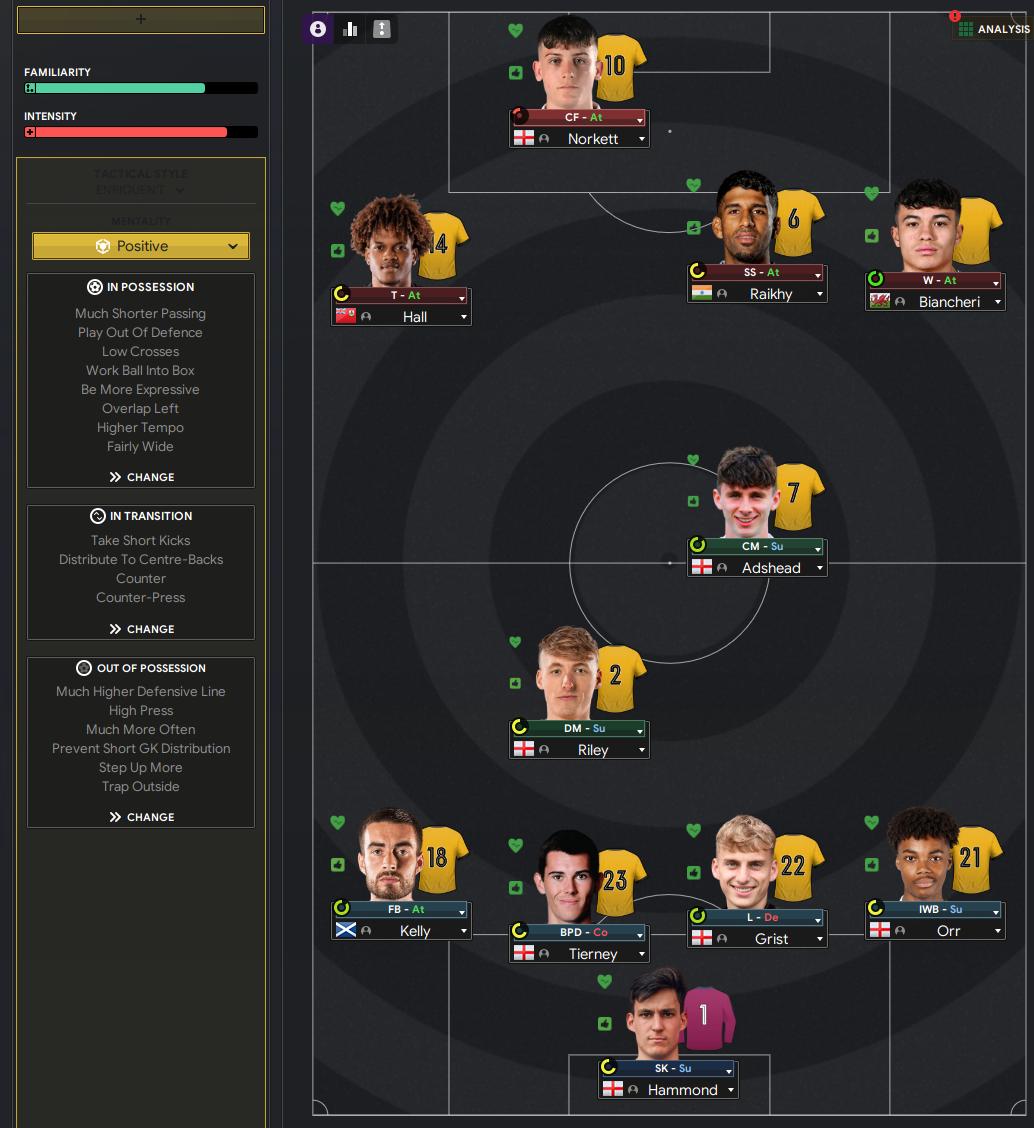
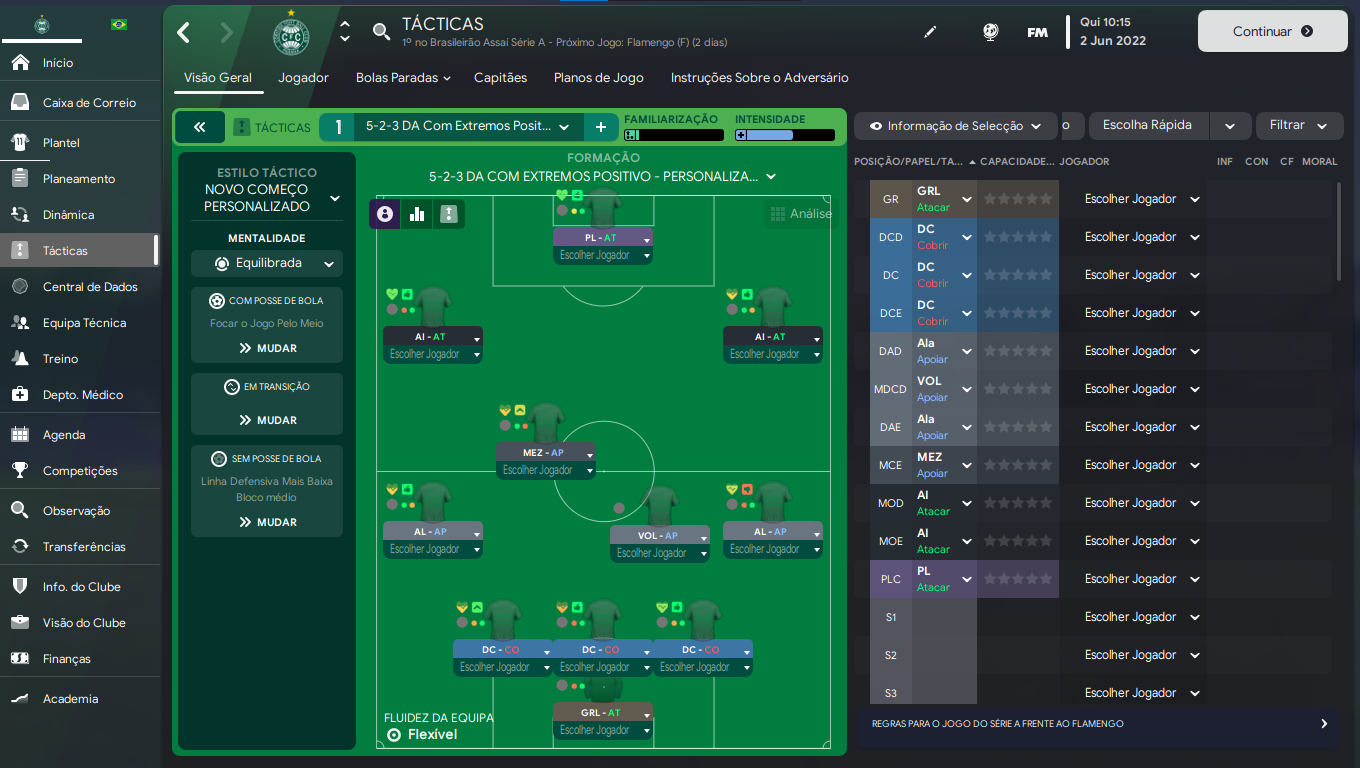
Formation & Style
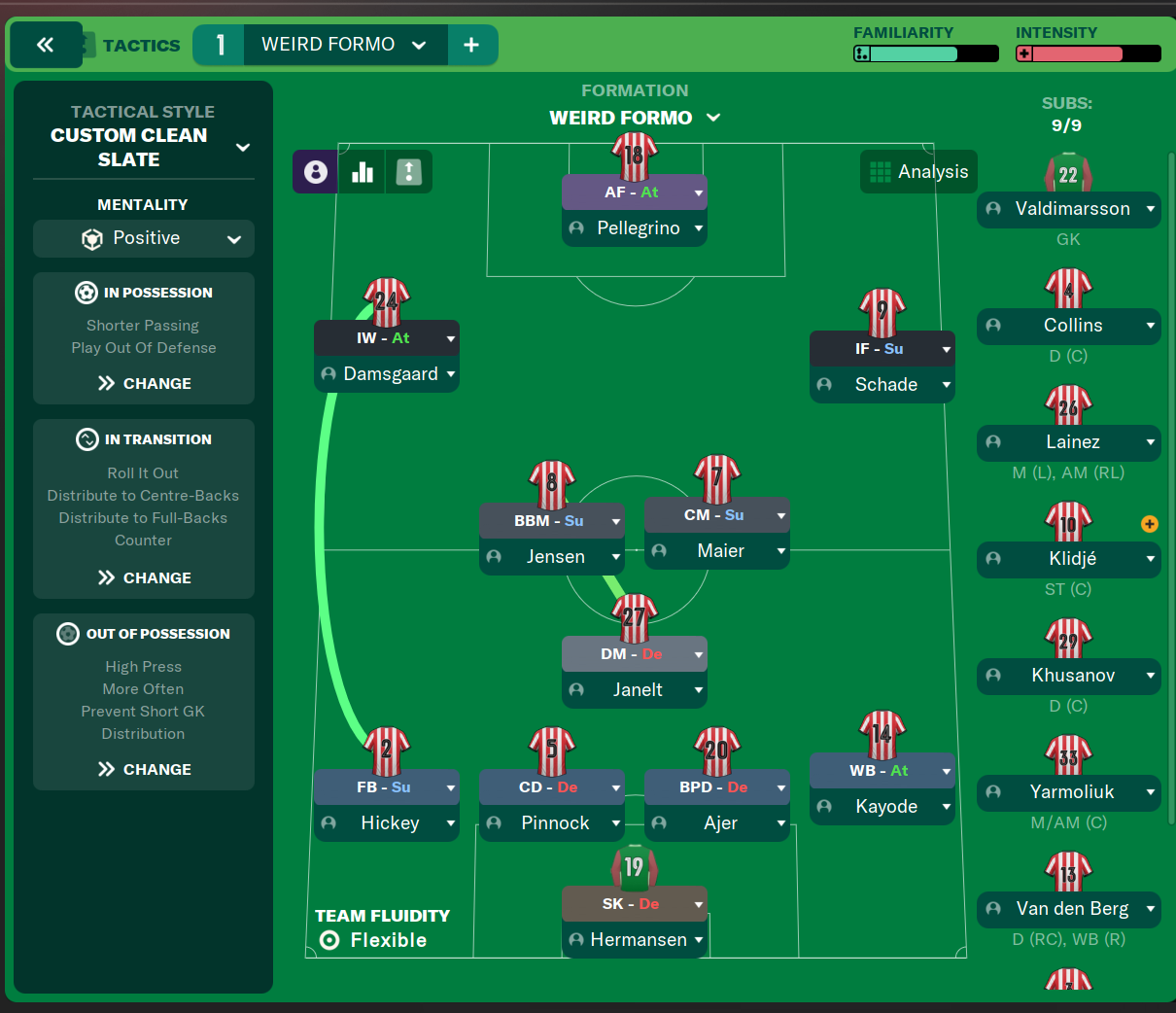
Tactical Style:Positional Play
Mentality:Positive
Formation:3-2-3-2
Team Fluidity:Flexible
In Possession
Much Shorter Passing
Play Out Of Defence
Work Ball Into Box
Overlap Left
Higher Tempo
Fairly Wide
In Transition
Take Short Kicks
Distribute To Centre-Backs
Counter
Counter-Press
Out of Possession
Much Higher Defensive Line
High Press
Prevent Short GK Distribution
Step Up More
Trap Outside
Team Shape Without Ball
No team shape without ball data available
Team Shape With Ball
No team shape with ball data available
Key Strengths
Compact Midfield Control
The double pivot in midfield provides solid defensive cover while allowing for creative build-up, enhancing ball retention.
Width and Depth in Attack
Utilizing wingers and overlapping full-backs creates wide options that stretch the opposition, allowing for more effective attacking play.
High Press and Defensive Intensity
A higher defensive line coupled with a high press adds pressure on opponents, forcing errors and regaining possession quickly.
Effective Transition Strategies
Counter and counter-press tactics enable quick recovery of possession and rapid offensive transitions.
Conflicting Directions
Overlapping Full-Backs vs. Higher Defensive Line
While full-backs overlap to enhance width, the higher defensive line can expose them to counter-attacks if they are caught upfield.
Aggressive Pressing vs. Short Passing
High pressing requires quick transitions, but relying on much shorter passing may slow down the tempo needed for effective pressing.
Positional Play vs. Counter-Press
Positional play emphasizes player positioning while counter-pressing requires more immediate and aggressive movement, which can create a tactical mismatch.
Counter vs. Higher Tempo
A higher tempo might not align with counter tactics, as quick transitions typically require a more measured approach to avoid losing possession.
Tactical Suggestions
Adapt Full-Back Roles
Consider switching some full-backs to a more conservative duty to maintain defensive stability while supporting attacks.
Increase Central Presence
Utilizing a more aggressive role for one of the central midfielders can enhance offensive support and create overloads in the middle.
Tighten Defensive Structure
Reassessing the defensive line's positioning could minimize vulnerability to counter-attacks when the full-backs push forward.
Encourage Fluid Movement
Encouraging players, especially forwards, to interchange positions can confuse opposition marking and create more scoring opportunities.
Ask Questions About Your Lineup
Related Tactics
More Positional Play tactics
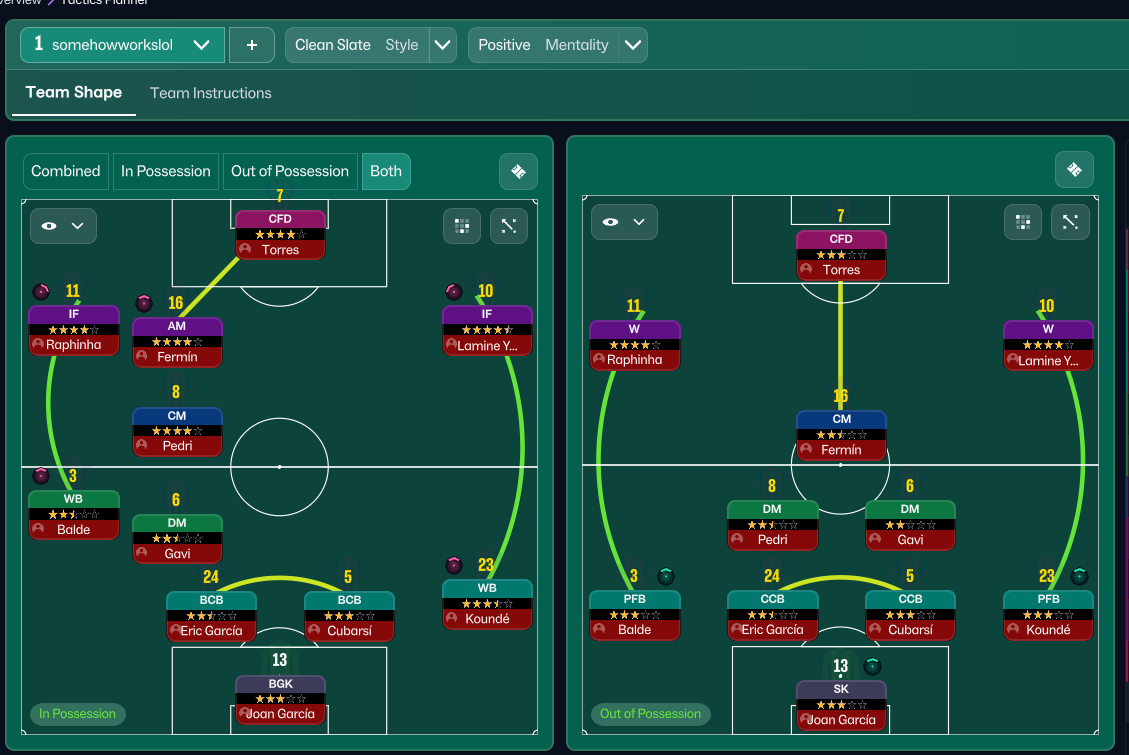
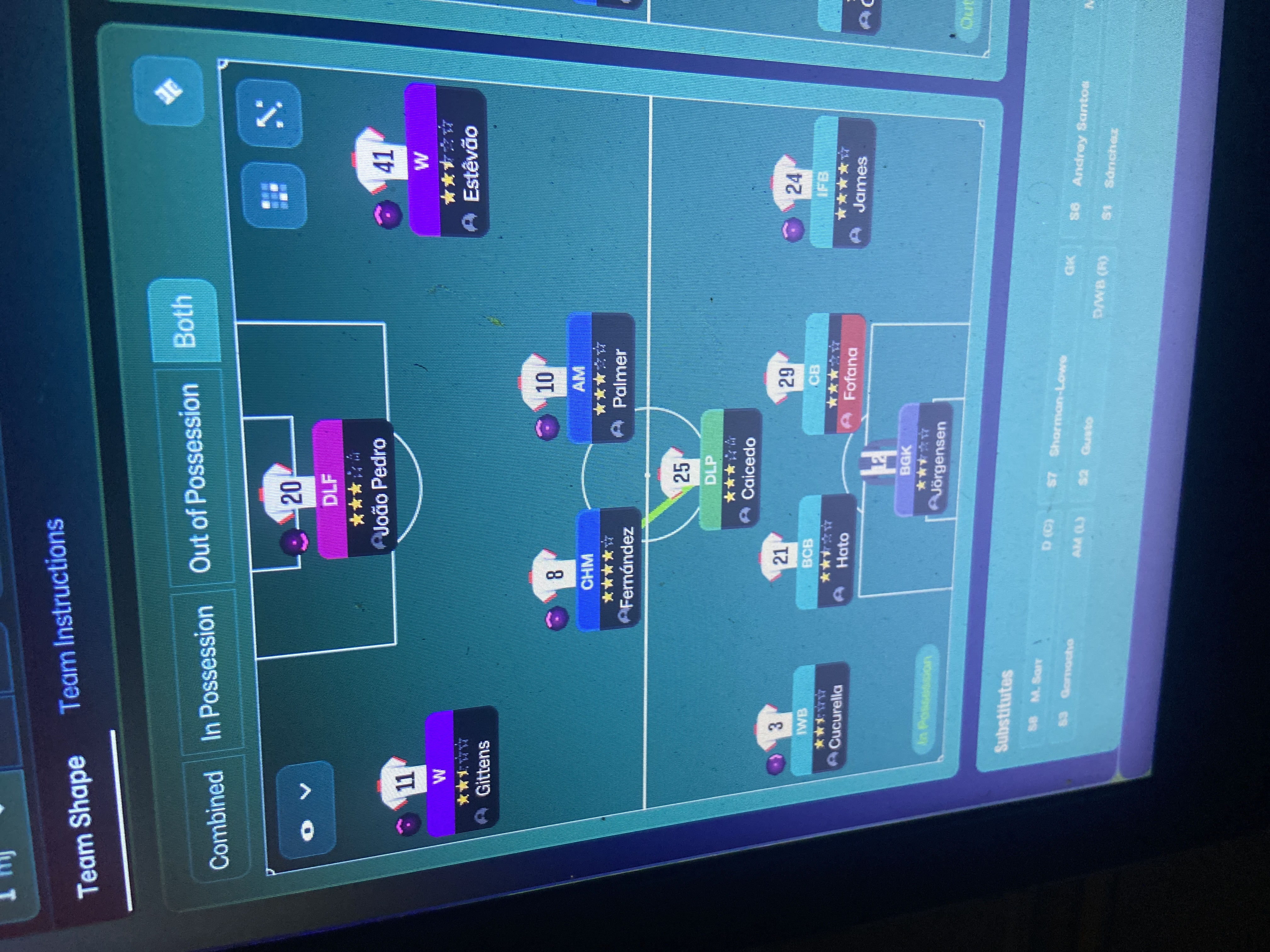
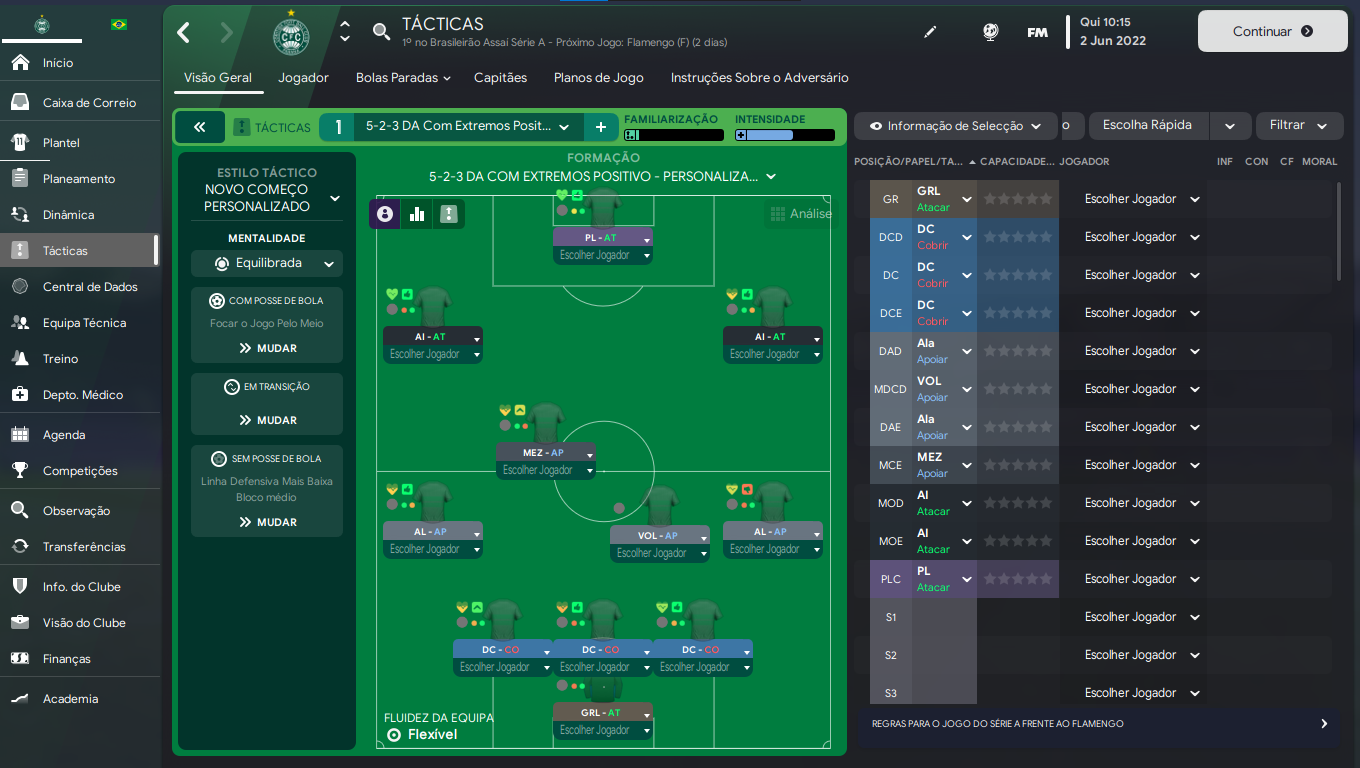
Guides for this formation
The tactical theory behind the 3-2-3-2: roles, instructions, and the trade-offs that decide whether the system holds up.