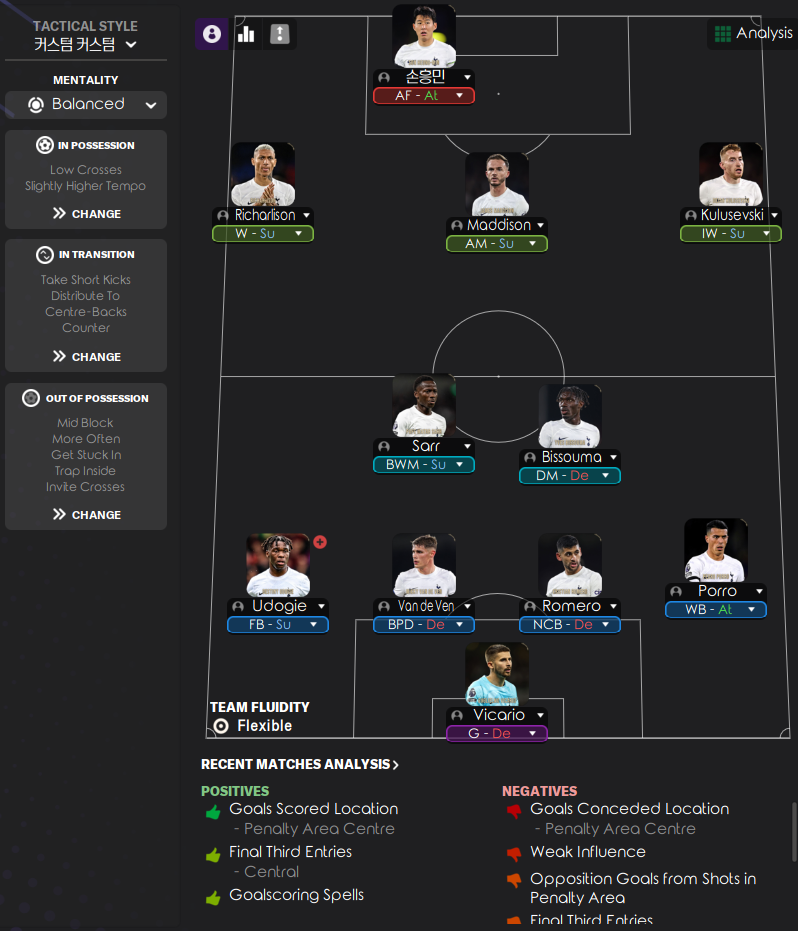
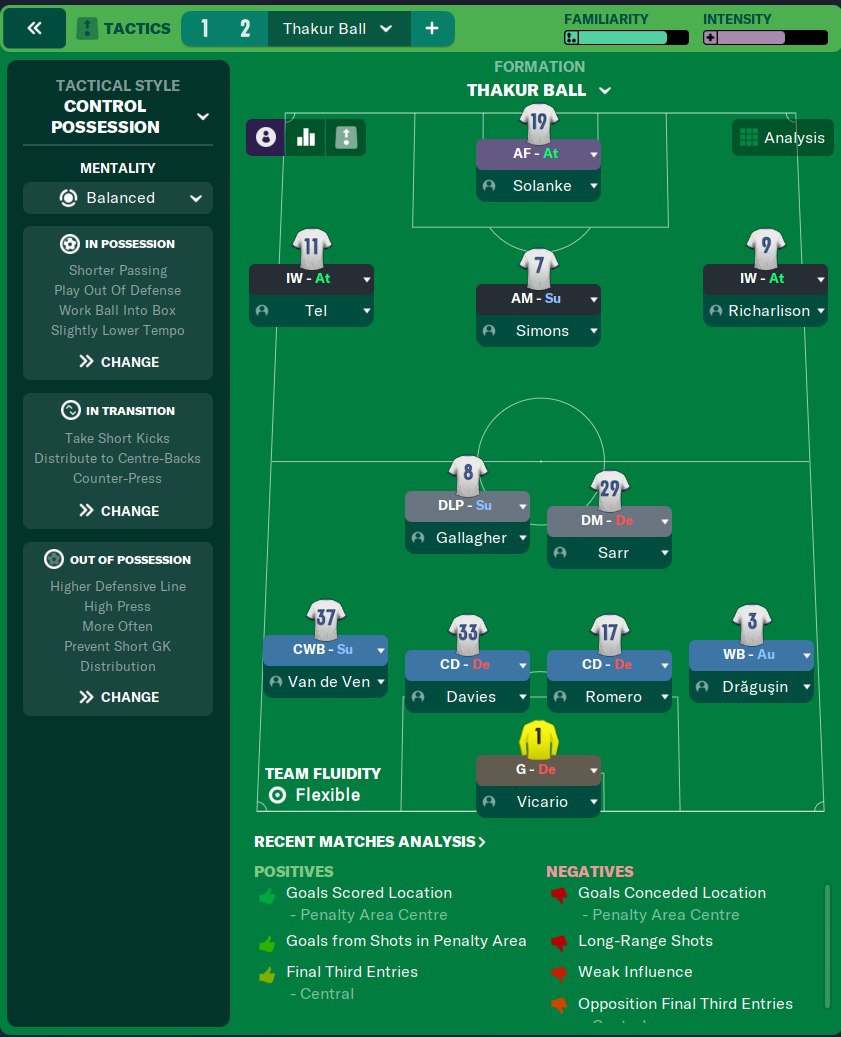
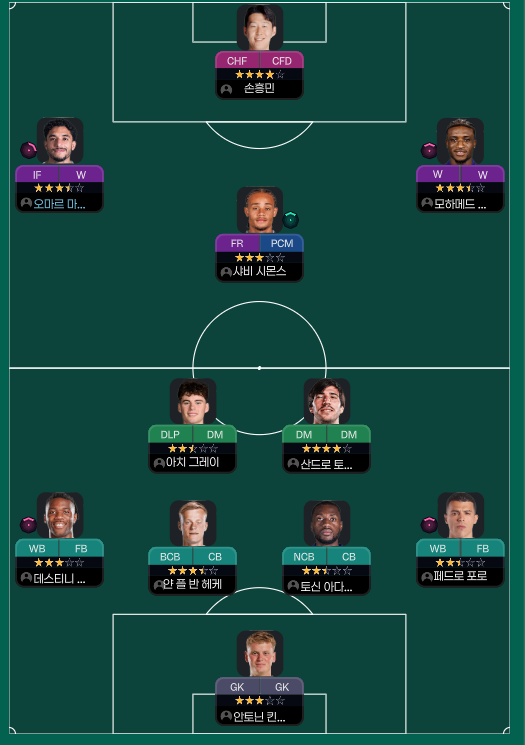
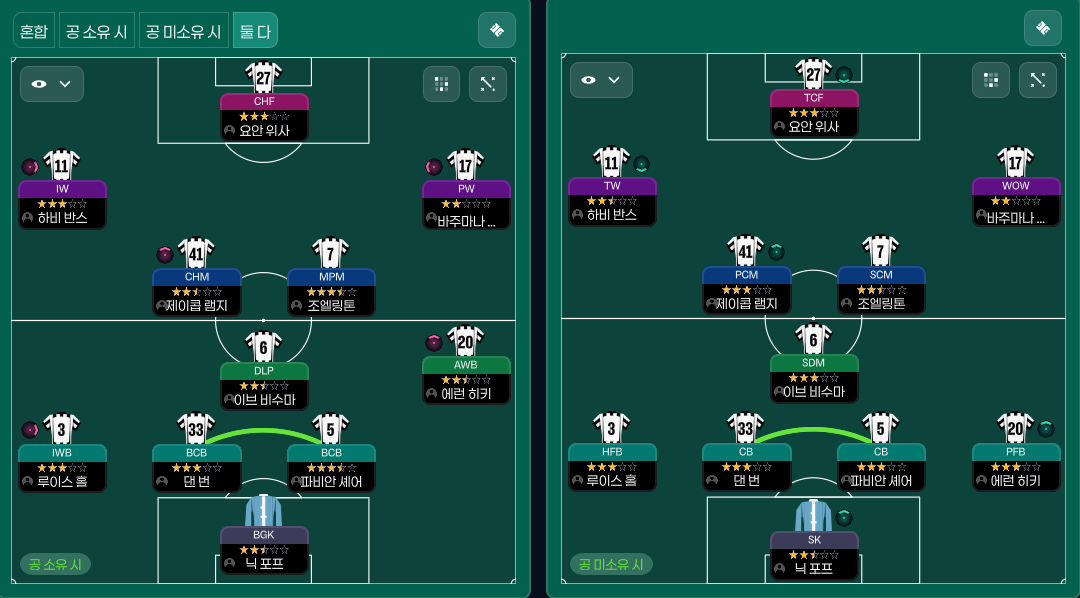
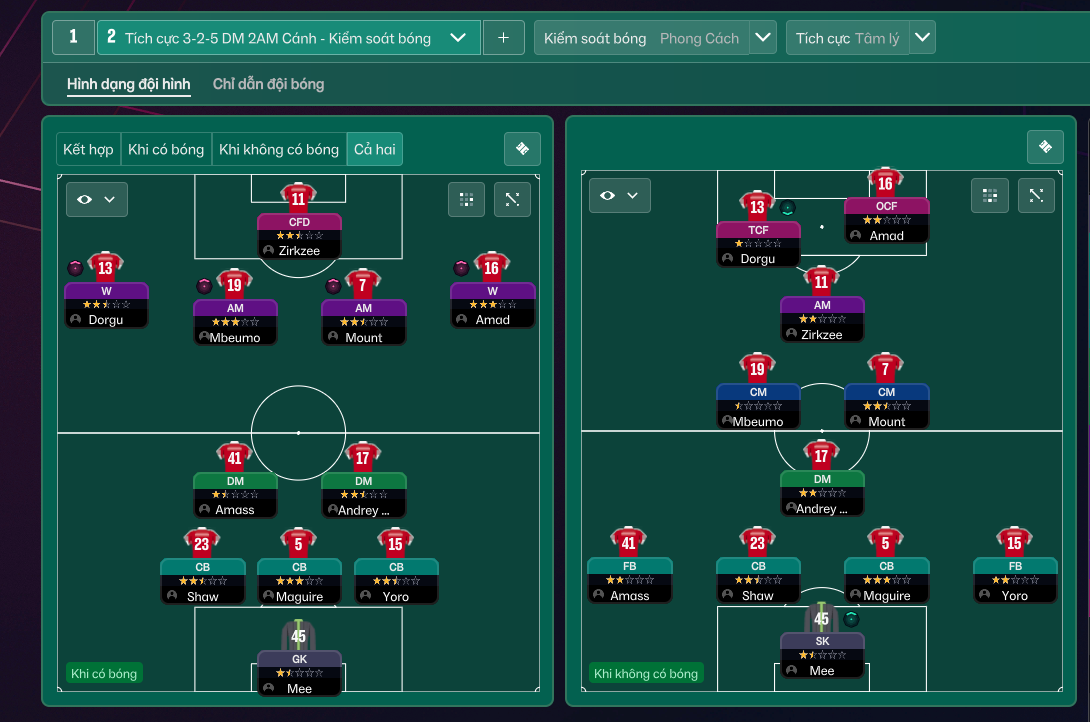
3-2-3-2
Control the ball and dictate the tempo of the match through midfield dominance. The midfield trio allows for superior ball retention and dictation of play.
Loading tactical analysis...
Control Possession
Positive
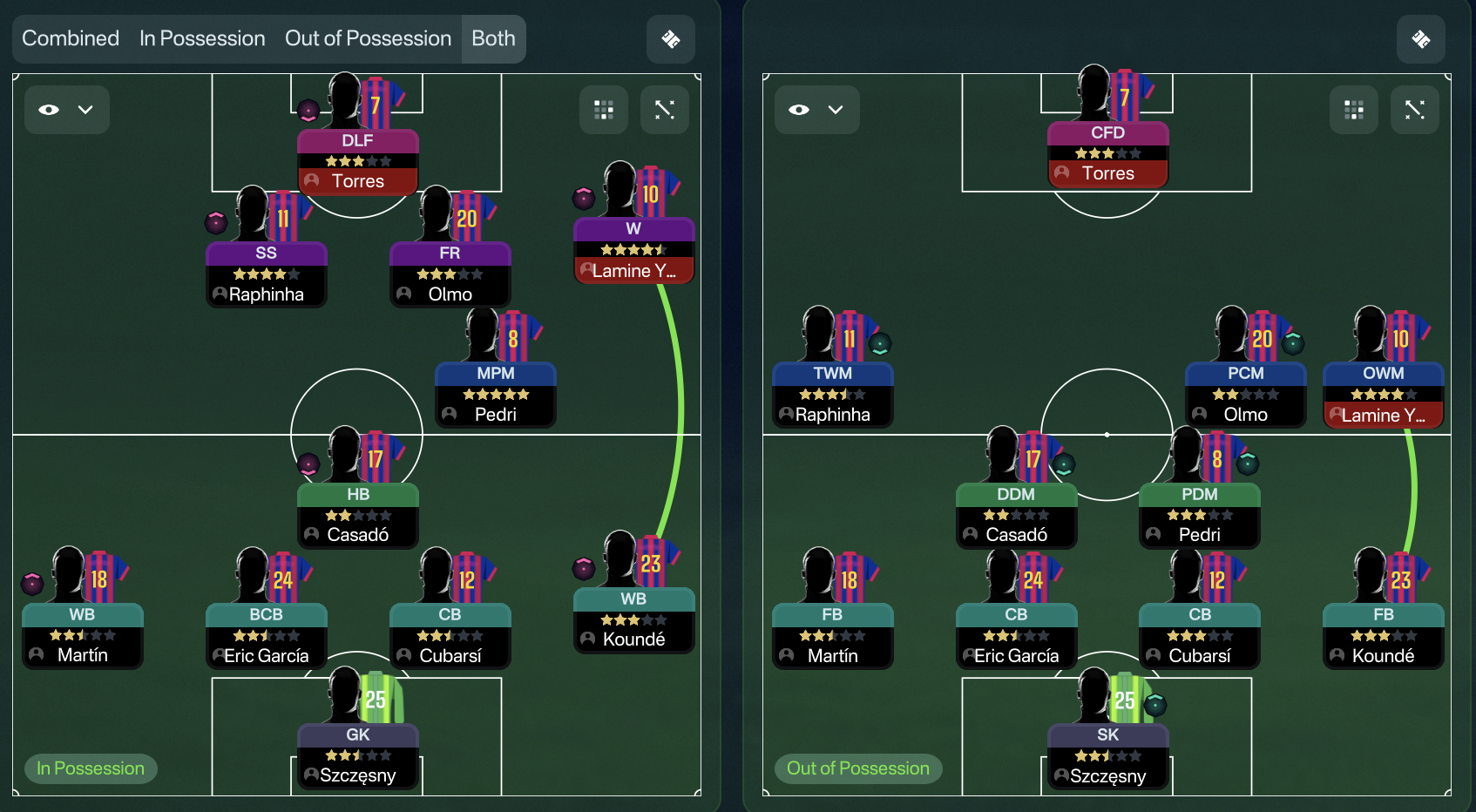
3-2-3-2
Flexible
Work Ball into Box
Play Out of Defence
Shorter Passing
Counter-Press
Counter
Higher Defensive Line
Higher Line of Engagement
Prevent Short GK Distribution
GK
Sweeper Keeper
Support
CB
Ball-Playing Defender
Defend
CB
Ball-Playing Defender
Defend
CB
No-Nonsense Centre-Back
Defend
WB
Wing-Back
Support
HB
Half Back
Support
MPM
Mezzala
Support
PCM
Central Midfielder
Support
SS
Shadow Striker
Attack
DLF
Deep-Lying Forward
Support
CFD
Complete Forward
Attack
Focus on maintaining possession and creating space through short passes, utilizing the wing-backs for width.
Quickly regroup with a focus on counter-pressing opponents immediately after losing the ball.
Control the ball and dictate the tempo of the match through midfield dominance.
Compact
A compact three-man defence supported by wing-backs providing width while the midfield shields the defense effectively.
3 CBs with DDM at [3,1] and 2 DMS at [4,2] and [4,3] help protect against counters.
Fluid
Attacking shape emphasizes central penetration while utilizing width through wing-backs.
WB at [2,1] and [2,5] to stretch opposition while DLFs create spaces.
The midfield trio allows for superior ball retention and dictation of play.
Mezzala at [4,3] with MPM supports dominant possession play.
Allows versatility in attack with the DLF dropping in and CF making runs.
DLF at [6,2] teamed with CFD at [6,3] creates passing options in tight situations.
High defensive line exposes space behind the defence, risking quick transitions from opponents.
Higher Defensive Line leads to gaps that fast attackers can exploit.
Attack relies heavily on wing-backs for width, risking stagnation if they are marked out of the game.
WB roles at [2,1] and [2,5] are crucial for width, presence limited by opposition.
Defensive Transition
Quick transitions could overwhelm your back line, especially from set pieces or sudden breaks.
Higher Defensive Line and pressing can lead to quick breaks.
Central Overload
Central midfield may become congested result from the current roles.
Opponents matching 3 against 2 in central midfield.
Mezzala and Central Midfielder
This pairing allows for movements and passing triangles in midfield.
MPM at [4,3] and PCM at [4,2] work well in close quarters.
Wing-Backs and Forward Line
Wing-backs providing width can allow forwards to exploit central spaces.
WB at [2,1] providing depth for CF and DLF at [6,3].
How can adjustments to defensive roles improve overall team stability?
What tactical instructions can optimize pressing effectiveness?
How can substitutions provide fresh energy in key areas of the pitch?
The tactical theory behind the 3-2-3-2: roles, instructions, and the trade-offs that decide whether the system holds up.
Why circulation density and zonal occupation aren't the same thing in FM, and the half-space occupation rule that decides build-up.
How Mentality, Duty, and Role interact in FM, why duty trumps mentality every time, and the role-on-top-of-duty composition rules.
Counter-Press, Regroup, Stand Off, Trigger Press: what each pressing instruction does in FM and how to pair them without contradicting.