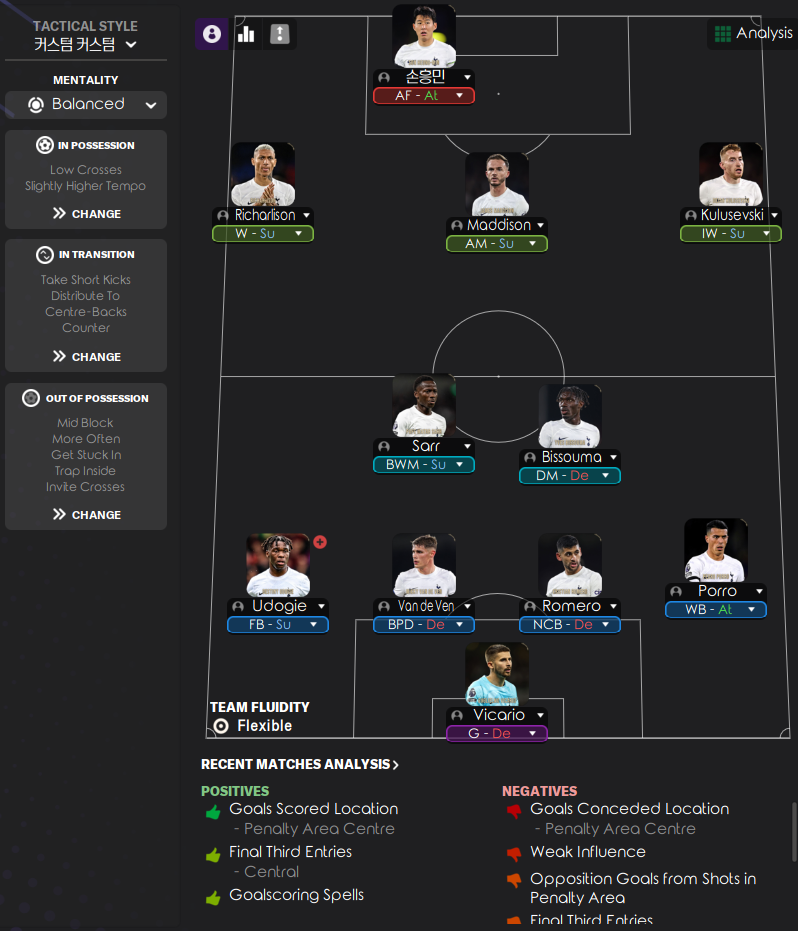
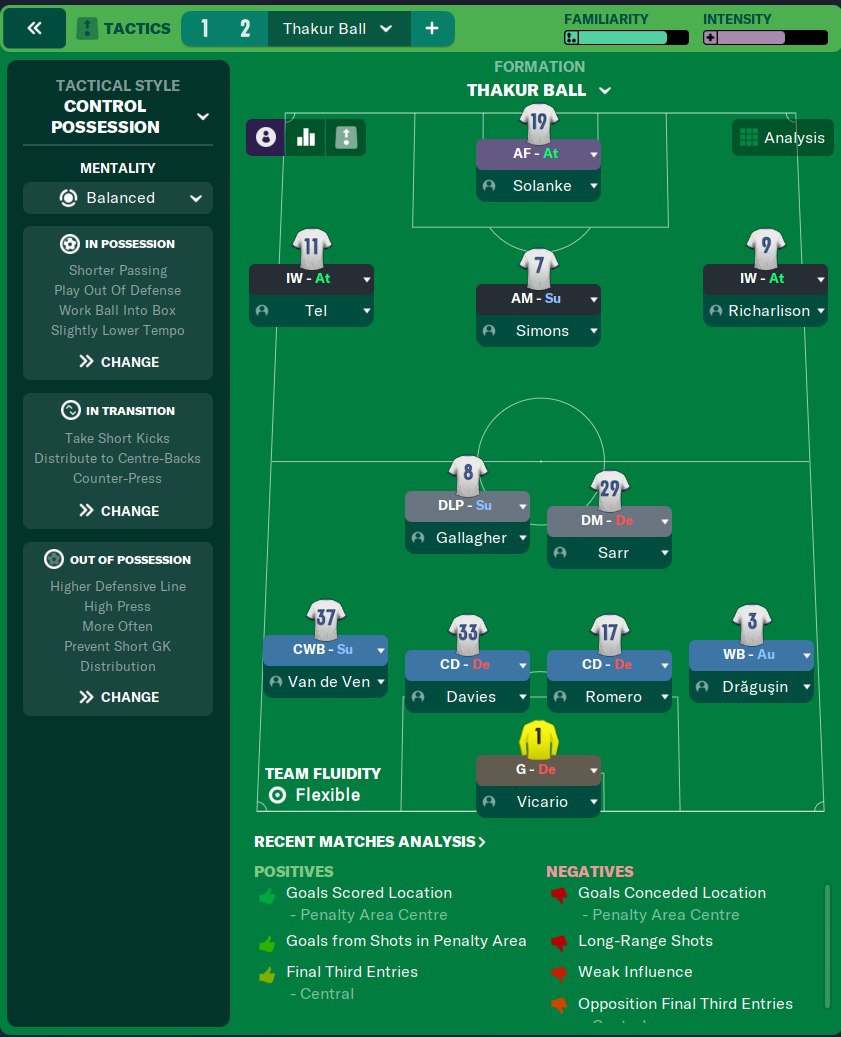
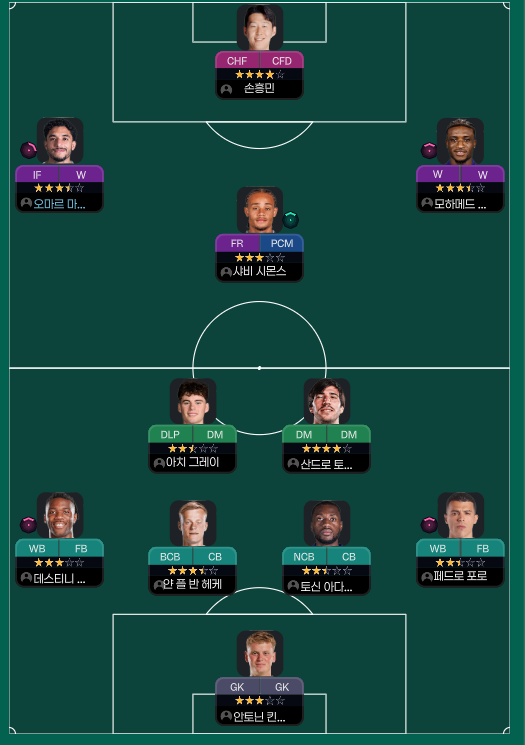
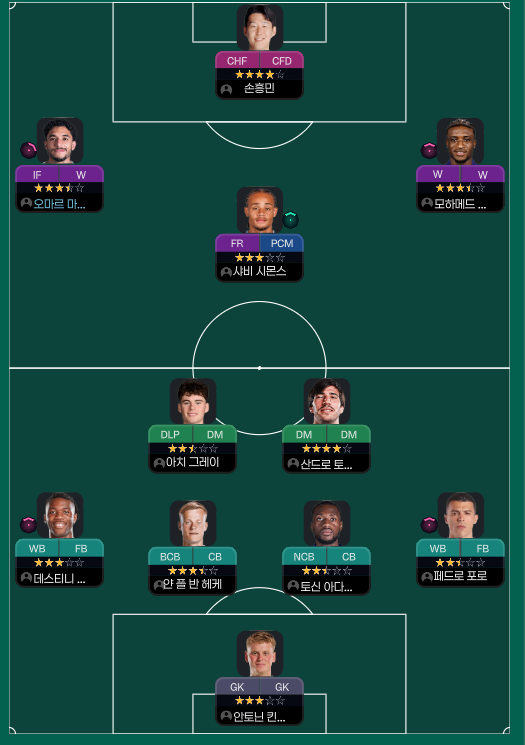
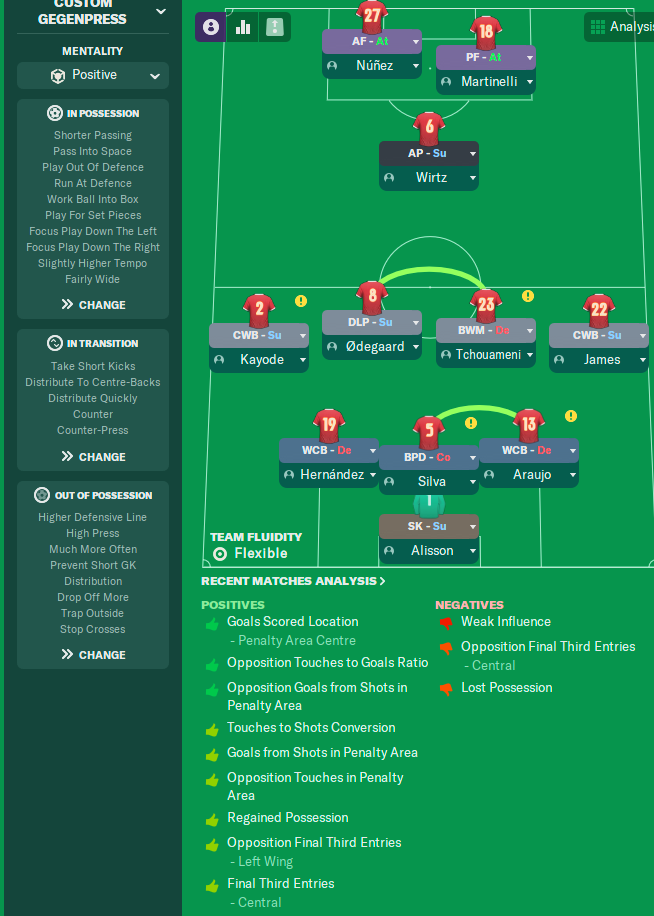
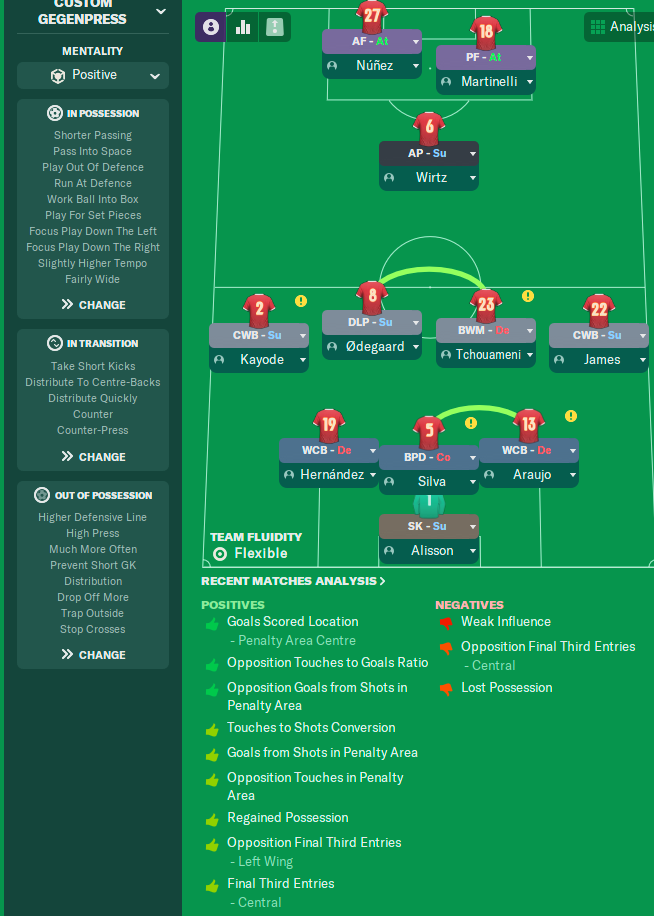
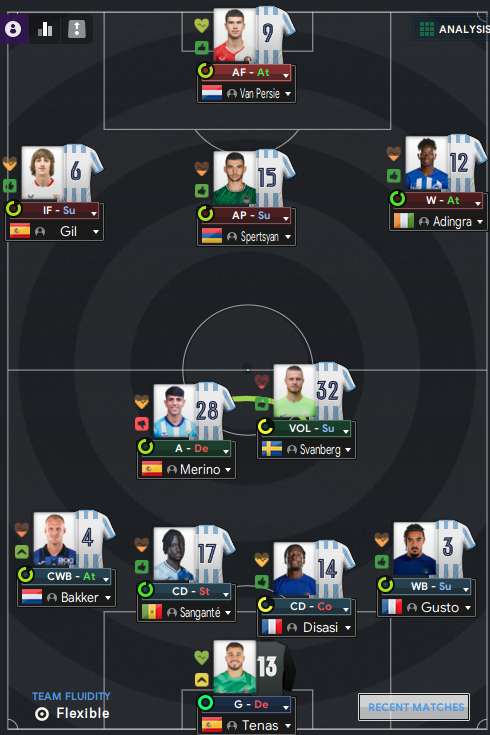
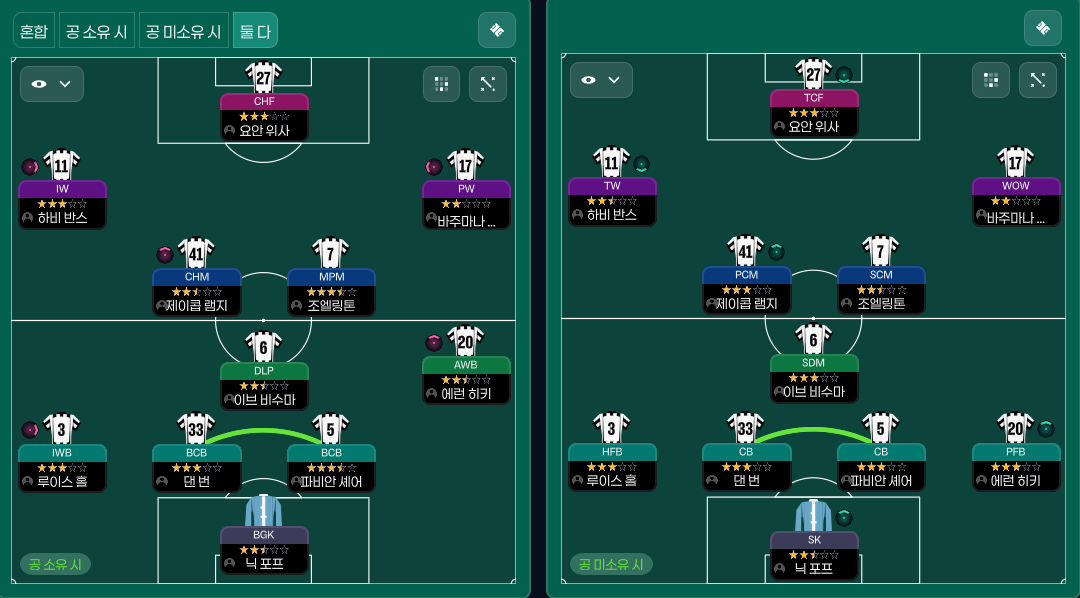
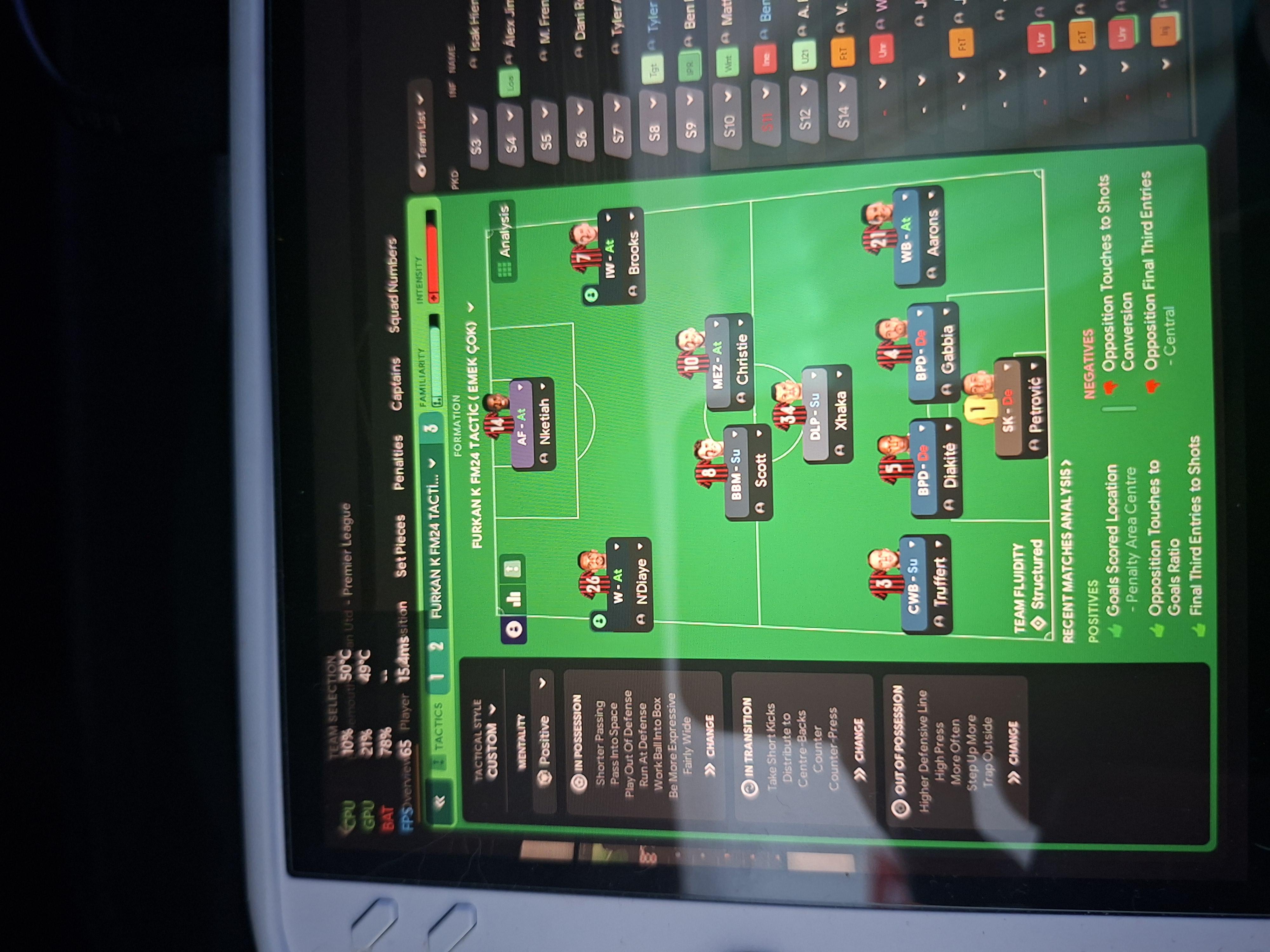
3-2-3-2
Exploit space behind opposition defenses through quick passing and movement. Wingers provide effective width to create crossing opportunities.
Loading tactical analysis...
Custom
Positive
3-2-3-2
Structured
Shorter Passing
Pass Into Space
Run At Defense
Work Ball Into Box
Be More Expressive
Take Short Kicks
Distribute To Centre-Backs
Counter
Counter-Press
Higher Defensive Line
High Press
More Often
Step Up More
Trap Outside
GK
Sweeper Keeper
Defend
CB
Ball-Playing Defender
Defend
CB
Ball-Playing Defender
Defend
CB
Complete Wing-Back
Support
CM
Deep-Lying Playmaker
Support
CM
Box-to-Box Midfielder
Support
CM
Mezzala
Attack
RW
Inside Winger
Attack
LW
Winger
Attack
ST
Advanced Forward
Attack
Focus on quick, transitional play utilizing wing players to stretch the opposition.
Press aggressively to regain possession quickly, particularly after losing the ball.
Exploit space behind opposition defenses through quick passing and movement.
3-2-3-2
A structured defensive formation with high defensive line and pressing.
CBs at [2,2], [2,3], [2,4] and CWB at [2,5] support high press.
Width through wingers with central focus
Utilizes wingers and an advanced forward to create multidimensional attacks.
IW at [6,1] and W at [6,5] provide width alongside AF at [6,3].
Wingers provide effective width to create crossing opportunities.
W at [6,5] and IW at [6,1] stretch defenses and create space for the AF.
A mix of roles in midfield allows for fluid transitions.
DLP-S at [3,3] aids in retrieval and distribution while BBM-S at [4,2] supports forward movement.
The use of CWB in support can lead to openings in wide areas.
CWB-S at [2,5] may leave gaps if drawn forward.
Short passing style can be risky under pressure.
Shorter Passing with high press may lead to lost possession during build-up.
Wings
Vulnerable to counter-attacks due to potential gaps when CWB pushes forward.
CWB-S at [2,5] can lead to exposure on flanks if opponents win the ball back quickly.
Central Midfield
Lack of a strong defensive presence can be exploited by opponents.
DLP-S at [3,3] alone may not be enough without help from other midfielders.
DLP-S and BBM-S
Complement each other in building attacks from deep to forward.
DLP-S at [3,3] supports buildup while BBM-S at [4,2] can push into advanced positions.
AF and IW
Inside Winger provides support for the Advanced Forward to exploit spaces.
IW at [6,1] and AF at [6,3] create movement and options in the final third.
How can the team improve its defensive solidity while maintaining attacking threat?
What adjustments can help in maintaining possession during high pressing opposition?
Should we modify the tactical style based on the strength of the opponent?
The tactical theory behind the 3-2-3-2: roles, instructions, and the trade-offs that decide whether the system holds up.
Why circulation density and zonal occupation aren't the same thing in FM, and the half-space occupation rule that decides build-up.
FM27 keeps FM26's tactic system. Here is what stays the same, the small changes that can catch you out, and what the new Tactical Effectiveness system asks of you.
How Mentality, Duty, and Role interact in FM, why duty trumps mentality every time, and the role-on-top-of-duty composition rules.