Uploaded Tactic
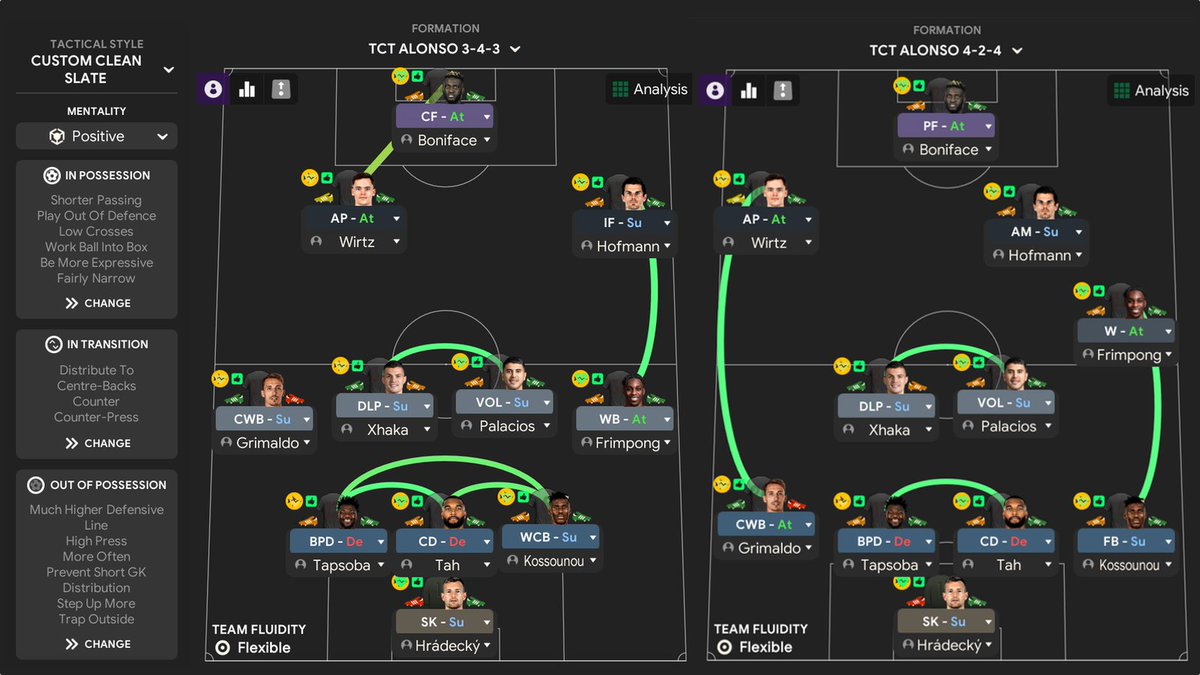
Formation & Style
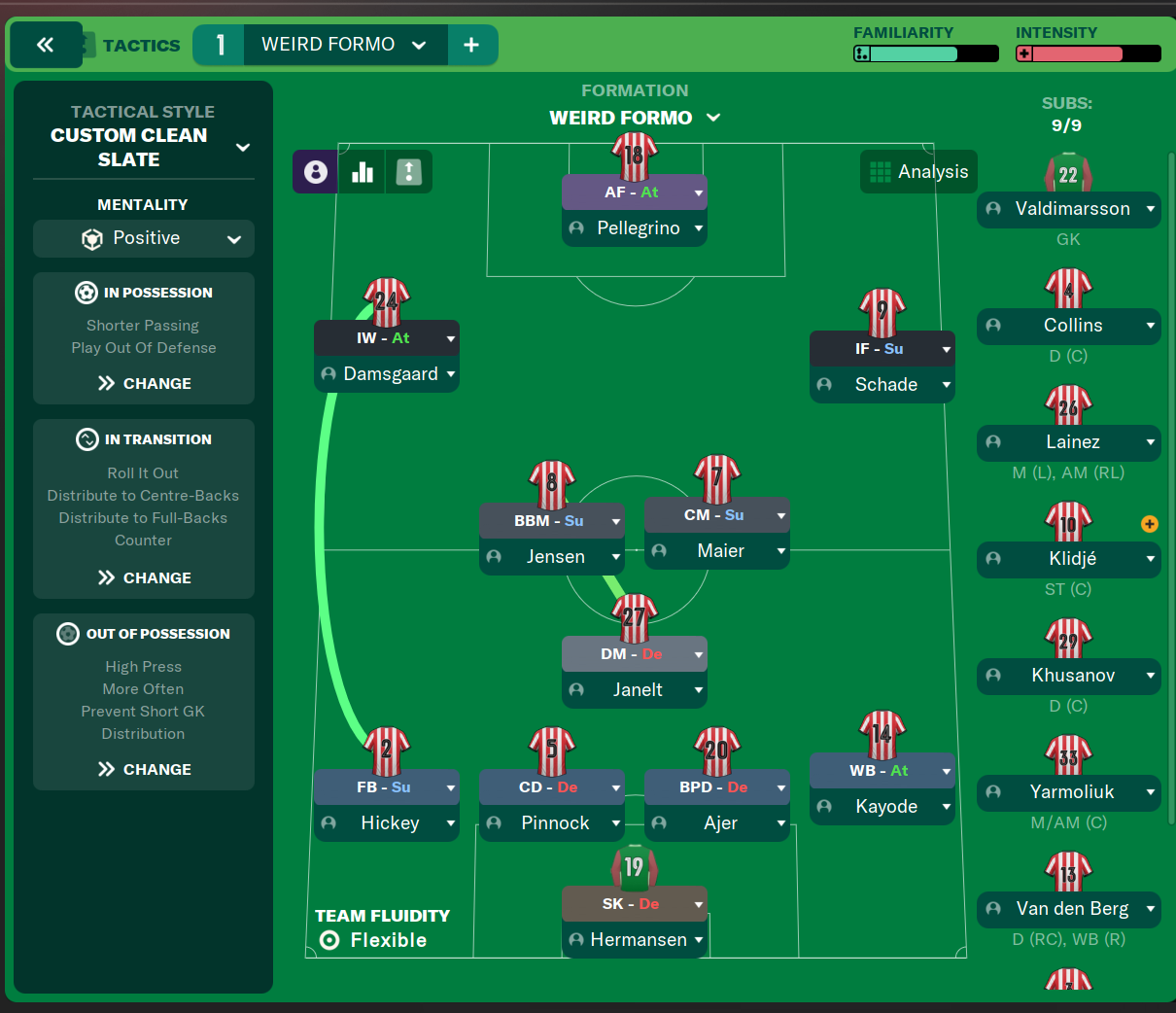
Tactical Style:Custom Clean Slate
Mentality:Positive
Formation:3-4-3 / 4-2-2
Team Fluidity:Flexible
In Possession
Shorter Passing
Play Out of Defence
Low Crosses
Work Ball Into Box
Be More Expressive
Fairly Narrow
In Transition
Distribute To Centre-Backs
Counter
Counter-Press
Out of Possession
Much Higher Defensive Line
High Press
Prevent Short GK Distribution
Step Up More
Trap Outside
Team Shape Without Ball
Shape:3-Defenders
Description:A compact defensive shape with a focus on pressing high to win the ball back quickly.
Evidence:Much Higher Defensive Line and High Press instructions highlight defensive aggression.
Team Shape With Ball
Shape:Wide and Dynamic
Description:Attacking shape allows for spreading out opponents through width provided by wing-backs and inside forwards.
Evidence:Utilization of Complete Wing-Backs and an Inside Forward to penetrate the opposition's flanks.
Phase Description
Attacking Play
Focus on building through the midfield with shorter passes, creating overloads on wings through the Complete Wing-Backs, and utilizing the central Advanced Playmaker.
Defensive Transition
Immediately press and counter-press when possession is lost to regain control, relying on the Speed of the wide players.
Main Focus
Utilize width and depth in attack, stressing the importance of wing-backs in contributing both offensively and defensively.
Key Strengths
Wide Play Opportunities
Utilization of the Complete Wing-Backs and Inside Forwards to stretch the opposition.
Fluid Offensive Play
Variety of attacking roles allows for unpredictable movements and combinations.
Strong Defensive Structure
Three defenders provide resilience against opposing attacks while allowing wing-backs to progress.
Conflicting Directions
High Defensive Line vs Quick Counterattacks
High defensive line might expose defenders to rapid counterattacks.
Midfield Compaction Risks
Overloading the midfield could lead to isolation of wide players.
Transition Vulnerability
Quick counter-presses may create openings if the ball is lost in attacking phases.
Tactical Suggestions
Adjust Defensive Line Height
Consider lowering the defensive line to prevent being caught out by fast strikers.
Increase Width in Attack
Encouraging greater width from wingers can help create space for the midfielders.
Consider More Defensive Stability
Adding a third midfielder may provide better balance between attack and defense.
Ask Questions About Your Lineup
More Custom Clean Slate tactics
Guides for this formation
The tactical theory behind the 3-4-3 / 4-2-2: roles, instructions, and the trade-offs that decide whether the system holds up.
Playing styles
Direct, Vertical Football
Long-ball football done well in FM. When direct, vertical play is the right choice, and what the Direct Passing TI actually changes.
Read guide
Playing styles
Possession-Based Tactics in Football Manager
Build the patient, control-the-tempo style without watching your opponents counter through the gaps you leave behind.
Read guide