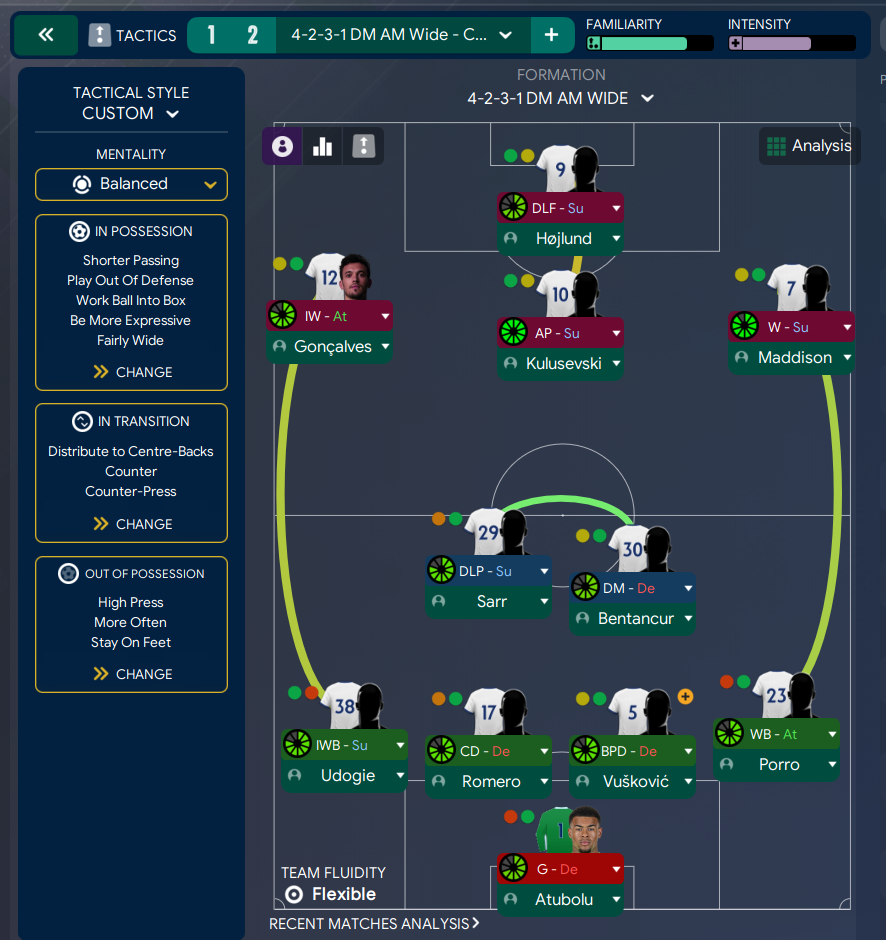
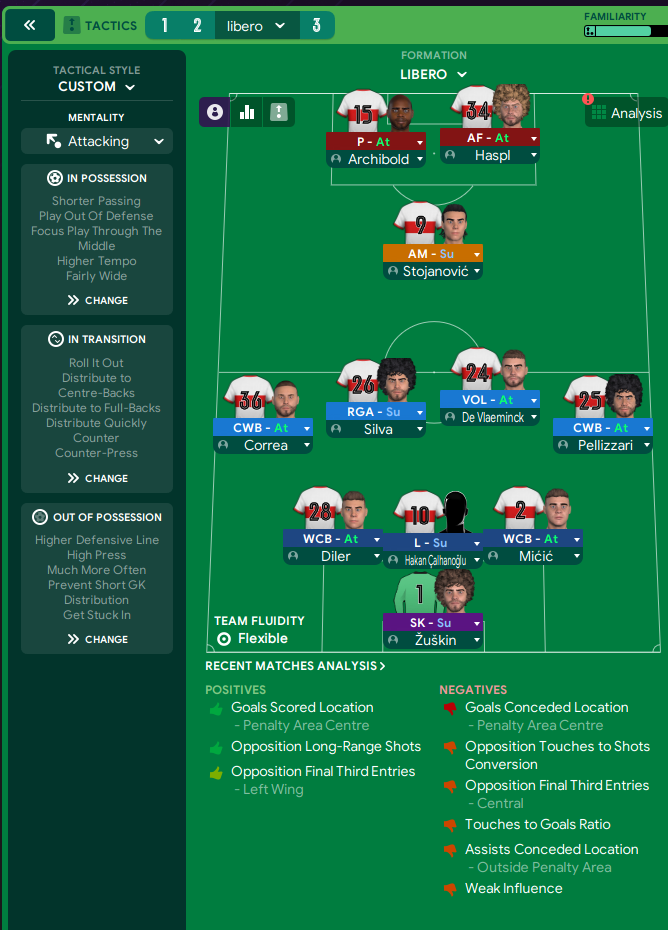
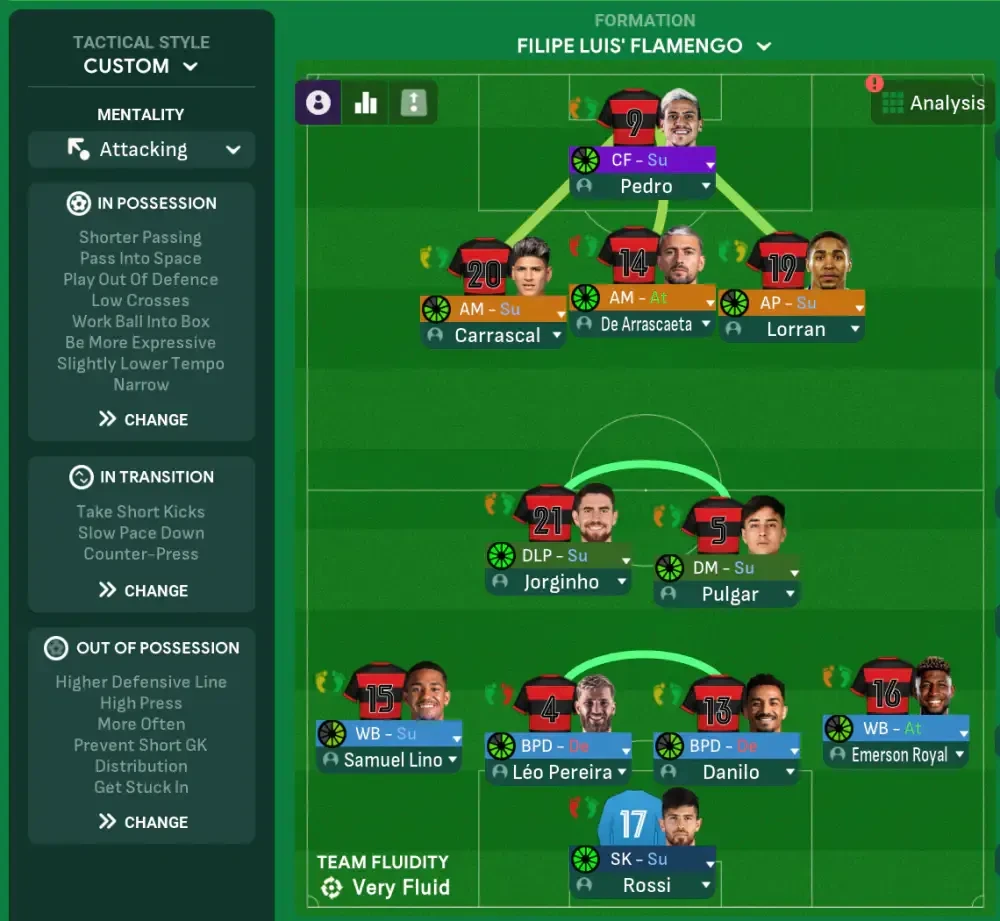
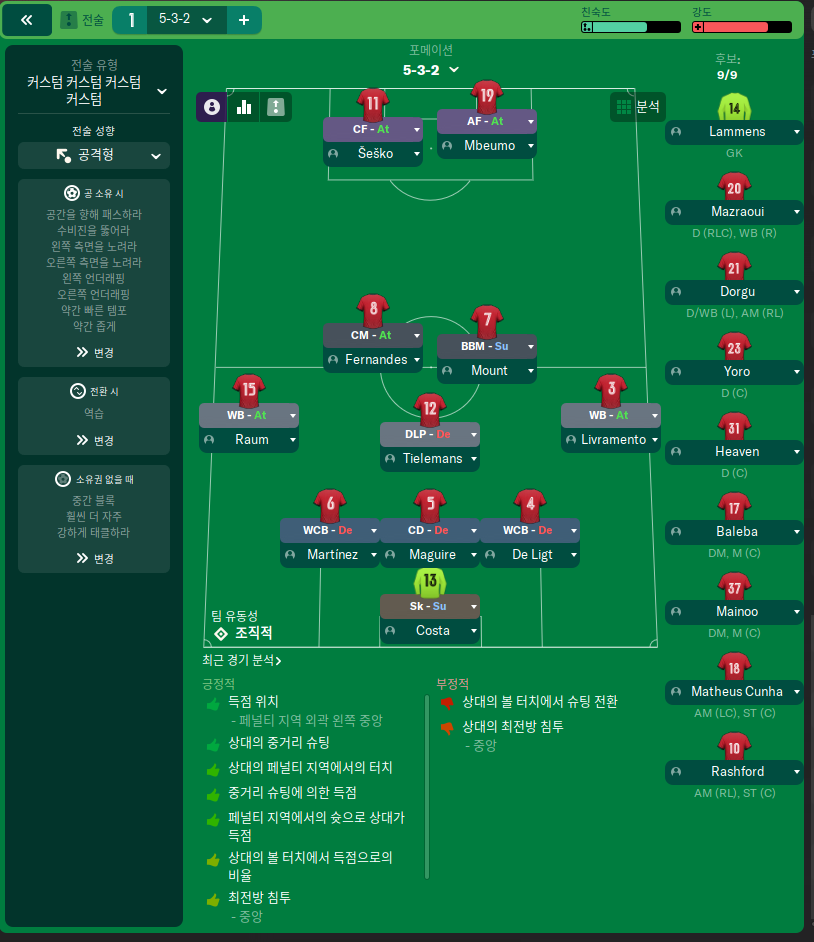
3-6-1 Direct Tiki Taka
The vertical tiki-taka style promotes short, quick passes, retaining possession effectively.
Loading tactical analysis...
Vertical Tiki-Taka
Positive
3-6-1 Direct Tiki Taka
Flexible
Play Out Of Defence
Work Ball Into Box
Be More Expressive
Focus Play Through The Middle
Fairly Narrow
Take Short Kicks
Distribute To Centre-Backs
Counter
Counter-Press
Much Higher Defensive Line
Mid Block
More Often
Prevent Short GK Distribution
Trap Outside
AF
Advanced Forward
Attack
AM
Attacking Midfielder
Support
WM
Wide Midfielder
Support
MEZ
Mezzala
Attack
BBM
Box to Box Midfielder
Support
A
Anchor
Defend
L
Left Centre-Back
Support
WCB
Wide Centre-Back
Defend
SK
Sweeper Keeper
Defend
The vertical tiki-taka style promotes short, quick passes, retaining possession effectively.
The setup with an advanced forward and multiple midfielders allows for multiple attacking options and overloads.
A much higher defensive line may expose vulnerabilities to quick counters which contradicts the emphasis on pressing.
The flexible team fluidity might cause players to occupy spaces that disrupt the intended shape, affecting structure.
How effective is the current pressing approach during matches?
Are players adapting well to their assigned roles within the formation?
Is the transition from attack to defense occurring smoothly?
How often does the team get caught out during counter-attacks?
Are the players able to maintain their shape in wide areas effectively?
What adjustments can be made during tighter matches to ensure better control?
The tactical theory behind the 3-6-1 Direct Tiki Taka: roles, instructions, and the trade-offs that decide whether the system holds up.
How Mentality, Duty, and Role interact in FM, why duty trumps mentality every time, and the role-on-top-of-duty composition rules.
Counter-Press, Regroup, Stand Off, Trigger Press: what each pressing instruction does in FM and how to pair them without contradicting.
The pairing rule for Defensive Line and Line of Engagement, all 9 combinations, and the gap that costs goals.