
4-2-3-1 DM AM Wide
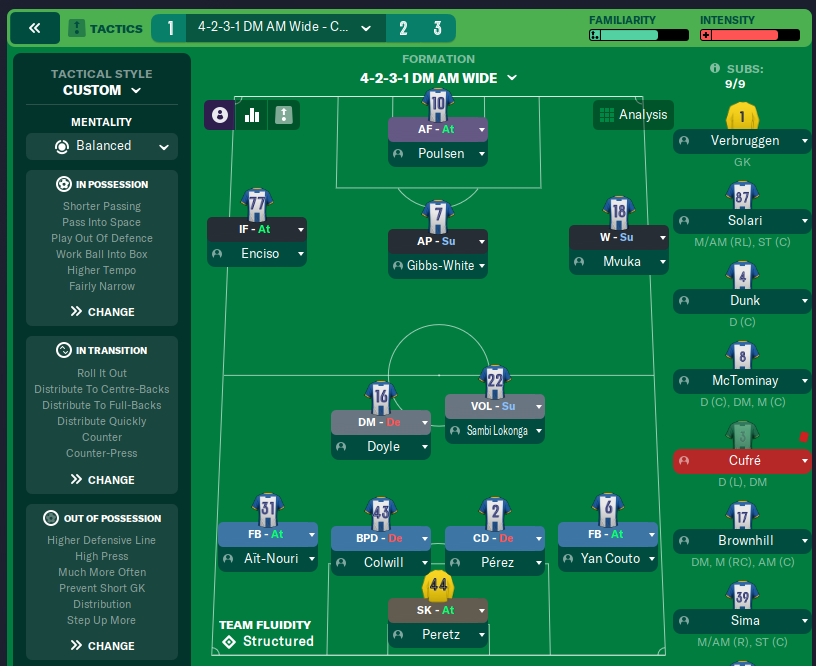
The balanced mentality allows for both defensive stability and offensive creativity, making it adaptable to various match situations.
Loading tactical analysis...
Custom
Balanced
4-2-3-1 DM AM Wide
Structured
Shorter Passing
Pass Into Space
Play Out Of Defence
Work Ball Into Box
Higher Tempo
Fairly Narrow
Roll It Out
Distribute To Centre-Backs
Distribute To Full-Backs
Distribute Quickly
Counter
Higher Defensive Line
High Press
Much More Often
Prevent Short GK Distribution
Step Up More
ST
Advanced Forward
Attack
AM
Attacking Midfielder
Support
WF
Wide Forward
Support
DM
Deep-Lying Playmaker
Defend
VOL
Volante
Support
BPD
Ball Playing Defender
Defend
CD
Central Defender
Defend
FB
Full-Back
Attack
SK
Sweeper Keeper
Attack
The balanced mentality allows for both defensive stability and offensive creativity, making it adaptable to various match situations.
The use of wingers provides width while the double pivot allows control in central areas, effectively utilizing the 4-2-3-1 formation.
The high press could leave the defense exposed if the team loses possession, particularly with a balanced mentality.
Attack-minded full-backs may conflict with the need for defensive stability, potentially leaving gaps if they push too far forward.
How effective is the pressing strategy against high-quality opposition?
Is the balance between attack and defense working well for current squad strengths?
Should one of the pivot roles adapt to become more defensive during critical match situations?
Are player instructions aligning with individual strengths?
What role is proving to be the most effective in exploiting defensive weaknesses?
How is the team transitioning from defense to attack under pressure?
Fluid
Custom
Positive
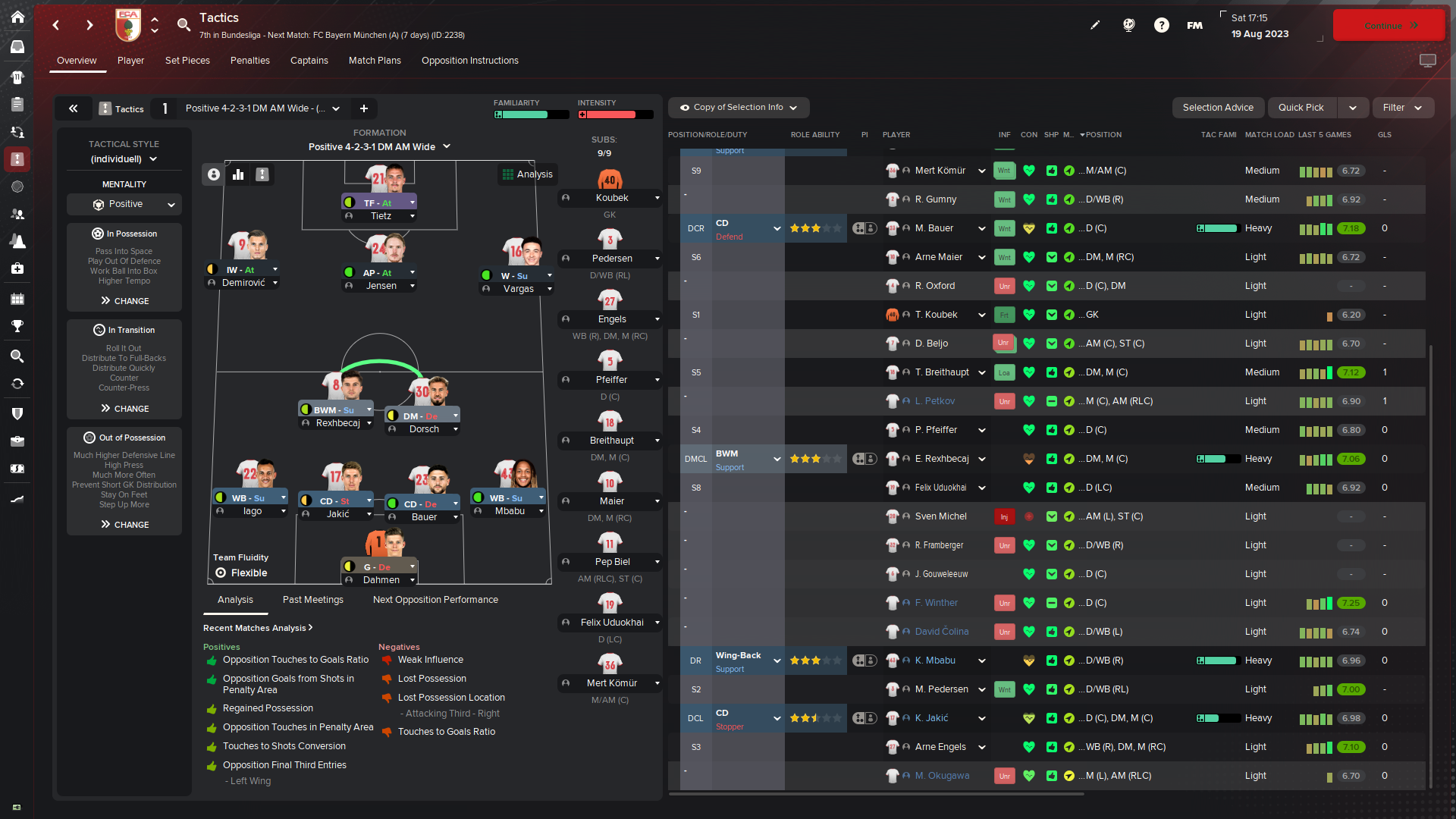
Positive
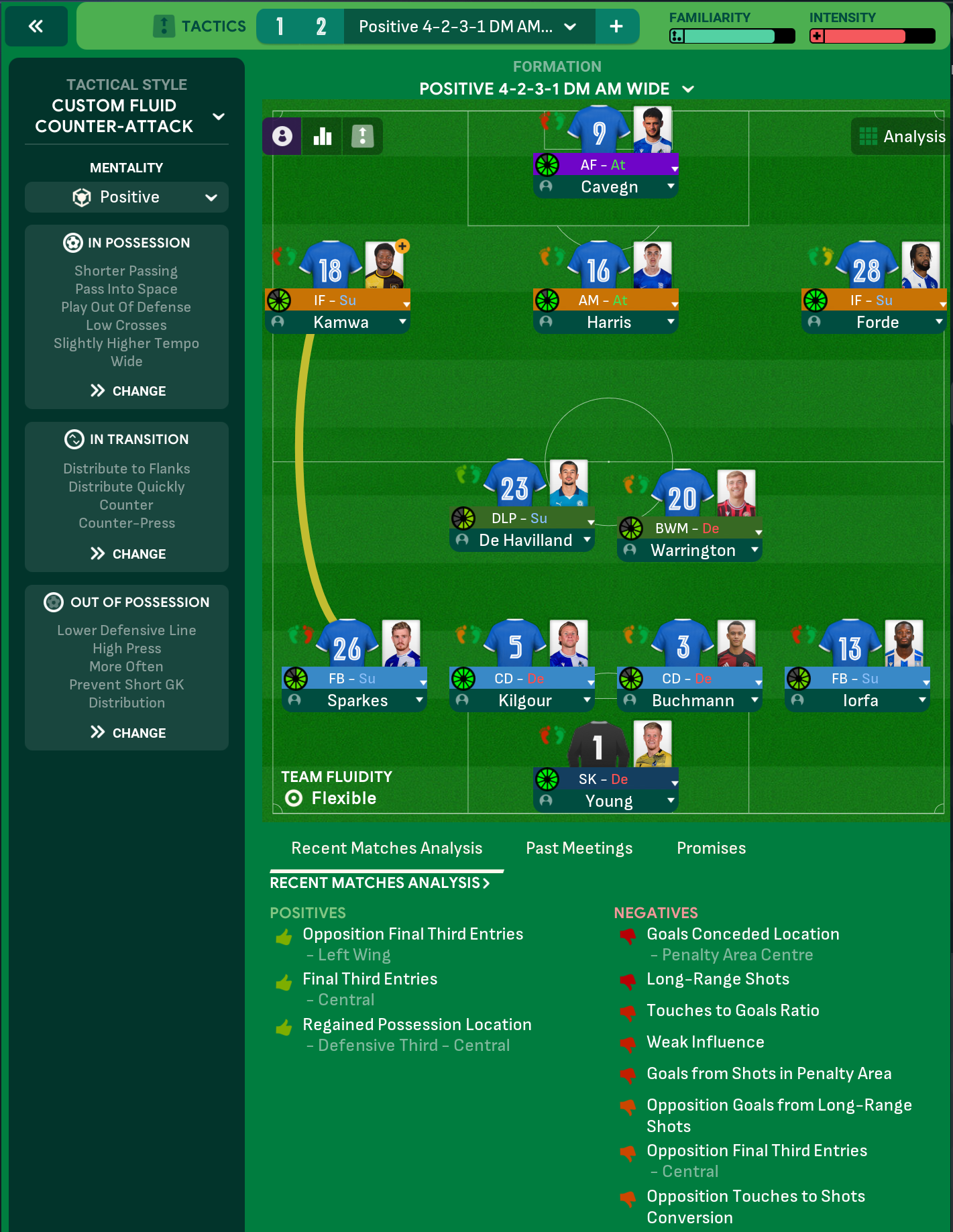
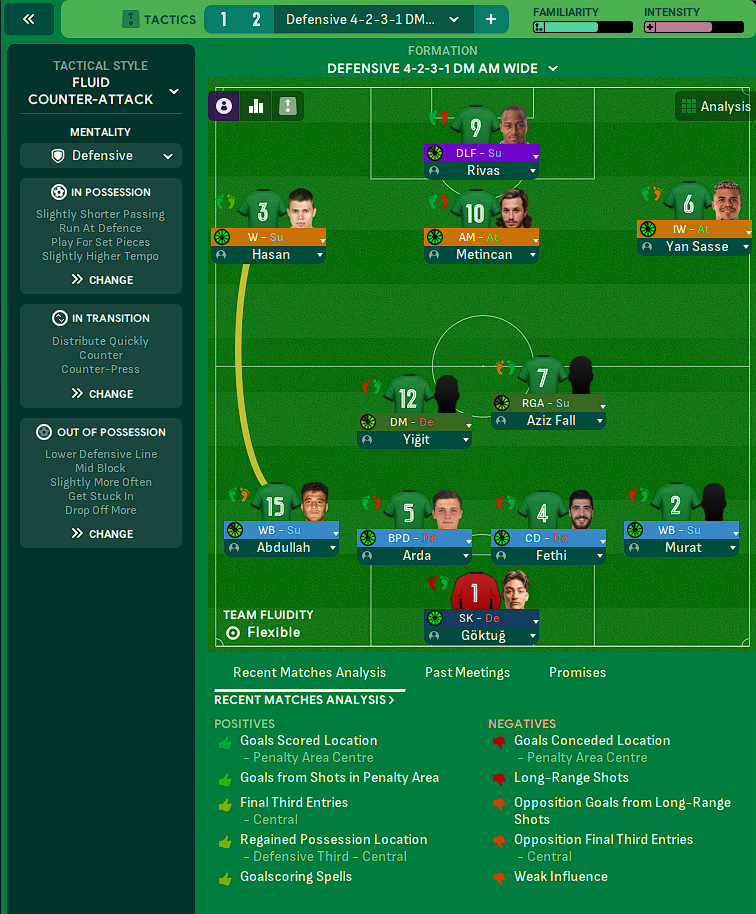
Custom Fluid Counter-Attack
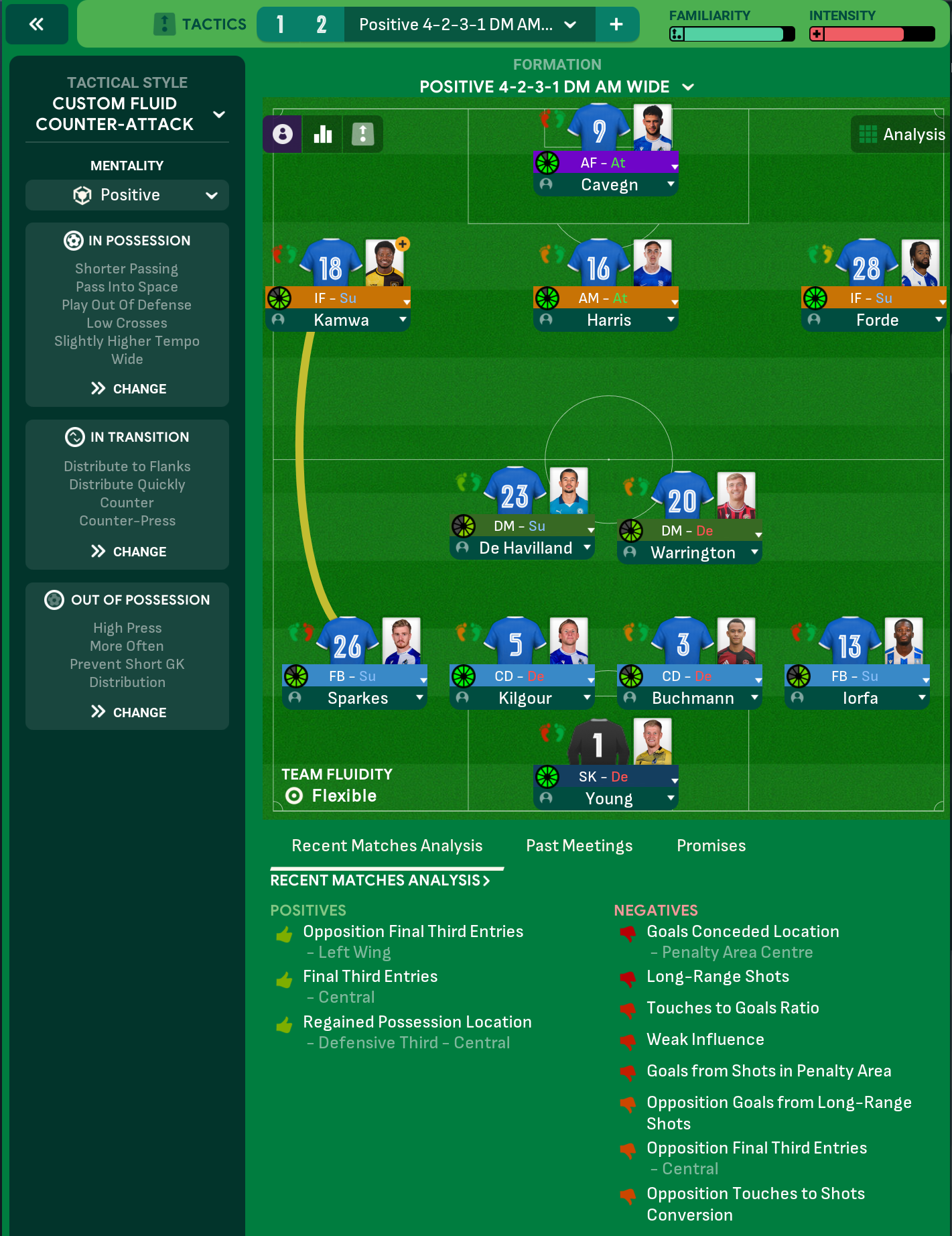
Custom Fluid Counter-Attack
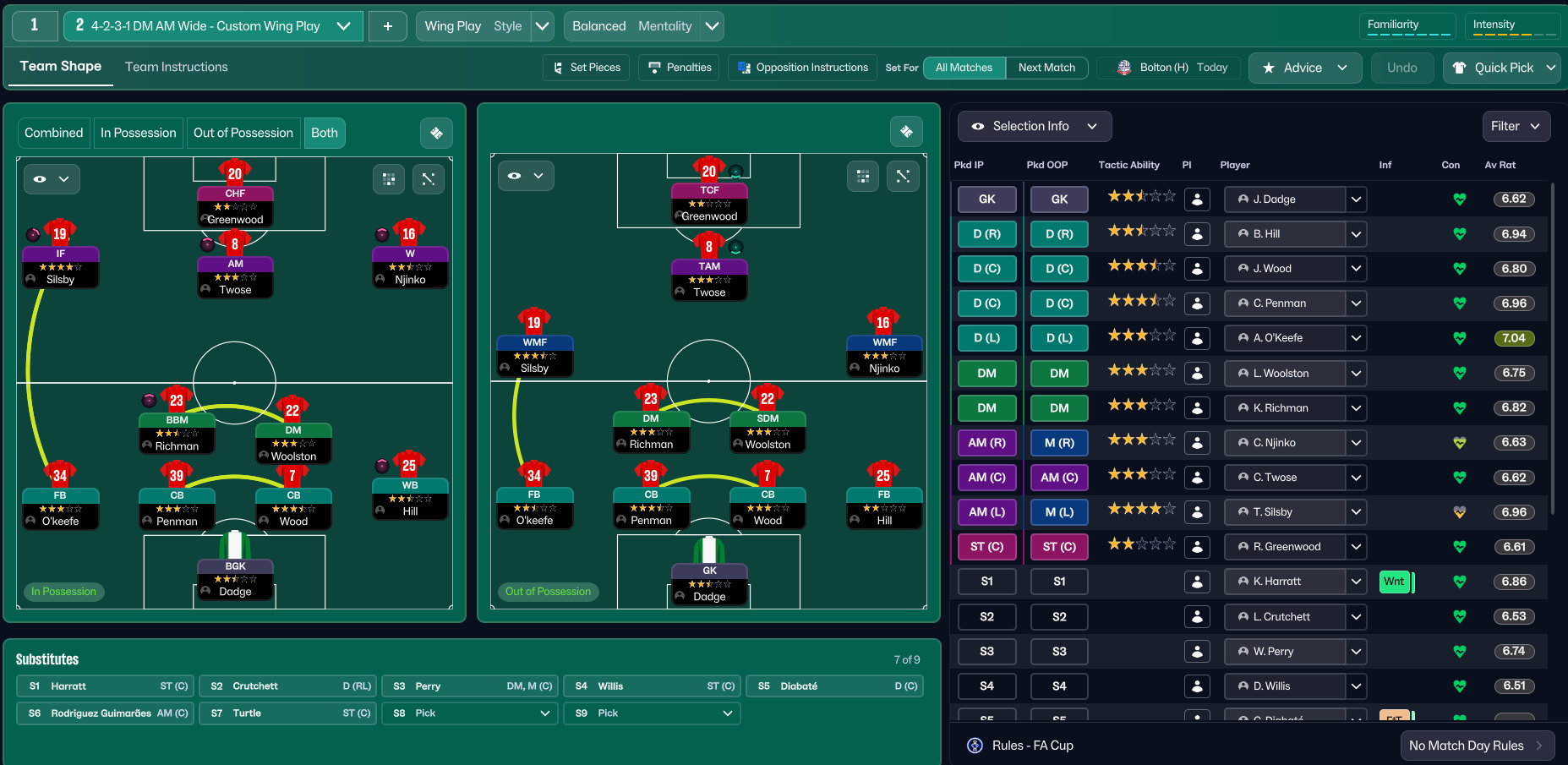
Wing Play
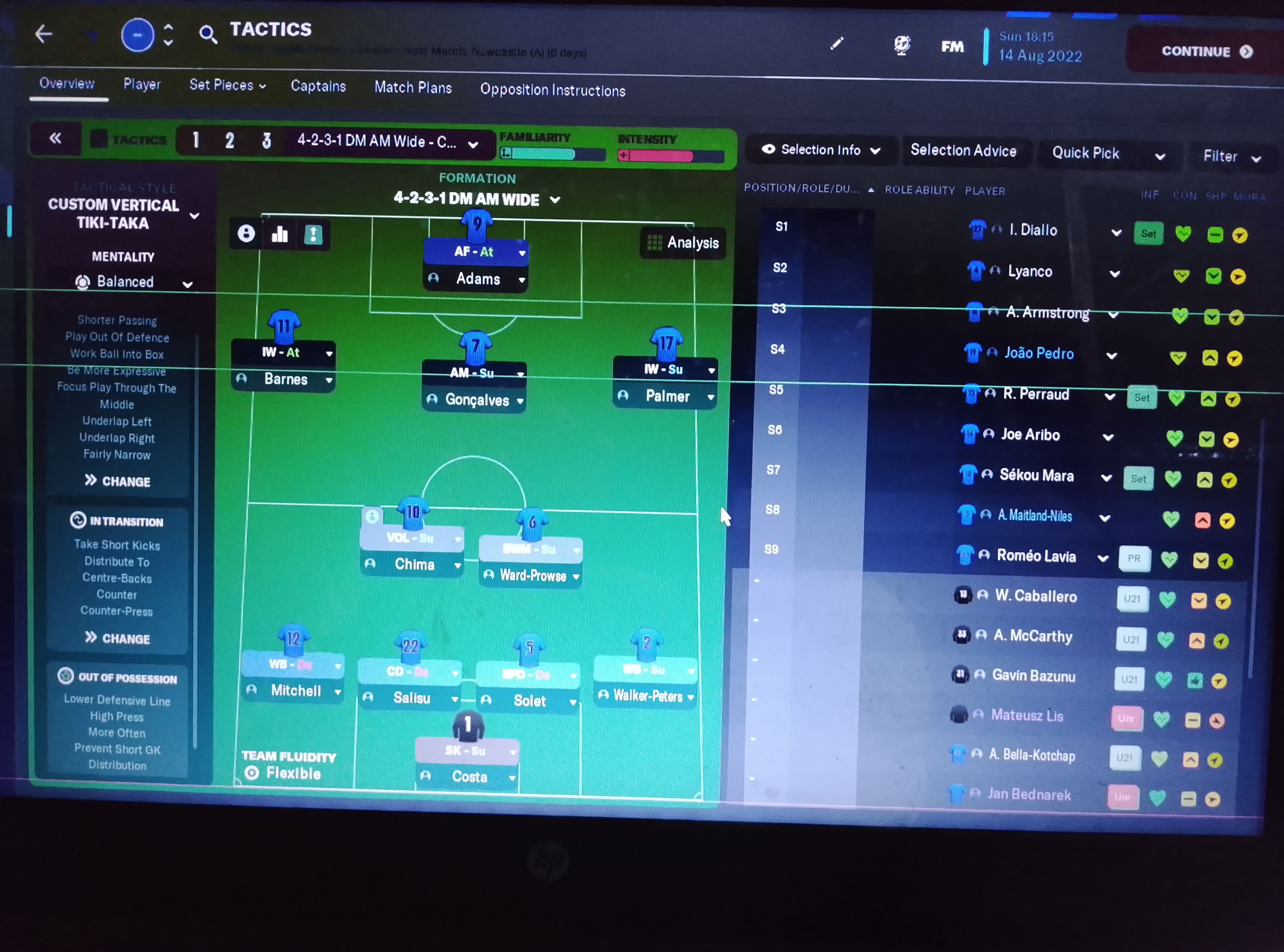
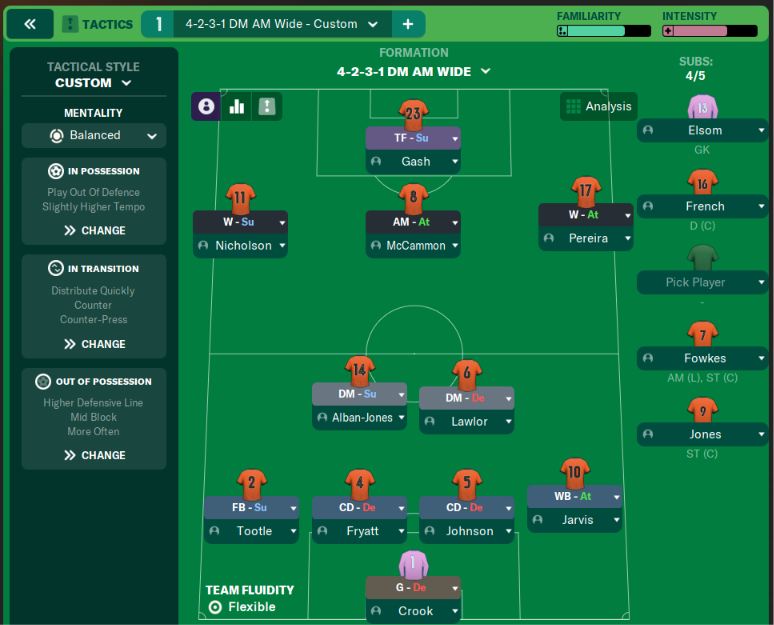
Custom Vertical Tiki-Taka
The tactical theory behind the 4-2-3-1 DM AM Wide: roles, instructions, and the trade-offs that decide whether the system holds up.
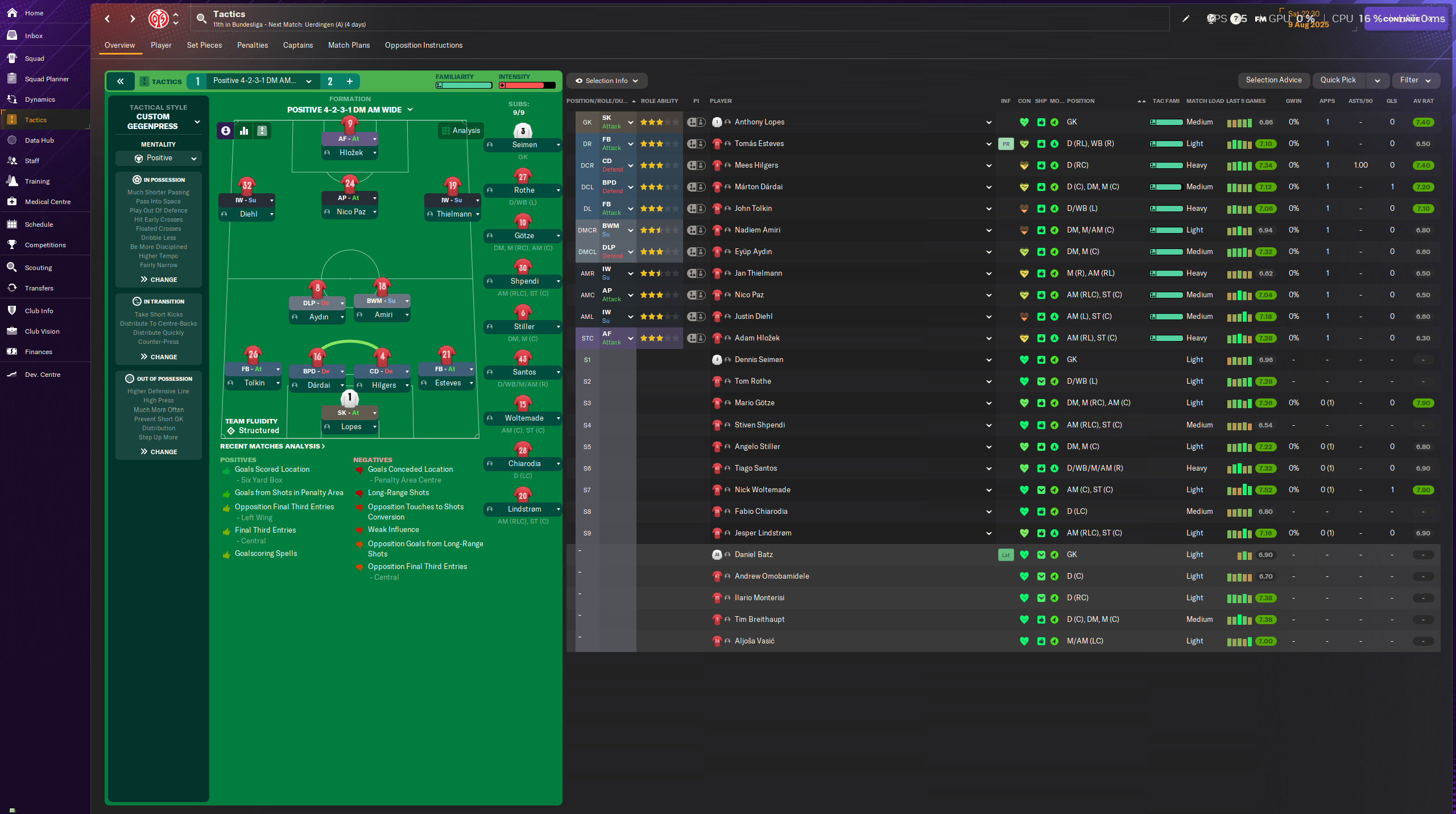
Klopp-style gegenpressing in FM, including squad profile, line-and-press pairing, sustainable workload, and the antipatterns to avoid.
Double pivots and flat pairs in 4-2-3-1 and 4-4-2: when each pairing works, when it collapses, and the AMC unicorn that rescues both.
Mentality, duty, role, instruction, sub. The change hierarchy from lightest to heaviest intervention, and 60th-minute patterns by game state.