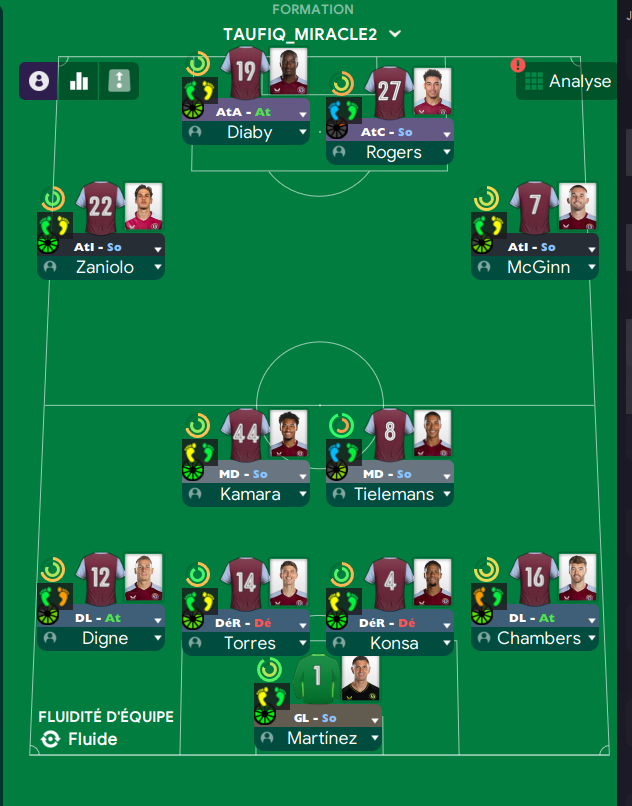
Uploaded Tactic
Formation & Style
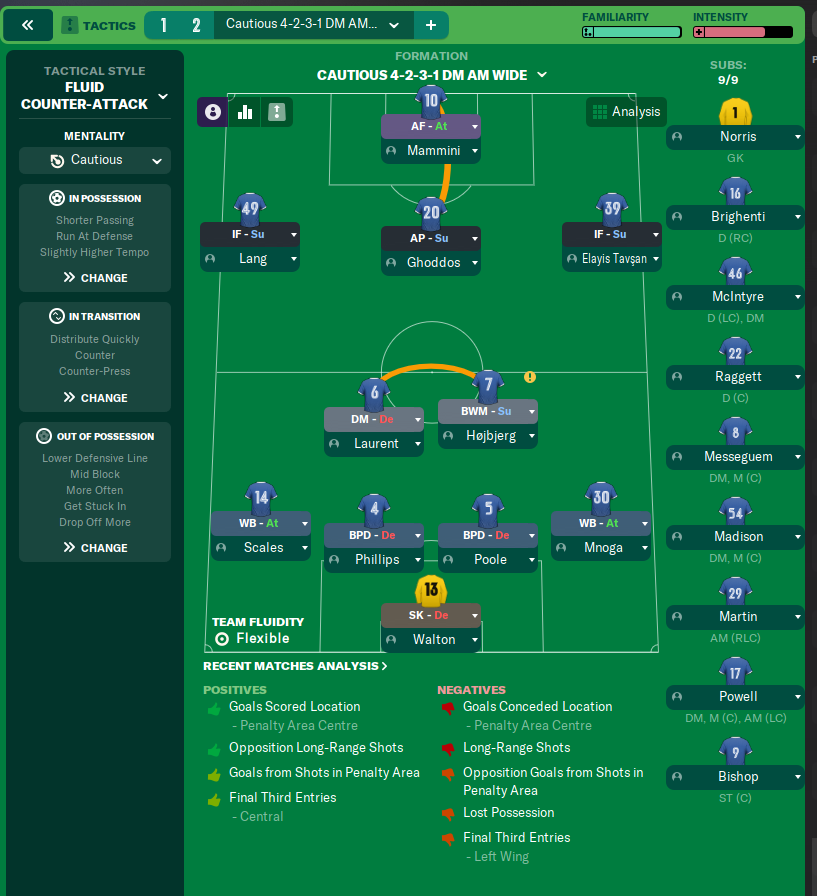
Tactical Style:Fluid
Mentality:Cautious
Formation:4-2-3-1 DM AM Wide
Team Fluidity:Flexible
In Possession
Shorter Passing
Run At Defense
Slightly Higher Tempo
In Transition
Distribute Quickly
Counter
Out of Possession
Lower Defensive Line
Mid Block
More Often
Get Stuck In
Drop Off More
Team Shape Without Ball
Shape:4-2
Description:A compact defensive shape with two holding midfielders providing extra protection.
Evidence:DM at [3,3] and BWM at [4,3] ensure that the midfield is well-covered.
Team Shape With Ball
Shape:4-3
Description:With two wing-backs and an advanced playmaker, the attack is wide-oriented focusing on individual pace.
Evidence:WB at [2,1] and [2,5] combined with IF at [5,2] creates additional width.
Phase Description
Attacking Play
The team employs a cautious approach with a focus on quick counter-attacks, utilizing width and pace from the wingers.
Defensive Transition
The transition is quick, utilizing the counter strategy effectively to regain possession.
Main Focus
The main focus is on solidifying the defensive structure while utilizing quick pacey attacks.
Key Strengths
Effective Counter-Attacking
The team is well-structured to break quickly after winning the ball, making use of faster players.
Solid Defensive Formation
The use of two defensive midfielders provides a balanced defense with the ability to transition effectively.
Wide Play Options
Utilization of wing-backs and inside forwards allows for flexibility and unpredictability in attack.
Conflicting Directions
Risk of Losing Central Control
While the width is exploited, the central midfield might be outnumbered against teams with strong midfield presence.
Vulnerability to Long Shots
Mid-block can lead to vulnerability against teams that effectively shoot from distance.
Heavy Reliance on Counter-Attacks
Cautious mentality may lead to missed opportunities against less aggressive opponents.
Tactical Suggestions
Consider Increasing Tempo
A slight increase in tempo may aid quicker transitions in certain match situations.
Adjust Midfield Player Duties
Consider changing BWM to Attack to add more pressure in the opponent's midfield during transitions.
Explore Wider Formation Adjustments
Adjusting formation to widen the attack could further exploit the defensive lines of opponents.
Ask Questions About Your Lineup
Related Tactics
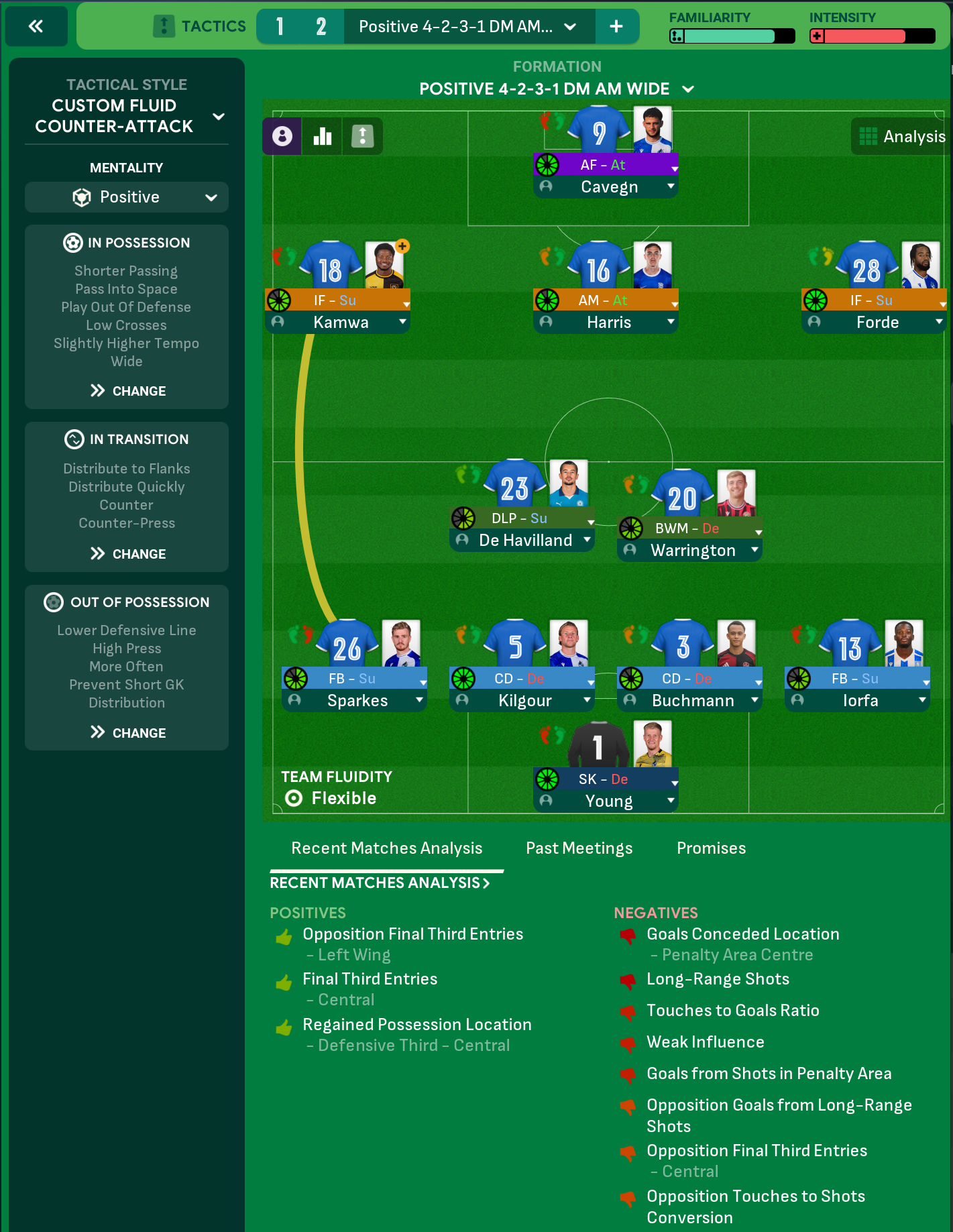
Fluid Counter-Attack 4-2-3-1 DM AM Wide
Custom Fluid Counter-Attack
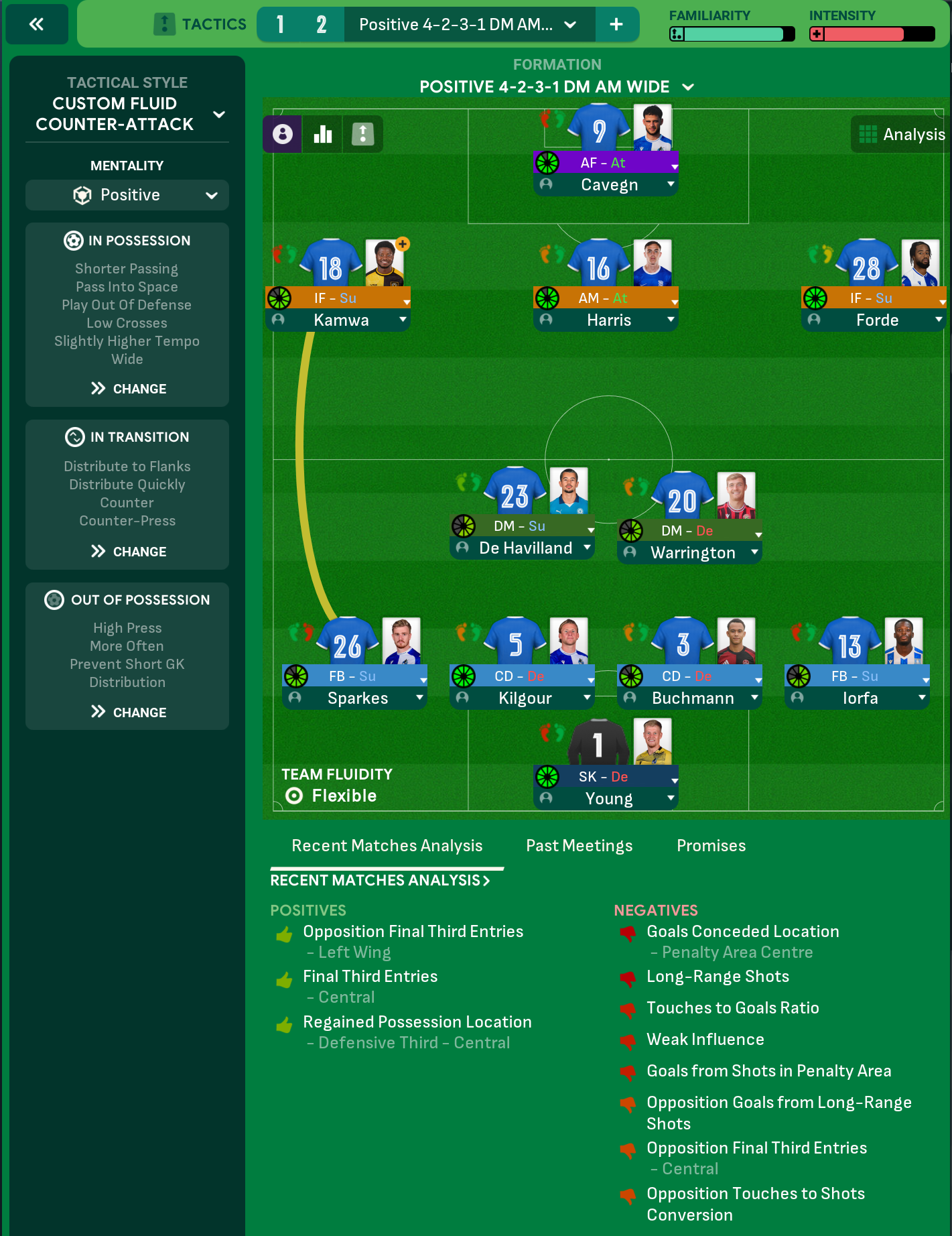
Fluid Counter-Attack 4-2-3-1 DM AM Wide
Custom Fluid Counter-Attack
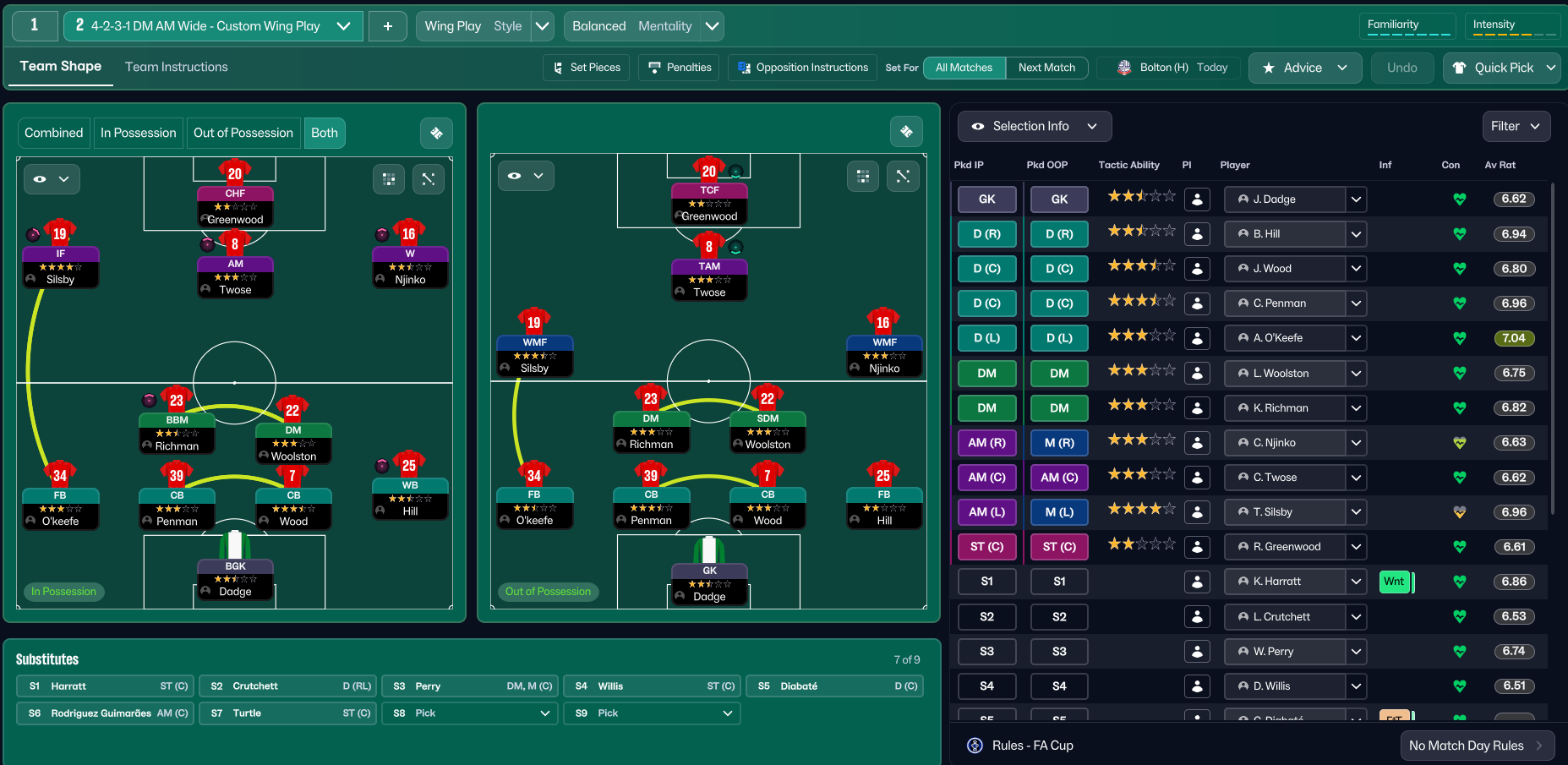
Wing Play 4-2-3-1 DM AM Wide
Wing Play
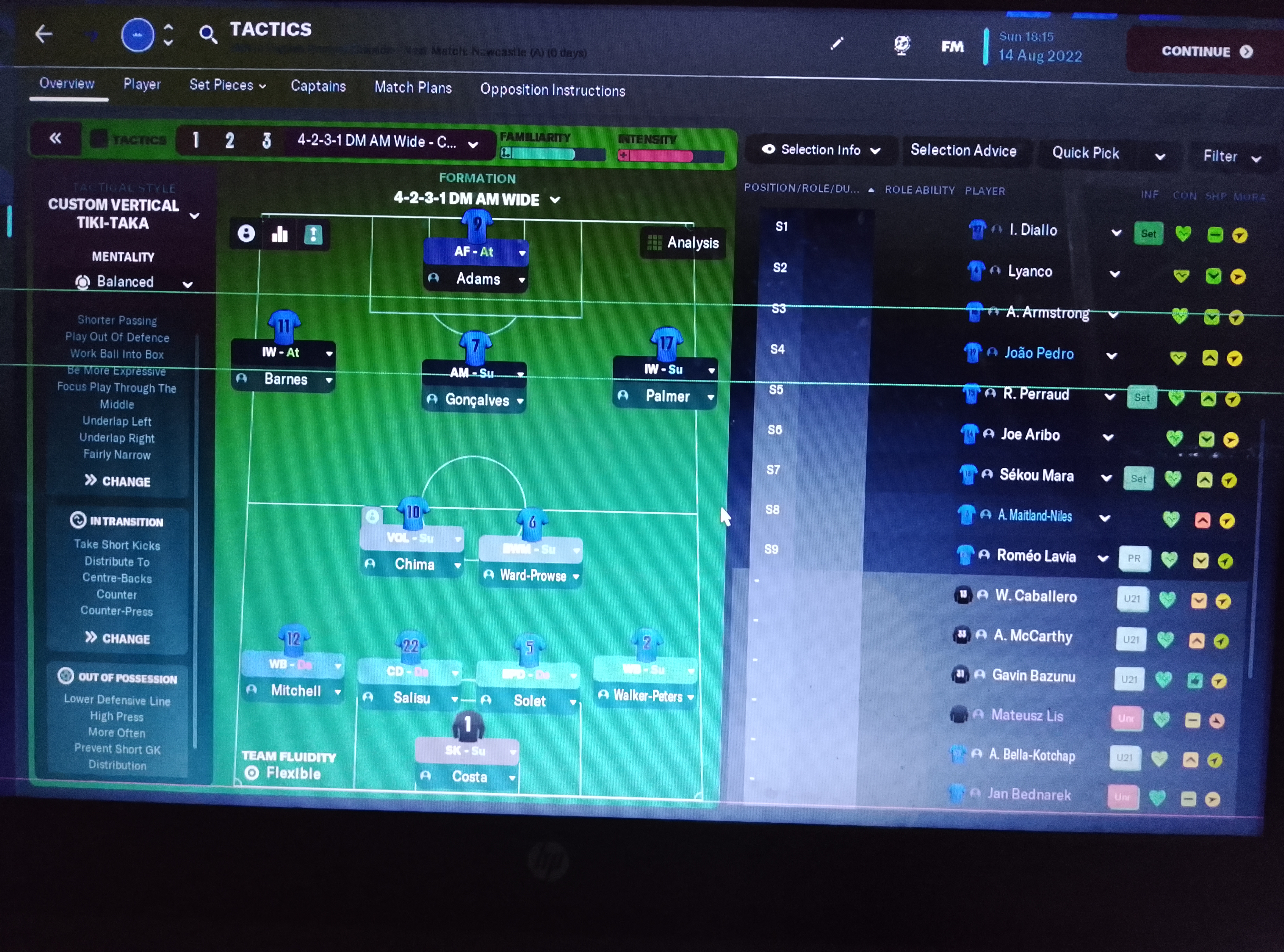
Vertical Tiki-Taka 4-2-3-1 DM AM Wide
Custom Vertical Tiki-Taka
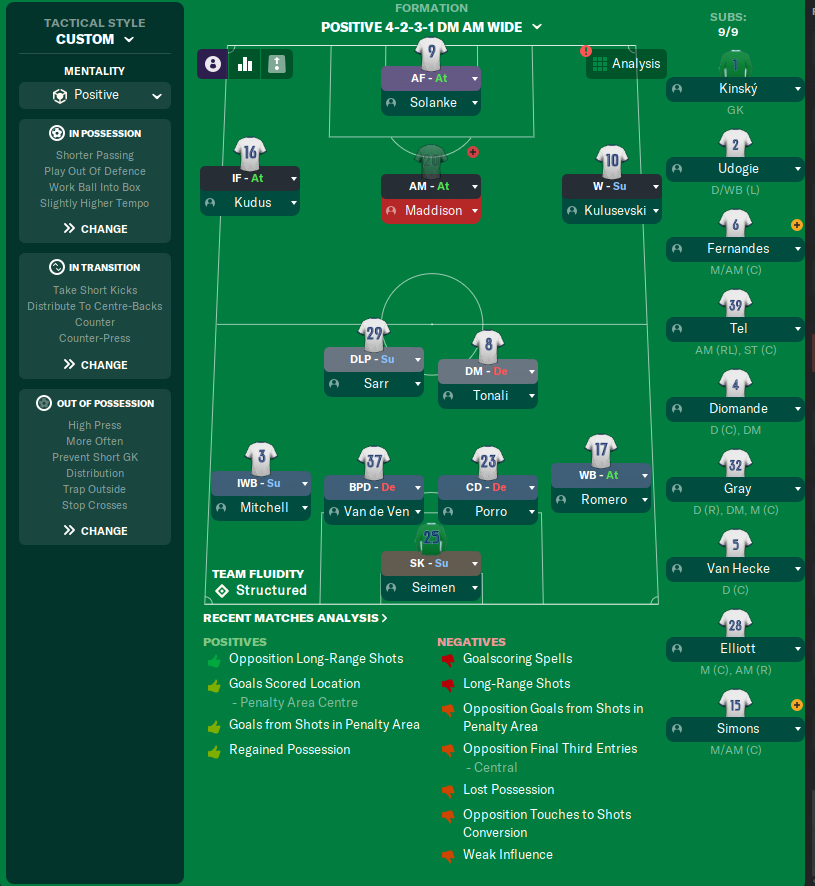
4-2-3-1 DM AM Wide Formation
Custom
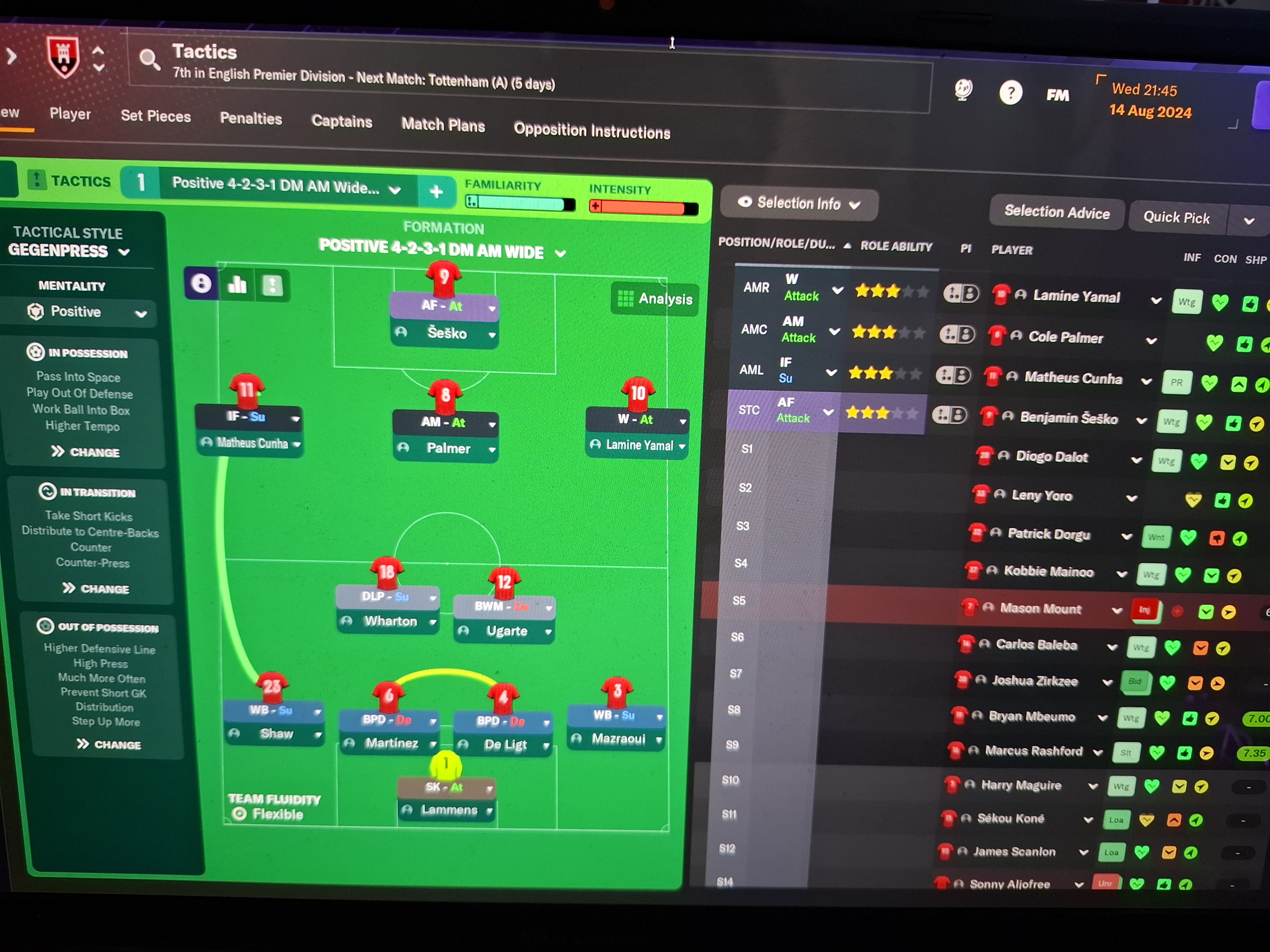
Gegenpress 4-2-3-1 DM AM Wide
Gegenpress
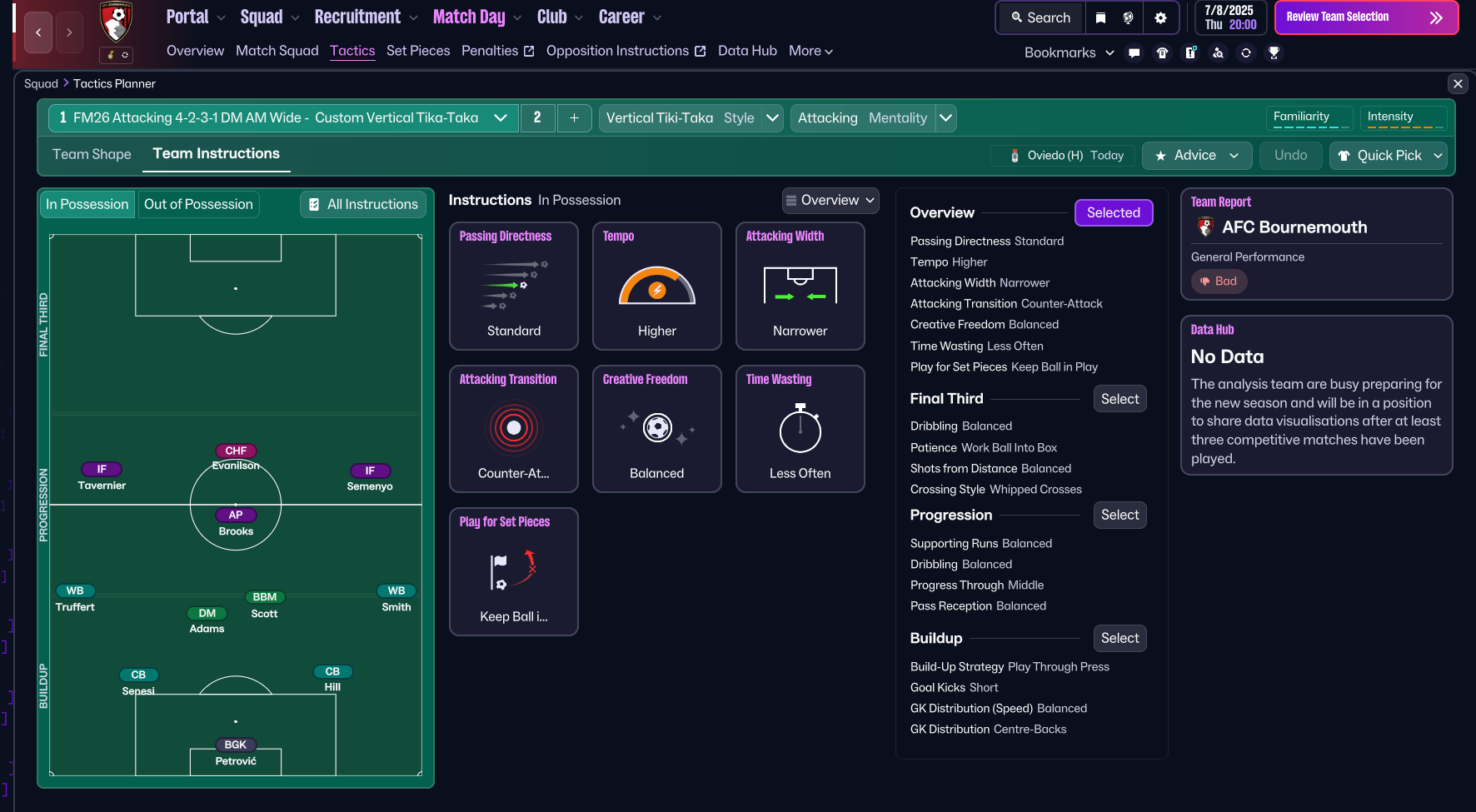
Vertical Tiki-Taka 4-2-3-1 DM AM Wide
Vertical Tiki-Taka
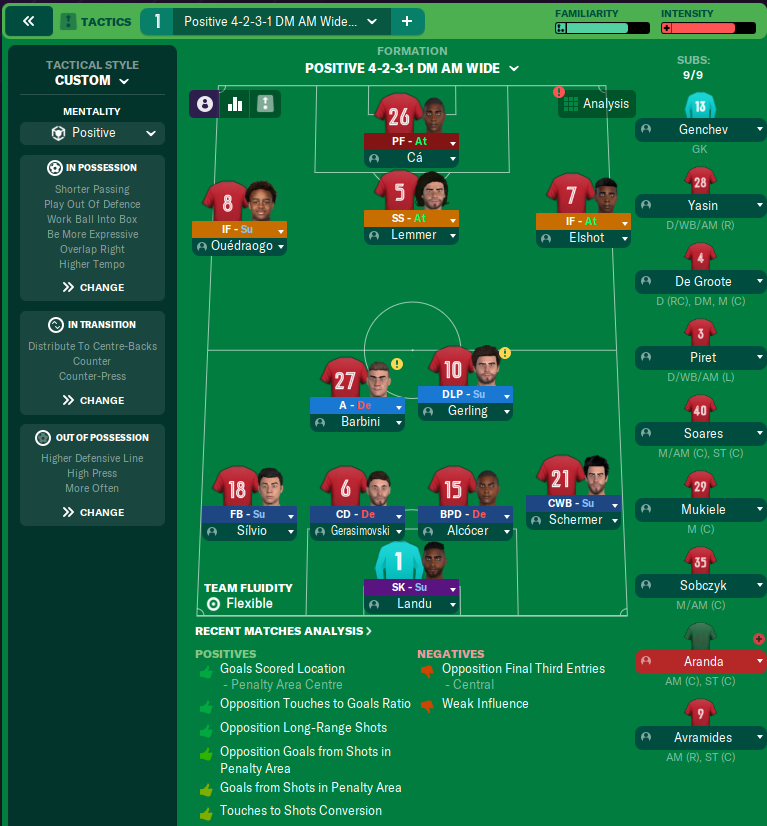
4-2-3-1 DM AM Wide Formation
Custom
More Fluid tactics
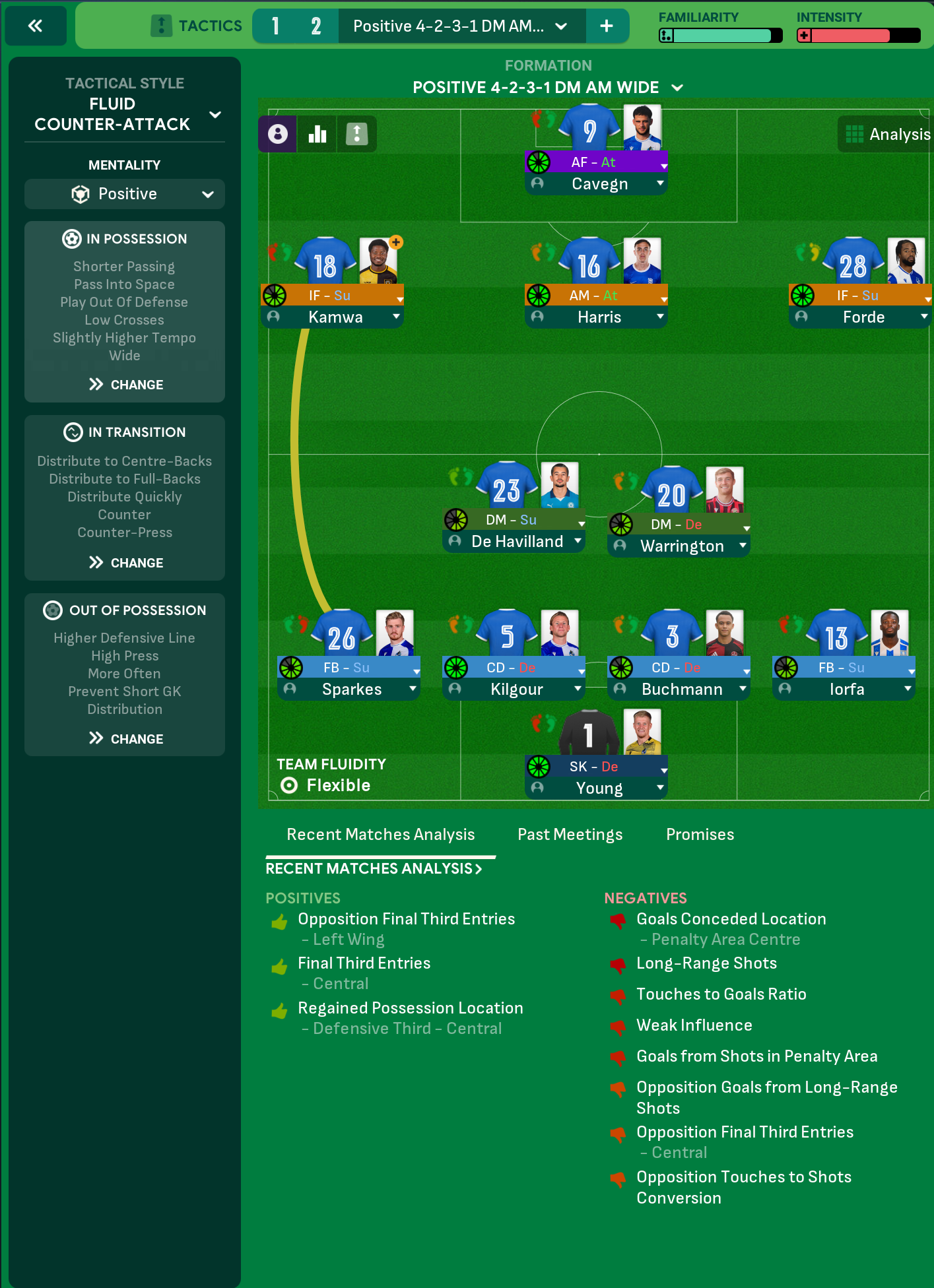
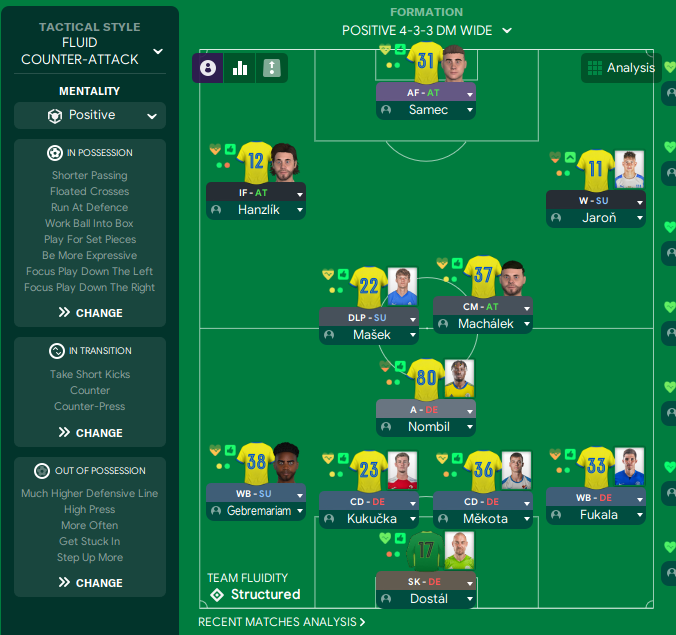
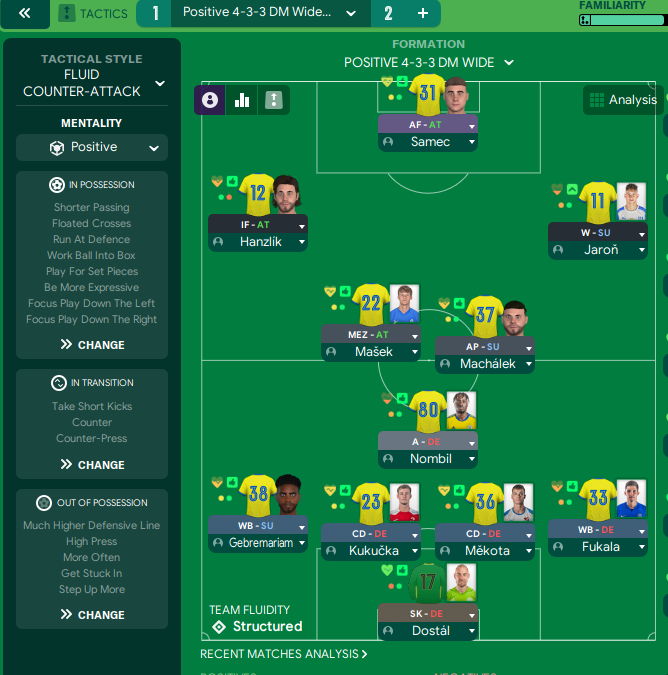
Guides for this formation
The tactical theory behind the 4-2-3-1 DM AM Wide: roles, instructions, and the trade-offs that decide whether the system holds up.
Player pairings
Midfield Pairs in 4-2-3-1 and 4-4-2
Double pivots and flat pairs in 4-2-3-1 and 4-4-2: when each pairing works, when it collapses, and the AMC unicorn that rescues both.
Read guide
Playing styles
Gegenpressing: A Full Guide
Klopp-style gegenpressing in FM, including squad profile, line-and-press pairing, sustainable workload, and the antipatterns to avoid.
Read guide