Uploaded Tactic
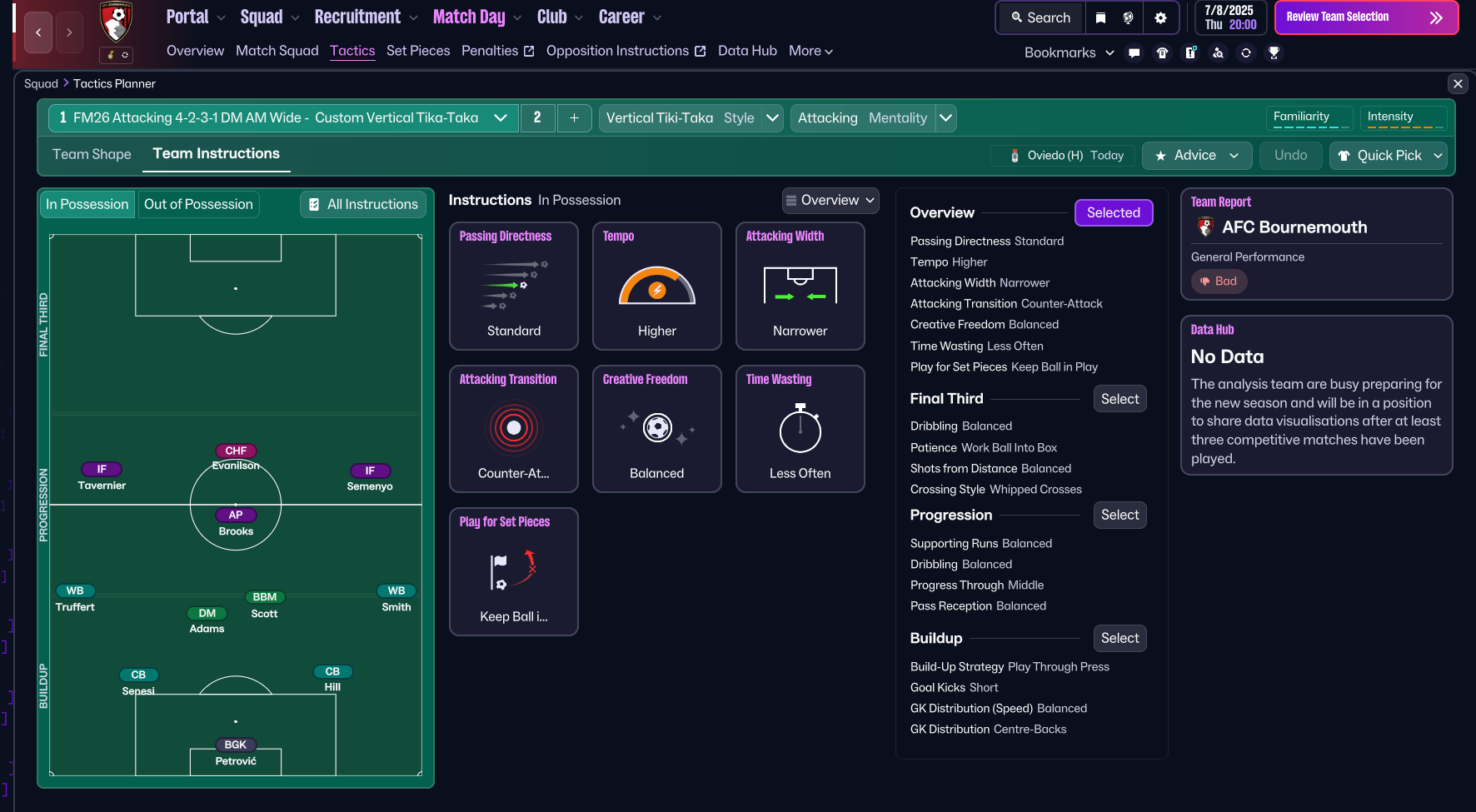
Formation & Style
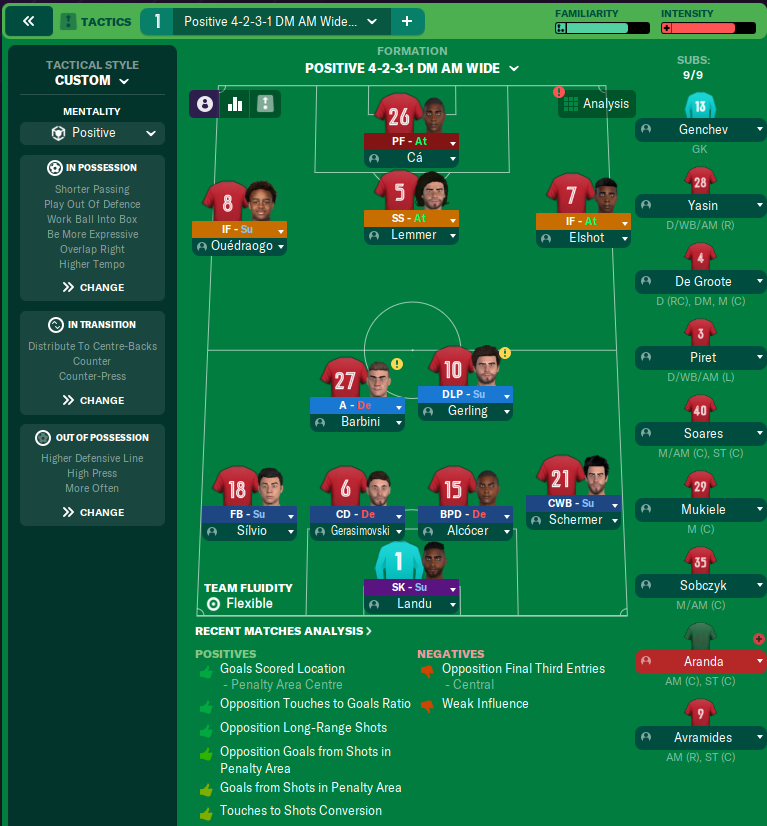
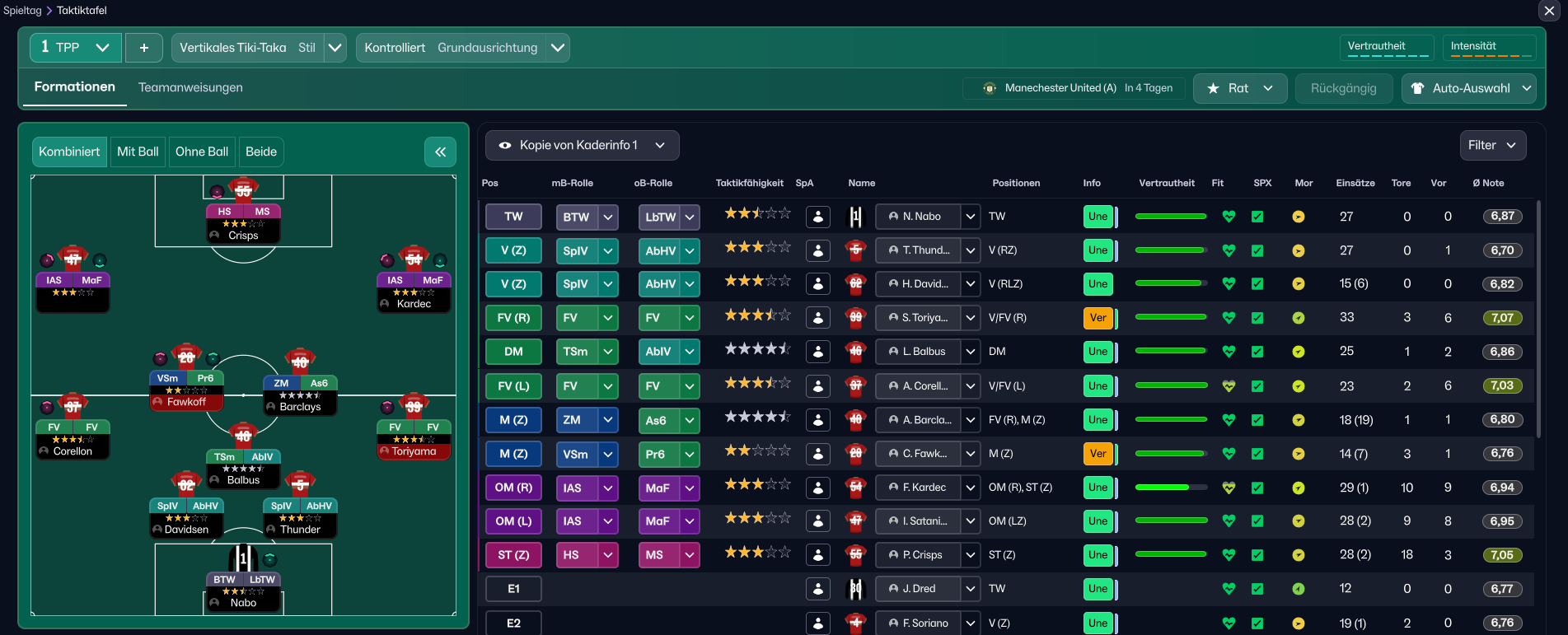
Tactical Style:Vertical Tiki-Taka
Mentality:Attacking
Formation:4-2-3-1 DM AM Wide
Team Fluidity:Structured
In Possession
Standard Passing Directness
Higher Tempo
Narrower Attacking Width
Counter-Attack for Attacking Transition
Balanced Creative Freedom
Less Often Time Wasting
Keep Ball In Play for Set Pieces
In Transition
Counter-Attack
Out of Possession
Defensive Line:Higher
Line of Engagement:Higher
Pressing Intensity:More Urgent
Offside Trap:Yes
Team Shape Without Ball
Shape:4-2
Description:Standard defensive shape allows for compactness with two holding players.
Evidence:DM at [3,3] and two CBs at [2,2] and [2,4]
Team Shape With Ball
Shape:4-3-3
Description:Utilizes width from wing-backs and inside forwards creating crossing opportunities.
Evidence:WB at [2,1] and [2,5] with two IFs at [6,1] and [6,5]
Phase Description
Attacking Play
Focus on maintaining possession with quick passing and creating space for wingers and the advanced playmaker.
Defensive Transition
Quickly transition to a counter-attacking style when possession is regained.
Main Focus
Utilizing width through wingers while contributing from the midfield.
Key Strengths
High Tempo Attacking Play
The higher tempo allows for rapid ball movement and creates chances quickly.
Positional Play
Utilizing the narrow attacking width supports tighter passing.
Wing Play
The wing-backs provide width and support to the attack.
Conflicting Directions
Counter-Attacking Vulnerability
With a strong focus on attacking play, the team may be susceptible to counter-attacks if dispossessed.
Width Limitations
While the attacking width is narrower, this could lead to congested midfield areas.
Defensive Transition Risks
Rapid attacking transitions can leave the defense exposed when the ball is lost.
Tactical Suggestions
Consider Defensive Midfielder Duty
Switch the DM to a Support duty to add more presence to the midfield during attacks.
Adjust Width During Attacks
Consider varying attacking width to exploit defensive weaknesses of opponents.
Include Higher Defensive Line
Implementing a higher defensive line may help in compressing the opponent's play to win back possession faster.
Ask Questions About Your Lineup
Related Tactics
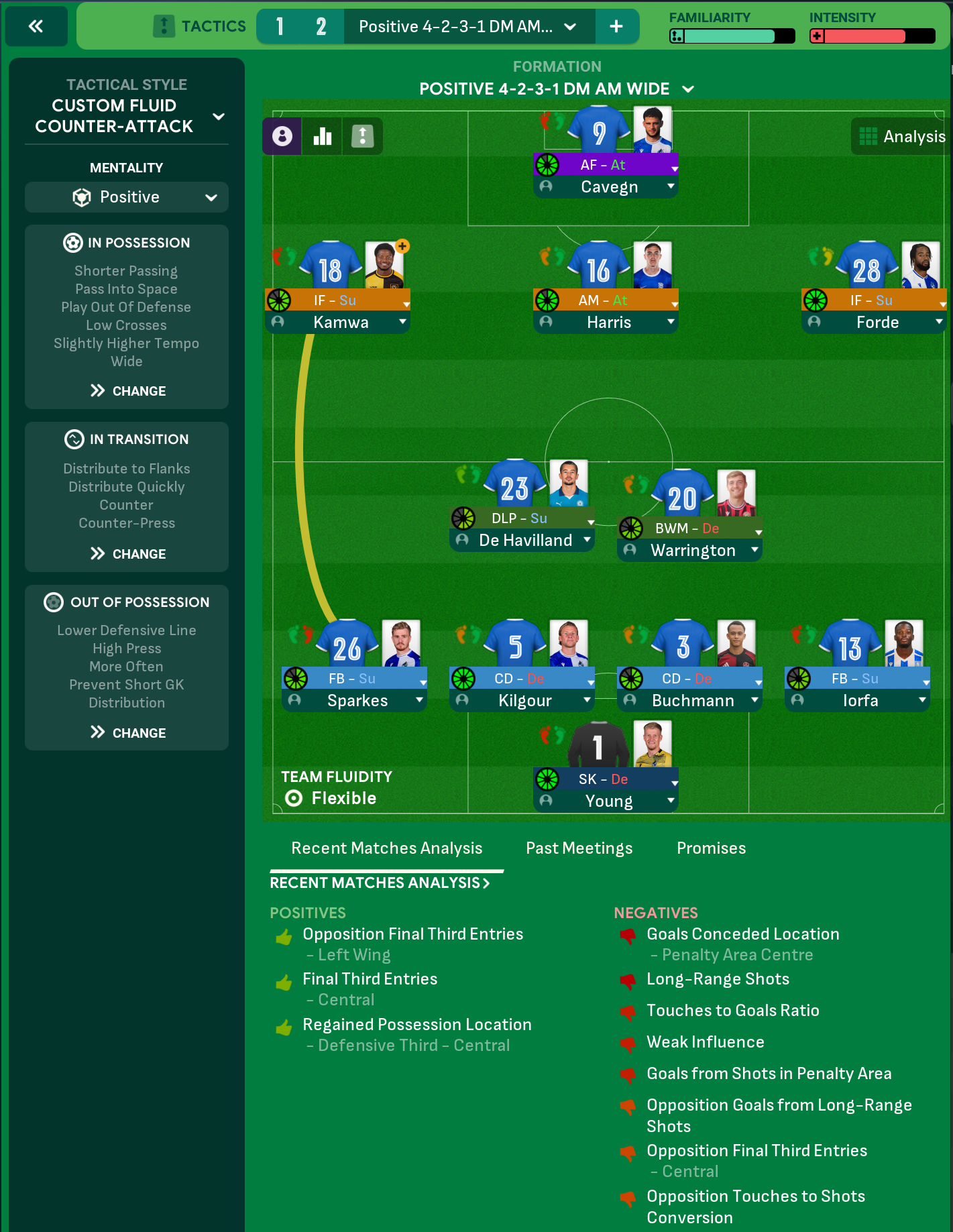
Fluid Counter-Attack 4-2-3-1 DM AM Wide
Custom Fluid Counter-Attack
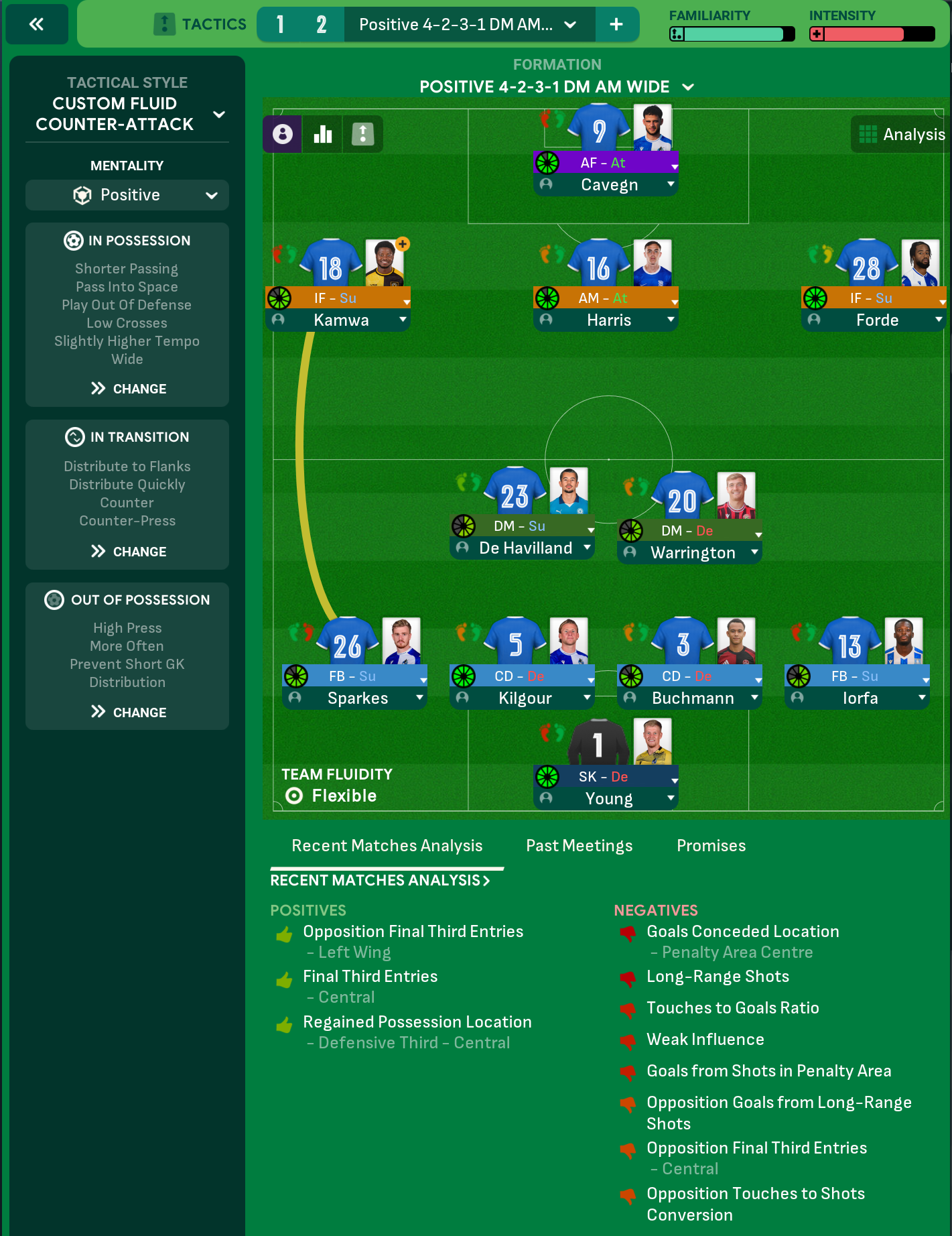
Fluid Counter-Attack 4-2-3-1 DM AM Wide
Custom Fluid Counter-Attack
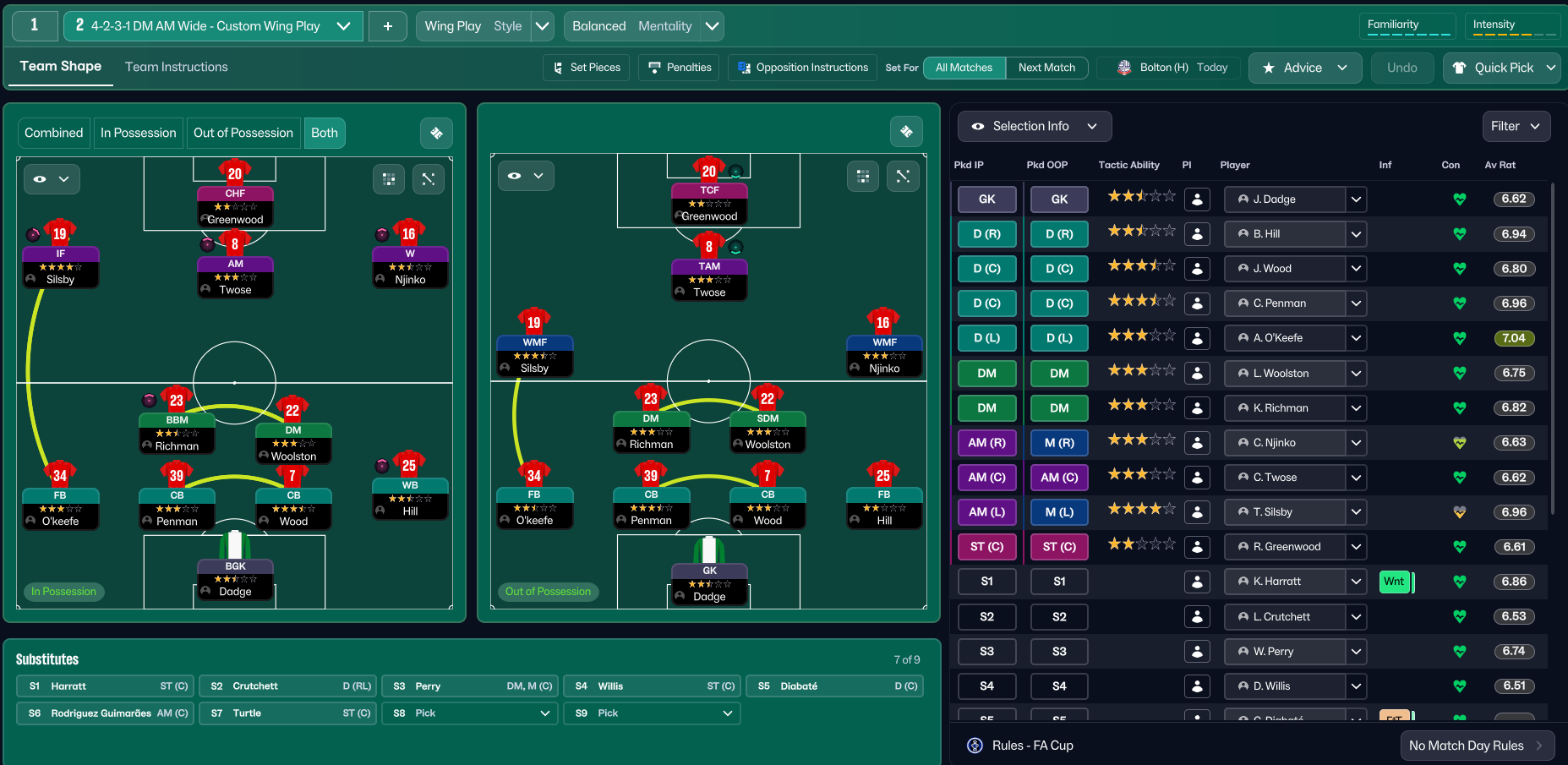
Wing Play 4-2-3-1 DM AM Wide
Wing Play
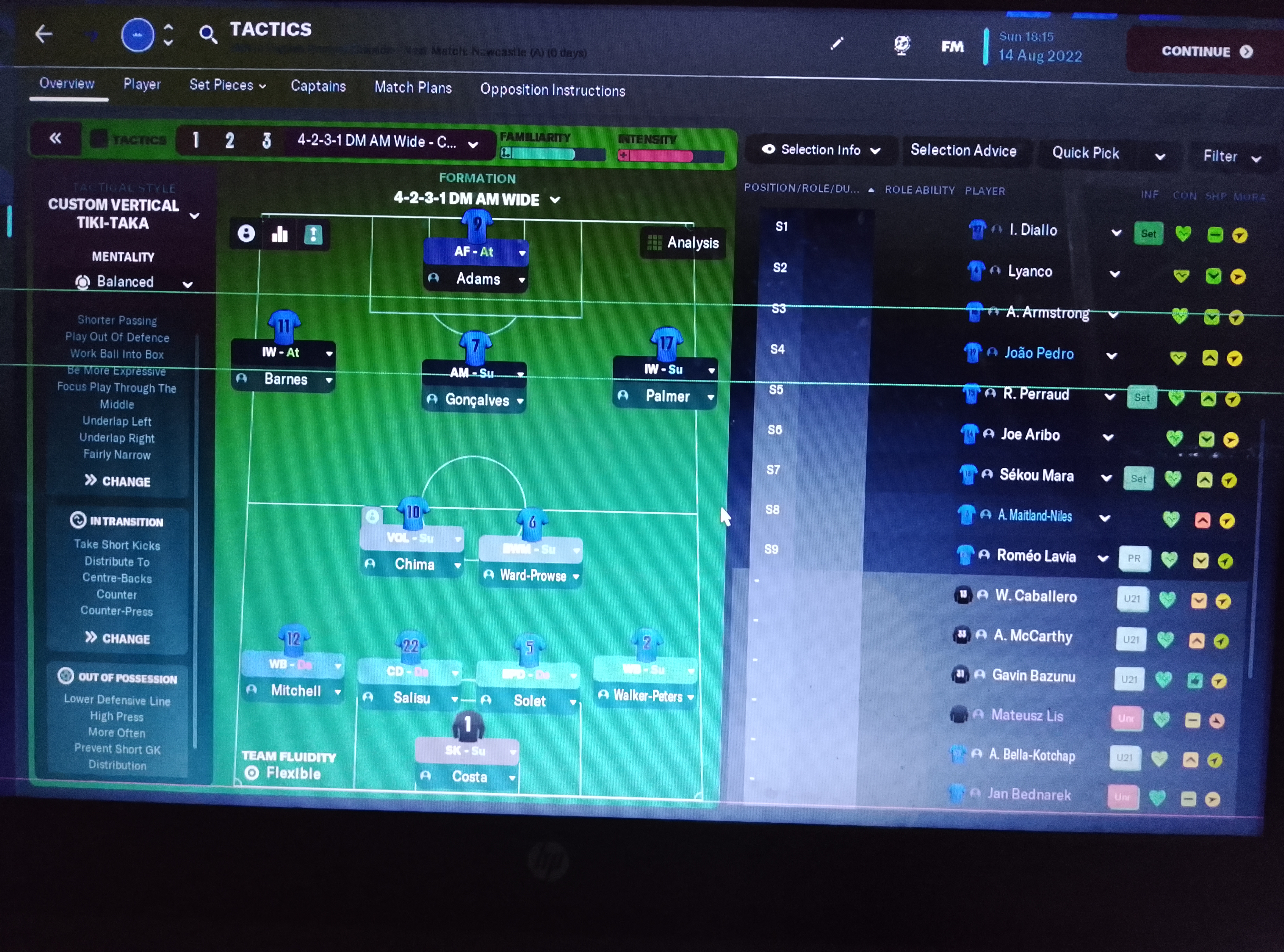
Vertical Tiki-Taka 4-2-3-1 DM AM Wide
Custom Vertical Tiki-Taka
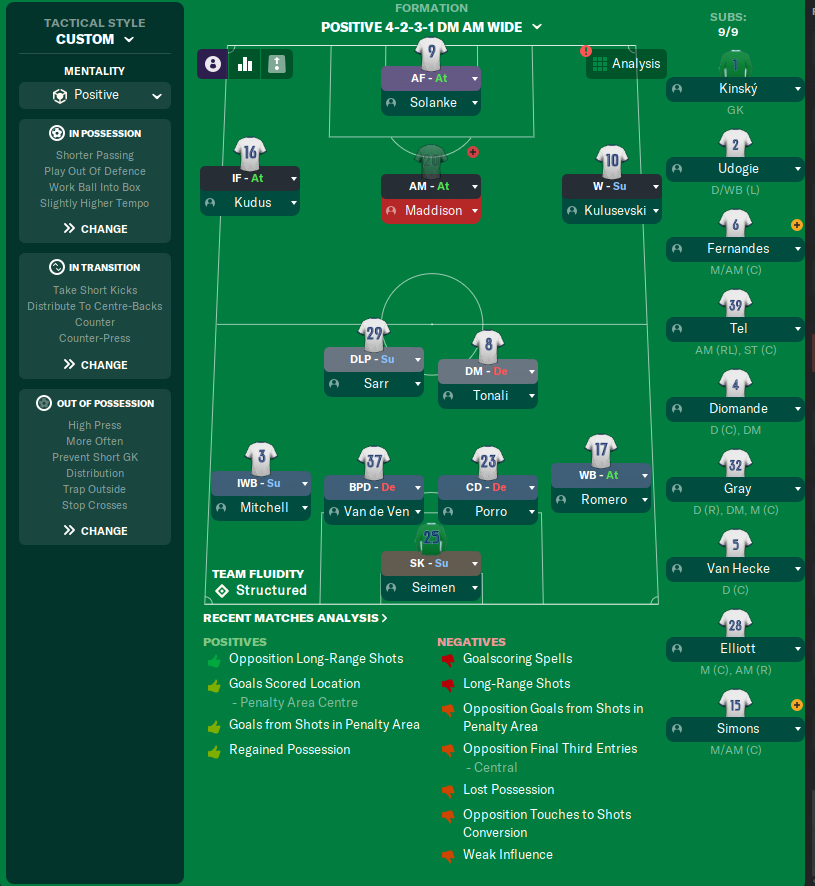
4-2-3-1 DM AM Wide Formation
Custom
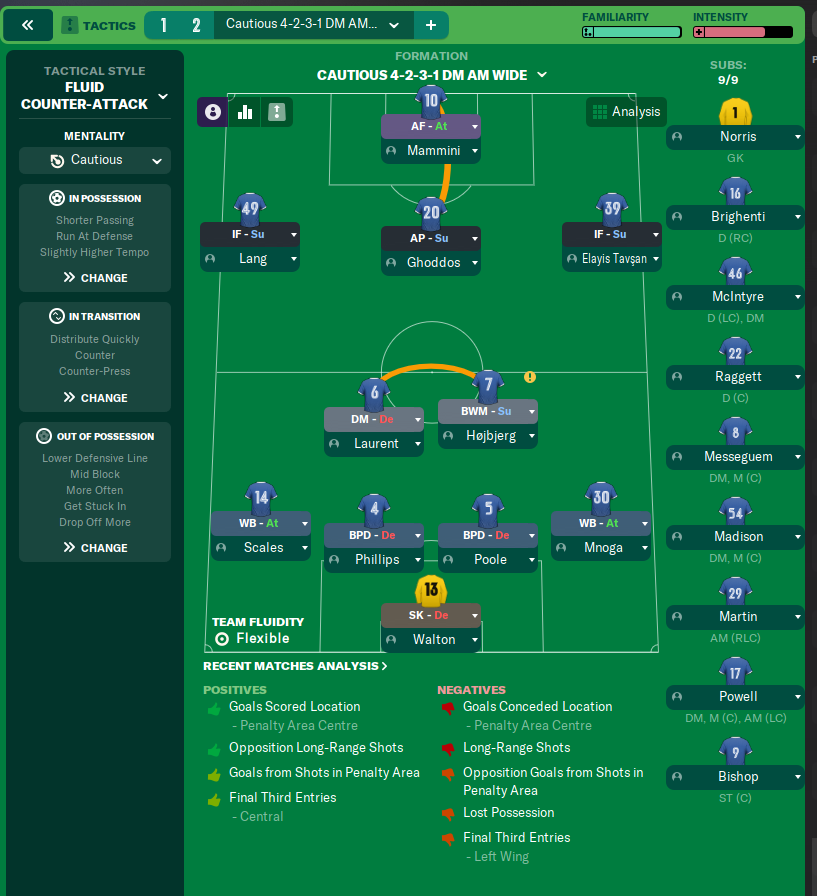
Fluid 4-2-3-1 DM AM Wide
Fluid
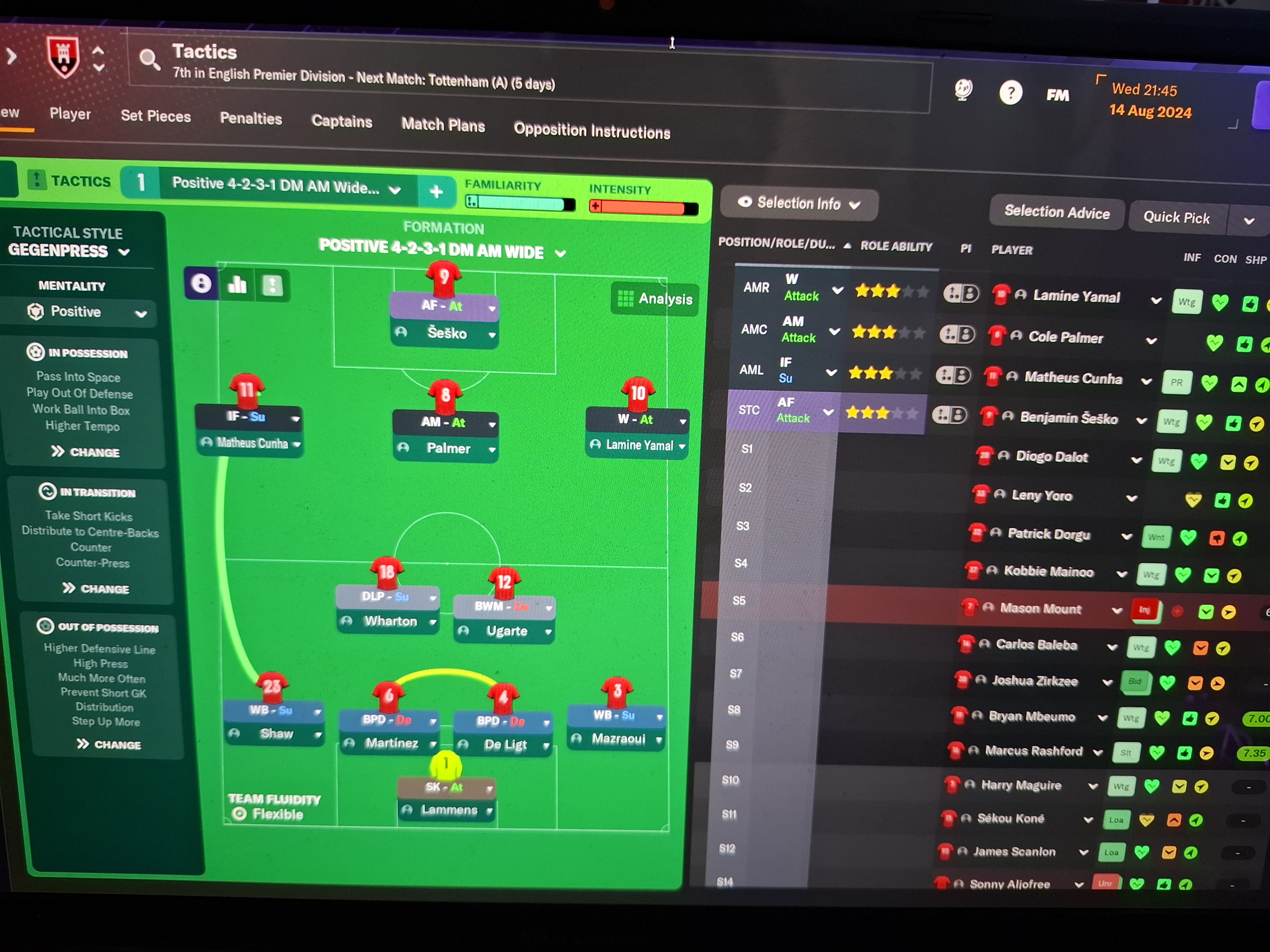
Gegenpress 4-2-3-1 DM AM Wide
Gegenpress
4-2-3-1 DM AM Wide Formation
Custom
More Vertical Tiki-Taka tactics
Guides for this formation
The tactical theory behind the 4-2-3-1 DM AM Wide: roles, instructions, and the trade-offs that decide whether the system holds up.
Player pairings
Midfield Pairs in 4-2-3-1 and 4-4-2
Double pivots and flat pairs in 4-2-3-1 and 4-4-2: when each pairing works, when it collapses, and the AMC unicorn that rescues both.
Read guide
Playing styles
Gegenpressing: A Full Guide
Klopp-style gegenpressing in FM, including squad profile, line-and-press pairing, sustainable workload, and the antipatterns to avoid.
Read guide