Uploaded Tactic
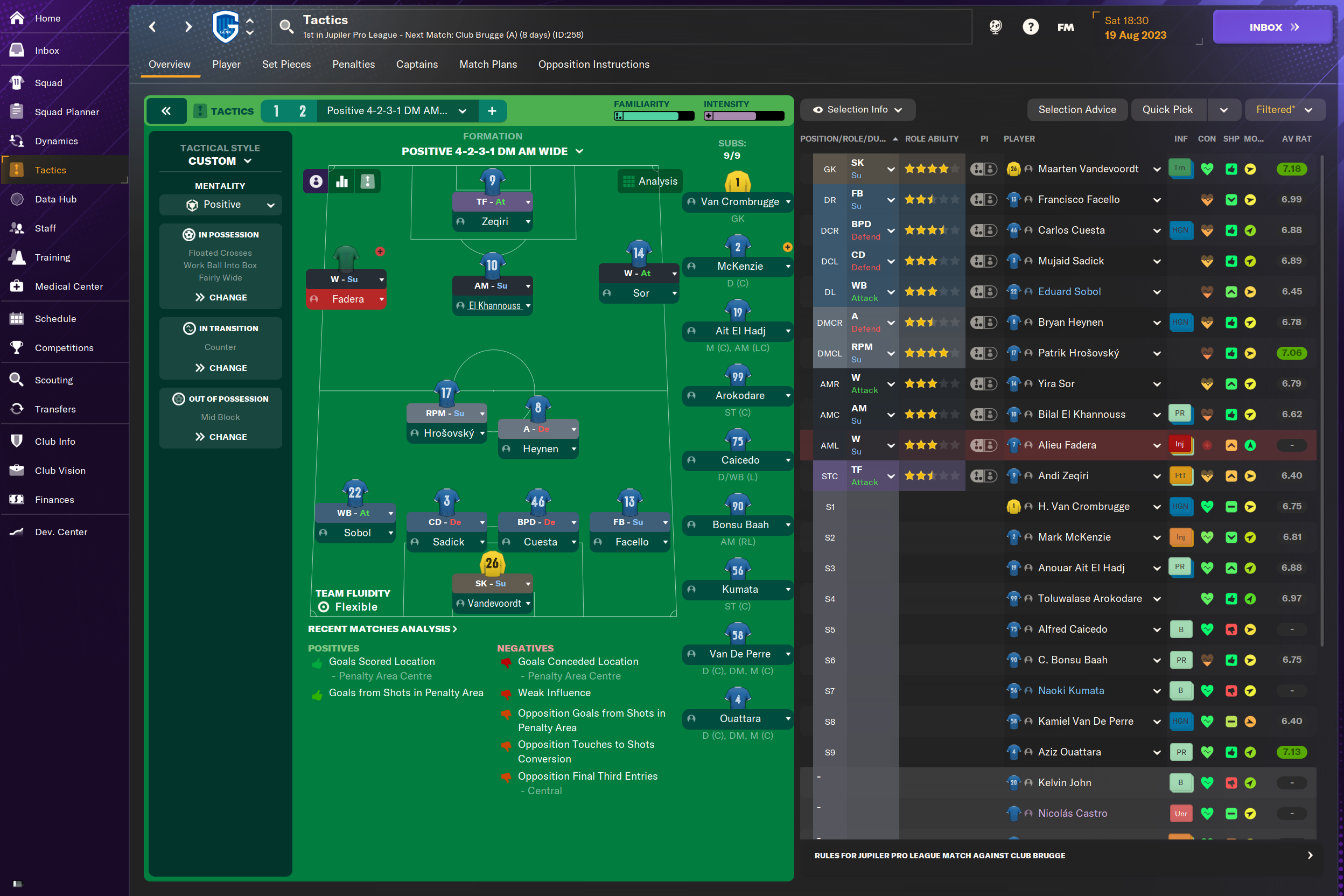
Formation & Style
Tactical Style:Custom
Mentality:Positive
Formation:4-2-3-1 DM AM Wide
Team Fluidity:Flexible
In Possession
Floated Crosses
Work Ball Into Box
Fairly Narrow
In Transition
Counter
Out of Possession
Mid Block
Team Shape Without Ball
Shape:Mid Block
Description:The team defends compactly, preventing easy access to the penalty area while not pressing high.
Evidence:Mid Block setup with two holding midfielders to protect the defense and disrupt opposition buildup
Team Shape With Ball
Shape:Wide Play
Description:Utilizing the flanks effectively for width, with full-backs and wingers supporting the target forward.
Evidence:Wingers positioned to cut inside while full-backs provide overlap to create space.
Phase Description
Attacking Play
Utilizes wide players and crossing to exploit space, combined with a central playmaker facilitating effective transitions.
Defensive Transition
Quickly reverts to a mid-block after possession loss, focusing on regaining control with counter-press.
Main Focus
Utilizing width and crosses to penetrate the opposition defense while maintaining a solid defensive shape.
Key Strengths
Effective Wide Play
Utilizing wingers to stretch the opposition and create crossing opportunities.
Balanced Midfield
Double pivot allows for both creative and defensive responsibilities.
Solid Defensive Foundation
The setup provides cover in defense, reducing chances on goal.
Conflicting Directions
Inflexible Counter-Press
Plans to counter might clash with mid-block structure, leading to vulnerability if the press is ineffective.
Weakness in Central Defense
While focusing on width, the center might become exposed if both DM and central defense are bypassed.
Reliance on Crossing
Heavy reliance on crosses may be countered effectively by teams with strong aerial defenders.
Tactical Suggestions
Consider a deeper block
Adjust team shape to a lower block to invite pressure and look for quick counter-attacks.
Enhance central presence
Introduce a more dynamic central midfielder to support both defense and offense more fluidly.
Increase pressing intensity
Adapting pressing to be more aggressive upfront could capitalize on opposition errors.
Ask Questions About Your Lineup
Related Tactics
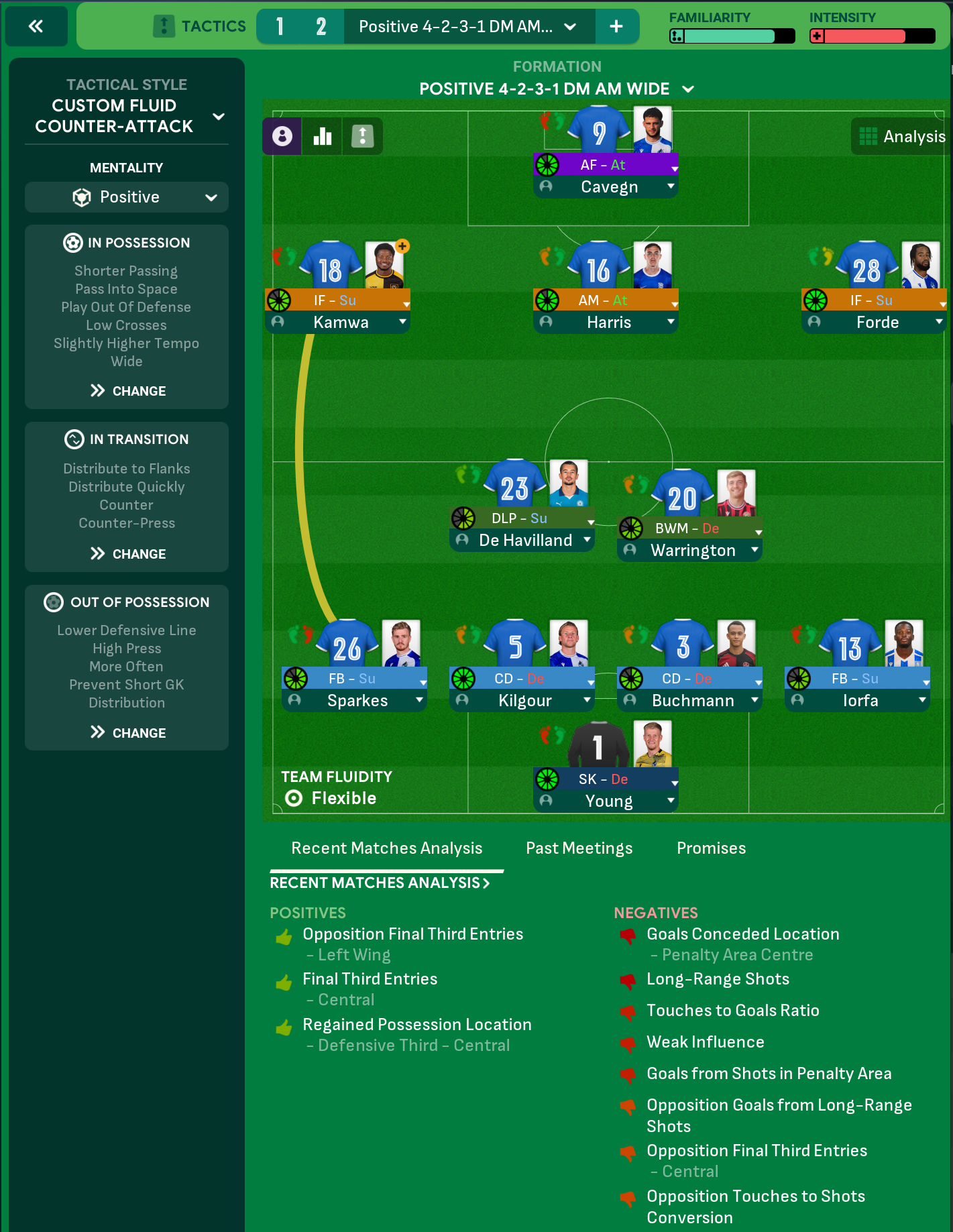
Fluid Counter-Attack 4-2-3-1 DM AM Wide
Custom Fluid Counter-Attack
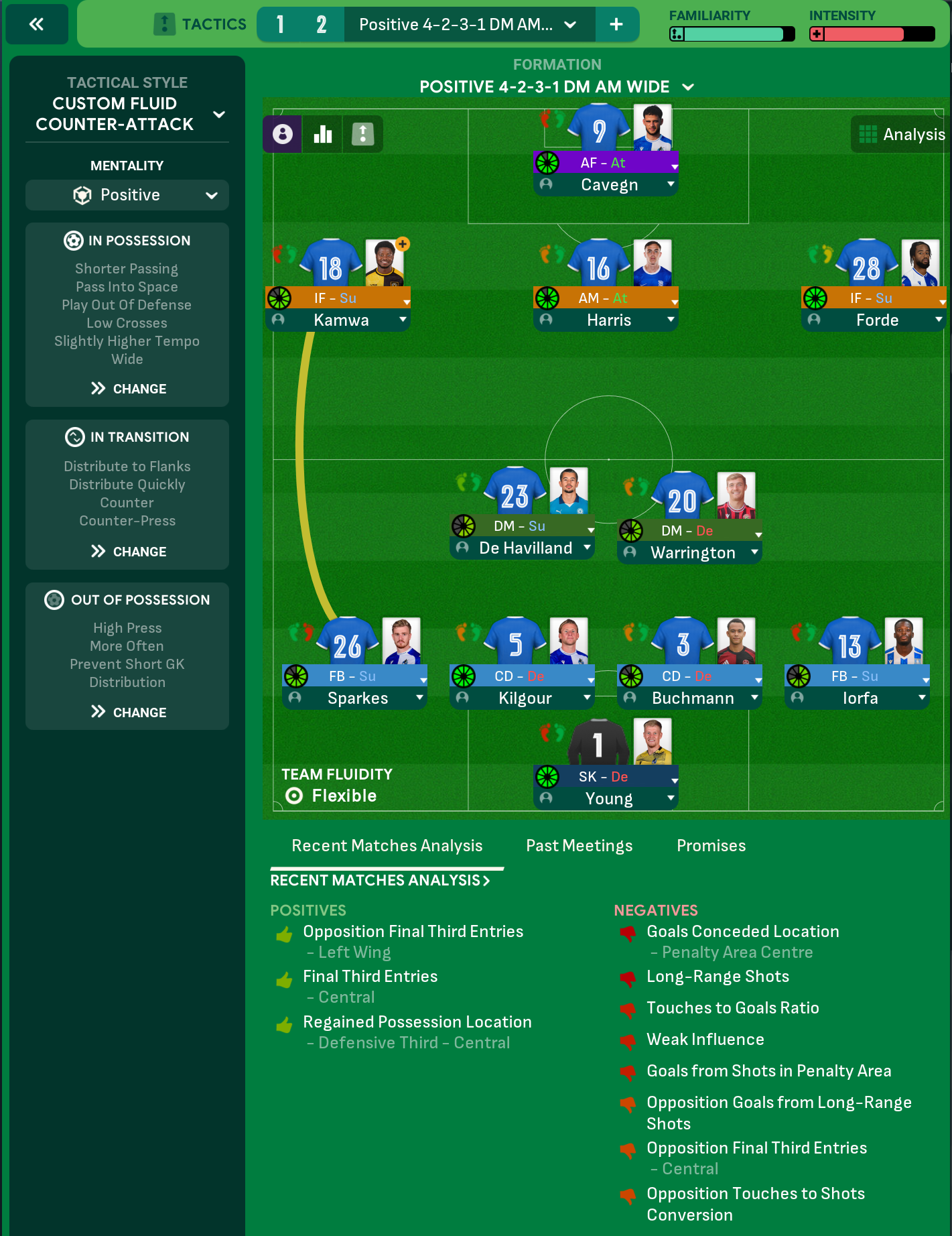
Fluid Counter-Attack 4-2-3-1 DM AM Wide
Custom Fluid Counter-Attack
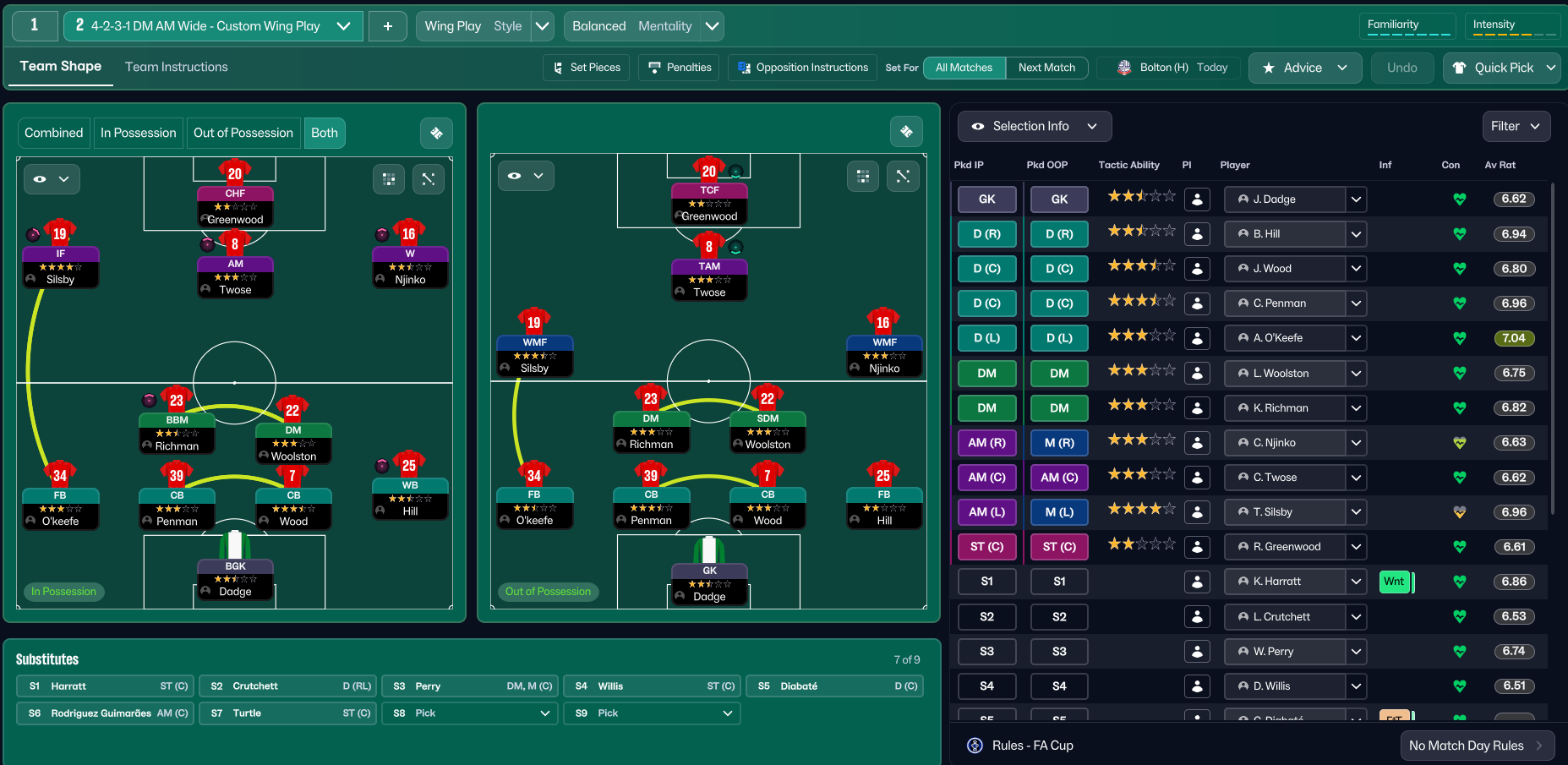
Wing Play 4-2-3-1 DM AM Wide
Wing Play
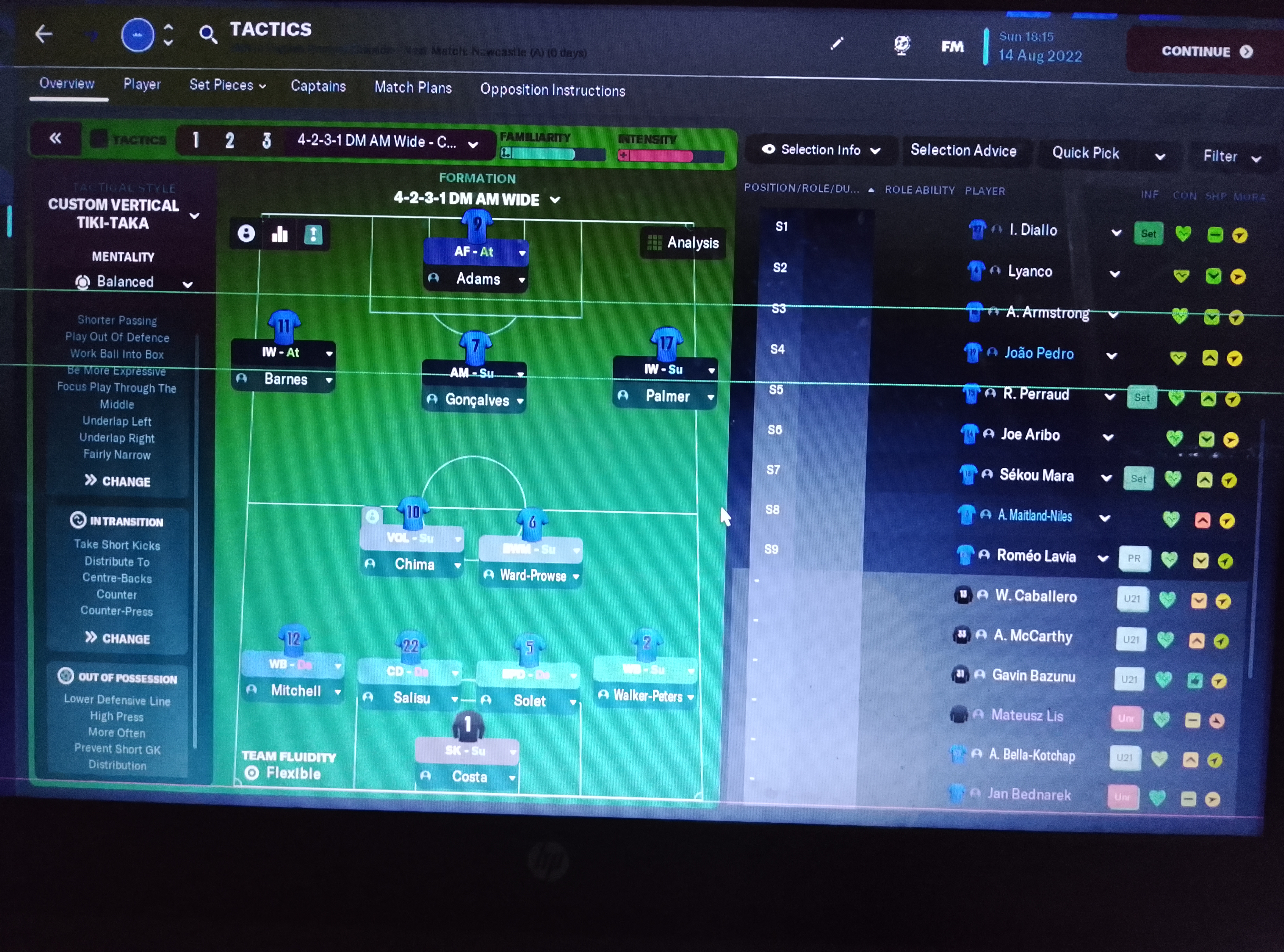
Vertical Tiki-Taka 4-2-3-1 DM AM Wide
Custom Vertical Tiki-Taka
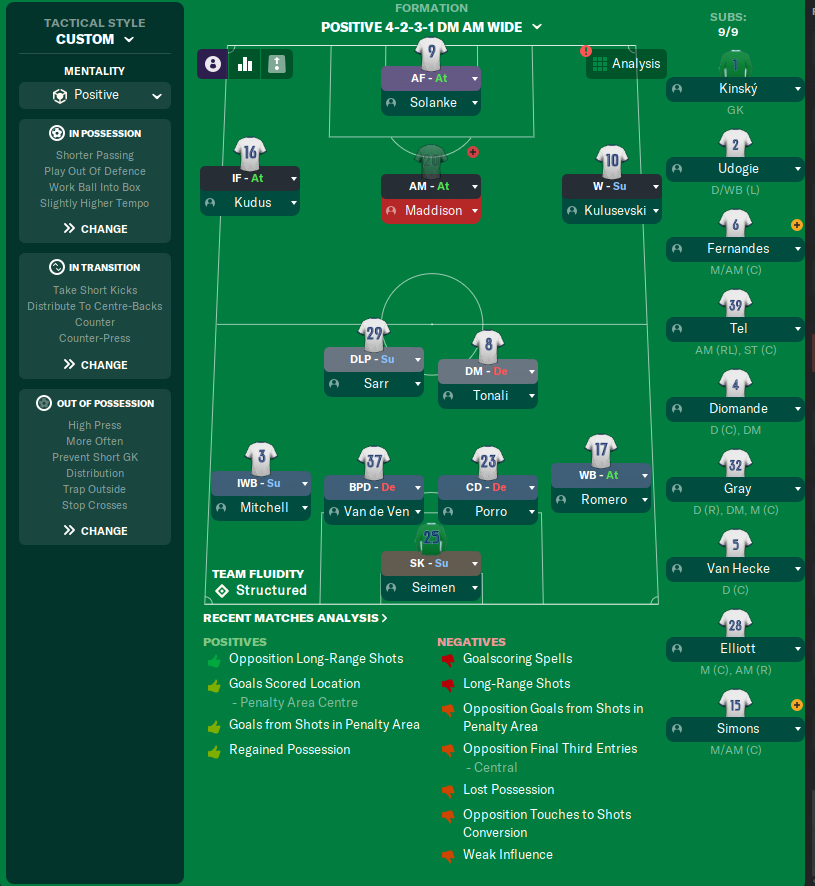
4-2-3-1 DM AM Wide Formation
Custom
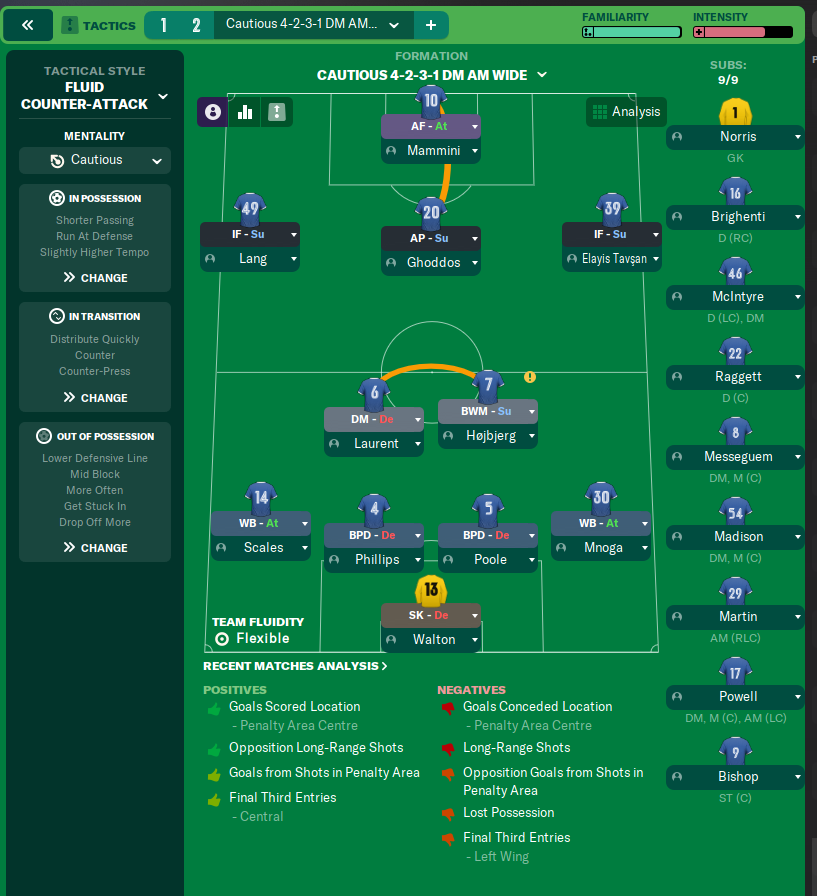
Fluid 4-2-3-1 DM AM Wide
Fluid
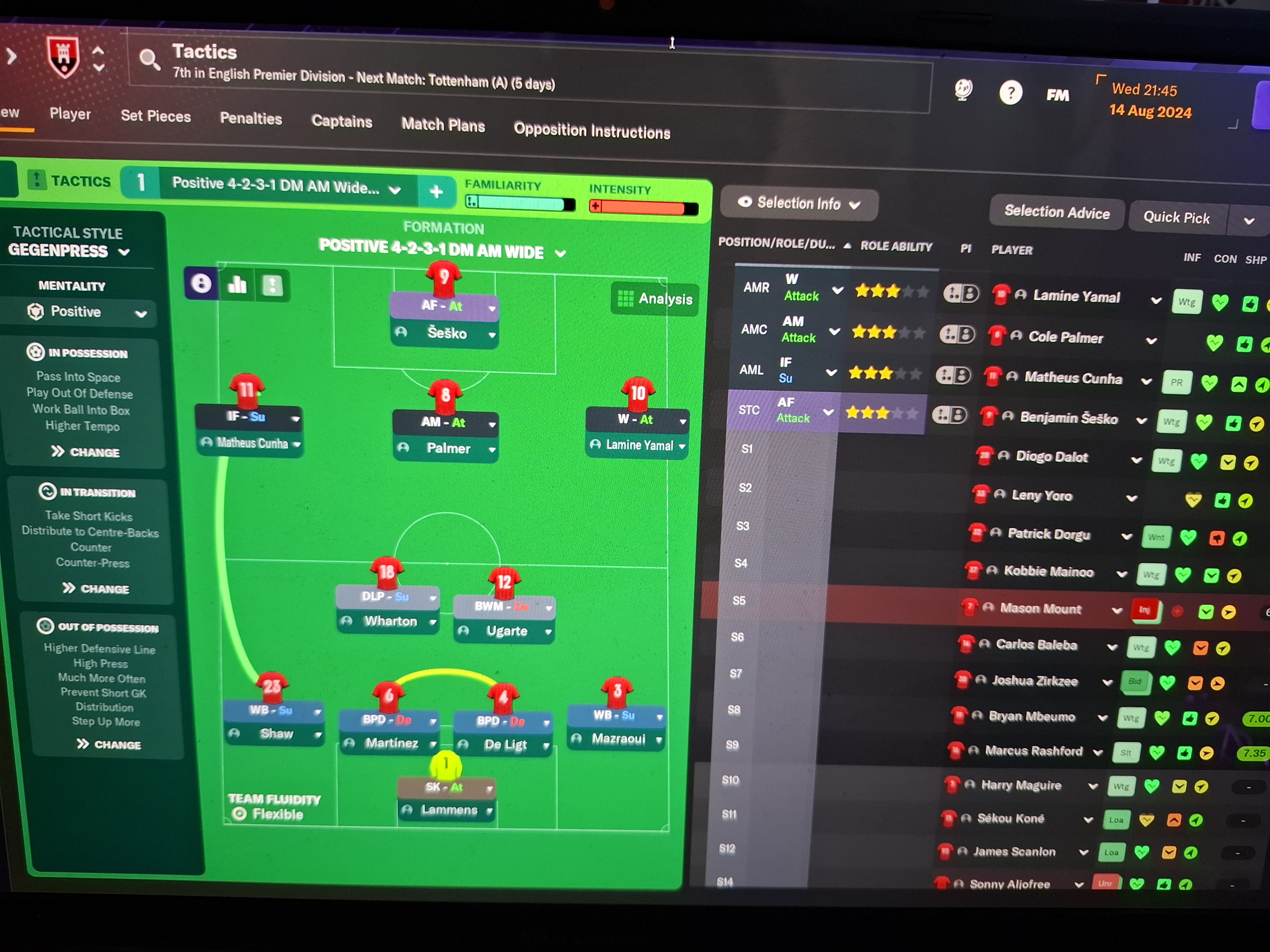
Gegenpress 4-2-3-1 DM AM Wide
Gegenpress
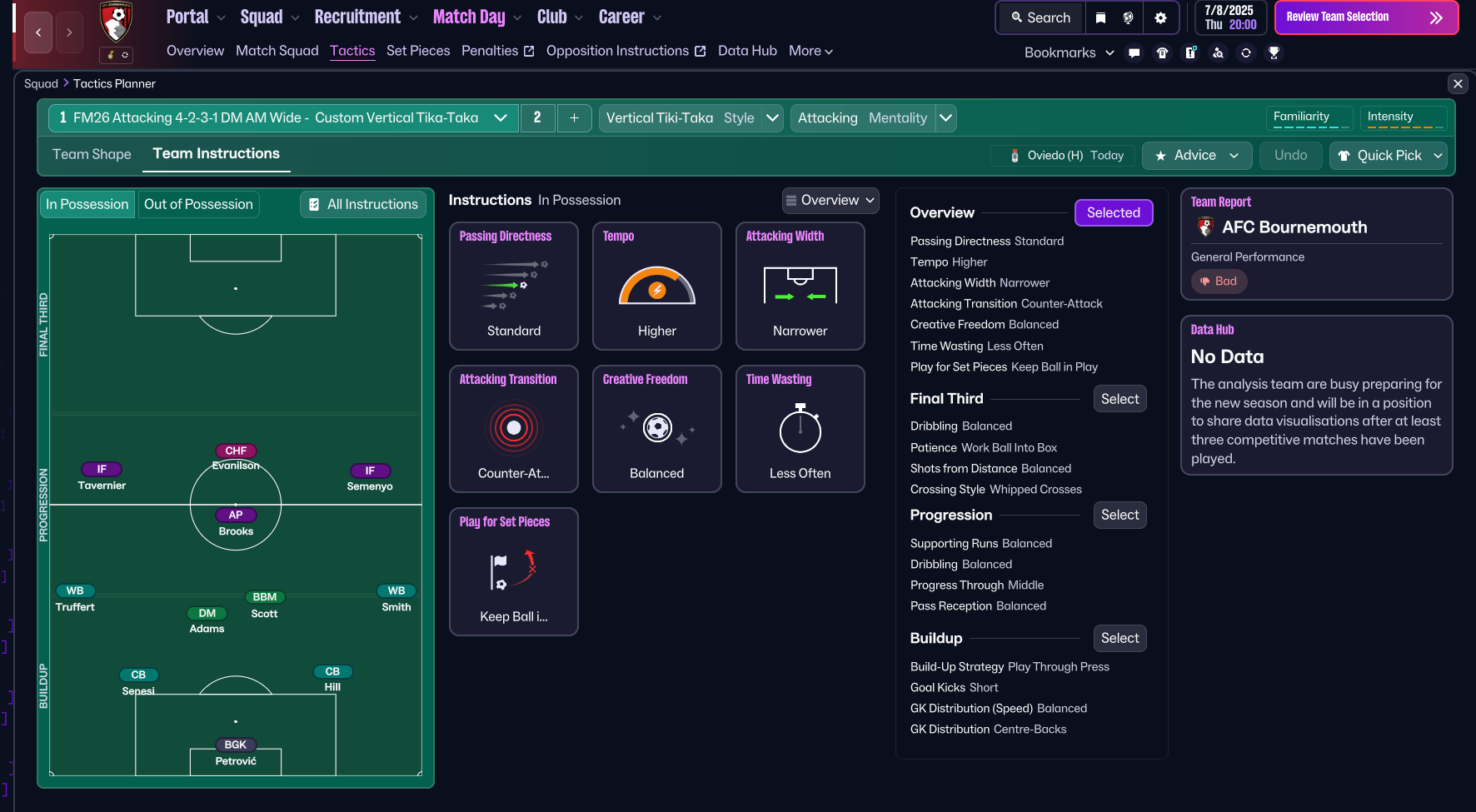
Vertical Tiki-Taka 4-2-3-1 DM AM Wide
Vertical Tiki-Taka
Guides for this formation
The tactical theory behind the 4-2-3-1 DM AM Wide: roles, instructions, and the trade-offs that decide whether the system holds up.
Player pairings
Midfield Pairs in 4-2-3-1 and 4-4-2
Double pivots and flat pairs in 4-2-3-1 and 4-4-2: when each pairing works, when it collapses, and the AMC unicorn that rescues both.
Read guide
Playing styles
Gegenpressing: A Full Guide
Klopp-style gegenpressing in FM, including squad profile, line-and-press pairing, sustainable workload, and the antipatterns to avoid.
Read guide