Uploaded Tactic
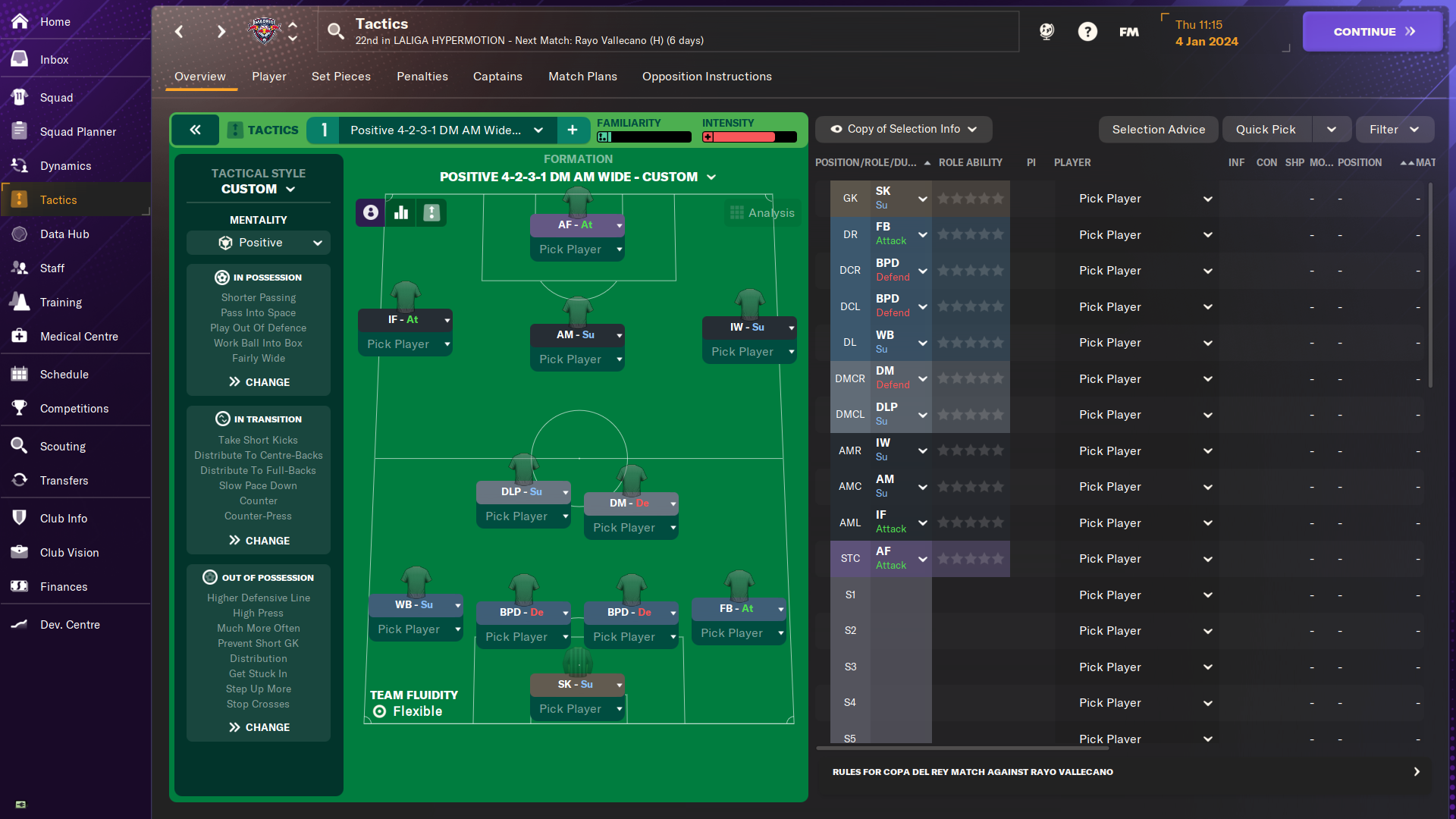
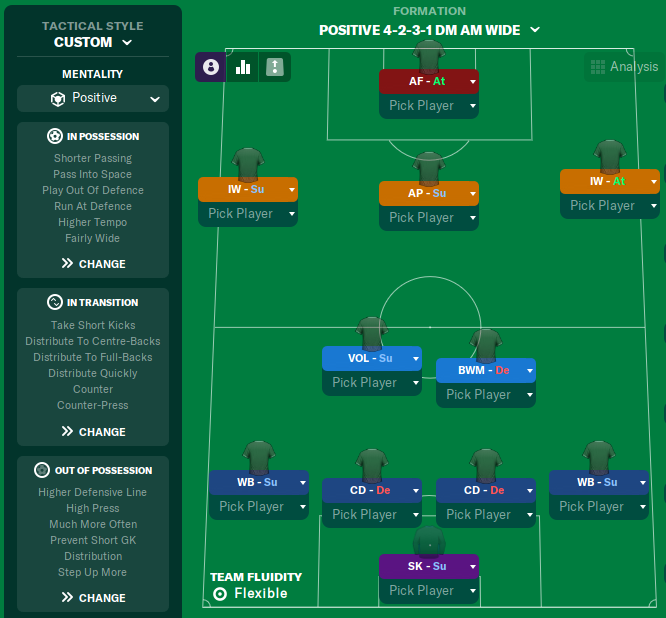
Formation & Style
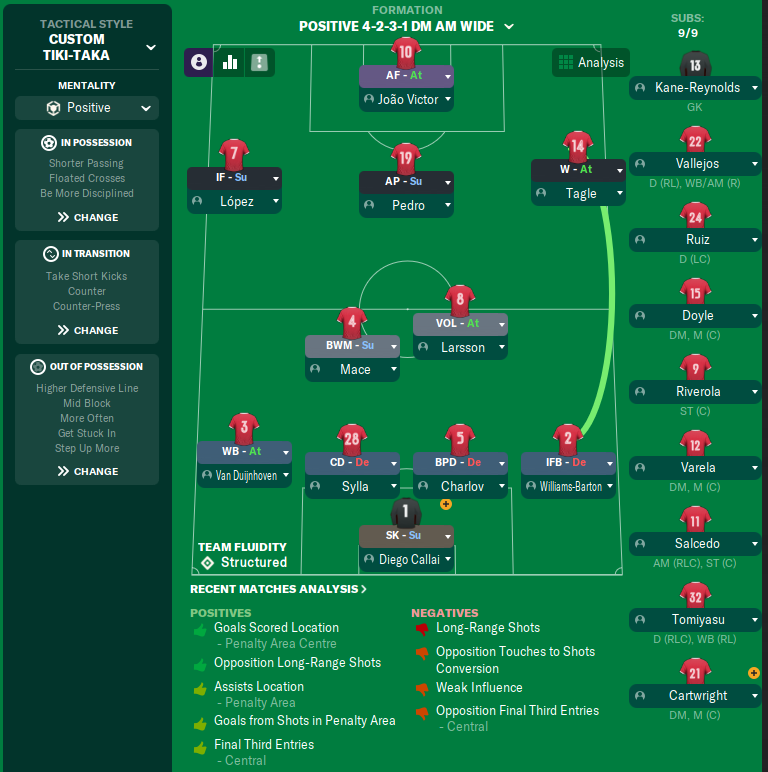
Tactical Style:Custom
Mentality:Positive
Formation:4-2-3-1 DM Wide
Team Fluidity:Flexible
In Possession
Shorter Passing
Pass Into Space
Play Out Of Defence
Work Ball Into Box
Fairly Wide
In Transition
Take Short Kicks
Distribute To Centre-Backs
Distribute To Full-Backs
Slow Pace Down
Counter
Counter-Press
Out of Possession
Higher Defensive Line
High Press
Much More Often Prevent Short GK Distribution
Get Stuck In
Step Up More
Short Crosses
Team Shape Without Ball
Shape:4-2-3-1
Description:A compact four-man defense with a screen provided by two midfielders helps absorb pressure while allowing for quick counter-attacks.
Evidence:BPD-De at [2,2] and [2,3], DM-D at [3,2], and DLP-S at [3,3] support the defensive line.
Team Shape With Ball
Shape:Fluid Attack
Description:The attack is characterized by three creative players behind the striker, facilitating width and dynamic runs into the box.
Evidence:IF-A at [6,4], AM-S at [6,3], and IW-A at [6,2] allow for versatile attacking options.
Phase Description
Attacking Play
Utilizes width and passing into space to break down defenses while maintaining a patient build-up with structured possession.
Defensive Transition
Prioritizes quick counter-press to regain possession immediately after losing the ball, supported by defensive midfielders stepping up to thwart opposition transitions.
Main Focus
Focuses on exploiting the wings and using attacking midfielders to penetrate defenses while maintaining a solid defensive setup.
Key Strengths
Strong Build-Up Play
Using a deep-lying playmaker and two ball-playing defenders allows for effective ball progression.
Varied Attacking Options
The inside forwards and a dynamic advanced forward create multiple goal-scoring opportunities.
Effective Wing Play
Full-backs supporting the attack stretch the opposition's defense and create space.
Conflicting Directions
Risk of Overcommitment
High pressing and attacking duties may leave the defense vulnerable to counter-attacks.
Transition Vulnerabilities
Counter-press might cause issues if the team fails to reset defensively after losing possession.
Full-Back Exposure
Attacking duties for full-backs could lead to spaces in defensive transitions.
Tactical Suggestions
Adjust Pressing Intensity
Consider lowering pressing intensity to maintain defensive structure and reduce vulnerability.
Balance Full-Back Duties
Switch one full-back’s duty to Support to minimize risk of getting caught out during transitions.
Consider Wider Shape
Tactically consider a more wing-focused approach to stretch opposition defenses.
Ask Questions About Your Lineup
Related Tactics
Guides for this formation
The tactical theory behind the 4-2-3-1 DM Wide: roles, instructions, and the trade-offs that decide whether the system holds up.
Player pairings
Midfield Pairs in 4-2-3-1 and 4-4-2
Double pivots and flat pairs in 4-2-3-1 and 4-4-2: when each pairing works, when it collapses, and the AMC unicorn that rescues both.
Read guide
Playing styles
Gegenpressing: A Full Guide
Klopp-style gegenpressing in FM, including squad profile, line-and-press pairing, sustainable workload, and the antipatterns to avoid.
Read guide