Uploaded Tactic
Formation & Style
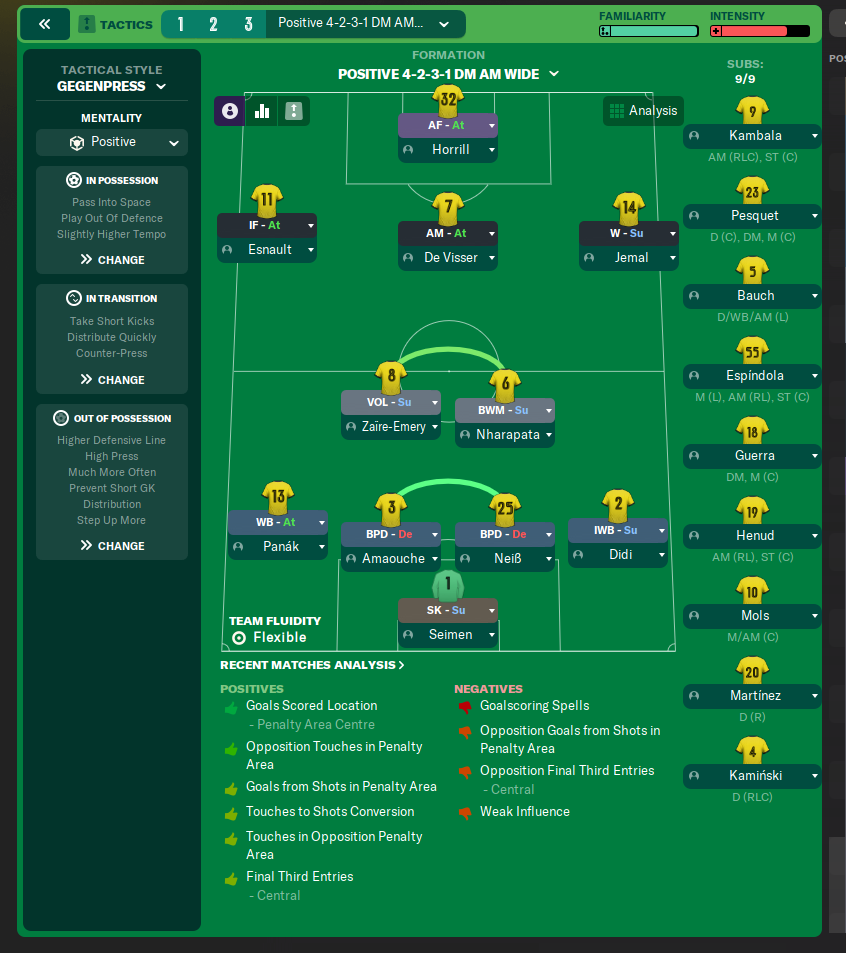
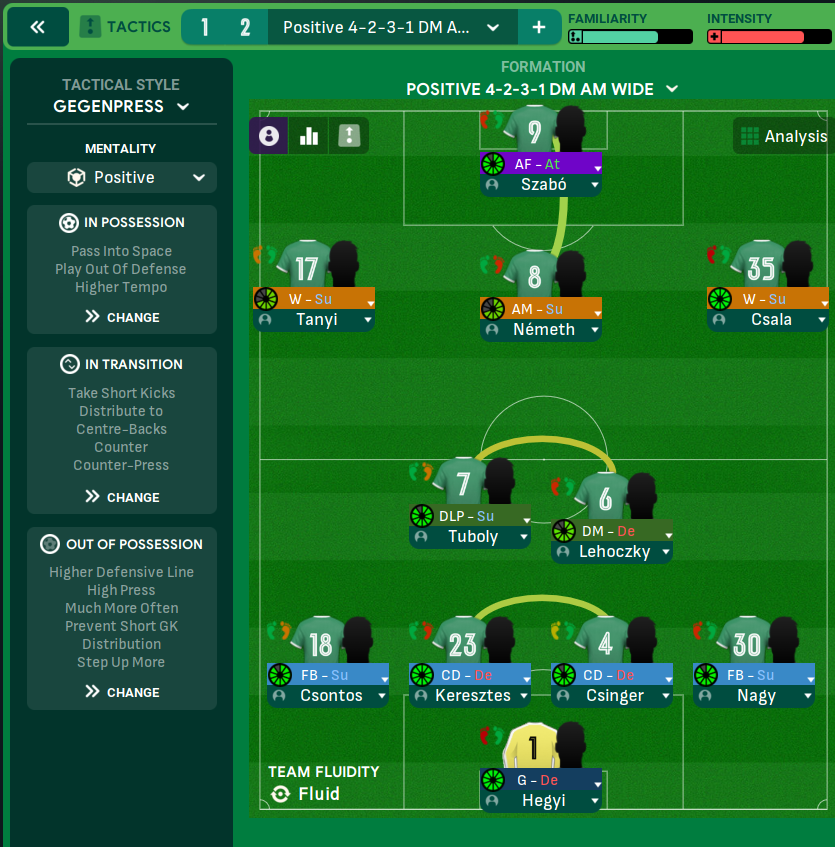
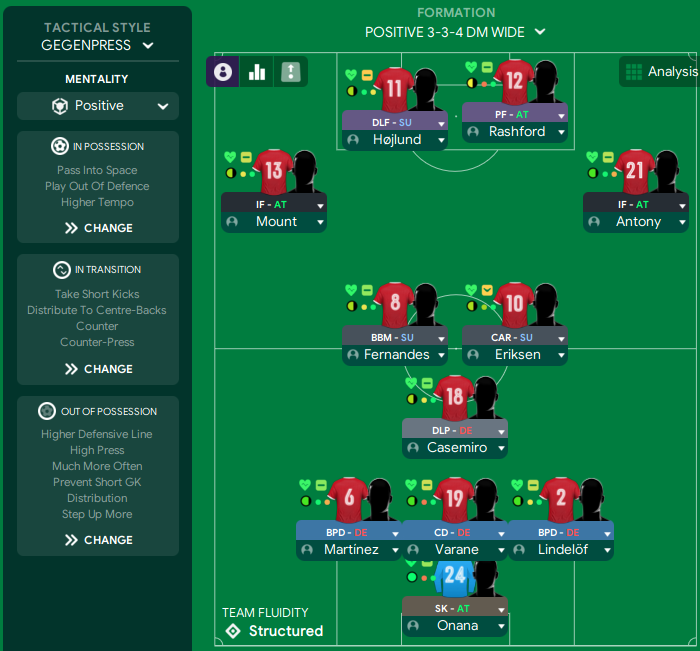
Tactical Style:Gegenpress
Mentality:Positive
Formation:4-2-3-1 DM Wide
Team Fluidity:Flexible
In Possession
Pass Into Space
Play Out Of Defence
Slightly Higher Tempo
In Transition
Take Short Kicks
Distribute Quickly
Counter-Press
Out of Possession
Higher Defensive Line
High Press
Much More Often Prevent Short GK Distribution
Step Up More
Team Shape Without Ball
Shape:4-2
Description:A compact, two-row defensive structure aimed at denying central spaces while also being capable of stepping up to apply pressure.
Evidence:BPD-D at [2,2] and [2,3] forming a robust back line.
Team Shape With Ball
Shape:4-3
Description:Fluid attacking shape with emphasis on width and penetration in central areas. The inside forwards and wingers stretch the defense while the advanced midfielder supports.
Evidence:IF-A at [6,2], AM-A at [5,3], and W-Su at [5,4] supporting the attack.
Phase Description
Attacking Play
Focuses on utilizing width with inside forwards and wingers, complemented by an attacking midfielder to create chances.
Defensive Transition
Quick recovery of possession through counter-pressing and maintaining a high press across the pitch.
Main Focus
To exploit spaces behind the opposition with quick transitions and attacking plays.
Key Strengths
Dynamic Attack
Utilizes inside forwards and wingers effectively to create space and scoring opportunities.
Effective Pressing
Team's high pressing style creates numerous opportunities for regaining possession.
Strong Midfield Support
The dual midfield roles facilitate both attacking and defensive transitions efficiently.
Conflicting Directions
Overexposure to Counter Attacks
With a high defensive line, the team may become vulnerable to quick counter-attacks.
Concentration on Wide Play
The focus on width can leave central areas less populated, risking overcommitment on flanks.
Limited Defensive Recovery
Counter-Pressing approach can lead to fatigue if possession is lost frequently.
Tactical Suggestions
Consider a Deeper Defensive Line
Adjusting the defensive line could mitigate vulnerability to counter-attacks.
Add Width to Central Play
Encouraging a more balanced approach with an additional central midfielder could strengthen control.
Implement Rotation in Attacking Roles
Encouraging rotations among the forwards could enhance unpredictability.
Ask Questions About Your Lineup
Related Tactics
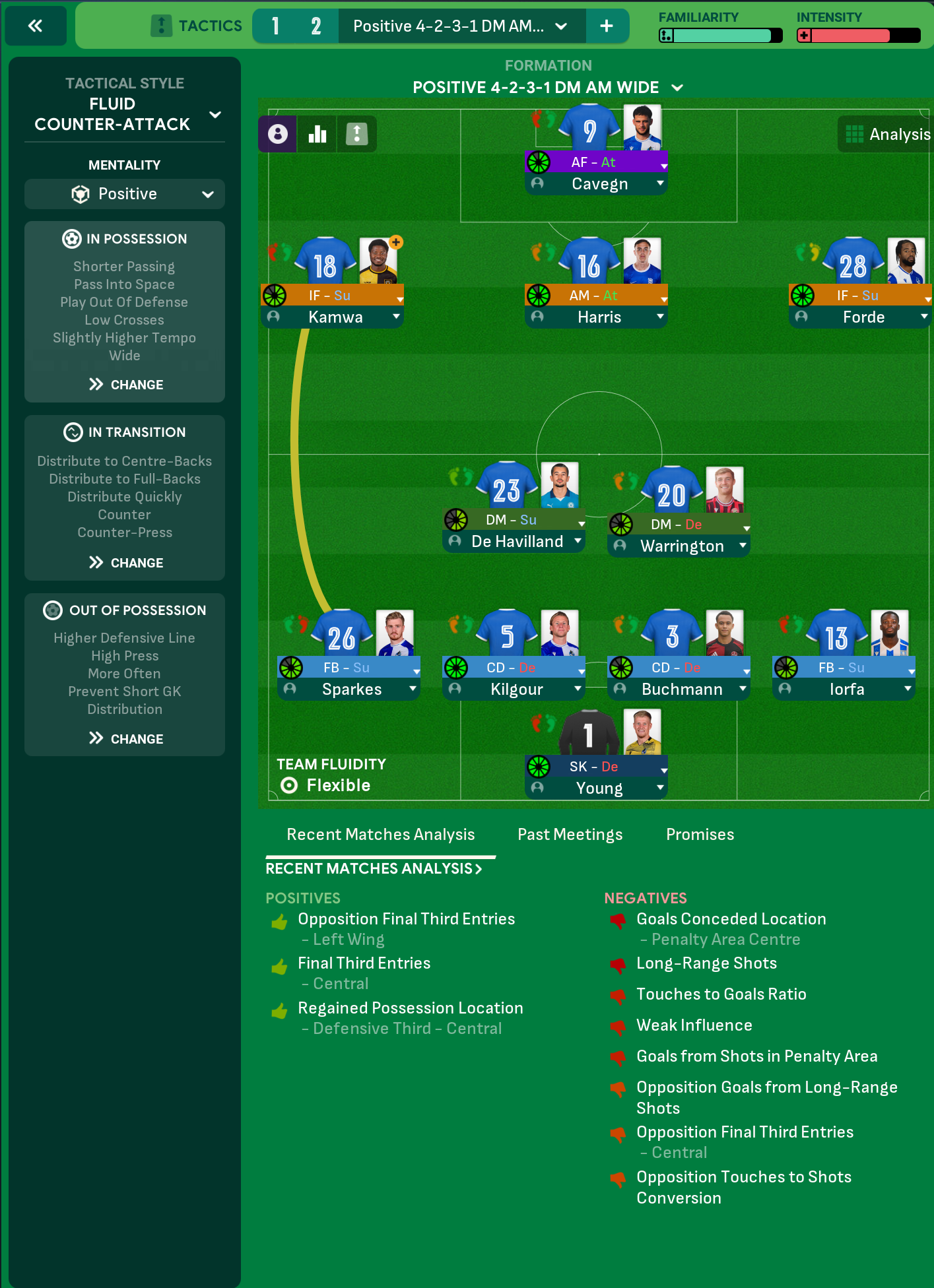
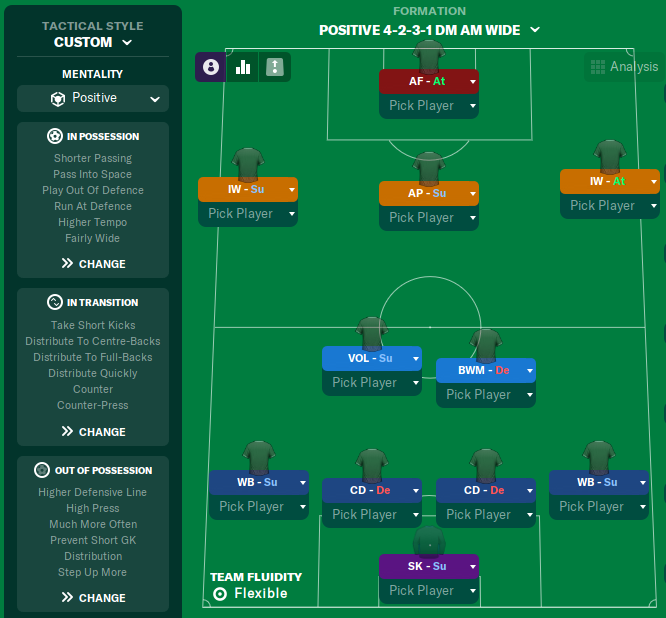
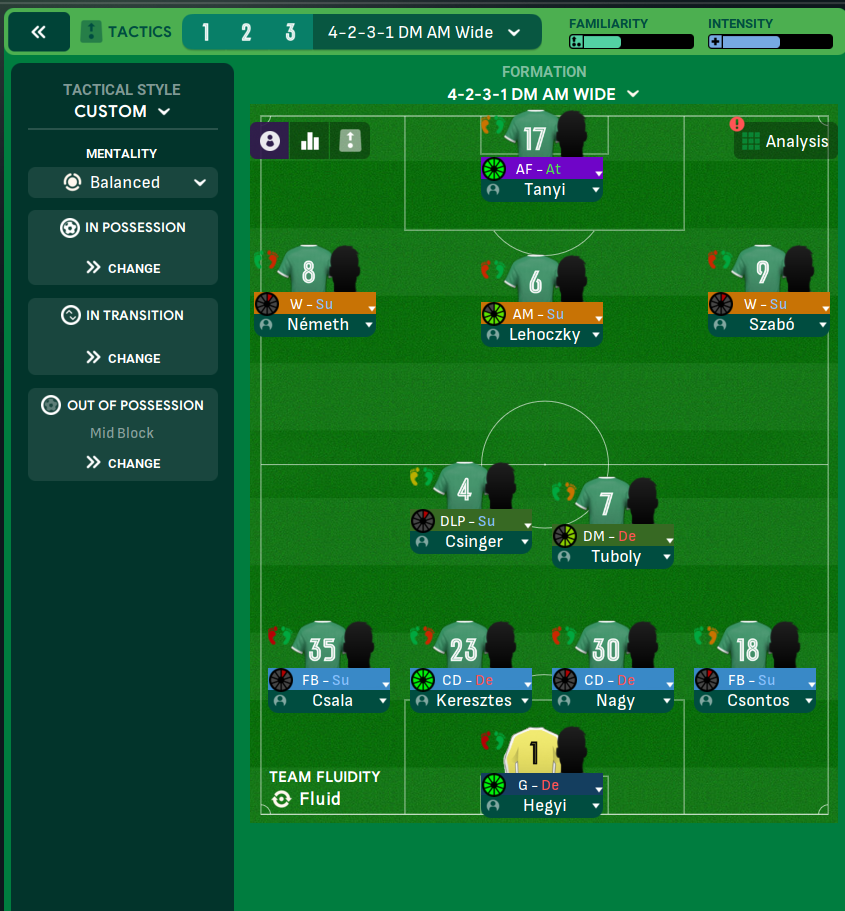
More Gegenpress tactics
Guides for this formation
The tactical theory behind the 4-2-3-1 DM Wide: roles, instructions, and the trade-offs that decide whether the system holds up.
Player pairings
Midfield Pairs in 4-2-3-1 and 4-4-2
Double pivots and flat pairs in 4-2-3-1 and 4-4-2: when each pairing works, when it collapses, and the AMC unicorn that rescues both.
Read guide
Playing styles
Gegenpressing: A Full Guide
Klopp-style gegenpressing in FM, including squad profile, line-and-press pairing, sustainable workload, and the antipatterns to avoid.
Read guide