Uploaded Tactic
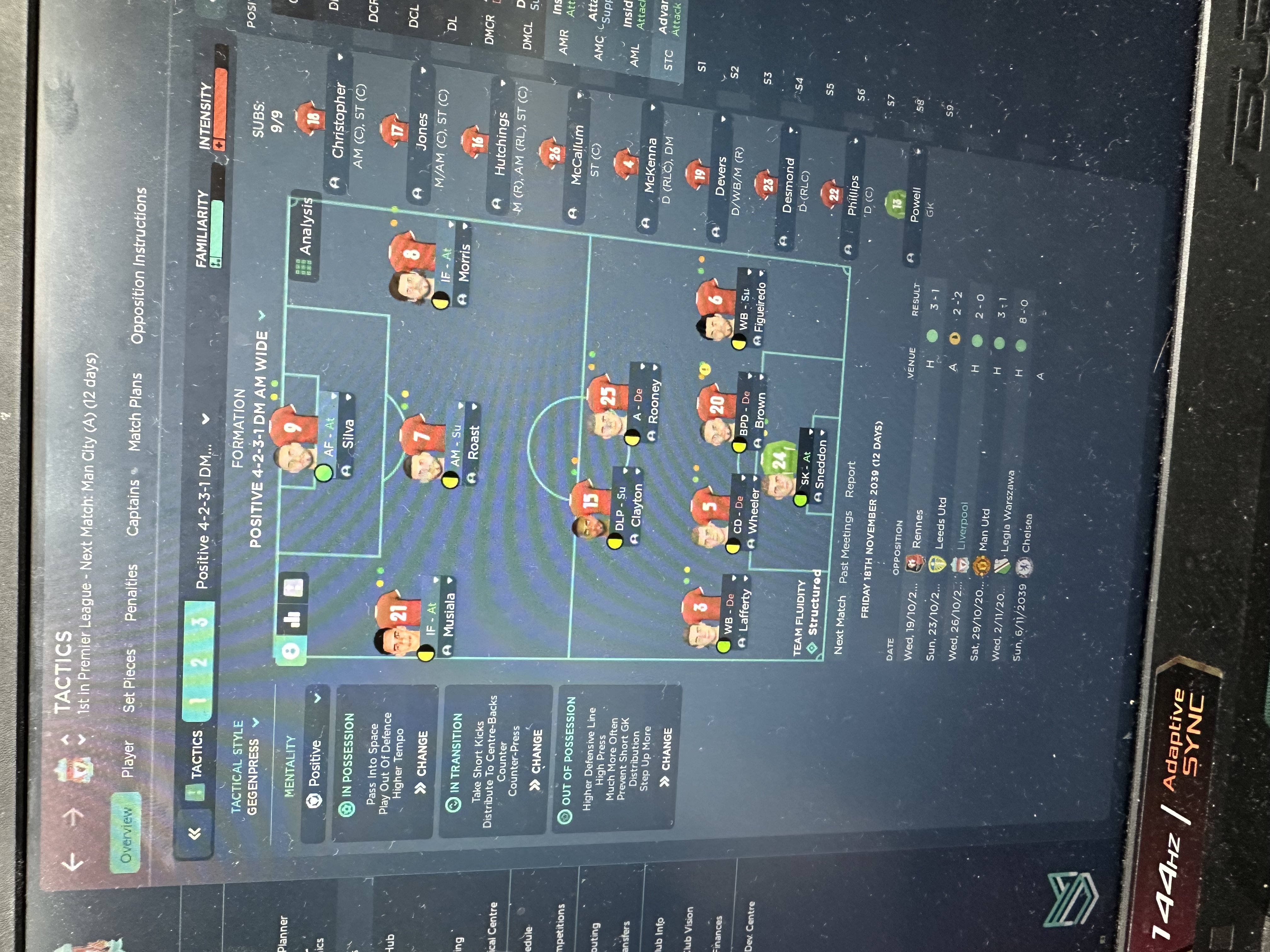
Formation & Style
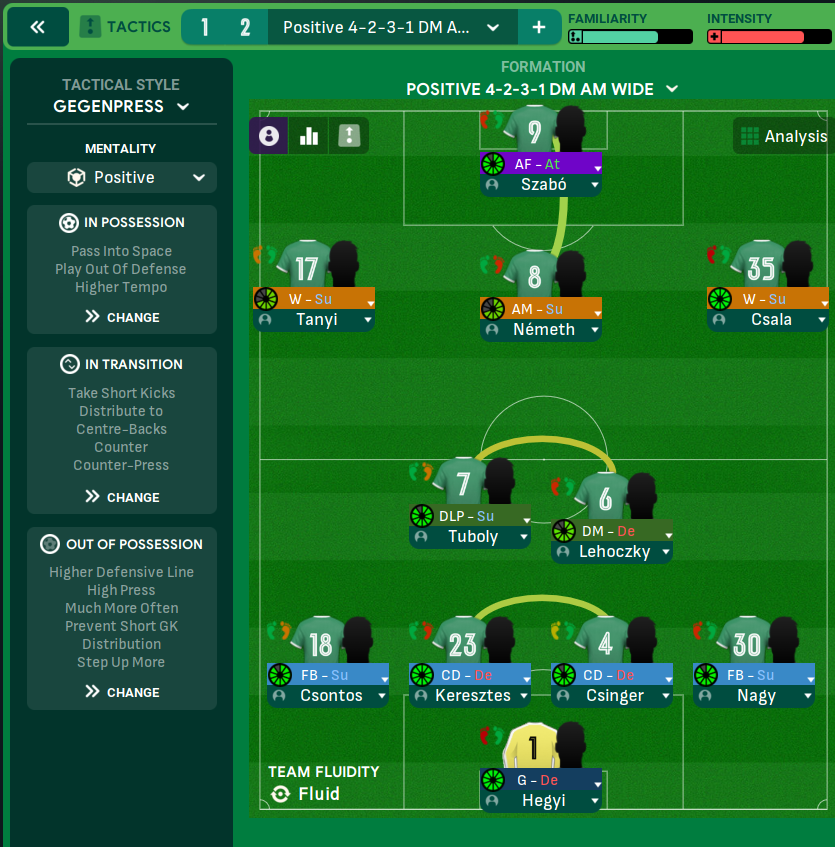
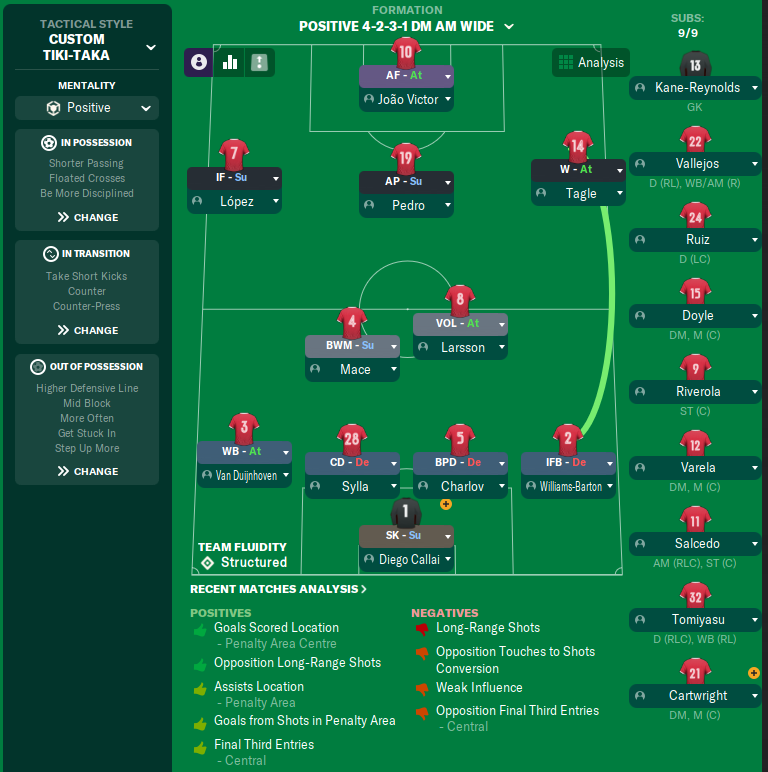
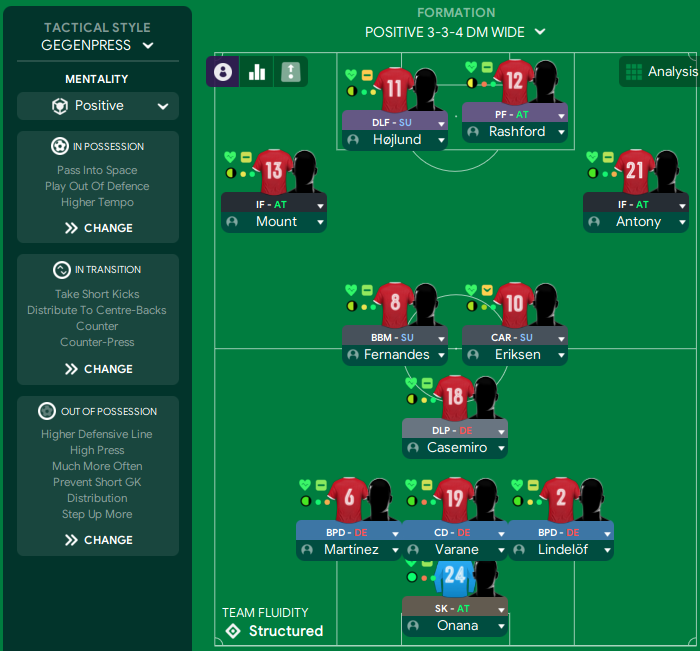
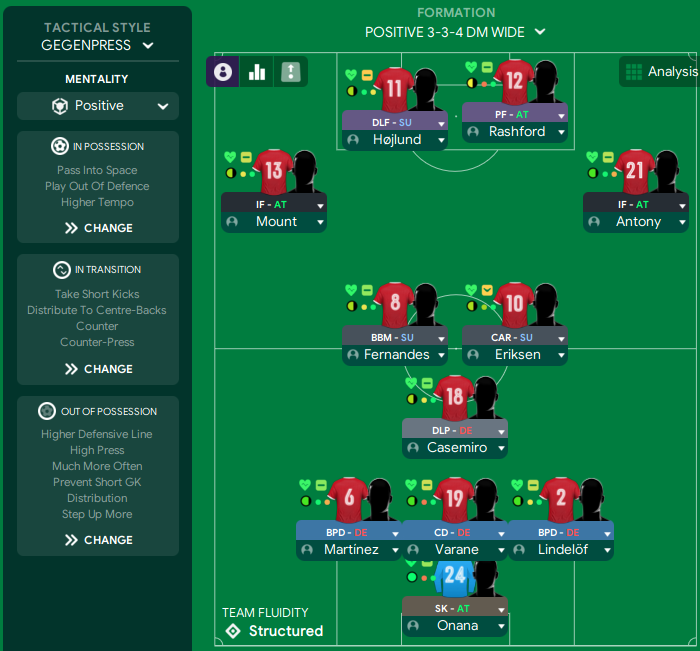
Tactical Style:Gegenpress
Mentality:Positive
Formation:4-2-3-1 DM Wide
Team Fluidity:Structured
In Possession
Pass Into Space
Play Out Of Defence
Higher Tempo
In Transition
Take Short Kicks
Distribute To Centre-Backs
Counter-Press
Out of Possession
Higher Defensive Line
Much More Often Prevent Short GK Distribution
Step Up More
Team Shape Without Ball
Shape:4-2-3-1
Description:Compact formation with a focus on defensive structure and quick recovery.
Evidence:CB and DM support from deep while FBs push wide.
Team Shape With Ball
Shape:4-2-3-1
Description:Wide play with attacking options coming from both wings and a central strike threat.
Evidence:Wing-Backs pushing up, Inside Forward cutting inside.
Phase Description
Attacking Play
Fast transitions using the width of the pitch, driven by the Wing-Backs and Inside Forwards.
Defensive Transition
Immediate counter-pressing to regain possession quickly and limit counter-attack opportunities.
Main Focus
High tempo attacking play with a strong emphasis on exploiting spaces behind the opposition.
Key Strengths
High Pressing Capacity
Counter-pressing with immediate attempts to regain possession.
Fluid Attacking Play
Versatile attacking options through width and through the middle.
Strong Build-up Play
Utilization of Ball-Playing Defender to facilitate transitions.
Conflicting Directions
Limited Under Pressure Play
Potential vulnerability during build-up phases when pressed.
Winger Dependency
Over-reliance on wide players might lead to stagnation.
Cautious Midfield Transition
Deep-Lying Playmaker might slow transitions if not supported.
Tactical Suggestions
Enhance Midfield Dynamics
Consider adjusting the Deep-Lying Playmaker to a more aggressive role.
Adjust Wing-Back Duties
Analyze the effectiveness of the Wing-Backs in attack; consider one as a more defensive option.
Increase Depth in Attack
Utilizing a Shadow Striker or a more creative role at AM could add unpredictability.
Ask Questions About Your Lineup
Related Tactics
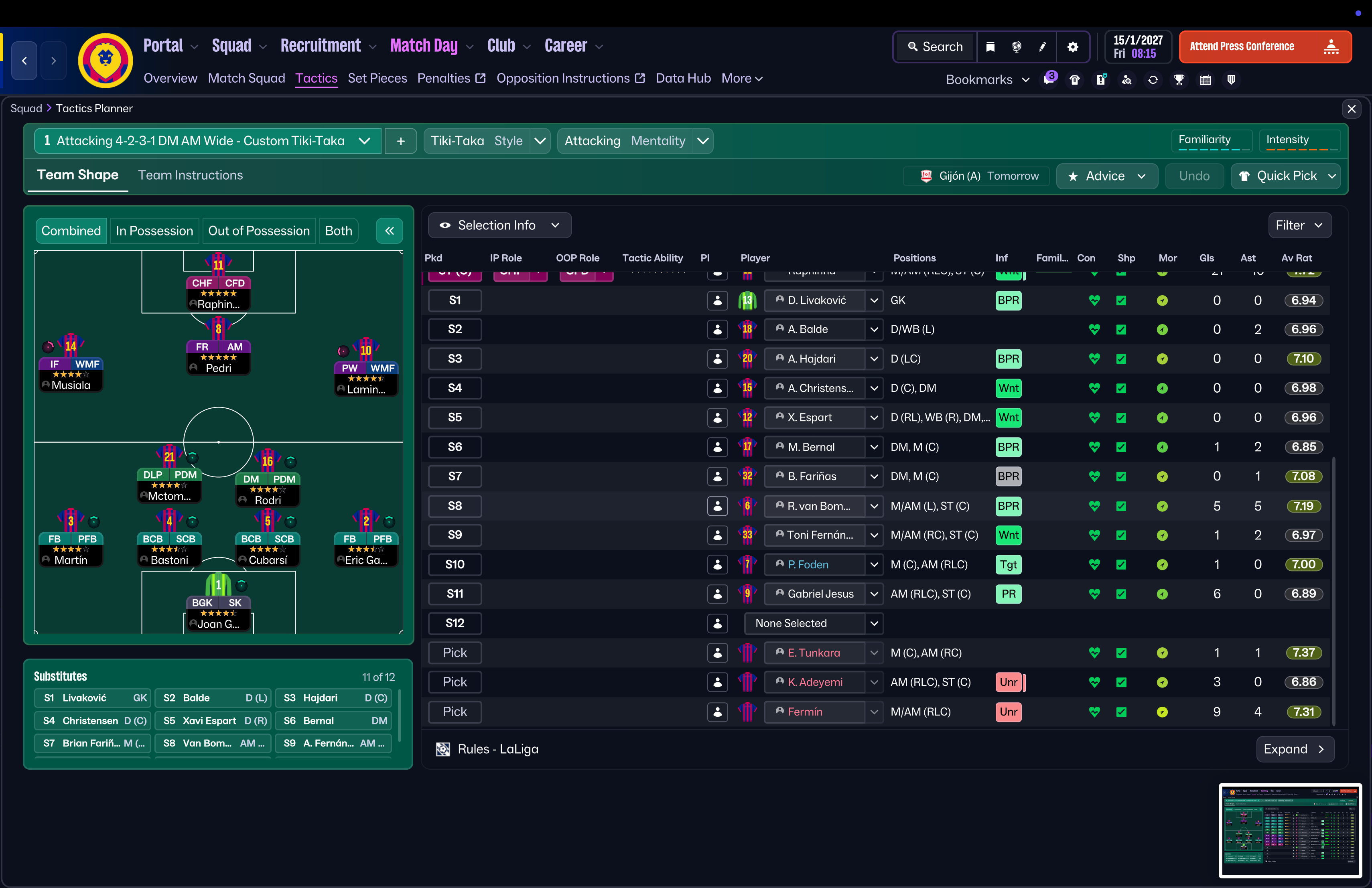
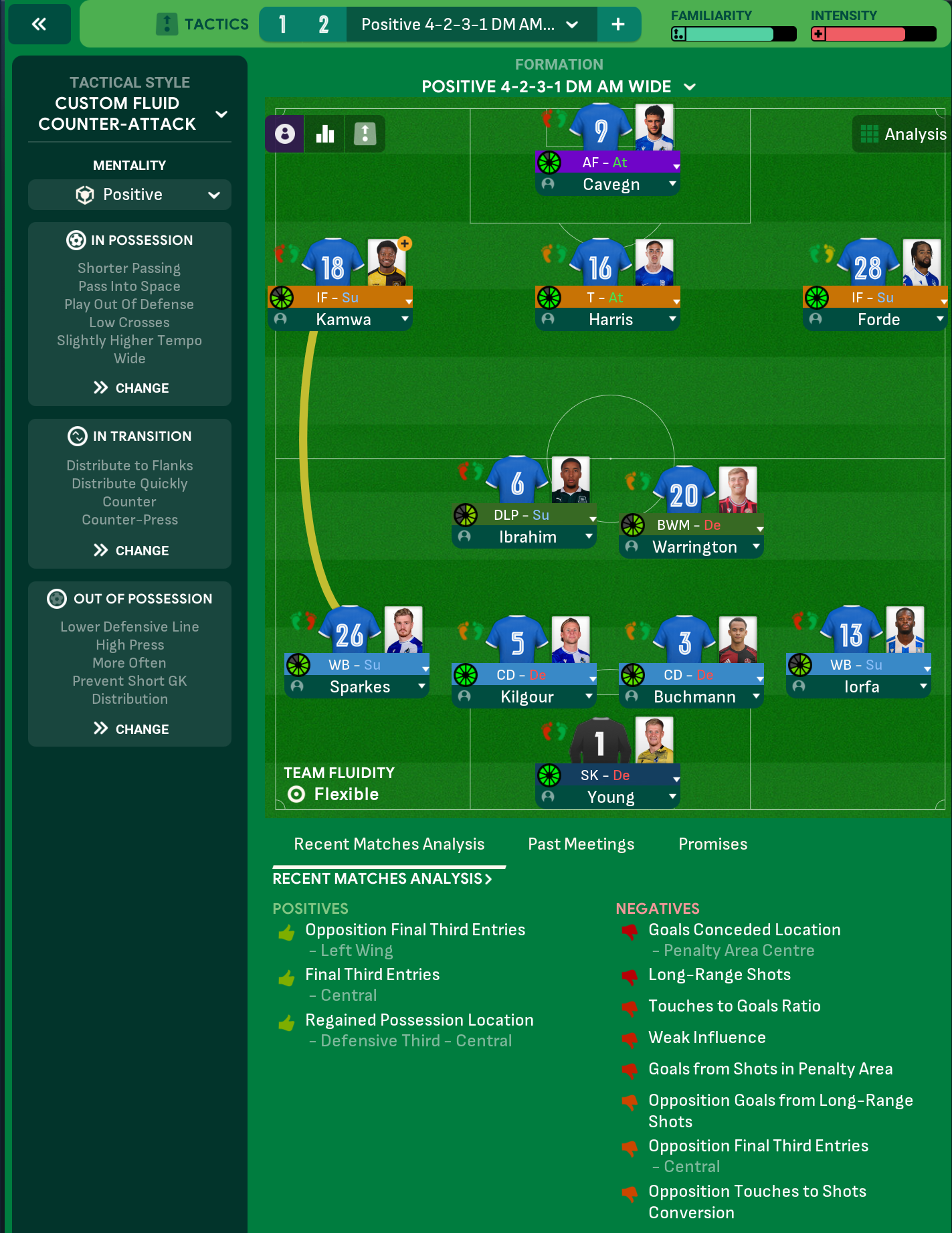
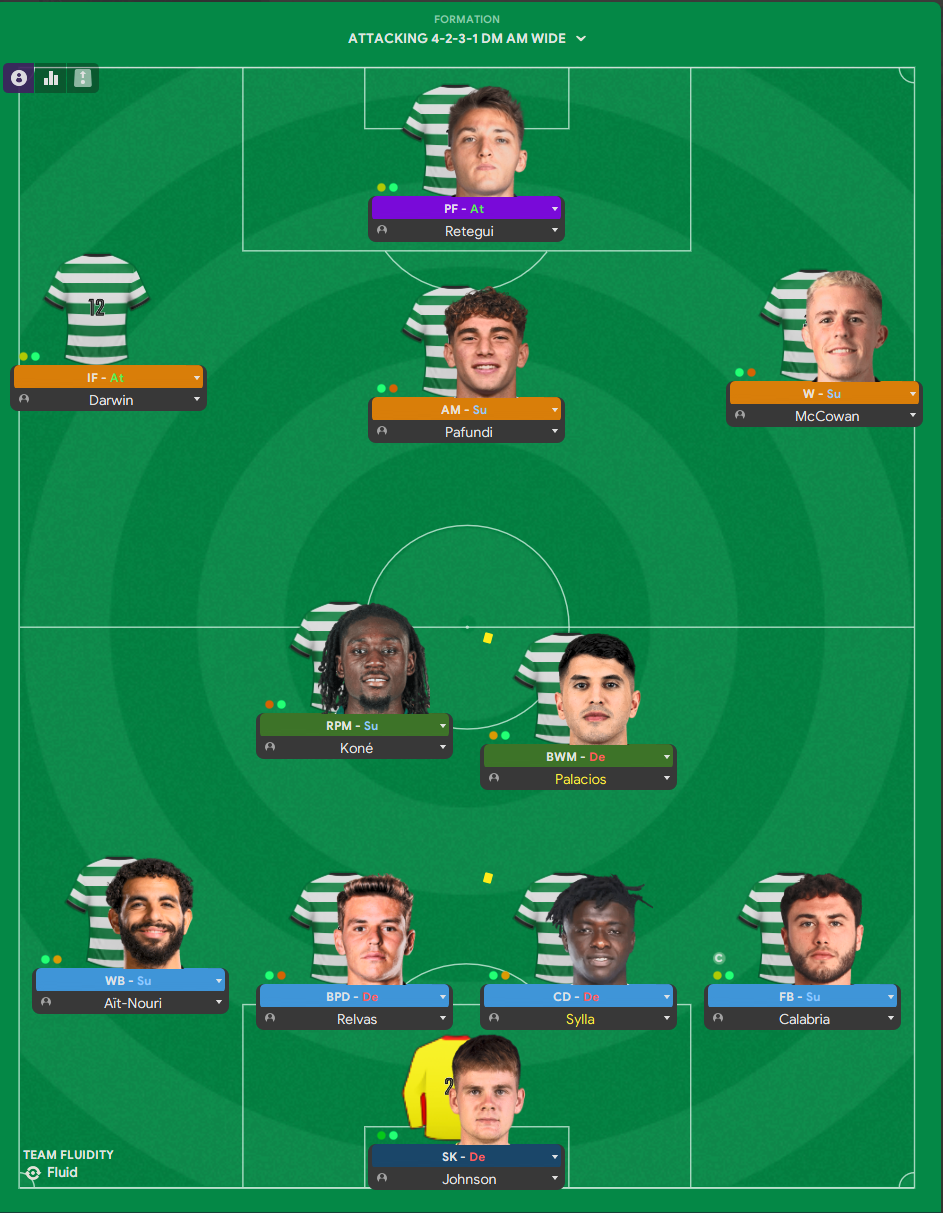
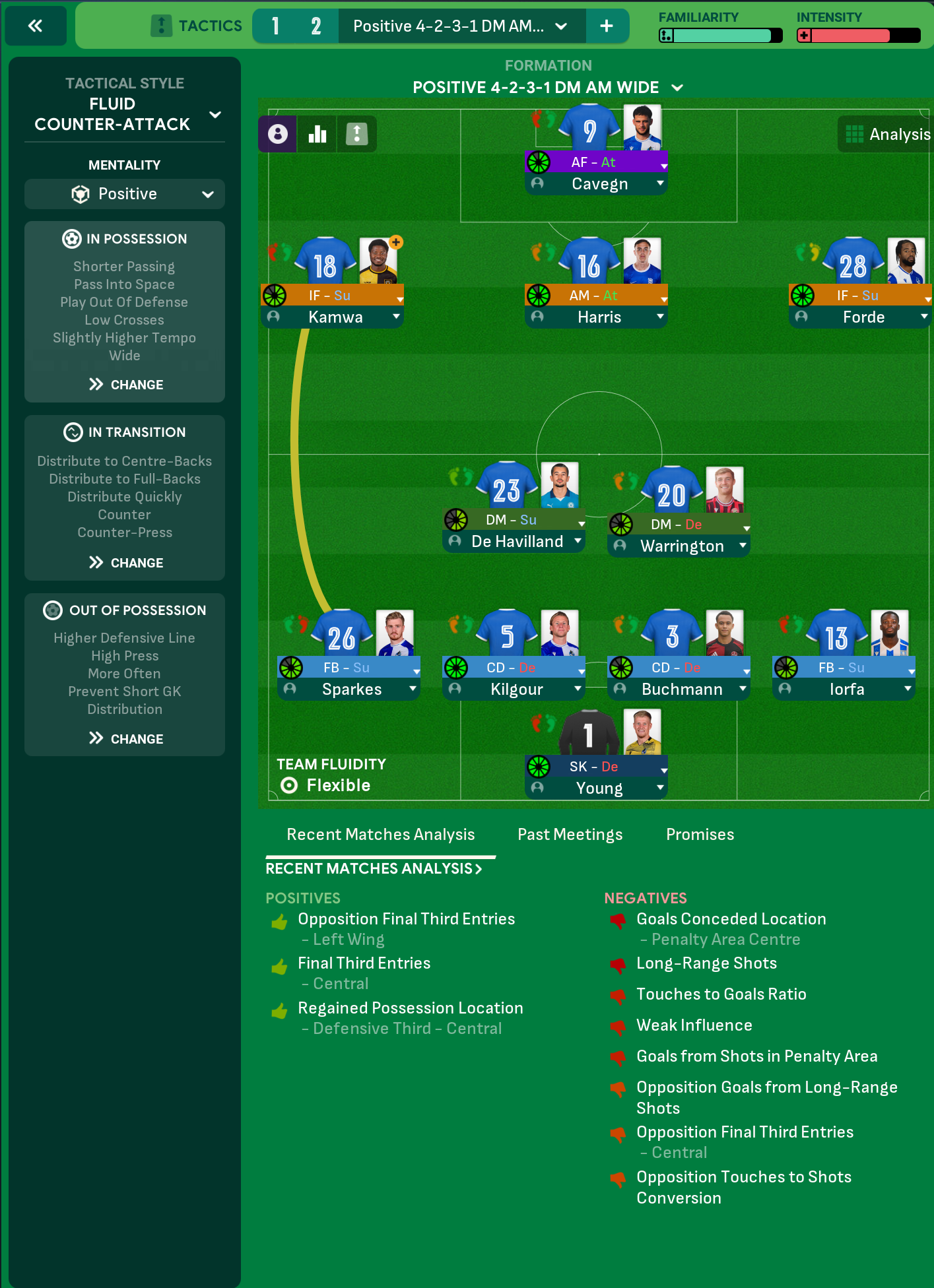
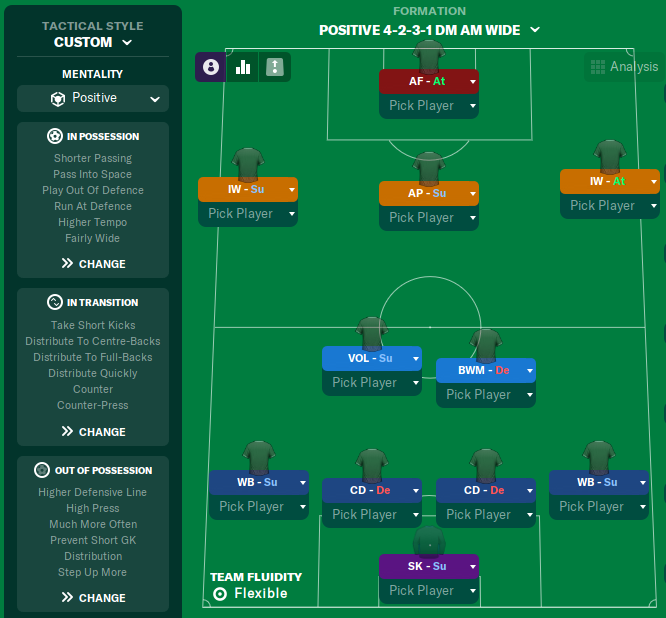
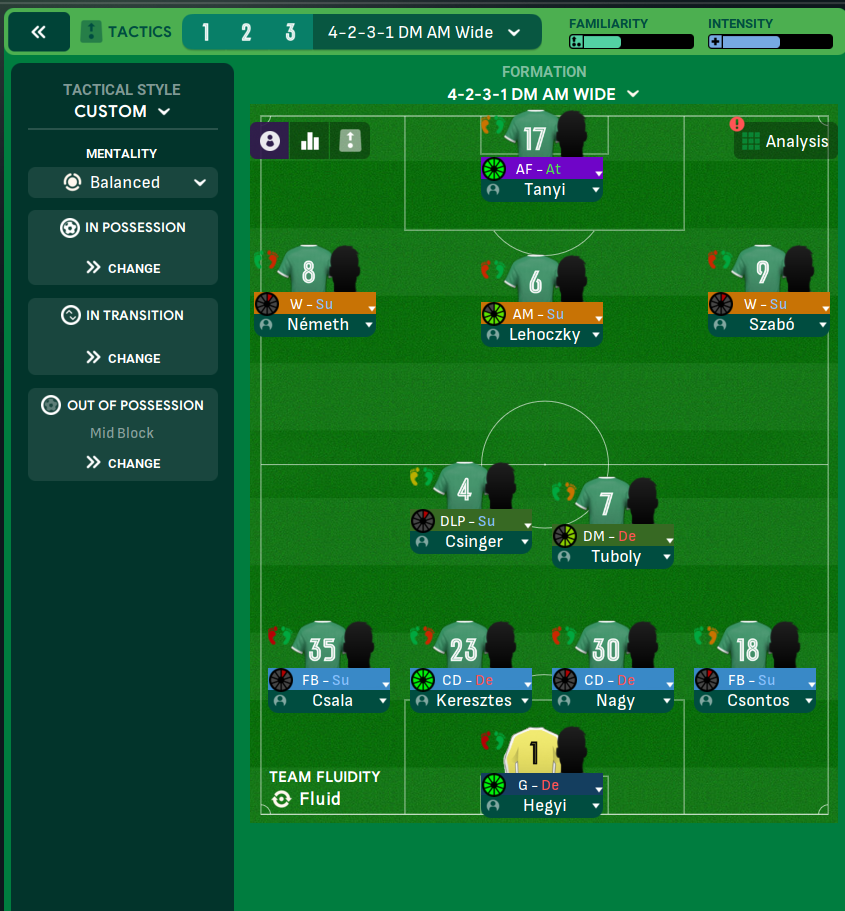
More Gegenpress tactics
Guides for this formation
The tactical theory behind the 4-2-3-1 DM Wide: roles, instructions, and the trade-offs that decide whether the system holds up.
Player pairings
Midfield Pairs in 4-2-3-1 and 4-4-2
Double pivots and flat pairs in 4-2-3-1 and 4-4-2: when each pairing works, when it collapses, and the AMC unicorn that rescues both.
Read guide
Playing styles
Gegenpressing: A Full Guide
Klopp-style gegenpressing in FM, including squad profile, line-and-press pairing, sustainable workload, and the antipatterns to avoid.
Read guide