Uploaded Tactic
Formation & Style
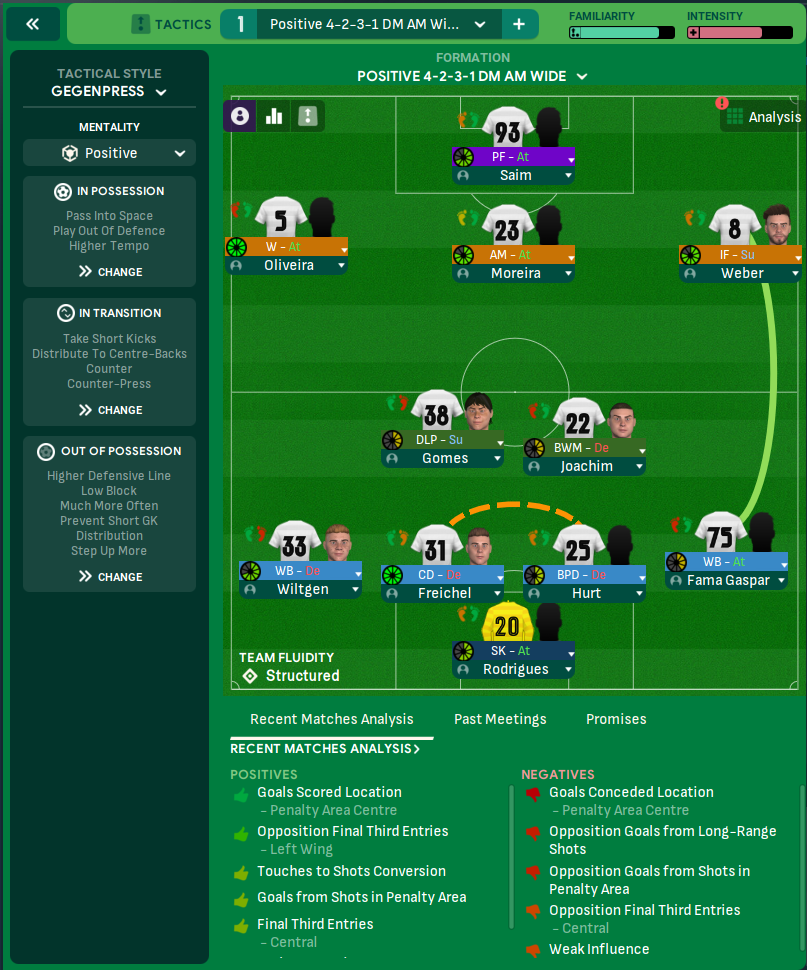
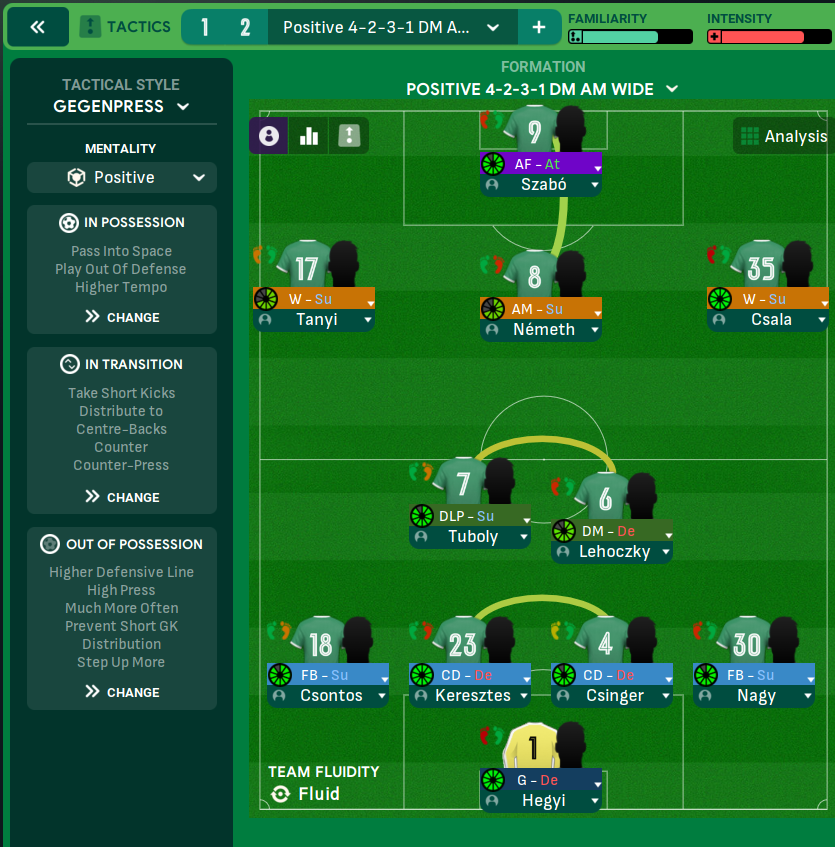
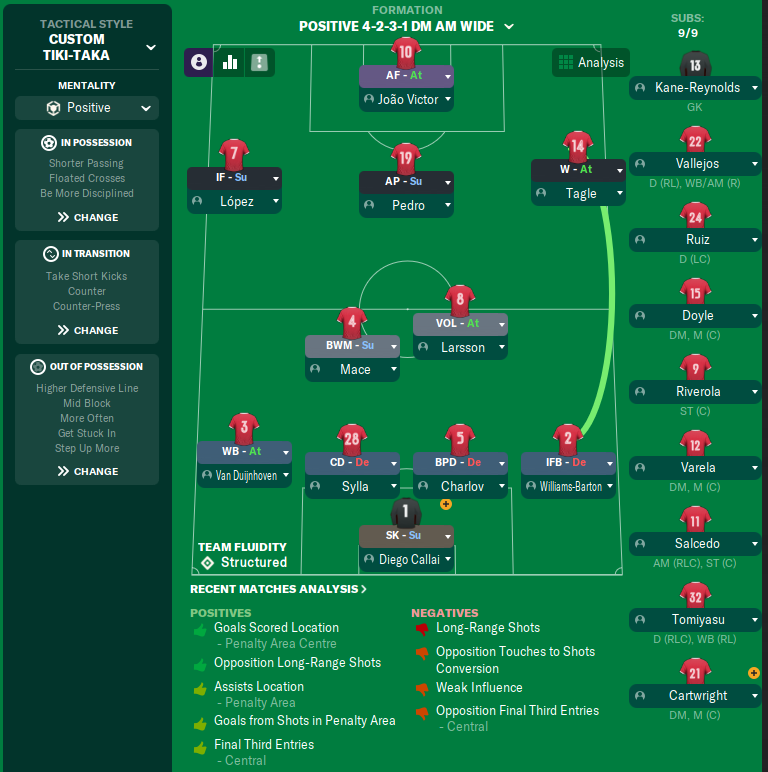
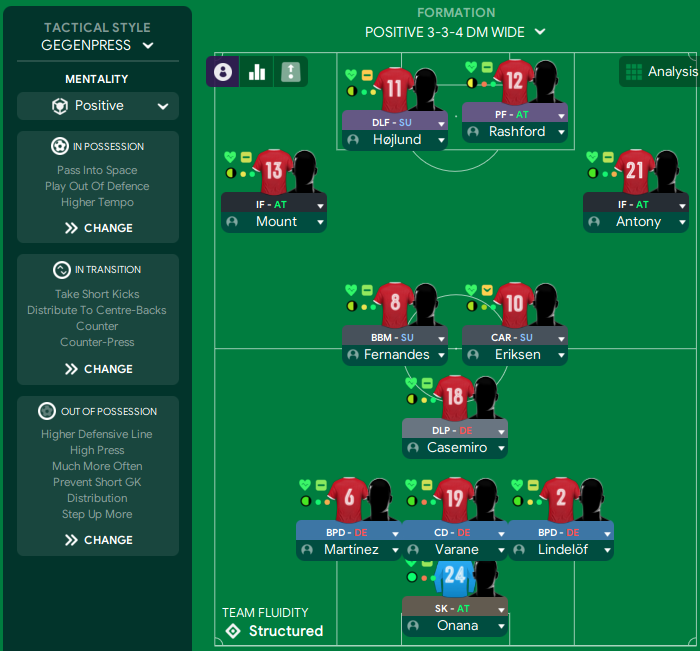
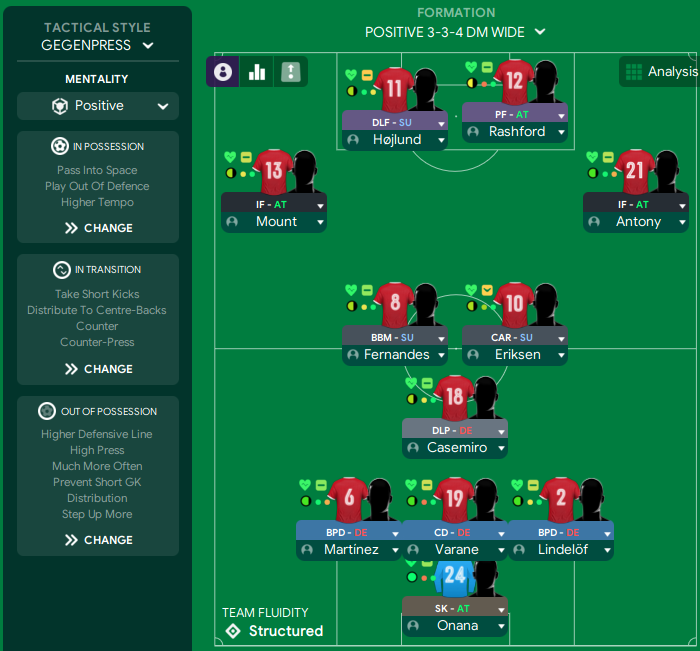
Tactical Style:Gegenpress
Mentality:Positive
Formation:4-2-3-1 DM Wide
Team Fluidity:Structured
In Possession
Pass Into Space
Play Out Of Defence
Higher Tempo
In Transition
Distribute To Centre-Backs
Counter
Out of Possession
Higher Defensive Line
Low Block
Much More Often Prevent Short GK Distribution
Step Up More
Team Shape Without Ball
Shape:4-2
Description:Standard defensive shape with two holding midfielders providing cover to the back four, effectively nullifying central threats.
Evidence:BWM-D at [4,3] and DLP-S at [3,3] work to shield the defense.
Team Shape With Ball
Shape:4-3
Description:Fluid attacking shape with wingers stretching play and forwards occupying central defenders, allowing for penetration.
Evidence:W-A at [6,1] and IF-S at [6,3] create width and depth in attack.
Phase Description
Attacking Play
Focus on wide play and exploiting space with quick transitions, maximizing the pace of wingers and forwards.
Defensive Transition
Quick recovery runs to regain possession, emphasizing a high counter-press to limit opposition buildup.
Main Focus
Utilizing width and pressing high to force errors and capitalize in opposition's half.
Key Strengths
Effective Wide Play
Wingers and wing-backs effectively stretch opposition and create space for central players.
Pressing Ability
Team's pressing orientation makes it difficult for the opponent to build up play from the back.
Strong Central Midfield
Ball-winning midfielder complements deep-lying playmaker in controlling the pace and stability in midfield.
Conflicting Directions
High Line Vulnerability
Higher defensive line could expose the team to quick counter-attacks, especially against teams with fast forwards.
Reliance on Wing-heavy Strategy
If wingers are marked out, the attack may lack cohesion, leading to a stagnant midfield.
Pressing Fatigue Risk
Intense pressing may lead to fatigue over a prolonged period, diminishing effectiveness.
Tactical Suggestions
Consider Adjusting Defensive Line
Lowering the defensive line could alleviate vulnerabilities against pacey forwards.
Diversify Attack Options
Including a more central attacking player could increase depth and options in the middle.
Manage Pressing Intensity
Reducing the frequency of pressing could maintain player stamina and effectiveness.
Ask Questions About Your Lineup
Related Tactics
More Gegenpress tactics
Guides for this formation
The tactical theory behind the 4-2-3-1 DM Wide: roles, instructions, and the trade-offs that decide whether the system holds up.
Player pairings
Midfield Pairs in 4-2-3-1 and 4-4-2
Double pivots and flat pairs in 4-2-3-1 and 4-4-2: when each pairing works, when it collapses, and the AMC unicorn that rescues both.
Read guide
Playing styles
Gegenpressing: A Full Guide
Klopp-style gegenpressing in FM, including squad profile, line-and-press pairing, sustainable workload, and the antipatterns to avoid.
Read guide