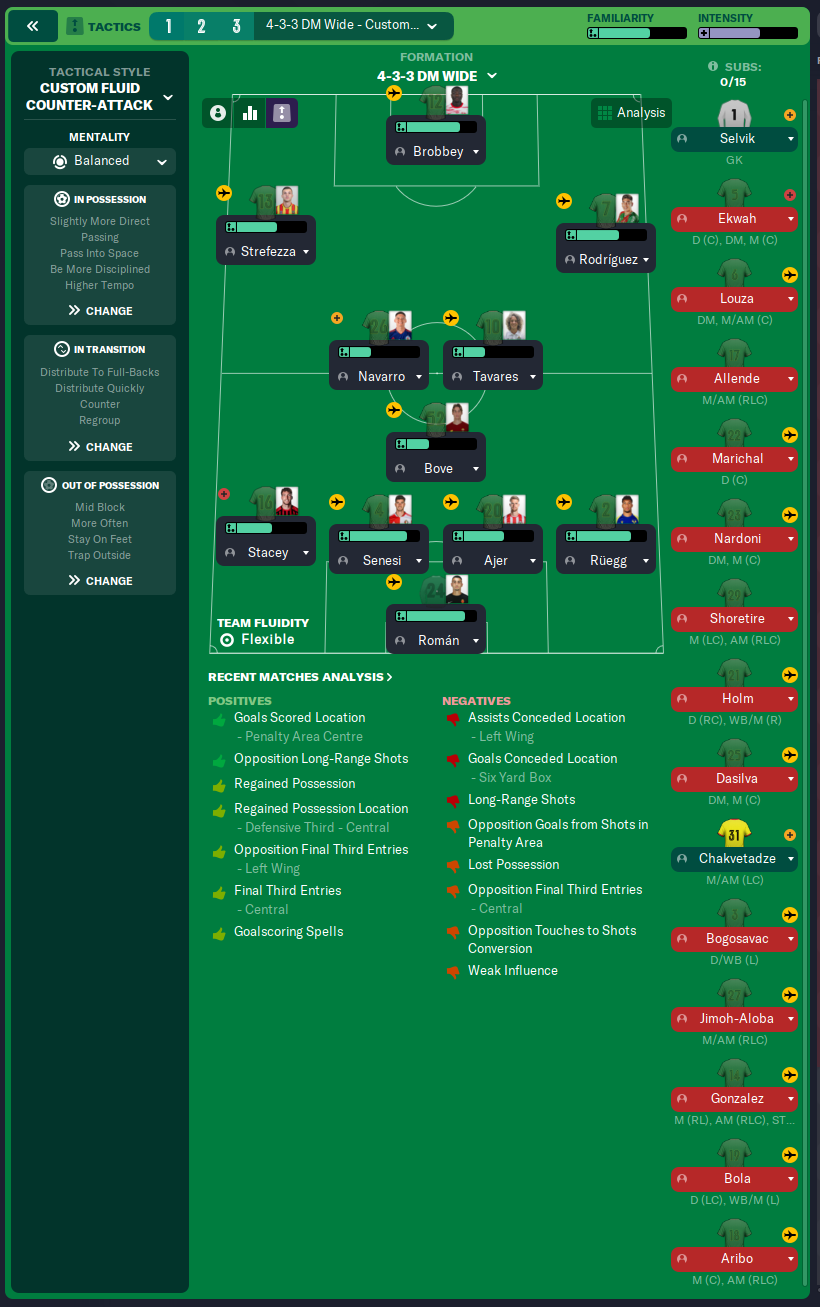
Uploaded Tactic
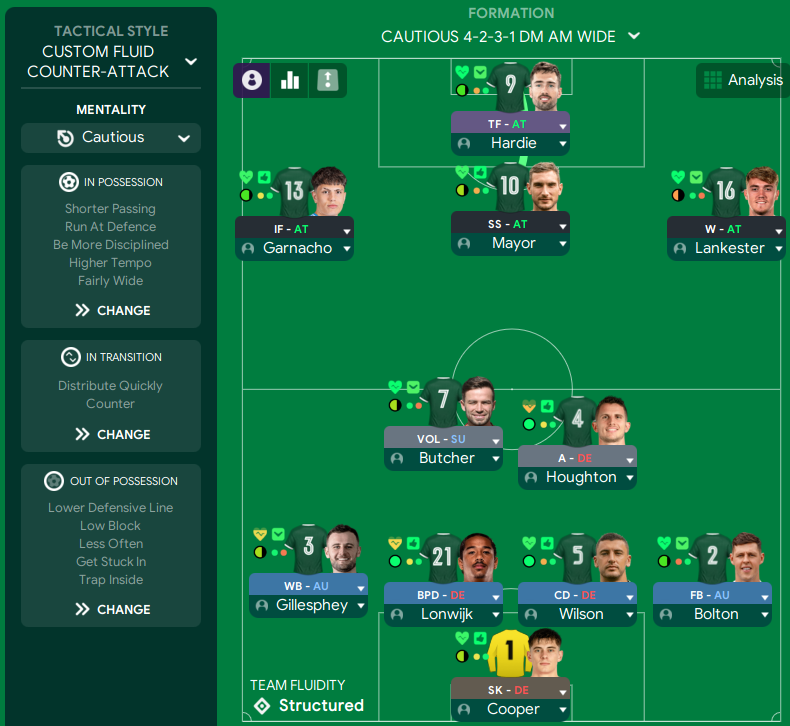
Formation & Style
Tactical Style:Custom Fluid Counter-Attack
Mentality:Cautious
Formation:4-2-3-1 DM Wide
Team Fluidity:Structured
In Possession
Shorter Passing
Run At Defence
Be More Disciplined
Higher Tempo
Fairly Wide
In Transition
Distribute Quickly
Counter
Out of Possession
Lower Defensive Line
Low Block
Less Often
Get Stuck In
Trap Inside
Team Shape Without Ball
Shape:Low Block
Description:The team maintains a disciplined low block, limiting space for the opposition.
Evidence:Utilisation of a lower defensive line and emphasis on getting stuck in.
Team Shape With Ball
Shape:Fluid Attack
Description:The front four interchanging positions dynamically to disrupt defensive structures.
Evidence:The presence of the Shadow Striker and Inside Forward creates fluid movement.
Phase Description
Attacking Play
The team focuses on quick transitions through shorter passing and running at defenders, utilising width to stretch the opposition.
Defensive Transition
Upon losing possession, the team quickly reorganises into a compact shape to stifle counter-attacks.
Main Focus
Utilising the pace of the wide forwards and the aerial presence of the target forward.
Key Strengths
Dynamic Attack
The presence of an Inside Forward and Shadow Striker maximises scoring opportunities.
Compact Defence
A low block formation makes it difficult for oppositions to create clear chances.
Quick Counterattacks
Utilising quick distribution puts pressure on unorganised defenses during transitions.
Conflicting Directions
High Press
The cautious mentality with a low block contradicts a high pressing approach.
Direct Play
Shorter Passing coupled with a cautious mentality may slow down build-up in some situations.
Winger Role Conflicts
Wingers might provide limited width due to a position-heavy system.
Tactical Suggestions
Increase Width
Consider opening space in attack by adjusting the width setting to stretch the defensive line.
Adjust Defensive Line
Consider a higher defensive line to apply pressure higher up the pitch if countering effectively.
Utilise Playmaker's Role
Encouraging the Advanced Playmaker to drop deeper can link play better.
Ask Questions About Your Lineup
Related Tactics
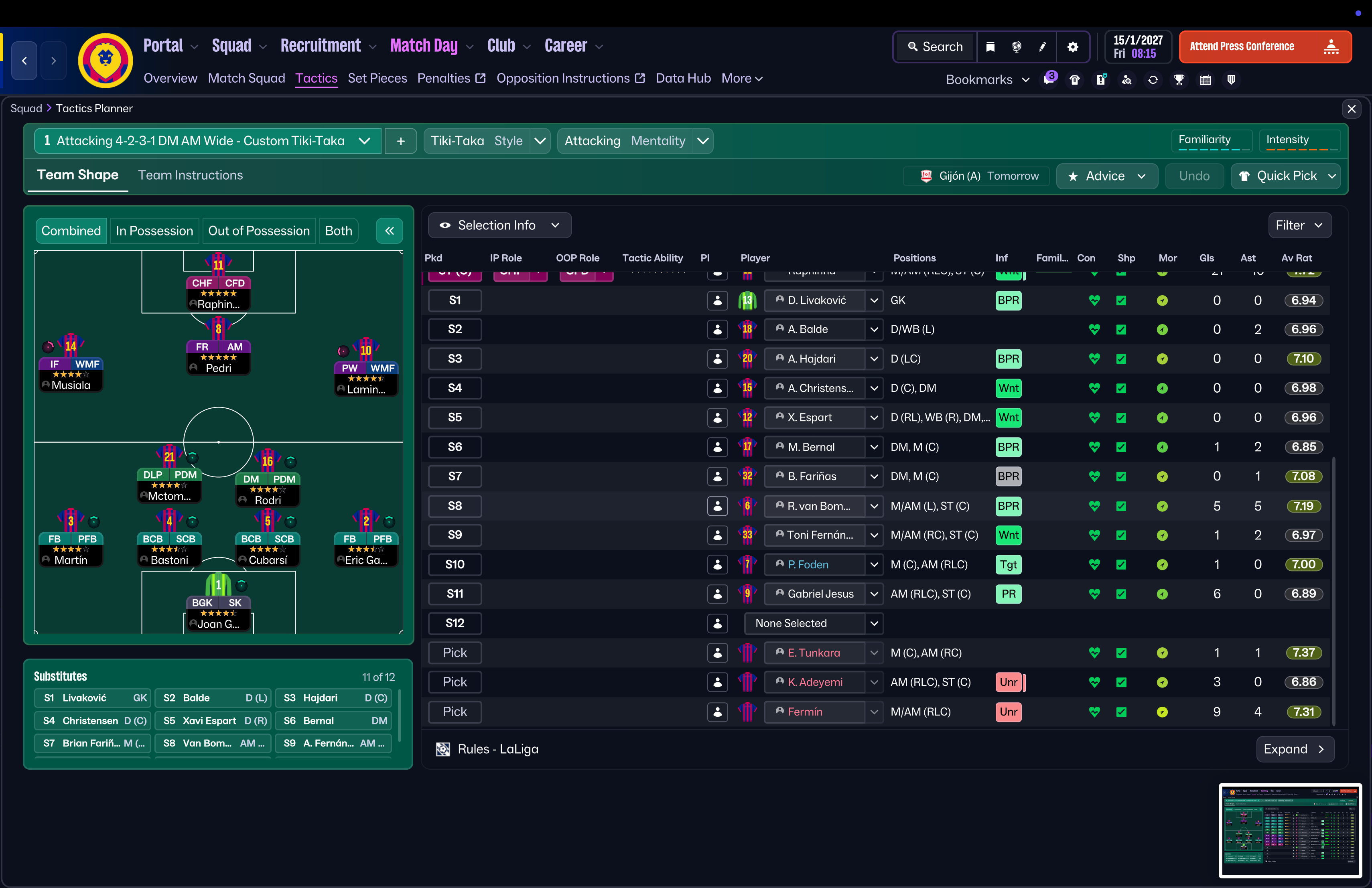
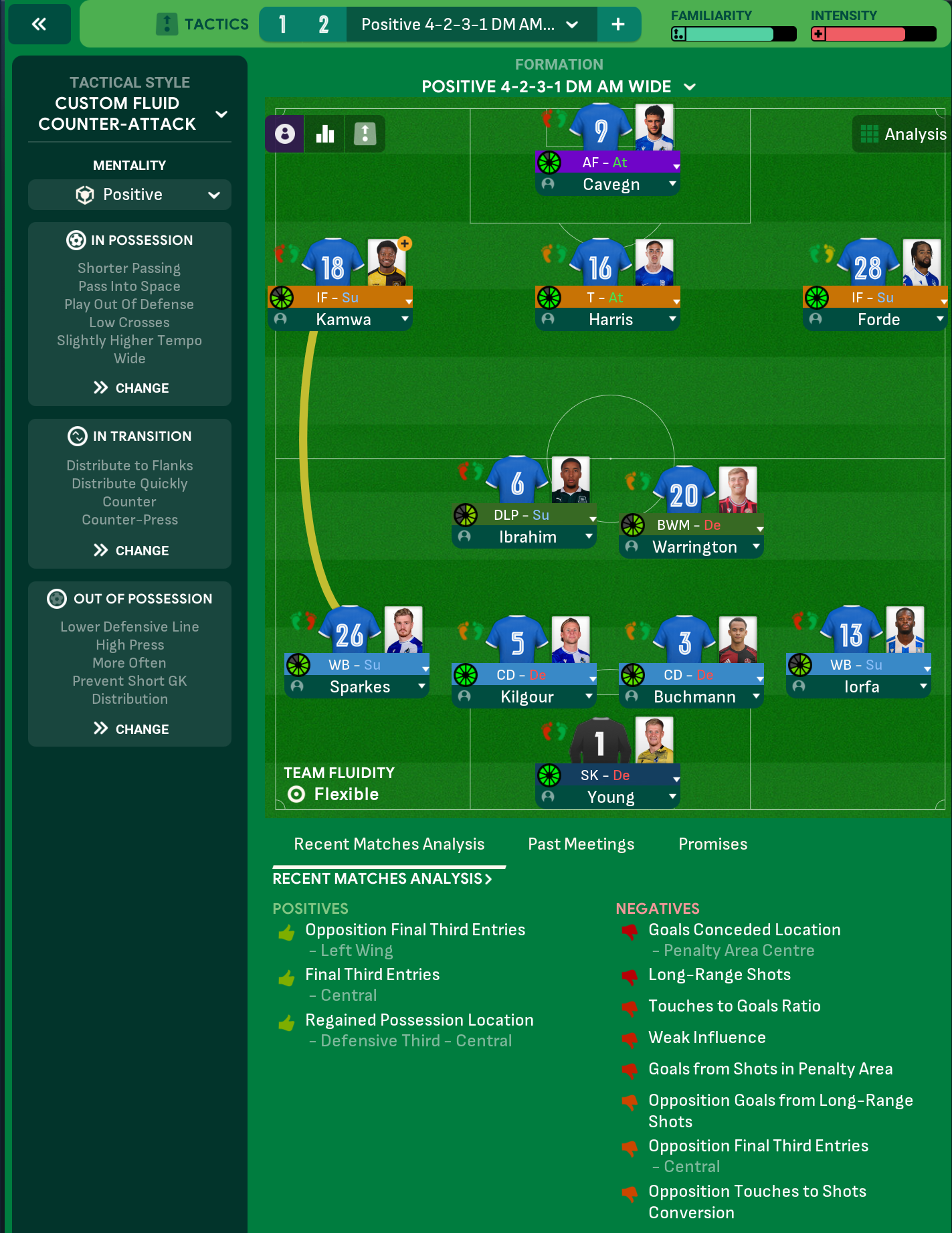
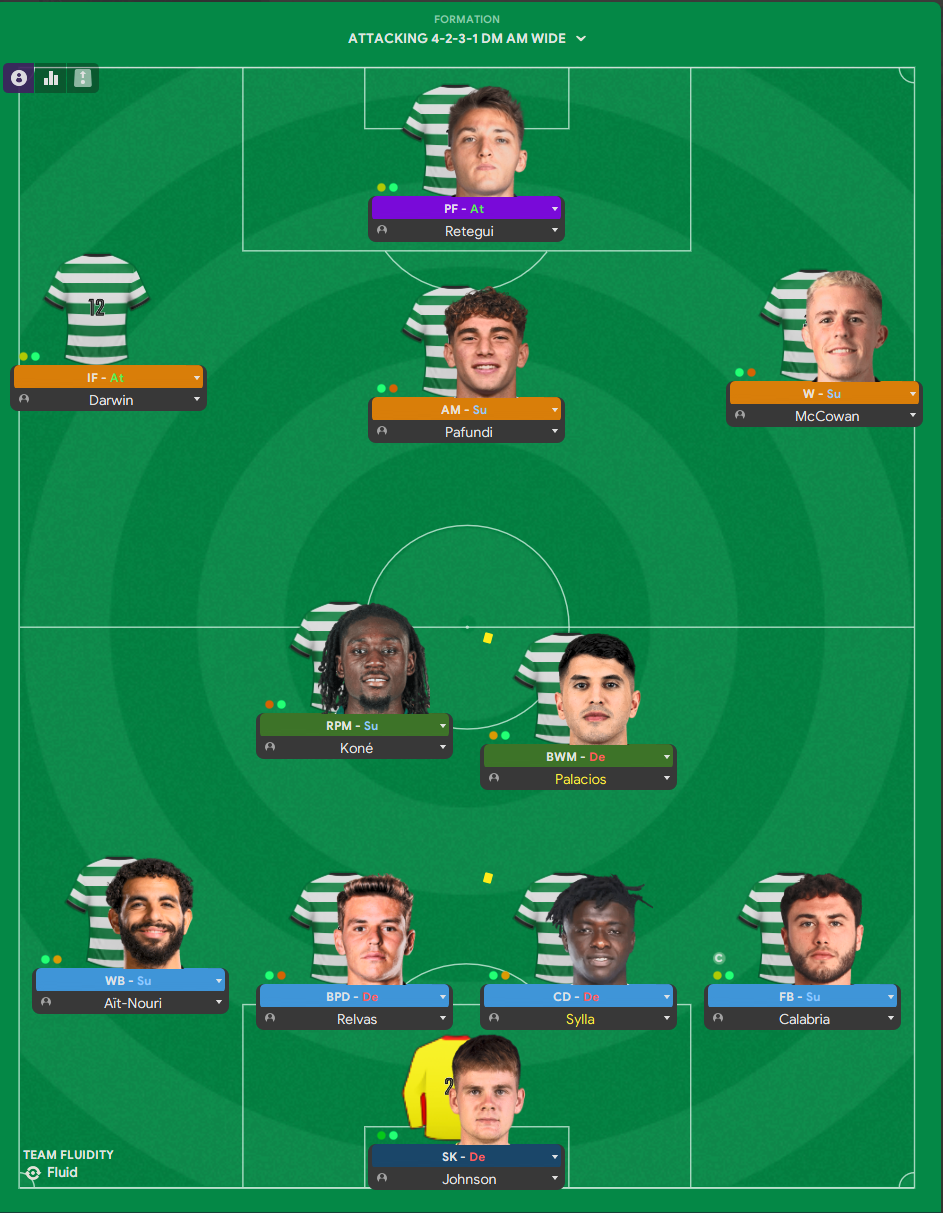
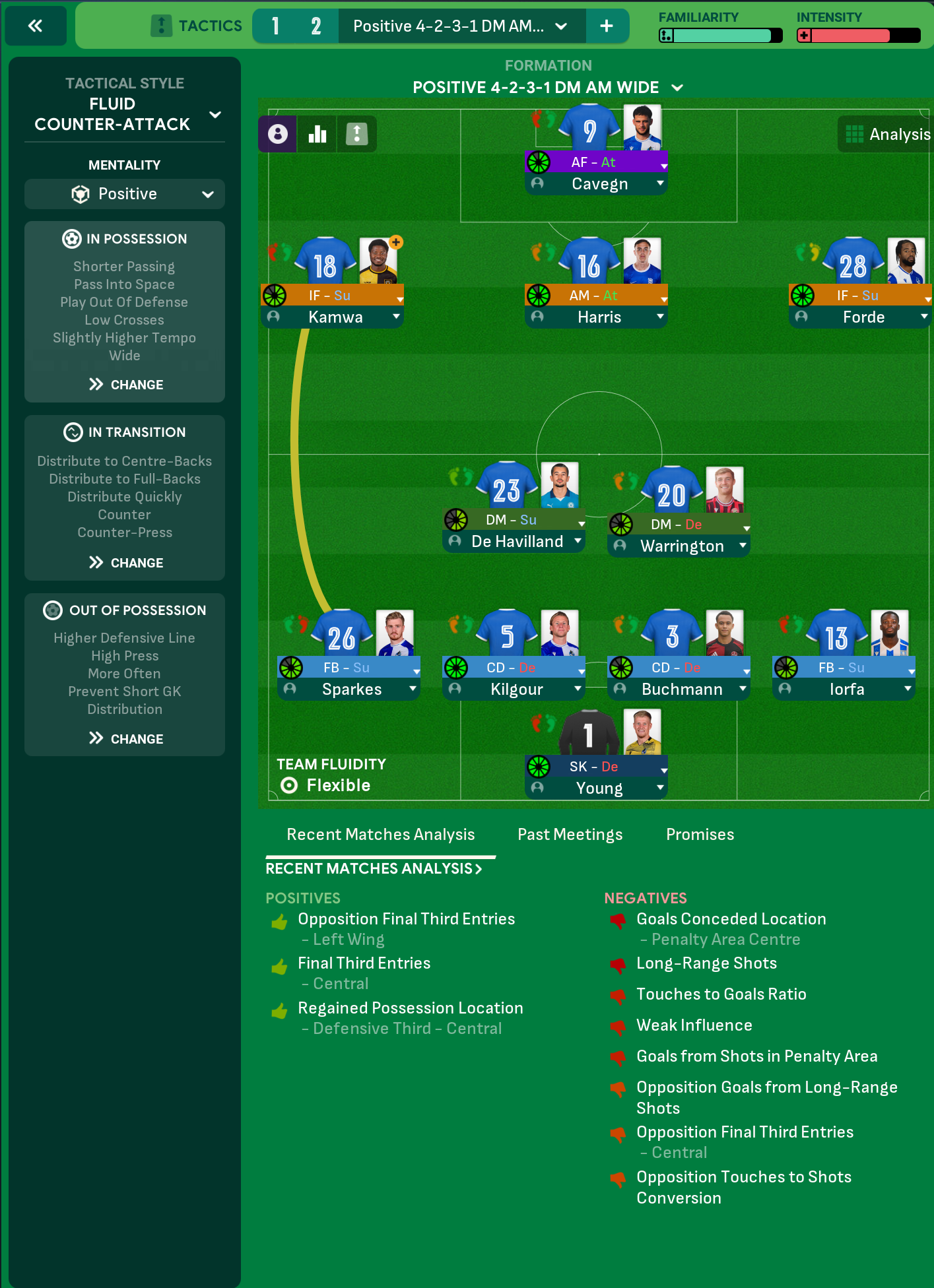
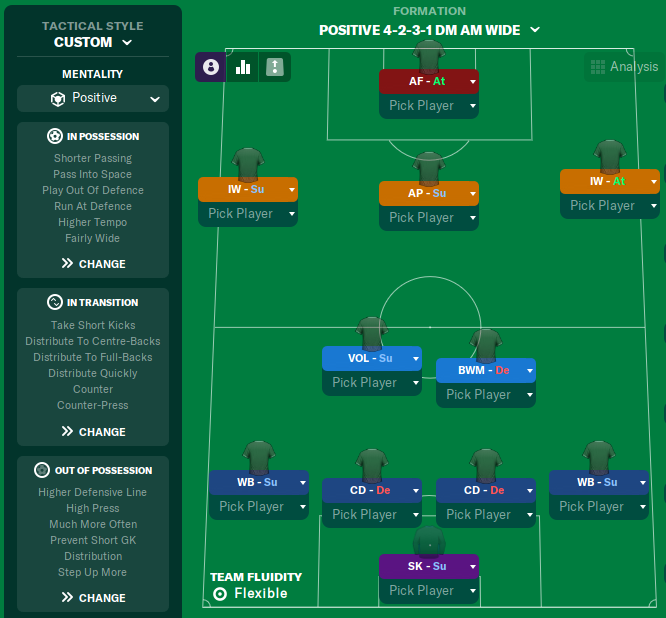
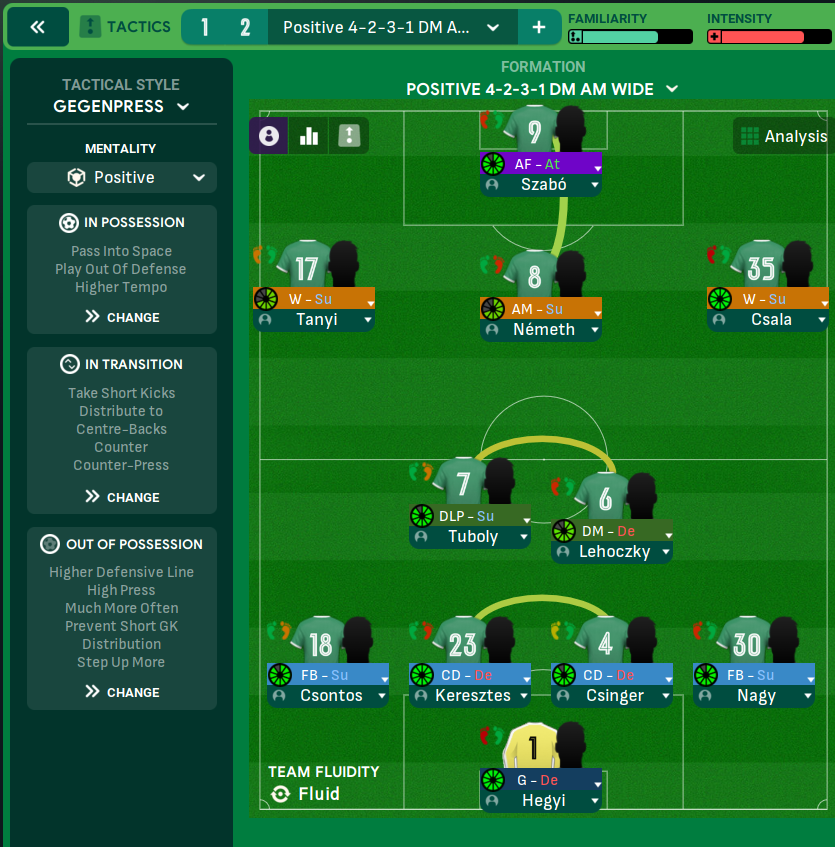
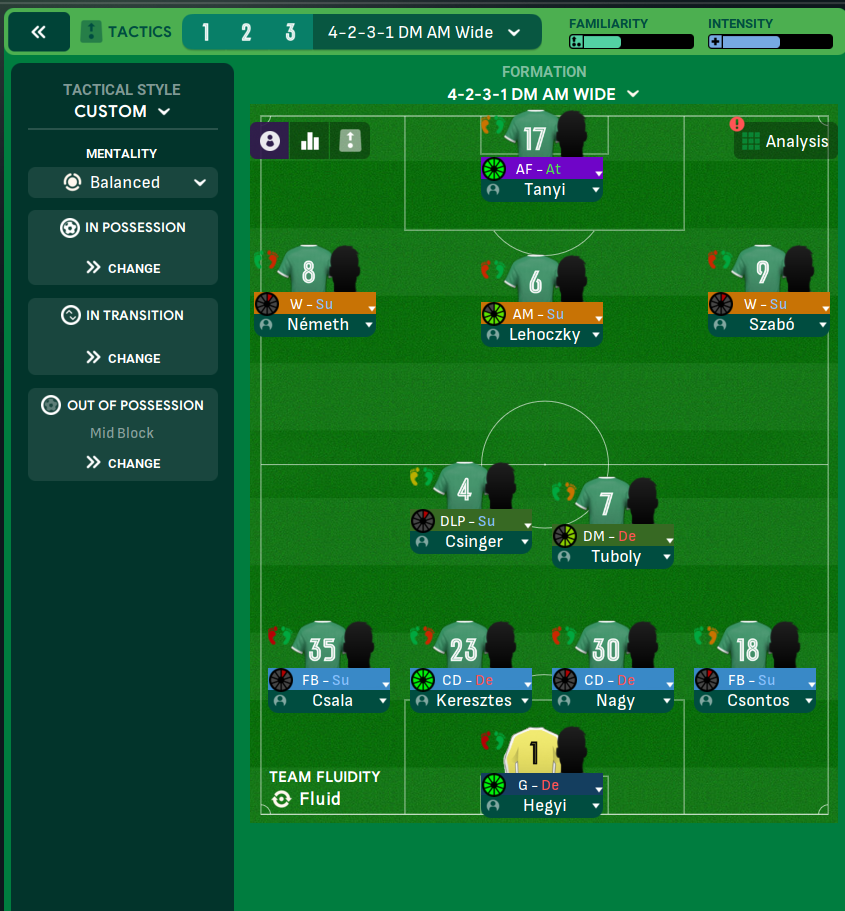
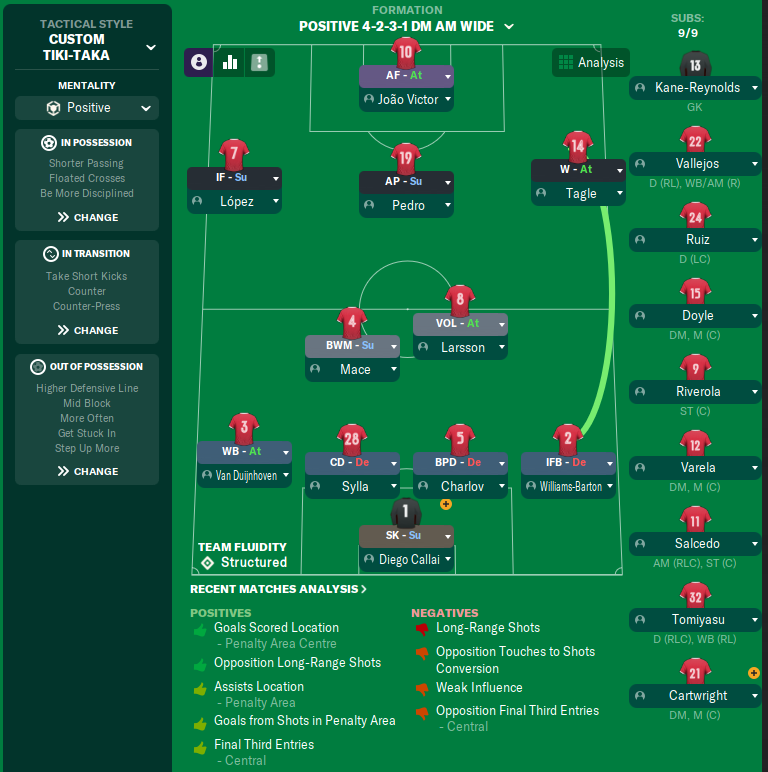
More Custom Fluid Counter-Attack tactics
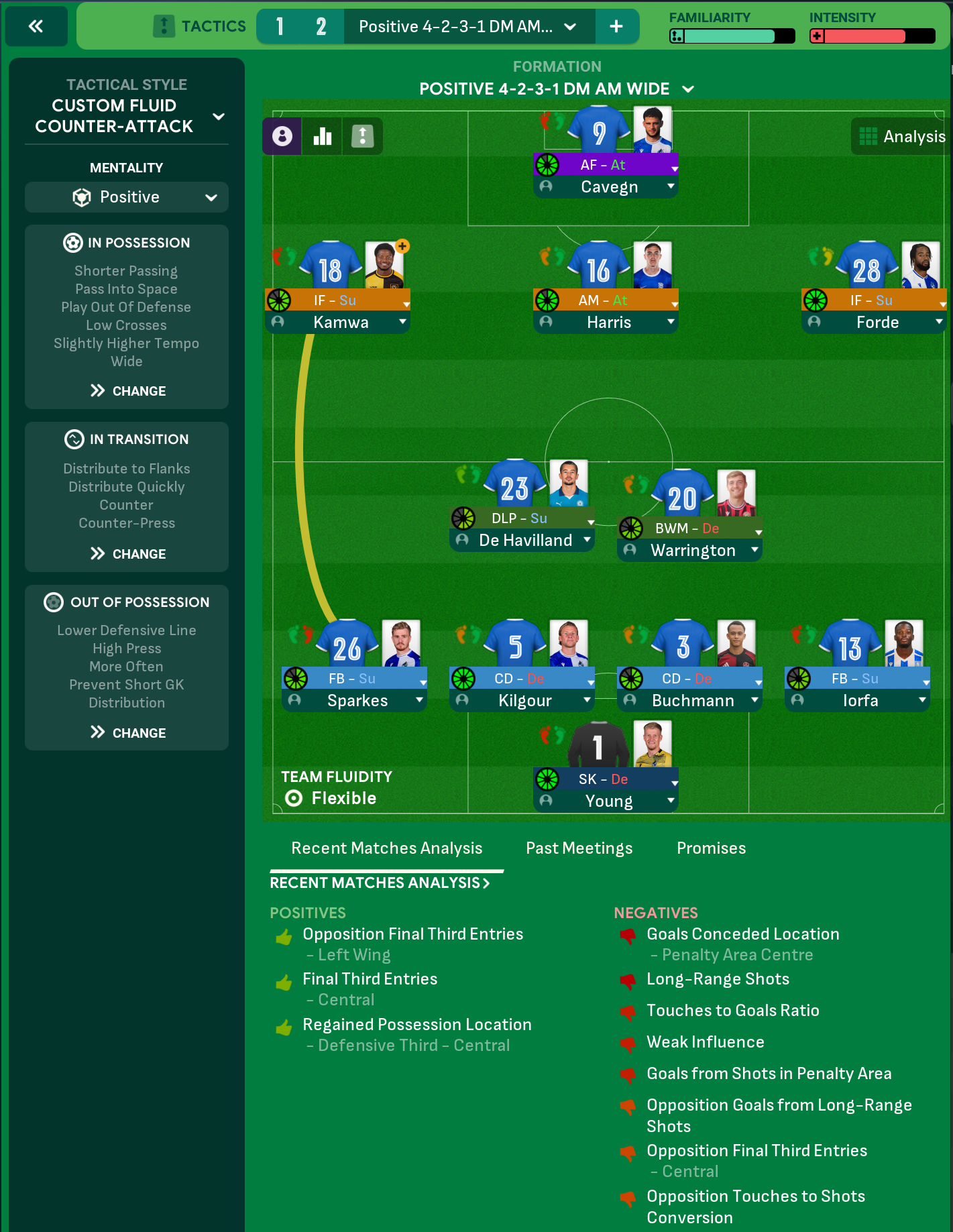
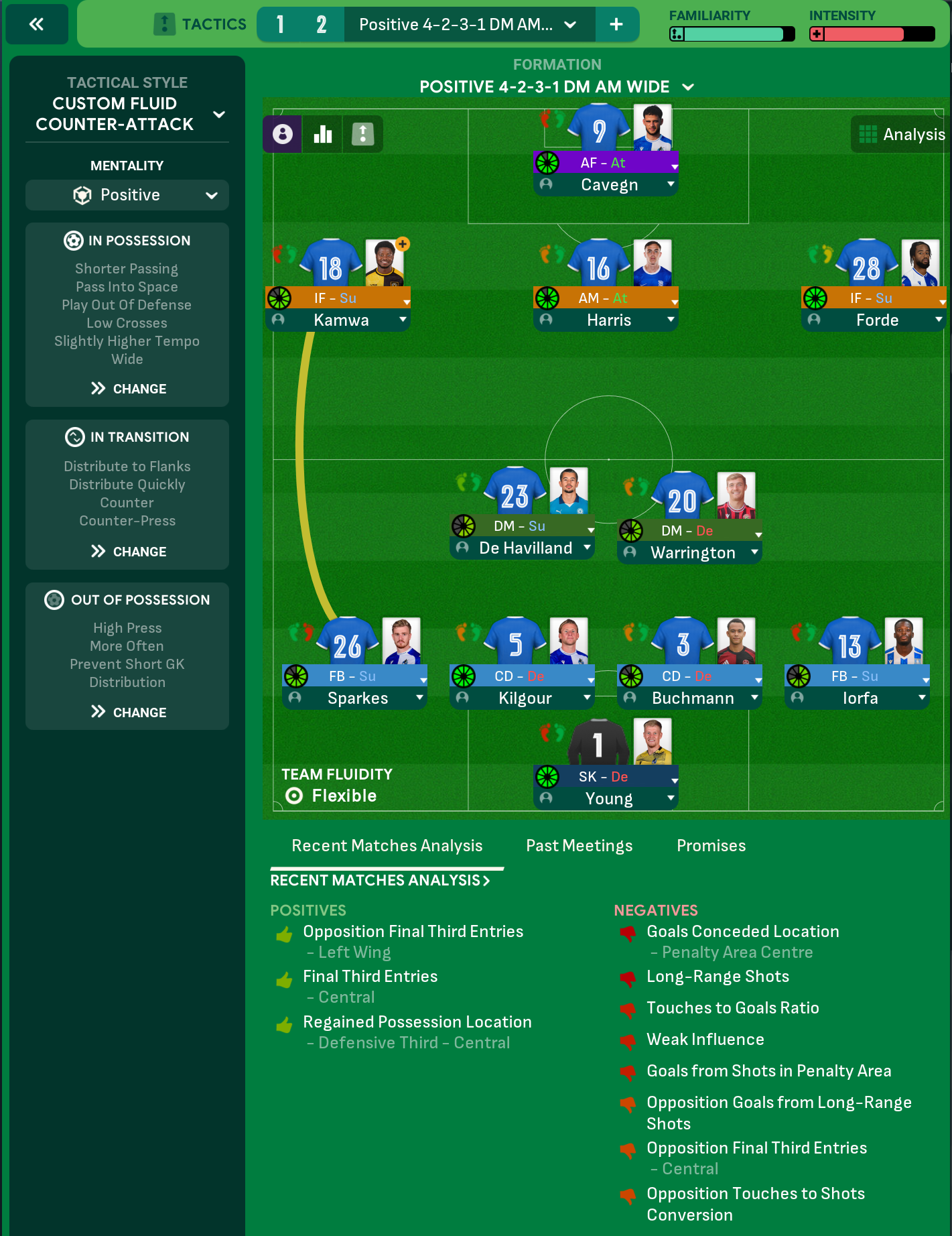
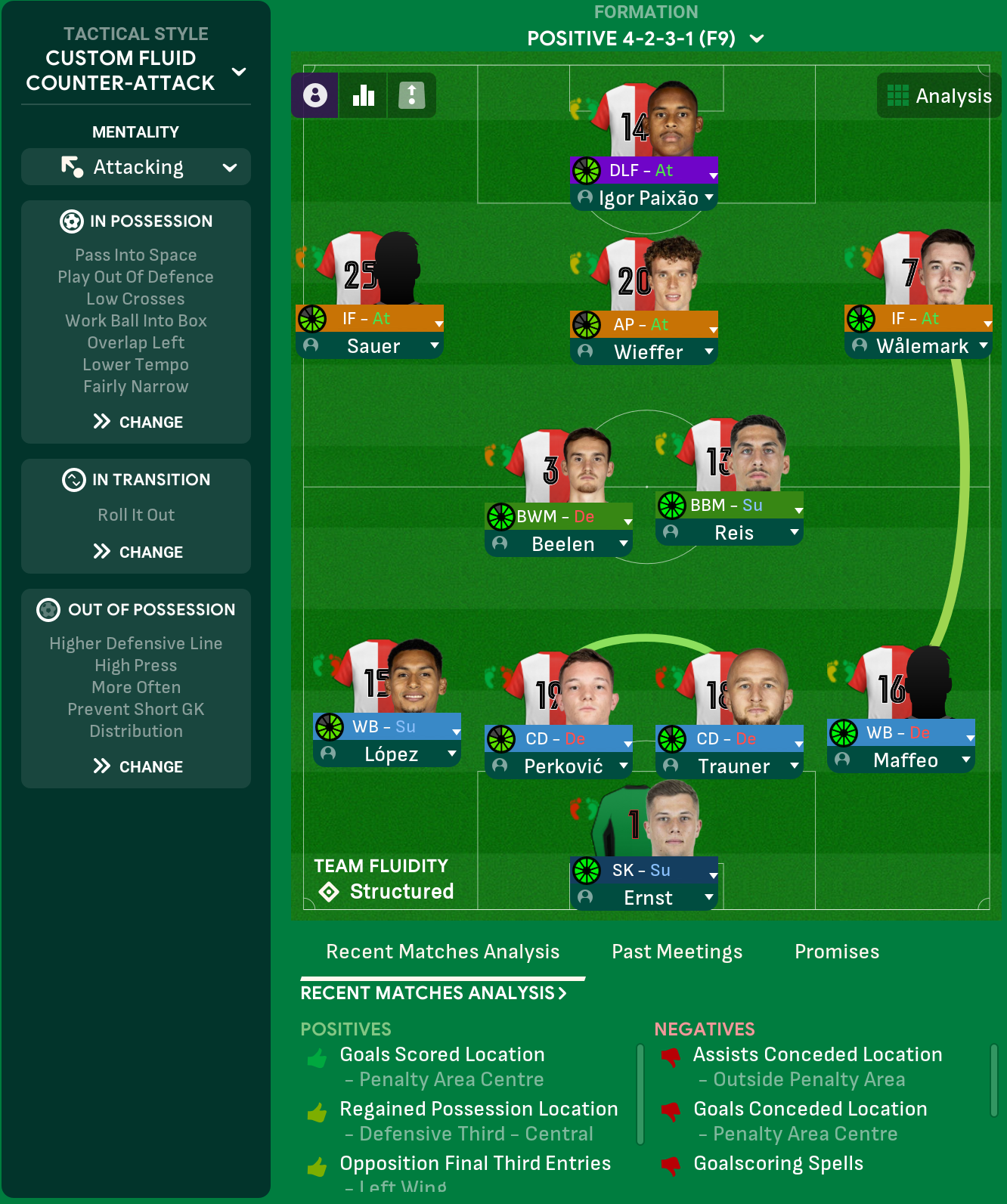
Guides for this formation
The tactical theory behind the 4-2-3-1 DM Wide: roles, instructions, and the trade-offs that decide whether the system holds up.
Player pairings
Midfield Pairs in 4-2-3-1 and 4-4-2
Double pivots and flat pairs in 4-2-3-1 and 4-4-2: when each pairing works, when it collapses, and the AMC unicorn that rescues both.
Read guide
Playing styles
Gegenpressing: A Full Guide
Klopp-style gegenpressing in FM, including squad profile, line-and-press pairing, sustainable workload, and the antipatterns to avoid.
Read guide