Uploaded Tactic
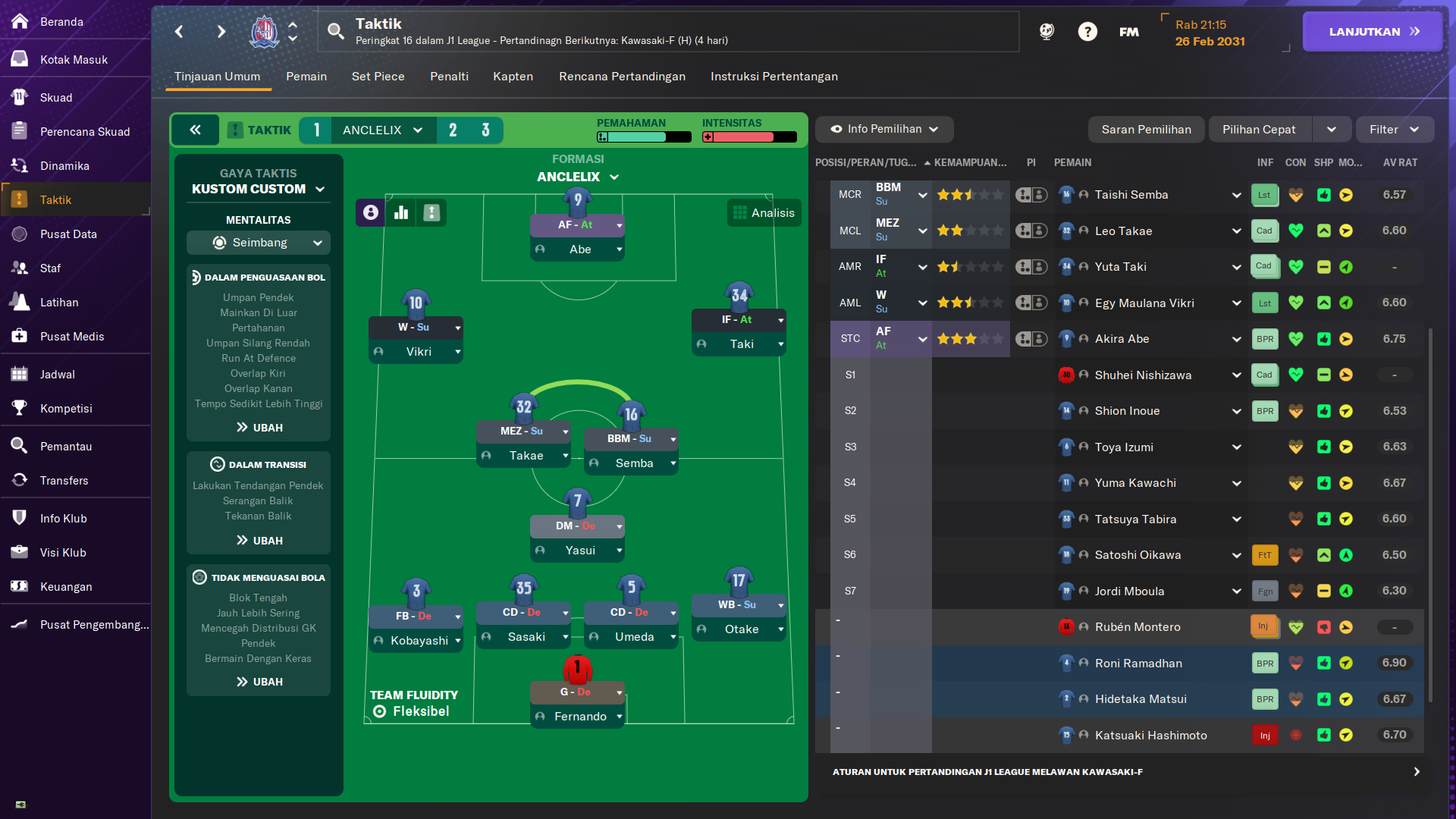
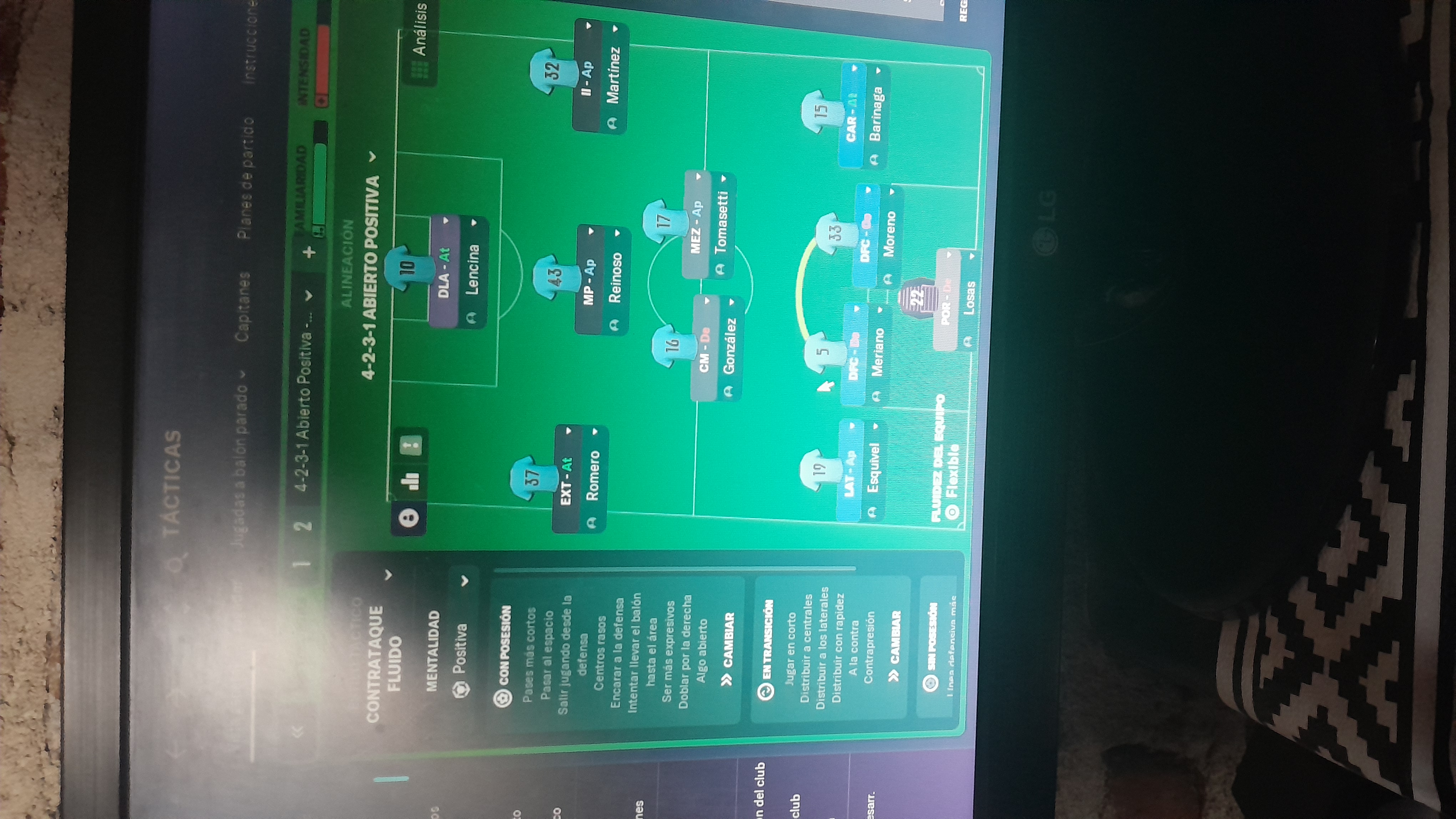
Formation & Style
Tactical Style:Kustom Custom
Mentality:Seimbang
Formation:4-2-3-1
Team Fluidity:Fleksibel
In Possession
Umpan Pendek
Mainkan Di Luar Pertahanan
Umpan Silang Rendah
Run At Defence
Overlap Kiri
Overlap Kanan
Tempo Sedikit Lebih Tinggi
In Transition
Lakukkan Tendangan Pendek
Serangan Balik
Tekanan Balik
Out of Possession
Blok Tengah
Jauh Lebih Sering
Mencegah Distribusi GK Pendek
Bermain Dengan Keras
Team Shape Without Ball
Shape:Compact
Description:Maintains a solid defensive block in the middle, limiting space for opponents.
Evidence:Blok Tengah instruction with multiple defenders.
Team Shape With Ball
Shape:Fluid
Description:Flexible attacking players maintaining space and creating opportunities.
Evidence:Overlap and varied positioning of AM players.
Phase Description
Attacking Play
Quick build-up play with short passes and overlaps to exploit space.
Defensive Transition
Immediate pressure upon losing possession with focus on regaining ball quickly.
Main Focus
Utilising width effectively through wing play and supporting overlapping runs.
Key Strengths
Dynamic Attack
The attacking trio allows for varied offensive threats through width and depth.
Strong Midfield Control
Well-balanced midfield with both defensive and attacking responsibilities.
Flexibility in Formation
The setup allows players to easily adapt between phases of play.
Conflicting Directions
High Defensive Line
Risky against teams with pacey attackers when sitting too high.
Heavy Pressing
May leave the midfield exposed without sufficient cover.
Wide Play Vulnerabilities
Could be exploited by opponents with quick counter-attacks down the flanks.
Tactical Suggestions
Balance Defensive Duties
Consider adjusting the role/duty of the DM to provide more support.
Consolidate Pressing Strategy
Implement a more structured pressing approach to maintain midfield shape.
Explore Central Players Movement
Encourage central midfielders to interchange positions to confuse defenses.
Ask Questions About Your Lineup
Related Tactics
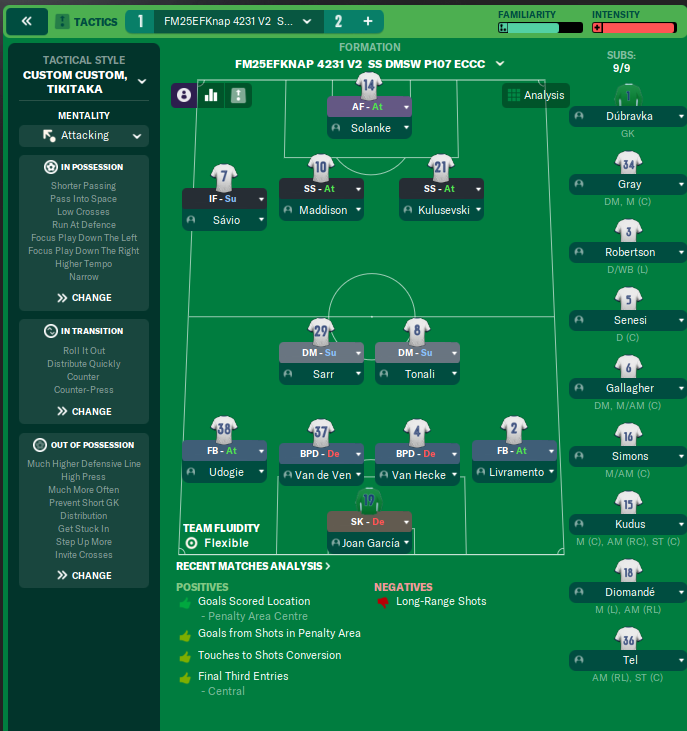
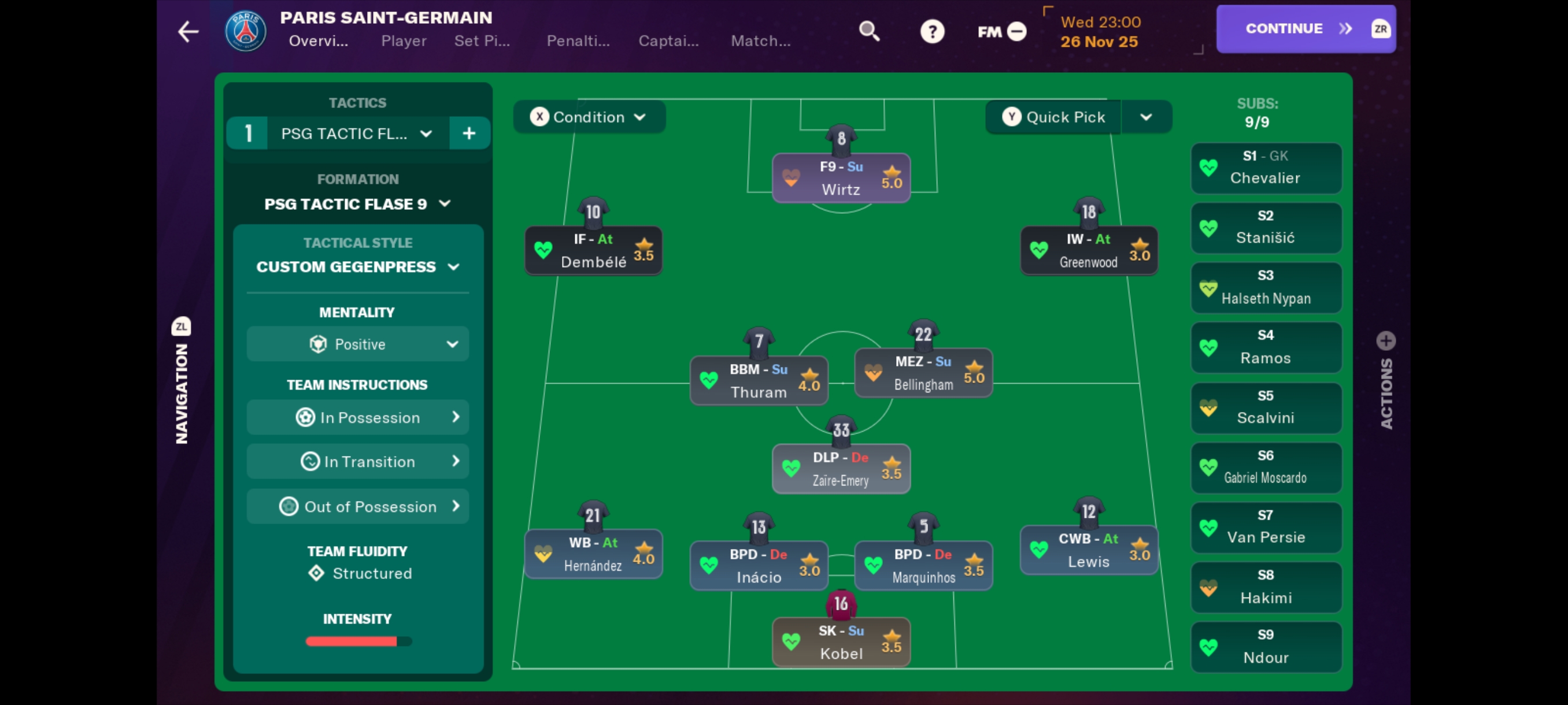
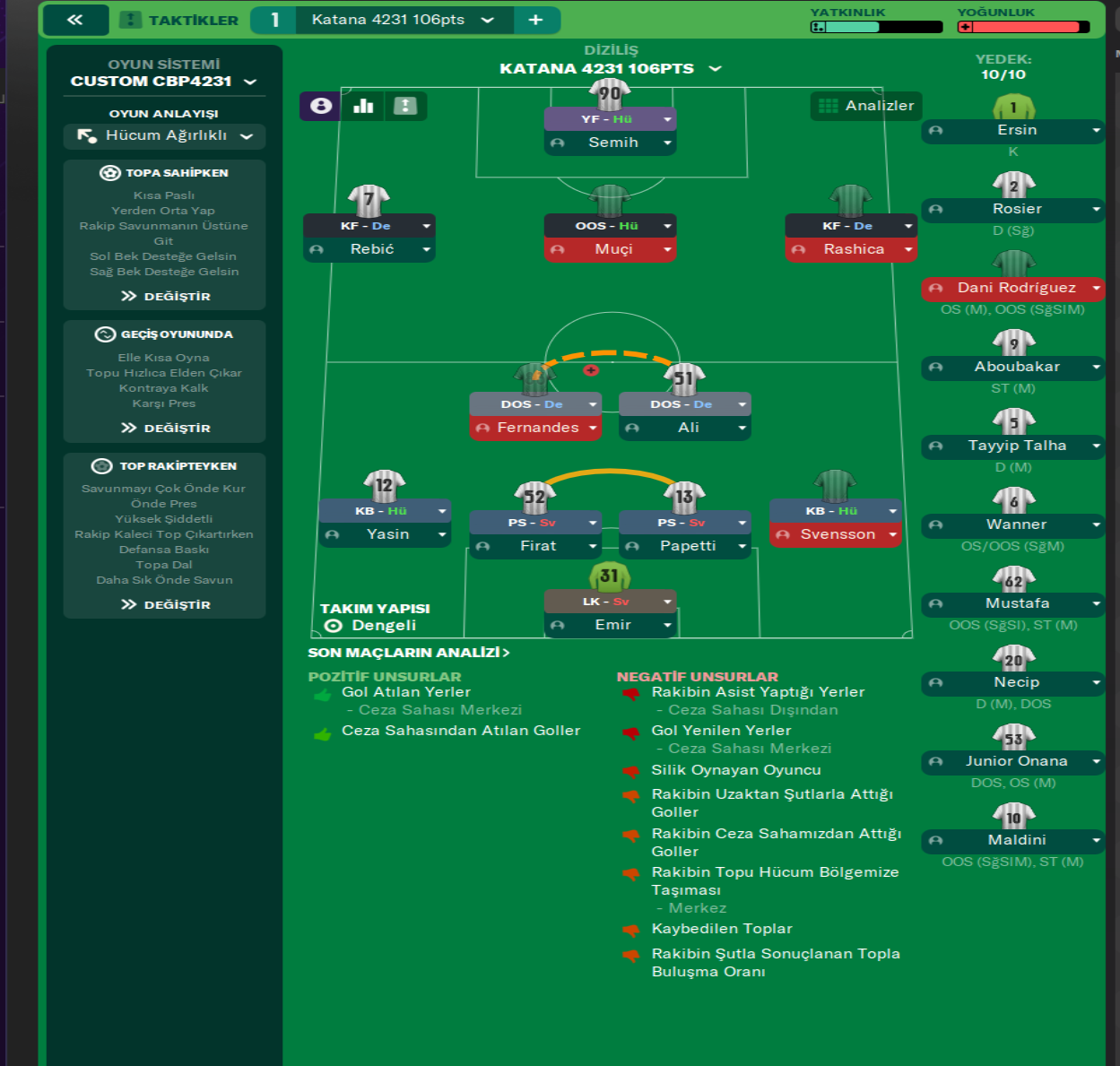
Guides for this formation
The tactical theory behind the 4-2-3-1: roles, instructions, and the trade-offs that decide whether the system holds up.
Player pairings
Midfield Pairs in 4-2-3-1 and 4-4-2
Double pivots and flat pairs in 4-2-3-1 and 4-4-2: when each pairing works, when it collapses, and the AMC unicorn that rescues both.
Read guide
Playing styles
Gegenpressing: A Full Guide
Klopp-style gegenpressing in FM, including squad profile, line-and-press pairing, sustainable workload, and the antipatterns to avoid.
Read guide